Feta is one of the easiest cheeses to replace badly. The mistake is choosing another white cheese before asking what the feta was doing.
Brine is what makes feta salty and crumbly at the same time, and those two properties are what a substitute has to hit. A salad, a pastry, a grain bowl, and a baked dish each lean on a different half of that, so no single stand-in covers all four.
The fastest answer is ricotta salata for cold crumbles. After that, the right substitute depends on whether the recipe needs brine, acid, creamy sauce, visible white pieces, or a cheese that can survive direct heat.
In This Article
What Does Feta Do in the Dish?
Feta usually does four jobs at once. It seasons the dish with salt, brightens it with acid, breaks into irregular white pieces, and stays firmer than a melting cheese when warm.
A block stored in brine does those jobs better than dry pre-crumbled feta because the center stays creamy while the surface carries salt. That is the texture you are trying to copy in Greek salad, watermelon salad, tomato plates, grain bowls, and roasted vegetables.
Hot dishes change the question. In baked feta pasta, the cheese is supposed to soften into the tomatoes.
In spanakopita or stuffed peppers, it needs to stay present inside a filling. On a grill, feta is usually the wrong cheese altogether.
If you can name the feta job, the substitute gets much easier. If you cannot, default to ricotta salata for cold food and queso fresco for a softer, cheaper crumble.
5 Feta Substitutes: Best Alternatives for Salads and Baking
1. Ricotta Salata Wins Cold Crumble Jobs
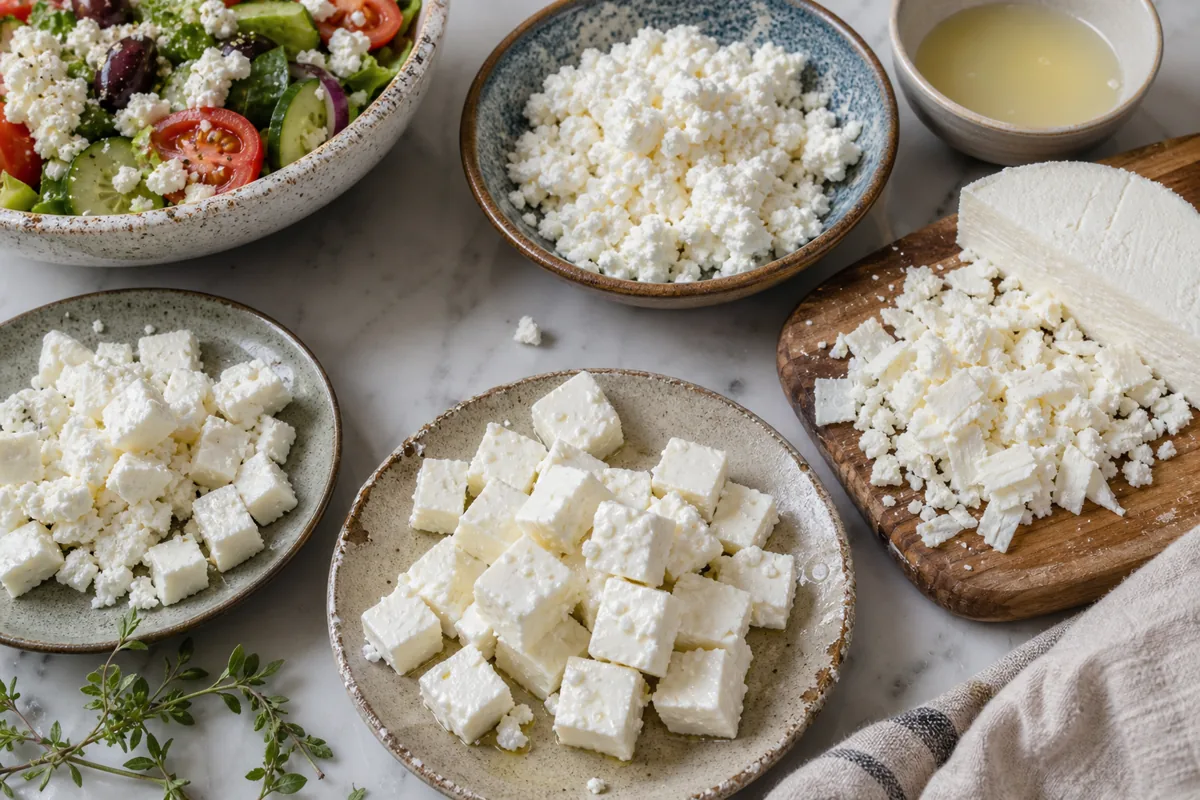
Pressed ricotta salata is the closest practical substitute for feta in cold salads because it is firm, white, salty, and non-melting. It breaks into pieces that sit on cucumber, tomato, herbs, olives, watermelon, farro, lentils, or roasted vegetables without smearing into the dressing.
The important difference is flavor. Ricotta salata is usually milder and less briny than feta, especially in common cow-whey versions.
Sheep-milk versions taste closer, but they still miss the sharp brine snap that Greek feta brings.
Fix the flavor after the crumble lands. Break the cheese into larger uneven chunks, dress the salad normally, then add lemon juice, red wine vinegar, or a spoon of olive brine only if the dish tastes flat.
Do not ask ricotta salata to become baked feta pasta. It softens a little on hot food, but it does not turn creamy in the pan.
Its best hot job is finishing pasta or vegetables after cooking, not melting into the sauce. When you need finishing salt, keep ricotta salata or Cotija out of the heat and add it last.
Use ricotta salata when the eye expects feta pieces. The substitute works because the plate still gets white, salty, irregular crumbles in each bite.
That visual cue matters in Greek salad and grain bowls. If the cheese disappears into a spread, the dish may still taste good, but it no longer behaves like a feta-topped dish.
2. Queso Fresco Covers Mild Crumble, Not Feta Sharpness
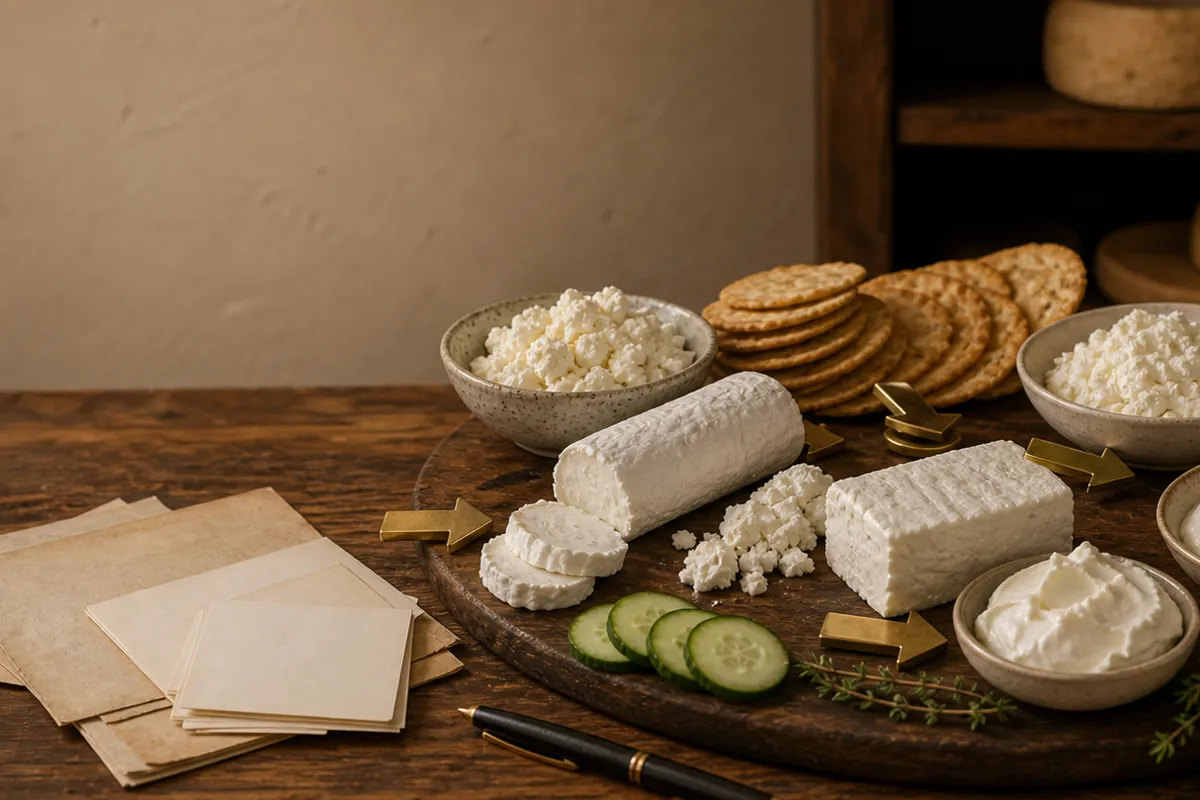
Queso fresco is the best budget substitute when you need an easy supermarket crumble. It is soft, white, moist, and mild, which makes it useful over tacos, beans, eggs, chopped salads, and weeknight bowls.
The tradeoff is clear: fresh queso fresco crumbles are cooler and gentler than feta. They do not bring sheep-milk richness, brine depth, or the same salty punch.
That means queso fresco needs seasoning support. Salt the vegetables lightly, add lemon or lime, and use enough olive oil or dressing to keep the mild crumble from tasting chalky.
- Use queso fresco: chopped salads, beans, tacos, tomato plates, eggs, grain bowls, and roasted corn.
- Add back: salt, lemon, vinegar, oregano, olives, or a sharper dressing.
- Avoid it: recipes where feta's brine is the main flavor.
- Buy it: whole or in a firm piece, then crumble by hand right before serving.
Queso fresco is most convincing when the dish already has acid from tomato, lime, tomatillo, or vinegar. It is least convincing when feta was the only salty, bright ingredient on the plate.
For spanakopita, stuffed peppers, and savory fillings, queso fresco or a mild brined white cheese can work because the cheese stays in soft pieces among spinach, herbs, eggs, and dough. If the filling already has lemon, dill, parsley, or olives, the missing feta sharpness matters less.
Drain either cheese first before it goes into the filling.
3. Goat Cheese Softens Into Baked Feta Pasta
Warm feta recipes split into different problems. Some need a creamy tangy cheese to soften into a sauce.
Some need salty curds that remain visible inside a filling. Some only use feta because it sounds Mediterranean, even though the cooking method wants a frying cheese.
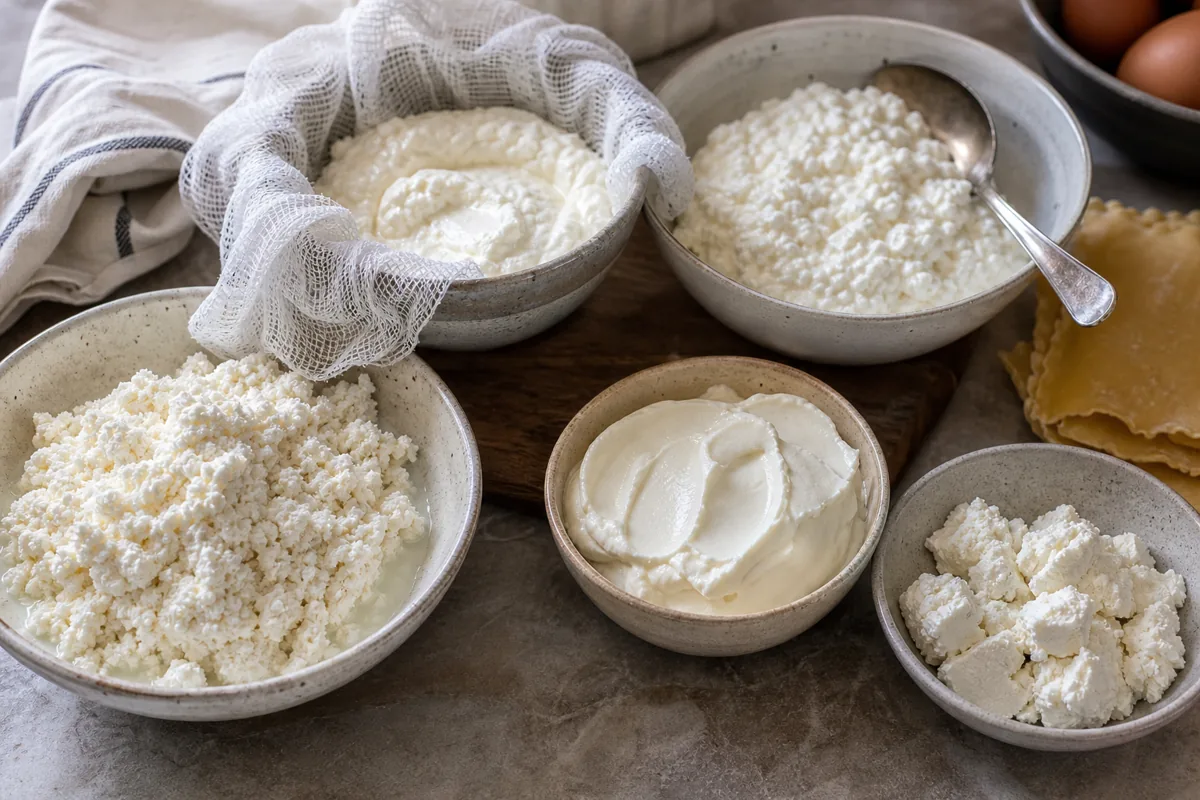
For baked feta pasta, fresh goat cheese is often the better substitute than ricotta salata, because it softens into tomatoes and olive oil and the sauce stays creamy instead of grainy. It will taste more goaty and less briny, but the texture is closer to the dish people expect.
When the dish needs that creamy sauce, season the goat cheese after roasting.
4. Halloumi, Paneer, or Queso Blanco Hold Slabs on the Grill
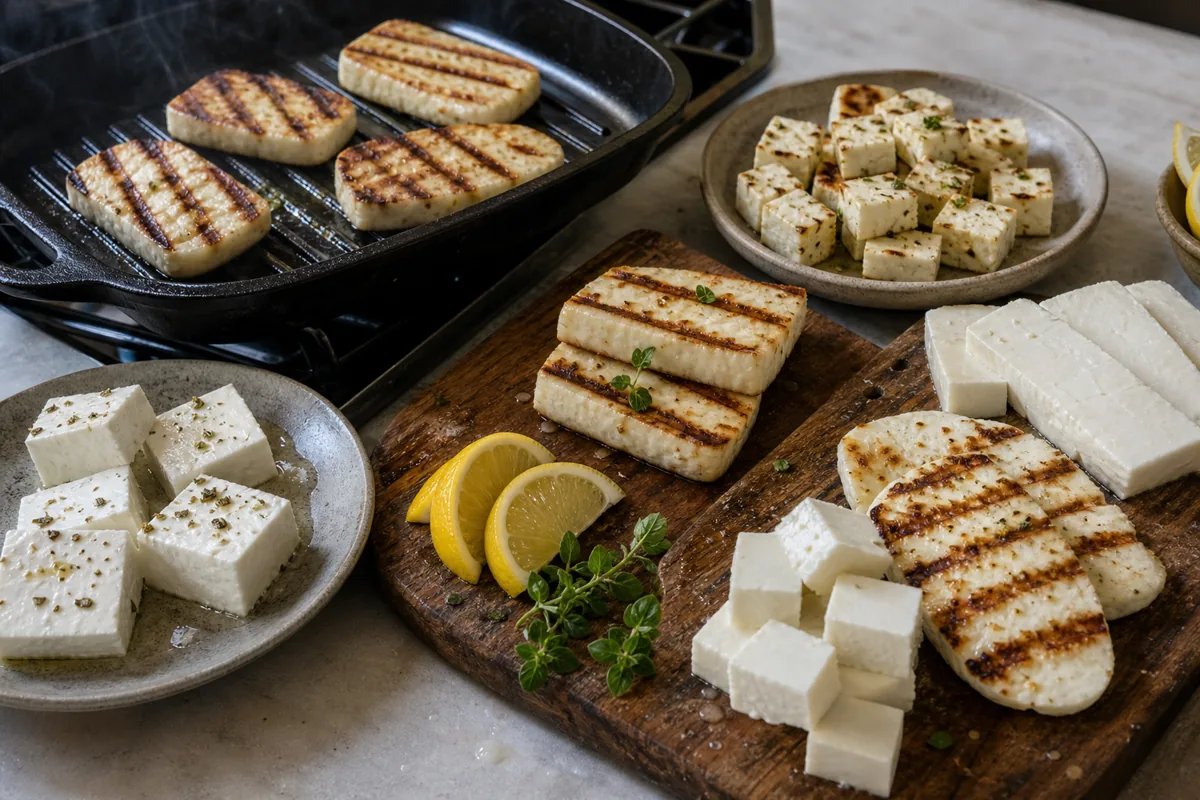
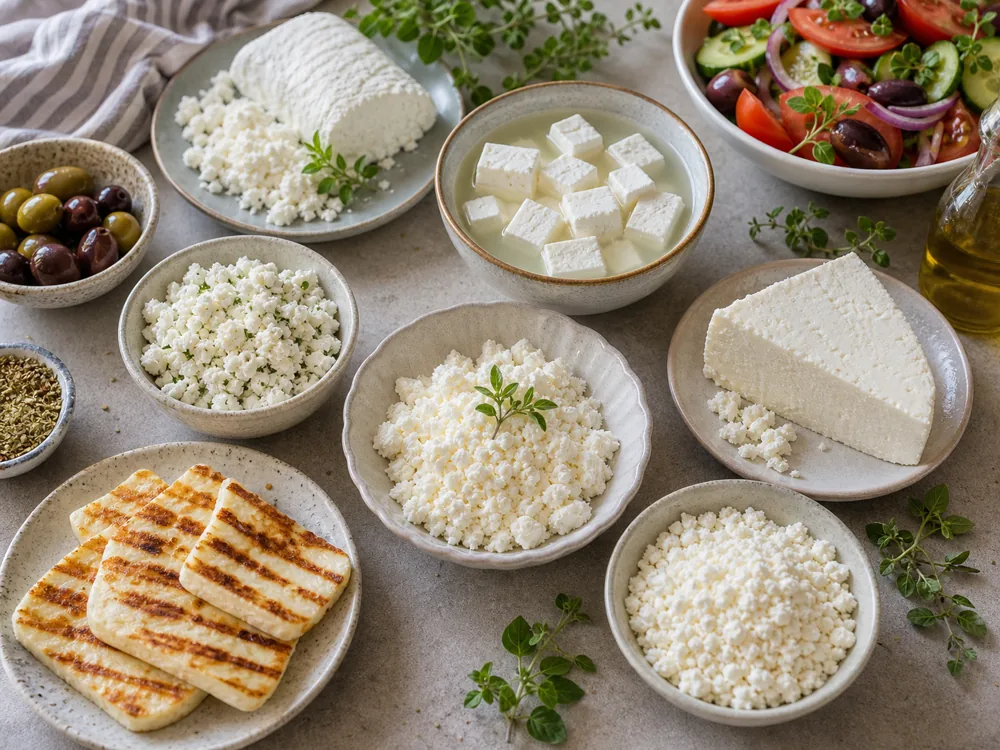
For searing, grilling, or skewers, stop trying to copy feta. Cypriot halloumi, acid-set paneer, or heat-holding queso blanco will stay in slabs or cubes.
They replace the plate shape, not the feta crumble.
| Hot dish | Best substitute | Adjustment |
|---|---|---|
| Baked feta pasta | Fresh goat cheese | Add a little extra salt and finish with lemon. |
| Spanakopita filling | Queso fresco or mild brined white cheese | Drain well and season the greens more boldly. |
| Roasted vegetables | Ricotta salata after roasting | Crumble at the end so pieces stay distinct. |
| Grilled slabs or skewers | Halloumi or paneer | Salt paneer; rinse salty halloumi if needed. |
The briny crumble and grill structure split explains why those two cheeses trade places badly. Feta gives briny crumble.
Halloumi gives grill structure.
The recipe decides which one matters.
5. Dairy-Free Feta Needs Marinade, Not Just Crumble
Dairy-free feta-style blocks are most useful in cold salads, grain bowls, wraps, and mezze plates where the goal is a salty white crumble. Coconut-oil versions can taste convincing enough when the dish has herbs, olives, tomato, cucumber, lemon, and good olive oil around them.
Firm tofu is the more controllable option when you have time. Press it, cut it into small cubes, then marinate it with lemon juice, olive oil, salt, oregano, garlic, and a splash of vinegar or olive brine.
The tofu will not become cheese, but it can carry the same salty-acid role in a salad.
Heat exposes the limit. Dairy-free feta-style blocks can soften or turn oily, and marinated tofu will not become creamy like baked feta.
Use them cold or warm, not as the main sauce structure in a hot recipe.
- Best cold shortcut: a feta-style dairy-free block crumbled over salad.
- Best homemade option: pressed tofu marinated with salt, acid, oil, and herbs.
- Weakest use: baked feta pasta, because plant-based blocks rarely create the same creamy sauce.
For dairy-free Greek salad, marinate tofu cubes for at least 30 minutes, then drain before adding them to wet vegetables. The surface seasoning matters more than the inside.
If the dish depends on creamy dairy behavior, choose a different recipe path instead of forcing a one-to-one feta replacement.
SOURCES & REFERENCES
Which Cheeses Should You Avoid as Feta Substitutes?
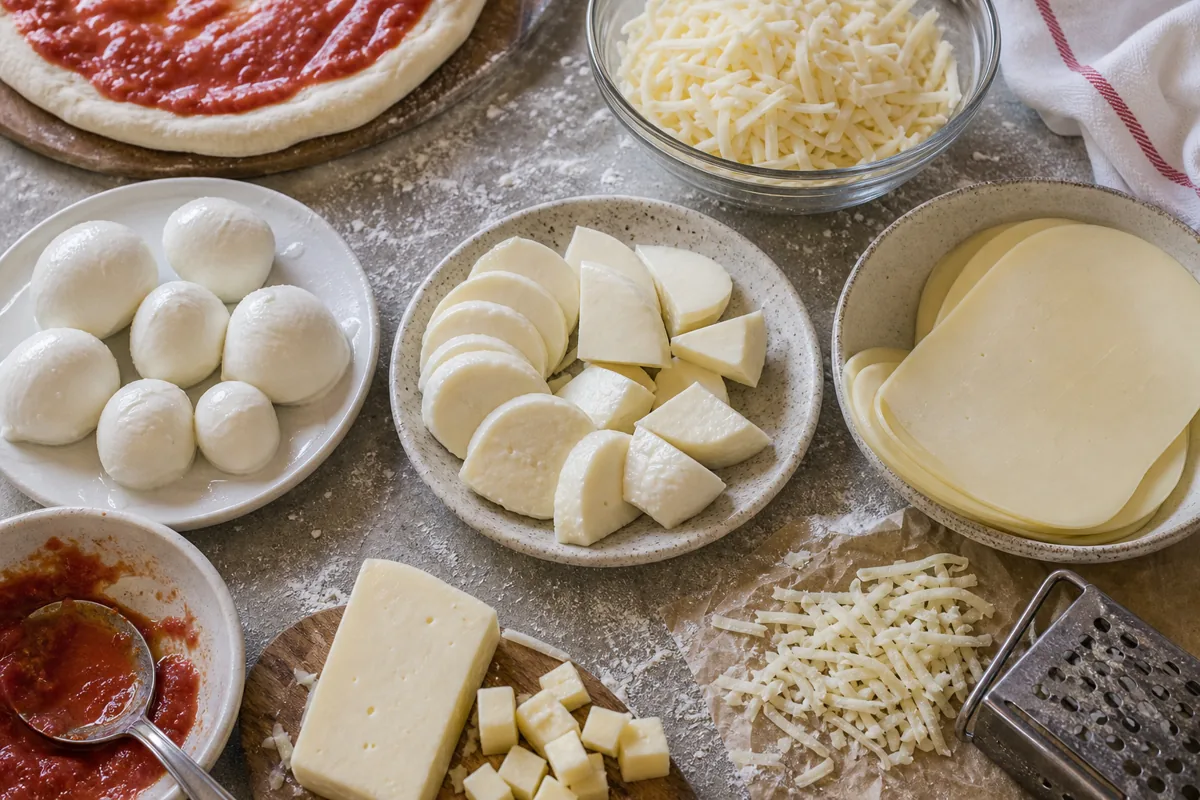
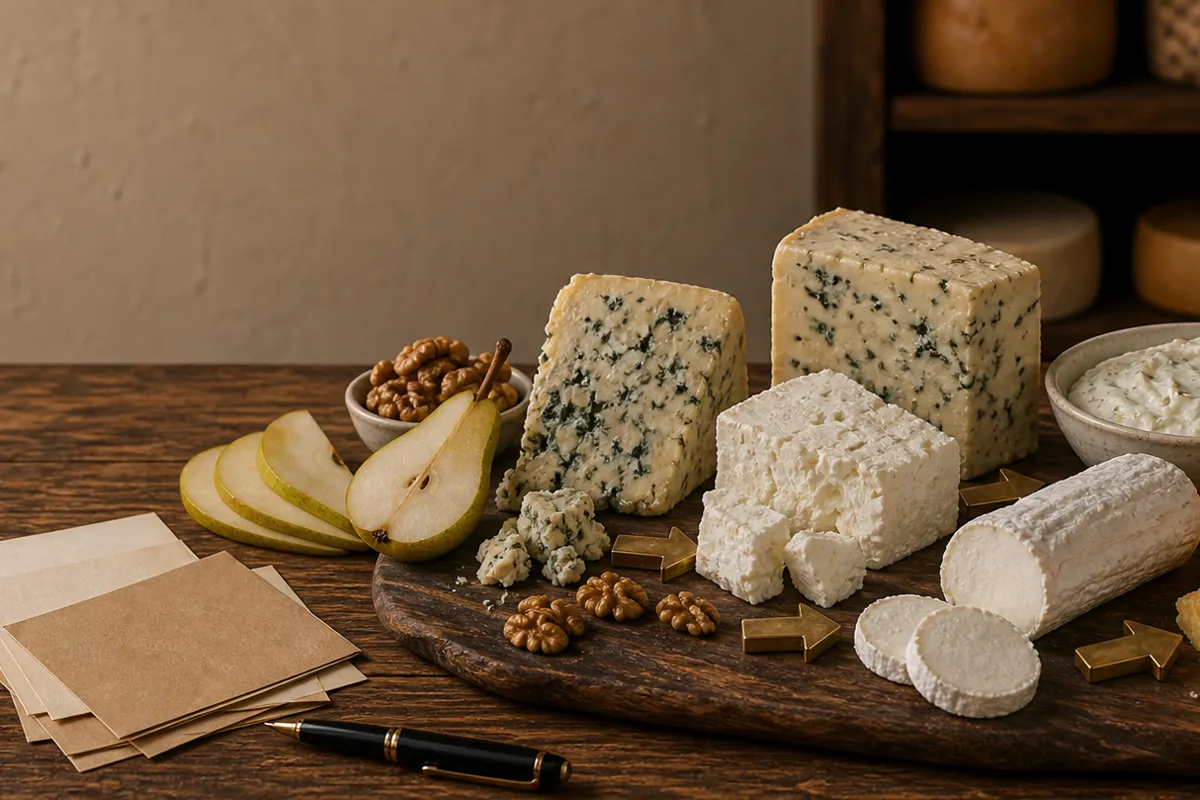
Fresh mozzarella, cream cheese, Parmesan-style hard cheese, and blue cheese can all seem plausible if you focus on only one trait. None is a direct feta substitute.
Fresh mozzarella is mild and stretchy, not briny or crumbly. Cream cheese spreads instead of breaking into pieces.
Parmesan-style hard cheese overshoots into dry grating territory. Roquefort's sheep-milk blue intensity can work in a bold salad, but it changes the dish into a blue-cheese dish.
Do not use a stretchy cheese as a feta substitute just because it is white. If the cheese melts into threads, it is solving the wrong problem for salad, brined crumble, and most feta-topped dishes.
This exclusion step saves the recipe. A bad substitute does not merely taste different.
It changes how the dish eats.
How Should You Fix Salt, Acid, and Moisture Before Serving?
Most feta substitutes fail quietly. The texture looks close enough, but the final dish tastes dull because real feta would have supplied salt and acid in one bite.
Correct salt first. Ricotta salata and queso fresco may need a pinch of flaky salt over the finished plate, while aged Cotija-style crumbles need the opposite treatment: use less cheese and hold back salt in the dressing, pasta water, or vegetable seasoning.
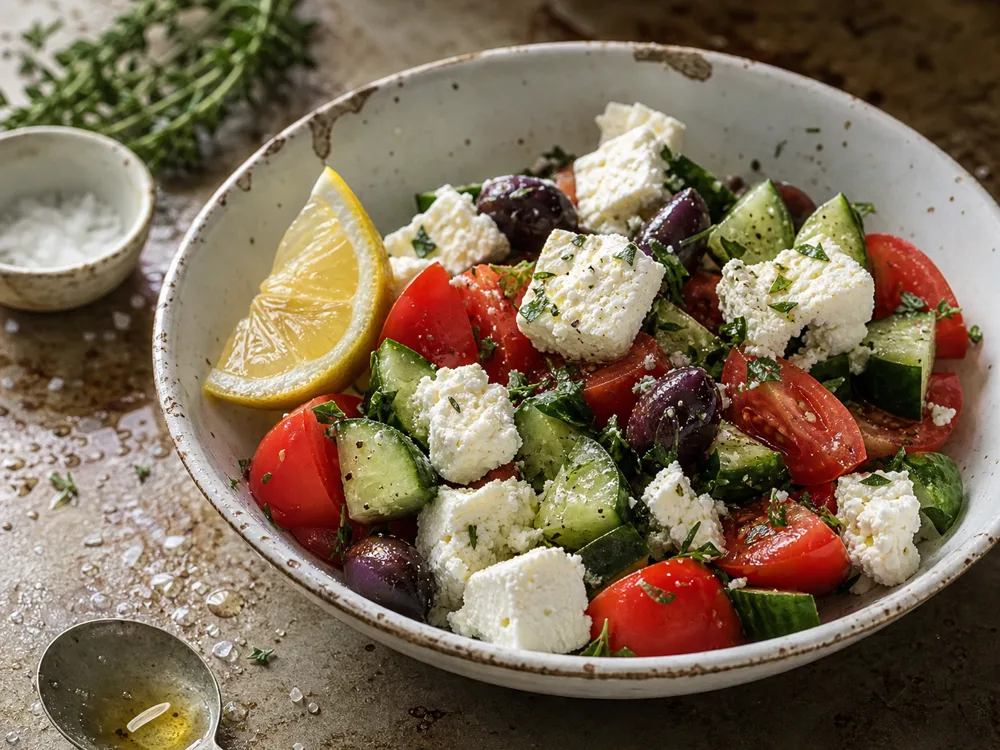
Correct acid second. Lemon juice, red wine vinegar, olive brine, pickled onion, or a sharper vinaigrette can replace the brine snap that mild substitutes lack.
Add acid after tasting, not automatically, because goat cheese and some brined white cheeses already bring enough tang.
Protect moisture last. Crumble cheese cold for clean pieces, drain watery substitutes before filling pastry, and add finishing crumbles after roasting rather than before.
If the substitute sits in dressing too long, it can soften into paste.
Storage matters because many feta substitutes dry out fast after cutting. The general cheese storage rules help, but the practical habit is simpler: keep the substitute wrapped, crumble only what you need, and season the dish after the cheese is on the plate.
Choose the substitute by the missing feta job, then correct salt and acid at the end. The final adjustment matters as much as the cheese name.
That rule keeps the swap flexible. Ricotta salata, queso fresco, goat cheese, halloumi, paneer, and dairy-free feta-style blocks can all work, but none works in every feta recipe.
What Else Do People Ask About Feta Substitutes?
These answers focus on the fast replacement decisions readers usually need while cooking.
Ricotta salata is the best substitute for feta in Greek salad because it is white, salty, firm, and crumbly. Add lemon juice or red wine vinegar after tasting if the salad needs more sharpness.
Use goat cheese when creamy tang is acceptable, especially in warm tarts, tomato dishes, toast, and baked feta-style pasta. It is softer than feta and will smear instead of breaking into clean brined crumbles.
Fresh goat cheese is the most practical replacement for baked feta pasta because it softens into tomatoes and olive oil. Add extra salt and lemon because it does not bring feta's brine.
Queso fresco is a good mild feta substitute for salads, beans, tacos, eggs, and grain bowls. It is less salty and less tangy, so the dish usually needs more acid and seasoning.
A dairy-free feta-style block works best for cold salads and bowls. Pressed tofu marinated with lemon, olive oil, salt, oregano, and vinegar is the most practical homemade option.