Put halloumi in a hot pan and it behaves more like an ingredient than a cheese case garnish. It browns at the edges, keeps its shape, and still lifts in one piece, so the real question is how fast you can serve it while the center is springy.
The squeaky, briny, layered texture of fresh halloumi bears almost no resemblance to anything else in a cheese counter. Once you understand how and why it behaves the way it does, you use it differently.
The buyer decision starts with heat, then moves to milk mix, brine, salt level, and whether the label is real Halloumi/Hellim PDO or a generic grilling cheese.
In This Article
What Is Halloumi For?
The pan test comes before the pedigree. The Cypriot original is a semi-hard brined cheese, traditionally made from sheep's and goat's milk in roughly equal proportions.
The cheese received PDO (Protected Designation of Origin) status from the European Union in 2021, after decades of dispute. The PDO rules specify that halloumi must be made in Cyprus.
Turkish Cypriots also produce the cheese under the name Hellim, and the PDO covers both names.
- Origin -- Cyprus; production documented from at least the 16th century under Venetian rule
- Milk -- traditional: sheep and goat; commercial export: often includes cow's milk
- PDO status -- Halloumi/Hellim PDO granted by the EU in 2021, covering production in Cyprus only
- Defining property -- exceptionally high melting point allows direct grilling and frying without melting
- Texture signature -- layered, springy, squeaky when fresh; firms and becomes chewier when cooked
The high melting point is halloumi's defining characteristic and the reason it became globally popular. It results from the production method: the curd is cooked in hot whey at 90-95 degrees C (194-203 degrees F) before pressing.
This process denatures the proteins in a way that raises the melting threshold significantly above most cheeses.
Traditional halloumi is made from at least 51% sheep and goat milk under the PDO rules. The sheep-dominant version has a richer, slightly gamier, more complex flavor than cow's milk versions.
Most halloumi sold outside Cyprus and the UK uses a higher cow's milk percentage.
The halloumi PDO dispute involved Cyprus, the EU, and Turkey over the name Hellim. Turkish Cypriots in the northern part of the island have made the cheese under the name Hellim for centuries. The 2021 PDO registration covers both names and recognizes producers on both sides of the island. Non-Cypriot producers selling similar cheese must use different names -- such as grilling cheese or queso para asar -- rather than halloumi.
What Does Halloumi Taste Like?
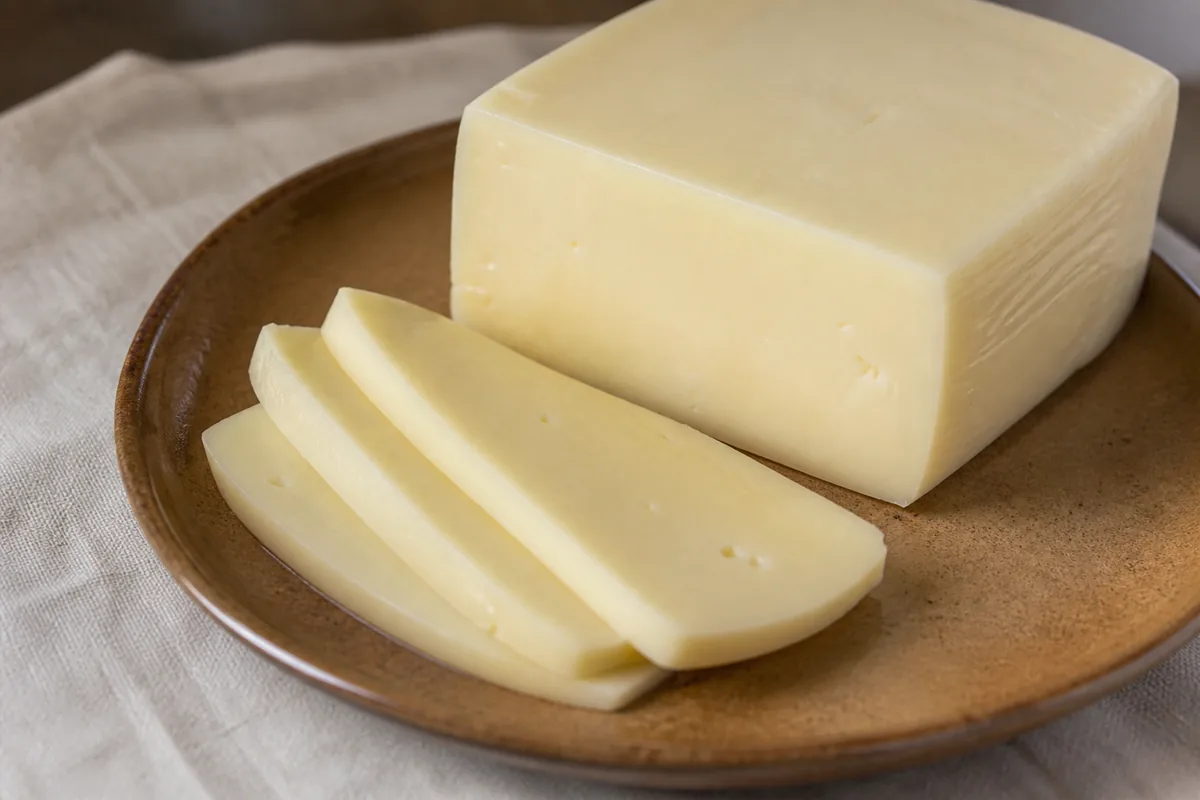
Fresh slices have a salty, milky, slightly tangy flavor with a distinctive squeaky texture that many people find unlike anything else they have eaten. The squeak comes from the protein strands rubbing against tooth enamel, the same phenomenon you feel in fresh cheese curds.
The saltiness level of halloumi is significant. It is preserved and sold in brine, and the salt is distributed throughout the paste, not just on the surface.
This salt level is part of the flavor profile but can be reduced by soaking in water before cooking.
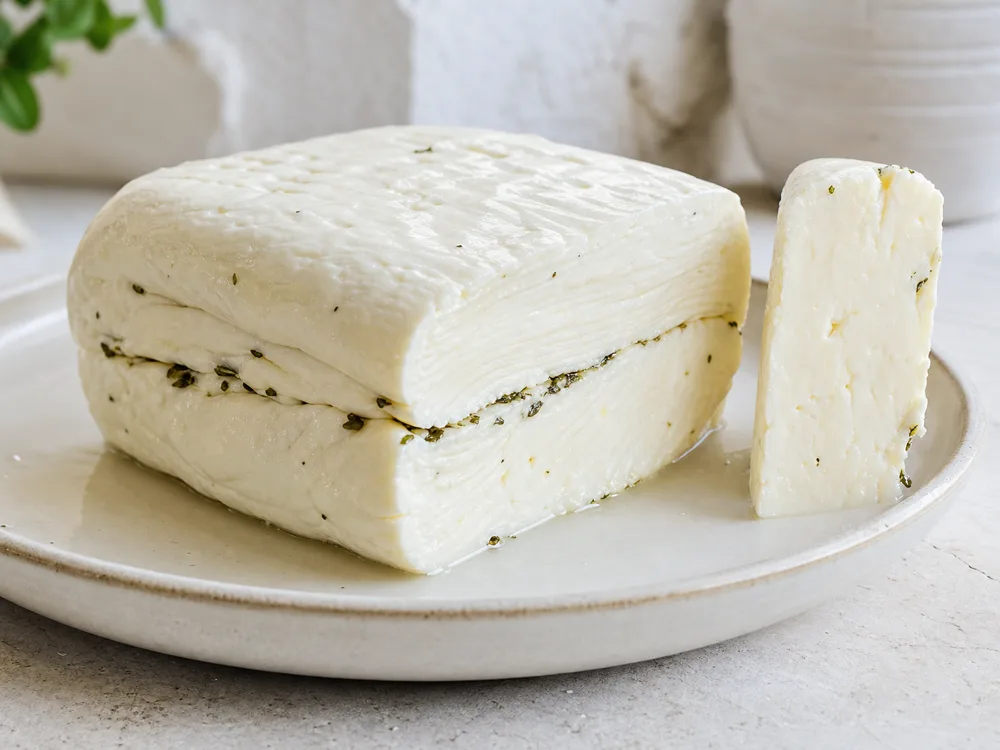
This describes traditional sheep-goat halloumi. It is among the saltiest cheeses you can buy, because it is stored in brine and eaten young.
Cow's milk commercial halloumi is less salty and less savory, with a creamier texture. Cooked halloumi also develops a mild caramelized sweetness from Maillard browning that raw halloumi never shows.
The texture transforms dramatically with heat. Raw halloumi is springy and squeaky.
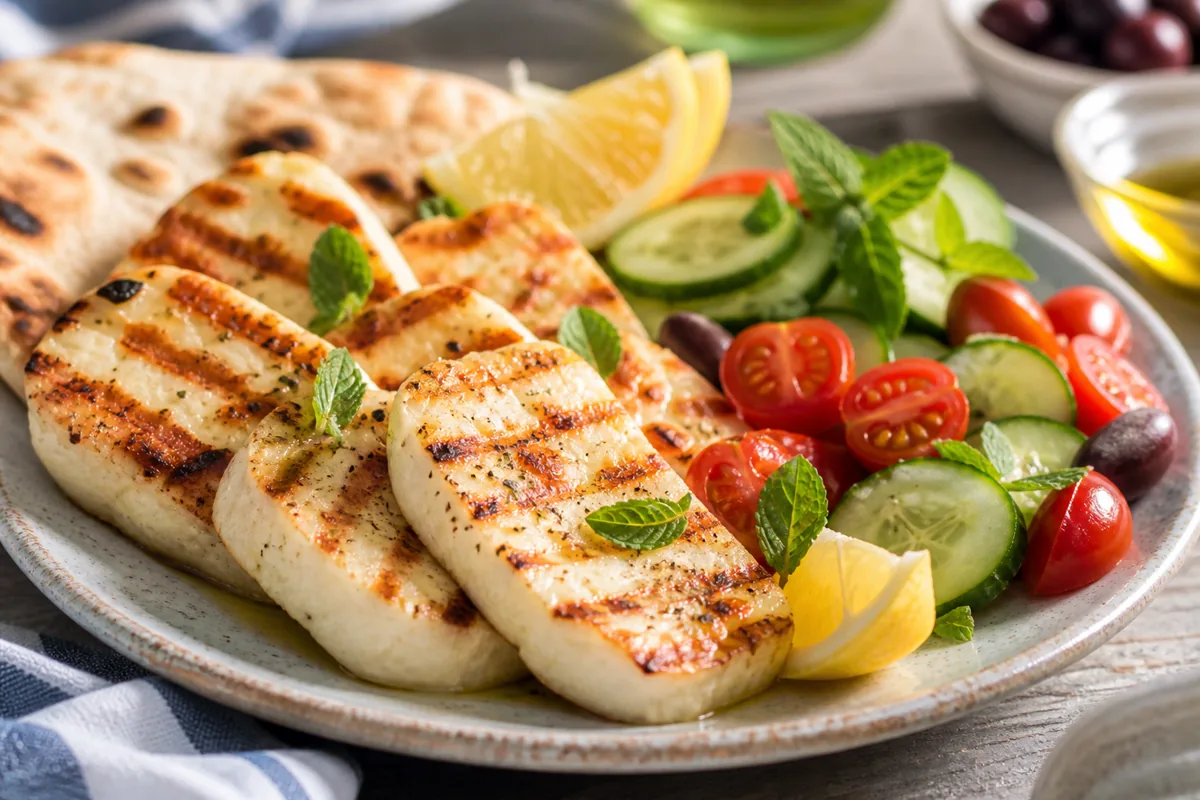
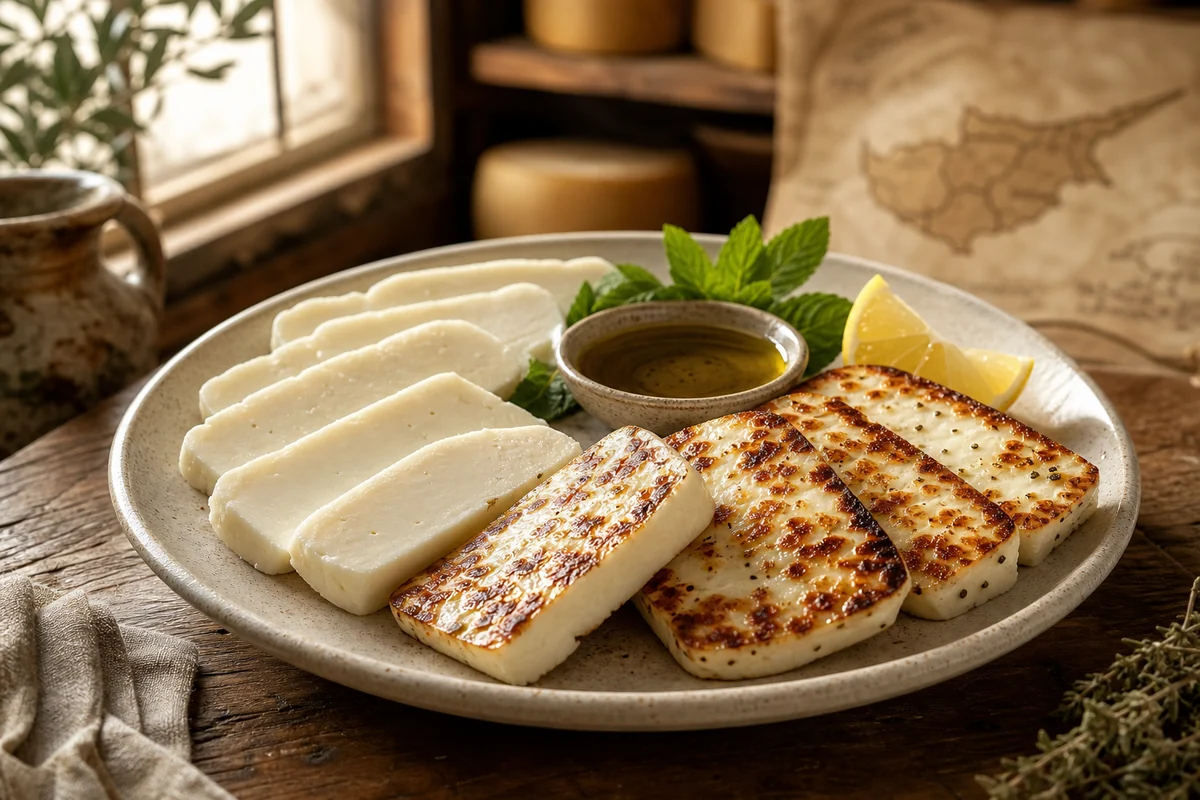
Grilled or pan-fried halloumi develops a golden, slightly crispy exterior and a softer, chewier interior. The browned exterior has subtle caramelized notes that the fresh cheese lacks entirely.
- Fresh (uncooked): salty, milky, springy, squeaky, layered paste, assertive brine
- Grilled or pan-fried: golden exterior, softer chewier interior, mild caramelized sweetness from browning
- Traditional sheep-goat: richer, slightly gamier, more complex than commercial cow's milk versions
- Aged halloumi (3 months): firmer, drier, saltier, more crumbly -- a less common commercial product
Halloumi's squeaky texture is a sign of freshness. As the cheese ages or dries out, the protein structure changes and the squeak diminishes.
Very fresh halloumi squeaks noticeably when bitten.
Older or improperly stored halloumi squeaks less. For maximum texture, cook halloumi within a few days of purchase.
Why Doesn't Halloumi Melt?
The non-melting behavior comes from production, not luck. The cheese curd is cooked in hot whey at temperatures close to boiling (90-95 C) before pressing, which crosslinks the proteins in a way normal cheese production does not achieve.
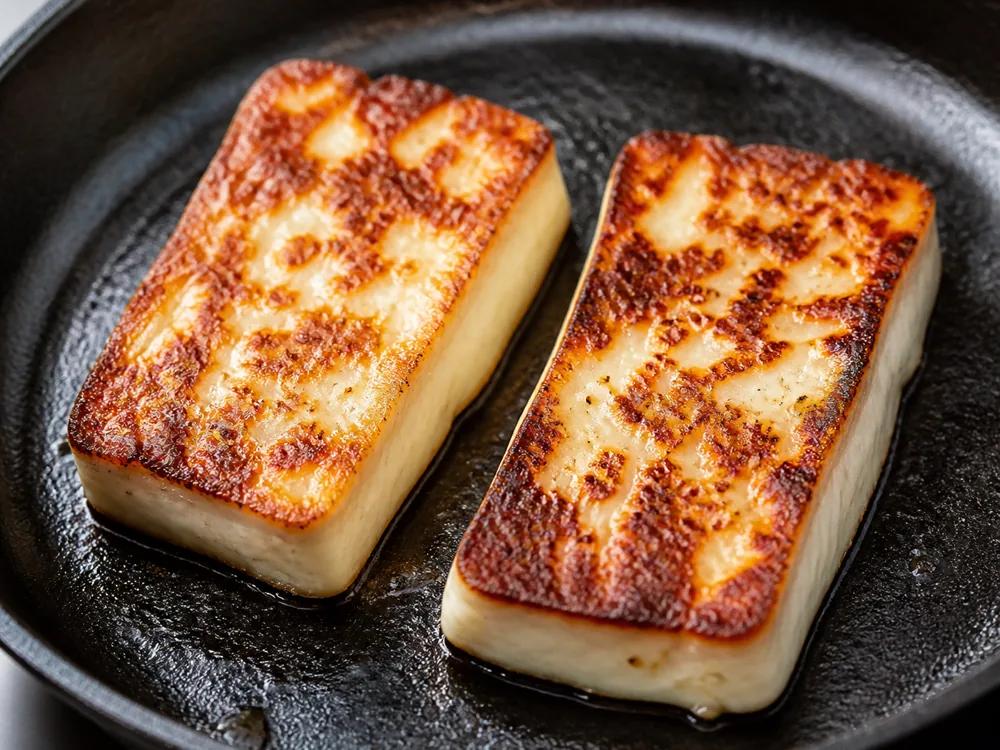
When you heat most cheeses above their melting point, the protein network softens and flows. In halloumi, the heat-denatured proteins form a more stable matrix that holds its shape even at direct grill temperatures above 200 C (390 F), unlike stretchy mozzarella curd.
The same crosslinking explains what goes wrong at the other end. A slice left on the heat past browning keeps driving out water while the protein matrix tightens, so an overcooked piece turns rubbery instead of slumping.
Holding its shape is not the same as being heatproof. The surface browns on a schedule, and past that point the interior dries, which makes two to three minutes a side a real limit rather than a loose suggestion.
Halloumi is designed not to melt. Its flavor is salty, milky, and slightly gamey, far more assertive than mild American cheeses.
Availability at 75 reflects its growing presence in UK and US specialty grocery stores following the PDO registration and global popularity growth.
- Grill on high heat -- halloumi needs direct high heat to develop proper browning; low heat steams it instead
- Dry the surface first -- pat dry before grilling to prevent steam that slows browning
- Cook 2-3 minutes per side -- enough to develop golden color without drying out the interior completely
- Serve immediately -- cooked halloumi firms and becomes rubbery as it cools; eat hot or warm
How Do You Cook Halloumi?
Direct heat is the main reason to buy halloumi. Grilling, pan-frying, broiling, and baking all produce the characteristic golden exterior without the cheese losing its shape.
- Use thick slices when halloumi is the center of the plate.
- Use cubes for skewers, bowls, and warm salads where browning matters.
- Use a quick soak when the package tastes too salty for the dish.
- Use heat-stable replacement only when the replacement can survive direct heat.
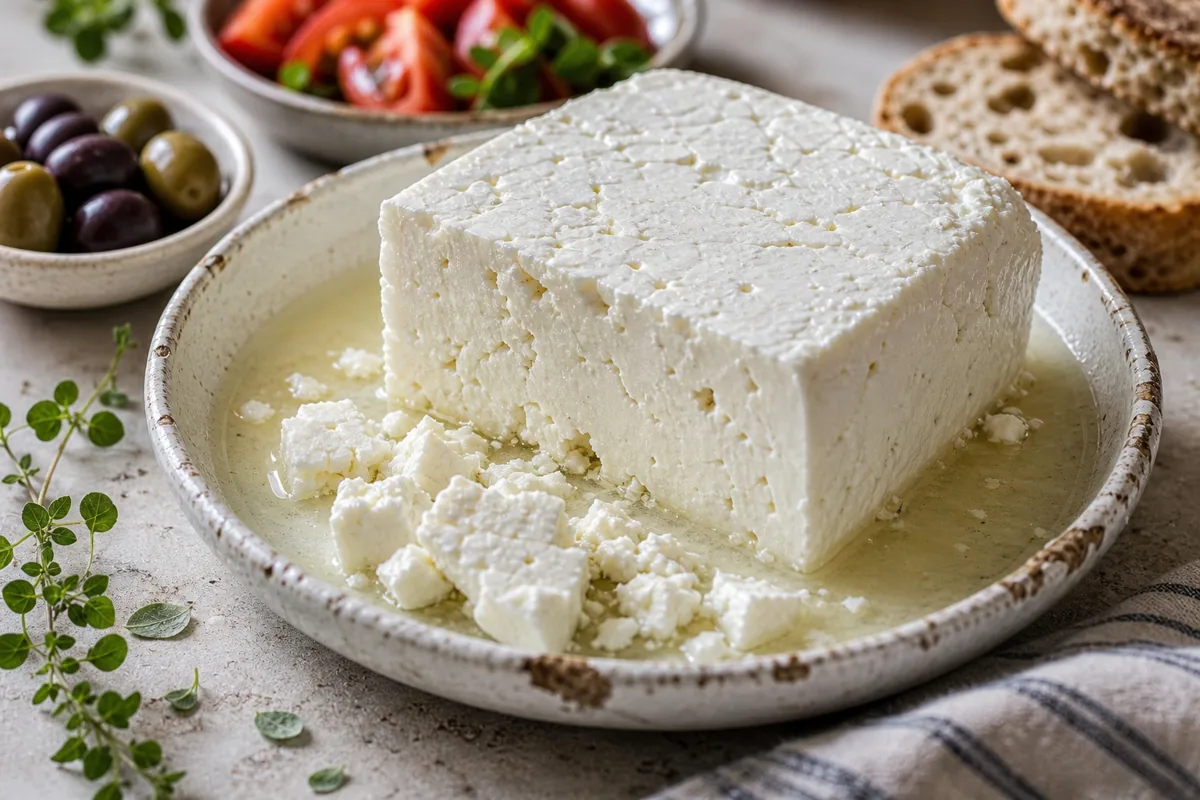
In vegetarian cooking, halloumi functions as a protein-rich meat substitute in dishes where you want something with texture, substance, and the ability to char and brown under heat. For a softer brined contrast, crumbly Greek feta brings salt without the same grill structure.
| Use | How It Works |
|---|---|
| Grilled Halloumi | The primary application. Slice 1cm thick, dry with paper towel, grill on high heat for 2-3 minutes per side until golden. Serve immediately with lemon juice. Do not let it cool on the plate; it firms and toughens quickly after heat is removed. |
| Pan-Fried with Honey and Thyme | The most popular preparation in UK restaurants. Pan-fry in a dry non-stick pan (no oil needed -- halloumi has enough fat) until golden. Drizzle with honey and fresh thyme leaves. The sweet-salty-herbal combination is balanced and complete. |
| Halloumi Burger (Vegetarian) | A thick slab of grilled halloumi as the protein in a burger bun. Holds its shape under heat and has enough substance to satisfy as a meatless main. Standard at UK gastropubs and increasingly common in US restaurants. |
| Salads (Grilled or Fresh) | Cubed fresh halloumi in a salad provides salty, squeaky contrast. Grilled slices over greens, tomato, and cucumber is the Cypriot village salad tradition. The salty cheese with fresh vegetables and olive oil requires no dressing beyond the halloumi brine. |
| Mezze and Appetizers | Grilled halloumi on a mezze platter alongside hummus, olives, and flatbread is a standard Eastern Mediterranean combination. Serve hot, cut into smaller pieces for sharing. The salty, chewy bites work as starters or shared plates. |
| Skewers and Kebabs | Cubed halloumi threaded onto skewers with vegetables and grilled. The cheese holds its shape on the skewer under grill heat. A common preparation in Cypriot and Lebanese cooking. Works on charcoal or gas grill. |
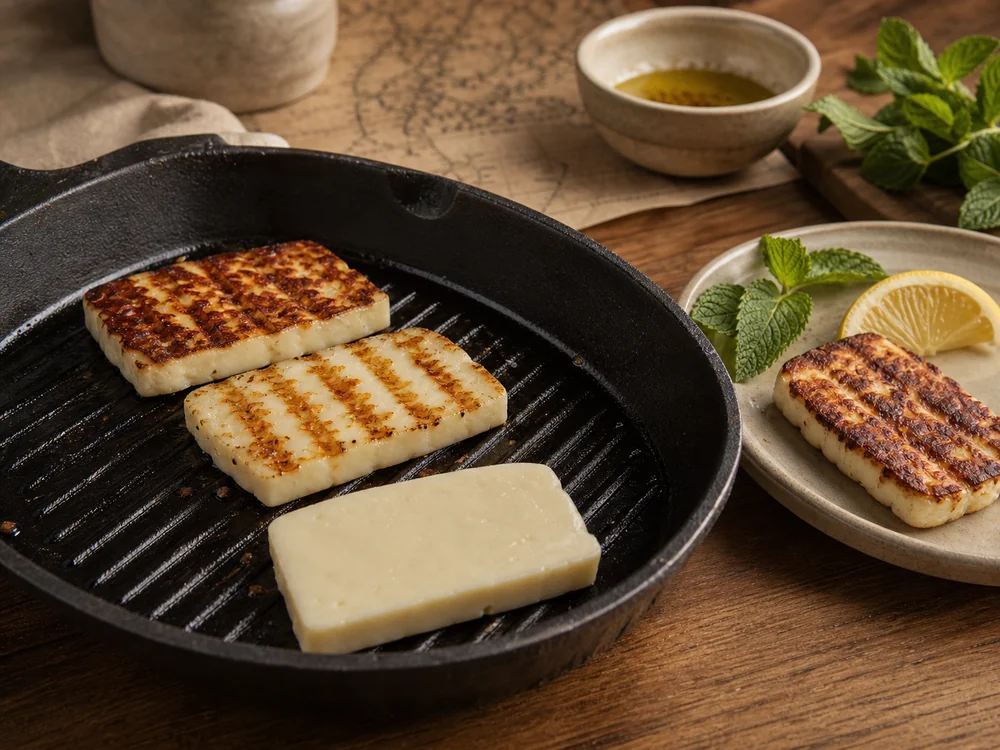
- Direct grilling -- the primary application, 2-3 minutes per side on high heat
- Pan-fried with honey and thyme -- the UK restaurant standard, sweet-salty balance
- Vegetarian burger patty -- holds shape under heat, substantial enough for a main
- Cypriot village salad -- fresh or grilled with tomato, cucumber, olive oil
- Mezze platter -- alongside hummus, olives, flatbread as a shared appetizer
Crowding the pan causes the other common failure. Slices packed edge to edge release enough water to pull the pan temperature down, and the cheese steams pale instead of browning.
Score a thick slab in a shallow crosshatch before it goes in. The cuts open more surface to the metal and give the browning something to grip on a piece too deep to color evenly.
Cook it last, after everything else on the plate is finished. The window between hot and rubbery runs a couple of minutes wide, so nothing else should be waiting on the halloumi.
One common mistake with halloumi is cooking it in oil. Halloumi has enough fat to self-baste in a dry pan.
Adding oil delays the browning by creating a steam layer between the cheese and the pan surface. Use a dry, preheated non-stick or cast iron pan for pan-frying.
To reduce halloumi's saltiness, soak slices in cold water for 30-60 minutes before cooking. This draws out a significant portion of the brine salt without affecting texture. Pat completely dry after soaking before cooking, otherwise the surface moisture will steam the cheese rather than letting it brown. Soaking is particularly useful if you are serving halloumi to guests who are watching sodium intake.
What Cuts Halloumi's Salt?
Salt sets the pairing rules. Pairing needs to account for both brine and the caramelized richness of cooked halloumi, because fresh halloumi and cooked halloumi are different targets.
The Eastern Mediterranean tradition of serving halloumi with fresh vegetables, citrus, and herbs is the most reliable pairing framework. These high-acid, bright-flavored partners balance the salt and fat.
| Pairing | Type | Why It Works |
|---|---|---|
| Dry Rose (Greek or Lebanese) | Wine | The best wine match for grilled halloumi. Greek Agiorgitiko or Lebanese dry rose has enough acidity to cut the salt and fat. The light fruit notes complement the caramelized exterior. Serve cold with hot halloumi for maximum contrast. |
| Assyrtiko (Santorini) | Wine | The most classic Eastern Mediterranean wine pairing. Assyrtiko's high acidity and mineral character cuts halloumi's salt and fat cleanly. The volcanic terroir notes of Santorini Assyrtiko align with halloumi's slightly smoky grilled character. |
| Cold Lager or Pilsner | Beer | The practical everyday pairing. Cold carbonated lager with grilled halloumi is the Cypriot beach restaurant standard. The carbonation and bitterness cut the salt and fat without competing with the cheese's flavor. |
| Watermelon | Food | The classic Cypriot pairing: cold watermelon with hot grilled halloumi. The contrast of sweet, cold, watery fruit against salty, hot, chewy cheese is one of the most effective textural and flavor contrasts in Mediterranean food. |
| Fresh Mint and Lemon | Food | Halloumi is traditionally packaged with dried mint between the layers. Fresh mint and a squeeze of lemon over grilled halloumi is the standard Cypriot finishing touch. The mint lifts the flavor; the lemon acid cuts the salt. |
| Tomato and Cucumber | Food | The simplest and most effective vegetable pairing. Fresh tomato and cucumber with halloumi in a bowl or on a plate, dressed only with olive oil and lemon. This is village food in Cyprus and the purest expression of the cheese. |
- Dry Greek or Lebanese rose -- acid cuts salt and fat, regional connection
- Assyrtiko -- mineral high-acid white from Santorini, the most classic pairing
- Watermelon -- cold sweet fruit against hot salty cheese, the Cypriot standard
- Fresh mint and lemon -- the traditional finishing touch, lifts and brightens
- Tomato and cucumber -- the simplest village salad combination
Acid does more of this work than sweetness. Lemon over a hot slice cuts the brine and the fat together, while a sweet partner covers the salt and leaves the richness sitting where it was.
Position on the menu matters as much as the pairing. Halloumi flattens whatever mild thing is eaten straight after it, so a hot salty plate belongs early rather than halfway through a board.
For wine with a halloumi-based vegetarian meal, treat halloumi's salt level as you would treat a cured meat. High-acid, medium-body whites work best, especially with the Eastern Mediterranean flavors that often sit beside brined cheeses.
How Do You Store Opened Halloumi?
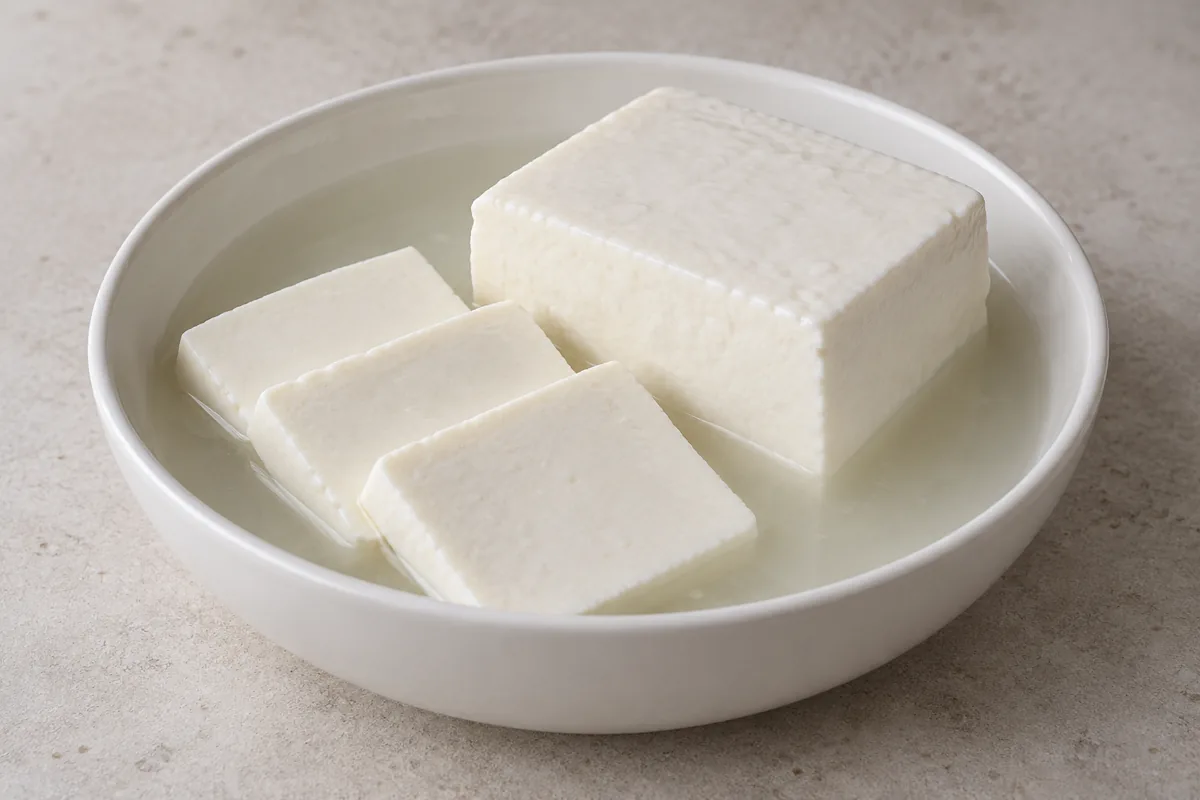
Brine gives the cheese a much longer shelf life than fresh unbrined cheeses like mascarpone. The brine is not just packaging.
It is an active preservation medium that maintains moisture and prevents spoilage.
- Keep the brine if you will use the rest of the pack within a few days.
- Add fresh salted water only when the original brine is cloudy or spilled.
- Dry the surface before cooking so browning starts before the center toughens.
- Store away from mild cheeses because brine aroma can travel in a shared container.
Halloumi sold in vacuum packaging without brine has a shorter shelf life after opening than traditionally brine-packed halloumi.
Cut only what you are about to cook. Every new face gives the brine another surface to soften, and a block kept whole in its liquid holds the squeak longer than the same block sliced in advance.
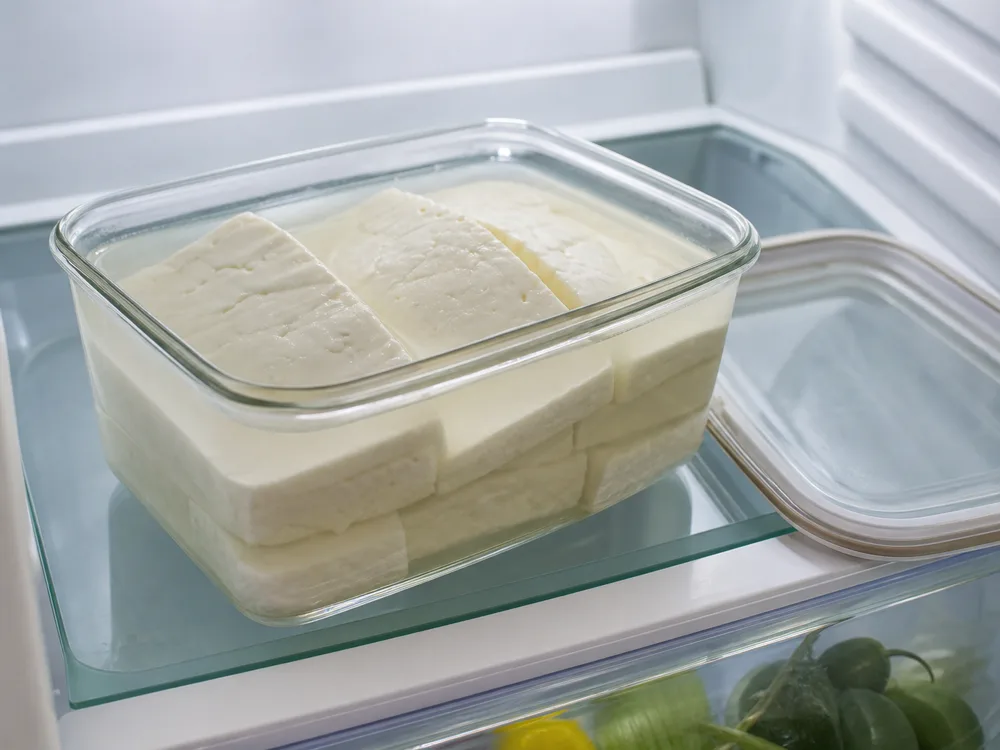
- Keep in brine after opening -- submerge remaining halloumi in the original brine to maintain moisture
- Make a fresh brine if needed -- 1 teaspoon of salt per cup of cold water maintains the right concentration
- Refrigerate consistently at 35-40 F -- temperature swings cause the paste to dry unevenly
- Freeze for long storage -- halloumi freezes better than most cheeses due to its firm, low-moisture paste
The mint leaves traditionally packed with halloumi are not decorative. They have mild antimicrobial properties and contribute to the characteristic halloumi flavor absorbed through the brine during storage.
Remove them before cooking if you want a cleaner flavor, or leave them on during pan-frying for a subtle herbal note.
Do not store opened halloumi in plain water. Plain water draws out the salt from the brine and into the water, progressively desalinating the cheese. The result is a bland, overly soft halloumi that tastes nothing like the original. Always store in salted brine. If you have discarded the original brine, make a fresh solution of 1 teaspoon salt per cup of water.
Brined cheese storage changes once the package is opened, especially when vacuum-sealed halloumi loses its original liquid barrier.
Does Halloumi's PDO Mark Matter?
Availability is no longer the hard part in many U.S. cities. Supermarkets, specialty grocery stores, and Middle Eastern markets increasingly carry it, and quality varies with the milk composition.
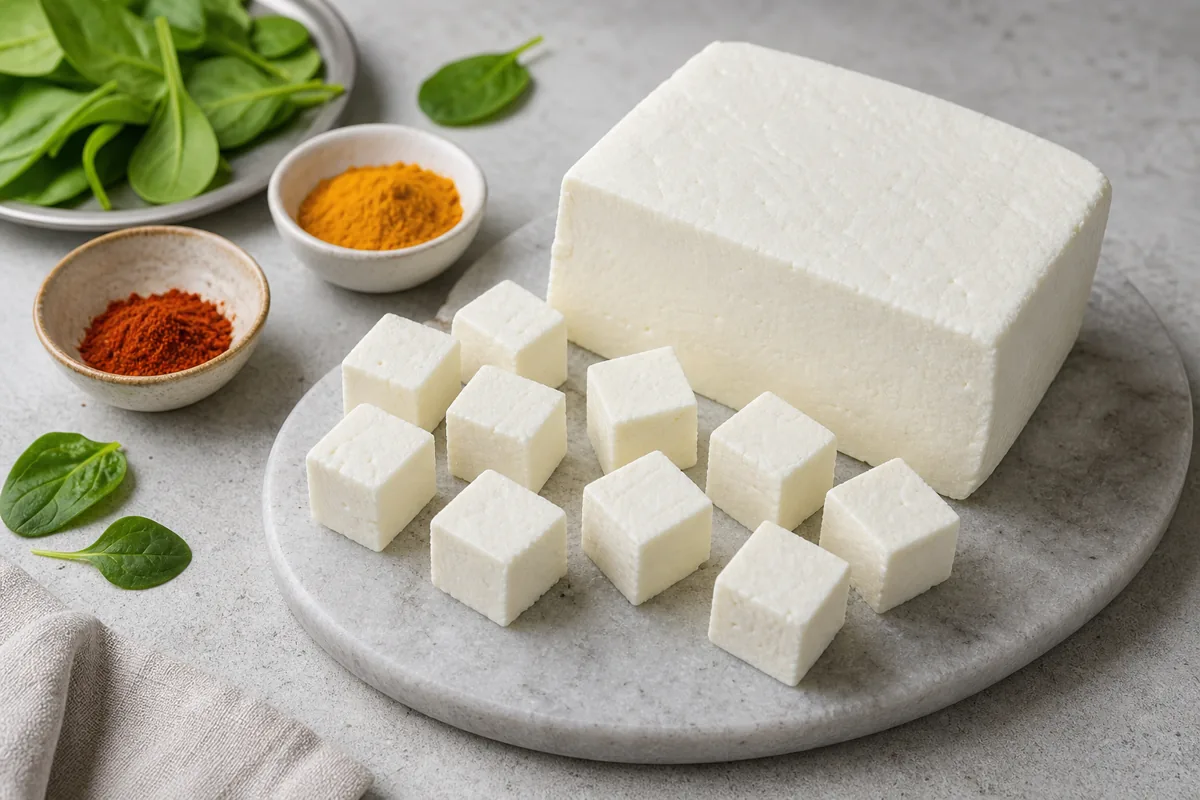
Traditional sheep-and-goat halloumi from Cyprus is the most flavorful and the authentic PDO product. Cow's milk versions are milder and more widely available, closer in shopper role to heat-stable paneer than to aged table cheese.
The mark changes what you can count on, not only what the pack says. A Cypriot PDO block is made to one set of milk and method rules every time, while a generic grilling cheese is only as consistent as its own producer decides to be.
Price is a weak signal on this shelf. The milk line on the back of the pack is the read that actually separates a traditional block from a commercial one.
How Salty Is Halloumi?
Sodium is the number that changes the serving size. Fat and protein are comparable to other semi-hard cheeses, but brine preservation is the primary nutritional consideration for people monitoring dietary salt.
- Moderate calories -- 90 per ounce, lower than most hard cheeses due to higher moisture
The same soak used for brined-cheese salt balance can reduce halloumi's surface salt before cooking.
Portion is the lever most people reach for last. A grilled slice eats as a serving in its own right rather than as a garnish, so the number of slices on the plate moves the sodium further than the brand does.
Nutritional data from the USDA FoodData Central database for halloumi. Values vary between traditional sheep-goat and commercial cow's milk versions.
Halloumi is unlike any other widely available cheese because no other cheese holds its shape on a grill. The PDO status from 2021 is a signal to look for Cypriot origin on the label. Traditional sheep-goat halloumi has meaningfully more flavor than cow's milk versions. Cook it hot, serve it immediately, store it in brine, and soak it first if sodium is a concern. It earns its place in any kitchen as the only true grilling cheese.
SOURCES & REFERENCES
Should You Know Anything Else About Halloumi?
The most common questions about halloumi, from why it does not melt to how to cook and store it correctly.
Halloumi's non-melting property comes from its production method. After cutting the curd, the pieces are cooked in hot whey at temperatures close to boiling, around 90-95 degrees C. This step denatures and crosslinks the proteins in a way that raises the effective melting point significantly above normal cooking temperatures.
The result is a cheese that holds its shape even on a direct grill at over 200 degrees C. Most other cheeses are not heated this way during production, which is why no other commonly available cheese behaves the same way.
For the best result, slice halloumi to about 1cm thick and pat the surface completely dry with paper towel. Heat a non-stick or cast iron pan on medium-high with no oil.
Place the halloumi in the dry pan and cook for 2-3 minutes per side until golden brown. Serve immediately.
The browning comes from Maillard reaction, and the cheese firms and toughens as it cools. The same approach works on a grill with high heat, a dry surface, and 2-3 minutes per side, while oil in the pan creates steam that slows browning.
Fresh halloumi tastes salty, milky, and slightly tangy with a distinctive squeaky texture from the protein strands. Traditional sheep-and-goat halloumi has a richer, slightly gamier flavor than the milder cow's milk commercial versions.
Cooked halloumi develops a caramelized exterior and a softer, chewier interior with subtle sweetness from the Maillard browning. The salt level is high by cheese standards -- a soak in cold water for 30-60 minutes reduces this if needed.
Unopened commercial halloumi in brine lasts up to a year in the refrigerator at 35-40 degrees F. After opening, store remaining halloumi submerged in the original brine or a fresh 5% salt solution (1 teaspoon per cup of water) in a sealed container. It keeps for 2-3 weeks this way.
Never store opened halloumi in plain water, which draws out the salt and destroys the texture and flavor within a day.
No. Both cheeses come from the Eastern Mediterranean and use sheep and goat milk, but they are completely different products. Feta is a soft, crumbly, brined white cheese from Greece made with curdled milk.
It crumbles and melts easily under heat. Halloumi is a firm, semi-hard cheese from Cyprus made by cooking the curd in hot whey.
Halloumi holds its shape under heat, so the two are not interchangeable. Feta is for salads, dips, and crumbling, while halloumi is for grilling, frying, and skewers.