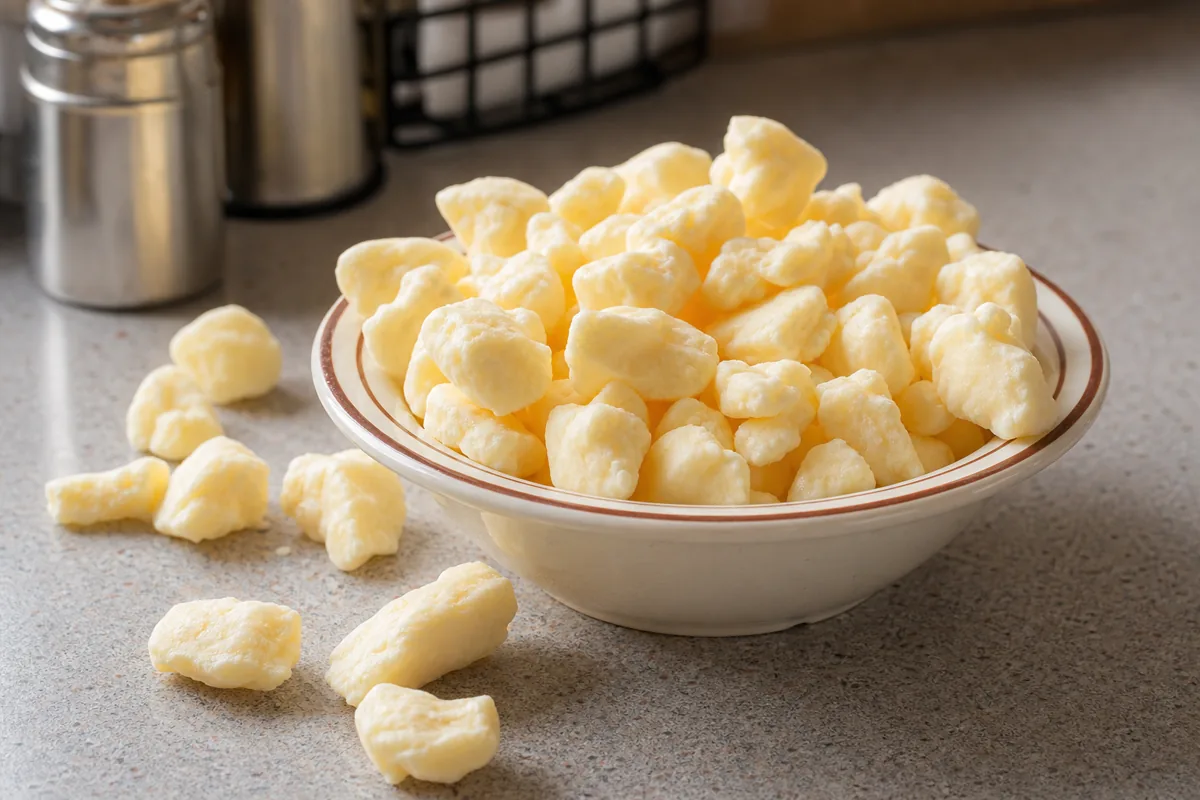
Cheese curds are young, salted pieces of curd sold before they become a pressed, aged wheel.
Fresh curds can squeak against your teeth because their protein network is still elastic. That squeak is a freshness cue, but it is not a safety test or a universal expiration clock.
Traditional Wisconsin-style curds usually come from the cheddaring process. The Wisconsin Center for Dairy Research also describes Brick, curds based on Muenster, and Monterey Jack styles, so two bags labelled cheese curds can differ in make, moisture, seasoning, and shelf life.
The package decides shelf life.
In This Article
What Cheese Curds Are
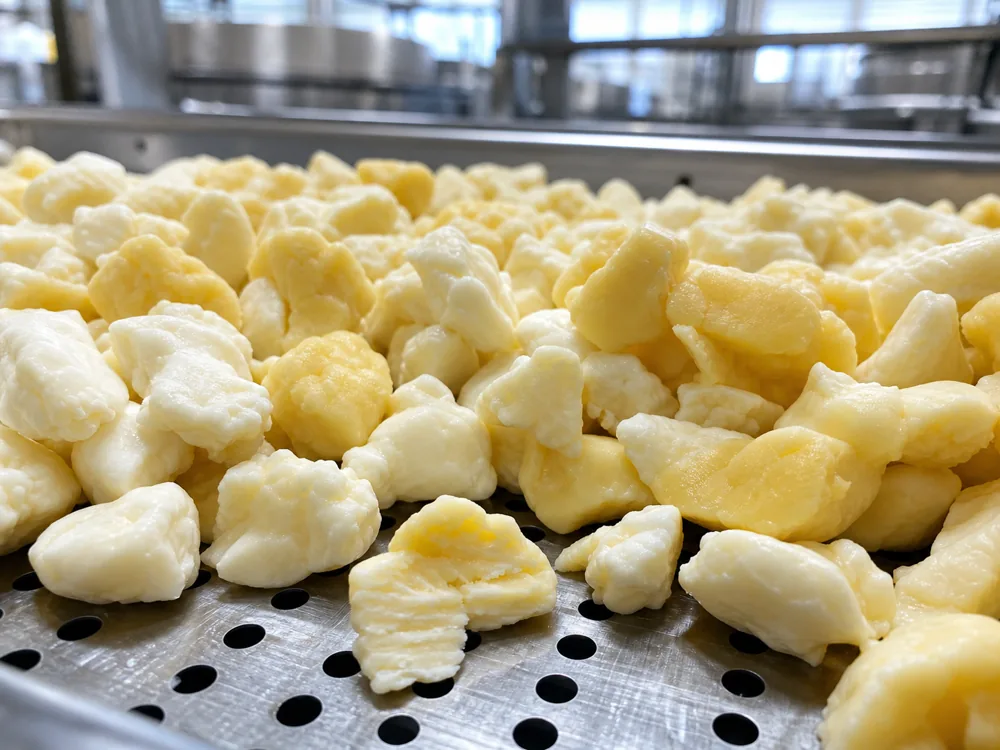
In a traditional cheddar make, cultured milk is set with rennet, cut, cooked, drained, and formed into slabs. The slabs are stacked and turned during cheddaring, then milled into small pieces and salted before pressing.
Because cheese curds stop before final pressing and aging, they remain irregular pieces with a moist surface and springy bite rather than the compact texture of a mature pressed cheddar wheel. Read the exact ingredient list when milk treatment, color, enzymes, flavoring, or an allergen matters.
Why the Squeak Fades
The Center for Dairy Research explains that the fresh protein network resists your bite, compresses, then springs back. That movement creates the vibration heard and felt as a squeak.
As the curds age, changes in calcium balance and protein structure reduce that resistance.
A quiet curd can be older or simply handled differently. A loud squeak cannot prove that a product stayed cold or remains within its date.
Controlled dairy research found that brief warming restored some squeak in the tested curds. It does not support one microwave time for every portion because age, package, portion size, starting temperature, and appliance power all change the result.
How Is Freshness Different from Shelf Life?
Competition curds described by the Center for Dairy Research are generally made within a day or two. That narrow window describes peak sensory quality in that setting, not a legal limit for every sealed retail bag.
Ellsworth Cooperative Creamery states that its sealed Natural Cheddar Curds have a tested refrigerated shelf life of nine months. That claim belongs to its product and packaging, and it does not establish how long any opened bag or deli-packed curd will keep.
Use the printed date, storage temperature, seal condition, and after-opening directions on the exact product. Do not replace them with a same-day rule based on squeak or a long unopened shelf life borrowed from another brand.
Should You Snack, Fry, or Use Curds for Poutine?
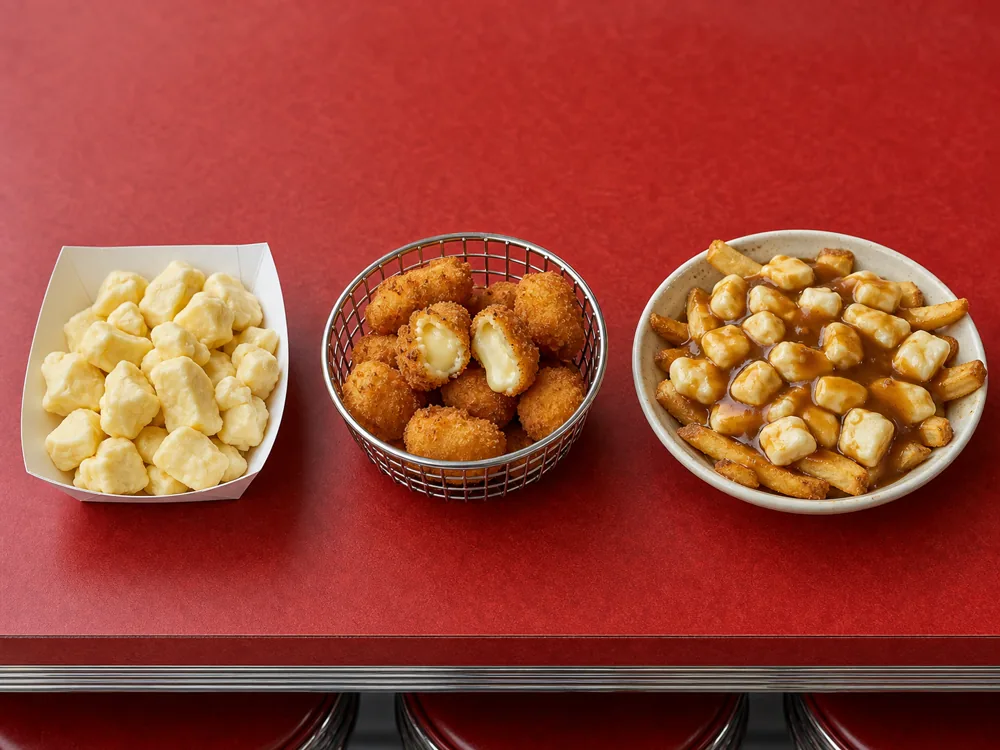
Choose plain curds for snacking when you want to judge their salt, moisture, and texture directly. Flavored curds add seasoning, so their ingredient and allergen lists can differ from the plain version.
Frying gives the pieces a crisp coating while the center softens. For poutine, curds are useful because the irregular pieces sit between fries and hot gravy instead of disappearing like finely shredded cheese.
Heat changes texture and can mute the fresh squeak. Buy for the dish you plan to make rather than treating the loudest curd as the only acceptable one.
What Should You Check on the Cheese Curd Package?
A package is the authority for ingredients, milk treatment, serving size, nutrition, allergens, date, and storage directions. The current Ellsworth Natural Cheddar Curds page gives these values for its exact 28 g serving:
| Label item | Per 28 g serving |
|---|---|
| Energy | 110 calories |
| Total fat | 8 g |
| Saturated fat | 5 g |
| Sodium | 220 mg |
| Total carbohydrate | 1 g |
| Protein | 6 g |
| Calcium | 190 mg |
Its ingredient list names pasteurized milk, cheese culture, salt, microbial enzymes, and natamycin. Other curds may use different milk, enzymes, colors, seasonings, preservatives, or serving sizes.
How Should You Keep Cheese Curds Cold?
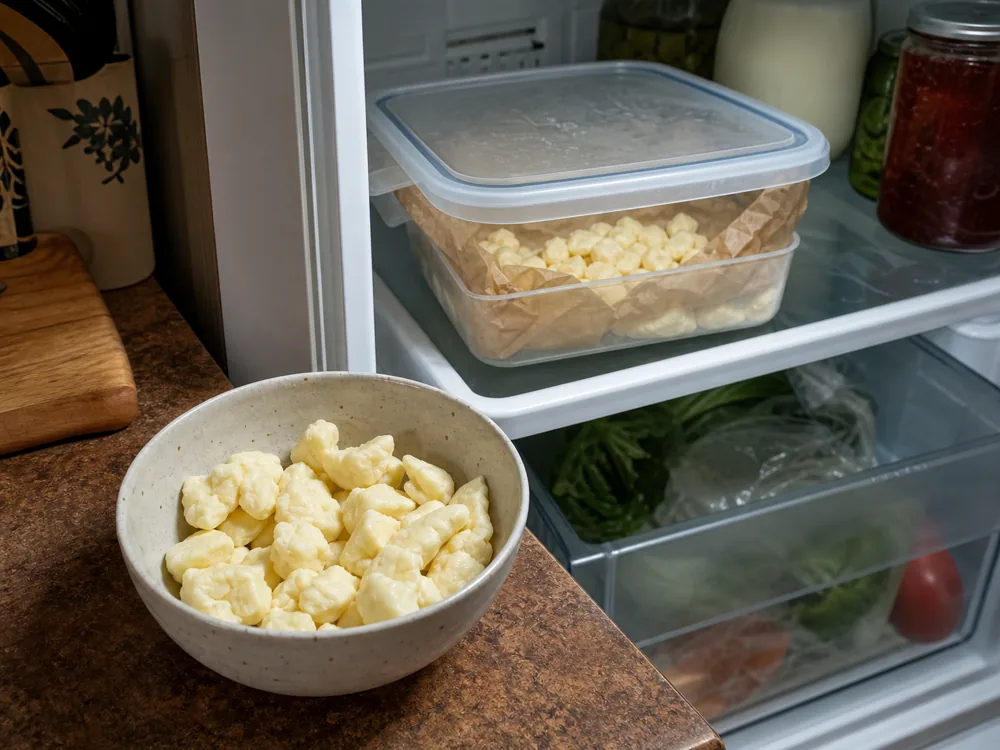
Health Canada advises keeping the refrigerator at 4 degrees C or lower. FoodSafety.gov likewise says to keep cheese and other perishable snacks at 40 degrees F or below.
Do not leave perishable food out for more than two hours, or more than one hour when the temperature is above 90 degrees F. Return the unused curds to refrigeration promptly and follow the package date and after-opening directions.
No universal opened-life or freezing instruction was found in the current records reviewed here. Cold handling follows the same wrapping and refrigeration rules that apply to opened cheese, but the exact package remains the product-specific authority.
Can You Eat Cheese Curds During Pregnancy?
Health Canada explicitly lists cheese curds made from pasteurized milk among the safer alternatives for pregnant people. The package must still confirm pasteurization, and the curds must be kept within the stated temperature, date, and handling directions.
Current U.S. CDC pregnancy guidance does not name cheese curds as a category. It identifies unpasteurized milk and cheese as riskier and gives separate examples for hard, soft, sliced, and fresh cheeses, so the name curd alone does not show which row applies to a specific product.
Check the exact package and current guidance for the country where the curds will be eaten. Our overview of milk treatment and handling rules explains why cheese type and heat need separate checks.
SOURCES & REFERENCES
What Else Do People Ask About Cheese Curds?
A fresh curd's elastic protein network resists, compresses, and rebounds against the teeth. That movement creates the vibration heard and felt as a squeak.
No. Squeak is a texture and freshness cue, not a safety test. Use the package date, storage directions, seal condition, and time outside refrigeration.
No. Traditional Wisconsin-style curds usually come from cheddaring, but the Center for Dairy Research also describes curds made from Brick, Muenster, and Monterey Jack-style cheese.
No universal opened-life count was found in the current records reviewed here. Follow the exact package or seller direction and use the earliest applicable date.
Health Canada explicitly lists pasteurized cheese curds as a safer alternative. Current U.S. CDC guidance does not name curds, so check the exact product and follow the guidance for the country where they will be eaten.