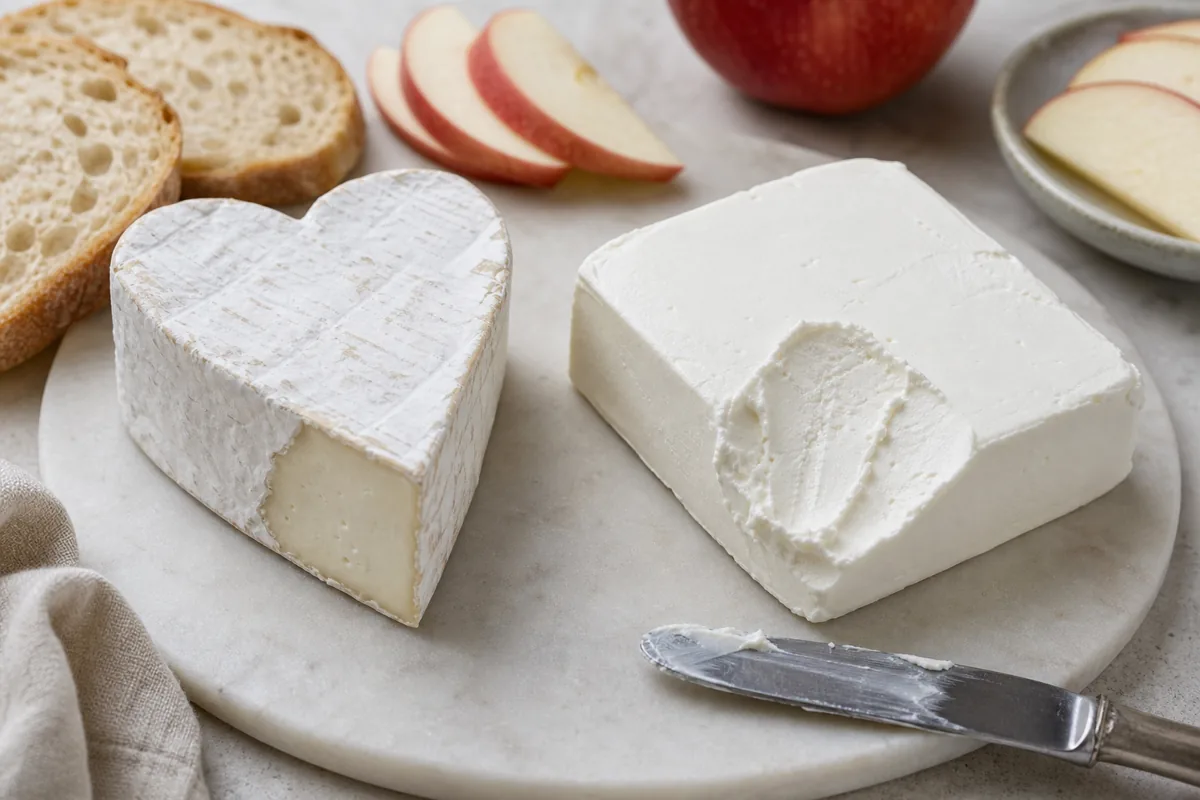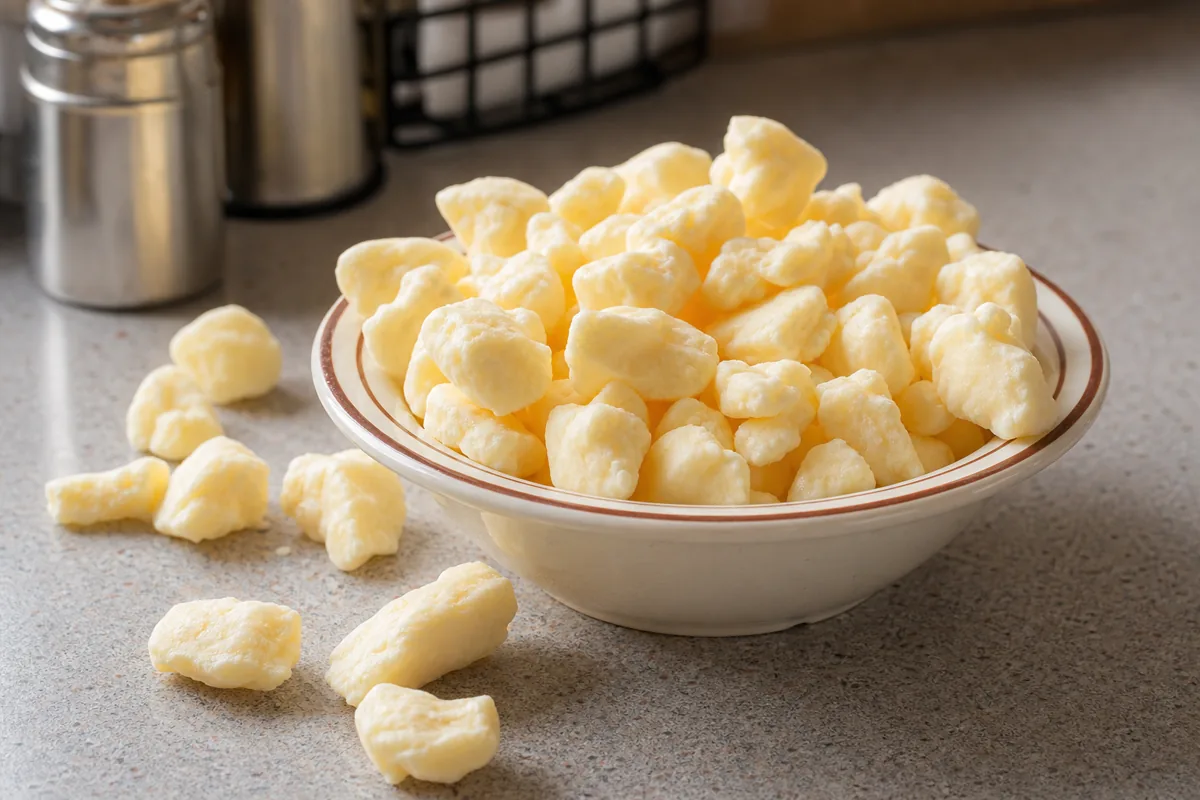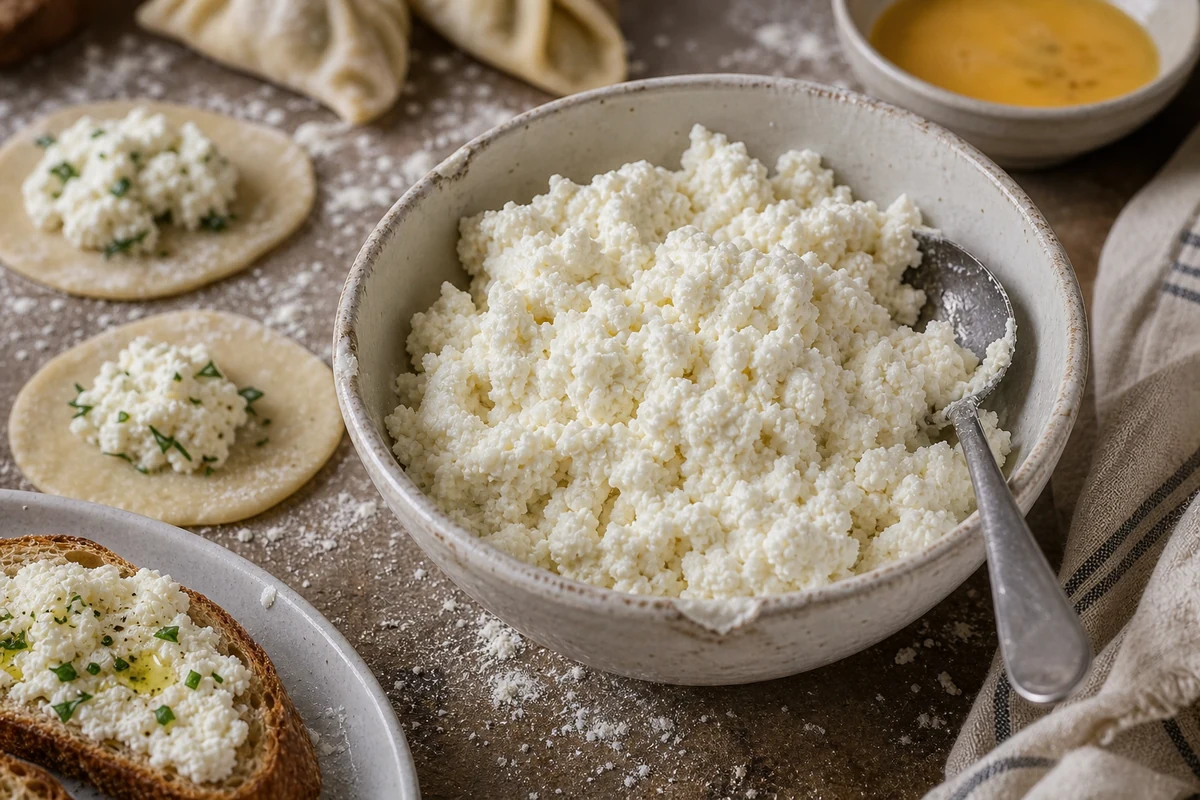
Farmer cheese is a fresh dairy name, not a promise of one texture.
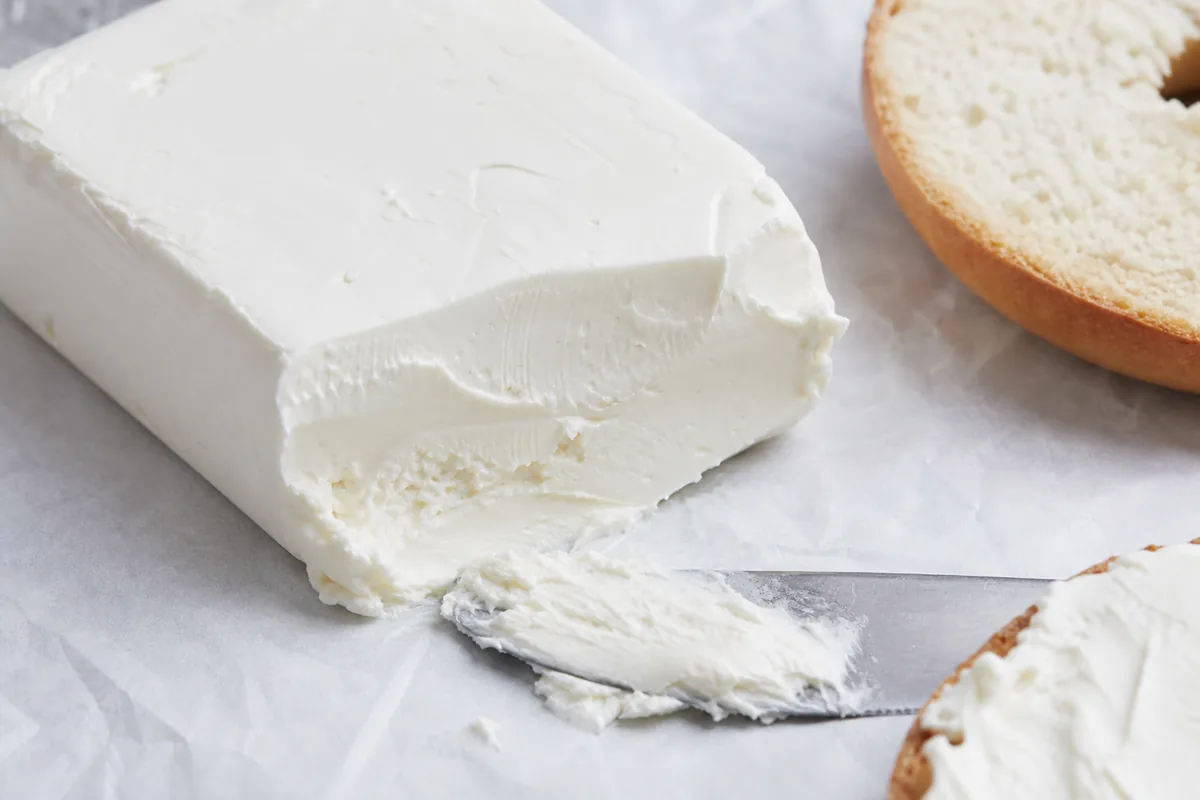
One package may hold pressed curd that slices and keeps a blintz filling firm. Another may contain a smooth cultured spread closer to blended cottage cheese.
Read the ingredients, texture description, nutrition panel, date, and storage directions before choosing it for a recipe.
In This Article
What Farmer Cheese Means
In U.S. shops, farmer cheese can refer to a drained or pressed cultured curd, but the words on the front do not establish one formula.
The current Friendship food-service block is pressed until almost all liquid is removed and is dry enough to slice. Current Lifeway Farmer Cheese is a soft cultured cheese made from pasteurized reduced-fat milk and sold in a 16-ounce tub.
The federal standard for dry curd cottage cheese provides a useful reference for drained curd. It sets a maximum of 80 percent moisture and less than 0.5 percent milkfat for that named standardized food, but it does not turn every product labeled farmer cheese into dry curd cottage cheese.
This boundary matters when a recipe, nutrition claim, or storage answer depends on the product. The exact label owns those facts.
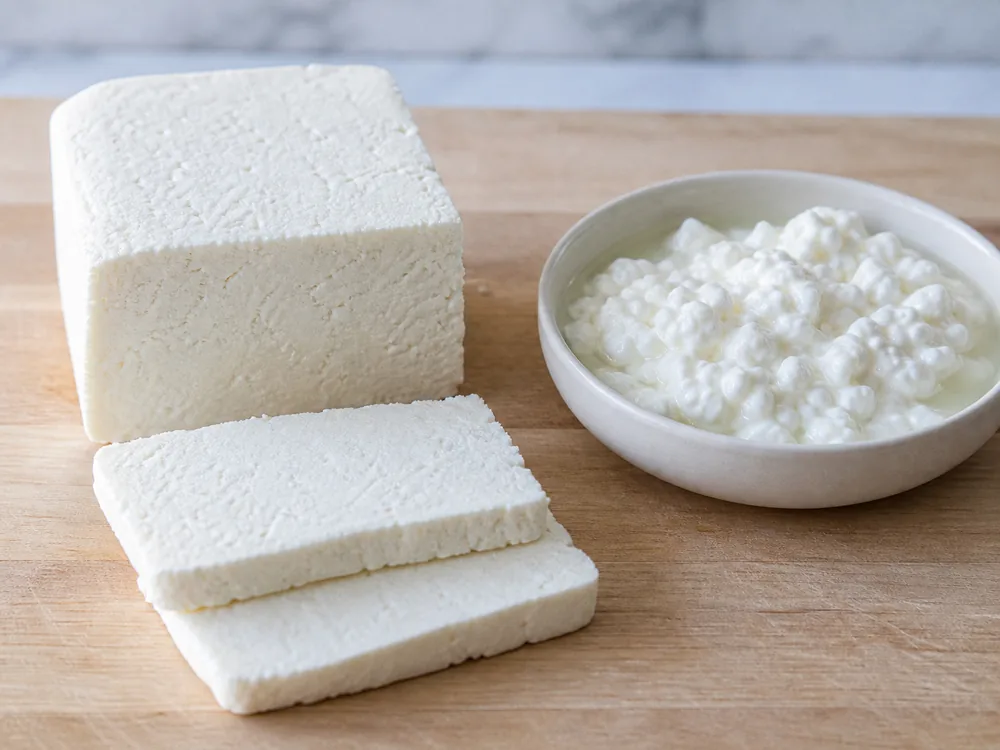
How Do Two Farmer Cheese Products Differ in Texture?
| Exact current product | Form and ingredients | Facts that belong only to that product |
|---|---|---|
| Friendship Farmers Cheese Block, food service | Sliceable pressed block made with cultured low-fat milk and salt | The producer describes 0.5 percent lactose per serving and a 12 by 1-pound case format |
| Lifeway Farmer Cheese, 16-ounce tub | Smooth cultured soft cheese made with pasteurized 2 percent reduced-fat milk and live cultures | The current label gives 15 grams protein per ½ cup and no added salt or sugar |
These products can share a name while behaving differently.
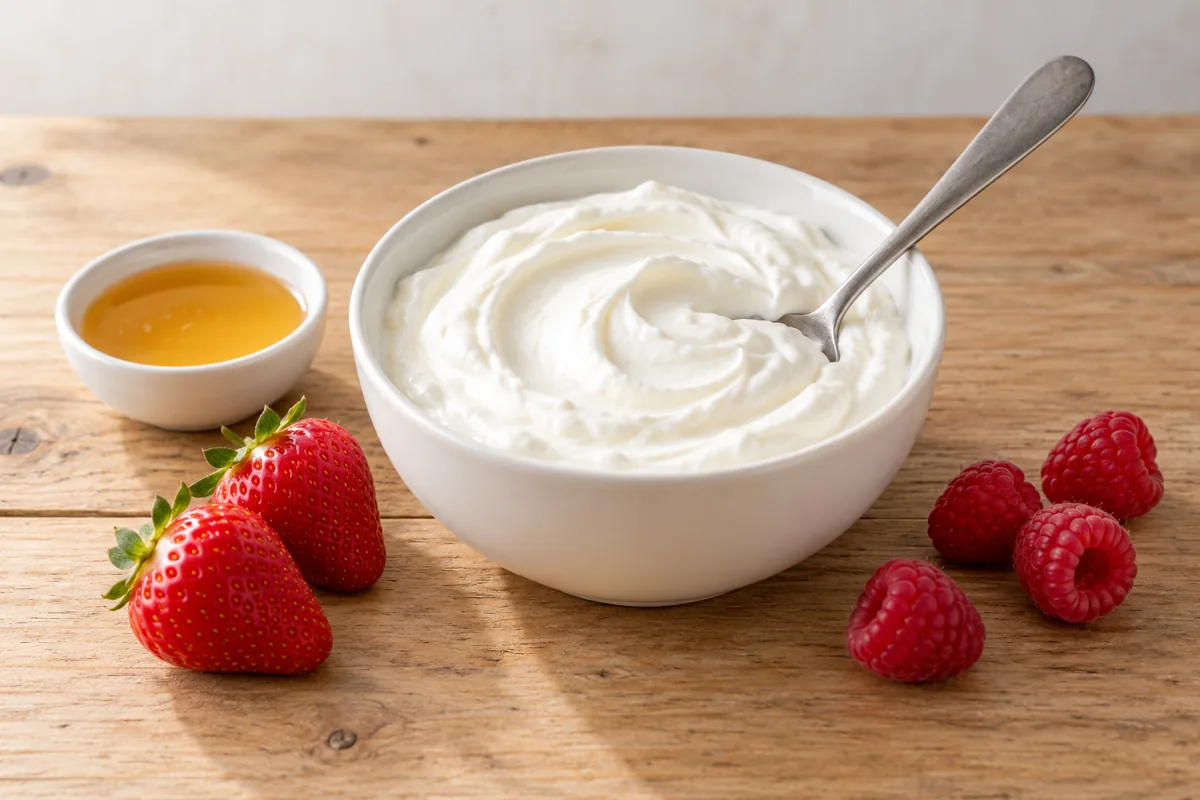
The block can be sliced or crumbled. The tub is designed to spread and may add more moisture to dough or batter.
Nutrition also changes with the formula and serving size. Use one product's panel only when discussing that exact product.
Which Farmer Cheese Texture Fits Your Recipe?
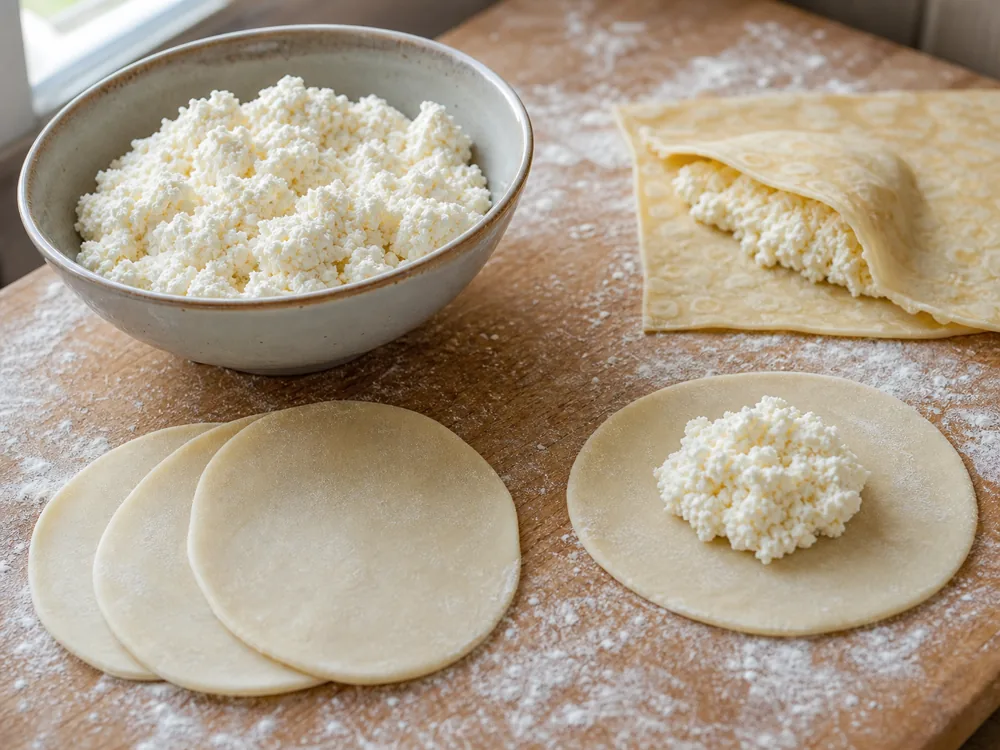
For blintzes, pierogi, stuffed pasta, or a baked filling, choose a curd that mounds on a spoon and leaves no ring of whey in the bowl. A sliceable block usually reaches that texture with less draining than a soft tub.
For toast, dips, dressings, or a cold spread, a smooth cultured farmer cheese can work straight from the package. Taste before adding salt because the Friendship block includes salt while the current Lifeway product does not.
When a recipe only says farmer cheese, its method provides the next clue.
A filling that must stay inside dough needs less free moisture. A spread or blended sauce can accept a softer product.
Can You Bake with Farmer Cheese or Substitute It?
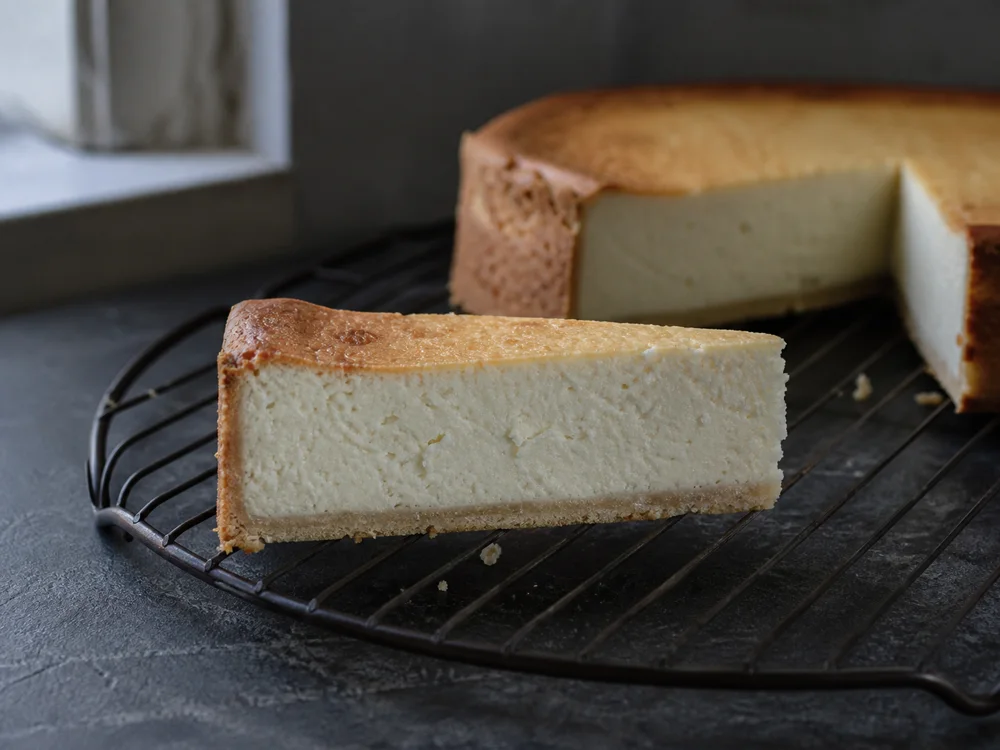
A pressed product gives cheesecake, Danish filling, and noodle casseroles visible curd and a firm set. A smooth tub produces a more even batter and may require less added cream, so follow the recipe's texture rather than swapping cup for cup without checking.
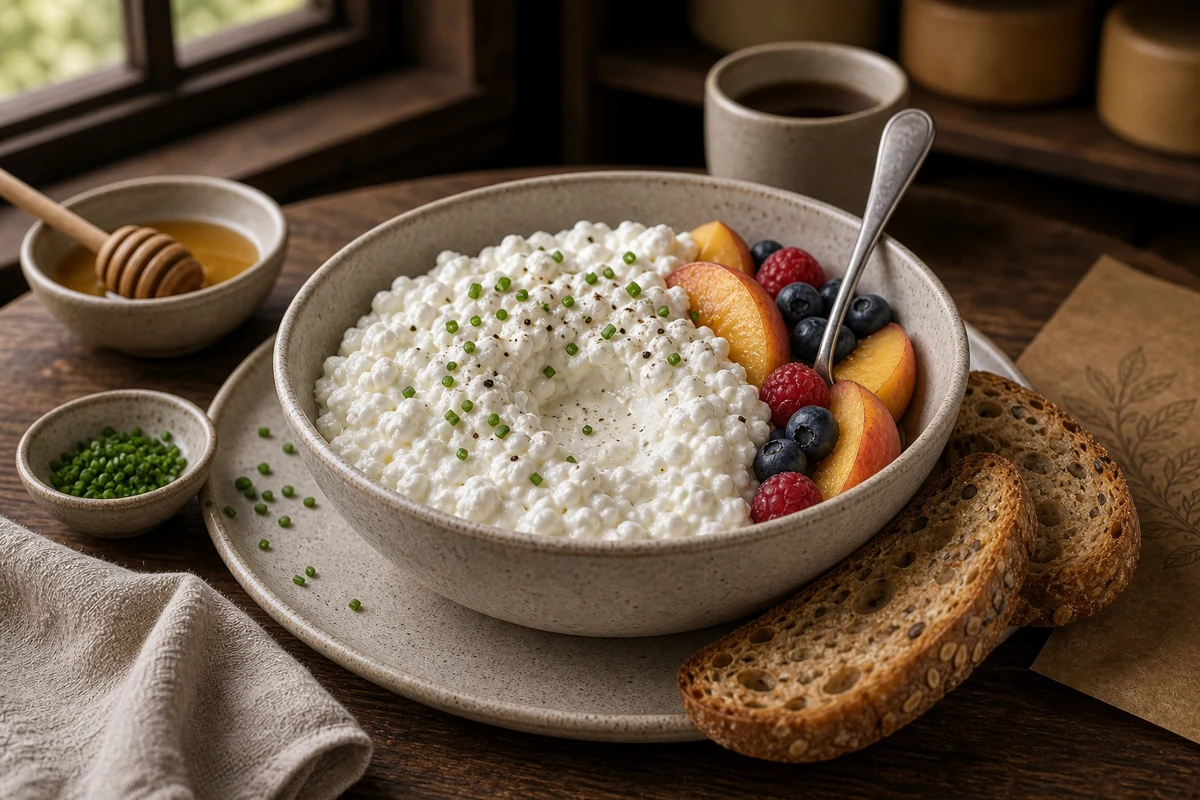
Draining cottage cheese for drier fillings can make it a workable replacement for pressed farmer cheese, but creamed curds carry extra liquid. Ricotta's softer whey-curd structure is often wetter, while quark's spoonable-to-firm range depends on the product.
Cream cheese's smoother body adds more richness than a lean pressed curd.
Weigh a drained substitute when the recipe gives a weight. Judge the finished mixture before filling dough: it should spread under pressure but stay where the spoon leaves it.
What Should You Check on the Farmer Cheese Label?
- Texture: Look for pressed, block, dry curd, smooth, creamy, or spreadable language that matches the dish.
- Milk treatment: Check the exact label for pasteurized milk when safety guidance requires it.
- Ingredients: Salt, cream, cultures, and stabilizers change flavor and performance.
- Serving basis: Compare nutrition at the same weight. A one-ounce block serving and a half-cup tub serving are not interchangeable.
- Storage: Keep the printed date and after-opening direction with the product instead of borrowing a number from another brand.
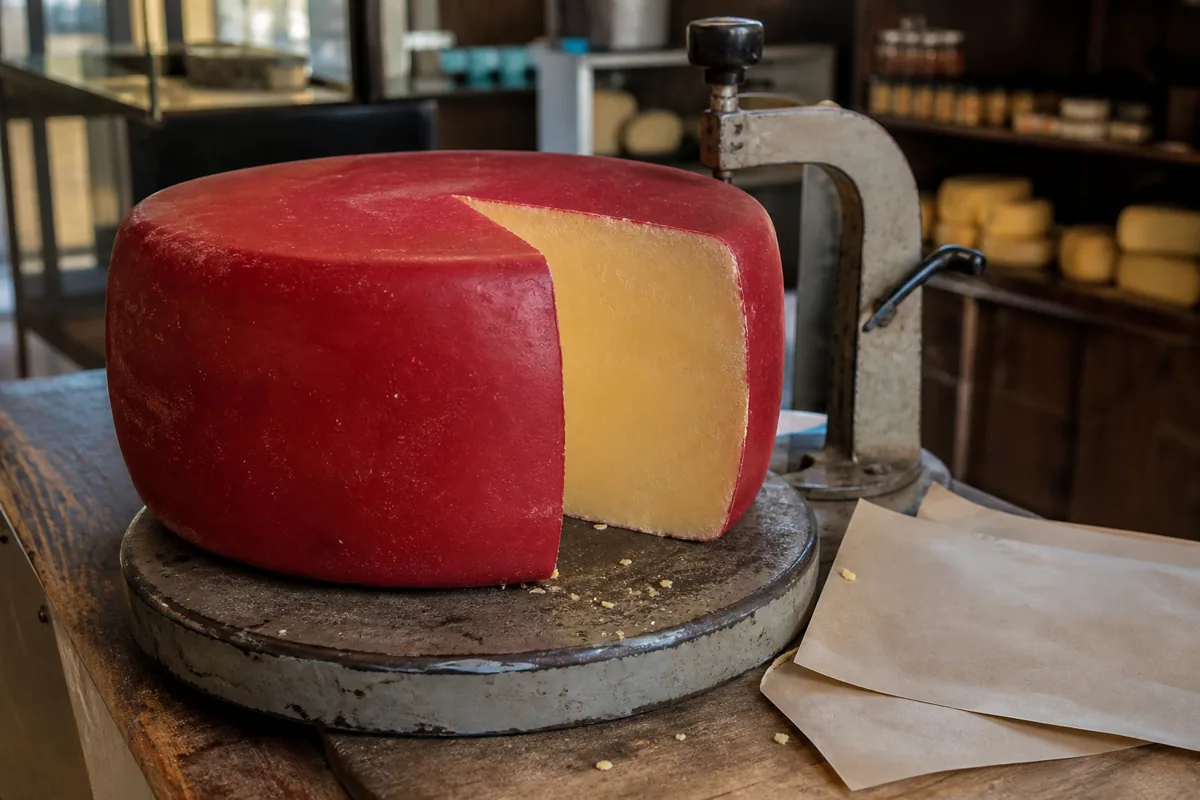
A counter-cut piece also loses the manufacturer's sealed package and may pass through shared deli equipment. Ask for the original product label when milk treatment, allergens, date, or pregnancy guidance matters.
How Do You Store Farmer Cheese?
Keep farmer cheese refrigerated at 40 degrees F or 4 degrees C or colder, with the exact package setting a lower limit when stated. Return it to the refrigerator promptly after portioning.
Lifeway's current FAQ says its Farmer Cheese can remain fresh through the printed expiration date after opening when it stays refrigerated, covered, and cool. That is a manufacturer direction for Lifeway Farmer Cheese, not a category-wide opened life.
FoodSafety.gov lists soft cheese, cottage cheese, cream cheese, ricotta, shredded cheese, and low-fat cheese among foods to discard after more than two hours above 40 degrees F during a power outage. A fresh farmer cheese should not receive a longer cold-chain allowance from an unsupported 5-to-7-day rule.
No reviewed current source supports one two-month freezer rule for every farmer cheese. Follow the exact package.
Freezing can also change a fresh curd's texture, which matters in spreads even when a cooked filling can tolerate it.
Is Farmer Cheese Safe During Pregnancy?
Current CDC guidance does not name farmer cheese as a separate category. It lists pasteurized cottage cheese and cream cheese among safer choices, while unheated deli-sliced cheese is a riskier choice and pasteurized soft cheeses heated to an internal temperature of 165 degrees F or until steaming hot are a safer choice.
Served cold, farmer cheese is described as a pasteurized fresh, pressed or soft cultured cheese, a type the CDC list does not cover, so ask a midwife or doctor. The NHS lists pasteurised soft cheeses as safe to eat and says foods made from unpasteurised milk must be thoroughly cooked, and the CDC lists unpasteurized (raw) milk and dairy products made from raw milk as riskier.
Health Canada also does not name farmer cheese. Its current page lists pasteurized cottage cheese and processed spreadable cheese as safer alternatives, while advising pregnant people to avoid soft cheeses such as Brie and Camembert even when pasteurized.
Because the farmer-cheese name can cover a pressed block, smooth tub, or deli-cut portion, check the exact product and follow the guidance for the country where it will be eaten.
Confirm pasteurized milk, an intact sealed package, the printed date, and uninterrupted refrigeration. For a deli-cut product in the U.S., the CDC lists deli-sliced cheeses heated to 165 degrees F or until steaming hot as safer, and for an uncertain soft product, pasteurized soft cheeses heated to an internal temperature of 165 degrees F or until steaming hot.
Our guide to how milk treatment, product type, handling, and jurisdiction change pregnancy advice gives the wider decision process.
SOURCES & REFERENCES
What Else Do People Ask About Farmer Cheese?
Sometimes the products are close, but the names are not interchangeable. The U.S. standard defines dry curd cottage cheese, while current products called farmer cheese include both a sliceable pressed block and a smooth cultured tub.
It can replace a pressed curd in many fillings after thorough draining. Weigh the drained curd and check that the mixture mounds without a ring of whey.
Use the exact nutrition panel. Current Lifeway Farmer Cheese lists 15 grams per ½ cup, but that number and serving size do not represent every farmer cheese.
Follow the exact package or manufacturer. Lifeway currently says its refrigerated, covered product may keep through the printed expiration date, but that direction does not apply automatically to a pressed block or deli-cut cheese.
Current CDC and Health Canada pages do not name farmer cheese separately. Check the product type, pasteurized-milk statement, seal, date, and cold storage, then follow the guidance for the country where it will be eaten.