Fromage blanc is a French fresh cheese that is never ripened: the milk is soured mainly by lactic bacteria, and the curd is lightly drained and chilled straight away.
Its fat can run from almost none to 7.7%. French labels and recipes print that fat in two different ways, as a share of the whole tub or of its dry matter.
In This Article
What Is Fromage Blanc?
The name means white cheese in French. English Wikipedia places its origin in the north of France and southern Belgium, where it is also called maquée.
French Wikipedia describes the other side of that origin: inside France the name is not tied to one region, and fromage blanc is made everywhere and all year, with separate regional fresh cheeses listed beside it.
French decree 2007-628, quoted by Les Produits Laitiers, the consumer site of the French dairy trade body CNIEL, reserves the name for an unripened cheese that, when fermented, has gone through a mainly lactic fermentation.
That makes it a fresh cheese, unlike the ripened camembert or comté that the same site names as a contrast.
Cow's milk is the usual base. French Wikipedia notes goat and sheep versions sold in France as fromage blanc de chèvre or de brebis.
Most fromage blanc starts from milk pasteurized for a few minutes, says Les Produits Laitiers.
French Wikipedia adds that farm-made fromage blanc fermier comes from raw milk. Industrial versions start from pasteurized skim milk and get pasteurized cream added back after draining.
How Is Fromage Blanc Made?
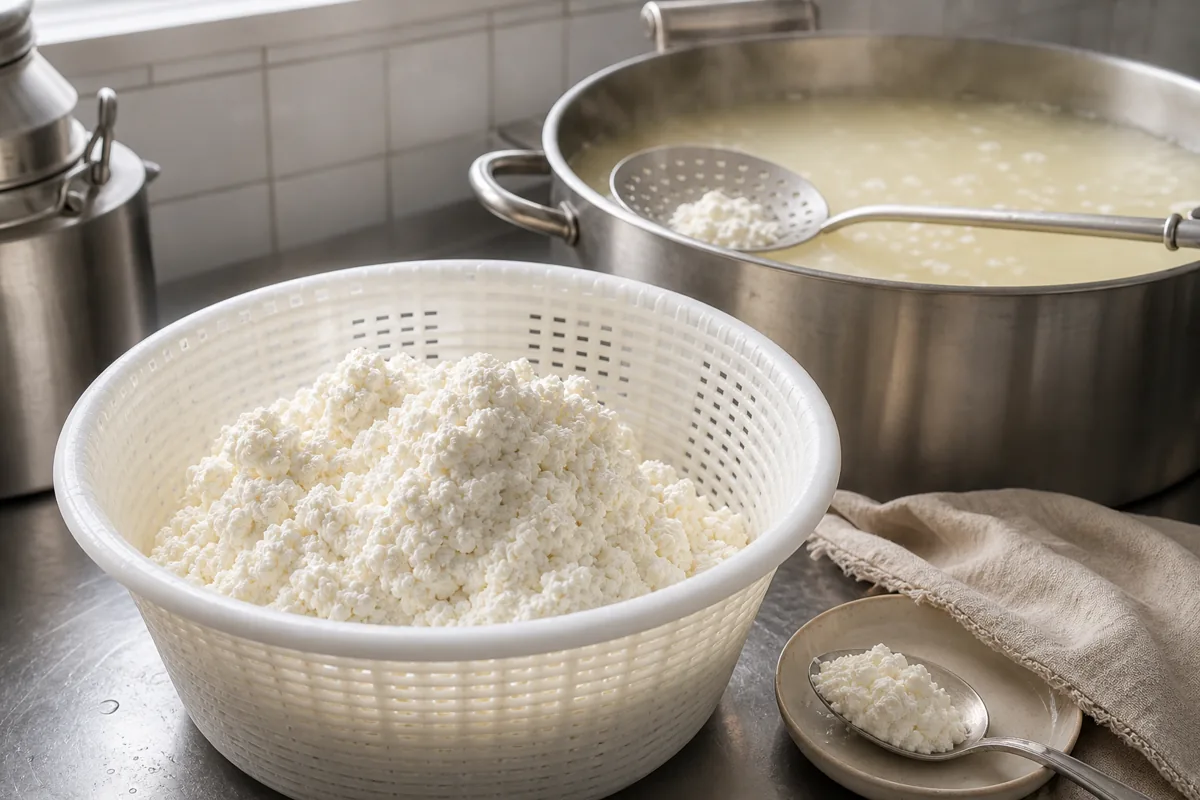
Les Produits Laitiers describes fromage blanc as a cheese taken from the first steps of cheesemaking: the milk is curdled, the curd is drained, and the tubs go straight into a cold room.
| Milk | Usually pasteurized for a few minutes to destroy possible pathogens (Les Produits Laitiers) |
| Culturing | Mesophilic lactic bacteria such as Lactococcus lactis are added (French Wikipedia) |
| Rennet | Optional; in modern practice a little is added once the milk reaches pH 6.3 to firm the curd (French Wikipedia) |
| Fermentation | 14 to 16 hours, ending when the milk reaches pH 4.5 (French Wikipedia) |
| Draining | Fairly light, either on its own in moulds or faster in a mechanical centrifuge (Les Produits Laitiers) |
| Chilling | Refrigerated at once and kept in a cold room (Les Produits Laitiers) |
Most of the set comes from acid rather than rennet. French Wikipedia says French rules allow only lactic ferments or rennet to set the milk, and that the milk curdles under the acid from lactic bacteria with limited use of rennet.
That acid comes from the milk's own sugar. French Wikipedia describes lactic bacteria splitting lactose into glucose and galactose and turning the glucose into lactic acid, which dehydrates the casein micelles until the milk separates into curd and whey.
The bacteria are added because today's milk is heat-treated: French Wikipedia says heat or chemical treatment obliges a dairy to seed the milk with mesophilic strains such as Lactococcus lactis. In the same account, the rennet added at pH 6.3 firms the coagulum and cuts the casein lost to the whey.
Some dairies also concentrate the milk before fermenting it, removing part of the water by ultrafiltration, according to Les Produits Laitiers.
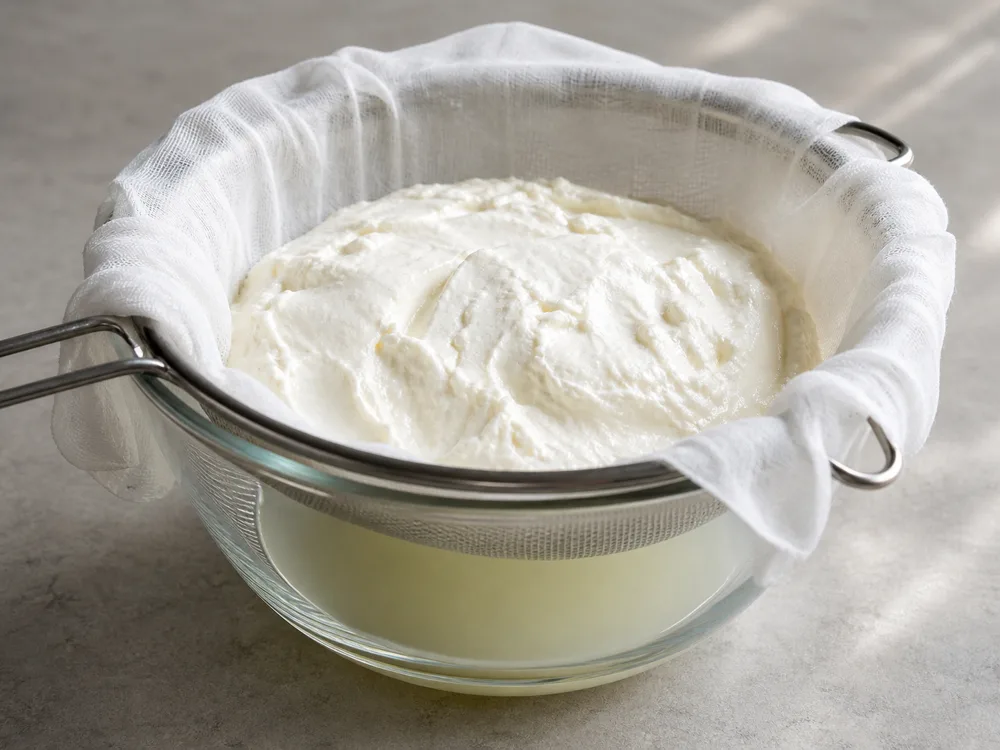
The older farm method needed no added culture at all. French Wikipedia describes milk left in a cool place until the cream rose and the milk set on its own, after which the curd was lifted out with a skimmer and drained in forms or in a cloth.
French Wikipedia lists the drawbacks that led dairies to leave that method behind: the curd sours, a taste judged unpleasant at least in Western countries, and it must be eaten quickly because it does not keep.
Faisselle, Smooth or Frais: Which Fromage Blanc Is in the Tub?
What happens after draining decides the style you buy. Les Produits Laitiers puts four products in the fromage blanc family, from the grainy faisselle to the cream-enriched petit-suisse.
| Style | How it is made | Texture |
|---|---|---|
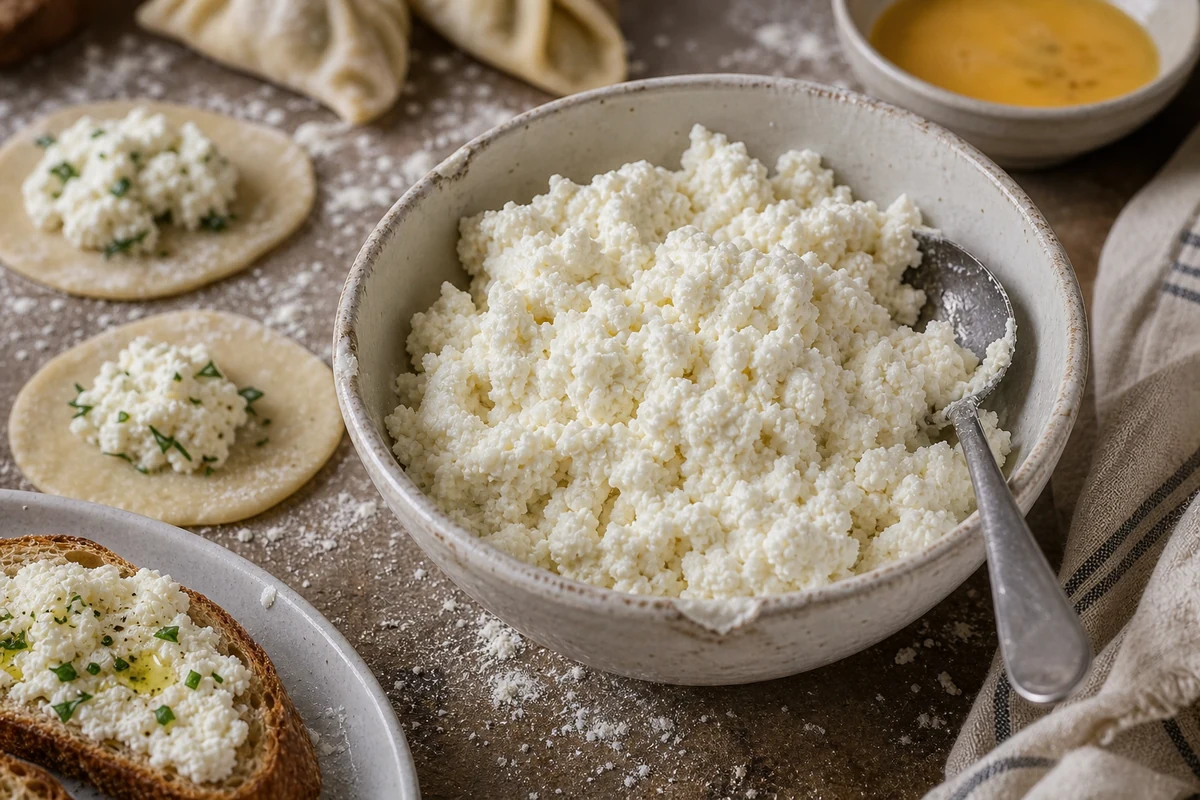
| Faisselle | Curd lightly drained in a perforated mould and sold in its pot with the basket | Granular, sold with its whey |
| Fromage frais de campagne | Curdled in a basin like faisselle, but sold already drained | Granular |
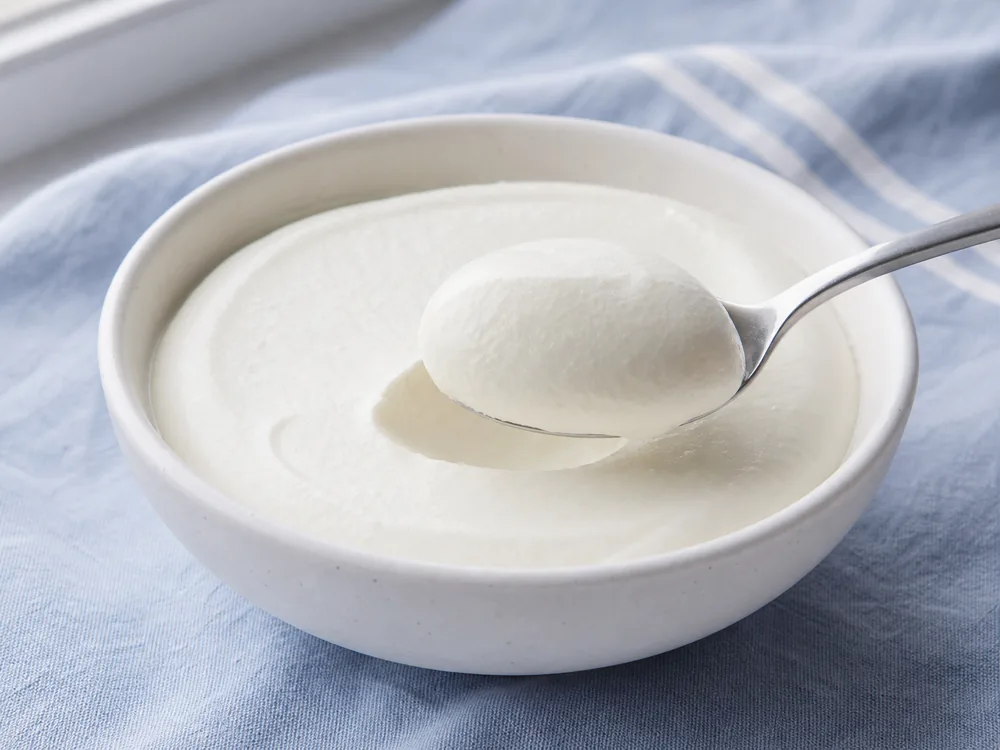
| Smooth fromage blanc (lissé or battu) | Drained curd whipped until smooth | Even and creamy |
| Petit-suisse | Smooth fromage blanc with crème fraîche added | Not described by the source |
Large dairies build the smooth style from separate parts. French Wikipedia says industrial fromage blanc is skim-milk curd that receives pasteurized cream under high pressure and is then homogenized, which gives the trade names battu and lissé.
French Wikipedia credits the name petit-suisse to Mme Hérould, a Normandy farmer working with Charles Gervais, in honour of her Swiss cowherd, who suggested enriching the curd with cream. The cream-enriched formula is older than the name: Étienne Pommel was already selling one from near Gournay-en-Bray.
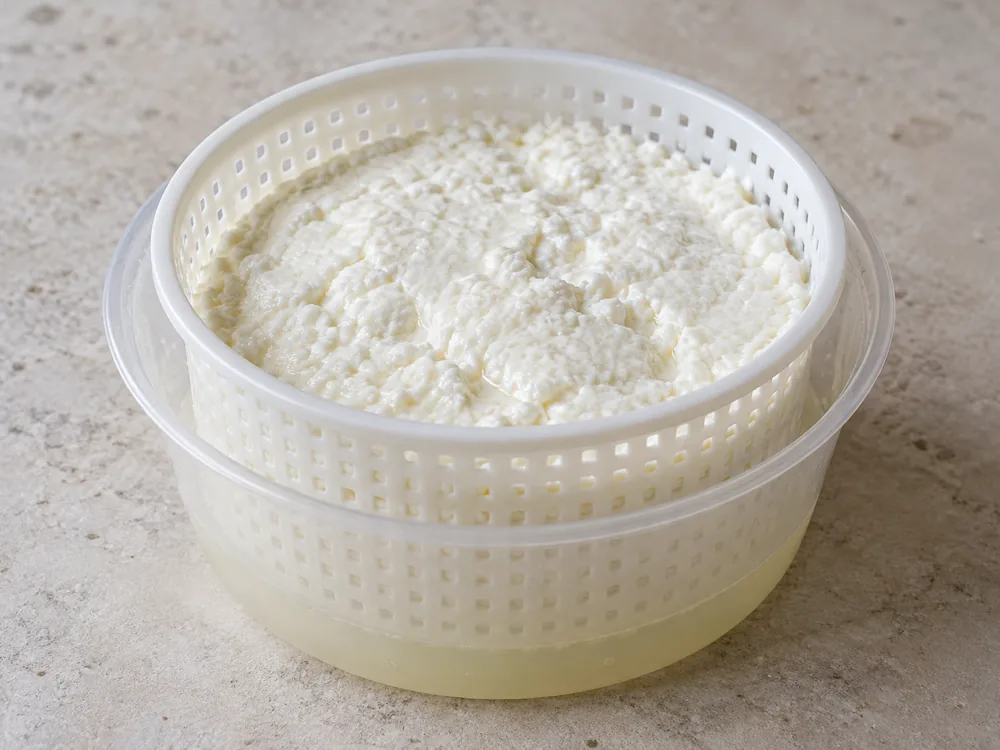
The word frais on a label carries a legal promise. Under the same decree, fromage blanc sold as frais, or under the name fromage frais, must still contain live bacteria when you buy it.
English Wikipedia reads this as fromage frais keeping live cultures while fermentation in fromage blanc has been halted. The decree text itself sets the live-culture rule only for products that carry the frais wording.
In the UK, English Wikipedia adds, fromage frais arrived in the 1980s and is often sold sweetened and fruit-flavoured as a dessert marketed to children.
English Wikipedia lists maquée as another name for fromage blanc, while French Wikipedia describes Belgian maquée as a fresh cheese made from buttermilk, so on a Belgian label the name alone does not settle whether the base is milk or buttermilk.
What Do 0%, 20% and 40% Mean on Fromage Blanc?
Older French labels and recipes give fat as 0%, 20% or 40%, and French Wikipedia explains that those figures count fat in the dry matter, not in the whole tub.
Because fromage blanc is mostly water, the real fat is much lower. French Wikipedia puts it at about 3.5% for a 20% product and 7 to 8% for a 40% product.
Current French tubs print the whole-product figure instead, and Les Produits Laitiers lists labels of 0%, 3.3% and 7.7% fat.
The same site says fat depends on how much water draining leaves and on whether the milk was whole, semi-skimmed or skimmed.
Cream is what moves a fromage blanc from one tier to the next: French Wikipedia says the fat share varies with the cream added.
The lean-versus-rich split is old: French Wikipedia says the 16th-century agronomist Olivier de Serres had milk skimmed for the everyday cheese on his Ardèche estate and made a fat cheese for guests.
Until the late 19th century, it adds, farm-made lean fromage blanc fed day labourers, while farms near big cities sold a cream-enriched version to townspeople.
| Source and product | Water | Energy | Protein | Fat | Carbohydrate | Calcium |
|---|---|---|---|---|---|---|
| ANSES Ciqual 2012, plain whipped whole-milk fromage blanc (via French Wikipedia) | 81.3 g | 481 kJ | 6.8 g | 8.11 g | 3.47 g | 113 mg |
| ANSES Ciqual 2012, plain whipped 0% fromage blanc (via French Wikipedia) | 86.8 g | 193 kJ | 7.4 g | 0.18 g | 4 g | 118 mg |
| Les Produits Laitiers, fromage blanc at 3% fat | About 80% (all fromage blanc) | About 77 kcal | Not given | 3% | Not given | Not given |
The 0% version keeps its protein and calcium. French Wikipedia notes that it has about two and a half times less energy and loses the vitamins A and D that the fat carries.
Ciqual prints energy in kilojoules. At 4.184 kJ per kilocalorie, the whole-milk row's 481 kJ is about 115 kcal per 100 g and the 0% row's 193 kJ is about 46 kcal, with the 77 kcal that Les Produits Laitiers gives for 3% fat falling between them.
Les Produits Laitiers gives an average protein content of 8% and counts fromage blanc among the three fresh dairy products richest in calcium.
Les Produits Laitiers lists phosphorus, which helps the body absorb calcium, iodine, and vitamins B2 and B12 among what a pot provides. The whole-milk Ciqual row puts phosphorus at 102 mg, vitamin B2 at 240 µg and vitamin B12 at 0.34 µg per 100 g.
French Wikipedia calls fromage blanc easier to digest than milk, since lactic ferments have already transformed it.
Because the curd sets quickly, fromage blanc still holds 2 to 3% lactose, according to French Wikipedia, which can cause problems for people intolerant to that milk sugar.
A 20% or 40% on an older label or recipe counts fat in the dry matter, so it means about 3.5% or 7 to 8% of the tub. Current French tubs print 0%, 3.3% or 7.7% of the whole product.
Is Fromage Blanc the Same as Quark, Cream Cheese or Yogurt?
No, although German quark comes closest. English Wikipedia's quark entry names fromage blanc as a similar fresh cheese, and both are made by souring milk with lactic bacteria and straining the curd.
The two share a production order. English Wikipedia says quark starts from pasteurized skim milk with cream added later to adjust fat, the sequence French Wikipedia gives for industrial fromage blanc.
Even the pH figures are close: quark dairies add rennet at about pH 6.1 and let the milk reach about pH 4.6, against pH 6.3 and 4.5 for fromage blanc.
Texture is where a swap shows. French Wikipedia calls fromage blanc a semi-fluid, creamy paste, while English Wikipedia says German tub quark has the firmness of sour cream but is slightly drier and somewhat crumbly.
Labels can mislead in the Netherlands, where English Wikipedia says many products sold as kwark are a thick yogurt-like product made with yogurt bacteria, not acid-set fresh cheese.
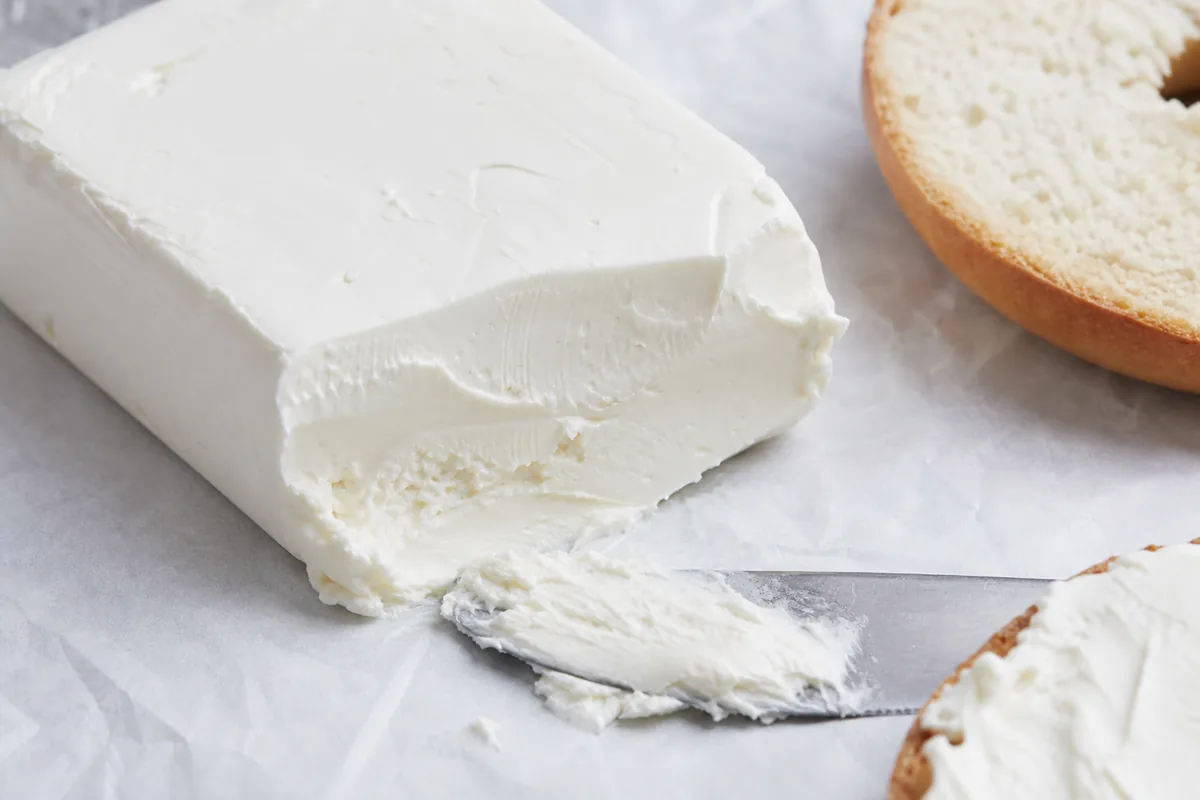
American cream cheese is much richer. The US standard for cream cheese sets a floor of 33% milkfat in the finished cheese, several times the 7.7% of the richest French fromage blanc label.
Cream cheese is built differently too. The federal standard, 21 CFR 133.133, lets a maker press, chill and work the curd and heat it until fluid before homogenizing, and allows stabilizers up to 0.5% of the finished weight; Les Produits Laitiers describes only a light draining for fromage blanc.
Yogurt differs in how the milk is set. Les Produits Laitiers says yogurt is fermented with two specific bacteria, while fromage blanc can be set with other lactic ferments, rennet or both before it is drained.
| Point | Fromage blanc | Quark | Cream cheese (US) | Yogurt |
|---|---|---|---|---|
| How the milk sets | Mainly lactic ferments, rennet optional | Lactic bacteria; small amounts of rennet are typical in modern dairies | Lactic culture plus a clotting enzyme | Two specific bacteria, never rennet |
| Drained | Yes, lightly | Yes, strained | Yes | Usually not |
| Fat | 0%, 3.3% or 7.7% of the product | Under 10%, 20% or 40% fat in dry matter (German grades) | At least 33% milkfat, at most 55% moisture | Not compared here |
| Sources | Les Produits Laitiers | English Wikipedia | 21 CFR 133.133 | Les Produits Laitiers, French Wikipedia |
French Wikipedia adds the reason yogurt is not a cheese: its gel is usually not broken up and drained, the two steps that fromage blanc goes through. Les Produits Laitiers says yogurt and fromage blanc supply the same amount of calcium.
Italian ricotta sits further away. English Wikipedia's quark entry separates the fresh milk-curd cheeses from ricotta, which is made from scalded whey.
Which Other Fresh Cheeses Belong to the Fromage Blanc Family?
Fromage blanc sits in a very old, worldwide group: French Wikipedia dates fresh white cheeses of this broad kind to the Neolithic and finds them in every major livestock-raising region.
It names counterparts abroad, among them tvarog or twaróg among Slavic peoples, German quark, cottage cheese in the UK and North America, and Swiss séré.
Séré is a cow's-milk fresh cheese that French Wikipedia asks readers not to confuse with sérac, a whey cheese, and Morocco's jben is made from cow's, sheep's, goat's or camel's milk.
Inside France, French Wikipedia lists traditional regional fresh cheeses next to fromage blanc: claquebitou in Burgundy, fontainebleau near Fontainebleau, the fromage frais of Nîmes, gournay frais from the Pays de Bray and Bibbelkääs in German-speaking Moselle.
Mountain regions make a different kind of fresh cheese from the whey left after draining, which French Wikipedia calls brousses: brocciu in Corsica, the breuil of the Basque Country, greuilh in the Ossau valley and sérac or recuite in Savoy.
How Do You Eat and Cook With Fromage Blanc?
Fromage blanc can be cooked. Les Produits Laitiers says it often goes into tarts, quiches, gratins and cakes, and into sauces, dips and spreads alongside or instead of crème fraîche or mayonnaise.
| Use |
|---|
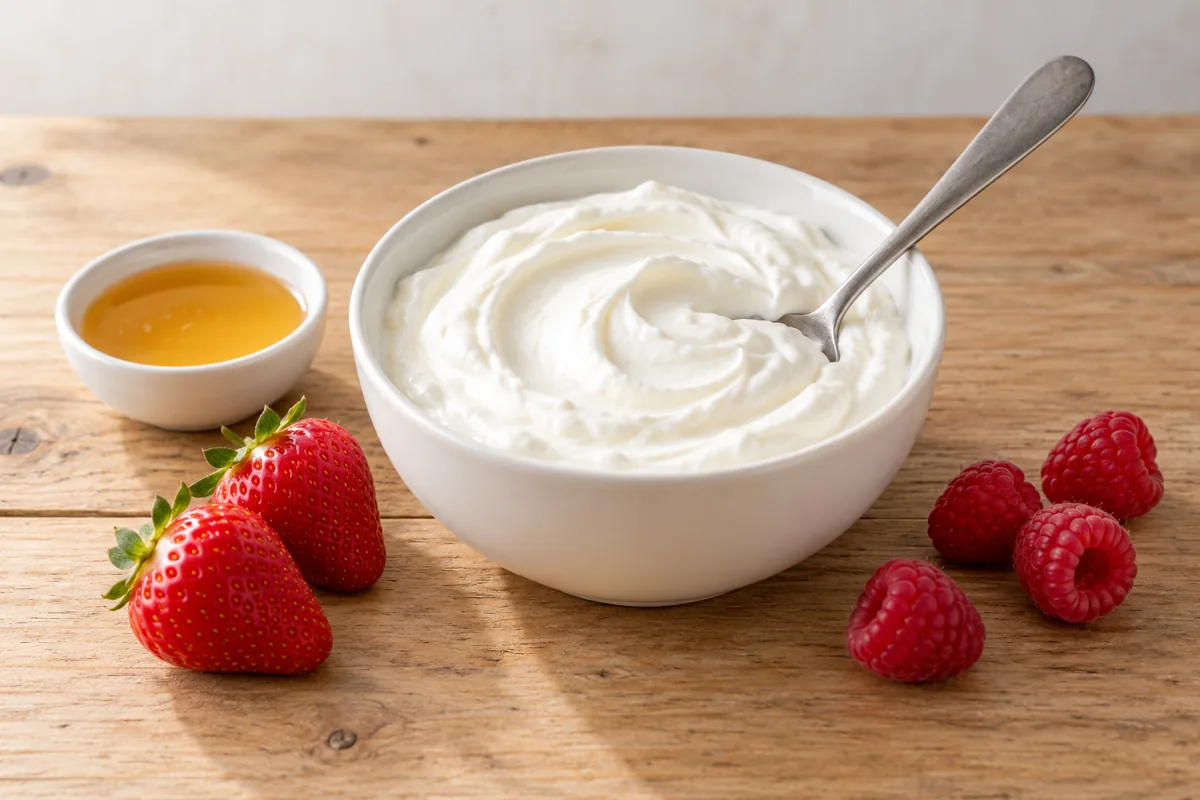
| Dessert: with jam, honey or sugar, with strawberries and raspberries, or with apple or pear; in cherry clafoutis and charlottes (French Wikipedia); in cheesecakes and mousses (Les Produits Laitiers) |
| Savoury: cervelle de canut in Lyon, or stirred into spinach once the leaves have wilted in the pan (French Wikipedia) |
| Regional baking: tarte au fromage blanc, called Käskueche in Moselle and Lorraine, and the tourteau fromagé of Poitou, made with goat's milk fromage blanc (French Wikipedia) |
In France it is mainly eaten as a dessert, according to French Wikipedia.
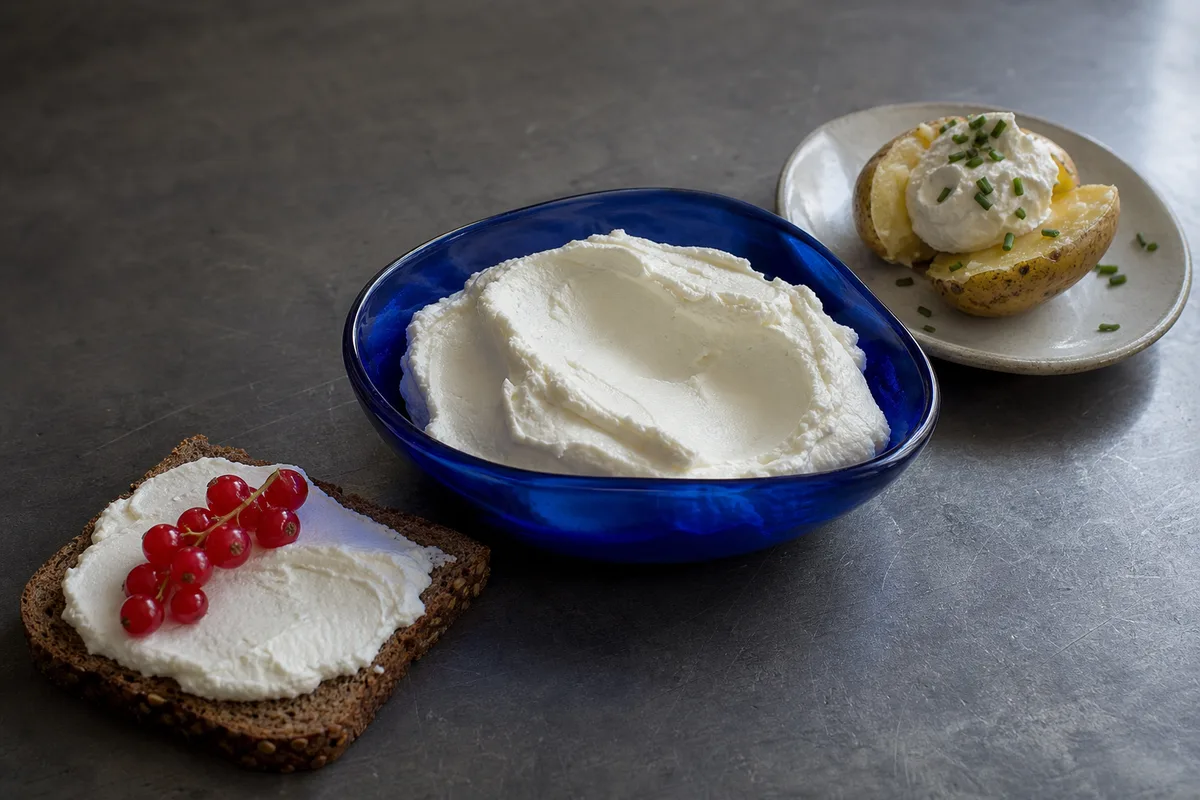
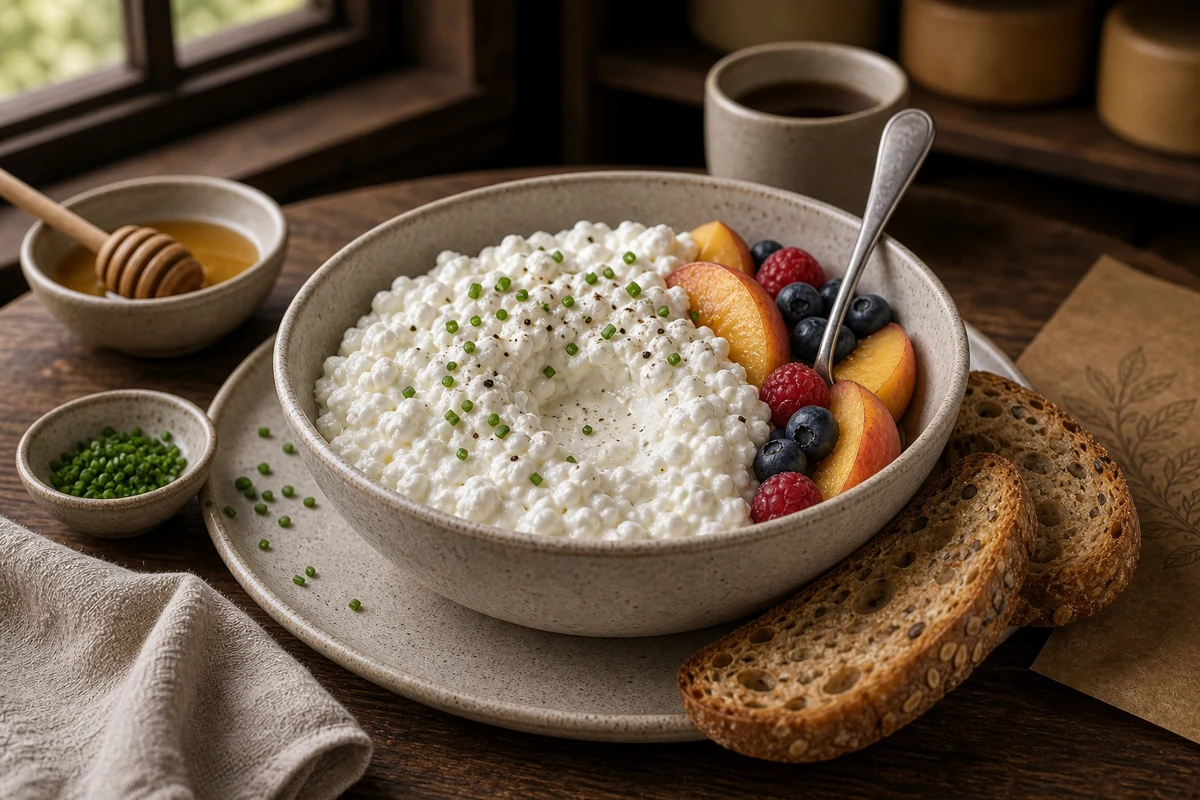
French Wikipedia lists it at breakfast with fruit, jams and cereals, and English Wikipedia says it is spread on bread, usually over or under jam.
In baking, Les Produits Laitiers says fromage blanc gives pastries a soft note and can stand in when there is not enough butter.
French Wikipedia also lists it in canapés, sandwiches and salads and in fillings borrowed from elsewhere, among them sernik, pierogi, gibanica, tarte de Metz and the tarte flambée of Alsace.
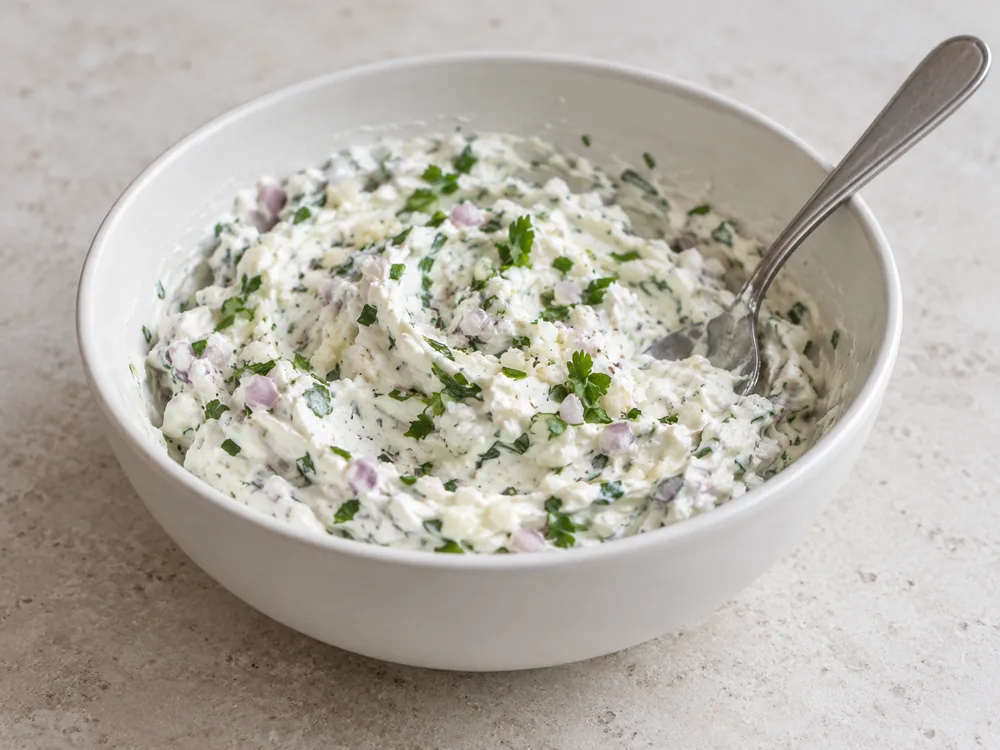
Cervelle de canut shows the savoury side. French Wikipedia describes it as drained fromage blanc seasoned with garlic, shallots and other chopped condiments, the everyday food of Lyon's silk workers in the 19th century.
How Should You Buy and Store Fromage Blanc?
French tubs use lid colours to signal fat, says Les Produits Laitiers: pink or purple for 0%, blue for 3.3% and green for 7.7%. Some organic tubs use a green lid whatever their fat.
In many Western countries, English Wikipedia notes, fromage blanc is often sold beside the yogurts in supermarkets.
In the United States, Vermont Creamery makes a cow's-milk fromage blanc with microbial rennet near Websterville, Vermont, says Culture magazine, which describes fresh, soft curds slightly drained of whey and often called the French answer to yogurt or cream cheese.
Co-founder Allison Hooper took her inspiration from her time on a dairy farm in Brittany, where the cheese was regularly mixed with a little sugar and eaten for dessert. Culture adds that it also goes with honey, granola or, blended with herbs, a savoury dip.
At home, keep it cold. The FDA advises keeping milk products at 40 °F (4 °C) and following use-by dates.
French Wikipedia notes that whey can separate from the curd while it is stored and that its keeping time is limited; follow the use-by date.
Is Fromage Blanc Safe During Pregnancy?
The answer depends on whose advice you follow. The NHS lists pasteurised soft cheeses such as cottage cheese, cream cheese and ricotta as safe for eating cheese while pregnant, so a pasteurized fromage blanc fits its safe list.
The CDC lists soft cheese made from unpasteurized (raw) milk as riskier. Served cold, fromage blanc is described as a pasteurized fresh, soft cheese, a type the CDC list does not cover, so ask a midwife or doctor.
Farm-made fromage blanc can start from raw milk. The FDA notes that some cheeses are not made with pasteurized milk and tells pregnant women to check the label.
For a pasteurized fromage blanc, cooking brings both agencies into line: the NHS counts any cheese cooked until steaming hot as safe, and the CDC counts pasteurized soft cheeses heated to an internal temperature of 165°F or until steaming hot as safer. The CDC does not say whether a raw-milk fromage blanc becomes safer when cooked.
SOURCES & REFERENCES
What Else Do People Ask About Fromage Blanc?
No. The US standard requires cream cheese to hold at least 33% milkfat, while French fromage blanc is labelled 0%, 3.3% or 7.7% fat.
They are made in a similar way: both are fresh cheeses soured by lactic bacteria and drained, and German quark uses the same 20% and 40% fat-in-dry-matter grades that older French fromage blanc labels show.
Sometimes. French rules allow lactic ferments, rennet or both, and Culture magazine lists Vermont Creamery's fromage blanc as made with microbial rennet.
Usually. Les Produits Laitiers says most is made from pasteurized milk, but farm-made fromage blanc fermier uses raw milk, so check the label.