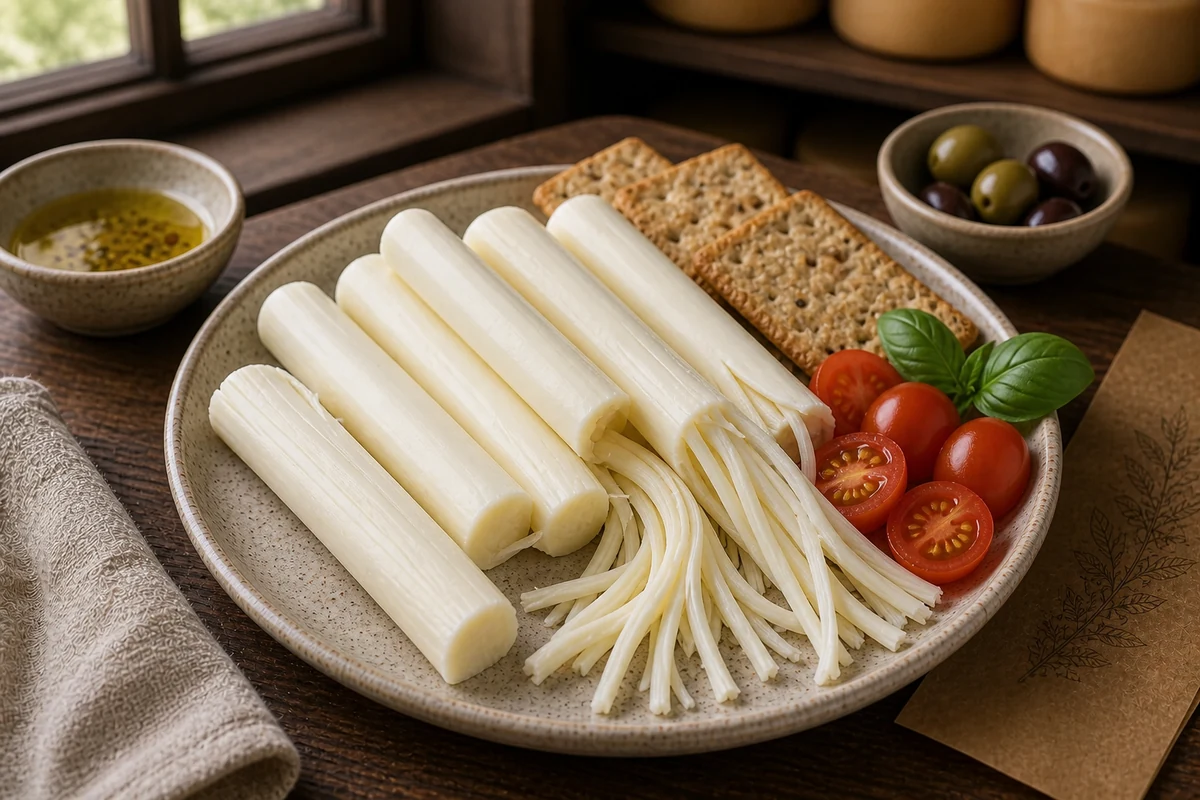
String cheese is any cheese whose manufacturing aligns the proteins so it pulls apart into strands. In the United States the name usually means a snack-sized stick of low-moisture mozzarella.
Elsewhere the same two words cover Armenian chechil, Slovak korbáčiky, Turkish dil peyniri, and UK Cheestrings.
In This Article
What Is String Cheese?
The American stick is commonly mozzarella or mozzarella blended with cheddar. Cheese.com describes the texture as chewy, firm, and stringy.
The U.S. standard of identity puts numbers on the mozzarella part. Under 21 CFR 133.156, low-moisture mozzarella has more than 45 percent but not more than 52 percent moisture and at least 45 percent milkfat in its solids, and the dairy ingredients are pasteurized.
The same standard says the cheese may be molded into various shapes. A stick is low-moisture mozzarella cut to snack size, as Wikipedia describes it, and the peel comes from how the curd is stretched.
Wikipedia credits Frank Baker with inventing the American stick in 1976.
String cheese is a pasta filata cheese, like mozzarella and provolone: one of a family of cheeses whose curds are stretched to a desired texture.
Is String Cheese the Same as Mozzarella?
By its ingredients, yes: Cheese Scientist, a cheese-education site, says American string cheese is low-moisture part-skim mozzarella made from the same four ingredients as any mozzarella: part-skim cow's milk, starter culture, salt, and enzymes.
In Cheese Scientist's account, the heat in ordinary mozzarella aligns the casein proteins quite significantly but not entirely, so mozzarella is stretchy and elastic yet cannot usually be pulled into strings. The extra stretching for string cheese aligns them fully enough for the cheese to come apart as strands.
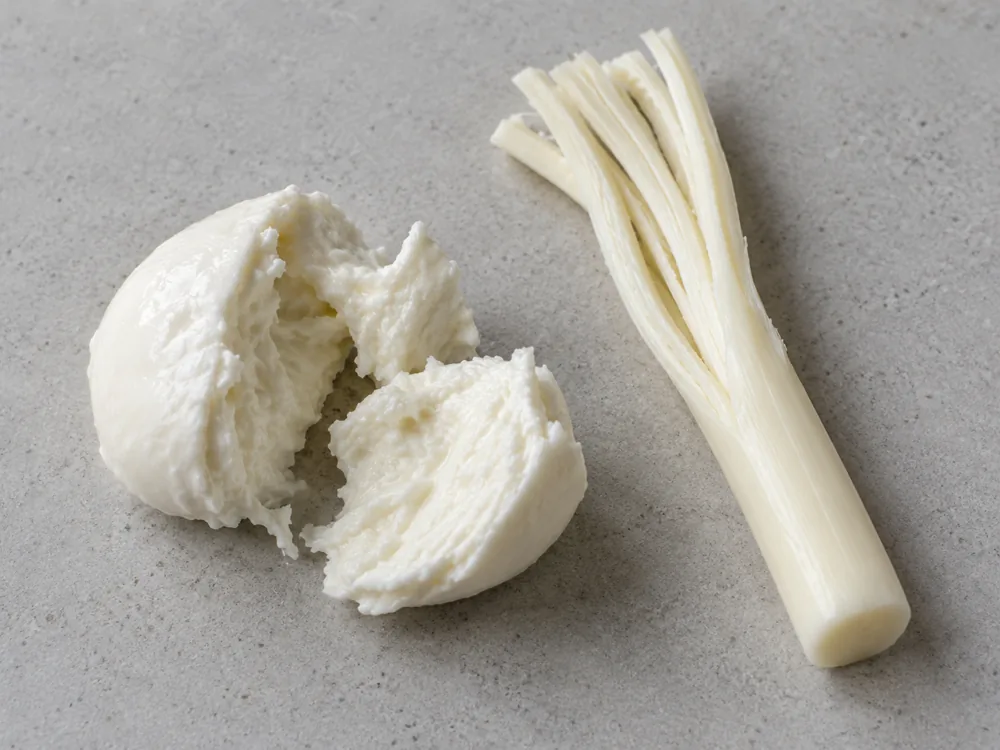
Cheese Scientist also says string cheese has slightly less moisture than mozzarella. The minireview's 48 to 52 percent moisture target for pizza mozzarella sits inside the standard's band.
Why Does String Cheese Peel?
String cheese gets its name from pulling strips off the cylinder along its length. Those strips exist because, in Wikipedia's account, the proteins line up when mozzarella is heated to 60°C (140°F) and stretched.
That 60°C falls inside the 55 to 65°C range that a 2021 minireview in Food Technology and Biotechnology gives for the curd, while the same review reports stretching water at 60 to 85°C. Within the critical 60 to 65°C range, it says, a difference of only a few degrees drastically changes the cheese's properties.
Acid has to come first. The starter culture's main job is to make enough lactic acid to turn the curd into a mass that stretches in warm water, and the right combination of pH and calcium at that moment decides whether it does.
Curd at the stretching pH plasticizes in hot water and reorganizes into a unidirectional fibrous structure. The review cites one study that puts the best stretching pH at 5.2 to 5.3 and another at 5.2 to 5.5, and says insoluble calcium forms the crosslinks that hold the protein network together.
As the calcium bound to the casein falls, the protein matrix takes up more water, which probably contributes strongly to plasticization. If the stretching temperature stays below the plasticizing point, the fibrous structure typical of the curd is not obtained.
The result, in the review's description, is parallel casein fibers interspersed with water and fat channels, which fits Wikipedia's account of strips coming away along the length of the stick.
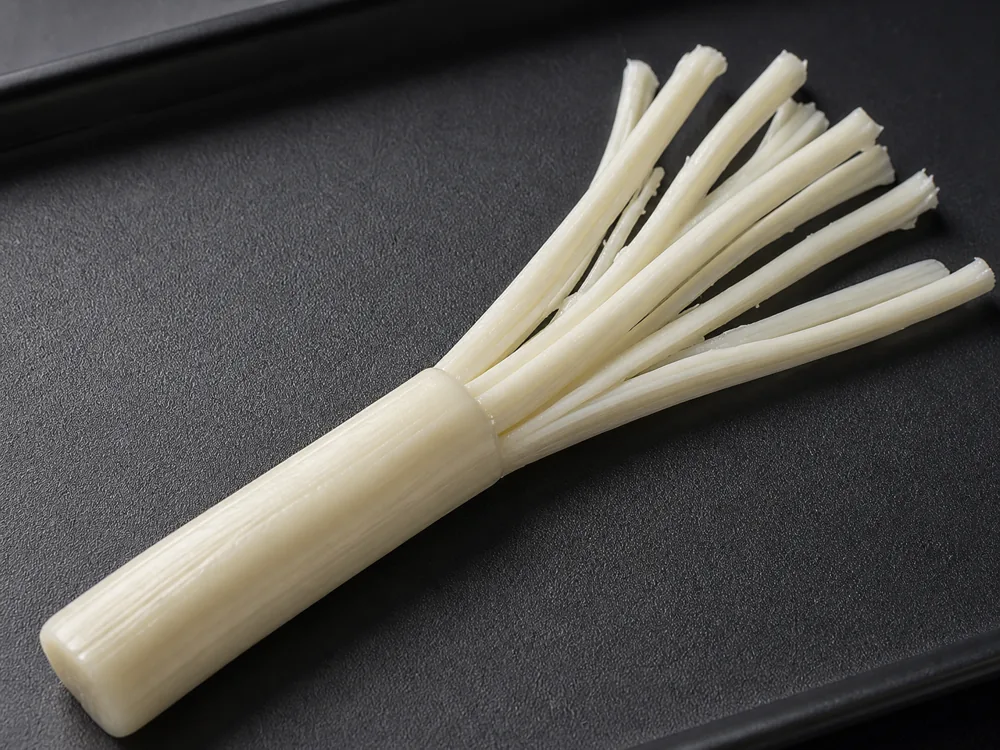
How Is String Cheese Made?
The U.S. standard for low-moisture mozzarella, 21 CFR 133.156, describes the steps in order.
- Culture and set. A lactic acid-producing culture and a clotting enzyme set the dairy ingredients to a semisolid mass.
- Cut, stir, and drain. The mass is cut, stirred, and allowed to stand, and the whey is drained off.
- Heat and stretch. The curd is immersed in hot water or heated with steam, then kneaded and stretched until smooth and free of lumps.
- Cut and mold. The curd is kept warm enough for the surface to seal.
- Firm in cold water. The molded curd is immersed in cold water and drained.
The minireview says small producers still work the curd by hand in pots with water at 70 to 80°C, while mechanical mixers use water at 82 to 85°C controlled by steam injection, and extruders are gaining significant commercial acceptance.
Machines turn curd particles into a continuous, easily molded mass quickly, but they spread moisture unevenly, and faster stirring means more fat loss and lower moisture.
The stretched ropes are rapidly cooled to set the aligned structure before they are cut to length and packaged.
For low-moisture mozzarella blocks, the review says cooling in brine should continue until the inside reaches 6°C or less. Blocks that stay warm inside suffer excessive protein breakdown and continuing acid development when salt is also low, at 1 percent or less.
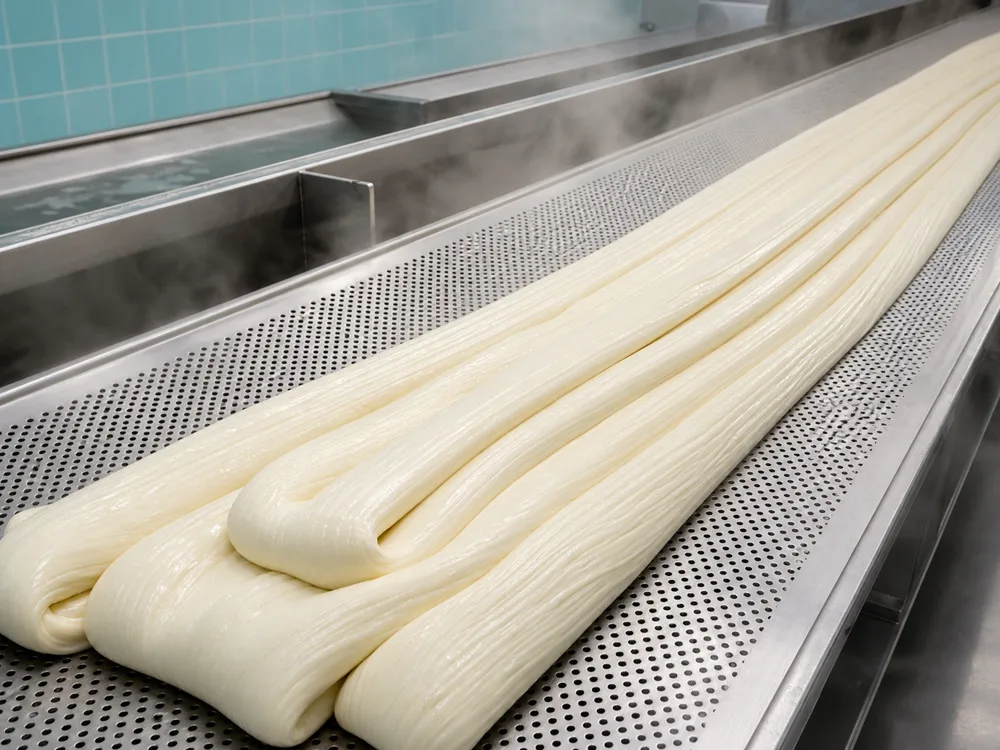
How Does String Cheese Differ from Cheestrings?
Cheese.com says American string cheese, or cheese stick, is made from mozzarella or a mozzarella and cheddar combination, and that UK and Irish Cheestrings are made from real cheese, not processed.
Wikipedia names Cheestrings, made by Kerry Dairy Ireland since 1996, as the popular UK and Ireland string cheese, made from grass-fed cows' milk that is matured, then heated, stretched, and cut to size.
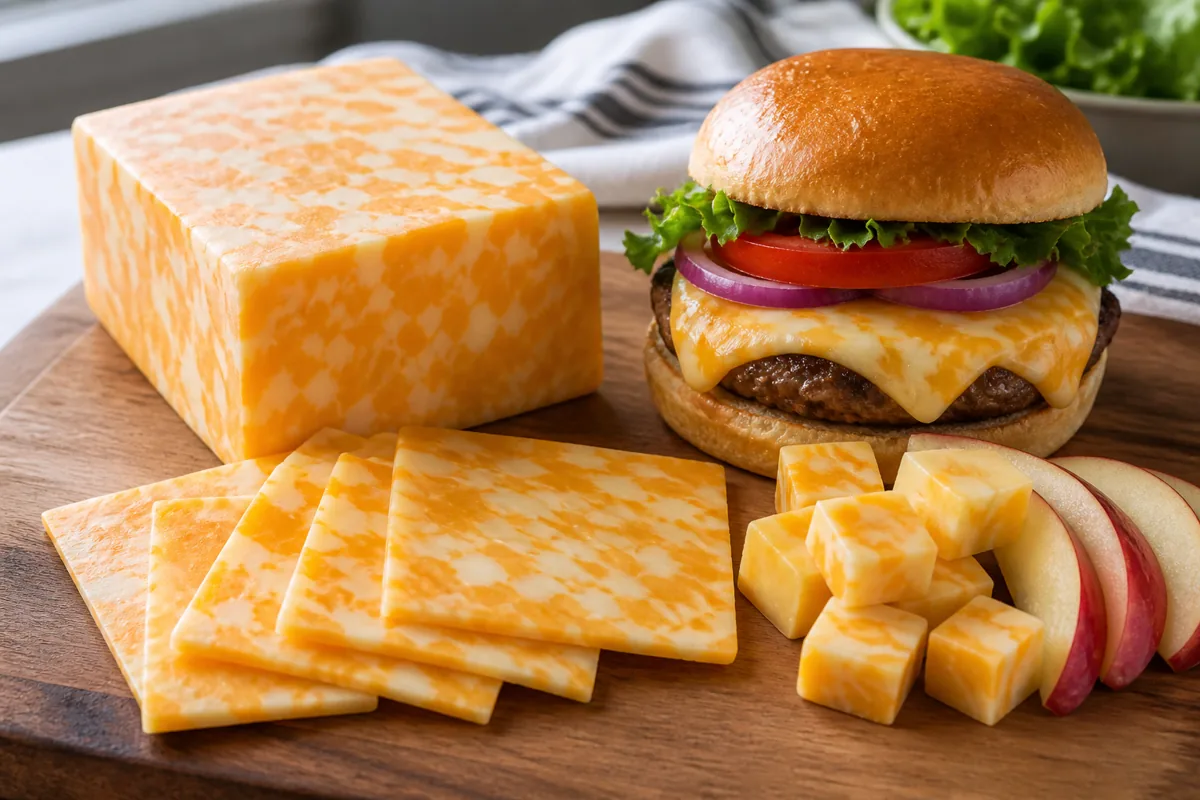
Early flavours included cheddar, smoky bacon, and pizza, and a later two-color variant called Twister combined cheddar and mozzarella.
| Name | What the sources say |
|---|---|
| American string cheese | Snack-sized low-moisture mozzarella, or mozzarella with cheddar, eaten by pulling strips along its length (Wikipedia) |
| Cheestrings (UK and Ireland) | Real, not processed, cheese (Cheese.com); matured cows' milk cheese that is heated, stretched, and cut to size (Wikipedia) |
| Processed cheese | A blend of fresh and aged cheese that is shredded, mixed, and heated with an emulsifier salt (Penn State Extension) |
A pack sold as string cheese can therefore hold mozzarella, a mozzarella and cheddar mix, or a matured cheese that has been heated and stretched. Cheese.com's description of Cheestrings as not processed separates it from the blends Penn State Extension calls processed cheese.
How Do American Sticks, Armenian Chechil and Other String Cheeses Differ?
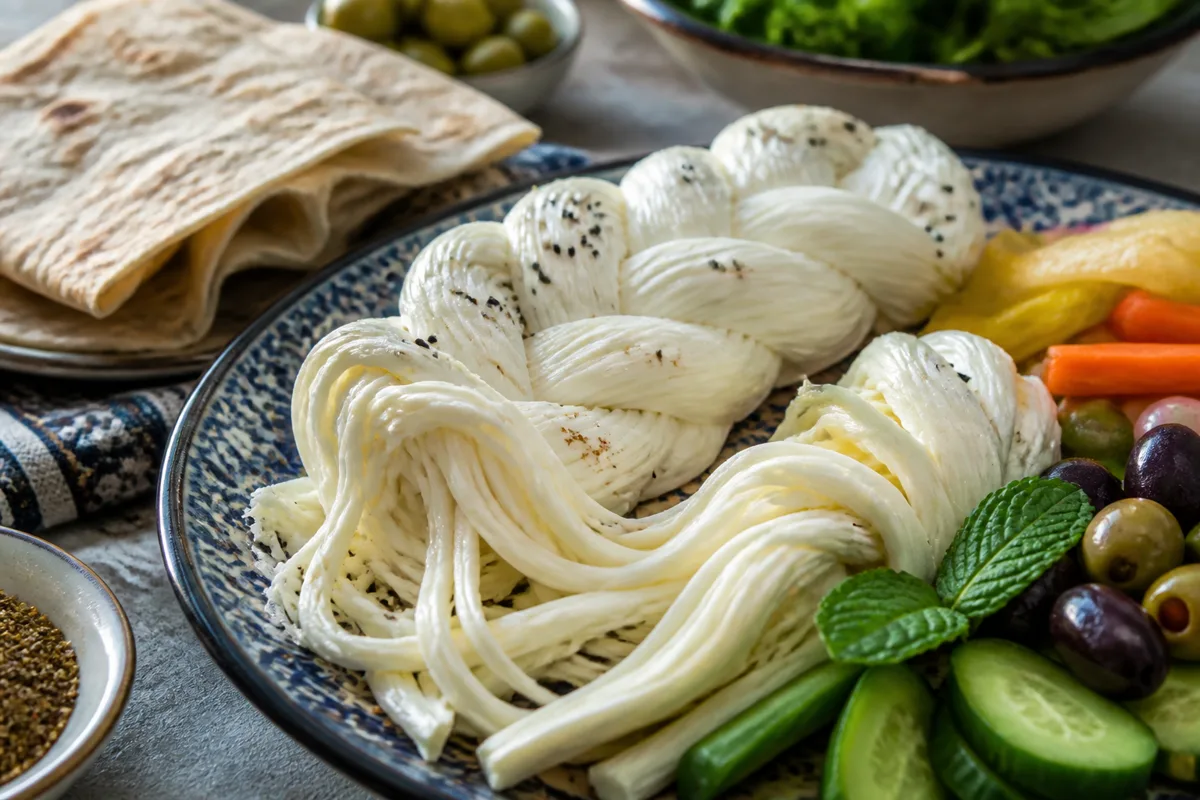
Armenian chechil is usually made from goat or sheep milk in Wikipedia's description, while Cheese.com says it can be made from cow's, goat's, or sheep's milk. Wikipedia gives it a white base seasoned with black cumin and mahleb, traditionally sold as a braided endless loop.
Wikipedia says chechil forms its strings from how the cheese is pulled during processing, while the American stick owes them to heating and stretching mozzarella. Mahleb is an aromatic spice made from cherry seeds, added to enhance the flavor.
| Attribute | American Snack Stick | Armenian Chechil |
|---|---|---|
| Shape | Roughly cylindrical, about 6 in long and under 1 in across | Traditionally a braided endless loop |
| Milk | Pasteurized dairy ingredients under the U.S. standard | Usually goat or sheep milk (Wikipedia); cow, goat, or sheep (Cheese.com) |
| Seasoning | None in Cheese Scientist's four-ingredient list: milk, culture, salt, enzymes | Black cumin and mahleb (Wikipedia and Cheese.com) |
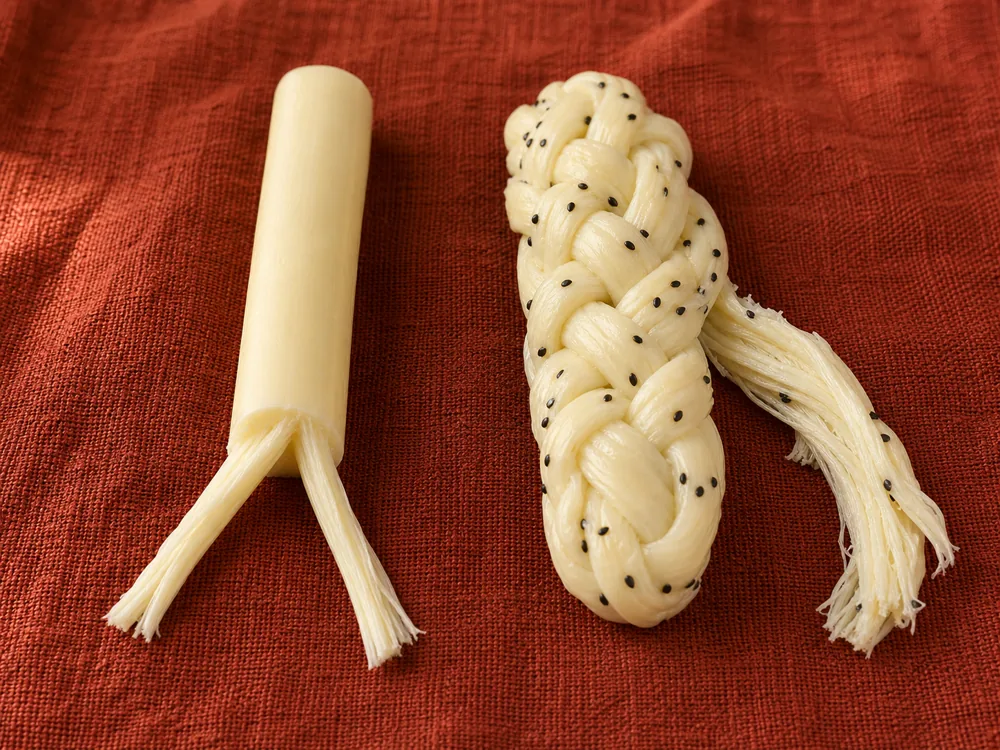
Wikipedia lists other regional string cheeses with their own milk and handling.
- Slovakia, korbáčiky: a salty sheep's milk cheese, smoked or unsmoked, traditionally made by hand-pulling steamed cheese into strings and braiding them; cow's milk versions exist.
- Turkey, dil peyniri: a fresh white cow's milk cheese made traditionally in the provinces of Bilecik and Bursa.
- Syria, jibneh mshalleheh: contains spices such as mahleb, cumin, anise, and caraway.
- Georgia, tenili: made from fermented sheep's milk and cream, matured for 60 days in a salted and dried veal stomach.
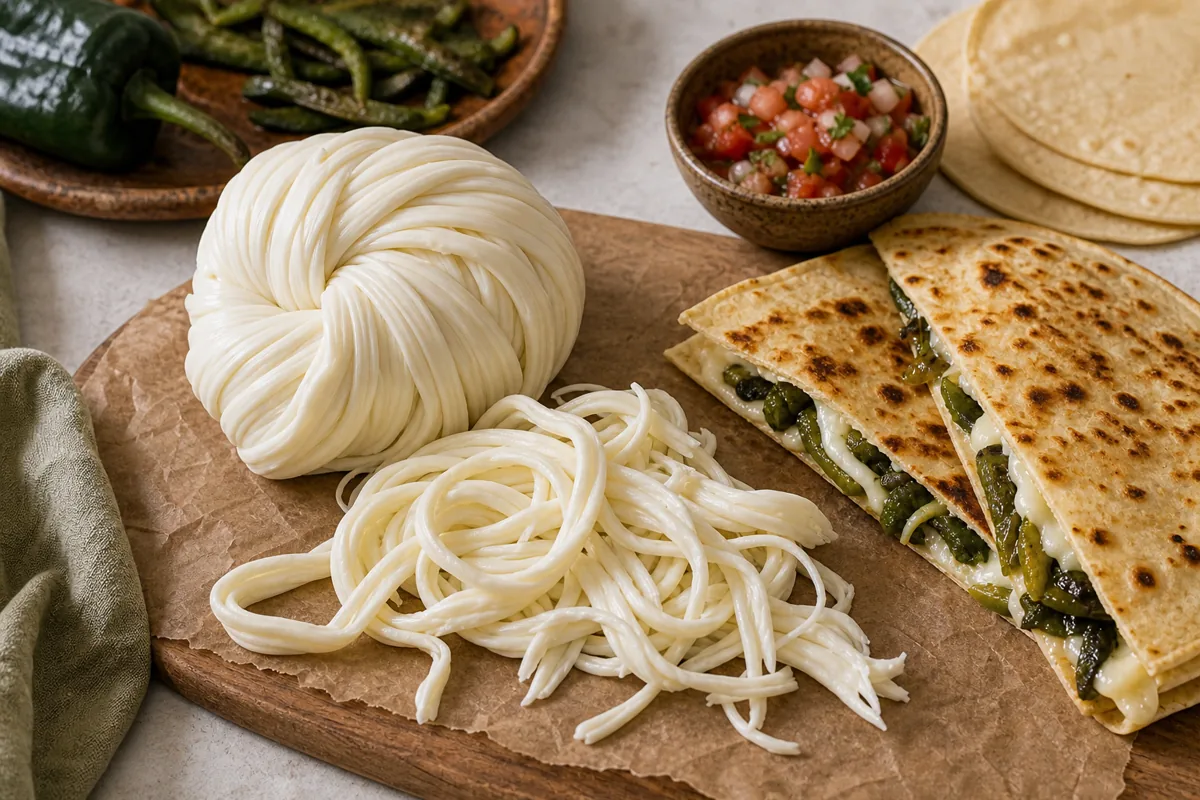
- Mexico, quesillo: sold in balls of various sizes and also known as Oaxaca cheese.
- Dominican Republic, queso de hoja: produced in the form of a ball and mostly served with toast or crackers.
- Australia, Bega Stringers: string cheese sold by the Bega Group.
Does String Cheese Melt?
Yes, with limits. Cheese.com's string cheese page names melting on pizza as a use, and it also says string cheese is "not specifically designed to melt like other types of cheese".
| Source | What it says |
|---|---|
| Cheese.com, string cheese page | It can be melted on top of pizzas, but string cheese is "not specifically designed to melt like other types of cheese" |
| Cheese Scientist | You can melt it, but its moisture is lower than mozzarella's, so you might not get the same over-the-top cheese pull |
| Stretching minireview (2021), calcium | Mozzarella with higher total calcium has a lower melting capacity; in one study the review cites, lowering the calcium mass fraction from 0.65 to 0.35 percent raised melting capacity 2.6-fold |
| Stretching minireview (2021), fat | Raising the stretching temperature from 55 to 75°C reduced elasticity and increased fat globule size and free oil content; the review calls both excessive and limited oil release defects when the cheese is heated |
The review covers mozzarella in general, so it explains why formulas can melt differently rather than predicting how one stick will behave.
Two levers recur: moisture and calcium. Cheese Scientist ties the weaker cheese pull to lower moisture, and the review ties lower melting to calcium crosslinks that stiffen the protein network.
Not every string cheese stays put under heat: Wikipedia says the stringy texture of Turkish dil peyniri becomes even more prominent when the cheese is melted.
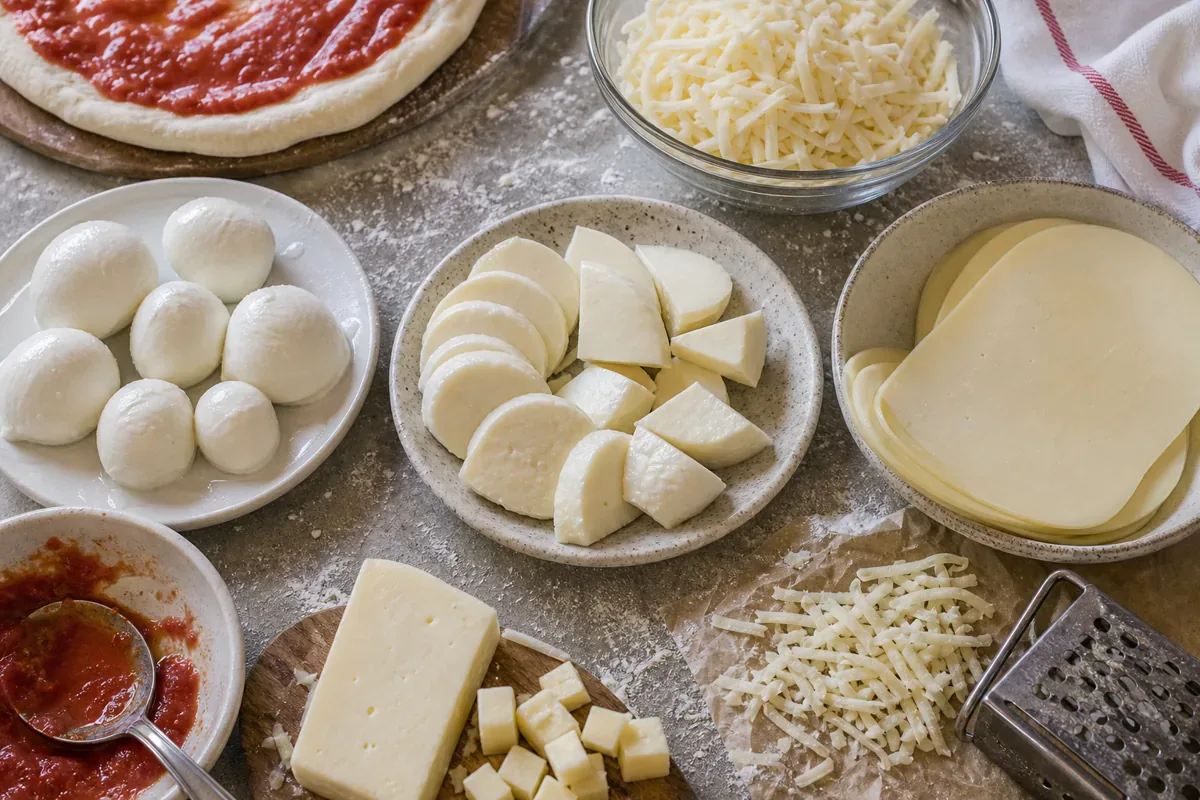
Cheese.com says grated string cheese brings satisfying cheese pull when it goes atop a pizza. It describes mozzarella as known for its mild flavor and superior melting properties.
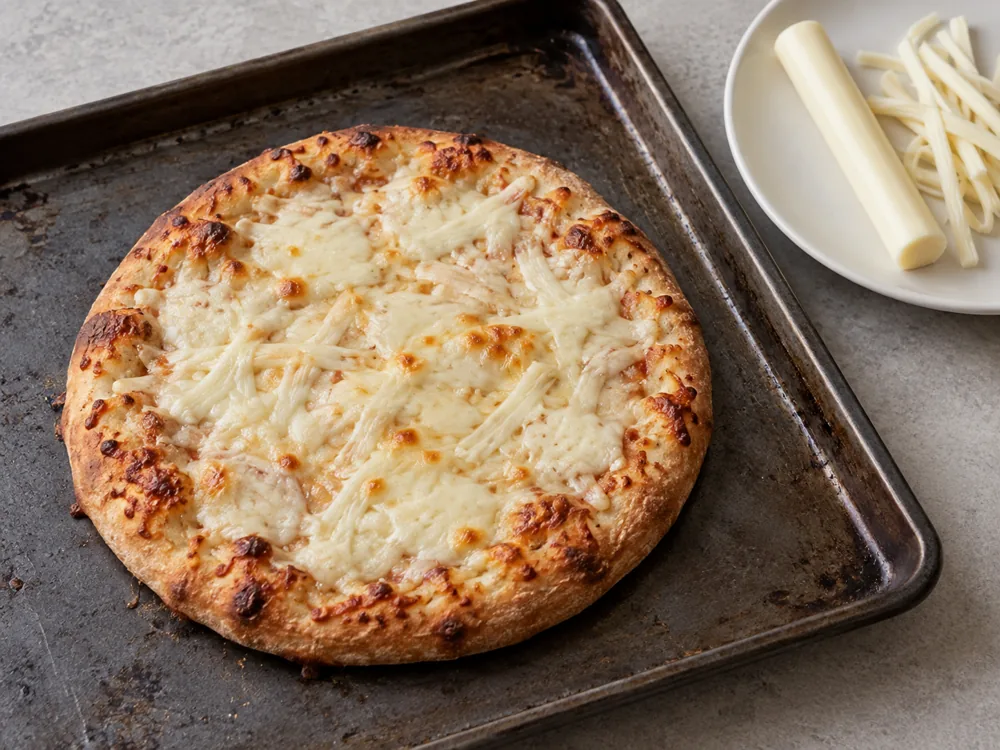
What Is String Cheese Used For?
Cheese.com says the stick's mild flavor makes it a choice for adding a touch of cheesiness without overpowering other ingredients, and it names three uses.
| Use | How It Works |
|---|---|
| Snack | Eaten on its own or paired with fruits or crackers, according to Cheese.com. |
| Salads | Cheese.com says it can be added to salads for a creamy touch. |
| Sandwiches and wraps | Cheese.com says it can be used as a filling for sandwiches and wraps. |
Cheese.com also says string cheese tastes more flavorful pulled into strings than eaten whole, because tearing exposes more surface area to saliva, which increases the release of flavors and aromas.
How Do You Choose a String Cheese Pack?
The front of a pack says string cheese whatever is inside, so the ingredient panel is where you tell one product from another.
A plain American stick has a short list. Cheese Scientist gives the four ingredients as part-skim cow's milk, starter culture, salt, and enzymes, and the U.S. standard lets a maker declare the clotting enzymes simply as enzymes.
The standard also allows safe and suitable extras in low-moisture mozzarella: vinegar, salt, coloring to mask any natural yellow color in the curd, calcium chloride at no more than 0.02 percent of the dairy ingredients' weight as a coagulation aid, and antimycotics.
Each ingredient used has to be declared on the label, so a longer list on a stick is permitted under the name and shows up on the panel.
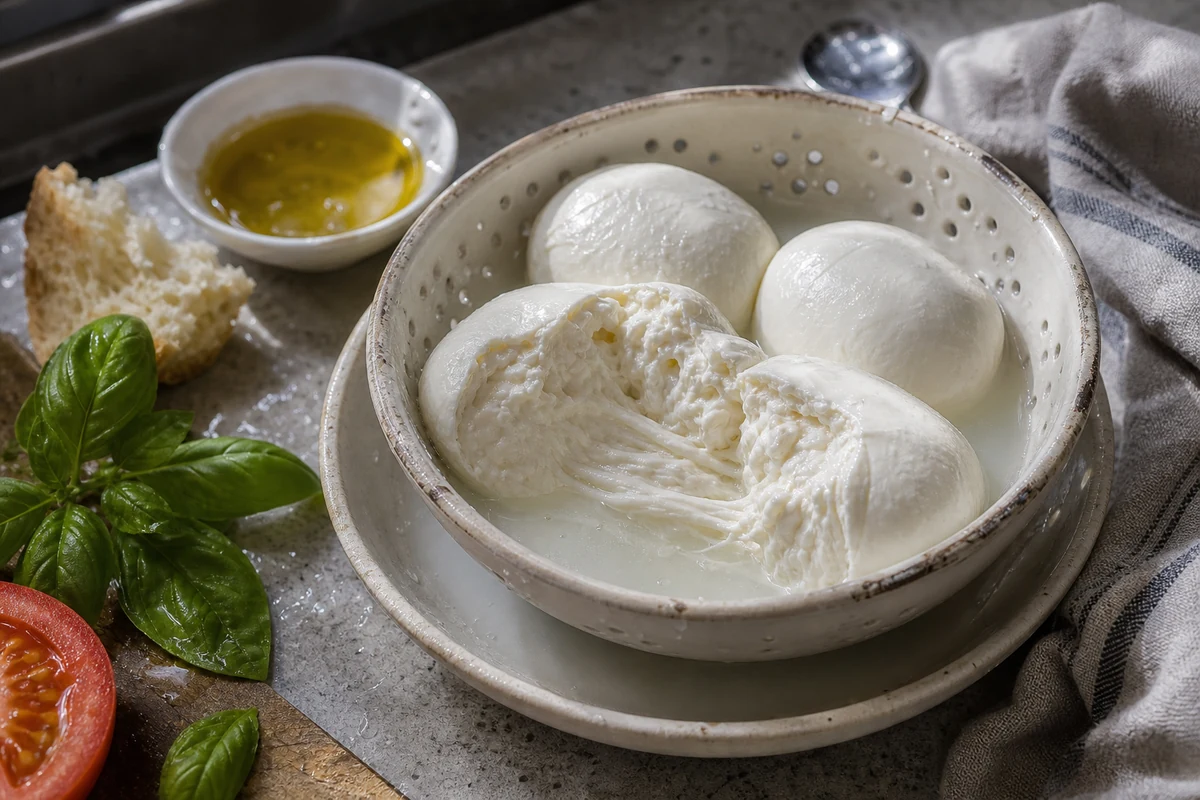
Milk is the other thing a panel can settle. The standard lets low-moisture mozzarella use water buffalo dairy ingredients as long as they are not combined with cow's milk products, and the name then carries the phrase made with water buffalo milk.
Read the legal name and the ingredient list together: low-moisture mozzarella with pasteurized milk, culture, salt, and enzymes is a plain stick. Anything beyond that is either an extra the standard allows and the panel must declare, or a different product such as seasoned chechil.
How Does String Cheese Nutrition Compare?
Penn State Extension's cheese table puts every cheese on a 1 ounce basis, and its string cheese row comes from one product's Nutrition Facts panel for a low-fat mozzarella string cheese, while the other rows use USDA and National Dairy Council data.
| Cheese | Calories | Fat | Sodium | Protein | Calcium |
|---|---|---|---|---|---|
| String cheese (one low-fat mozzarella label) | 80 | 6 g (4 g saturated) | 190 mg | 7 g | 200 mg |
| Mozzarella, whole milk | 85 | 6 g (4 g saturated) | 178 mg | 6 g | 143 mg |
| Mozzarella, skim milk | 84 | 6 g (3 g saturated) | 189 mg | 7 g | 198 mg |
| Provolone | 100 | 8 g (5 g saturated) | 248 mg | 7 g | 214 mg |
| Cheddar | 115 | 9 g (5 g saturated) | 185 mg | 6 g | 201 mg |
Sodium barely separates the stick from its neighbors: 190 mg per ounce against 178 mg for whole-milk mozzarella and 185 mg for cheddar, while provolone runs highest of the five at 248 mg. Calories do separate them, with cheddar at 115 against 80 for the string cheese label.
The calcium column needs care: the string cheese label lists 200 mg against 143 mg for whole-milk mozzarella, but the rows come from different kinds of source, so the gap cannot be put down to the stretching.
If you are watching sodium, Penn State Extension says limiting cheese to an ounce or two can help keep it in check. It defines one serving of natural cheese as 1½ ounces, which at the table's 190 mg per ounce works out by our arithmetic to about 285 mg of sodium.
Cheese.com says string cheese can still contain lactose. A Nutrition Facts panel has no lactose line, but Penn State Extension says a panel showing carbohydrate is showing lactose unless an added sugar appears in the ingredients, so the carbohydrate line on your pack is the figure to read.
How Long Does String Cheese Last?
Sargento's FAQ says its freshness date assures freshness in an unopened package only. Once you open the package and air reaches the cheese, mold can develop, so Sargento recommends using the cheese within 5 days of opening.
Sargento does not recommend freezing its cheese, because the packaging was not developed to withstand freezing temperatures and thawing may leave the cheese crumbled or clumped. Cheese.com says freezing is possible but can affect the texture.
The minireview describes one way freezing changes texture, though in high-moisture mozzarella: larger serum channels and fat clusters formed, and growing ice crystals can disrupt the casein matrix.
The same review says makers can use freezing to extend the functional shelf life of low-moisture part-skim mozzarella shipped to distant markets, which makes freezing a managed step for them rather than a verdict on the cheese.
FDA says to keep the refrigerator at or below 40°F (4°C), and not to leave foods that need refrigeration at room temperature for more than two hours, or one hour when the air is above 90°F (32°C).
Can You Eat String Cheese While Pregnant?
CDC lists string cheese made with pasteurized milk among the safer cheese choices for pregnant women, alongside pasteurized cottage cheese, cream cheese, feta, and mozzarella. CDC adds that pregnant women are 10 times more likely to get a Listeria infection.
NHS lists mozzarella among the pasteurised soft cheeses that are safe, and it says unpasteurised or soft ripened dairy foods may contain listeria bacteria. If you buy a braided or imported string cheese, the milk statement on its label decides, as it does for any cheese in pregnancy.
SOURCES & REFERENCES
What Else Do People Ask About String Cheese?
Wikipedia says American string cheese is commonly mozzarella or a mozzarella and cheddar combination. UK Cheestrings and Armenian chechil are also called string cheese.
Cheese Scientist says both use the same four ingredients, and that string cheese gets extra stretching that aligns the proteins further, plus slightly less moisture.
Stretching hot mozzarella lines up its proteins. A 2021 minireview describes a unidirectional fibrous structure, and Wikipedia says the proteins line up at about 60°C (140°F).
Cheese.com says it can be melted on pizza but is not specifically designed to melt like other types of cheese.
Sargento recommends using its cheese within 5 days of opening, and says the freshness date covers unopened packages only.
CDC lists string cheese made with pasteurized milk as a safer choice. Check the label for pasteurized milk, especially on braided or imported packs.