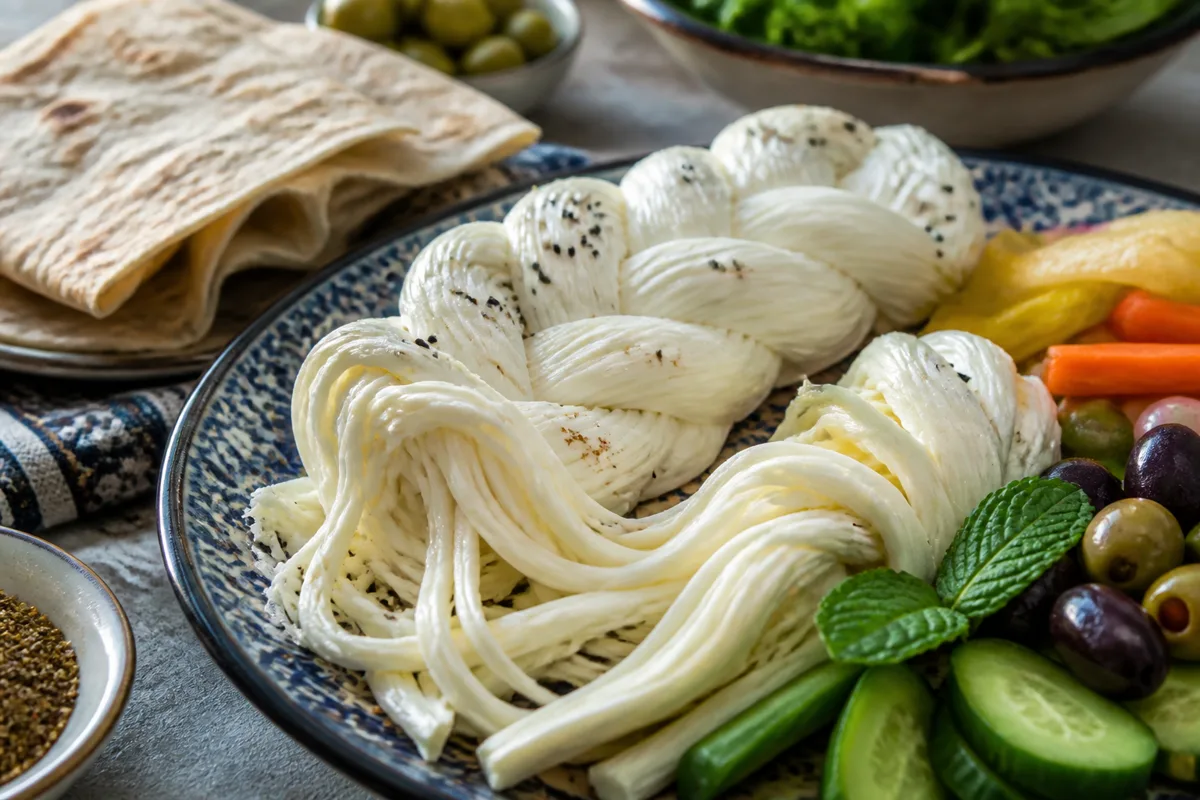
Armenian string cheese is a braided stretched-curd cheese that you pull into long, springy strands before eating. You may see it sold as Chechil, tel banir or tel panir, sometimes plain and sometimes scented with nigella and mahlab.
The braid does not guarantee one recipe. Milk, rennet, seasoning and salt vary by maker, so the package tells you more about the cheese in your hand than the general name does.
In This Article
How Do You Recognise the Right Braid?
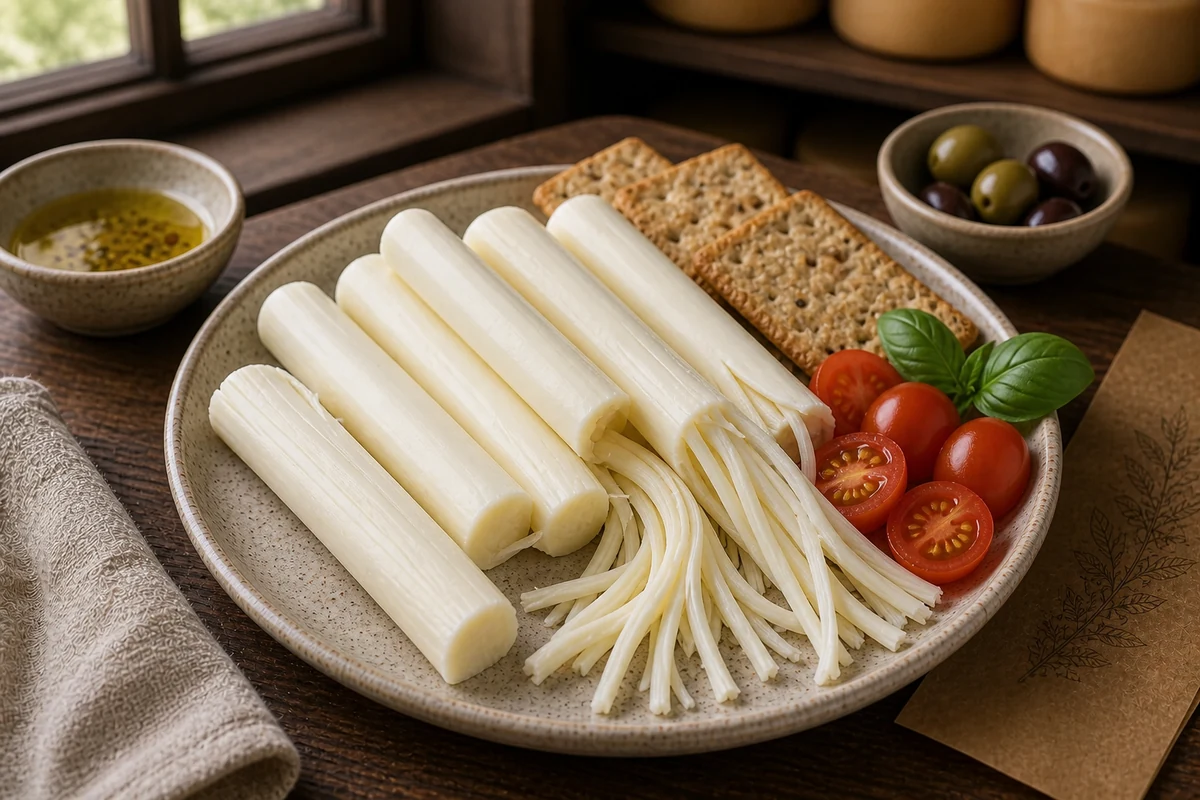
Look for a twisted loop or compact braid of white to pale cheese that separates along its length. Armenian string cheese is different from the short American mozzarella stick, even though both reveal fibres when you pull them apart.
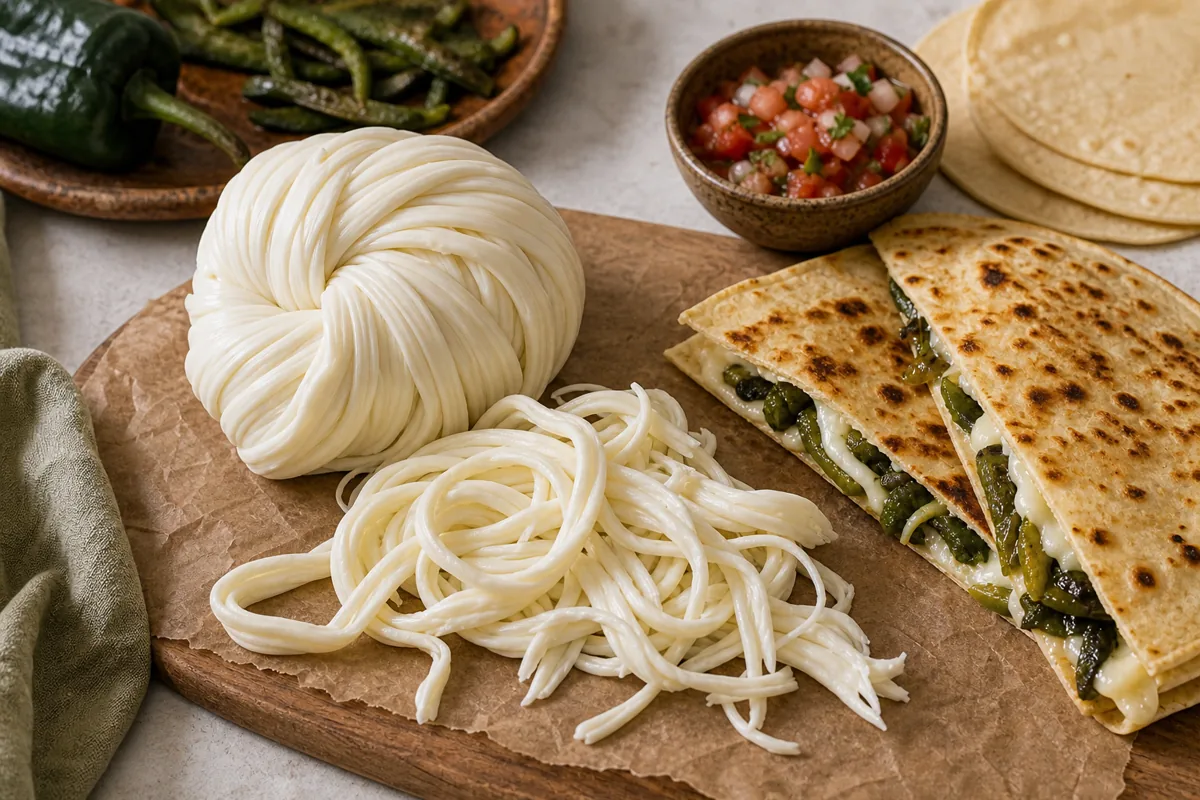
It also belongs to the wider stretched-curd family that includes Oaxaca cheese. The shared technique explains the strands, but it does not make the cheeses interchangeable in salt, milk or seasoning.
Chechil is the broad traditional name most likely to appear in reference material, while tel banir or tel panir literally points to string cheese and husats panir to the braided form.
A shop may use one of those names without repeating “Armenian string cheese” on the front.
Syrian string cheese is closely related, but some producers sell it as a separate product with its own seasoning and format. If a label uses only “string cheese,” the braid, country of origin and ingredient list are more reliable identifiers than the English name alone.

Why Does It Pull Into Strings?
The curd is heated until it can stretch, then gathered, kneaded and drawn into ribbons before being looped into skeins or braids. In a traditional Chechil description, the curd reaches about 48-54°C before it is stretched.
Before that stretch, the milk is soured and the curd is set warm; the traditional description gives setting temperatures around 38-40°C.
Heating the set curd further changes it from separate flakes into a mass that can be pulled as a continuous ribbon.
That treatment aligns the milk proteins, so the finished cheese tears with the grain instead of crumbling across it. Sun-Ni describes its version as cooked, stretched and hand-braided, then sealed in an airtight bag.
Braiding is the final shaping step, not the reason the strings exist.
The fibres form during acidification, heating and stretching; the braid gathers those long strands into a compact package that you can pull apart at the table.
You can imitate the shape at home with fresh mozzarella curd, but that shortcut begins after the cheesemaking stage. The home method focuses on warming, stretching, seasoning, looping and braiding the curd.
What Should You Check on the Label?
Start with milk and coagulant if diet or pregnancy matters to you, then check salt and seasoning. A plain Karoun braid and a nigella-and-mahlab Sun-Ni braid can look related while tasting noticeably different.
| Version | Milk and coagulant | Salt or seasoning | What it changes for you |
|---|---|---|---|
| Traditional Chechil description | Mostly skimmed cow's milk, with mixed cow, sheep or goat versions; rennet or pepsin | Brined, with a high finished salt level | Expect a leaner, firmer and saltier reference style |
| Sun-Ni braid | Pasteurised whole cow's milk, vinegar and rennet | Salt, black nigella seeds and mahlab | Expect aromatic seasoning in the strands |
| Karoun Original | Pasteurised reduced-fat cow's milk with non-animal kosher rennet on the US label checked | Salt; the US ingredient list checked is unspiced | A plainer braid and a vegetarian coagulant on that product |
Seasoning is optional, not defining. If you specifically want black seeds or the warm perfume of mahlab, confirm them in the ingredients rather than assuming every Armenian braid contains them.
Salt varies just as much. A Karoun nutrition panel lists 850 mg sodium per 30 g, while the traditional Chechil description gives a much broader brined-cheese range, so portion size and rinsing can materially change your plate.
Milk fat varies too: a reduced-fat commercial braid does not represent every Chechil, and a whole-milk version will feel richer even when both pull into similar strands. This is why texture alone cannot tell you which milk or coagulant was used.
Smoked and marinated braids add another layer of variation. Treat those words as product distinctions, because smoke, oil or seasoning changes what the cheese contributes to a mezze plate and which package directions apply.
Should You Rinse Armenian String Cheese?
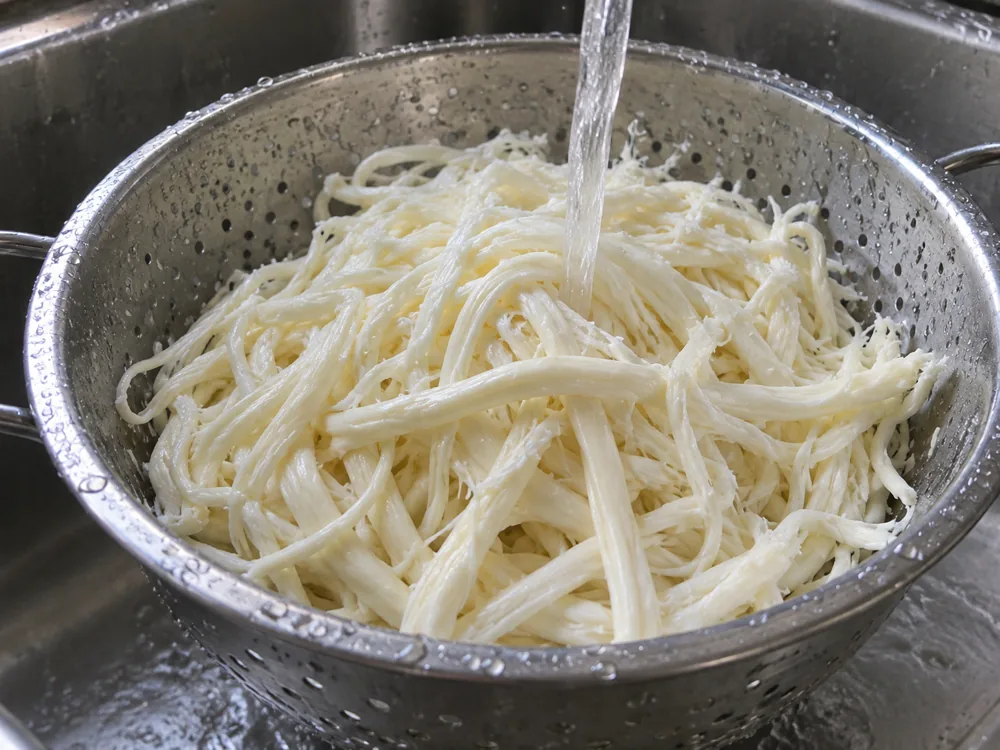
If the first strand tastes too salty, separate a small portion and rinse it under cold water. Karoun's serving directions use that light rinse, while traditional Chechil may be soaked in warm or cold water before eating.
There is no single soaking time that fits every braid. Taste after a brief rinse, then repeat only if you still need less salt; this keeps you from washing away more flavour than necessary.
Rinse the portion you plan to eat rather than the entire package.
Once the strands are separated and wet, they expose more surface area and lose moisture faster in the refrigerator.
The same Karoun panel lists 850 mg sodium per 30 g, which puts the tasting step in context: a small handful can carry substantial salt before bread, olives or other brined foods join the plate. If sodium is a medical concern, the package panel and your clinician's advice matter more than whether the cheese tastes mild after rinsing.
How Can You Serve or Warm It?
Pull the braid apart before serving so people can take a few strands rather than cutting dense slices. Bread, olives, vegetables and fruit give you a mezze-style plate, while Armenian breads such as chorag or simit make the serving more specific to the cheese's food culture.
Use fresh, acidic fruit rather than another heavily salted accompaniment when the braid remains briny after rinsing. The same balance behind a broader cheese-and-fruit pairing works here, but the fruit should support the seasoning rather than hide nigella or mahlab.
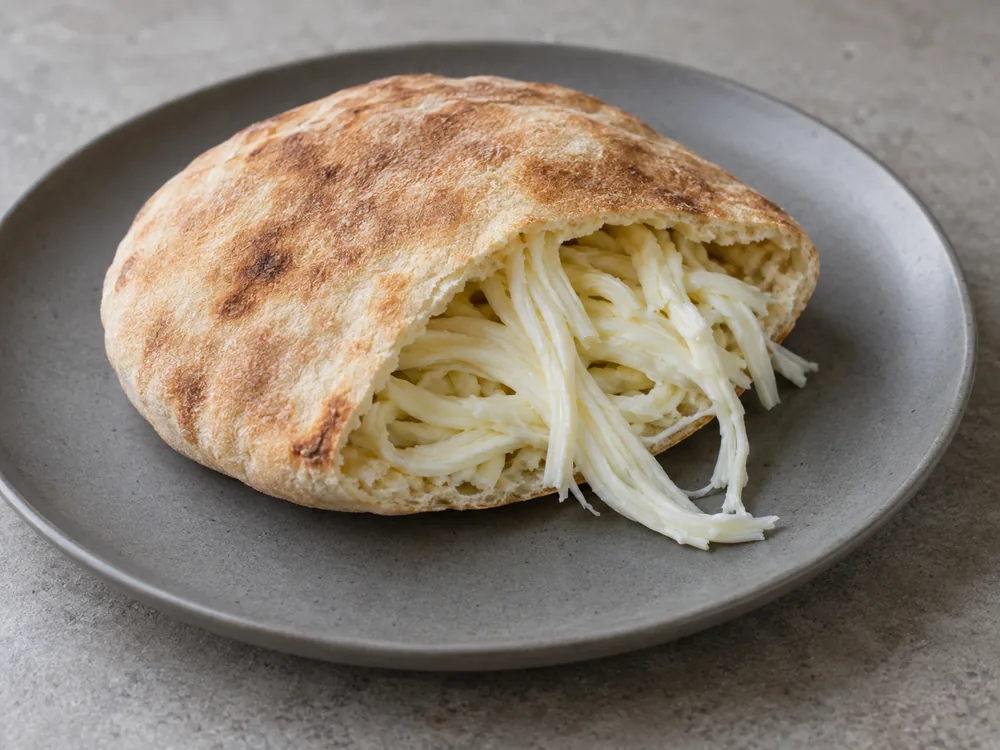
For a warm snack, tuck the strands into pita and heat only until they soften. The cheese can join other melting cheeses, but it is valued for its fibres, so a gentle warm-up preserves more of the texture than cooking it into a smooth sauce.
A plain braid gives you the most flexibility for warming because its salt and smoke do not dominate the filling.
With a seasoned or smoked version, taste first and keep the bread and vegetables simple.
| Pairing | Type | Why It Works |
|---|---|---|
| Chorag or simit | Food | The lightly sweet or sesame-rich breads give the salty strands a soft, chewy base. |
| Olives and vegetables | Food | Fresh and briny accompaniments make a simple mezze plate without hiding the cheese. |
| Fruit | Food | Fresh sweetness balances a salty braid, especially after only a light rinse. |
| Armenian coffee | Drink | A small strong coffee suits a breakfast or snack plate with bread and fruit. |
If you need a substitute, fresh mozzarella can cover the mild dairy flavour and stretching family, but it will not reproduce the braid's salt or seasoned strands. Oaxaca cheese is closer in pull-apart structure and still brings its own moisture and flavour.
How Should You Store the Braid?
Keep a retail braid refrigerated in its sealed package until opening, then follow the date and instructions on that exact pack. Pull off only what you need and return the rest quickly so the exposed strands do not dry out.
After opening, press the remaining braid back into a compact shape and protect it from circulating refrigerator air. The principles in storing cheese still apply, but the manufacturer's package date takes priority over a general estimate.
A homemade braid has a different clock: the published home recipe gives about one week refrigerated or two months frozen when wrapped and bagged. Those times should not be transferred to every commercial product.
Freezing is most defensible when the maker explicitly allows it or when you are following the homemade recipe that supplies the two-month figure. A commercial braid with no freezing instruction should stay within its own refrigerated date rather than borrowing the homemade limit.
Can You Eat the Braid During Pregnancy?
The Sun-Ni and Karoun products list pasteurised milk, but a handmade or imported braid may use a different milk treatment. Check the word “pasteurised” on your own package before applying advice written for another brand.
NHS guidance permits pasteurised soft cheeses such as mozzarella and says cheese cooked until steaming hot is safe, while CDC guidance treats unpasteurised soft cheese as a higher-risk choice. Armenian string cheese is not named by either agency, so use the milk statement and the pregnancy guidance for cheese in your country.
The label still needs to match the cheese you will actually eat. A pasteurised Karoun or Sun-Ni braid cannot establish the treatment of an unpackaged braid from another maker, and heating advice applies only when the cheese becomes steaming hot throughout.
No. American string cheese is usually a short low-moisture mozzarella stick, while Armenian string cheese is a braid that may be brined and seasoned.
Many versions are brined, and one Karoun label lists 850 mg sodium per 30 g. Rinsing separated strands can reduce surface salt before serving.
It can soften and melt, but its pull-apart fibres are part of the appeal. Warm it gently in bread when you want to keep some strand structure.
It depends on the product. The Karoun US Original label checked uses non-animal rennet, while the Sun-Ni ingredient list checked names rennet without making the same claim.
Fresh mozzarella is a mild substitute, while Oaxaca cheese comes closer to the pull-apart structure. Neither automatically matches the salt or seasoning of the braid.