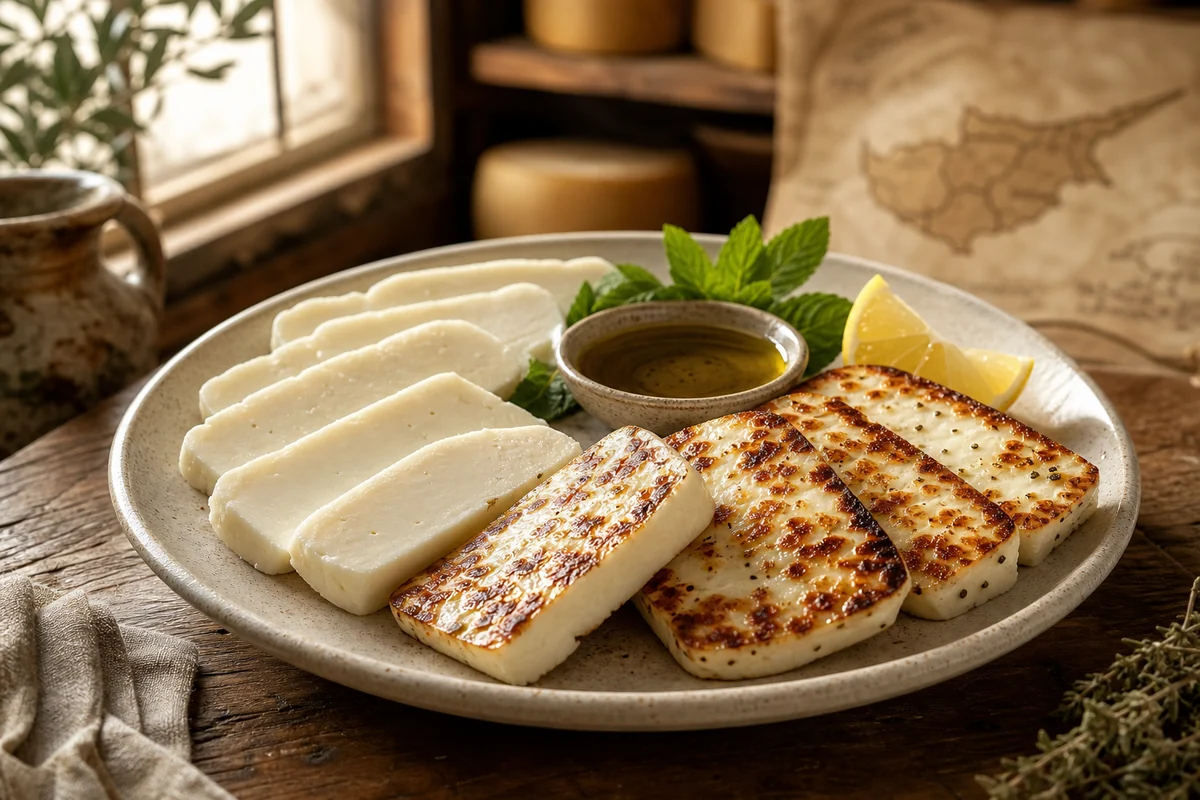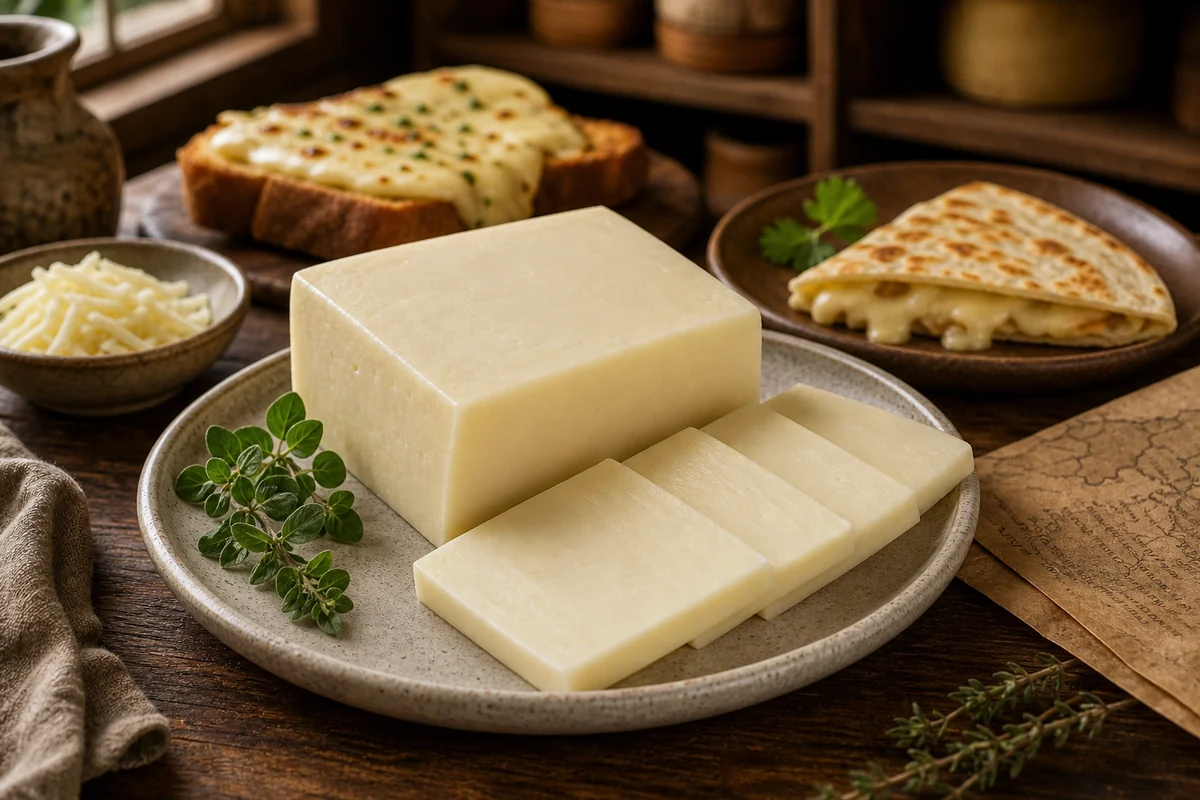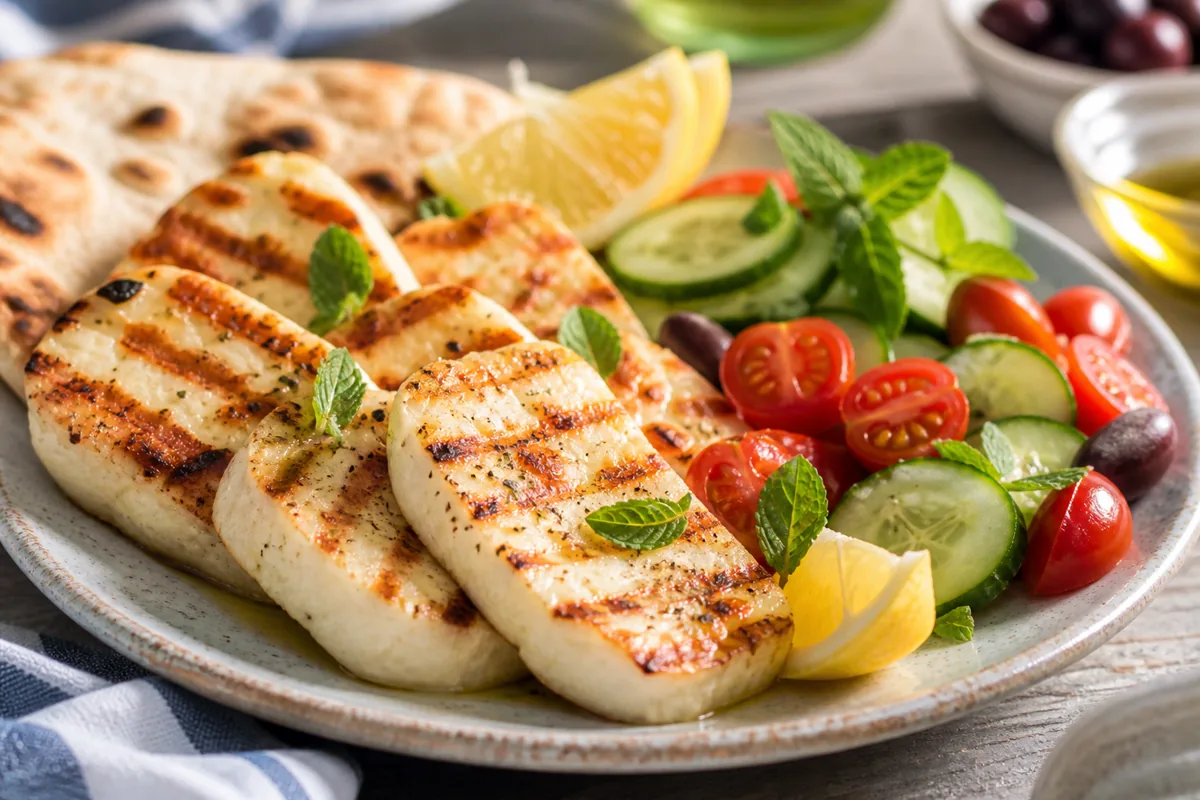
Aphrodite Haloumi is a Cyprus-made halloumi that Will Studd sells as a handmade cheese from goat's and ewe's milk. It browns in a hot pan or on a grill instead of melting, and two retailers list it as pasteurized.
Cheese.com describes a goat-milk-only Aphrodite instead, so the milk and texture printed on your own pack decide what you are cooking.
In This Article
What Is Aphrodite Haloumi, and Where Do the Sources Disagree?
Will Studd says he came across this cheese while filming in Cyprus. His page calls it one of the few halloumis still formed into pockets by hand, made from a combination of goat's and ewe's milk.
Four records describe it, and they do not all agree.
| Source | Milk | Milk treatment | Texture and flavor wording |
|---|---|---|---|
| Will Studd product page | Goat's and ewe's | Not stated | Firm yet elastic; ewe's milk fat gives a brown crust when grilled or fried; "subtle lingering lemony tang" |
| Whole Foods Market listing | Goat's and ewe's, plus salt, non-animal rennet and dried mint | Pasteurized | Not described |
| The Artisan Cheese Room | Sheep's and goat's | Pasteurised | High melting point, squeaky; "firmer, saltier and more characterful than mass-produced alternatives" |
| Cheese.com, "Aphrodite Goat Milk Halloumi" | Goat's only | Pasteurized | Soft and moist, lemony, tangy, strong aroma |
Cheese.com is the outlier on both milk and texture, and nothing we fetched explains the difference. Will Studd's page, Whole Foods and The Artisan Cheese Room agree on two milks, so that is the cheese this article describes.
Whole Foods lists non-animal rennet and warns that manufacturers can change ingredient lists, so the pack in your hand outranks any listing.
What Does the Cyprus Protected Name Require?
Will Studd's page carries the PDO label for this cheese. Under the Halloumi/Hellim protected name, the cheese must be made in Cyprus to a written specification that was last amended in 2022.
The specification requires sheep's or goat's milk, or a mixture of both, to make up more of the cheese than any cow's milk, plus rennet (not pig rennet), Cypriot mint and salt. The milk must be pasteurised or heated above 65 °C.
Mixed milks must appear on the label in decreasing order of percentage. Whole Foods names goat's milk before ewe's milk, which would make goat's the larger share if that rule was followed, but no listing gives percentages.
| Measure | Fresh | Mature |
|---|---|---|
| Body | Semi-hard, elastic | Semi-hard to hard, less elastic |
| Ripening | None stated | At least 40 days in salted whey |
| Maximum moisture | 46% | 37% |
| Minimum fat in dry weight | 43% | 40% |
| Maximum salt | 3% | 6% |
| Weight per cheese | 150 to 350 g | 150 to 350 g |
No Aphrodite listing says whether it is fresh or mature, so the table shows the protected limits and not measurements of this brand.
The Cyprus trade service's ingredients page still gives 52% maximum moisture for fresh halloumi and pieces of 150 to 1,200 g. That differs from the 2022 Official Journal text, which is the source of the figures above.
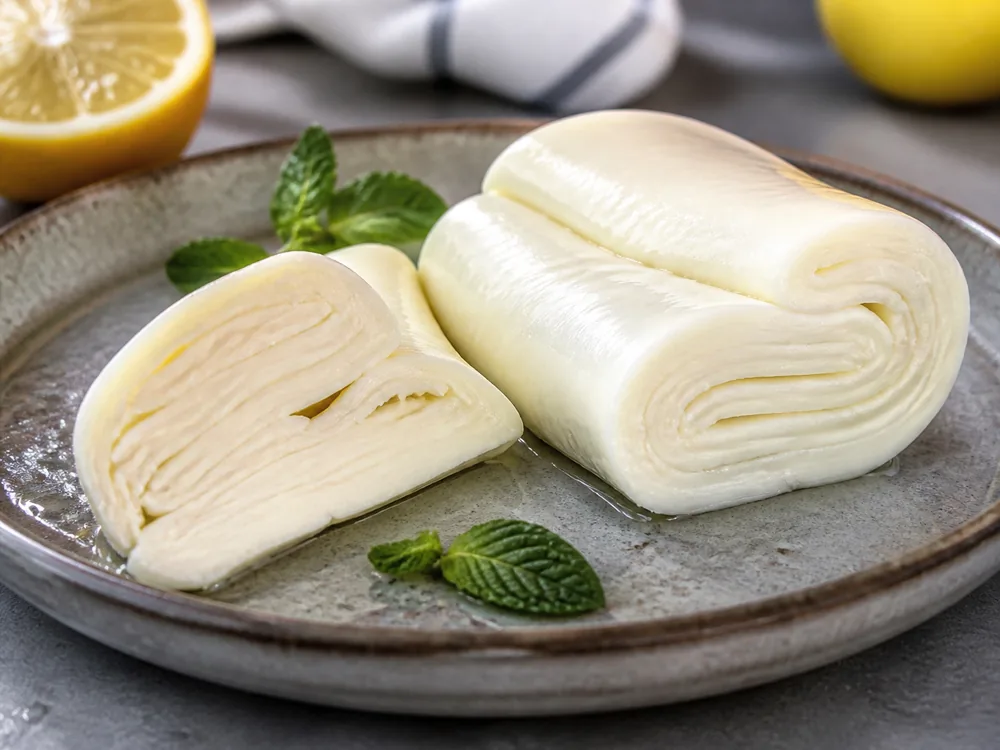
The specification describes a folded shape, rectangular or semi-circular, with mint placed between the curd layers as the cheese is folded.
Why Does Aphrodite Haloumi Brown Instead of Melting?
The specification lists one property first: halloumi does not spread or melt at high temperatures, so it can be fried or grilled. It traces that property to the traditional production process, which includes heating the curds in whey at over 90 °C for at least 30 minutes.
For this brand, Will Studd credits the ewe's milk: its fat forms a brown crust when the cheese is grilled or fried. The goat's milk gives a firm yet elastic texture.
The squeak has thinner support. The Artisan Cheese Room calls the texture squeaky, and Cheese.com's general halloumi entry puts the squeak down to a high melting point and proteins that pack tightly when the cheese is grilled or fried.
The protected-name specification never mentions squeaking, so that explanation rests on one reference site.
How Should You Cook and Serve Aphrodite Haloumi?
Will Studd's how-to page says to use medium to high heat, butterfly the halloumi at its natural seam so it becomes two pockets, and fry it. It then cuts thin strips before serving and adds a squeeze of lemon.
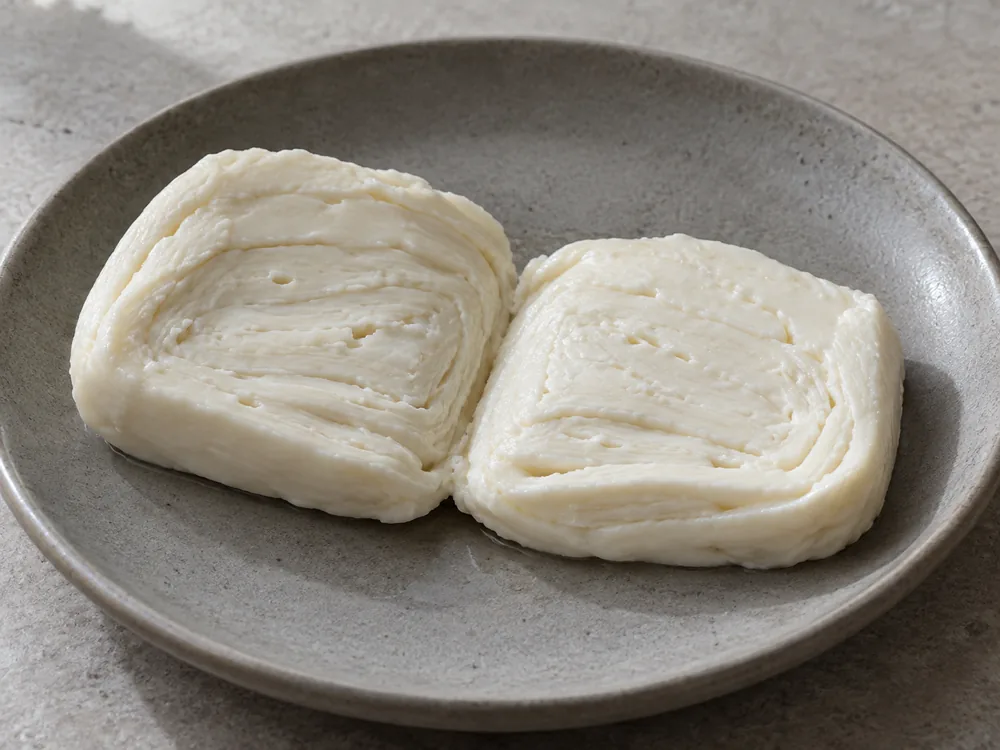
The Artisan Cheese Room says the opposite about thickness: slice it thickly, cook it hot and fast, and serve it immediately, whether grilled, pan-fried or barbecued.
Neither seller gives a pan temperature in degrees or a time per side, so we cannot offer a timed recipe.
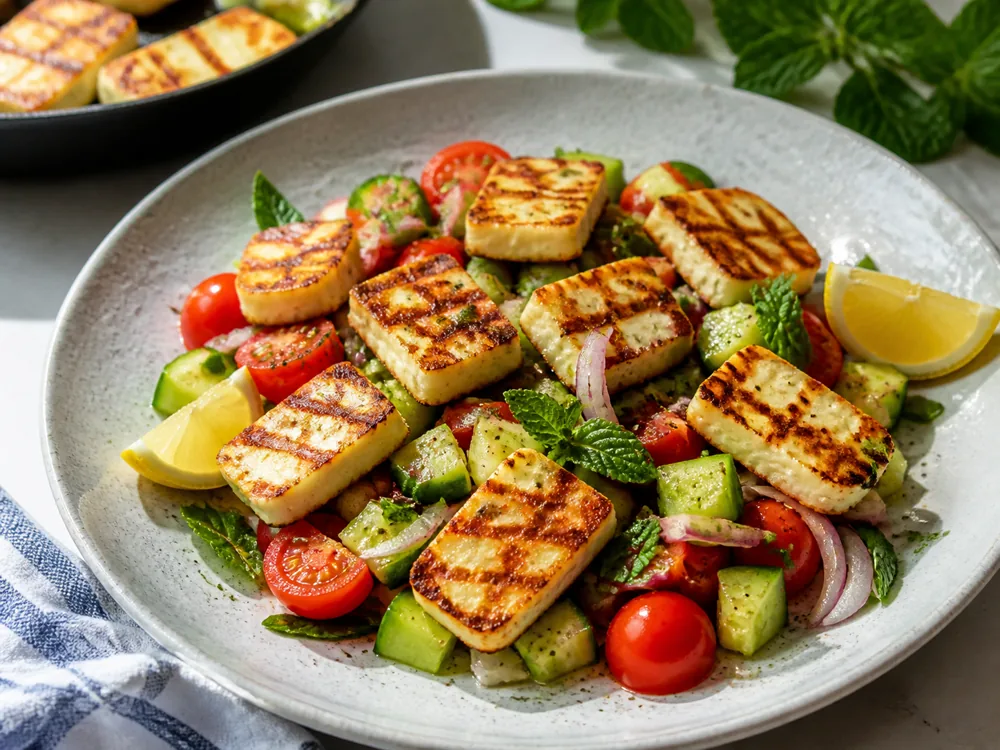
Salt comes with the cheese. The specification describes a pungent, salty taste, and the Whole Foods label lists 280 mg sodium in a 1-inch cube (93 calories, 7 g fat, 6 g protein) without giving the weight of that cube.
| Use | How It Works |
|---|---|
| Lemon, honey, molasses | Will Studd finishes fried halloumi with lemon, honey or pomegranate molasses. |
| Tomato, watermelon, mint | The Artisan Cheese Room pairs it with tomatoes, watermelon, mint and lemon, and suggests a dry rosé or Assyrtiko. |
| Fries and burgers | Will Studd's site lists halloumi fries with panko crumbs and a halloumi burger among its recipes. |
Cheese.com's general halloumi entry adds salads, sandwiches and wraps as uses.
Is Aphrodite Haloumi Safe During Pregnancy?
Two retailers list this cheese as pasteurized: Whole Foods names pasteurized goat's and ewe's milk in its ingredients, and The Artisan Cheese Room says pasteurised milk. The NHS names halloumi among the pasteurised soft cheeses it lists as safe to eat in pregnancy.
The CDC lists feta and mozzarella made with pasteurized milk as safer choices, and says pasteurized soft cheeses are safer when heated to an internal temperature of 165°F (74°C) or until steaming hot. Served cold, Aphrodite Haloumi is described as a pasteurized semi-hard, firm yet elastic, or soft and moist cheese, a type the CDC list does not cover, so ask a midwife or doctor.
The protected name allows milk that is pasteurised or heated above 65 °C, so neither the brand nor the PDO label proves pasteurization.
If a label shows milk that was only heated above 65 °C and not pasteurised, the NHS says foods made from unpasteurised milk must be thoroughly cooked, and the CDC lists unpasteurized (raw) milk and dairy products made from raw milk as riskier.
How Do You Buy and Store Aphrodite Haloumi?
Will Studd calls Aphrodite a handmade, random-weight product, while Mayers' trade listing shows 14 packs of 225 g with a 230 g unit weight.
His halloumi page says handmade halloumi is recognisable by an irregular shape and a rough fold in half, whereas industrial halloumi usually comes as small uniform blocks.
Whole Foods Market carries it in the US, and Will Studd's page lists Australian stockists.
None of the Aphrodite listings gives storage instructions or a shelf life. Cheese.com's general halloumi entry says fresh halloumi lasts up to two weeks in the refrigerator, tightly wrapped or in brine, and is best eaten within a few days once opened.
What Can Replace Aphrodite Haloumi?
The closest replacement is another halloumi made to the Cyprus specification, since the non-melting property is written into the protected name and not only into this brand.
| Closest match | Another Cyprus PDO halloumi |
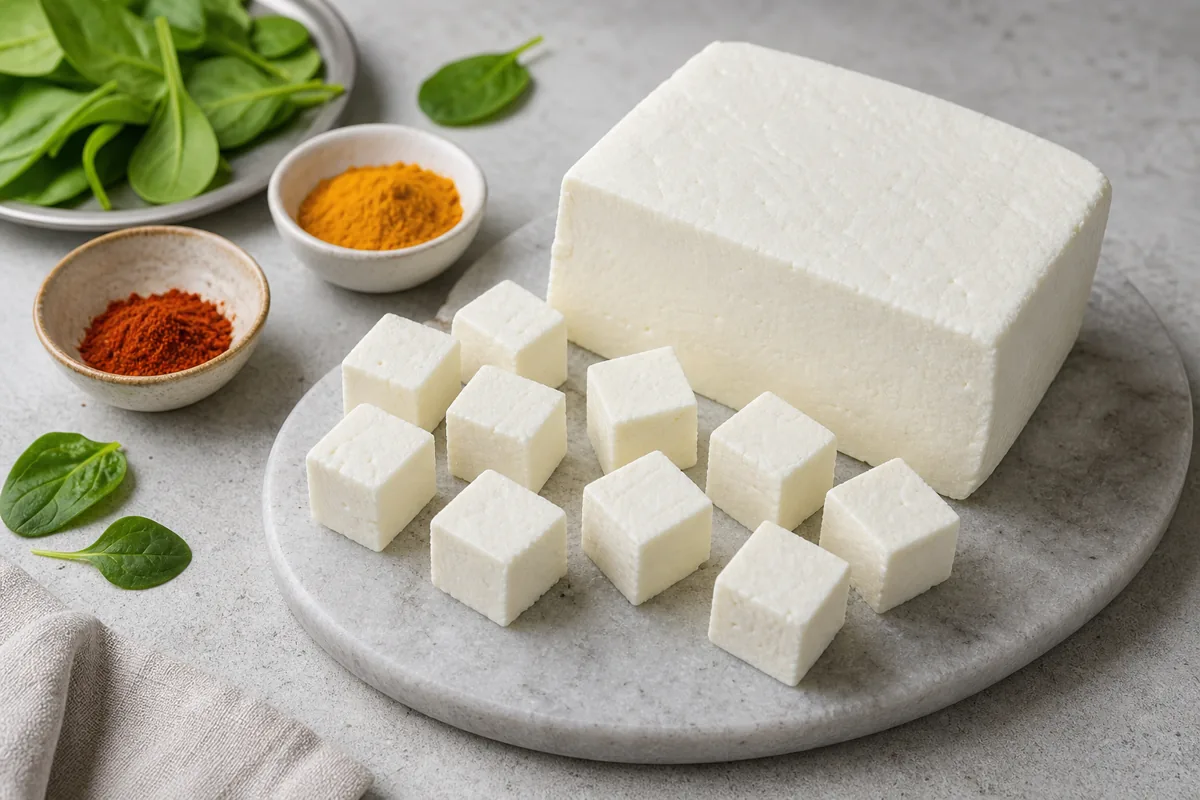
| Non-melting fresh cheese | Paneer |
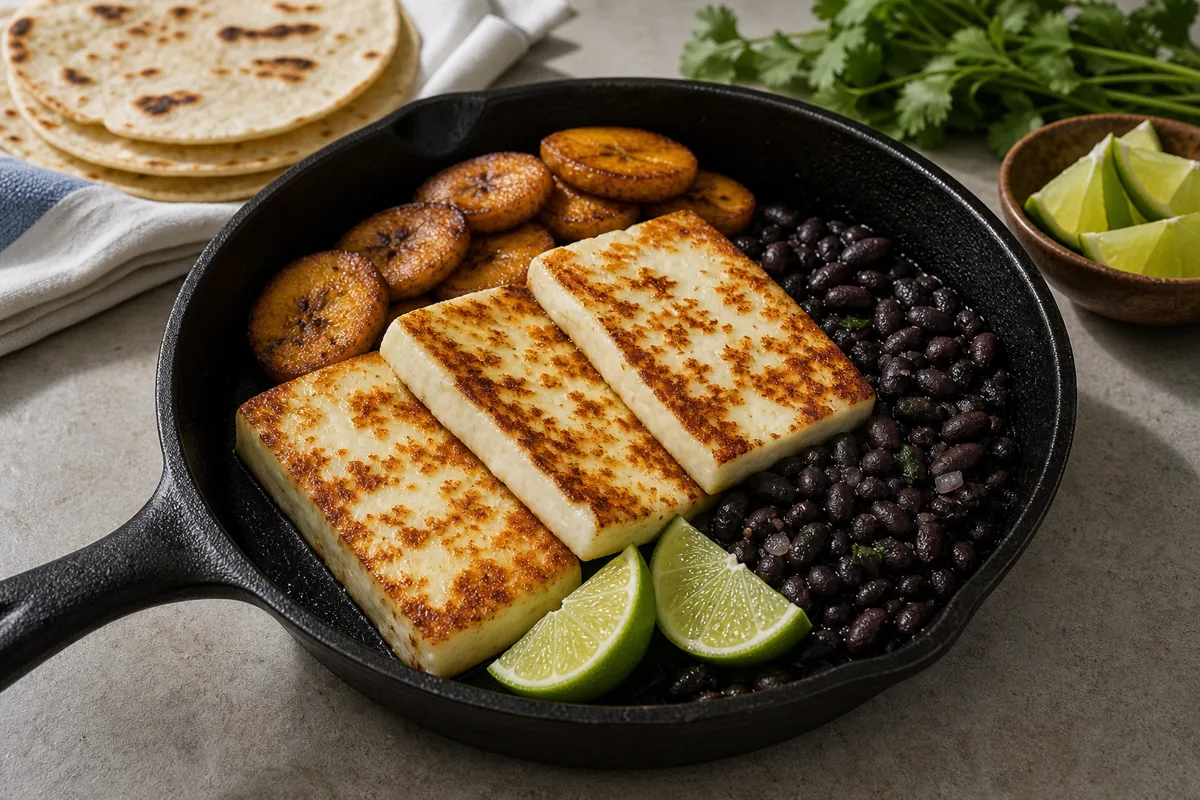
| Firm frying cheese | Some queso blanco |
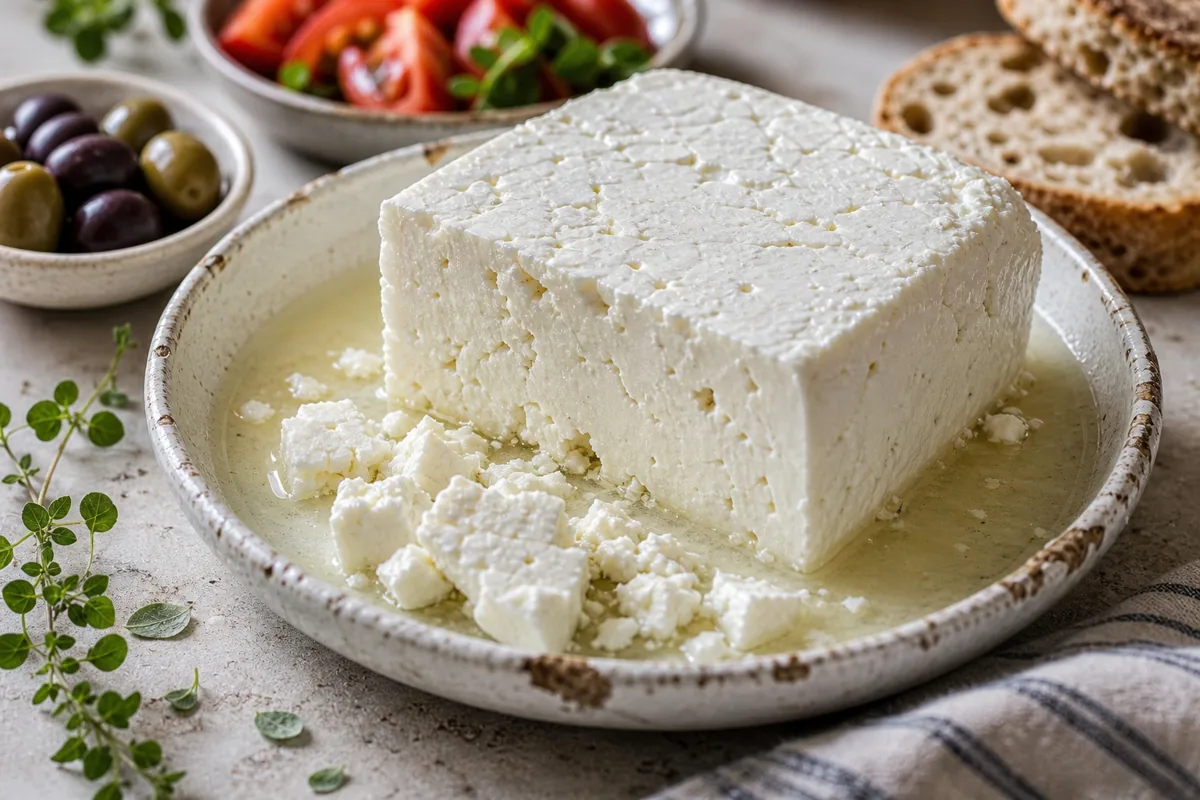
| Salty crumble | Feta |
Wikipedia describes acid-set paneer as a non-aged, non-melting cheese set with acid from cow's or buffalo milk, so it holds its shape but starts from different milk than Aphrodite.
Wikipedia also says most queso blanco varieties soften instead of melting, and that firm Dominican and Nicaraguan versions are fried as queso frito.
It describes brine-aged feta as crumbly, though it can be served grilled, so it gives a different result from a halloumi slice.
A recipe that needs a stretch or a sauce calls for a cheese picked for melting, because halloumi's protected specification is built on not melting.
SOURCES & REFERENCES
It is a handmade Cyprus halloumi that Will Studd sells, listed as goat's and ewe's milk and pasteurized by Whole Foods and The Artisan Cheese Room. Cheese.com lists a goat-milk-only version instead.
Will Studd, Whole Foods and The Artisan Cheese Room list goat's milk together with ewe's (sheep's) milk. Only Cheese.com lists goat's milk alone, so check the pack.
Two retailers list it as pasteurized, and the NHS lists pasteurised soft cheeses such as halloumi as safe to eat and says foods made from unpasteurised milk must be thoroughly cooked. Served cold, Aphrodite Haloumi is described as a pasteurized semi-hard, elastic or soft cheese, a type the CDC list does not cover, so confirm pasteurized on your own pack and ask a midwife or doctor.
The Cyprus protected-name specification says halloumi does not spread or melt at high temperatures. Will Studd says this brand's ewe's milk fat gives a brown crust when it is grilled or fried.
Will Studd says medium to high heat, splitting the cheese at its seam and frying it. The Artisan Cheese Room says to slice it thickly and cook it hot and fast, and neither gives times.
Another Cyprus PDO halloumi is closest. Paneer is non-melting, most queso blanco softens under heat, and feta is crumbly and aged in brine.