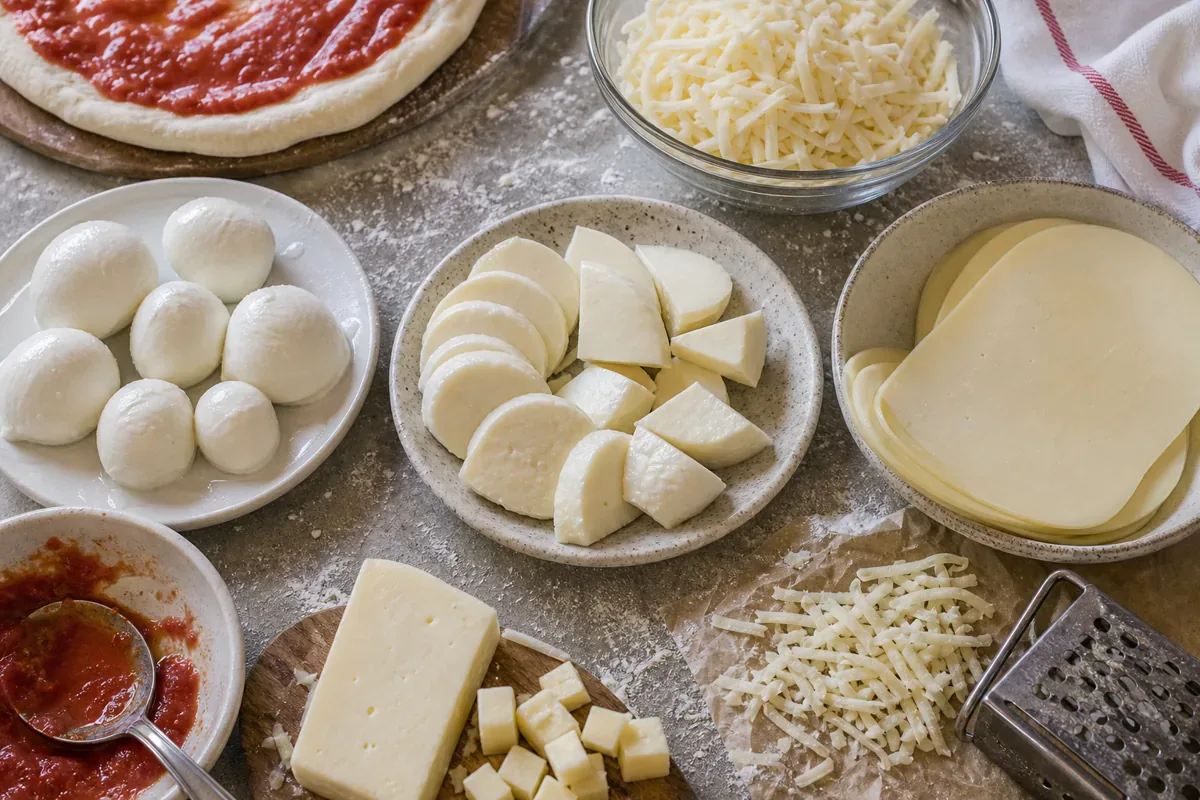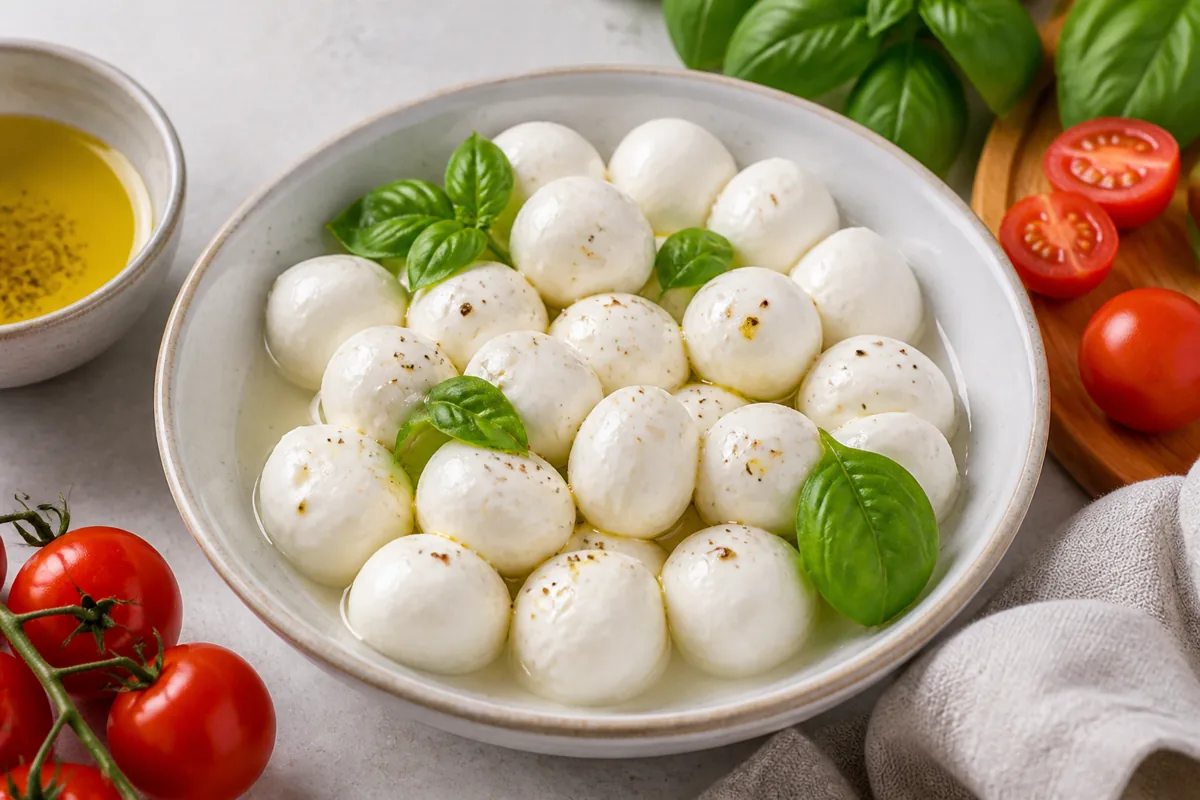
Bocconcini are small balls of fresh mozzarella, and Cheese.com translates the Italian name as "little mouthfuls". The BelGioioso and Brimi labels list pasteurized cow's milk, and buffalo-milk versions also exist, some under a protected name.
Sources disagree on how big one ball is, so the weight per piece, where a maker gives it, tells you more than the name.
In This Article
What Are Bocconcini?
English Wikipedia describes mozzarella as a semi-soft cheese that is not aged, made by the pasta filata, or stretched-curd, method, with a long history in southern Italy. Bocconcini are that cheese shaped into bite-sized balls, which Wikipedia says are sometimes called uova di bufala, "buffalo eggs".
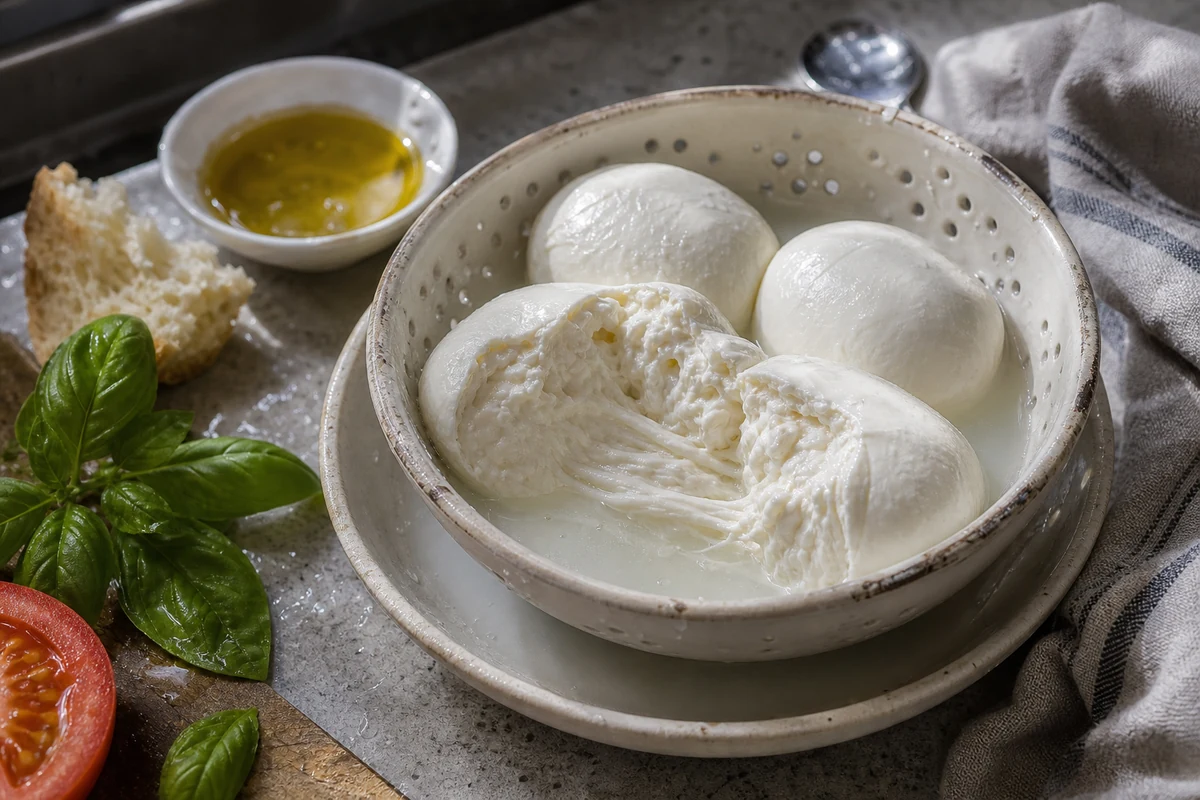
Wikipedia says the small balls are packaged in whey or water, and Cheese.com says bocconcini are usually sold in brine or whey to keep them fresh.
Cheese.com gives the widest range of milks: cow's, goat's or water buffalo's milk. The BelGioioso and Brimi ingredient lists both start with pasteurized cow's milk.
- BelGioioso (United States), from the Gourmet Foods International listing: cultured pasteurized milk, salt, lactic acid and enzymes.
- Brimi (Italy), from its Open Food Facts label record: pasteurized cow's milk, salt, rennet and citric acid as an acidity regulator.
How Big Are Bocconcini?
Bocconcini come in several sizes. The clearest numbers come from Galbani's foodservice range, which sells four sizes of fresh mozzarella by weight per piece.
| Name | Galbani weight per piece | English Wikipedia |
|---|---|---|
| Perle, perline or perlene | 4 g | Smallest size made commercially |
| Ciliegine | ⅓ oz (about 9 g) | Cherry-sized; the name means "small cherries" |
| Bocconcini | 2 oz (about 57 g) | Approximately bite-sized |
| Ovoline or ovolini | 4 oz (about 113 g) | About the size of a hen's egg |
Cheese.com says bocconcini are about the size of cherry tomatoes, which is closer to ciliegine on the table. Food Network Kitchen's recipe gives about 2 inches (5 cm) across, and English Wikipedia says the protected bocconcino di bufala campana is made in the egg-sized format.
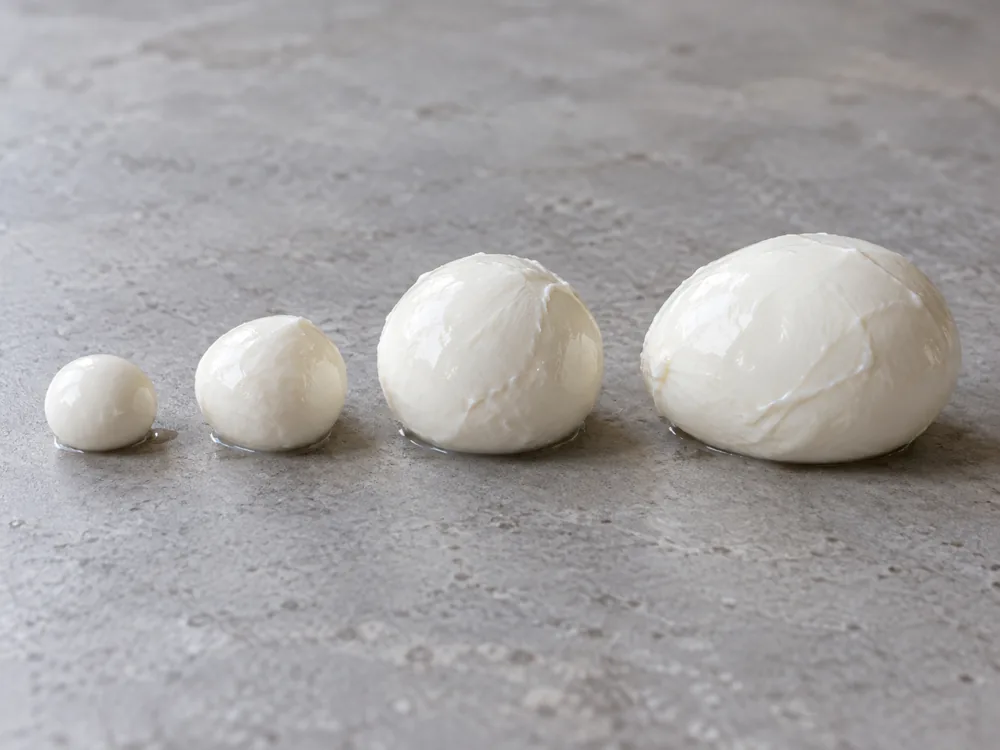
At Galbani's weights, one bocconcino weighs as much as about six ciliegine, and one ovoline ball as much as two bocconcini. For a recipe built around one size, the weight per piece settles which tub fits.
English Wikipedia puts the usual fresh mozzarella ball at around 90 g (3 oz) and about 6 cm across, with larger ones up to 1 kg and about 12 cm. Against that standard ball, Galbani's 2 oz bocconcino weighs about two-thirds as much, and its 4 oz ovoline is a little heavier.
Food Network Kitchen's recipe packs 10 to 12 balls into each of four pint jars from 4 pounds of cheese. If all of it goes into the jars, our arithmetic gives 40 to 48 balls of roughly 38 to 45 g each, lighter than Galbani's 57 g bocconcino.
A recipe that counts balls and a tub sold by weight can therefore differ by up to half again, depending on whose bocconcini fill the tub.
Cow's Milk or Buffalo Milk?
English Wikipedia names mozzarella by its milk: mozzarella fior di latte is made with cow's milk, and mozzarella di bufala with the milk of the Italian buffalo.
Galbani's foodservice page describes its US-made fresh mozzarella, bocconcini included, as crafted in the fior di latte tradition, which puts a cow's-milk bocconcino from that range in the style Wikipedia calls fior di latte.
Buffalo bocconcini can carry a protected name. The Italian Wikipedia entry for Mozzarella di Bufala Campana PDO lists bocconcini among its permitted shapes, with pieces from 20 to 800 g, made only from fresh whole milk of the Italian Mediterranean buffalo.
The Italian entry is not consistent about the lightest piece: its section on forms gives 20 g, while its types section puts the round forms, bocconcino among them, anywhere from 10 g to the 800 g piece it calls the Aversana.
English Wikipedia adds that buffalo bocconcini are still made in the provinces of Naples, Caserta and Salerno as bocconcini alla panna di bufala, made by mixing freshly made PDO buffalo mozzarella with fresh cream.
English Wikipedia says mozzarella has been an EU traditional speciality guaranteed (TSG) since 1998, under Regulation 2527/98. That registration requires a traditional recipe and does not set the source of the milk, and neither the BelGioioso nor the Brimi label claims a PDO.
How to Read a Bocconcini Label
Italian Wikipedia reports a 1998 decree of the agriculture ministry that bars the name mozzarella di bufala, even without campana, from buffalo-milk stretched-curd cheeses made outside the PDO specification. Those cheeses may say only mozzarella followed by di latte di bufala, in letters of the same size, with a brand or the maker's name between the two.
English Wikipedia draws the same line: buffalo-milk mozzarella made across Italy goes by the official name mozzarella di latte di bufala, and only cheese from designated areas of Campania, Lazio, Apulia and Molise is the PDO. A tub of buffalo bocconcini can therefore be real buffalo milk without being the protected cheese, and the wording shows which it is.
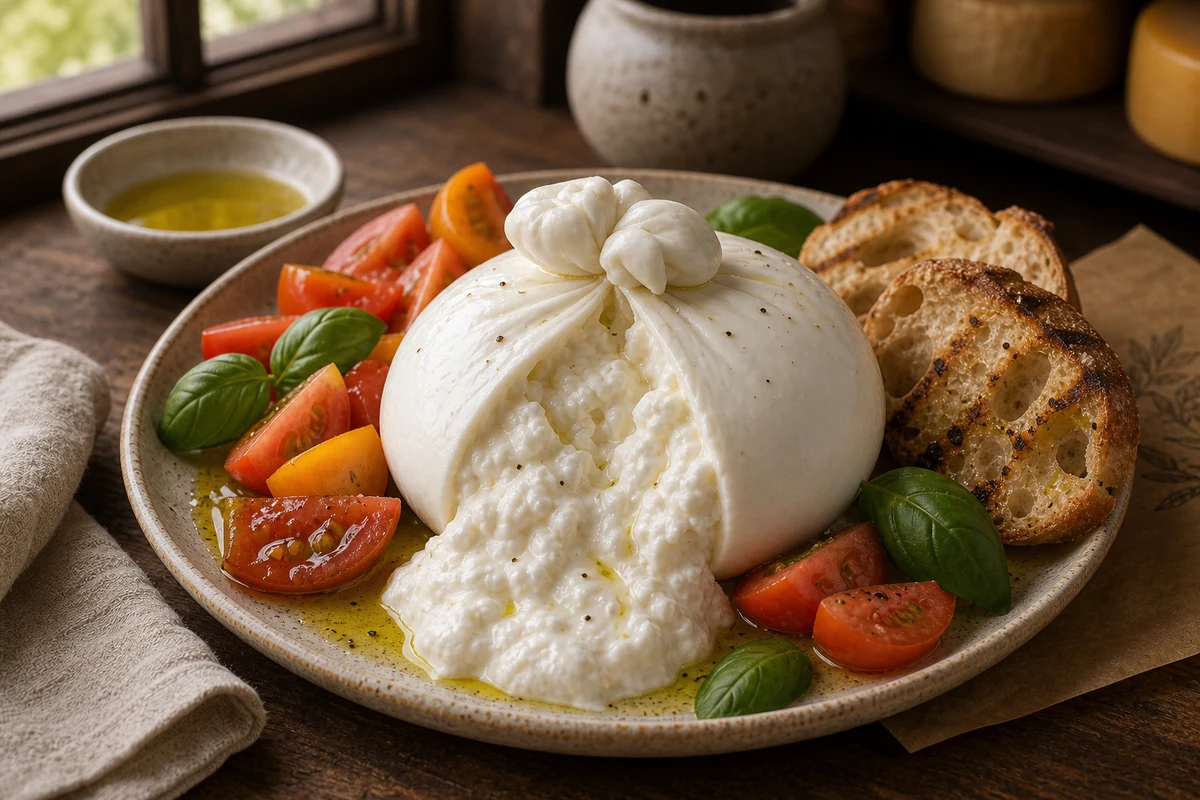
For the PDO itself, the Italian entry says the cheese may be sold only when packed at the dairy, with the Consortium and DOP marks, the name Mozzarella di Bufala Campana and the dairy's authorisation number on the pack. A knotted bag carries the producer's guarantee seal over the knot, because without one the contents can easily be swapped for non-PDO mozzarella.
The ingredient line settles a different question, whether the cheese suits a vegetarian. BelGioioso's listing names only enzymes yet calls the cheese vegetarian, while Open Food Facts flags the rennet on the Brimi label as an ingredient that may not be vegetarian because the label does not say where it comes from.
The Italian entry's method for the buffalo PDO specifies natural calf rennet, which is animal-derived.
The name alone does not guarantee a mozzarella ball either: Cheese.com also lists a Bocconcino di Langa, made from goat's milk with a smooth bloomy rind.
How Bocconcini Are Made
Cheese.com says bocconcini are made by the pasta filata method: the curd is heated in water, then stretched and kneaded into a smooth, elastic texture.
English Wikipedia gives the mozzarella steps in more detail. The curd is cut into 1 to 1.5 cm pieces, heated and drained, then left until its pH reaches about 5.2 to 5.5, the point at which it can be stretched and kneaded.
The Italian entry gives the buffalo PDO method in times and temperatures: milk heated to 33 to 39 °C, soured with a natural starter kept from earlier buffalo-milk batches, and set into curd that is broken to walnut-size grains.
Where English Wikipedia waits for a curd pH of 5.2 to 5.5, the Italian entry waits by the clock: the grains mature in whey for about 5 hours, and the curd is then stretched into strips in water at 95 °C.
The stretched paste is then divided into pieces, and Wikipedia traces the word mozzarella to mozzare, "to cut off", after the way those portions are separated.
That cut-off step is where size is set: the Italian entry says the stretched strips of the buffalo PDO are cut off to the size wanted, so the portion the maker separates decides whether the ball is a pearl, a bocconcino or an ovoline.
For the buffalo PDO, the Italian Wikipedia entry says the pieces are held in cold drinking water, salted in brine and then kept in their packing liquid.
What Do Bocconcini Taste and Feel Like?
Cheese.com describes a mild, creamy flavour with a subtle tang and a milky sweetness, and a texture that is supple and springy when young. Galbani's foodservice page gives its fresh mozzarella a soft, stretchy texture and a clean, milky flavour.
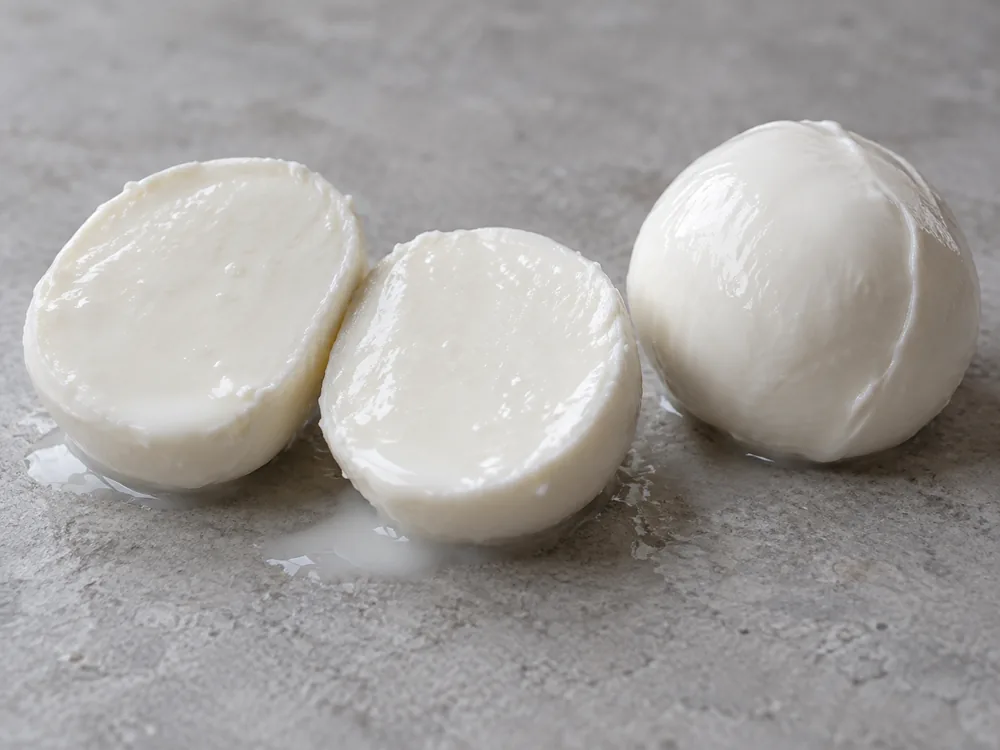
English Wikipedia says fresh mozzarella makes a distinct squeaky sound when chewed or rubbed. It also says the small balls have a spongy texture and absorb flavours, which is what a marinade relies on.
English Wikipedia adds that fresh mozzarella is generally white but may be light yellow, depending on the animal's diet.
For the buffalo PDO, the Italian Wikipedia entry describes a smooth porcelain-white skin 1 mm thick (its word is crosta), a paste in thin layers that stays elastic for the first 10 hours after packing and then softens, and a delicate flavour.
Cut open, the same entry says, the buffalo PDO shows no holes and releases a slight, fatty white whey that smells of lactic ferments.
How to Use Bocconcini
English Wikipedia names one use for bocconcini directly: alternating them with cherry tomatoes on a skewer as an appetiser.
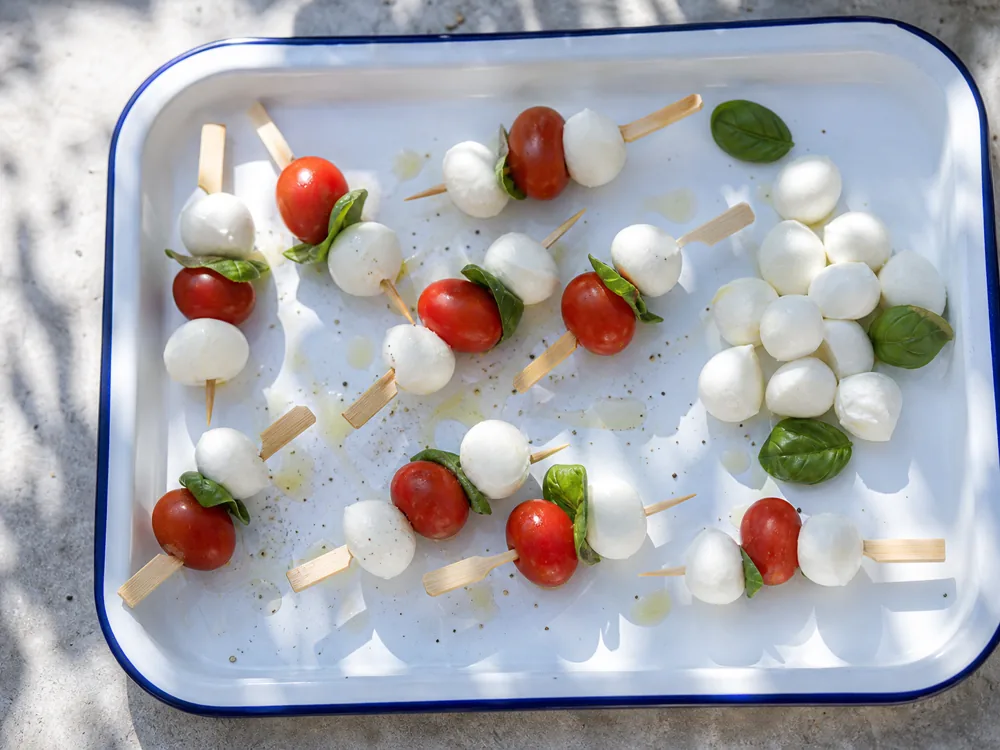
Cheese.com's list runs from Caprese salad and pizza creation to antipasto platters, sandwiches, omelets and frittatas. BelGioioso's distributor listing recommends its bocconcini for pizzas and Caprese salads.
| Use | How It Works |
|---|---|
| Skewers | Alternated with cherry tomatoes as an appetiser (English Wikipedia). |
| Caprese salad | Named by Cheese.com and BelGioioso; Wikipedia describes Caprese as mozzarella with sliced tomatoes and basil, and Cheese.com adds a drizzle of balsamic glaze. |
| Pizza | Named by Cheese.com and BelGioioso. |
| Antipasto platters | Named by Cheese.com and by the Women's Weekly marinated bocconcini recipe. |
| Omelets and frittatas | Named by Cheese.com. |
| Pasta dishes | Named by Cheese.com, which lists a bocconcini and tomato pasta. |
| Stuffed chicken breast | Named by Cheese.com. |
English Wikipedia gives the other sizes their own jobs. Ovolini are served whole in a composed salad or sliced to top a small sandwich such as a slider, and perlene go into salads, hot soups and pasta dishes just before serving.
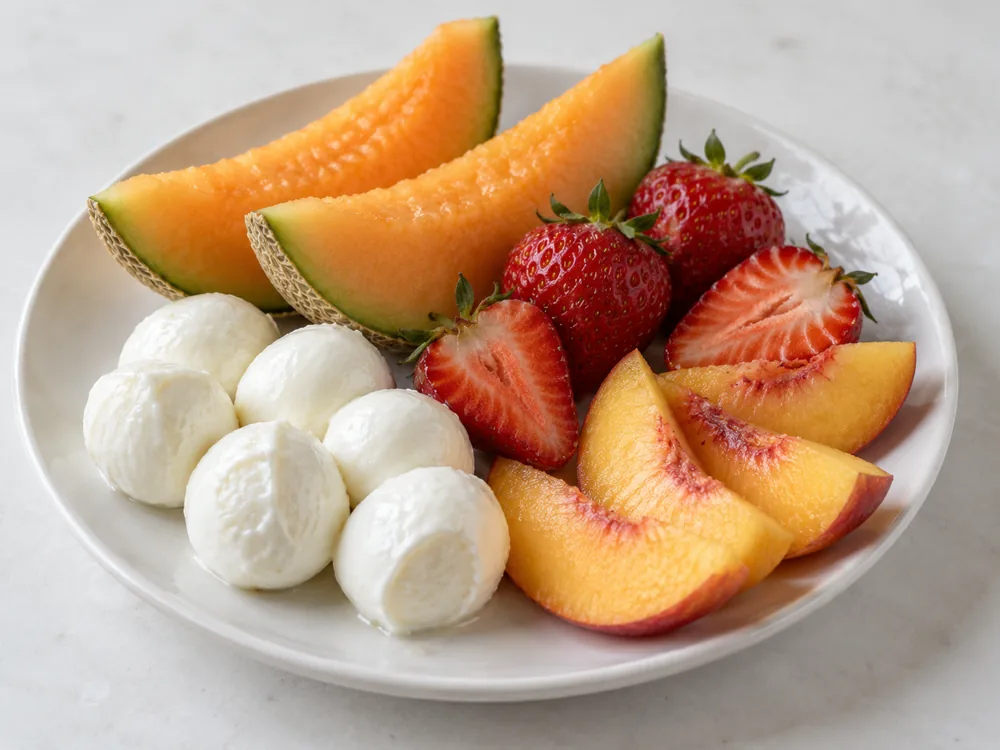
Cheese.com also pairs bocconcini with fruit, saying its creaminess contrasts with the sweetness of the fruit.
| Pairing | Why It Works |
|---|---|
| Melon | Named by Cheese.com. |
| Strawberries | Named by Cheese.com. |
| Peaches | Named by Cheese.com. |
| Prosciutto | Named by Cheese.com for skewers and for a pizza with arugula. |
| Spinach, sun-dried tomatoes and mushrooms | Named by Cheese.com as partners in omelets and frittatas. |
Bocconcini or Low-Moisture Mozzarella?
English Wikipedia says several mozzarella variants have been formulated and prepared specifically for pizza, low-moisture mozzarella among them, and that fresh mozzarella, the family bocconcini belong to, has a high moisture content.
| Point | Bocconcini (fresh mozzarella) | Low-moisture mozzarella |
|---|---|---|
| Moisture | High moisture content (English Wikipedia) | Lower by design; a denser version is made by adding citric acid and partly drying the cheese (English Wikipedia) |
| Refrigerator life | About a week (Cheese.com); a week-long shelf life as sold (English Wikipedia) | Up to a month, and up to six months for some shredded packs (English Wikipedia) |
| Browning | Not described | The part-skim version has a low galactose content, which English Wikipedia links to a preference for low or moderate browning on pizza |
| Dishes named | Skewers, Caprese, pizza, salads and pasta (English Wikipedia, Cheese.com, BelGioioso) | Pizza and baked dishes such as lasagna (English Wikipedia) |
Cheese.com's own page points two ways on the oven: its description says heated bocconcini turn stringy and gooey and puts them on a Margherita pizza, while the summary of its question on melting says they soften but do not melt the way some other cheeses do.
English Wikipedia also records Arthur Schwartz's account that a Neapolitan will not eat day-old mozzarella without further processing, frying it or baking it into a casserole or pasta dish.
Cheese.com and BelGioioso both name bocconcini for pizza, but only low-moisture mozzarella is described as formulated for it.
How Do You Marinate Bocconcini?
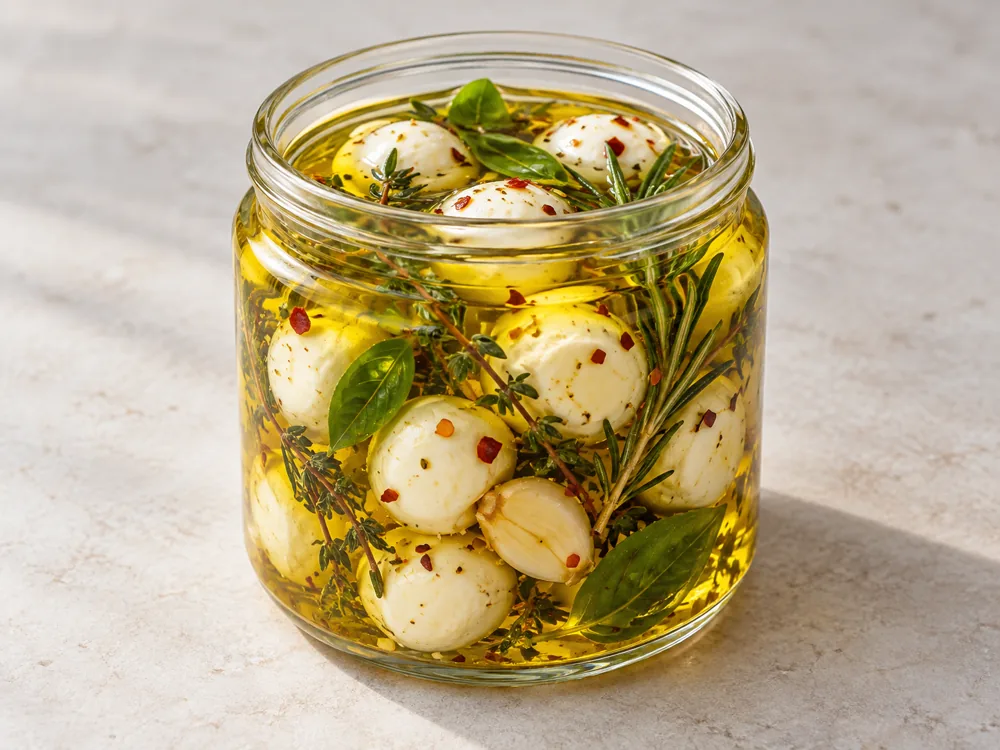
BelGioioso's distributor listing suggests serving its bocconcini marinated with olive oil, and Cheese.com says they can be marinated in olive oil, herbs and spices and served cold or melted on a pizza. Two published recipes show how differently cooks go about it.
| Point | Women's Weekly Food | Food Network Kitchen |
|---|---|---|
| Cheese | 500 g bocconcini, quartered | 4 pounds bocconcini, drained, 10 to 12 balls per pint jar |
| Flavourings | Black peppercorns, bay leaves, rosemary, oregano | Basil, thyme, rosemary, crushed garlic, red pepper flakes, kosher salt |
| Liquid | ¼ cup white wine vinegar and about 2 cups olive oil | Extra-virgin olive oil to the top of the jar |
| Jar | One sterilised 1-litre jar | Four sterilised pint jars |
| Time in the fridge before serving | At least 6 hours | At least 3 days |
Women's Weekly suggests baby bocconcini when you can find them, and serves the result on antipasto platters or in green salads.
Food Network Kitchen keeps the balls whole and turns the sealed jars over several times so the herbs and oil spread through them.
Quartering the balls, as Women's Weekly does, gives the marinade more cut surface than Food Network's whole balls, and its wait is 6 hours against at least 3 days. Neither recipe says why, so linking surface to time is our reading rather than theirs.
Both recipes give up to 2 weeks in the refrigerator, longer than the week Cheese.com gives for a tub, and neither explains the difference.
How Long Bocconcini Keep
Cheese.com says bocconcini keep for about a week in the refrigerator when stored properly, and are best eaten within a few days once the pack is open.
Cheese.com says the cheese stays in its brine or whey so that it does not dry out, names a salt-and-water mixture as the replacement if the brine evaporates, and gives a sealed container with a damp paper towel as the alternative.
English Wikipedia says makers sell fresh mozzarella with a week-long shelf life, although it is traditionally served the day it is made. Its introduction gives the traditional time as the day after, so the entry disagrees with itself by a day.
As mozzarella is kept, Wikipedia says, it turns sour and softens, and that change is slower in larger cheeses, which puts a small bocconcino on the quicker side.
Wikipedia also reports a belief among part of Naples's population that the best mozzarella is "relaxed", meaning softened in the hours after it is made. Arthur Schwartz, it says, finds that Campanians living near the dairies do not share the belief and buy the cheese still firm.
The Italian Wikipedia entry says the buffalo PDO cheese is always kept covered by its liquid. The CDC says to refrigerate perishable food, dairy included, within 2 hours (1 hour above 90°F) and to keep the refrigerator at 40°F (4°C) or below.
The same entry gives 18 to 20 °C as the ideal serving temperature for mozzarella according to experts, and ties storage of the PDO cheese to the temperatures the producer prints on the label.
How Many Calories Are in Bocconcini?
Cheese.com gives about 60 calories and about 4 g of protein in a 28 g serving. The Brimi label record on Open Food Facts gives fuller figures per 100 g, scaled here to the same 28 g, and the BelGioioso listing adds a label per 1 oz serving.
| Nutrient | Brimi, per 100 g | Brimi, scaled to 28 g | BelGioioso, per 1 oz | Cheese.com, per 28 g |
|---|---|---|---|---|
| Energy | 230 kcal | 64 kcal | 70 calories | About 60 calories |
| Fat | 18 g | 5.0 g | 5 g | Not given |
| Saturated fat | 12.5 g | 3.5 g | 3.5 g | Not given |
| Carbohydrate | 0.9 g | 0.3 g | 1 g | Not given |
| Protein | 16 g | 4.5 g | 5 g | About 4 g |
| Salt | 0.49 g | 0.14 g | Not given | Not given |
| Sodium | 196 mg | 55 mg | 65 mg | Not given |
Cheese.com notes that bocconcini contain lactose. It also lists calcium, vitamin A, vitamin B12, iron and zinc among the nutrients.
Italian Wikipedia gives the buffalo PDO per 100 g as 288 kcal, 24.4 g of fat and 16.7 g of protein, against 230 kcal, 18 g and 16 g on the Brimi cow's-milk label. The protein is close and the fat is where they part, which fits the entry's remark that buffalo milk has a relatively higher total fatty acid concentration than cow's milk.
The same entry lists 0.4 g of lactose, 210 mg of calcium and 56 mg of cholesterol per 100 g for the buffalo PDO.
Is Bocconcini Safe During Pregnancy?
The NHS lists pasteurised soft cheeses such as mozzarella, feta and ricotta as safe to eat in pregnancy.
The CDC puts mozzarella made with pasteurized milk among its safer choices, next to cottage cheese, cream cheese, string cheese and feta. Pregnant women are 10 times more likely to get a Listeria infection, according to the CDC.
For a bocconcino made from unpasteurized milk, the CDC lists soft cheese made from unpasteurized milk as a riskier choice, and the NHS says foods made from unpasteurised milk must be thoroughly cooked.
SOURCES & REFERENCES
What Quick Questions Come Up About Bocconcini?
Cheese.com translates the Italian word as "little mouthfuls". The balls are small pieces of fresh mozzarella.
Galbani sells them at 2 oz a piece and Food Network Kitchen describes them as about 2 inches across. Cheese.com compares them to cherry tomatoes, so sizes vary by maker.
Yes. Bocconcini are fresh mozzarella in a smaller size, and English Wikipedia lists them with ovolini, ciliegine and perlene.
Cheese.com says to eat bocconcini within a few days of opening, and that they keep for about a week in the fridge when stored properly.
Bocconcini made with pasteurized milk are safe according to the NHS and a safer choice according to the CDC. Unpasteurized versions are a riskier choice.
It depends on the rennet. BelGioioso's listing calls its bocconcini vegetarian, while Open Food Facts flags the rennet on the Brimi label as possibly not vegetarian.
Cheese.com and BelGioioso both name pizza. English Wikipedia describes low-moisture mozzarella as the variant formulated for pizza, and fresh mozzarella as high in moisture.
Another size of fresh mozzarella is the same cheese. At Galbani's weights, six ciliegine match one bocconcino, and one ovoline ball weighs as much as two.