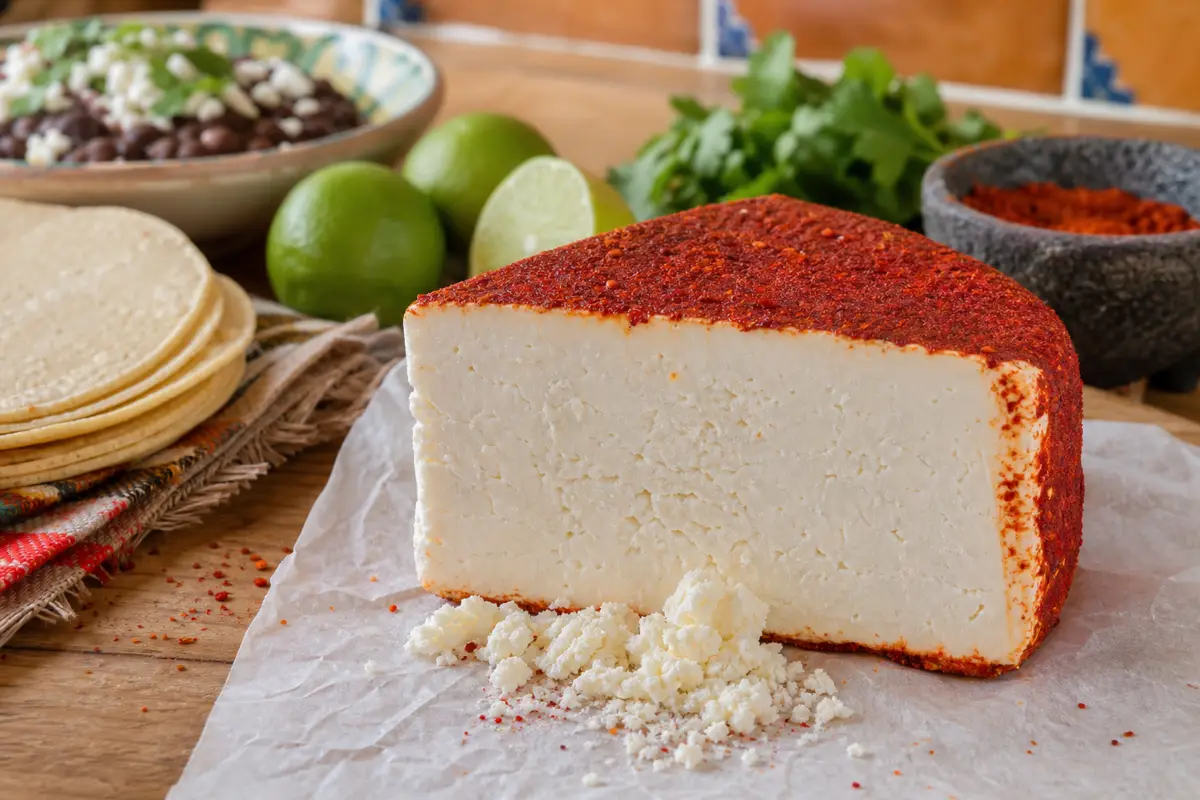
Añejo Enchilado is queso añejo, a salty aged Mexican cheese, rolled in paprika or chile until the outside turns brick red. You grate or crumble it over hot food for salt and a chile accent.
It is not Cotija with a coating, although the two do the same job at the table. Cotija is its own cheese with no chile jacket, and the sources disagree on which one tastes stronger.
You use it for grating and crumbling, so if you need a stringy, mozzarella-like pull, reach for Oaxaca instead.
In This Article
What Is Añejo Enchilado?
Añejo means aged in Spanish and enchilado means seasoned with chile, so the name describes queso añejo coated on the outside.
The coating differs by maker. CooksInfo lists paprika, chile powder, or a mild chile paste, while Cheese.com describes the brick-red exterior as paprika.
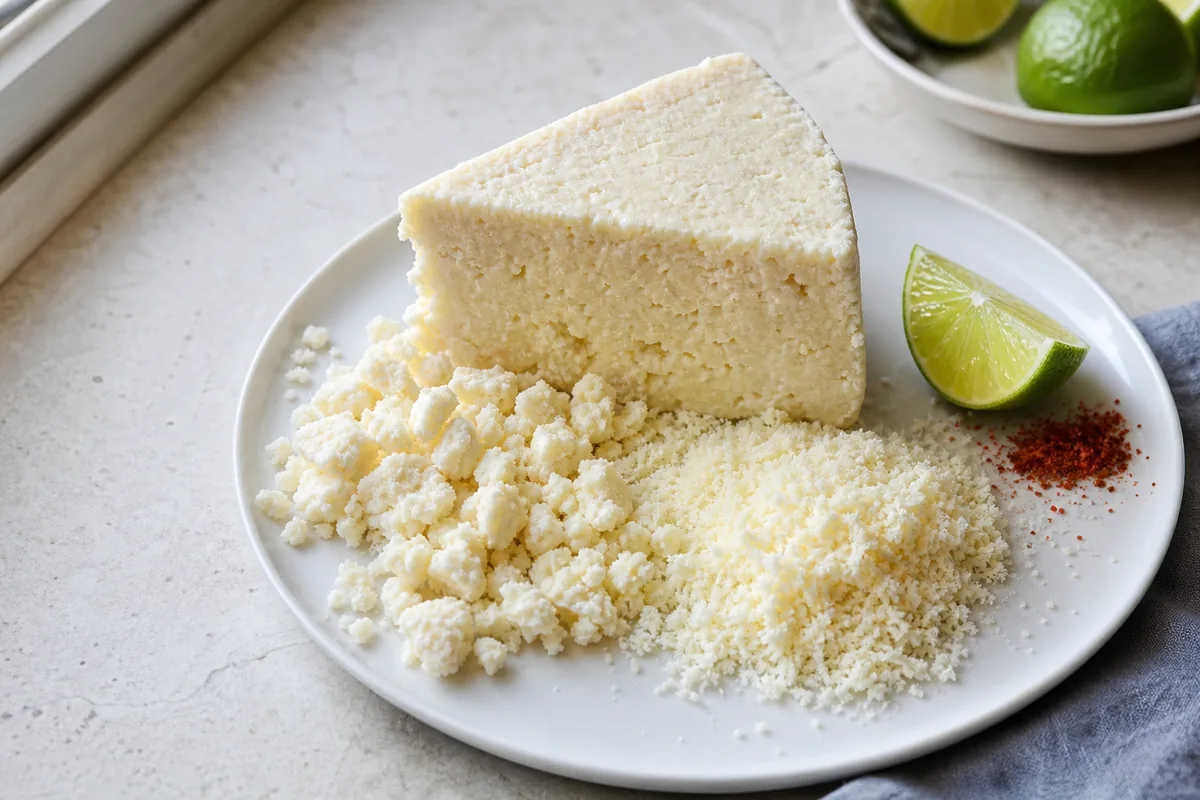
Under the coating the paste is ivory, so a cut wedge looks like a white cheese in a red jacket. CooksInfo treats Enchilado as regular Queso Añejo with the spiced coating added, and Wikipedia also lists añejo enchilado as another name for queso añejo.
Sources disagree on the milk. Wikipedia says queso añejo was traditionally made from skimmed goat's milk but is most often made today from skimmed cow's milk, while Cheese.com says Añejo Enchilado is made from cow's or goat's milk.
One retail listing, the Jaimito brand on Cheesemakers, names whole cow's milk instead. The pack has the last word.
How Is Añejo Enchilado Made, and Why Does the Texture Vary?
Wikipedia describes the make in two steps: the cheese is made, and afterward it is rolled in paprika for extra flavor. The coating goes on the outside, so the heat sits on the surface of each crumb rather than running through the paste.
Wikipedia says queso añejo crumbles into small pieces when fresh and firms enough to shred or grate once dried. Cheese.com describes the same shift from crumbly to firmer with age.
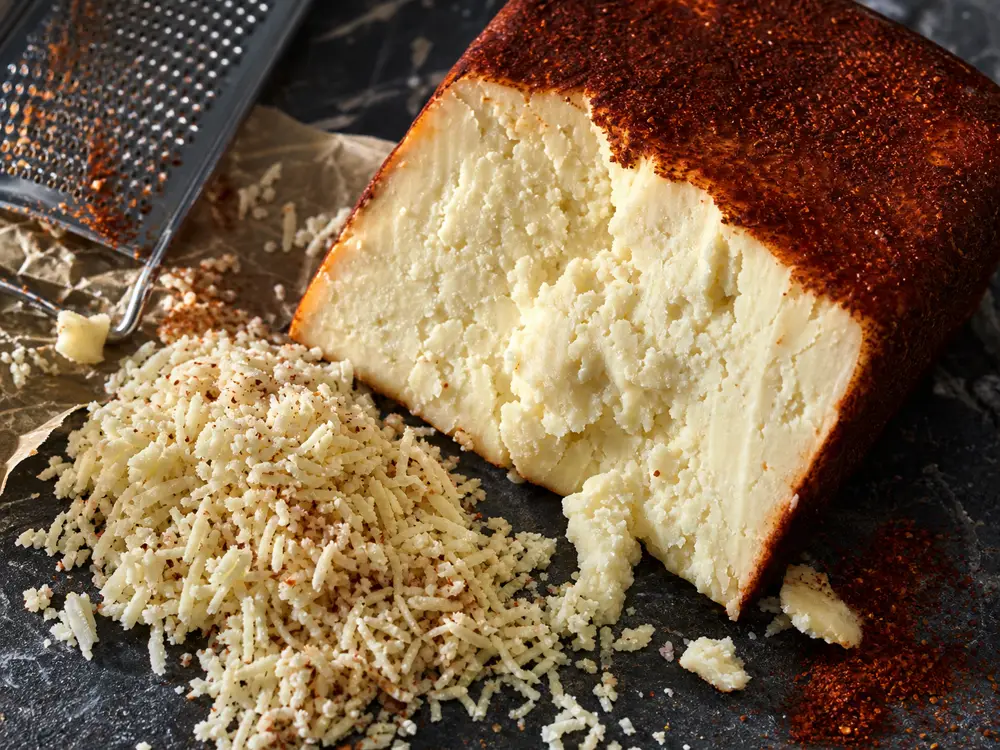
Neither Cheese.com nor Wikipedia gives an age for Añejo Enchilado, and the Jaimito listing calls its version fine-grained, crumbly, and semi-soft. Two wedges under the same name can therefore behave differently on the grater.
Ask at the counter which kind is in the case, since a block that crumbles suits hand-crumbling over beans and a drier one rewards a grater.
What Does Añejo Enchilado Taste Like?
Cheese.com lists the flavor as salty, sharp, spicy, and strong, and compares it with Parmesan and Romano. CooksInfo calls the coating mildly spicy, so the heat depends on what the maker rolled the cheese in.
A red coating does not prove a heat level. Taste a small crumble first, because the chile or paprika blend differs by maker.
Grating the wedge with the coating still on spreads the red through the crumbs, so the seasoning reaches the whole plate.
Salt is the first thing you taste in a crumb, so cut back on other salt in the dish before adding the cheese. More crumbles can go on at the table, but salt and chile cannot come back out of a bowl of beans.
How Do You Use Añejo Enchilado?
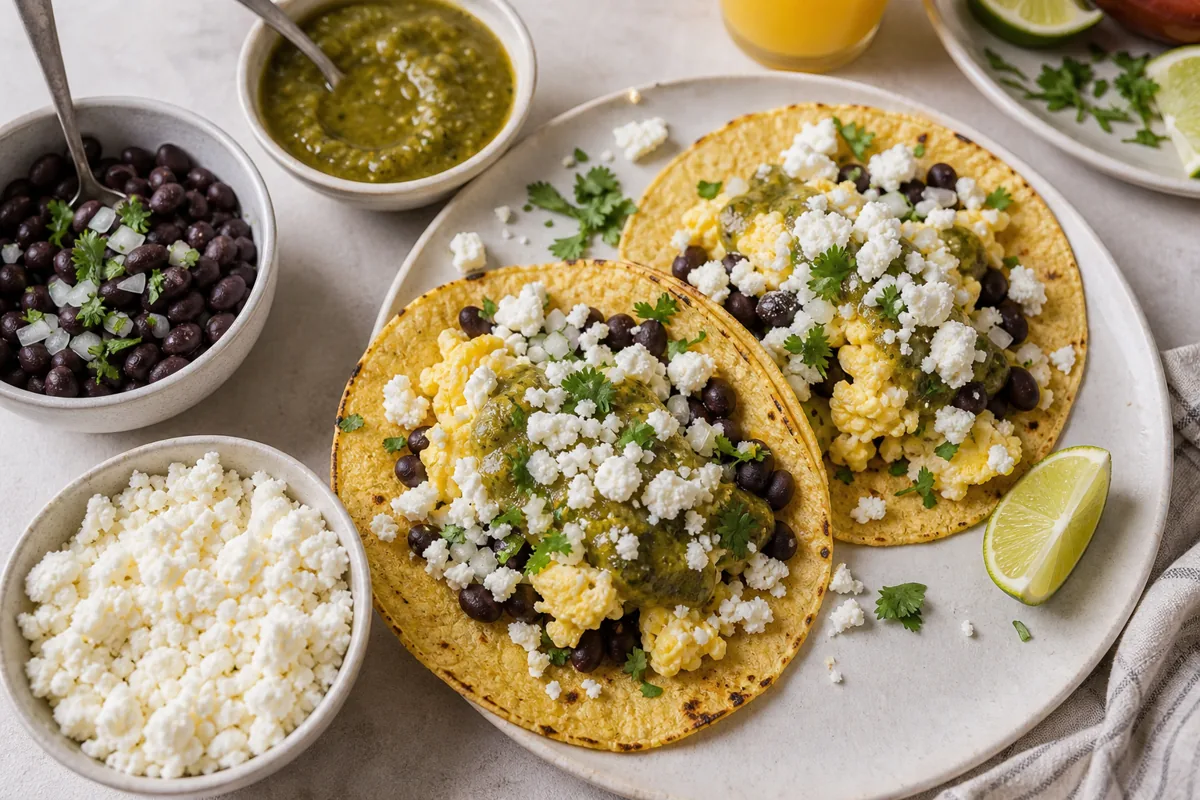
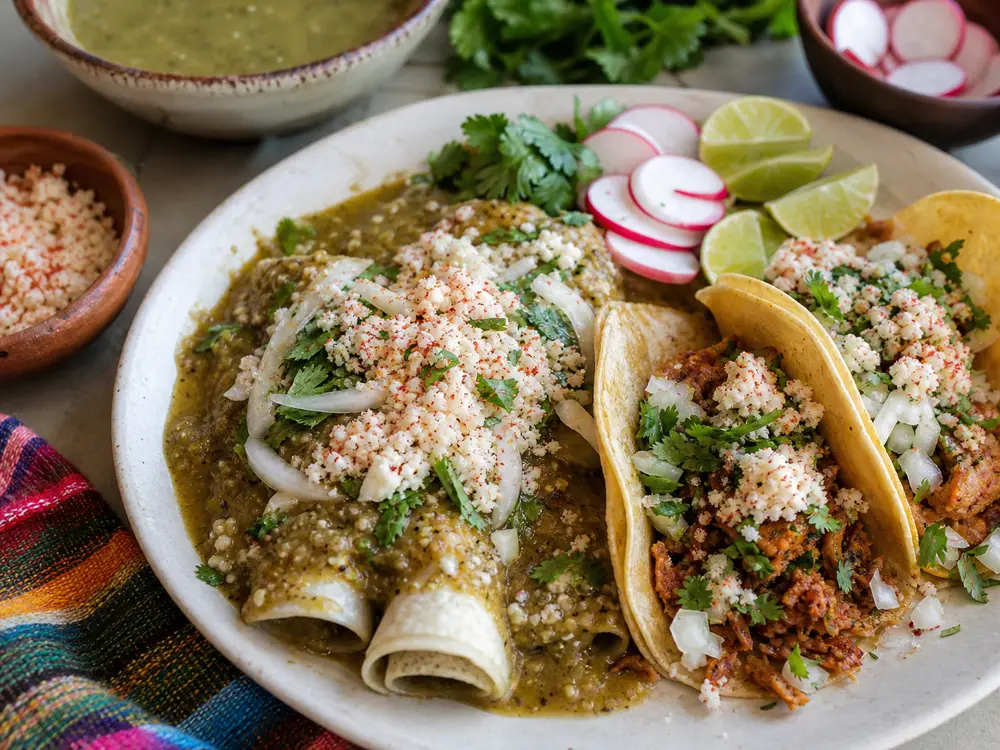
Wikipedia says queso añejo is generally sprinkled on top of or stuffed into enchiladas, burritos, tostadas, and tacos. Cheese.com adds baking and grilling.
| Use | How It Works |
|---|---|
| Enchiladas and burritos | Sprinkled on top or stuffed inside, per Wikipedia. |
| Tacos and tostadas | Scattered over the filling, per Wikipedia. |
| Baking and grilling | Cheese.com lists both as common uses. |
| Beans and salads | The Jaimito listing suggests crumbling or grating it over them. |
| Nachos and pizza | Also named on the Jaimito listing. |
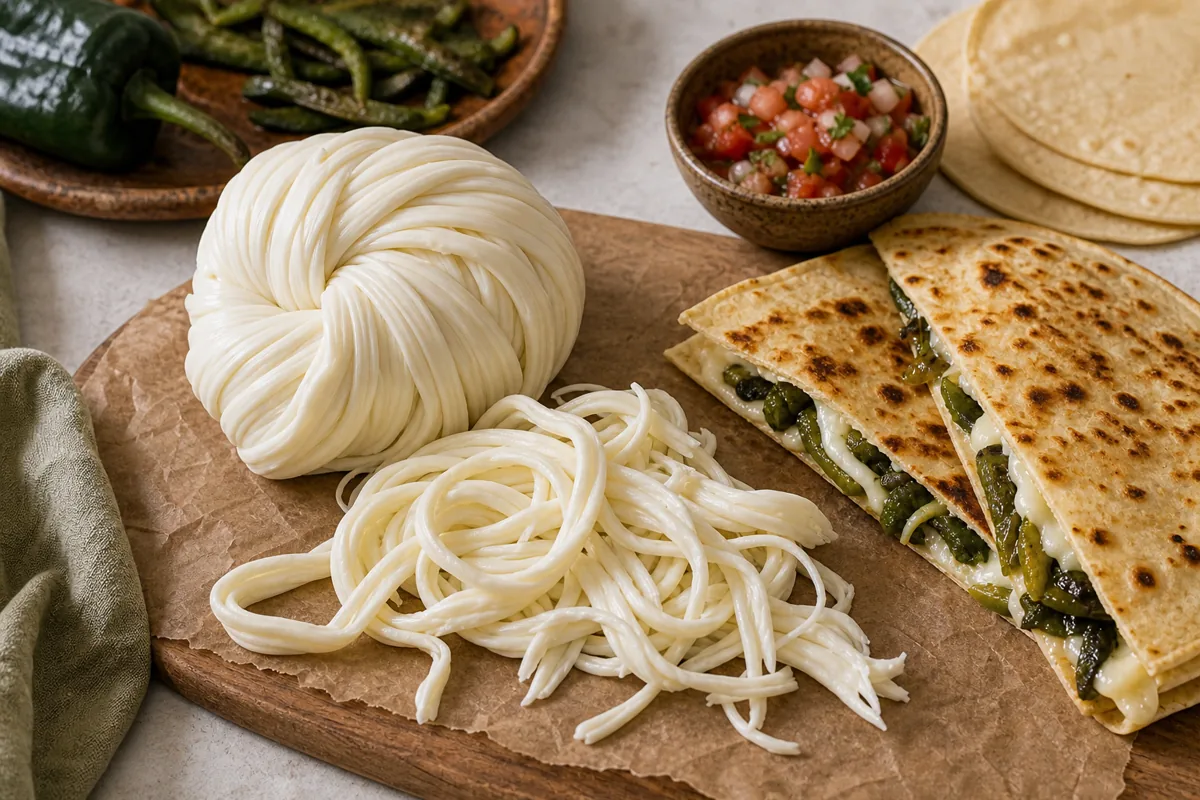
None of these sources describes a smooth melt or a cheese pull. For quesadillas, a melter like Chihuahua should carry the dish, and a little Añejo Enchilado on top adds salt and color.
How Does Añejo Enchilado Differ from Cotija and Queso Fresco?
The nearest neighbor is Cotija, a finishing cheese that Wikipedia says is crumbled or grated over burritos, soups, salads, beans, tostadas, or tacos. Añejo Enchilado does the same jobs, and the visible difference is the coating.
Wikipedia gives Cotija an aging time of 100 to 365 days and says it is usually several times saltier than typical cheese. On strength, Wikipedia says queso añejo is not as strongly flavored as Cotija, while Cheese.com calls Añejo Enchilado equally robust.
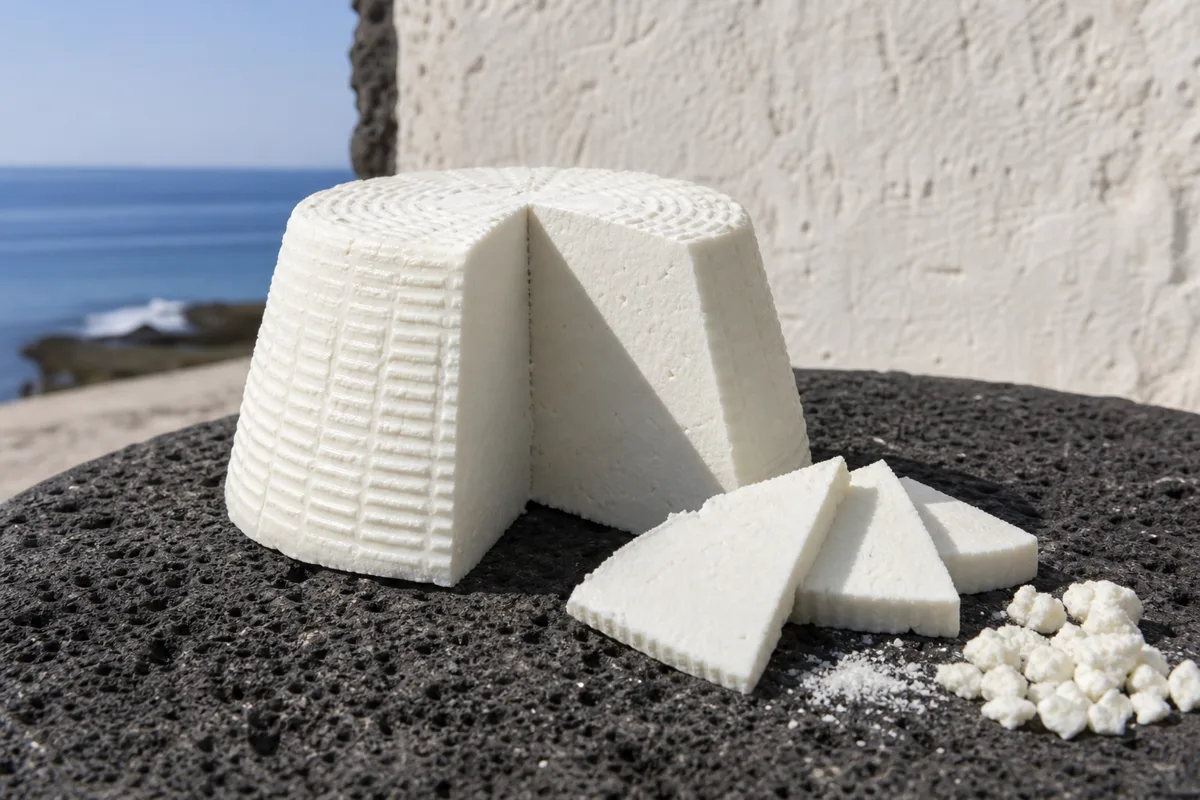
Queso Fresco is a fresh cheese where queso añejo is aged, so the two sit at opposite ends of the ageing scale.
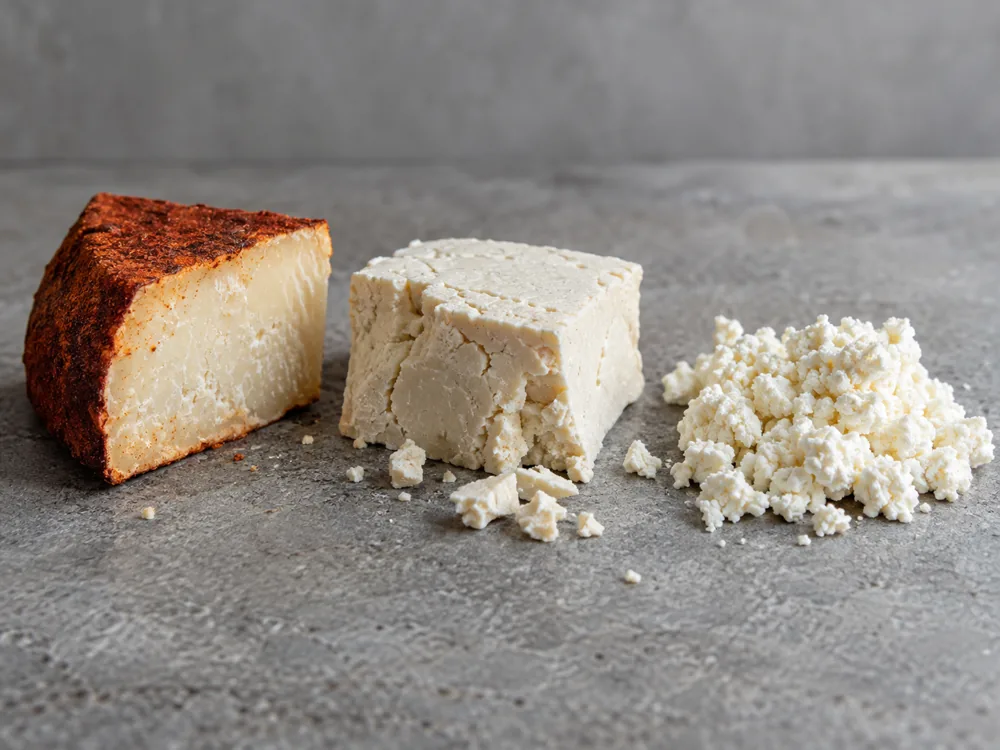
| Añejo Enchilado | Aged queso añejo in a red chile or paprika coating; salty, sharp, grateable. |
| Cotija | Salty aged crumble without the red coating. |
| Queso Fresco | Fresh, unaged cheese, the counterpart to aged añejo. |
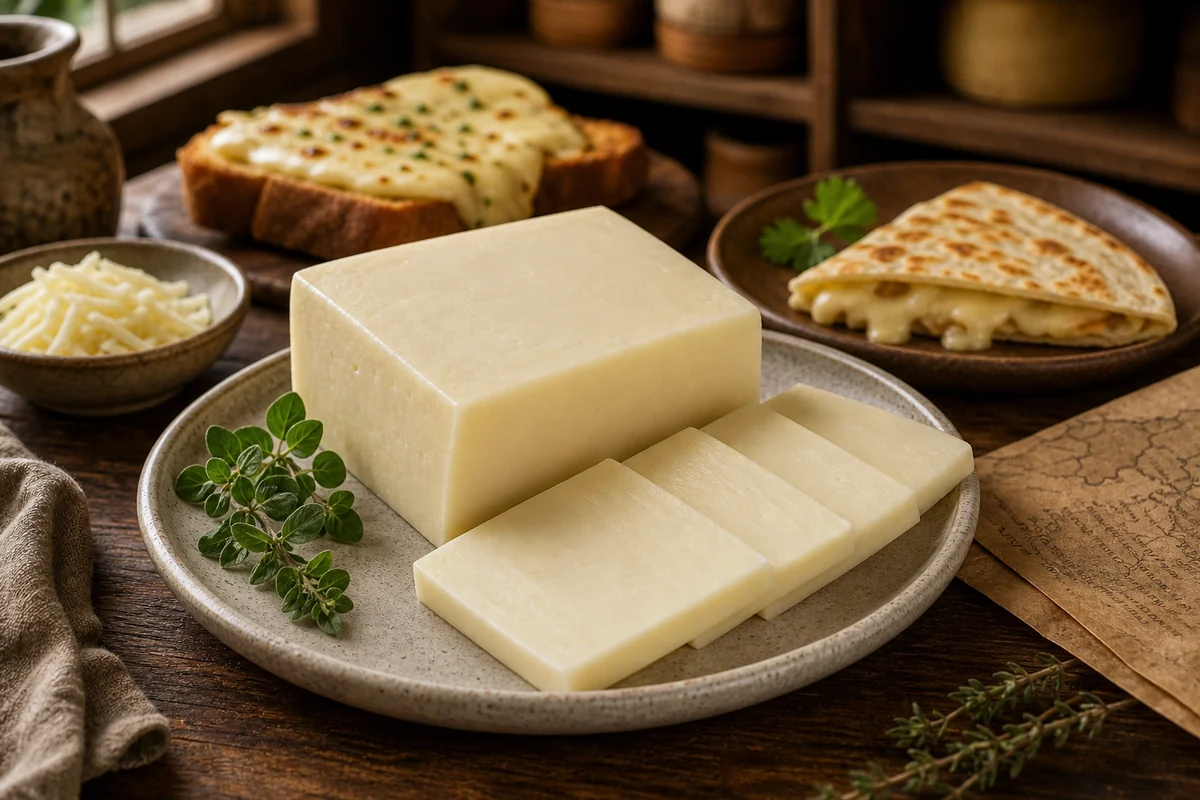
| Oaxaca | White, semihard cheese with a texture like mozzarella or string cheese, per Wikipedia. |
If a recipe only says Mexican cheese, the dish decides: a salty topping, a fresh crumble, and a melter give three different plates.
What Does the Label Say, and How Do You Store the Wedge?
Two retail records show how much one name can cover, and neither describes the whole category.
| Per 1 oz | Jaimito (Cheesemakers) | Cacique (CalorieKing) |
|---|---|---|
| Energy | 70 kcal | 90 kcal |
| Total fat | 6 g | 7 g |
| Saturated fat | Not listed | 4.5 g |
| Protein | 5 g | 7 g |
| Sodium | 280 mg | 340 mg |
The Jaimito listing gives ideal storage at 36°F within a range of 34 to 40°F and a shelf life of 90 days from packaging.
Another brand can carry different numbers and a different date. For wrapping, follow the usual advice for storing firm cheese.
Is Añejo Enchilado Safe During Pregnancy?
If you are choosing for a vegetarian table or for pregnancy, the pasteurization and rennet lines on the label matter more than the flavor.
Cheese.com states that Añejo Enchilado is made from pasteurized milk, and the Jaimito listing names whole pasteurized Grade A cow's milk.
The CDC's pregnancy food guidance lists soft cheese made from unpasteurized milk and any queso fresco-type cheese as riskier, and hard cheese made with pasteurized milk as safer. A label that says pasteurized is the deciding fact.
Rennet has no single answer either. Cheese.com marks Añejo Enchilado as neither vegetarian nor vegan, while the Jaimito ingredient list names rennet without a type.
If you are vegetarian, look for a pack that says microbial or vegetable rennet.
What Can You Substitute for Añejo Enchilado?
The best substitute depends on the job. Cotija is the closest salty Mexican finishing crumble, though it lacks the chile jacket.
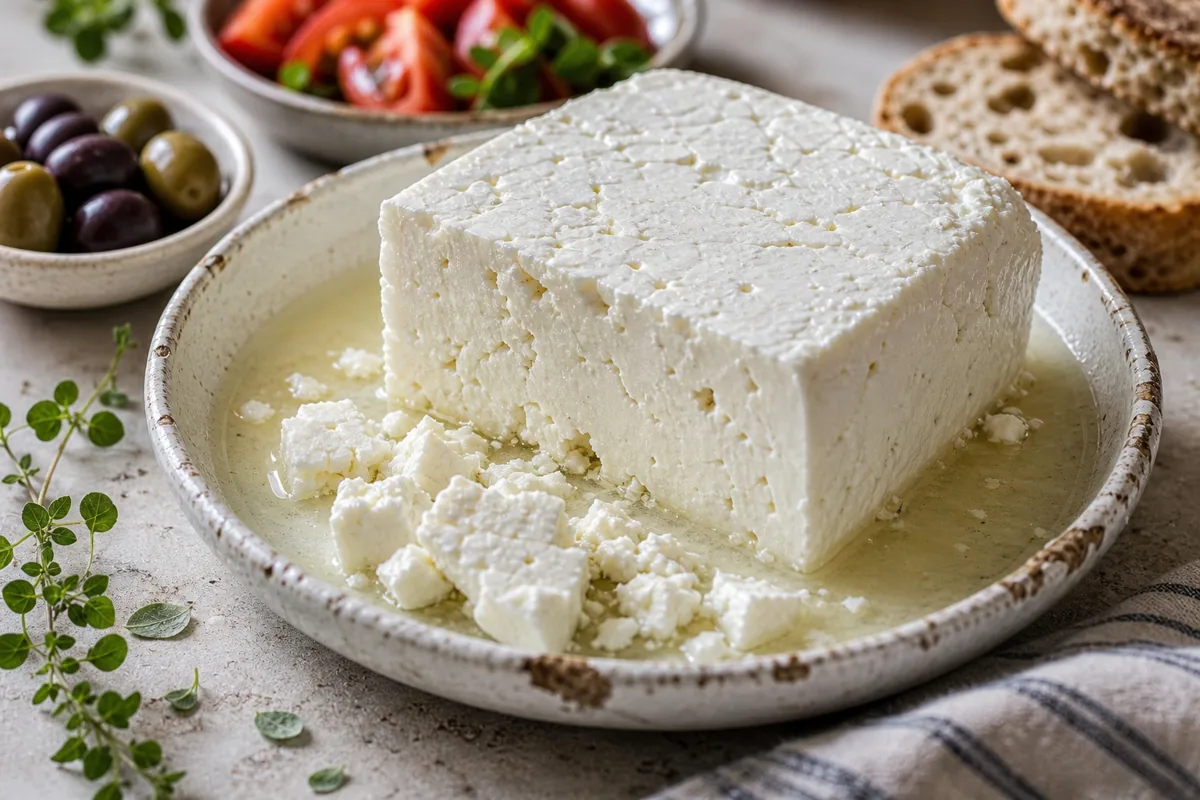
Wikipedia describes feta as crumbly, tangy and salty, so it can stand in for the salt but brings no chile.
For a hard grating fallback, grated Pecorino Romano or Parmesan is the flavor match the sources name, though neither carries the Mexican identity.
| Closest Mexican finish | Cotija, with chile or paprika added separately |
| Tangy salty crumble | Feta, which brings no chile |
| Hard grating fallback | Pecorino Romano or Parmesan for flavor, not Mexican identity |
SOURCES & REFERENCES
Añejo Enchilado is queso añejo, an aged Mexican cheese, rolled in paprika or chile. It is usually grated or crumbled over food rather than melted.
Cheese.com calls the flavor spicy, while CooksInfo describes the coating as mildly spicy. Heat depends on the coating the maker used, so taste a small crumble first.
It is a topping and filling cheese for enchiladas, tacos, and beans. For quesadillas, a melting cheese suits the dish better.
No. Both are salty finishing cheeses, but Añejo Enchilado is queso añejo with a chile or paprika coating, and Cotija has no coating. Wikipedia says queso añejo is not as strongly flavored as Cotija, while Cheese.com calls it equally robust.
CooksInfo describes Enchilado as regular Queso Añejo with a spiced coating added, so the two differ by the red exterior.
One retail listing gives 90 days from packaging at 34 to 40°F, with 36°F ideal. Another brand can carry a different date, so use the date on the pack.
Cheese.com marks it as neither vegetarian nor vegan, and one retail ingredient list names rennet without a type, so vegetarians need a label that says microbial or vegetable rennet. For pregnancy, the label's pasteurization statement decides.
Cotija is the closest common Mexican substitute. Feta is a tangy, salty crumble by Wikipedia's description, so it covers the salt but not the chile.