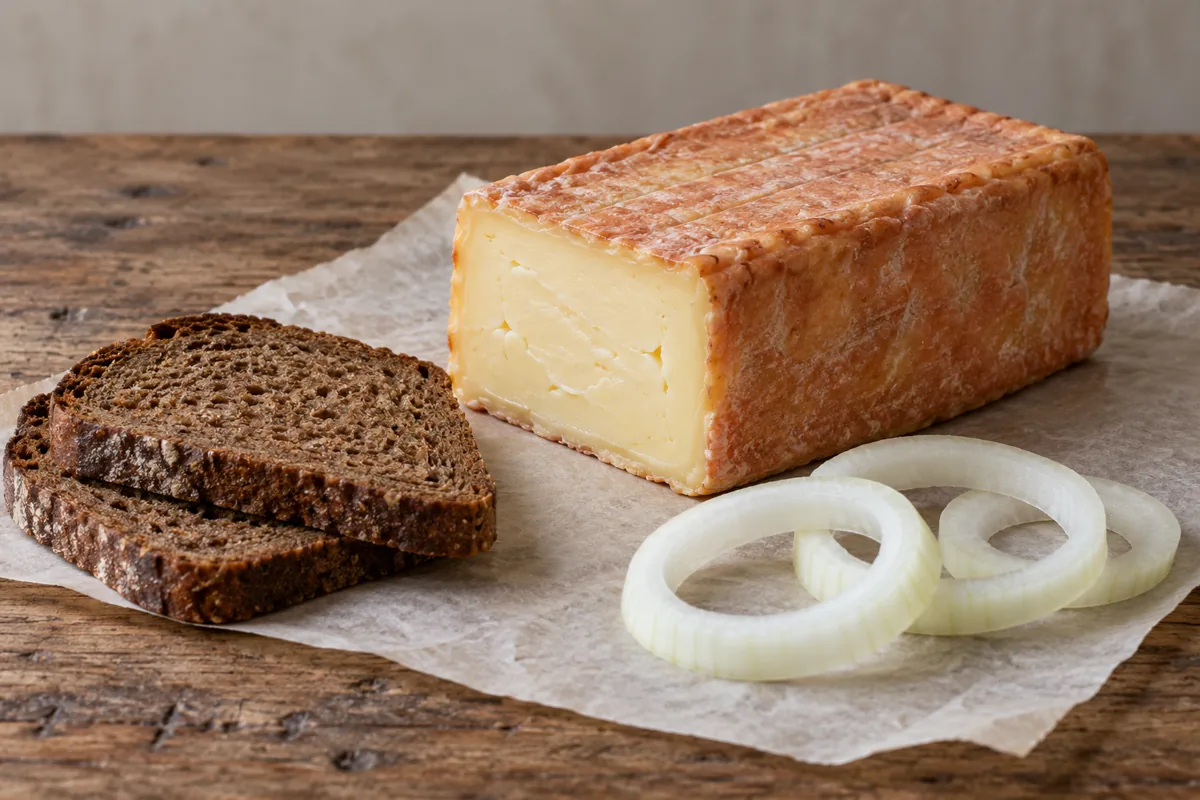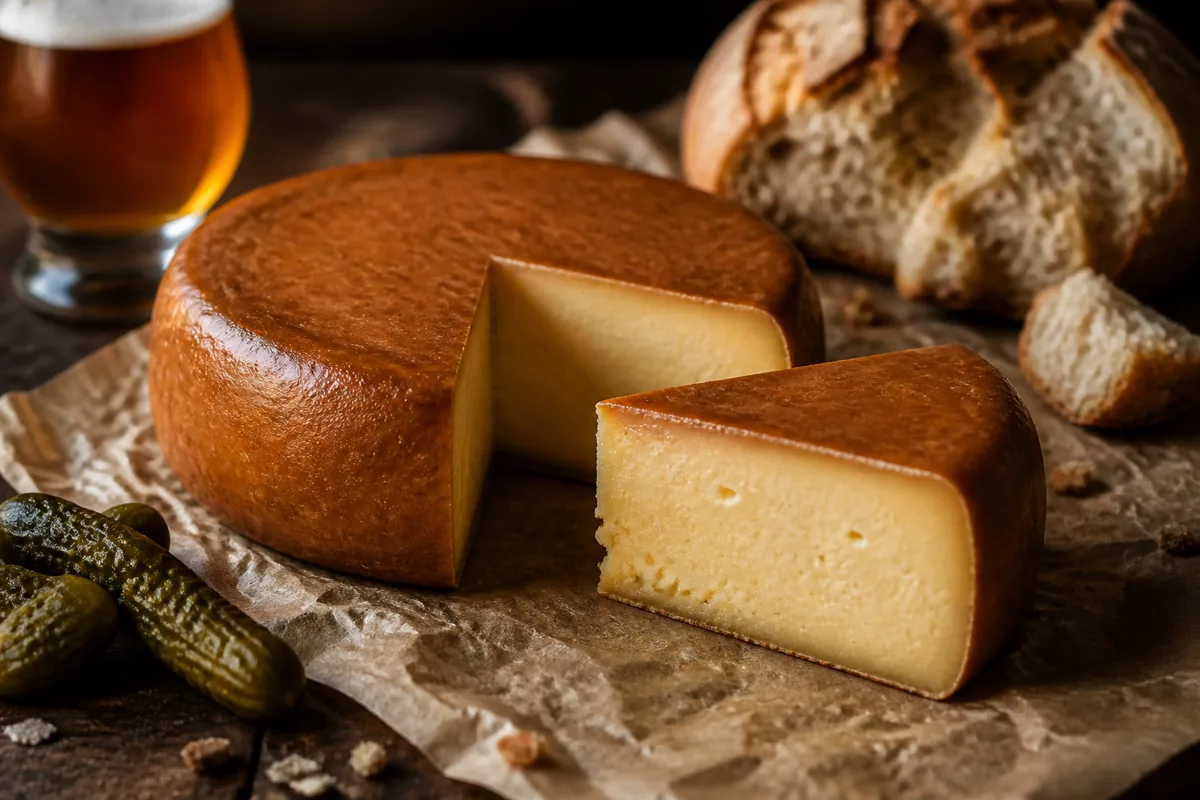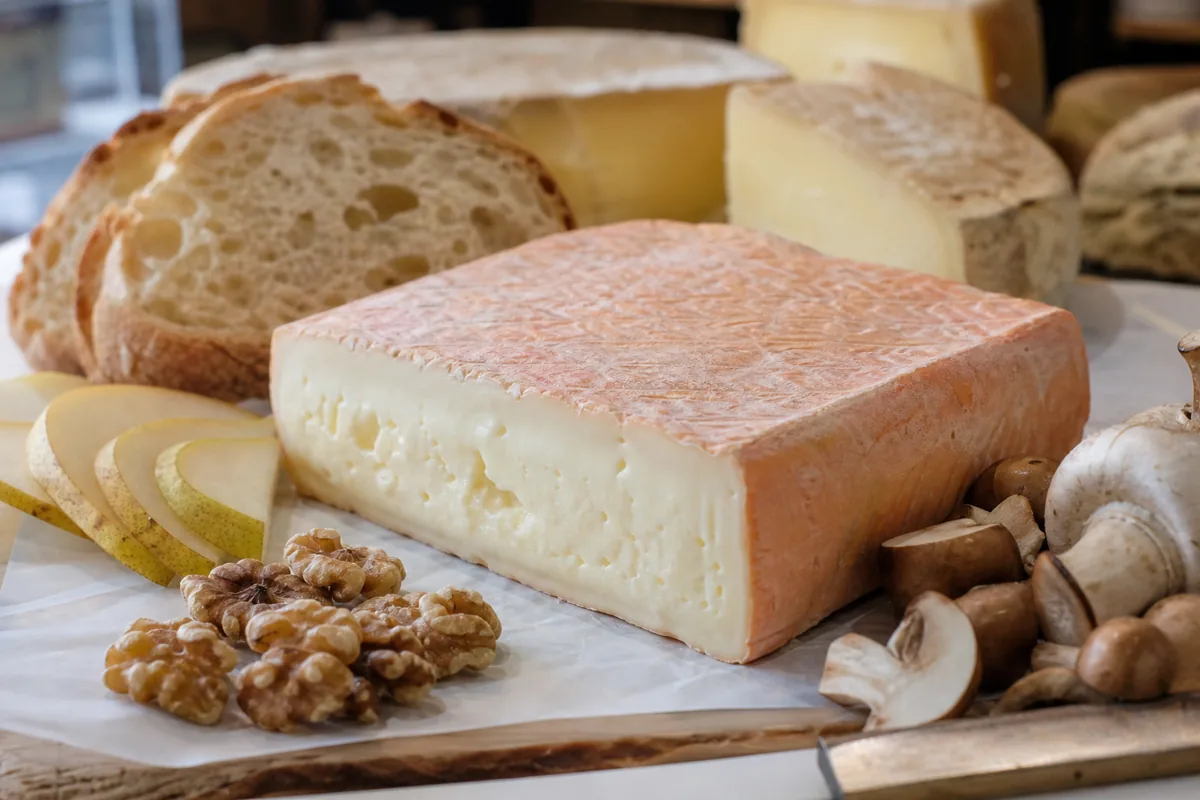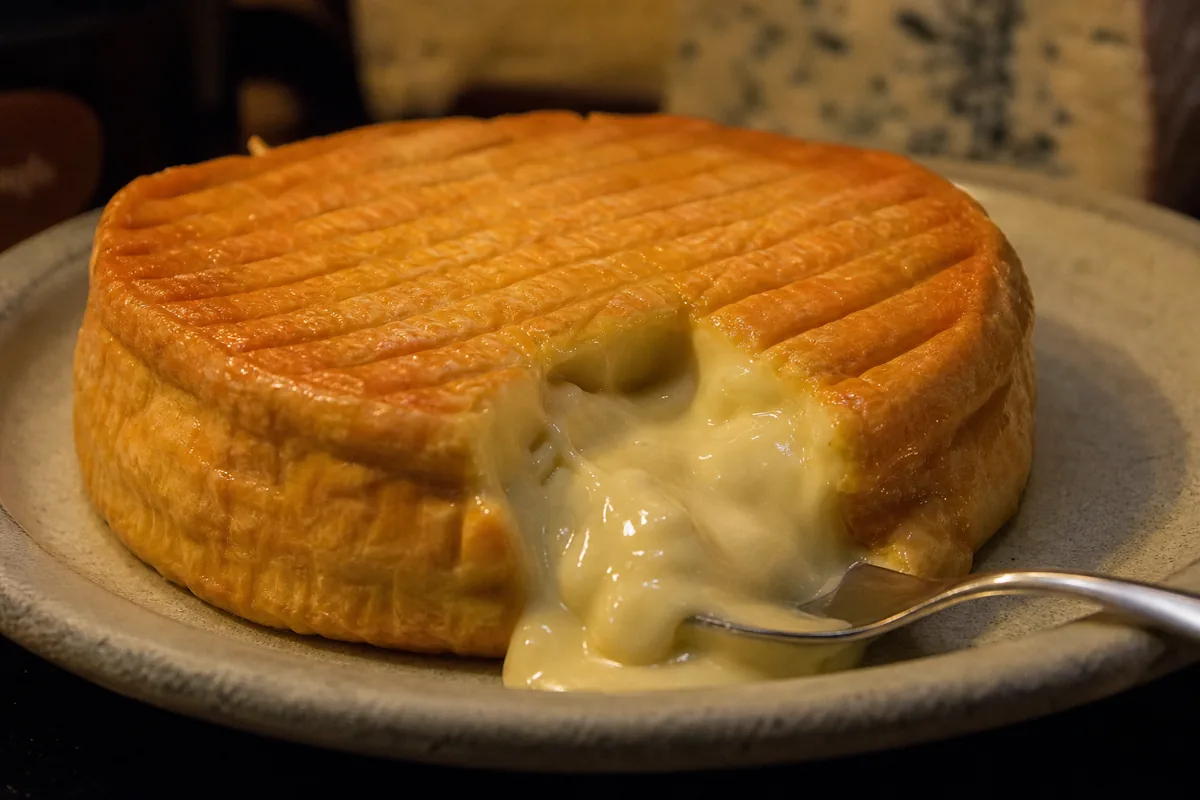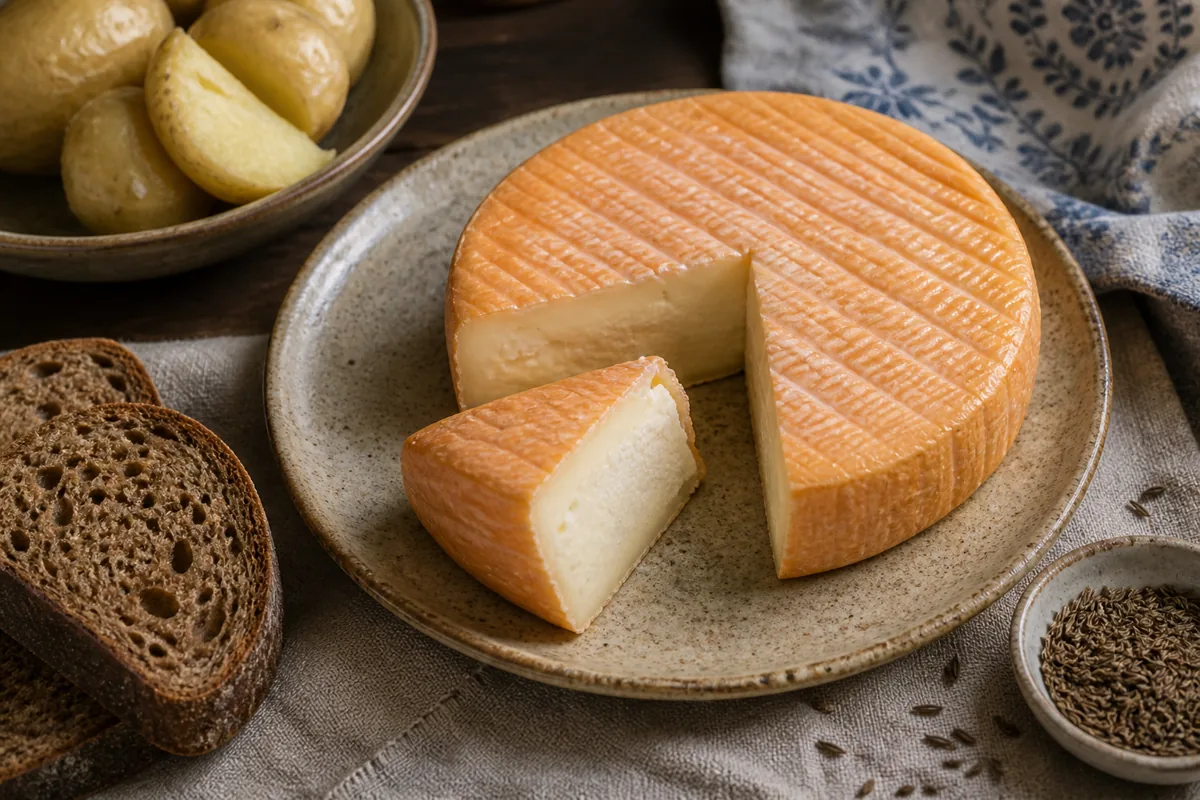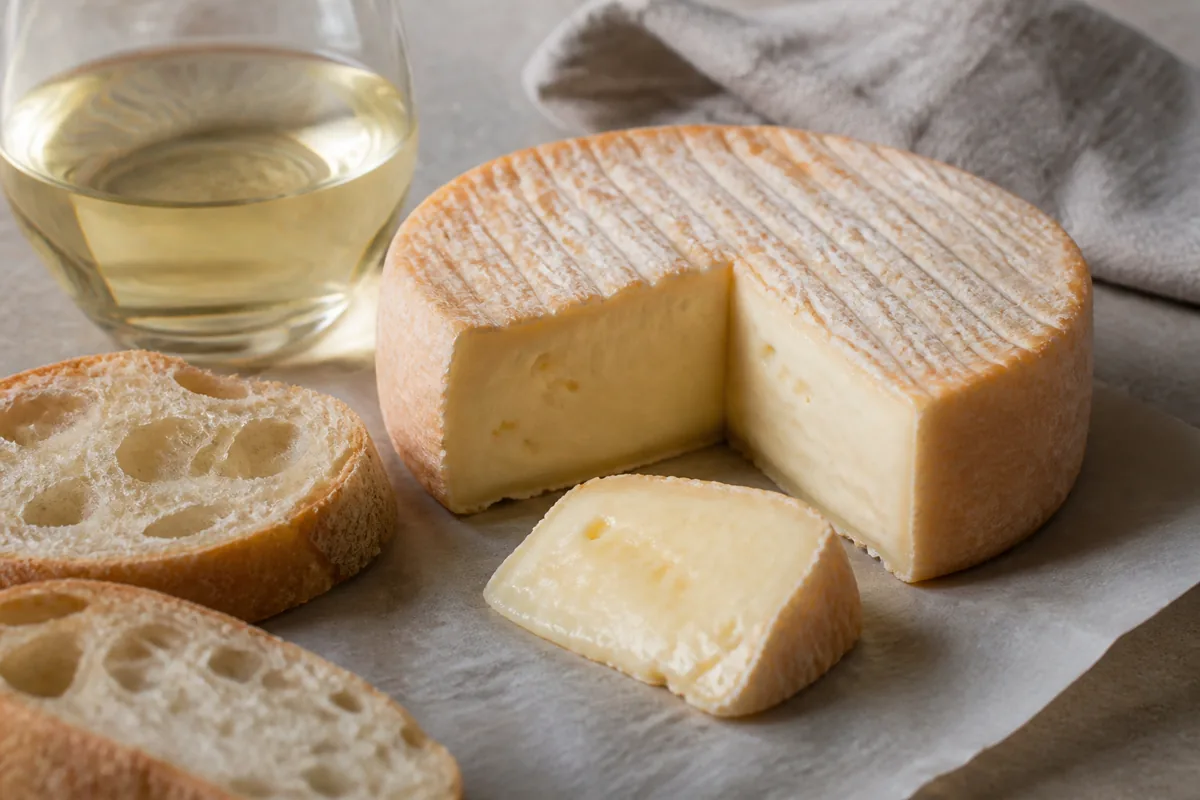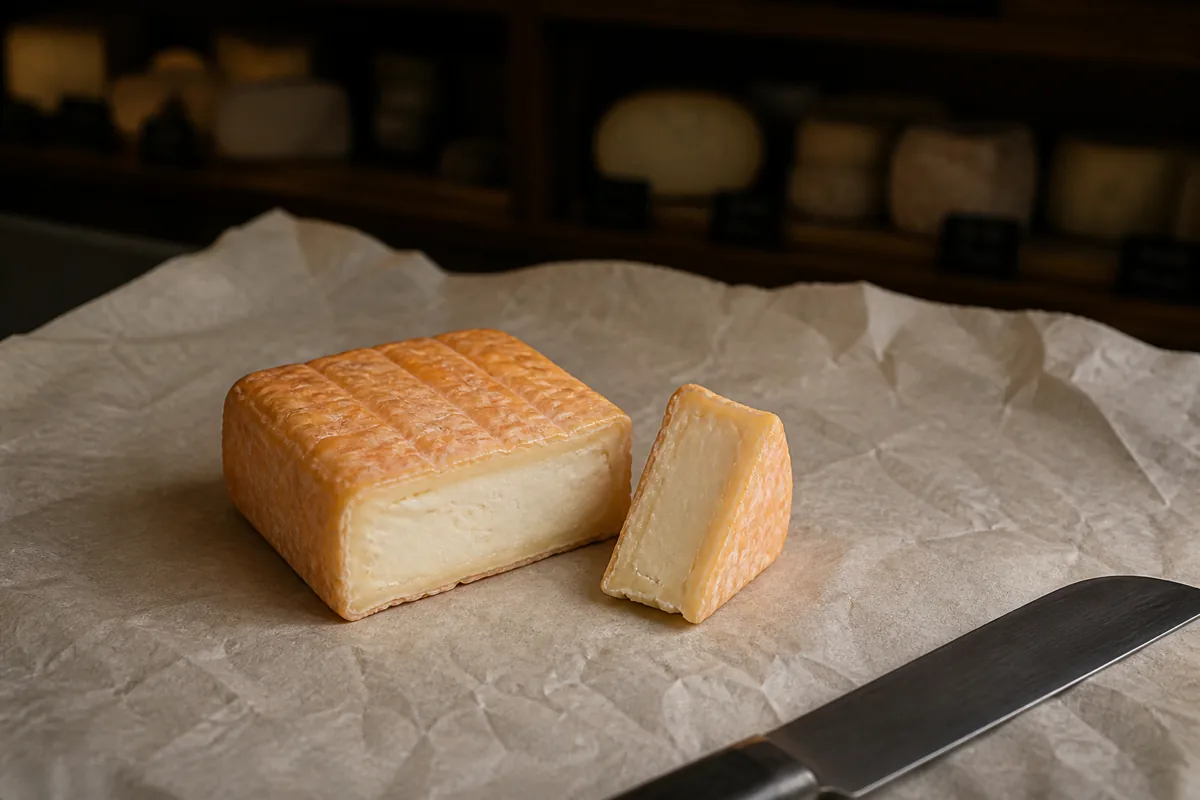
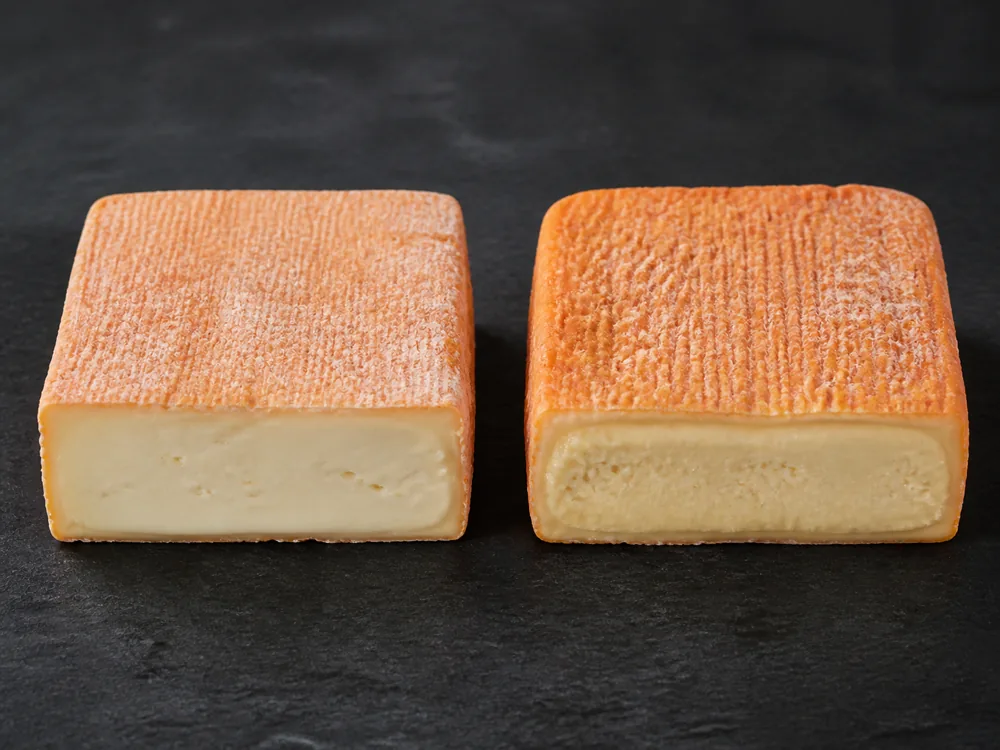
Herve is a soft, washed-rind cheese made from cow's milk in the Pays de Herve, in Belgium's province of Liège, and sold as small cubes with an orange rind.
The strong smell comes from the rind rather than the paste, which the Herve association describes as creamy and mild inside.
Doux is the shorter-ripened, milder version and piquant the longer-ripened, sharper one, though published ripening times differ from source to source.
In This Article
What Is Herve Cheese?
The application file for its protected name describes Fromage de Herve as a soft cheese with a washed rind, made from cow's milk and shaped as a cube or parallelepiped. It sets the minimum fat at 45% of the dry matter.
The association says the name has been an EU Protected Designation of Origin since 1996, and the application file reserves it for cheese that is produced, made and ripened inside the defined area.
The file also records a collective label, Herve origine, protected as a trademark in the Benelux since 20 November 1987 and made available to every member of the applicant association, which is composed of producers and ripeners.
The association names three producers, Herve Société, Ferme du Vieux Moulin and Ferme Colyn, and says they make more than 500 tonnes a year between them. Its general sheet adds that 50 years ago there were 500 Herve producers.
Where Is Herve Cheese Made?
Production and ripening must both happen inside a zone that the application file bounds by the Vesdre and Ourthe rivers to the south, the Meuse to the west, and the Dutch and German borders to the north and east. The file excludes the Fourons area, where production had fallen to a bare minimum, and says the milk must come from the Herve plateau.
That plateau has about forty villages among apple and pear orchards, lies near 200 metres in altitude, and has clay and chalk soil. The file links the milk's high protein content and the natural ferments in the untreated farm milk of traditional production to the grasses that grow there.
The association's general sheet calls the tradition eight centuries old and traces cheesemaking on the plateau to the 13th century, citing a study by Professor Remacle of the University of Liège. The application file instead says Herve has been produced since the 15th century, so a buyer will meet both dates.
The file describes Herve as the result of breeders' research at the end of the Middle Ages into keeping surplus milk until early winter by fermenting the traditional fresh cheese called maquée.
Emperor Charles V's ban on grain exports to the Low Countries in the 16th century pushed farmers to turn fields into pasture and keep dairy cows. The new pastures called for a cheese that ripened long enough to travel to distant regions, and Herve even served as money, with houses sold against rents paid in butter and Herve.
The association also says that attempts to make Herve in other regions seem to have failed, and it credits the local climate, grasses, microflora and makers' skill.
How Is Herve Cheese Made?
The association's production page starts with milk taken straight from the cow at about 32 °C, neither cooled nor cooked. Rennet extracted from a calf's stomach sets that milk into curd in about 90 minutes, so Herve made this way is not suitable for vegetarians.
The production page calls judging how firm the curd is the most delicate moment: the cheesemaker presses a finger into it horizontally and lifts it, and reads the firmness from how the mass splits, with no instrument.
The association says each cheese is washed individually in lightly salted water during ripening.
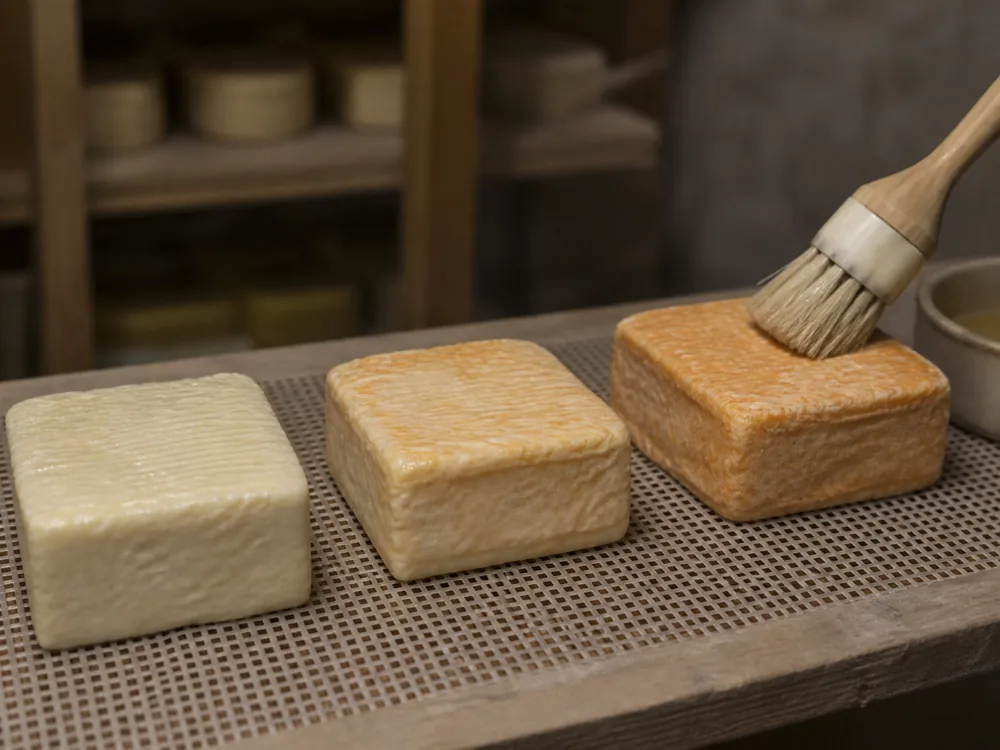
The PDO file describes the washing more loosely, as two or three times a week for the first fortnight and once a week after that, in damp cellars where the cubes sit on planks.
In that traditional recipe the salted curd cubes were sold a few days after moulding to ripeners, so the cheesemaker and the person who ripens the cheese can be different businesses.
Is Herve Made with Raw Milk?
It can be. The application file allows untreated or pasteurized cow's milk, and the association's production page describes the raw-milk version of the recipe.
So read the milk statement on the pack before you buy; it matters most for pregnancy.
Why Does Herve Cheese Smell So Strong?
The rind carries the smell. The association says what smells strong is the rind, not the taste, and that the paste inside is creamy and mild.
It names Brevibacterium linens among the bacteria behind both the orange color and the odor, which develop on a rind that is rubbed regularly with salt or brine. The PDO file says this bacterium and local yeasts are present in the cellar air, on its walls and in the wash water, so the cubes are seeded naturally without the standardized ferments of industrial production.
The association presents the aroma as a sign of controlled ripening, and says the paste can be milky or fuller-flavored depending on how long the cheese has ripened.
Its production page puts the intensity in the taste as well, calling Herve a strong cheese whose taste is felt well before the first bite and which shows its character even before the wrapper is opened.
Herve's rind is brown and slightly rosy in the application file, a pink crust called the morge on the production page, and orange in the association's 2025 and 2026 articles, so a rind anywhere from rosy to orange-brown fits the descriptions.
What Is the Difference Between Herve Doux and Piquant?
Piquant is the longer-ripened, sharper type: it ripens longer than doux in every schedule in the table, though the week counts differ.
| Source | Doux | Piquant |
|---|---|---|
| PDO application file (1996) | 5 to 6 weeks | 2 months |
| Association production page | 4 to 5 weeks | 7 to 8 weeks |
| Association general-information sheet | 4 to 5 weeks | 5 to 6 weeks |
| Association article, February 2026 | About 3 weeks | Often 7 to 8 weeks |
| Terre de Fromages FAQ (mild and strong) | 3 to 4 weeks | 7 to 8 weeks |
Piquant gets roughly one to five more weeks depending on the source, so the type printed on the pack tells you more about the cheese than any single week count.
The association's 2026 article describes doux as light, milky and slightly salty with subtle fermentation notes, soft and creamy, and sometimes a little runny late in ripening. Terre de Fromages instead calls the texture of a mild Herve chalkier.
The 2026 article describes piquant as frank, powerful and sharp, with pronounced fermentation, firmer at the heart but creamy under the rind. The production page calls piquant more bitter and salty than doux, and Terre de Fromages says the strong version is riper, with more mature and complex aromas.
Piquant is salted more heavily and continuously than doux, the production page says, and the 2026 article adds that its washes are more frequent. The production page also names a middle type, demi-doux, that falls between the two depending on ripening time and washing.
Choose doux for a light, milky, creamy cheese and piquant for a saltier, more bitter, more fermented one that is firmer at the heart. The sources disagree on weeks, so the type on the pack is the criterion.
What Is Remoudou Herve?
The PDO file lists remoudous among the traditional variants of Herve, describes them as double-cream, and gives 1512 as the year their recipe was specified. It says the variants do not basically change the cheese's specific nature.
The name comes from rimoude, the Walloon word for the second milking, which in the 19th century gave a rich, creamy milk because the first milking took only the thinner milk. French Reblochon was named the same way, from milk of a re-milking.
Terre de Fromages says Remoudou is no longer made with second-milking milk but with the richest and creamiest milk, and the production page calls it an old whole-milk recipe that gives a rich cheese with complex aromas.
Today Remoudou is the larger format, a cube 8 cm a side in 200 or 400 g, bigger than the standard cube.
How Do You Eat Herve, and Can You Eat the Rind?
The rind is edible: Terre de Fromages says washed rinds can be eaten and names Herve PDO among them.
The PDO file says that under the rind the cheese is more unctuous and tastes more mature, and that ripeness fades toward the center, so a wedge cut from rind to center carries the whole range. The file adds that the ripening technique can also give a cheese that is mature in the centre or uniformly mature, which has the advantage of preventing it from caving in at the sides.
When you cut it, give every portion a fair share of rind and paste: the association's tasting page says the flavor is stronger near the rind and the heart is creamier.
Terre de Fromages advises taking cheese out of the fridge an hour before cutting it. CDC says perishable food should not stay out for more than 2 hours, or 1 hour above 90°F, so that rest uses the whole allowance in hot weather.
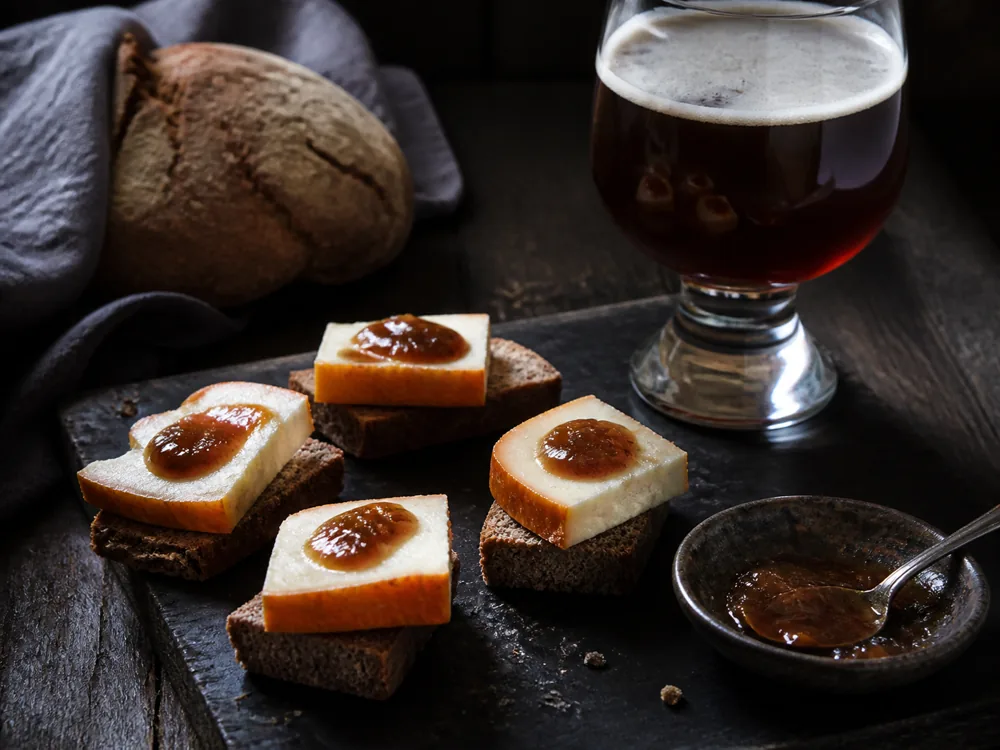
The association says the local way to taste Herve is with a little Liège syrup and a cup of coffee, and its tasting page adds a traditional breakfast of Herve, bread and syrup for either type.
What Wine or Beer Goes with Herve Doux and Piquant?
For doux, the association's tasting page asks for a young, light, fruity white wine, because a strong wine competes with the cheese and keeps it from showing all its aromas.
For piquant the same page moves up to a full-bodied red such as one from Burgundy or Vacqueyras, and it also names a generous port and a brown abbey beer.
If you want one drink for both types, the 2026 article recommends a cold local beer with either, and the general sheet lists a warm wine, vintage Port, a brown abbey beer and Gewürztraminer for Herve in general.
| Pairing | Type | Why It Works |
|---|---|---|
| Young, light white wine | Wine | Doux, per the tasting page, because a strong wine competes with the cheese. |
| Fruity or brown beer | Drink | Doux, per the tasting page: a fruity beer or a local brown or abbey beer. |
| Full-bodied red | Wine | Piquant, per the tasting page: Burgundy or Vacqueyras, for example. |
| Generous port | Wine | Piquant, per the tasting page; the general sheet names vintage Port for Herve in general. |
| Brown abbey beer | Drink | Piquant on the tasting page, and Herve in general on the general sheet. |
| Gewürztraminer | Wine | Named on the general sheet for Herve in general. |
How Do You Put Herve on a Cheese Board?
In Belgium the cheese board comes at the end of the meal, between the main course and dessert, and Herve takes its place last on it.
Lay the board out clockwise from the softest, freshest cheeses to the very fermented, strong ones, as the tasting page advises, because cheeses with a pronounced taste override the light ones if the order is reversed.
The page also asks for a separate knife for each cheese, since the flavors would otherwise mix, and for a board of wood, wicker or slate, materials that do not alter the taste of the cheese.
For contrast it suggests grapes, dried fruit, bread and syrup beside the cheeses, and small labels giving each cheese's name and origin, mentioning the PDO for a labelled cheese such as Herve.
How Do You Buy and Store Herve?
The association gives the standard cube as 6 cm a side and 200 g, with an elongated shape and a half cube at 100 g also sold, while the PDO file allows 50, 100, 200 or 400 g.
Once you have cut it, Terre de Fromages recommends putting the cheese back in its original wrapper in the salad drawer, away from other food, and CDC says to keep a refrigerator at 40°F or below.
Terre de Fromages calls that drawer the warmest and dampest place in the fridge and says lining it with newspaper stops smells from getting out.
The association's tasting page says Herve is stored in the fridge under a cloche or in an airtight container, and that a wrapped Herve keeps ripening from the outside toward the heart, so if you want it riper and more flavorful, give it an extra ripening period at home.
Can You Eat Herve Cheese When Pregnant?
The answer turns on the milk statement on the pack and on whether the cheese is heated, because Herve can be made from raw or pasteurized milk.
The NHS lists pasteurised soft cheeses such as mozzarella, feta and halloumi, and goats' cheese without a white coating, among the cheeses that are safe to eat, and it says any cheese cooked until steaming hot is safe. It also says foods made from unpasteurised milk must be thoroughly cooked, which covers raw-milk Herve.
The CDC lists soft cheese made from unpasteurized (raw) milk as riskier and pasteurized soft cheeses heated to an internal temperature of 165°F or until steaming hot as safer.
Served cold, Herve is described as a pasteurized soft cheese with a washed rind, a type the CDC list does not cover, so ask a midwife or doctor. CDC also says pregnant women are 10 times more likely to get a Listeria infection.