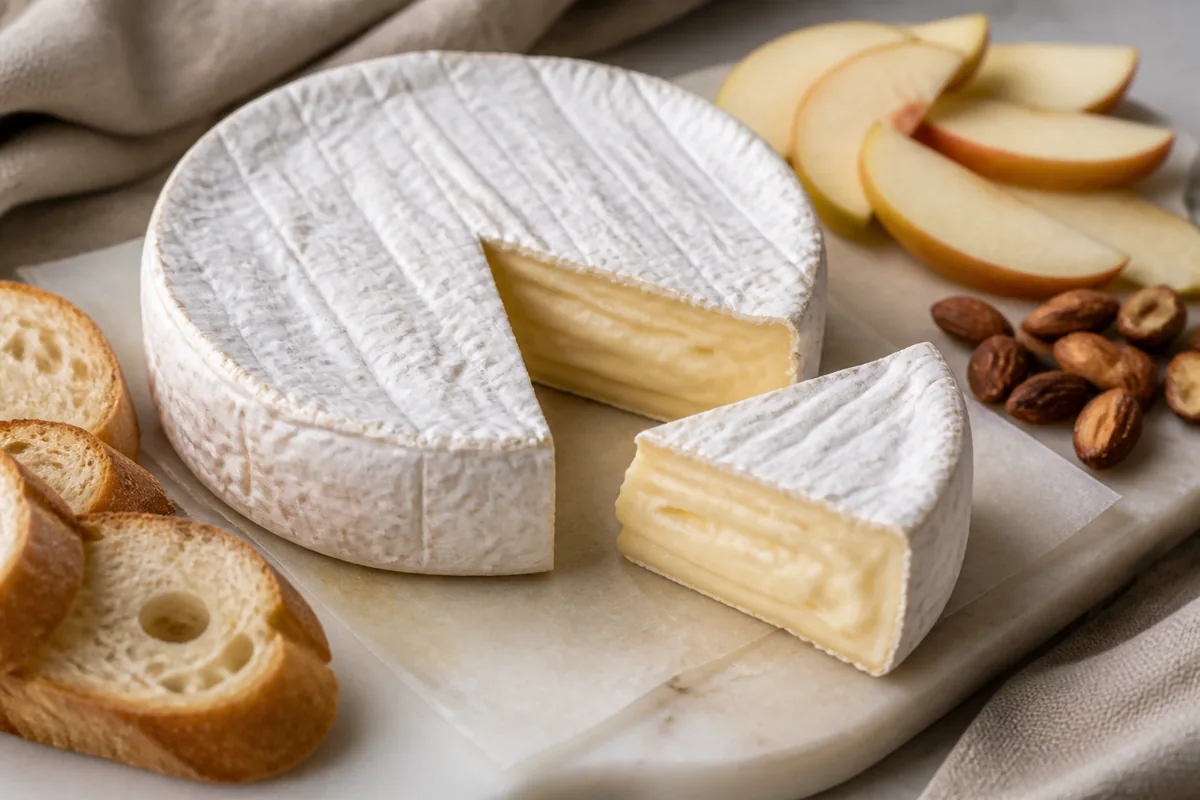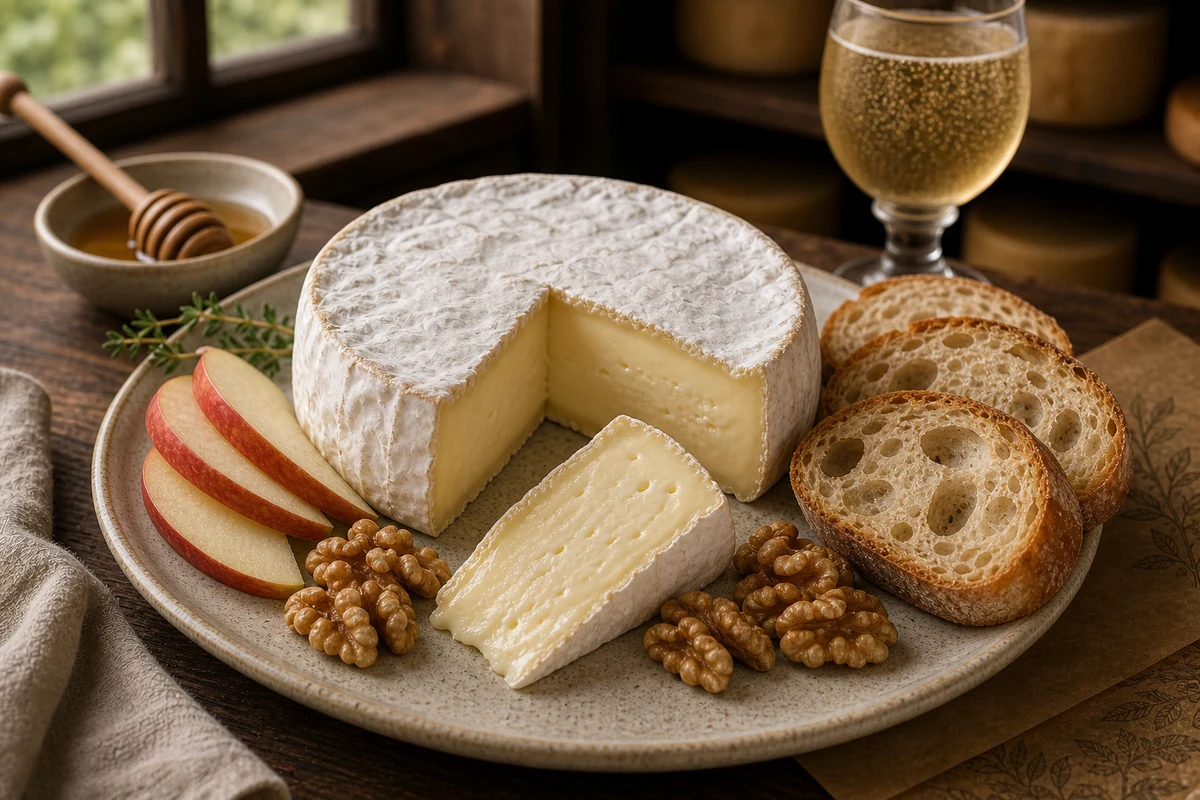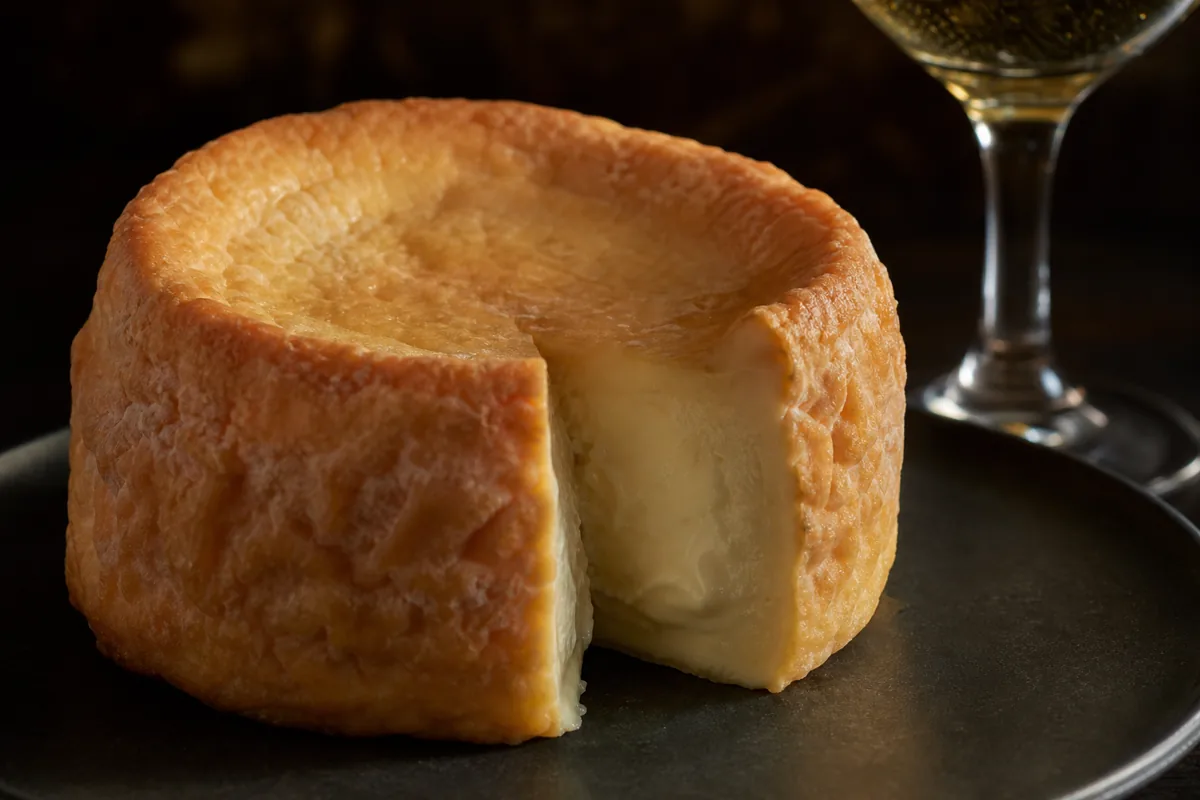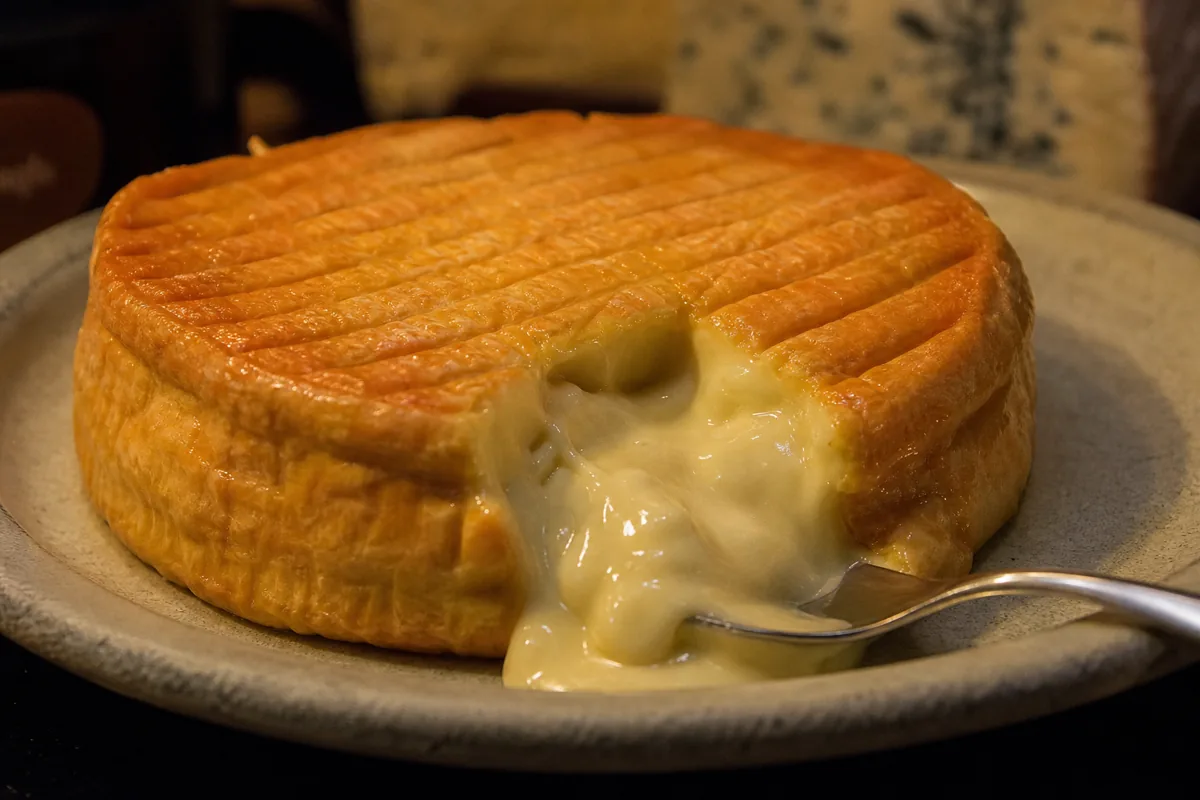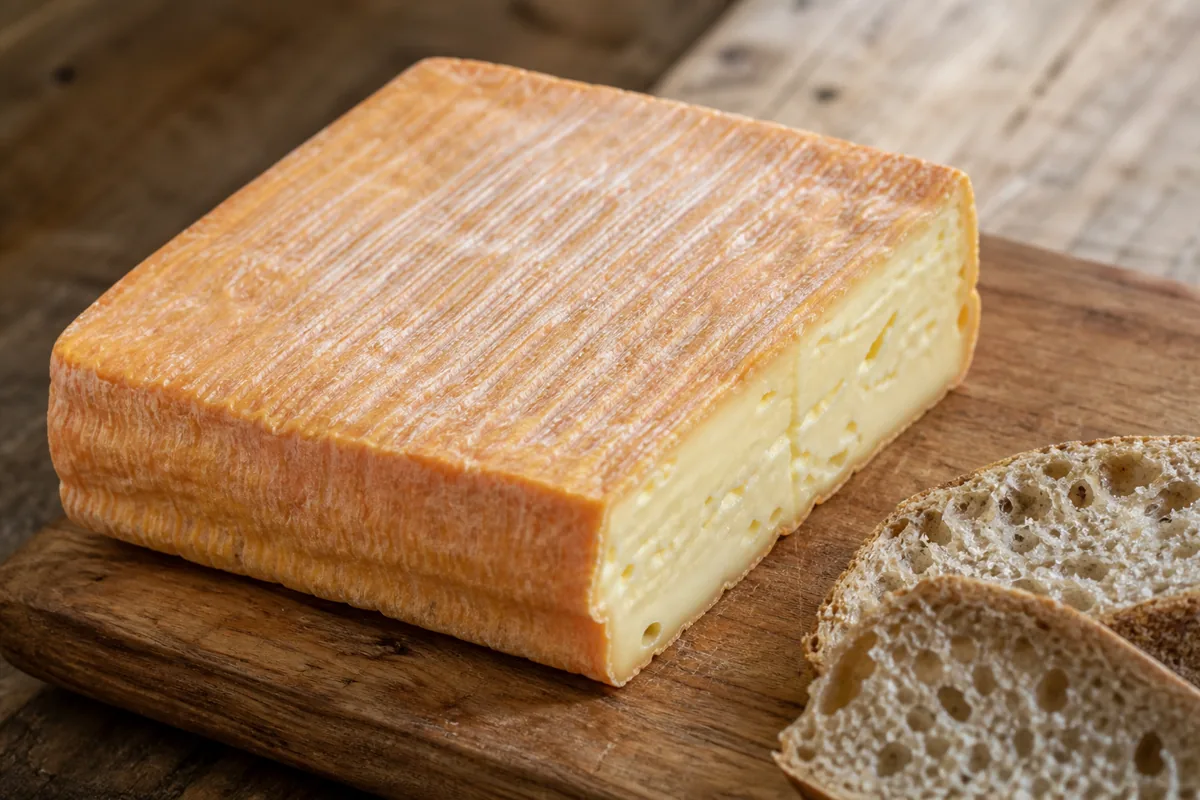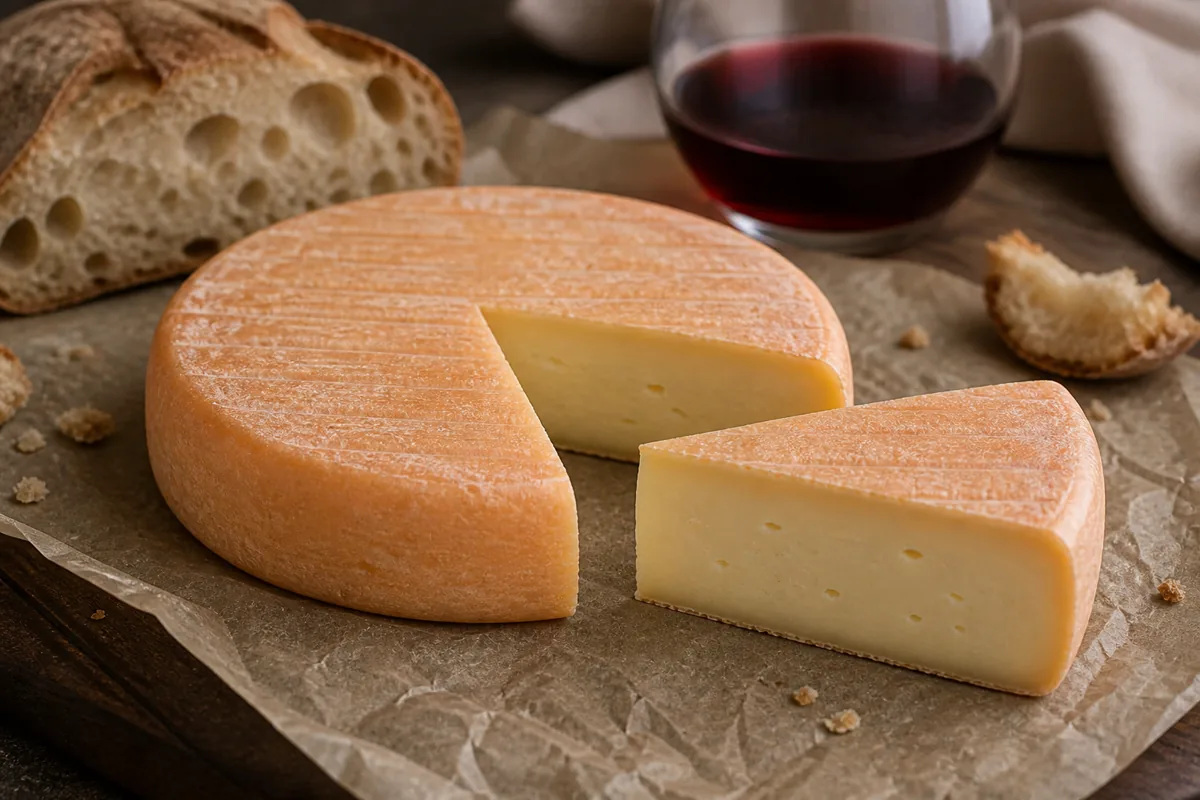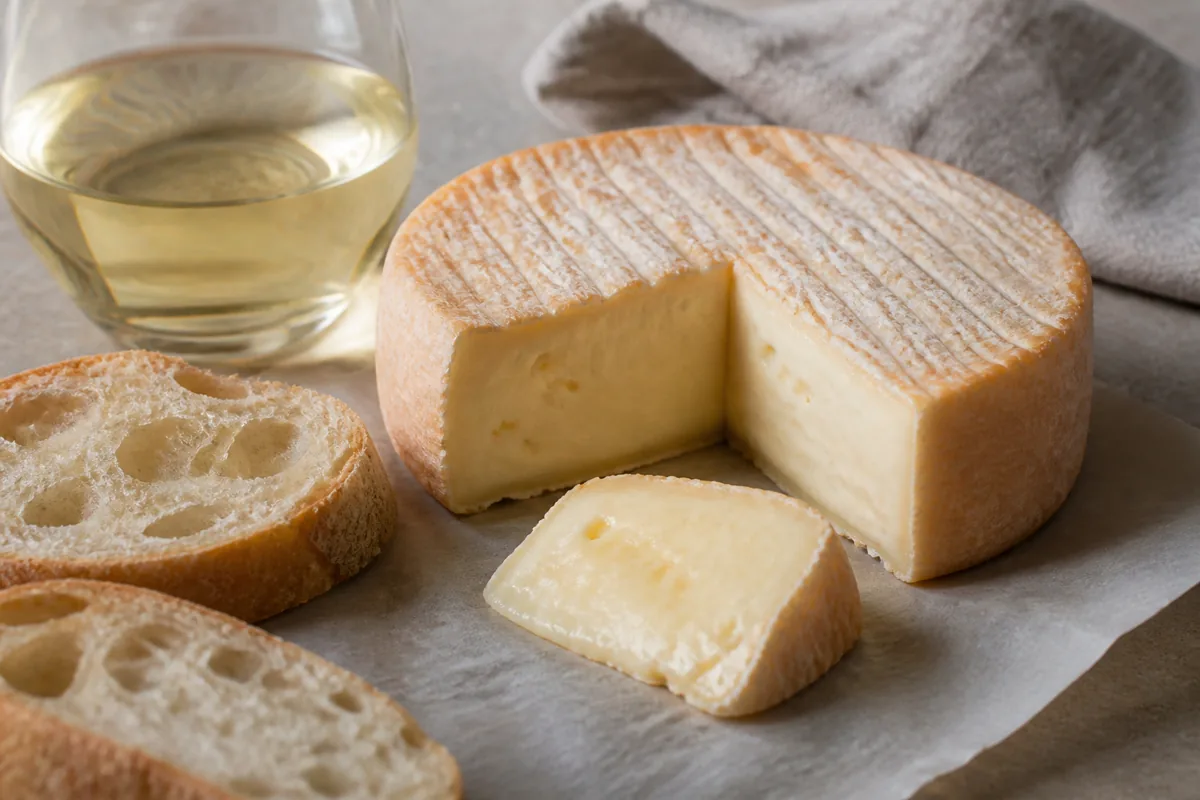
Affidelice au Chablis is Berthaut's Chablis-washed soft cheese from Burgundy.
Its connection to Epoisses is real, but the white-wine wash gives it a different identity from a cheese washed with Marc de Bourgogne.
It is also distinct from Germain's Le Millesime, affine au Chablis. Both use Chablis, so the maker's name matters when you compare ingredients, nutrition or descriptions of flavour.
In This Article
Which label identifies Affidelice?
Fromagerie Berthaut makes Affidelice in Epoisses, a village in Burgundy's Cote-d'Or. Savencia's account of the dairy names Affidelice among its specialities and identifies the Chablis treatment.
On a French pack, affine au Chablis describes maturation with Chablis; those words alone do not identify the producer. The 200 g Berthaut listing at Intermarche uses the name Affidelice and product code 3307950050015.
| Name on the product | What distinguishes it | What to compare |
|---|---|---|
| Affidelice au Chablis | Berthaut speciality washed with Chablis | Berthaut pack size, ingredients and nutrition |
| Le Millesime, affine au Chablis | Germain's separately named Chablis-washed cheese | Germain's own product label |
| Epoisses | Protected cheese with a Marc de Bourgogne wash | The maker and the AOP/PDO identity |
Germain currently describes its product as mild, floral and fruity. That is useful when choosing Germain's cheese, but it does not establish the taste or composition of a Berthaut pack sold as Affidelice.
What changes when the wash is Chablis?
The distinction is Chablis wine versus Marc de Bourgogne, rather than a reliable mild-to-strong ranking. INAO identifies the marc wash as part of Epoisses, while Berthaut's product brochure describes repeated Chablis washing for Affidelice.
Berthaut also describes a yellow-orange surface that develops during maturation. An orange rind therefore does not tell you which of these cheeses you have; the label identifies the wash.

An older Le Comptoir du Fromage specification describes a creamy paste with a slightly crumbly centre and balanced, distinctly milky flavours. A firmer centre can therefore fit the described product; complete runniness is not a requirement for serving it.
For someone seeking a gentle cheese, a description of the particular piece from the cheesemonger is more useful than assuming all Affidelice is milder than all Epoisses.
How Should You Serve Affidelice with Bread and Wine?
The Berthaut brochure recommends white Burgundy wines, including Chablis, with its cheeses. That gives you an attributed pairing for Affidelice without treating the wine used in the wash as a compulsory drink.
For a simple plate, plain baguette carries the soft cheese while apple or pear adds crisp texture. A little onion jam can provide a sweeter bite; keeping it alongside the cheese lets each guest choose how much to add.

A narrow wedge includes both rind and centre, so guests can try them together or leave the rind. For a very soft piece, a serving spoon avoids forcing it into neat slices.
On a cheese board, Epoisses is an alternative when the Burgundy washed-rind character matters more than the Chablis wash. Brie can supply a soft cheese for bread when a white bloomy rind is welcome, but it will not reproduce that wine treatment.
Germain's Le Millesime is the closer labelled alternative if Chablis itself is the attraction. Its separate recipe and sensory description still matter: a similar wash is not a promise of an identical bite.
What Are Affidelice's Ingredients and Nutrition?
The Intermarche listing for Berthaut's 200 g Affidelice names pasteurized cow's milk, salt, rennet, cultures, Chablis containing sulphites, and colouring E160b(ii). Milk and sulphites are therefore relevant label checks for guests with those allergies.
The listing does not specify the origin of the rennet, so it does not establish vegetarian suitability.
The wine wash provides no alcohol-free guarantee.
Use the pack's own nutrition label rather than Germain's figures. The older distributor sheet for that Berthaut product code lists 23 g fat per 100 g, while the Berthaut brochure gives 55% fat in dry matter: the latter excludes water and does not mean 55 g of fat in 100 g of cheese.
Those documents are useful for understanding the two measurement bases, but the current pack takes precedence for dietary tracking. Neither the cheese's softness nor a general carbohydrate figure proves it is lactose-free.
How Should You Store Affidelice?
Keep Affidelice refrigerated in its recommended wrapping, with the exposed cheese covered after cutting. Follow the use-by date and any after-opening instructions on the actual pack; a retailer's unopened shelf life is not a new allowance starting when you cut it.
FDA household guidance sets the refrigerator at 40 F (4 C) or below. For serving, put out the portion you intend to eat and leave the rest chilled, rather than repeatedly warming the whole cheese.
The FDA's limit for perishable food outside refrigeration is two hours, reduced to one hour when the air is above 90 F (32 C). Any time spent softening the cheese before the meal counts toward that exposure.
There is no single warm-up time that establishes Affidelice's readiness or safety. Its aroma and texture can guide a serving preference, but normal appearance, smell and taste cannot rule out harmful bacteria.
Can You Eat Affidelice During Pregnancy?
Pasteurized milk is not a universal clearance for serving this cheese cold during pregnancy. The advice depends on the country's guidance and the cheese category.
In France, Manger Bouger advises pregnant readers to avoid soft washed-rind cheeses, including when made from pasteurized milk. Affidelice belongs to that category, so a cold wedge is not the appropriate choice under that guidance.
For the US, CDC lists pasteurized soft cheeses heated to an internal temperature of 165 F or until steaming hot as a safer choice, and a brief melt on toast does not show that the cheese has reached that condition throughout. Served cold, Affidelice is described as a pasteurized soft, washed-rind cheese, a type the CDC list does not cover, so ask a midwife or doctor.
The UK NHS lists pasteurised soft cheeses as safe to eat and says mould-ripened soft cheeses with a white coating on the outside must be thoroughly cooked. Affidelice is described as a pasteurized soft cheese with a Chablis-washed rind, so under the stricter French advice above, choose another cheese or cook it until steaming hot throughout.