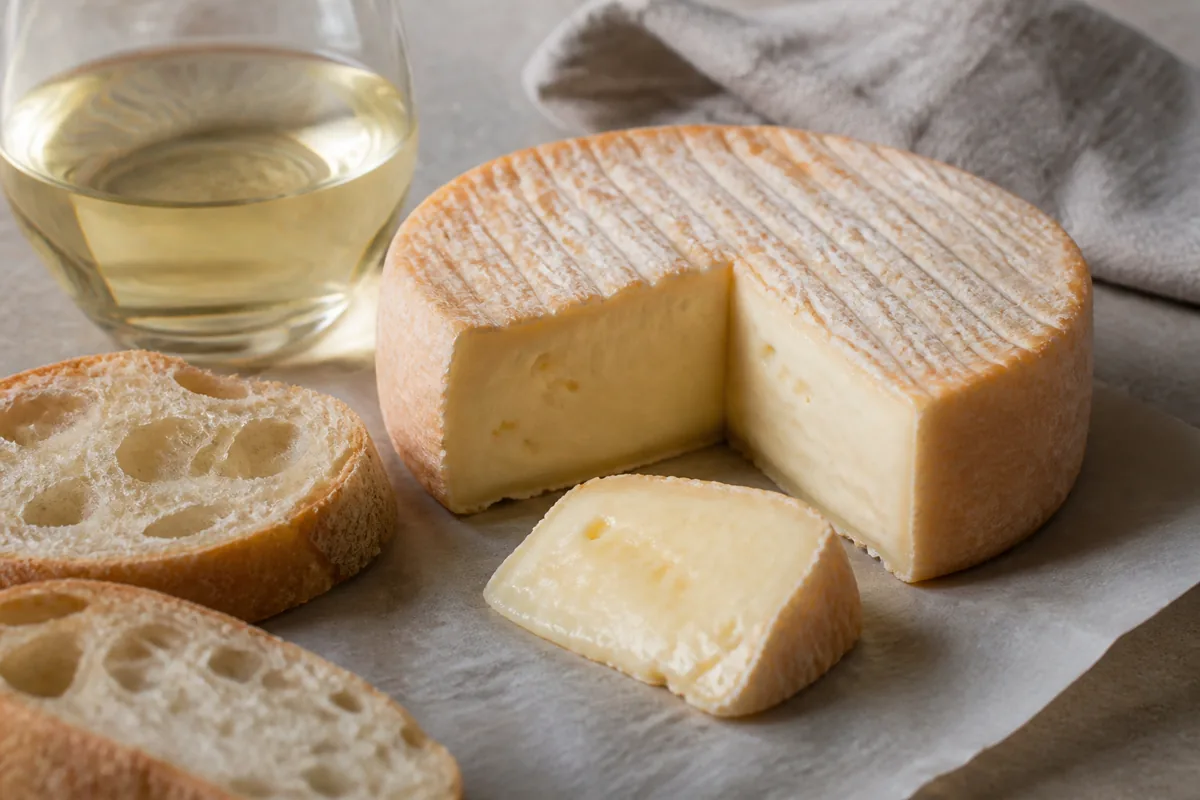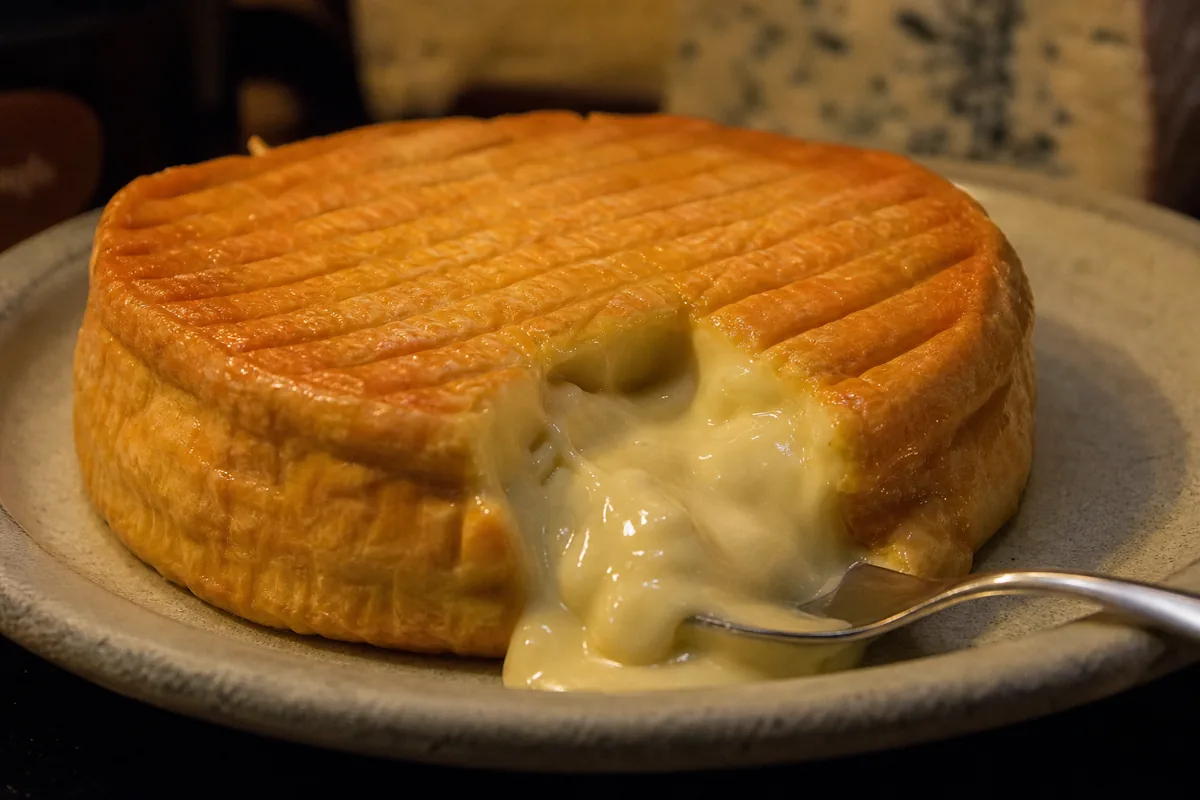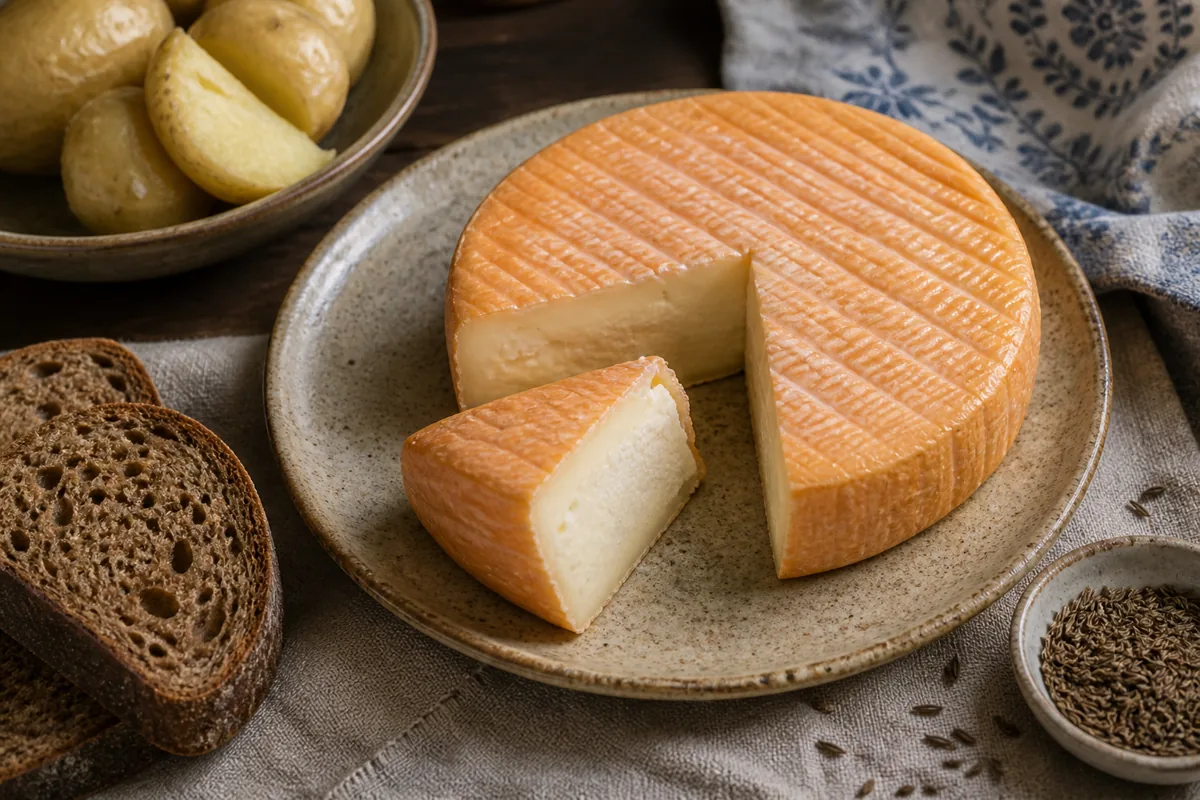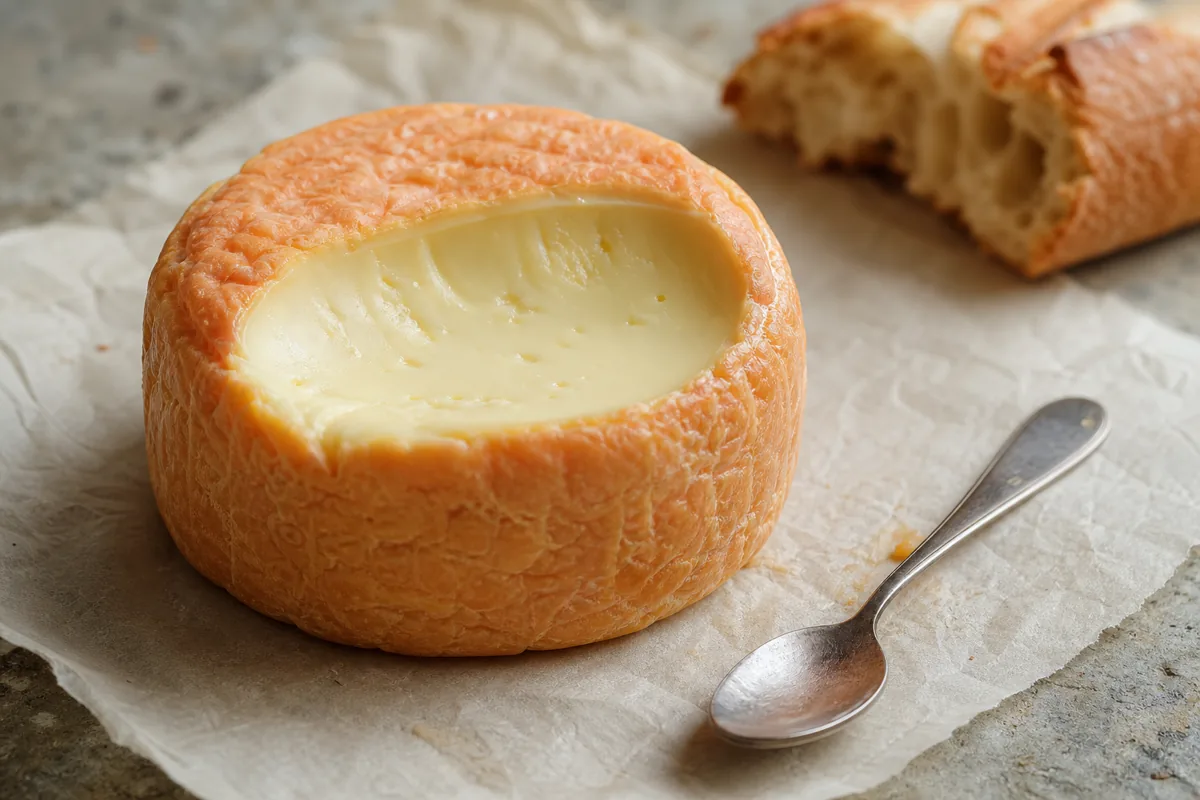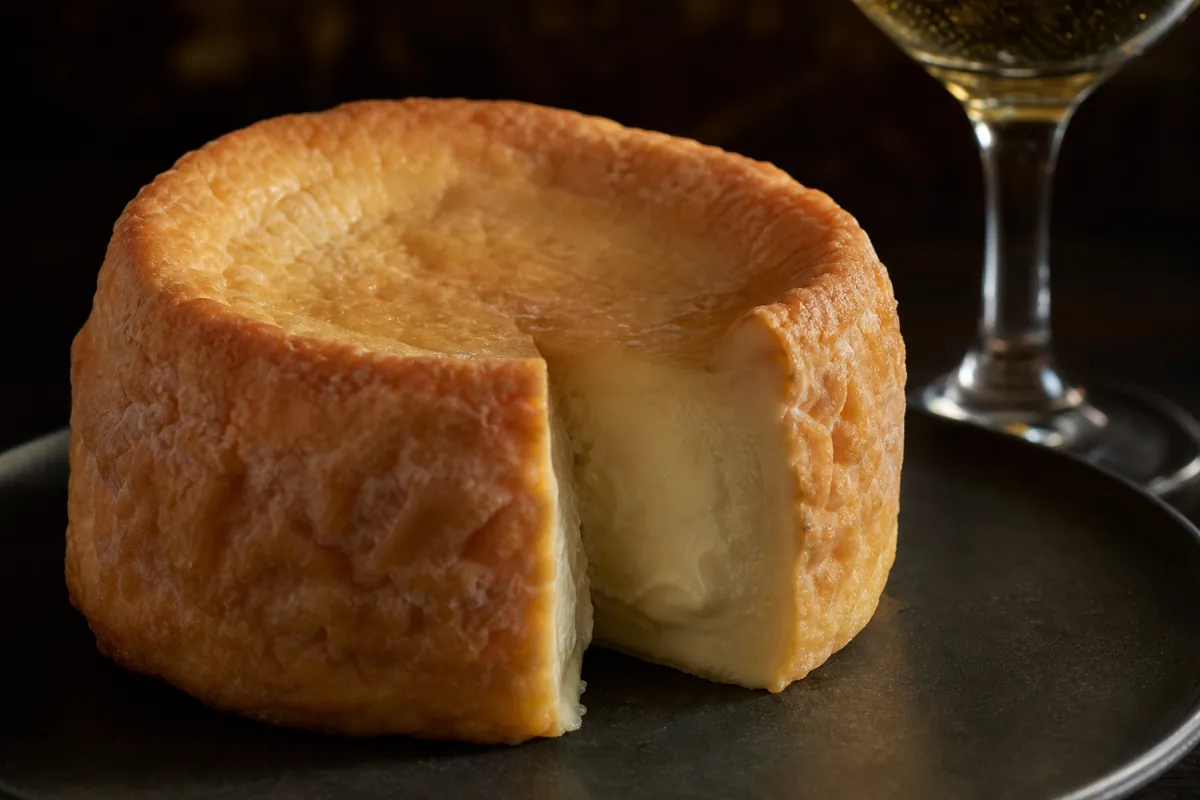
Langres is a French PDO soft cheese with a washed rind and a sunken top called the fontaine. The protected cheese comes in three size ranges, and its golden-yellow to reddish-brown rind surrounds a white paste that can become creamier as it matures.
The fontaine is the easiest visual clue, but it cannot prove a wheel's exact age or safety. Use it with the label, date, storage history, rind, and cut surface.
In This Article
What the PDO protects
The current European specification defines Langres as a soft, slightly wrinkled washed-rind cheese made exclusively from cow's milk. Its shape is cylindrical or slightly tapered, with a depression deeper than 5 mm on the upper face.
Milk production, cheesemaking, maturation, and packaging must take place within the defined area around Bassigny and the Langres plateau, largely in Haute-Marne. INAO records recognition of the designation in 1991 and European PDO registration in 1996.
The 50 percent figure is fat in dry matter, which excludes water from the calculation. It is not interchangeable with total fat per 100 g on a nutrition panel.
What Are the Three Protected Langres Formats?
Langres PDO has three protected size ranges. The minimum maturation period runs from 15 to 21 days depending on format, so size affects production time without creating a simple quality ranking.
| Protected format | Diameter | Weight |
|---|---|---|
| Small | 7 to 8 cm | 150 to 250 g |
| Medium | 9 to 10 cm | 280 to 350 g |
| Large | 16 to 20 cm | 800 to 1,300 g |
A small and a large Langres may soften at different rates after production. Choose the amount you can use, then judge the individual cheese by its date, condition, and the texture you want.
What the fontaine tells you
The protected shape includes the fontaine because Langres settles into a top depression during production. An AOP dairy technical sheet says the hollow deepens as the cheese matures, so it can help compare condition within a familiar product line.
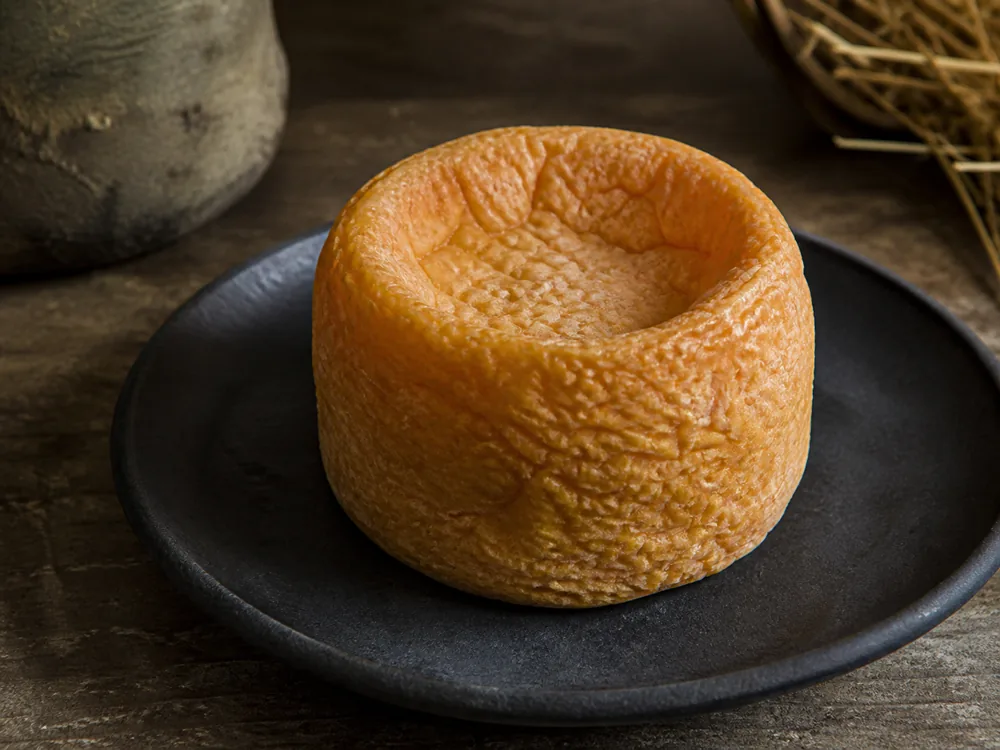
Humidity, handling, format, and time can all affect appearance. A deep hollow does not replace the package date or cold-chain checks, and a shallow one does not prove that the cheese is young.
Use the fontaine as one ripeness clue. For a buying decision, also check the seal, date, storage directions, rind condition, and whether the paste matches the texture you want.
How Does Langres Taste and Show Ripeness?
The PDO description starts with a golden-yellow to reddish-brown washed rind and a white paste that becomes creamy during maturation. The aroma can be assertive even when the flavor remains balanced, so smell alone does not tell you that a wheel is spoiled.
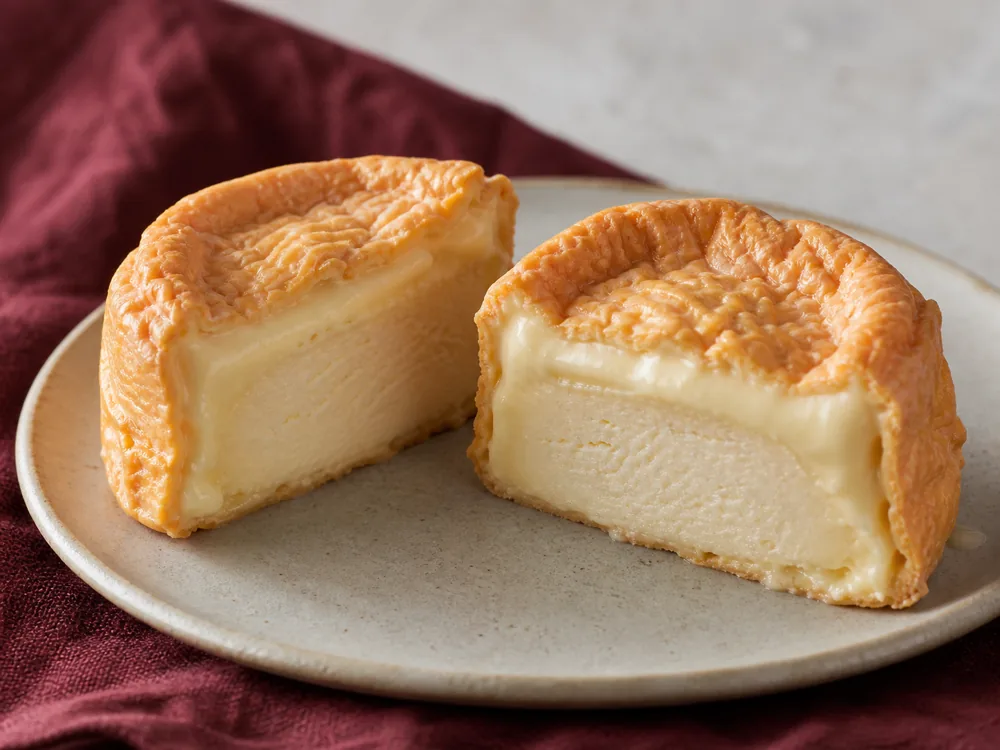
For cleaner slices, look for a paste that holds through the center. For a softer spoonable texture, choose a cheese with more even give beneath the rind, while avoiding broken packaging, unexplained swelling, unexpected discoloration, or evidence that it stayed warm.
A creamier edge with a firmer center can be normal in a surface-ripened cheese. It is a texture cue rather than a defect or a calendar.
How Should You Cut and Serve Langres?
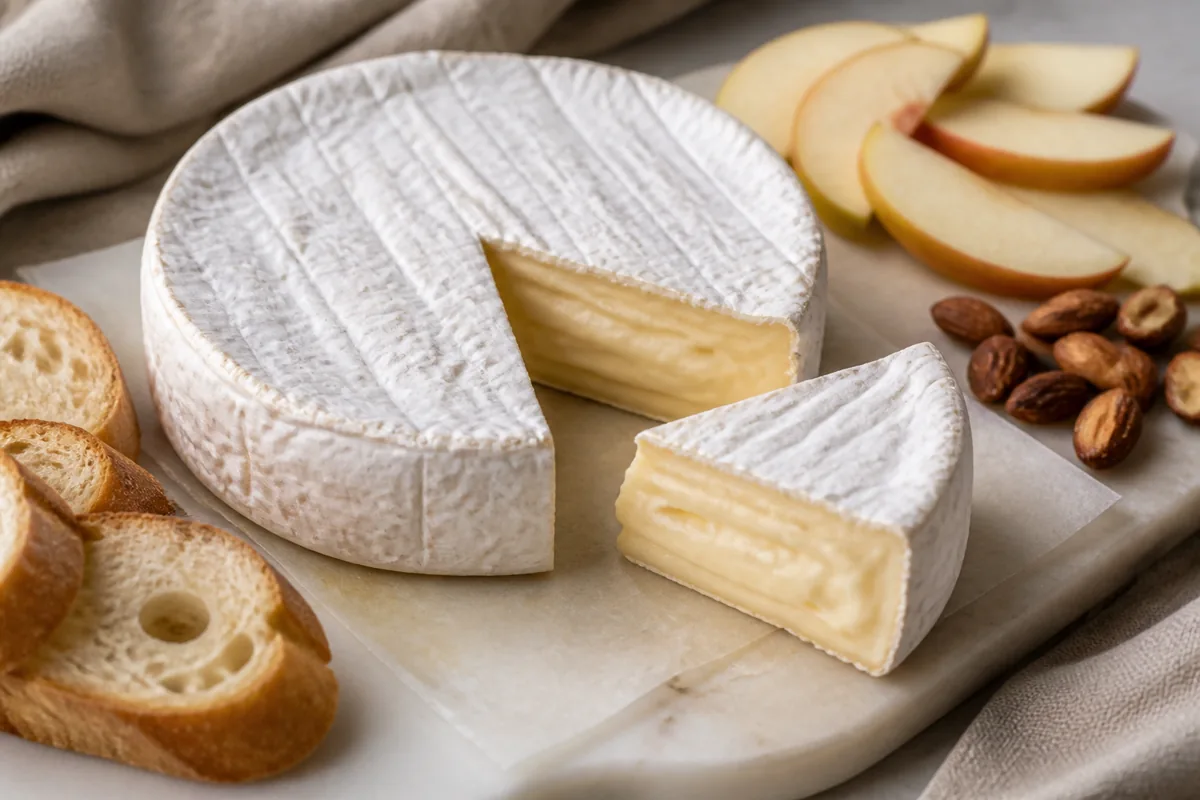
Cut a round Langres radially so each portion runs from the fontaine to the outer edge. This gives every serving some rind, softened paste, and center.
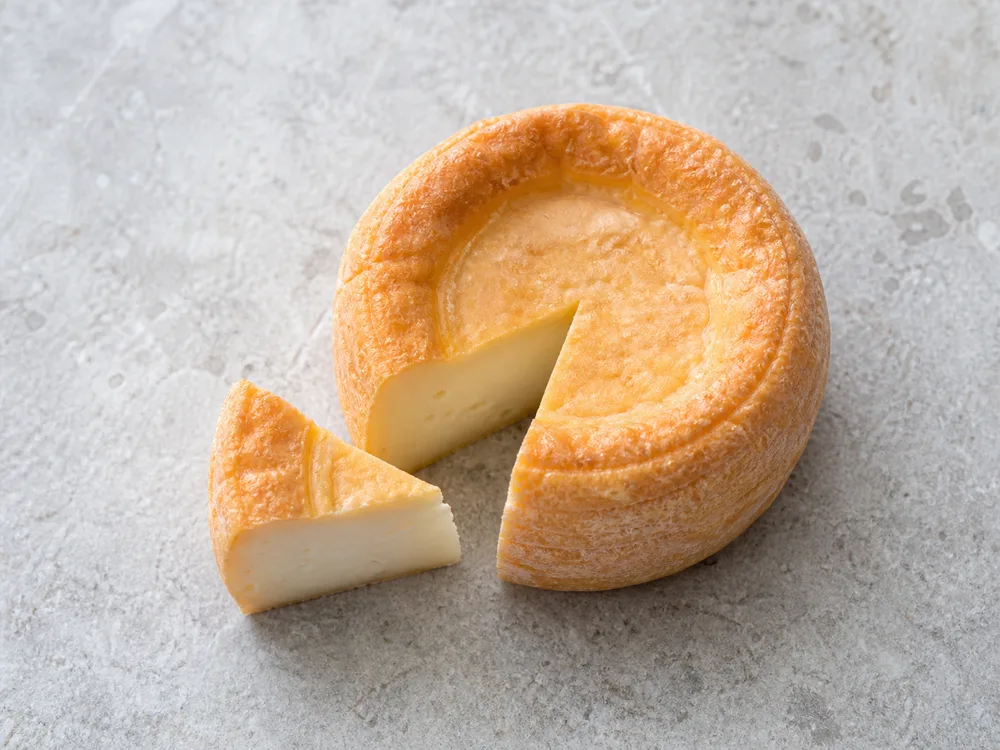
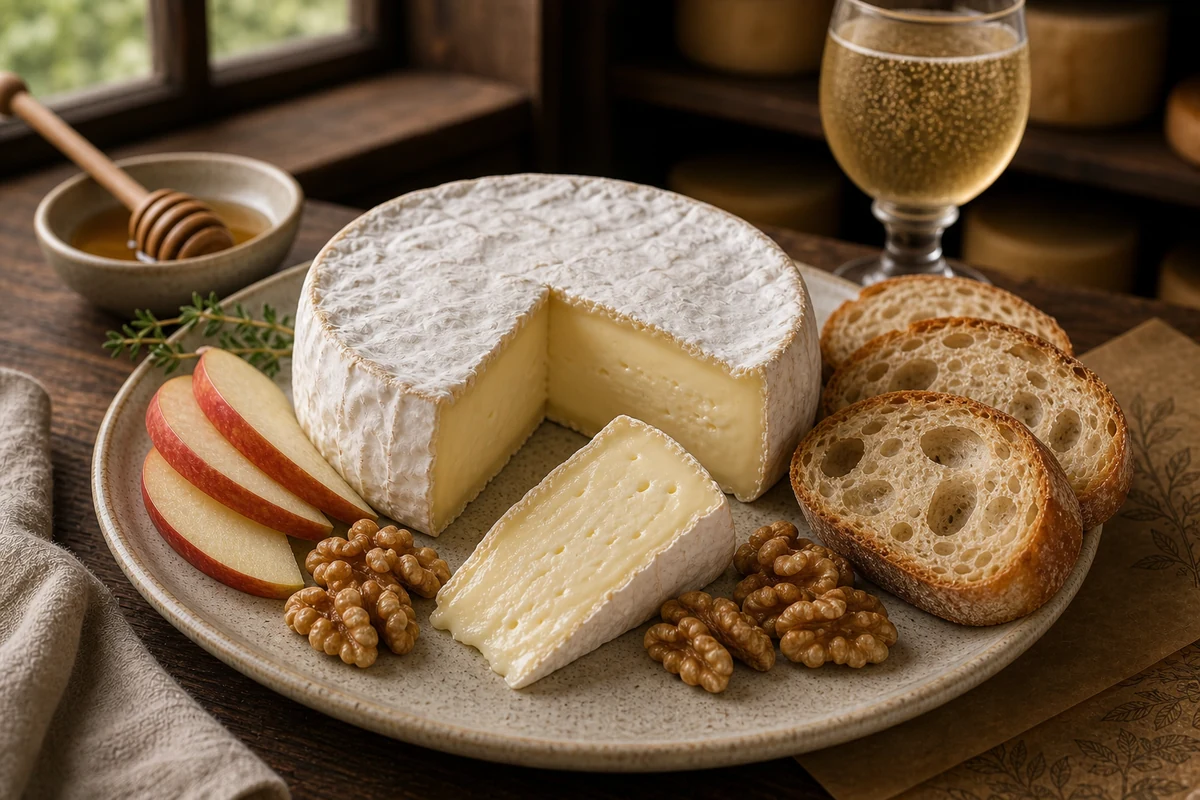
Plain bread and crisp apple give the cheese structure and acidity without covering the washed-rind character. The AOP dairy sheet also describes adding a few drops of Champagne or Marc de Champagne to the hollow, which is an optional regional serving custom rather than part of the PDO definition.
| Pairing | Type | Why It Works |
|---|---|---|
| Plain bread | Food | A neutral base carries the soft paste without competing with the rind. |
| Crisp apple | Food | Acidity and crunch contrast with the creamy paste. |
| Potatoes | Food | A mild starch supports melted Langres in a hot dish. |
| Dry Champagne | Wine | Acidity and bubbles refresh the palate between bites. |
| Dry cider | Drink | Apple acidity echoes the fresh fruit pairing. |
| Sparkling water | Drink | Carbonation provides a simple alcohol-free counterpoint. |
What Should You Check on a Langres Label?
Look for the Langres name and EU PDO logo, then read the exact package for the maker, weight, milk treatment, ingredients, date, and storage range. The protected specification says cow's milk, but it does not make one milk-treatment statement valid for every package in every market.
- Identity: Check the protected name and PDO logo.
- Condition: Choose an intact package with a rind and paste suited to how you plan to serve it.
- Product facts: Use that package for milk treatment, nutrition, storage, and date information.
Do not transfer a nutrition panel from another producer or size. The specification's fat-in-dry-matter minimum describes the protected cheese, while a package panel reports the product sold in that container.
How Should You Store Langres After Purchase?
Keep Langres refrigerated at the temperature printed on the package. The FDA advises keeping a refrigerator at or below 40°F (4°C) and returning perishable food to refrigeration within two hours, or one hour when the air temperature is above 90°F (32°C).
No universal three-day or five-day rule applies after opening. Protect the cut face, use clean utensils, follow the printed use-by date, and use the cheese promptly.
Discard a package with a broken seal, unexplained swelling, or evidence that it remained above safe refrigeration limits. Strong aroma or a deep fontaine cannot confirm safety.
Is Langres Safe During Pregnancy?
Langres is a soft washed-rind cheese. Current French public-health guidance tells pregnant people to avoid washed-rind soft cheeses when eaten cold, including pasteurized versions, and to remove cheese rinds.
The same French guidance allows raw-milk cheese when it has been cooked thoroughly in a dish. The CDC lists pasteurized soft cheeses heated to an internal temperature of 165°F (74°C) or until steaming hot as safer, and soft cheese made from unpasteurized (raw) milk as riskier.
The NHS lists pasteurised soft cheeses as safe to eat and says foods made from unpasteurised milk must be thoroughly cooked. Served cold, a pasteurized Langres is described as a pasteurized soft washed-rind cheese, a type the CDC list does not cover, so ask a midwife or doctor.
Check the milk statement, follow the guidance for your country, and ask your clinician if you have been given individual advice.
Which Washed-Rind Cheeses Are Similar to Langres?
Époisses, Munster, and Taleggio can occupy a similar washed-rind place on a board, but each has its own protected identity, format, texture, and label facts.
Choose a substitute by function. A soft washed-rind cheese can match aroma and texture more closely, while a mild soft cheese may suit guests who want less rind intensity.
Storage, milk treatment, nutrition, and pregnancy conditions must come from the substitute's own package and current guidance.