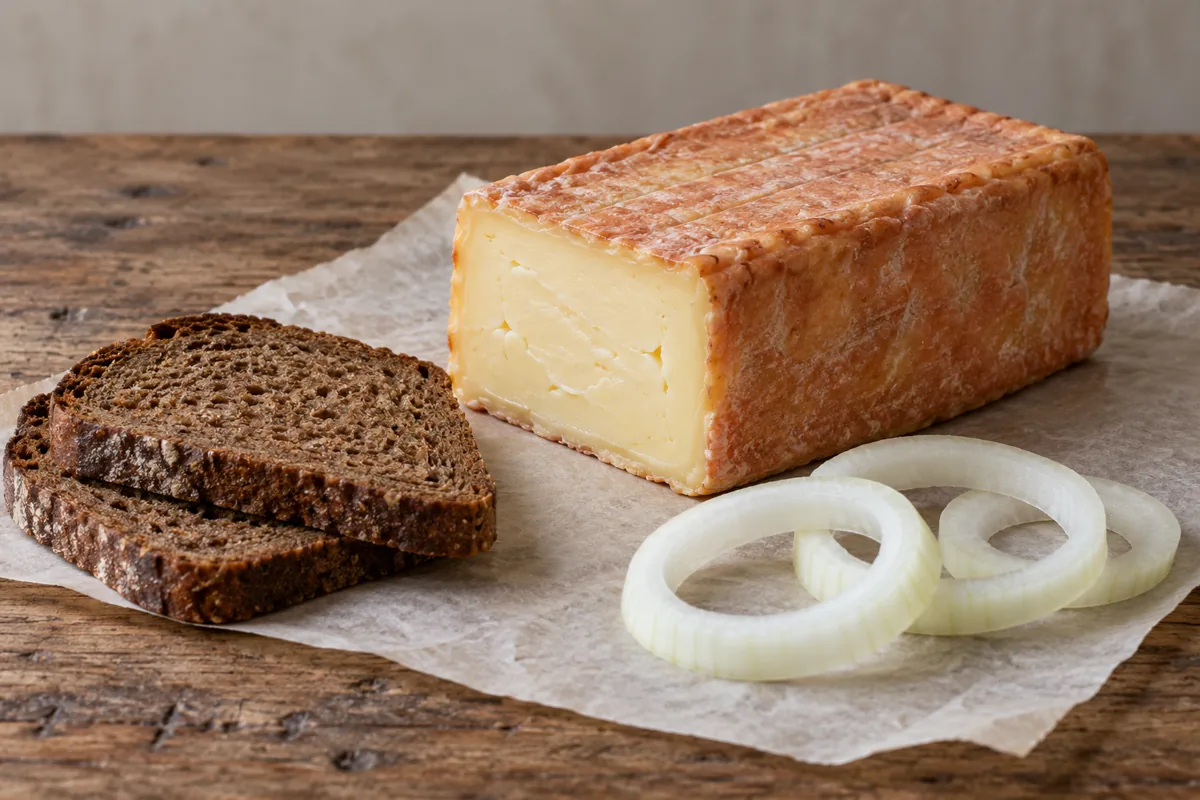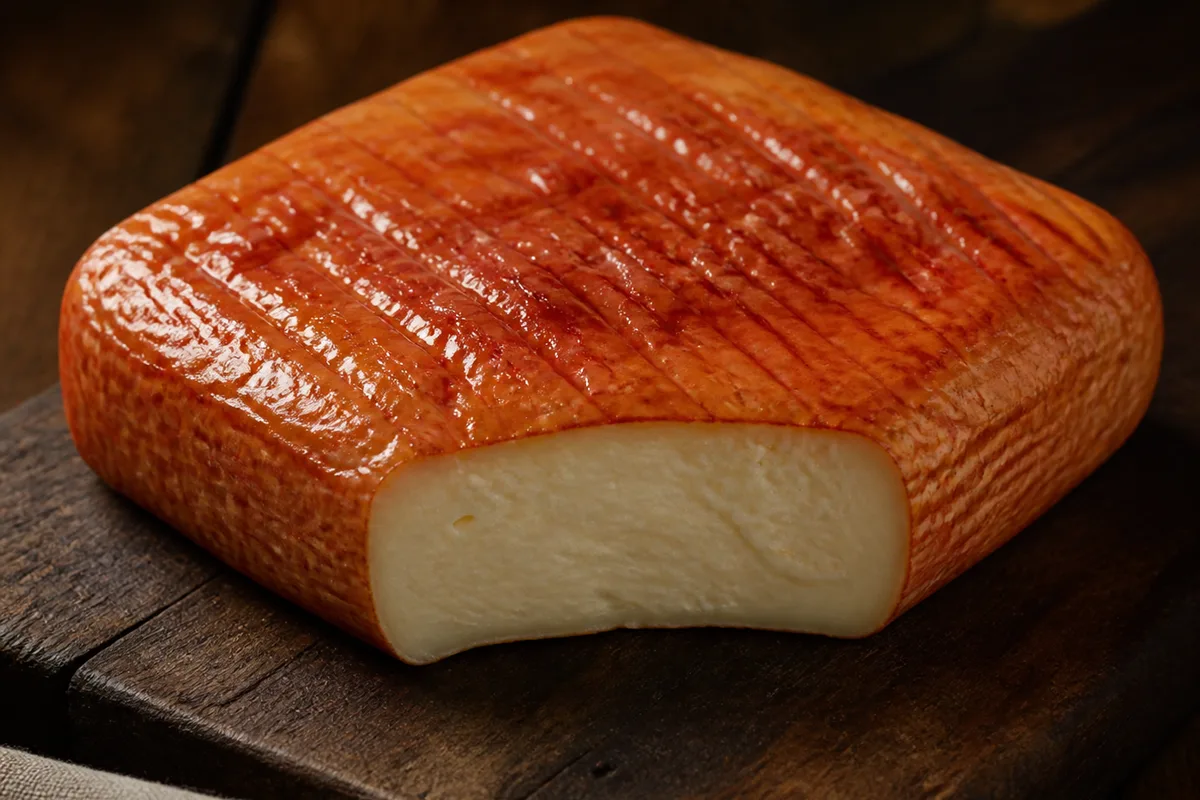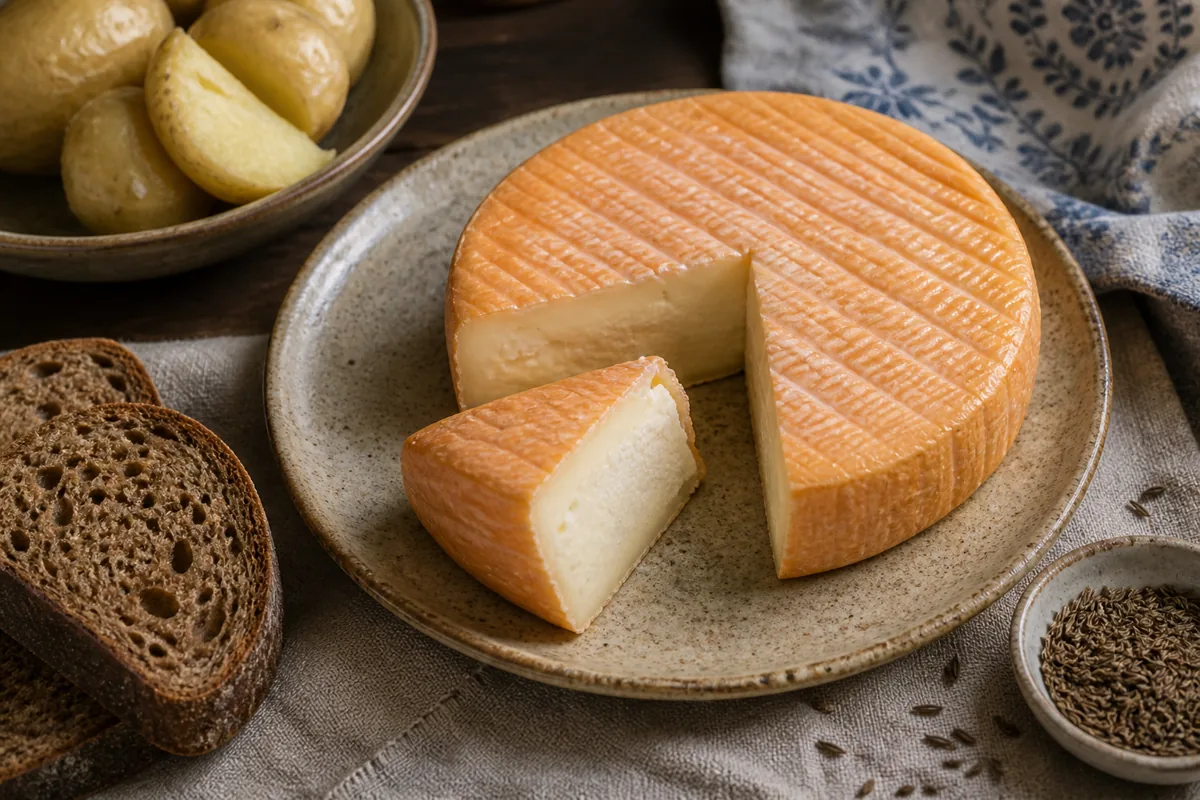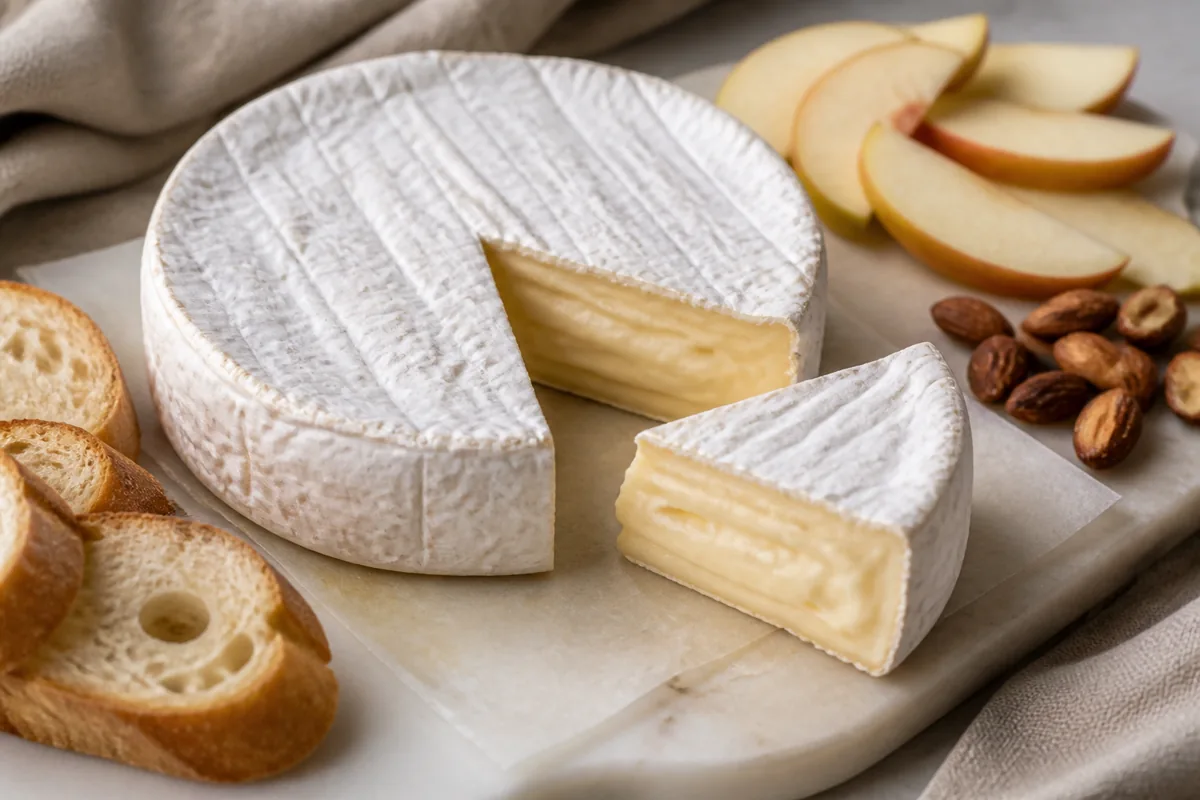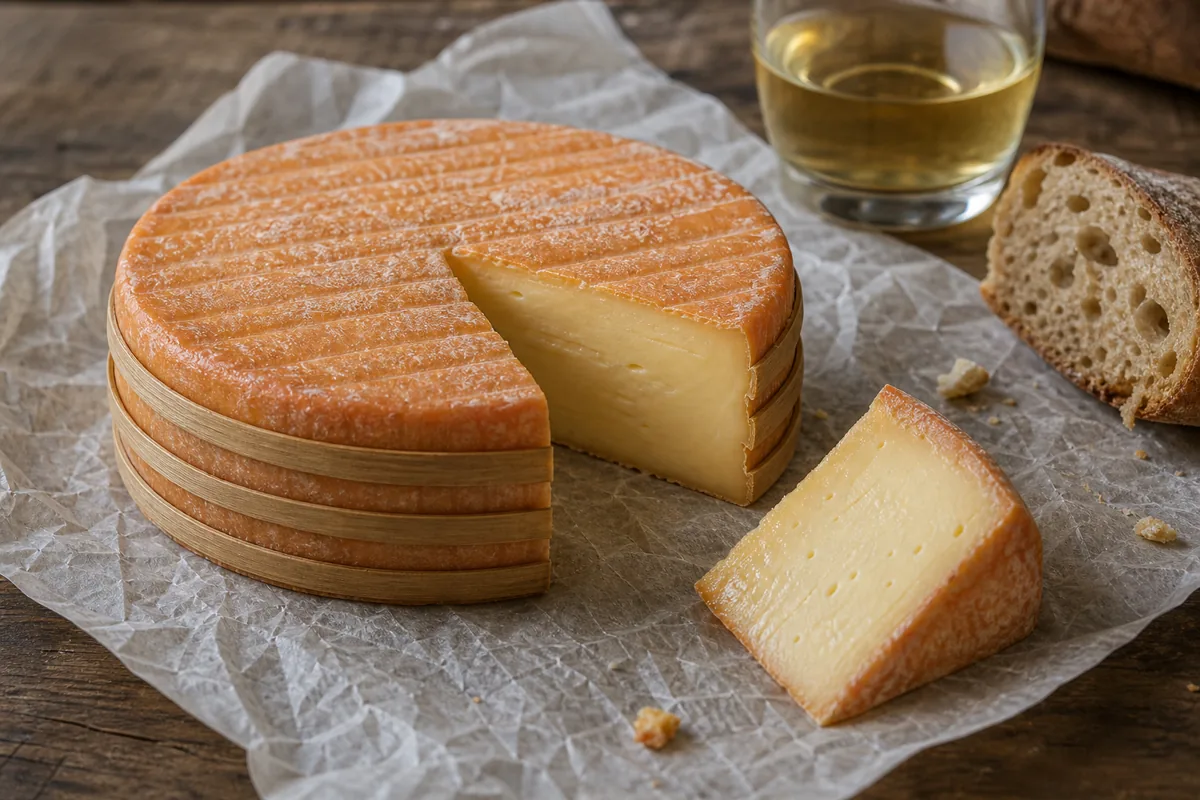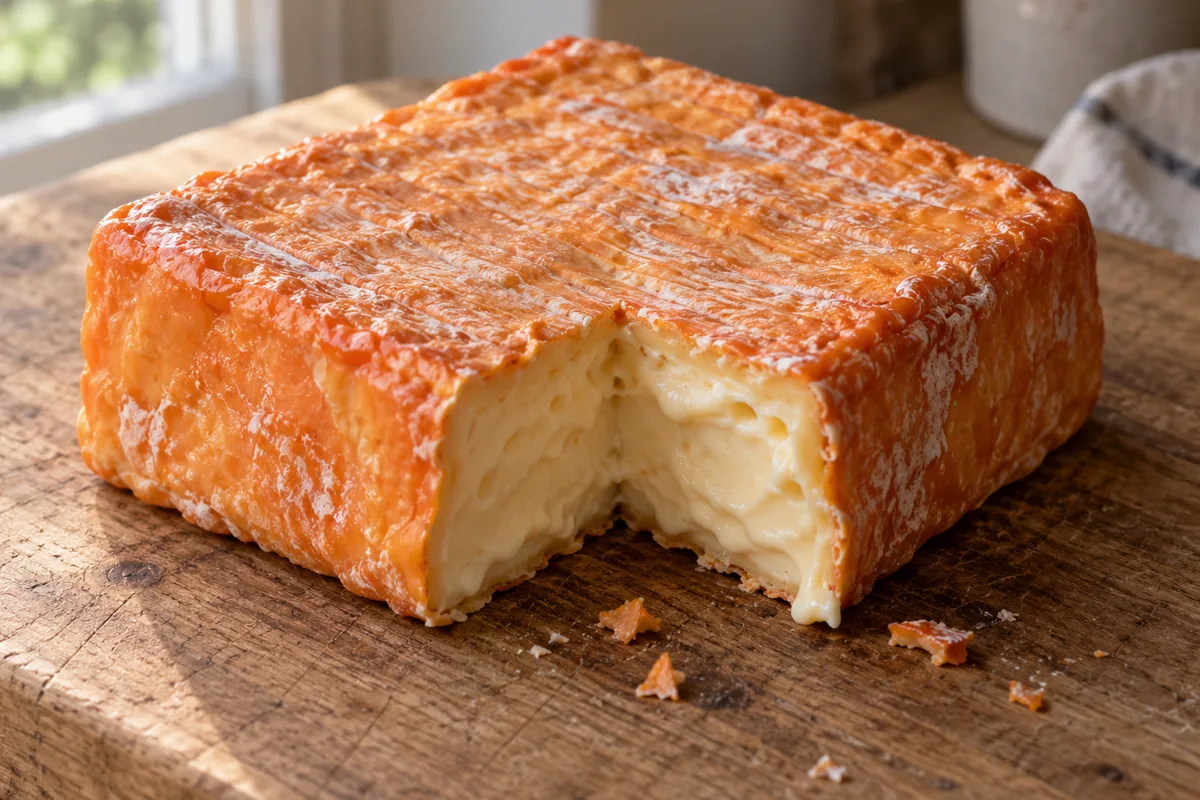
Minger is a soft washed-rind cheese made from pasteurized cow's milk by Highland Fine Cheeses in Tain, Ross-shire, and sold as a 250 g square block with a sticky orange rind.
The name comes from an old Scottish word for a bad smell, and the maker picked it on purpose.
In This Article
Why Is Minger Called Minger?
The word ming comes from an old Scottish English word for a bad smell, and over the years it has come to mean ugly or disgusting. The Fine Cheesemakers of Scotland glosses it as Scottish slang for something a bit "pongy".
The maker admits that some people dislike the name and compares the reaction to Marmite. The cheese's own tagline reads "A Minger should ming – in a good way!"
The name is also part of a house style. The Fine Cheesemakers of Scotland gives Minger and Fat Cow as examples of the "quirky names" the creamery uses, and describes Rory Stone as a man with a passion for "smelly little things".
Cheesemaker Rory Stone has described the smell as "a pungent aroma of welly boot", and Highland Fine Cheeses says researchers at Cranfield University once named Minger the world's smelliest cheese.
Is Minger a Brie or a Washed-Rind Cheese?
Highland Fine Cheeses calls Minger a brie-style cheese with an orange annatto soft washed rind, and those two labels point in different directions.
The maker's own comparison settles it: the annatto wash gives a sticky bright orange rind that the producer likens to a Scottish Munster or Époisses.
It also describes Minger as a mimic of Reblochon and Pont-l'Évêque, "a direct rip off from our friends across the channel". The stated aim of the mimic is "a meaty protein substitute, unctuous in texture and taste".
You will meet the same split in shops. Cheese.com files Minger as soft with a washed, orange rind, and The Cheese Lady lists its style as brie-style, soft while describing a "cheerful orange rind".
When the two labels disagree, the rind description is the one that tells you about the colour and the wash.
The maker's pages say rennet is stirred in, and Cheese.com and The Cheese Lady both list Minger as vegetarian. If you avoid animal rennet, ask Highland Fine Cheeses to confirm the rennet type.
How Does Highland Fine Cheeses Make Minger?
The dairy pasteurizes the milk, adds cultures to start acidification and later stirs in rennet to set the curd, according to the Minger page of Highland Fine Cheeses. How much acidity the milk reaches before the rennet goes in depends on the cheese.
The curd is then cut by a rule: the smaller the pieces, the more moisture the curd releases, so larger pieces keep more moisture and suit Minger. That fits the soft, oozy paste the maker describes.
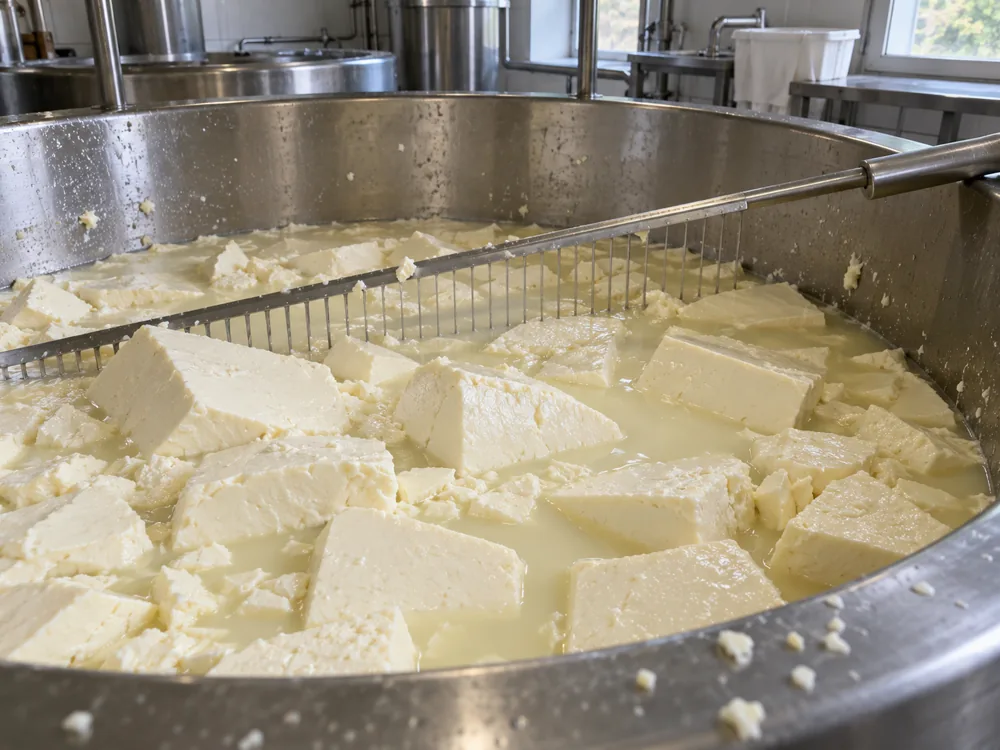
In the mould the curd keeps acidifying and draining, and taking away most of the whey also takes away moisture, some warmth and a lot of lactose, the sugar the cultures feed on. The maker says this is how it stalls the process to land on the right moisture, size and texture for the style.
Salt goes in both to flavour and to preserve the curd, and the maker lists three ways of adding it.
What Gives Minger Its Orange Rind?
Minger is washed every other day with a brine of salt and annatto and matured for 13 days, then wrapped and left to mature for another week. That adds up to roughly three weeks of maturation on the producer's own schedule.
The maker says the wrapping happens once the rind has developed and "a bit of ming" is present, so the smell you meet when you unwrap a block had already started before the wrapper went on.
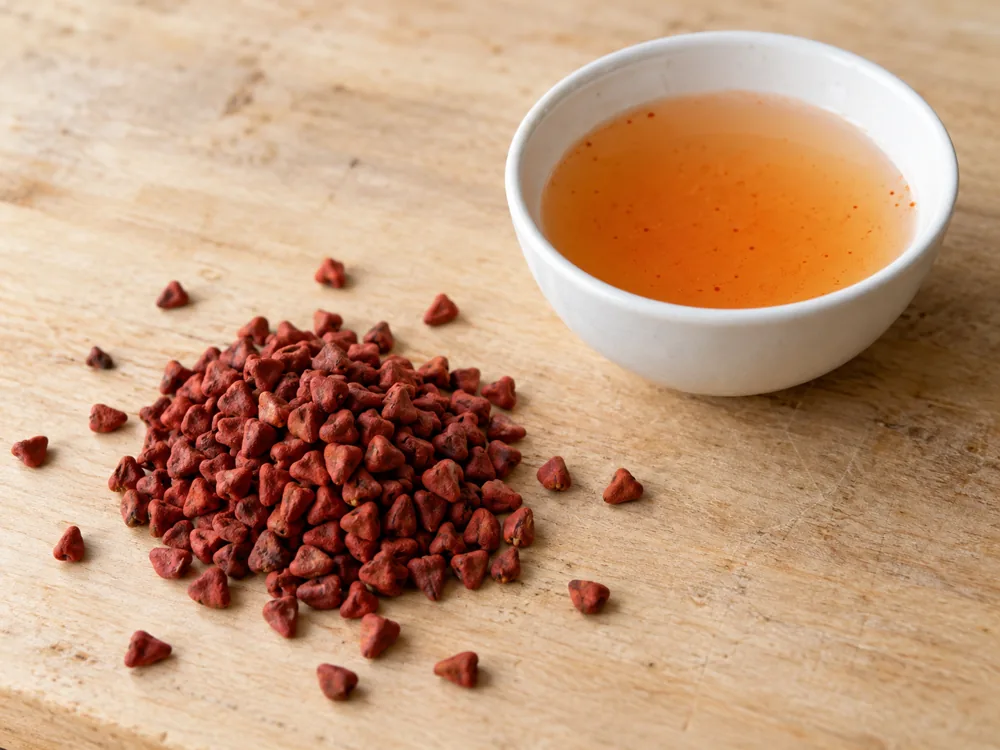
Highland Fine Cheeses describes annatto as a spice and food colouring from the seeds of the achiote tree, orange-red in colour, with a nutty, floral aroma of its own.
The orange of the rind comes from the annatto wash, which Highland Fine Cheeses says "creates a sticky bright orange rind", or from orange-hued bacteria that regular washing encourages, in the Fine Cheesemakers of Scotland's explanation.
What Does Minger Smell and Taste Like?
Minger smells of the farmyard to the Fine Cheesemakers of Scotland and of the barnyard to Cheese.com, and its maker calls it "a wee stinker", while The Cheese Lady finds the smell memorable but not quite as strong as the name suggests.
| Source | Aroma | Flavour | Texture |
|---|---|---|---|
| Highland Fine Cheeses (maker) | Calls it "a wee stinker" | Mildly nutty and lemony, hints of farmyard, rich butter and earthy mushroom | Soft, oozy, creamy paste |
| Fine Cheesemakers of Scotland | Earthy and farmyard, "gently, deeply inviting" | Buttery and milky when young, deepening to meaty, tangy richness with earthy undertones | Almost oozing, soft and silky, runny when mature |
| The Cheese Lady (retailer) | Memorable, but not quite as strong as the name suggests | Tagline: creamy, aromatic, lingering | Gooey, rich and soft when fully ripe |
| Cheese.com | Barnyardy, ripe, stinky, yeasty | Full-flavoured, garlicky, meaty, pungent, with some nuttiness and a hint of lemon | Buttery, creamy and runny |
Ripeness could explain part of the gap between "a wee stinker" and an aroma "not quite as strong as its name might suggest". The Fine Cheesemakers of Scotland says Minger starts mild and buttery when young and grows more complex as it ages.
If the smell puts you off, the taste may not. The trade body calls the taste "surprisingly balanced" despite an assertive aroma, and the maker says the smell "might not be for everyone" while the taste is "simply divine".
To judge how ripe a block is, go by the texture: the Fine Cheesemakers of Scotland describes the paste as soft and silky, turning runny when mature, and the maker says it turns "decadently pungent" at full ripeness.
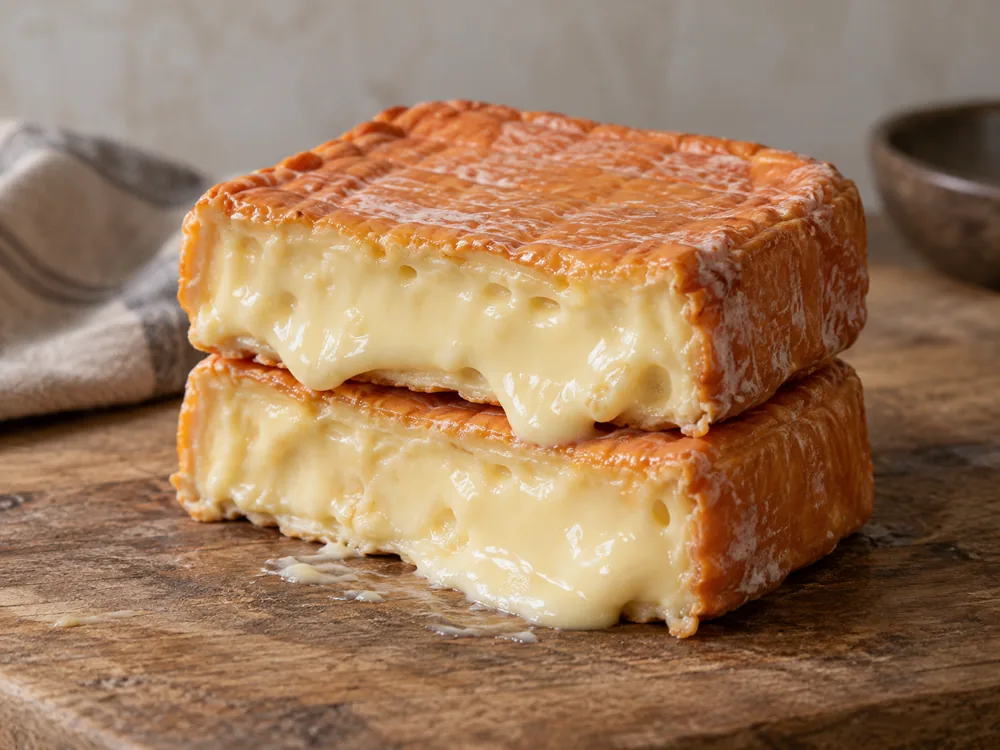
As for eating the rind, The Cheese Lady describes it as "both edible and delicious". The trade body credits the rind's orange-hued bacteria with part of the cheese's aroma and flavour.
What Should You Drink and Eat with Minger?
For a drink, white wine is the one that Highland Fine Cheeses and the Fine Cheesemakers of Scotland both name. The Fine Cheesemakers of Scotland gives its reason for a list that also includes a malty Scottish ale and a farmhouse cider: the acidity cuts through the richness.
| Pairing | Type | Why It Works |
|---|---|---|
| Dry, crisp white wine | Wine | Highland Fine Cheeses' own suggestion. |
| Crisp Chablis | Wine | Fine Cheesemakers of Scotland, for acidity that cuts through the richness. |
| Malty Scottish ale | Beer | Fine Cheesemakers of Scotland. |
| Farmhouse cider | Cider | Fine Cheesemakers of Scotland. |
| Light red wine | Wine | The Cheese Lady, on a cheeseboard. |
| Whisky | Drink | Listed by The Cheese Lady among its drinks for Minger. |
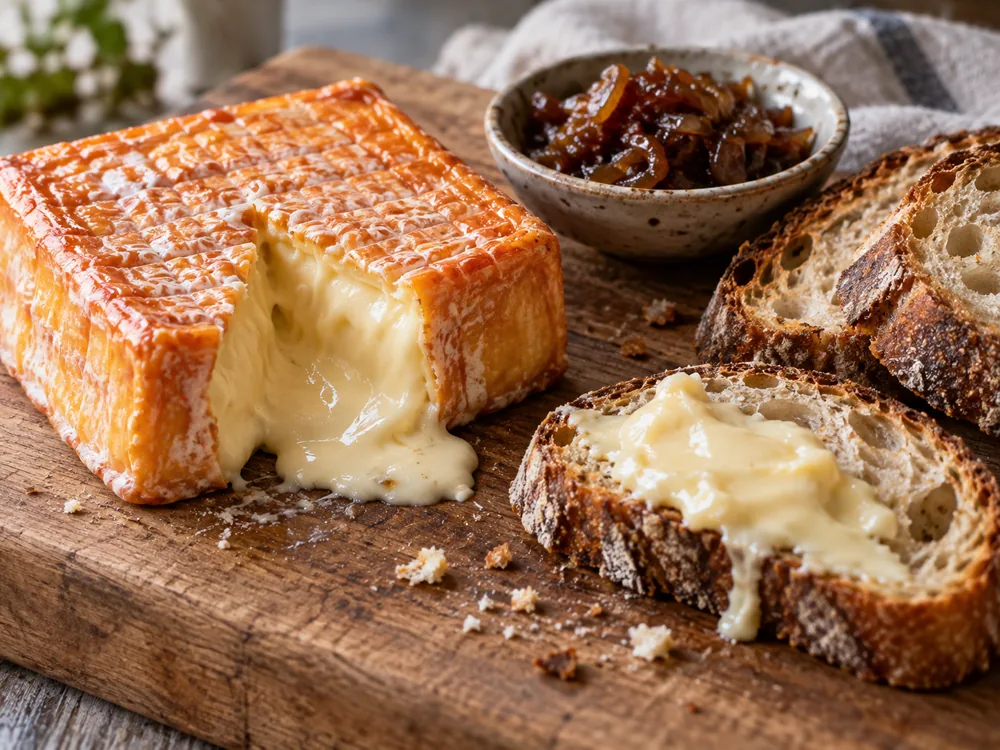
For food, the trade body's picks follow the texture. Because the paste turns runny, it suggests spreading or spooning the cheese onto warm bread, or melting it over roasted potatoes or a steak.
It says Minger's robust character "deserves bold companions" and lists crusty sourdough, caramelised onion chutney and pickled walnuts as accompaniments.
Where Can You Buy Minger?
You can look for Minger on Highland Fine Cheeses' own online shop, where the product page showed it as sold out in early October 2026, and the maker says a 125 g pack is available at Asda and Morrisons in Scotland.
Cheese.com's shop finder lists eleven UK stockists, from I.J. Mellis in Edinburgh, Glasgow and St Andrews and The Cheesery in Dundee to Calder Cheesehouse in Todmorden, Cheese Etc in Pangbourne and The Cheese Hut in Brighton.
The Cheese Lady states on its product page that ripeness and maturity are not guaranteed unless the product description specifies them.
Minger comes as a 250 g block from the maker, a 125 g supermarket pack and an approximately 200 g piece at The Cheese Lady, so compare prices per 100 g.
Compare the 250 g block, the approximately 200 g retailer listing and the 125 g Scottish supermarket pack by price per 100 g. The retailer does not guarantee ripeness unless a description states it, so ask it about ripeness before you order.
How Long Does Minger Keep in the Fridge?
Highland Fine Cheeses says to eat Minger within 5 days of opening, and that an unopened cheese stays fresh for around four weeks in the fridge.
The CDC says to keep a refrigerator at 40°F (about 4°C) or below. The maker's own limit is a fridge "below 5°C", a little above the CDC figure, so a fridge at 40°F or lower meets both.
The 5-day window starts at opening, so a 125 g pack leaves you half as much to finish as a 250 g block in the same time.
The maker advises keeping the cheese in its original wrapper and, once opened, putting it in a ziplock bag to keep the smell at bay. It says Minger can also be frozen.
For a block left out on a board, the CDC says perishable food, dairy among it, should be refrigerated within 2 hours, or within 1 hour when temperatures are above 90°F.
Can You Eat Minger While Pregnant?
It depends on whether you cook it until steaming hot, because the NHS and the CDC treat a pasteurized soft cheese differently when it is eaten cold.
Highland Fine Cheeses says it pasteurizes the milk. That settles the milk question but not the cheese question, because neither health agency sorts soft cheeses by milk treatment alone.
The NHS lists pasteurised soft cheeses as safe when they do not have a white coating on the outside, and asks for thorough cooking of mould-ripened soft cheeses with a white coating and of soft blue-veined cheeses, pasteurised or unpasteurised.
The NHS does not name Minger or any washed-rind cheese, and the maker calls Minger brie-style while describing an orange rind.
The CDC's safer list is narrower: it names pasteurized cottage cheese, cream cheese, string cheese, feta and mozzarella, and pasteurized soft cheeses heated to an internal temperature of 165°F or until steaming hot, and it does not name washed-rind cheese either.
The CDC says pregnant women are 10 times more likely to get a Listeria infection. The NHS lists any cheese cooked until steaming hot, including soft cheese, as safe, and the CDC lists pasteurized soft cheeses heated to an internal temperature of 165°F or until steaming hot as safer.
If you want to eat Minger cold, where the two lists differ, a midwife or doctor can settle the question.
What Is the Nutrition per 100 g and per Minger Block?
| Nutrient | Per 100 g |
|---|---|
| Energy | 1172 kJ / 283 kcal |
| Fat | 24 g |
| of which saturates | 14 g |
| Carbohydrate | 1.8 g |
| of which sugars | less than 0.1 g |
| Protein | 15.5 g |
| Salt | 1.5 g |
| Fibre | 0.9 g |
Scaled to the whole 250 g block, those per-100 g figures come to about 708 kcal, 60 g of fat and 3.75 g of salt. A 125 g supermarket pack holds half of that, about 354 kcal, 30 g of fat and 1.9 g of salt.
Who Are Highland Fine Cheeses, the Creamery Behind Minger?
Highland Fine Cheeses works from the dairy at Blarliath Farm in Tain, once a smallholding with 14 Dairy Shorthorn cows and now an industrial estate.
The cheesemaking began when Reggie Stone complained that nobody made crowdie any more. Susannah Stone set about souring a 10 gallon churn of milk, and the 10 gallons became a stone of crowdie, a little more than Reggie had planned on.
The Fine Cheesemakers of Scotland says the Stone family has been making cheese since the 1950s, starting with a batch of crowdie in the bathtub.
In the Highland tradition the company describes, the milk was set by souring: spare milk kept warm by the range, natural cultures eating the lactose and releasing lactic acid until it set, then the curd scrambled, drained in muslin and salted.
Minger keeps the lactose-eating cultures of that tradition, and its make, described above, also uses pasteurized milk, rennet, cut and moulded curd and a washed rind.
Rory Stone joined his mother and older brother in the business in 1994 and has headed it since. The company now concentrates on mould-ripened cheeses in brie, blue and washed-rind styles, and its range includes Black Crowdie, Caboc, Morangie Brie, Strathdon Blue, Blue Murder, Fat Cow and Minger.
Minger's milk comes from local farms around Tain on the maker's Minger page, while the company's About page says most of its milk comes from Rootfield Farm on the Black Isle.
The dairies that supply its milk do not give their cows Bovaer feed additives or supplements.
The farm shop Gardenforum reports that Minger won Gold in the rind-washed category at the 2025 International Cheese & Dairy Awards, where it says over 5,500 entries were judged in one day. It adds that Minger took Bronze at the 2025 Royal Highland Show.