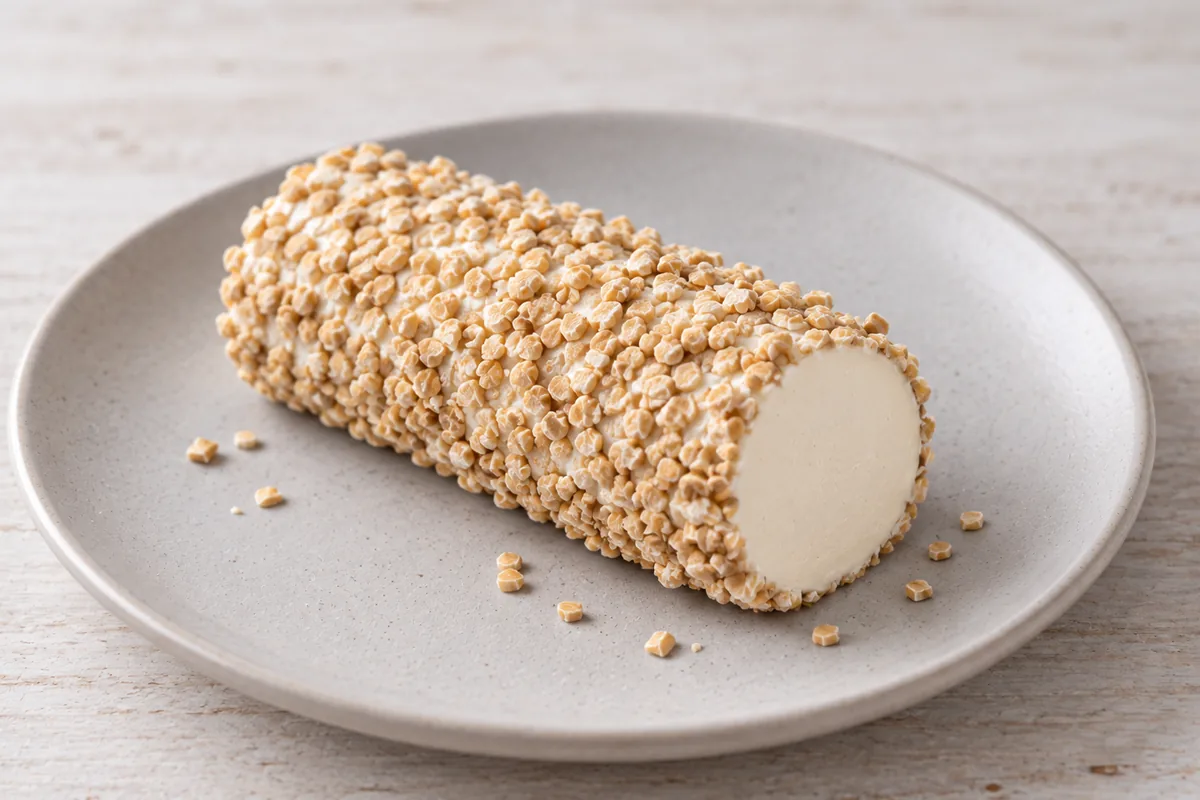
Caboc is a soft Scottish double-cream cheese made in Tain from pasteurized cow's milk, pressed with no rennet, shaped into a small log, and rolled in pinhead oatmeal. Its maker, Highland Fine Cheeses, sells it as a 110 g hand-rolled log.
Its color, its fat figure, and how long it keeps differ from one description to the next. For the log you buy, the date on the pack and the maker's nutrition panel are the figures to go by.
In This Article
Who Makes Caboc, and How Is It Sold?
Highland Fine Cheeses makes Caboc at Blarliath Farm in Tain from milk it collects at local farms, and it calls Caboc a matured double-cream cheese that is pressed.
The name comes from the Gaelic cabag, meaning little round, and Cheese.com describes a small round cheese to match. The maker shapes it into small logs, so a log is the shape to expect.
The rind is listed as washed on the maker's page and as natural by Cheese.com. Either way, the pinhead oatmeal is the layer you see on the outside.
A copy of the maker's earlier Our Story page, accessed in April 2022 and quoted by CooksInfo, named three milk farms: Sibster, west of Wick; Thrumster, with a herd of organic Jersey cows; and Rootfield on the Black Isle, which was converting to Ayrshire cows.
The maker's About page says most of its milk now comes from Rootfield Farm on the Black Isle, one of the three farms in the 2022 copy. The maker says the animals that supply its milk are not given Bovaer feed supplements.
Where Does Caboc Come From, and How Old Is It?
Caboc's story goes back to at least the 15th century, and it is reputed to have started in the Western Highlands in the 1400s. Its maker calls it one of the oldest Scottish cheeses still produced, and Teddington Cheese calls it Scotland's oldest.
Highland Fine Cheeses traces the recipe to Mariota de Ile, born in 1429 to the clan chieftain, the MacDonald of the Isles. In that account she took the thick cream from the milk and matured it in barrels instead of churning it into butter.
The accounts of her life diverge. Teddington Cheese has her escaping abduction by the Campbells at 12, learning cheesemaking in Ireland, and passing a secret recipe from mother to daughter, while the maker says the Campbell clan later took her and forced her into marriage.
Whether the recipe ran unbroken is disputed as well. Teddington Cheese says it passed down without a break, while CooksInfo ties it to legends of cow herders or of the MacDonalds of the Western Isles and says Caboc was revived in the 1960s.
The maker presents the descent from Mariota as a claim by its founder, Susannah Stone, so the 1429 date and the descent from Mariota are family tradition. What you can check is the current maker's process, pack, and nutrition panel.
How Is Caboc Made Without Rennet?
Caboc is made in four steps at Highland Fine Cheeses, and rennet is not one of them.
- Pasteurize the milk, place it in vats, and add cultures to begin acidification.
- Once a firm set has formed and the cream has soured, add salt and press the moisture out.
- Shape the cheese into small logs and roll them in pinhead oatmeal.
- Leave the logs to age for up to 6 months to develop their flavor.
The maker describes the traditional Highland way of making Crowdie in the same terms: warm milk left by the range, natural cultures slowly consuming the lactose and releasing lactic acid, and the milk eventually setting into a curd like yogurt.
Caboc's steps use that vocabulary, with cultures added to begin acidification and a firm set reached once the cream has soured, which points to acid rather than rennet doing the setting.
Is Caboc a Fresh Cheese or a Matured One?
That depends on who describes it. Cheese.com calls Caboc a fresh, soft cheese and CooksInfo a soft, fresh double-cream cheese, while the maker calls it a matured double-cream cheese that can be left to age for up to 6 months.
"Can be left to age" makes six months a ceiling rather than a standard age. At the young end, Teddington Cheese says Caboc is generally eaten young, within 5 days of making.
In the maker's steps, ageing is there to develop the flavor. A log a few days old is the young cheese of the fresh descriptions, and a log held for months is the matured cheese the maker describes, so ask the shop which one it carries.
At The Cheese Lady the listing may not settle it, because the shop does not guarantee ripeness or maturity unless the product description specifies it.
Why Is Caboc Rolled in Pinhead Oatmeal?
The coat is one of Scotland's own uses of oatmeal, listed alongside bannocks, oatcakes, and skirlie. Oats became Scotland's staple grain because they suit its low temperatures and high humidity better than wheat.
A legend that Teddington Cheese repeats gives the coat an accidental start, when a cattle herder's cheese absorbed oatcake residue.
In Scotland, oat groats may be chopped into two or three pieces to make pinhead oatmeal, also called steel-cut oats. Rolled oats are steamed and flattened by a mechanical roller instead.
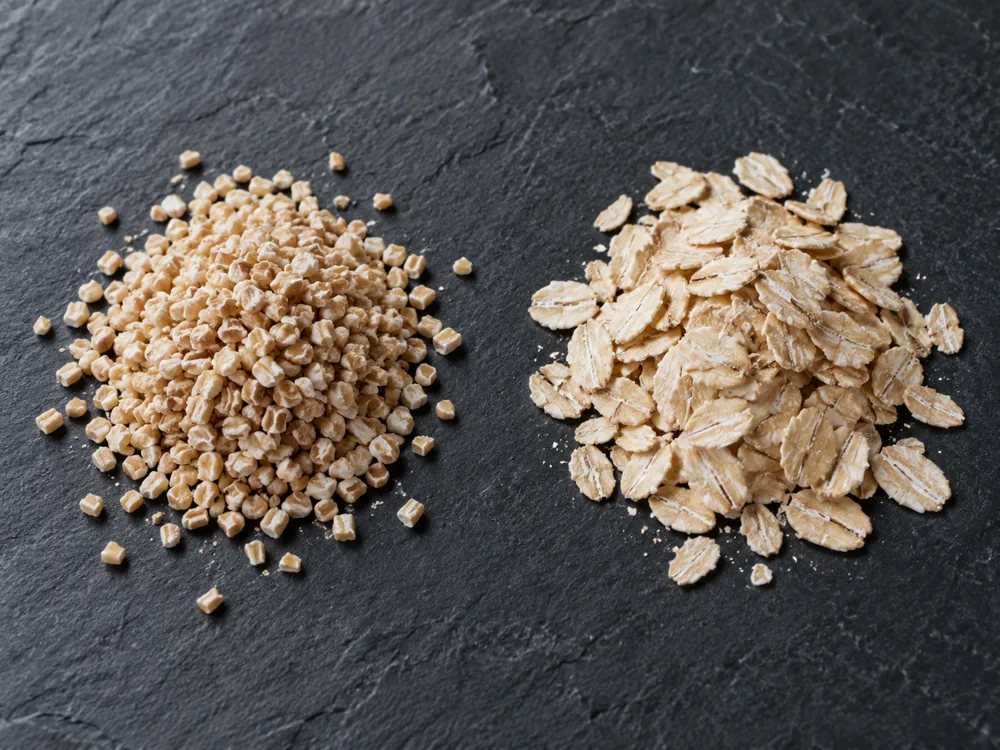
Wikipedia, CooksInfo, and Teddington Cheese describe the oatmeal on Caboc as toasted, and the maker calls it pinhead oatmeal. Dry-toasted oatmeal turns slightly darker and gives off a sweet, nutty fragrance.
The maker rolls the logs in oatmeal before maturation, so any ageing happens with the coat already on.
What Color Is Caboc, and How Much Fat Is in a Log?
The maker's nutrition panel gives 58.5 g of fat per 100 g, about 64 g in a whole 110 g log. Other descriptions give 67 to 69 percent, and the paste is called white, primrose yellow, or deep butter-colored depending on the description.
| Question | Value or range | Given by |
|---|---|---|
| Color of the paste | White; pale primrose yellow; deep butter color | Cheese.com (white); Wikipedia (pale primrose yellow); Teddington Cheese (primrose yellow paste); CooksInfo (deep butter color) |
| Texture | Soft, creamy and smooth; compared with butter and with clotted cream | Highland Fine Cheeses (soft, creamy); Cheese.com (creamy and smooth); Wikipedia (smooth, slightly thicker and grainier than clotted cream); CooksInfo (soft, fresh double cream); Teddington Cheese (rich and smooth, like butter) |
| Fat | 58.5 g per 100 g; 67 to 69 percent | Highland Fine Cheeses (58.5 g per 100 g, nutrition panel); Wikipedia (67 to 69 percent); CooksInfo (67 percent butterfat); Teddington Cheese (67 percent) |
| Size of a log | 100 g to 125 g | Highland Fine Cheeses (110 g); CooksInfo (100 g logs about 3 in long and 1¼ in wide, and 125 g logs); Teddington Cheese (100 g, 7 cm long and 3 cm across) |
The maker's panel describes the log on sale now, so it is the fat figure to use for the cheese you buy. With white, primrose yellow, and butter-colored pastes all described, color is a weak check on its own.
Teddington Cheese's figures may be older. Its page names Susannah Stone as the present maker and lists 2002 vintages in its wine sidebar, while her son Rory now heads the company, so its 67 percent, 100 g log, and five-day figures may describe the cheese as it was made years ago.
The 75% butter fat on the maker's About page appears inside the Mariota story, not on the nutrition panel.
Scaled to a whole 110 g log, the panel's per-100 g figures below come to about 665 kcal, 64 g of fat, and 36 g of saturates.
The panel prints carbohydrate and sugars as 17.6 g each and then an unlabeled 0.6 g, so check the pack before relying on those two lines.
What Does Caboc Taste Like?
Rich, creamy, and buttery run through the descriptions, and two of them add a tang. The maker gives a slight, tangy flavor with a rich, creamy texture and a savory, nutty bite, and CooksInfo reports a mild, sour tang.
Cheese.com lists the flavor as buttery and creamy and the aroma as buttery and fresh, and it says the oatmeal coating gives a pleasant contrast to the creamy interior.
Teddington Cheese credits the oatmeal coating for a light nutty flavor on top of a paste it calls rich and smooth like butter.
How Should You Serve Caboc?
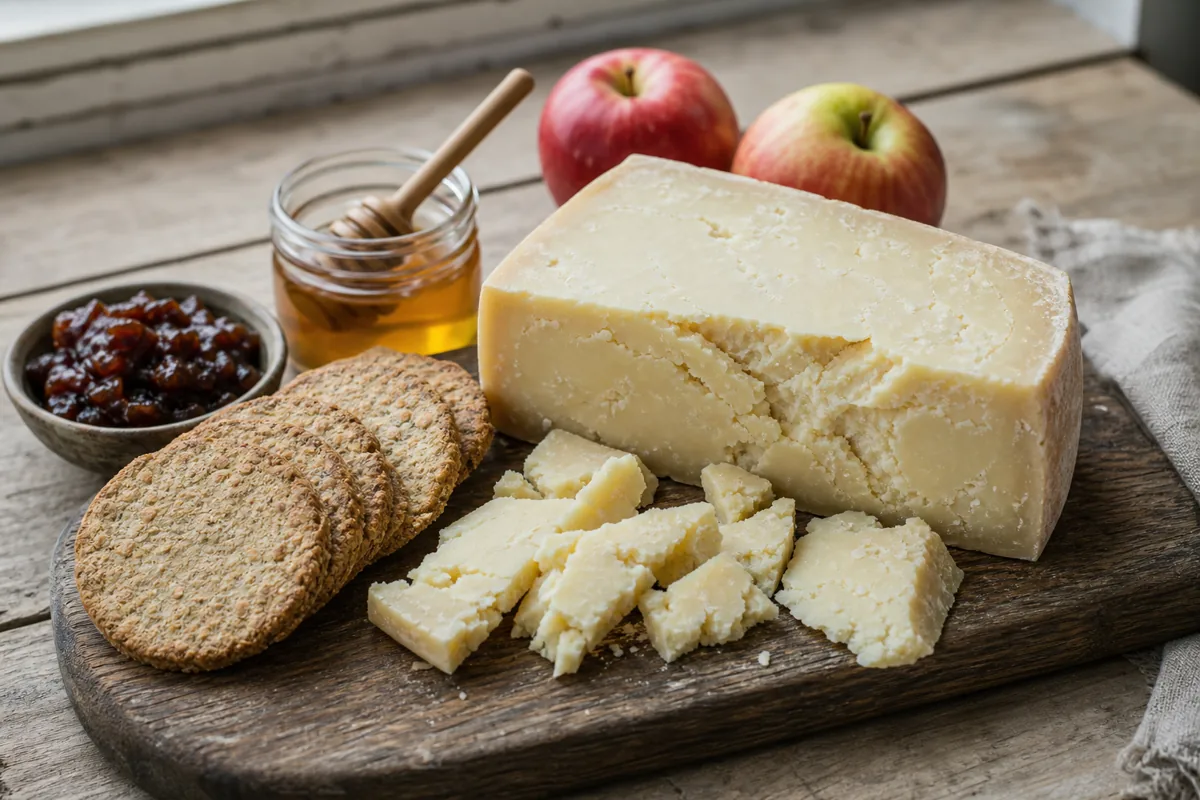
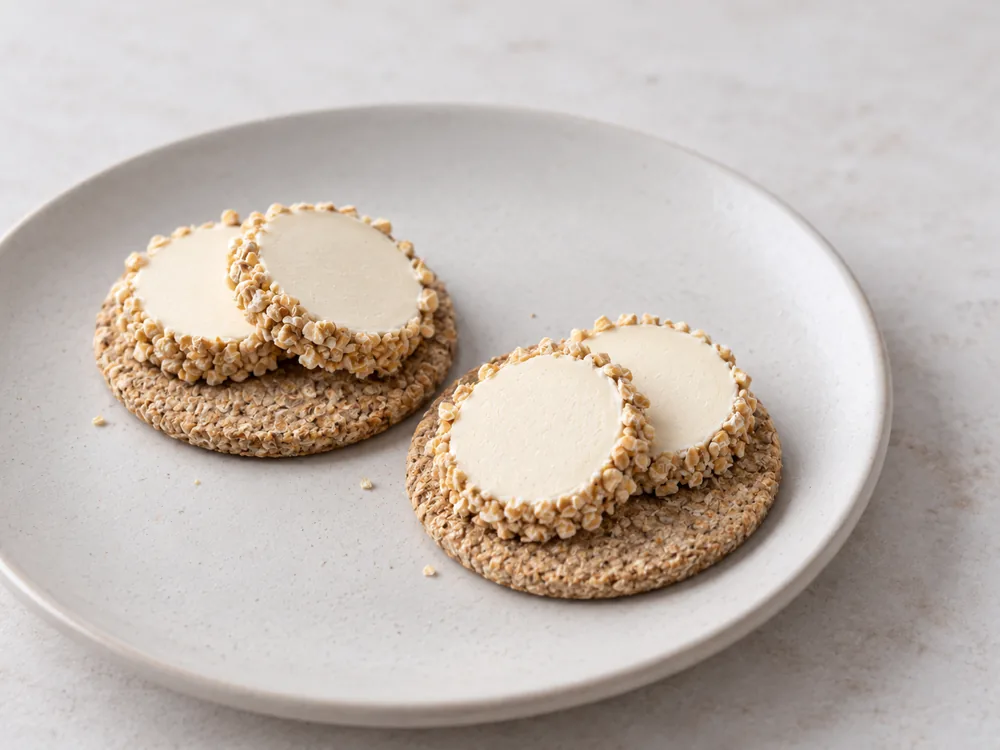
Spread it on oatcakes, the base its maker suggests and one of the two Wikipedia gives, with dry toast as the other. Oatcakes are another Scottish oatmeal food, so the base repeats the grain in the coating.
Teddington Cheese places it on a cheese board and adds a starter with watercress and dry brown toast. It also suggests mixing Caboc with Drambuie or malt whisky for a dessert.
| Pairing | Type | Why It Works |
|---|---|---|
| Oatcakes | Food | Named by the producer and by Wikipedia. |
| Dry brown toast with watercress | Food | Teddington Cheese suggests it as a starter. |
| Light red wine such as Beaujolais | Wine | Teddington Cheese's pairing. |
| Sparkling wine, pilsner, or whisky | Drink | Drinks listed on The Cheese Lady's Caboc page. |
Whisky is the one drink two of these suggestions share, as a dessert mix-in for Teddington Cheese and as a drink The Cheese Lady lists beside sparkling wine and pilsner.
Can You Melt Caboc?
Yes. Its maker names three foods for melting Caboc over.
| Use | How It Works |
|---|---|
| Potatoes | The producer says Caboc is often melted over potatoes. |
| Steak | The producer says Caboc is often melted over steak. |
| Roasted vegetables | The producer suggests melting it over roasted vegetables. |
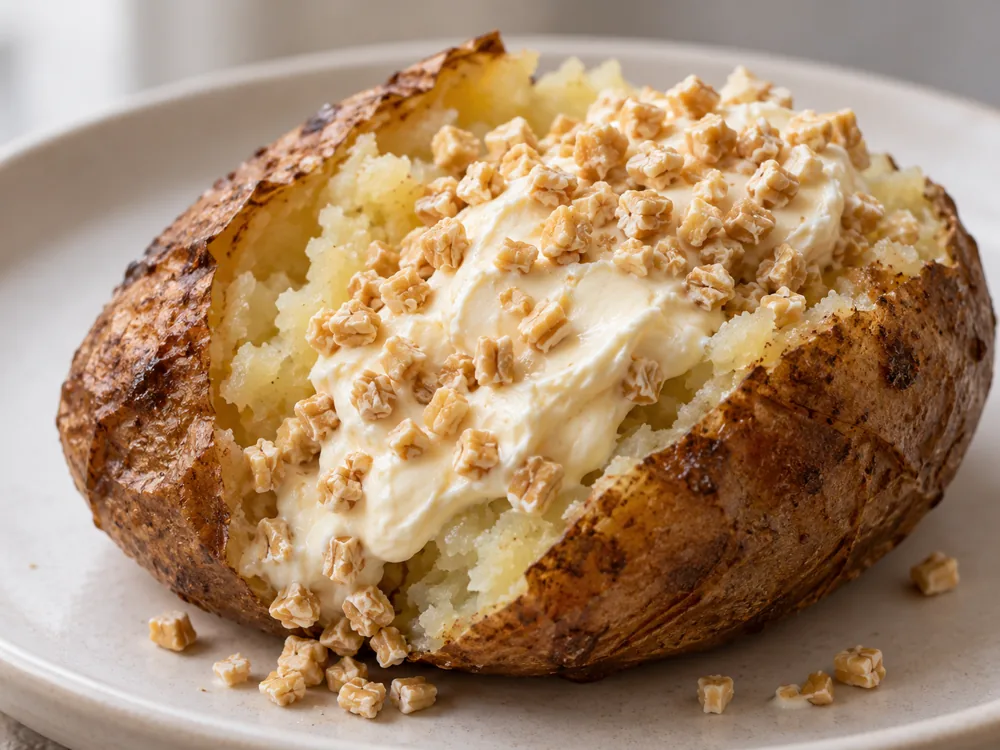
For potatoes, the maker also suggests using Caboc to turn them into skirlie mash. Skirlie is a Scottish dish whose main ingredient is oatmeal, so the idea puts the oat-coated cheese into an oatmeal dish.
Is Caboc Safe to Eat During Pregnancy?
The NHS lists pasteurised soft cheeses such as cream cheese, mascarpone, and ricotta as safe. It says "pasteurised or unpasteurised mould-ripened soft cheeses with a white coating on the outside, such as brie, camembert and chèvre" must be thoroughly cooked.
The CDC lists soft cheese made from unpasteurized (raw) milk as riskier. Its safer list includes cottage cheese, cream cheese, string cheese, feta and mozzarella, all when made with pasteurized milk, and pasteurized soft cheese heated to an internal temperature of 165°F or until steaming hot.
Wikipedia calls Caboc a Scottish cream cheese, the type on that safer list, while its maker calls it a matured double-cream cheese, and eaten cold that type is not on the CDC list, so ask a midwife or doctor before eating Caboc cold.
Behind the CDC's cheese advice is its warning that pregnant women are 10 times more likely to get a Listeria infection.
How Do You Buy and Store Caboc?
Go by the date and storage line on the pack. The published keeping times run from best within 5 days to up to 3 weeks refrigerated or in cool conditions.
| Question | Value | Given by |
|---|---|---|
| Best eaten within | 5 days | CooksInfo (best eaten within 5 days); Teddington Cheese (generally eaten when young, within 5 days of making) |
| Keeps for | Up to 3 weeks | CooksInfo (refrigerated, keeps up to 3 weeks); Teddington Cheese (up to three weeks in cool conditions) |
Teddington Cheese counts its five days from the day of making, so a log bought from a shop has already used part of that window. For the three weeks, CooksInfo means a log kept in the fridge, while Teddington Cheese says cool conditions.
The Cheese Lady's Caboc page lists the rennet as "Traditional" and the style as triple-cream. The producer says no rennet is used and calls Caboc a double-cream cheese, so the maker's page is the stronger source.
If you avoid gluten, read the allergen line: the maker lists milk and warns of possible traces of gluten in the pinhead oatmeal.
How Does Caboc Compare with Crowdie and Mascarpone?
Caboc is a Scottish cream cheese made with double cream or cream-enriched milk, and in fat it compares with rich continental cream cheeses such as mascarpone.
Crowdie is the cheese it was set against. Caboc was a cheese for the wealthy, while the similarly aged Crowdie was a poor man's cheese made from the by-products of skimming cream.
The difference was the cream. On Highland crofts the cream was ladled off the milk to churn into butter, Crowdie was what the remaining milk made, and Caboc used the cream itself.
Teddington Cheese adds that rich soft cheeses were reserved for the nobility and called "white meats."
SOURCES & REFERENCES
Caboc is a soft Scottish double-cream cheese made from pasteurized cow's milk and cream. It is shaped into a small log and rolled in pinhead oatmeal.
No. Its maker, Highland Fine Cheeses, presses Caboc without rennet, and a retailer listing that gives "Traditional" rennet conflicts with the maker's own page.
The maker lists milk as the allergen and warns of possible traces of gluten in the pinhead oatmeal. If you avoid gluten, rely on the pack.
Yes. Its maker says it is often melted over potatoes or steak and suggests melting it over roasted vegetables.
The maker suggests oatcakes, and Wikipedia says oatcakes or dry toast. Teddington Cheese adds a cheese board and a starter with watercress and dry brown toast.
Its story goes back to at least the 15th century, and its maker traces it to Mariota de Ile, born in 1429. The maker presents that descent as a claim by its founder, Susannah Stone, so the 1429 date and that descent are family tradition.
Descriptions split: Cheese.com and CooksInfo call it fresh, Teddington Cheese says it is eaten within 5 days of making, and the maker says it can be left to age for up to 6 months. The date on the pack shows which you have.
CooksInfo says it is best within 5 days and keeps up to 3 weeks refrigerated, and Teddington Cheese gives up to three weeks in cool conditions. The date on your pack is the safest guide.