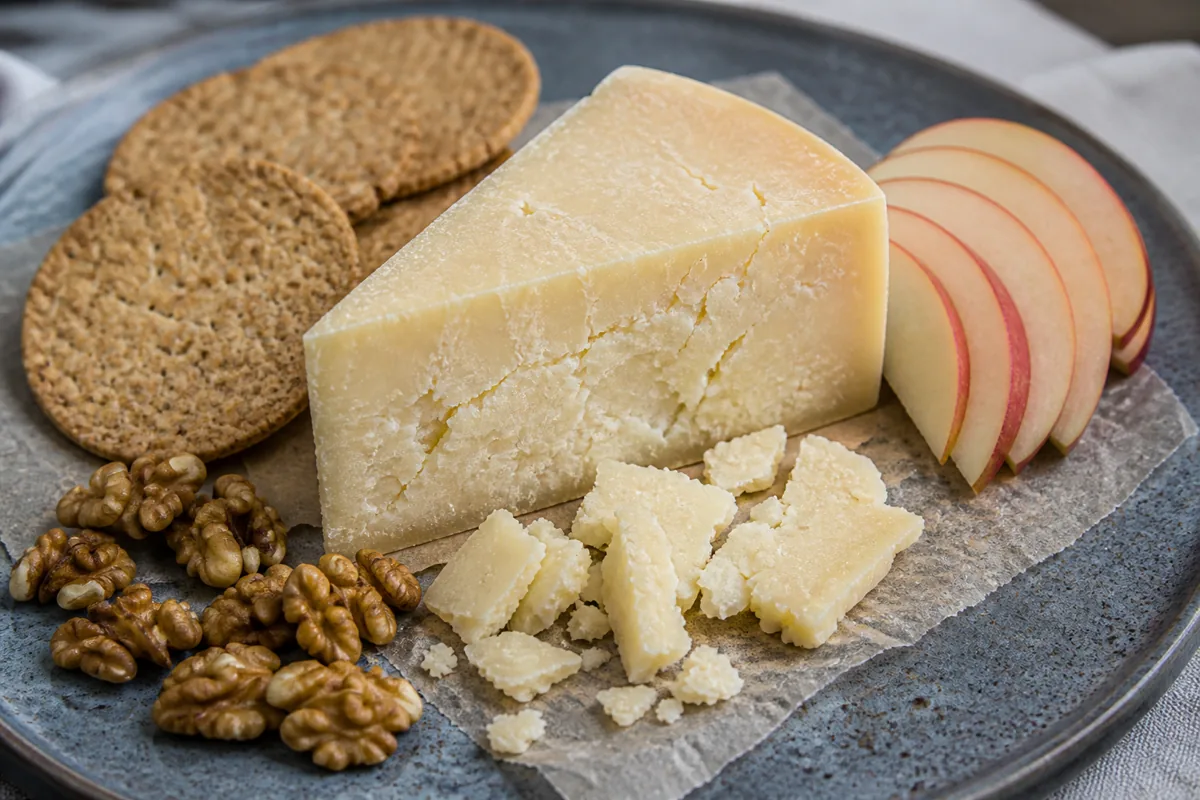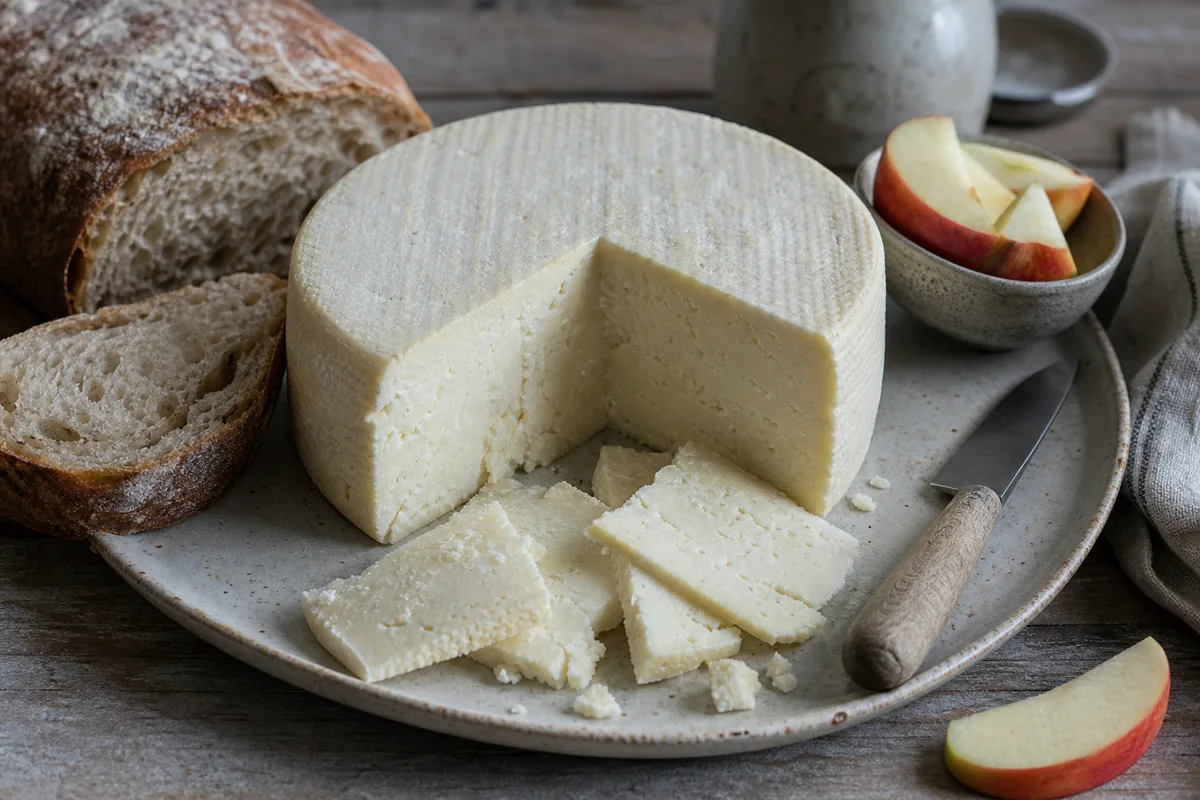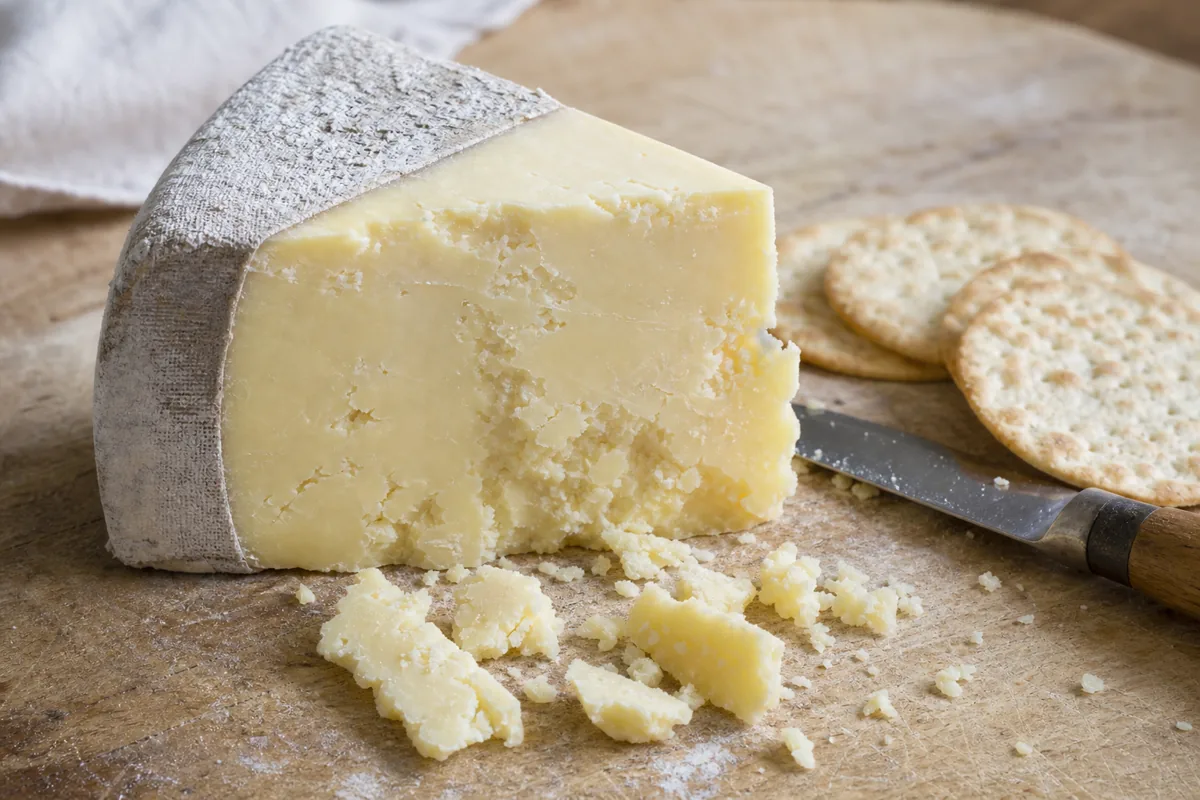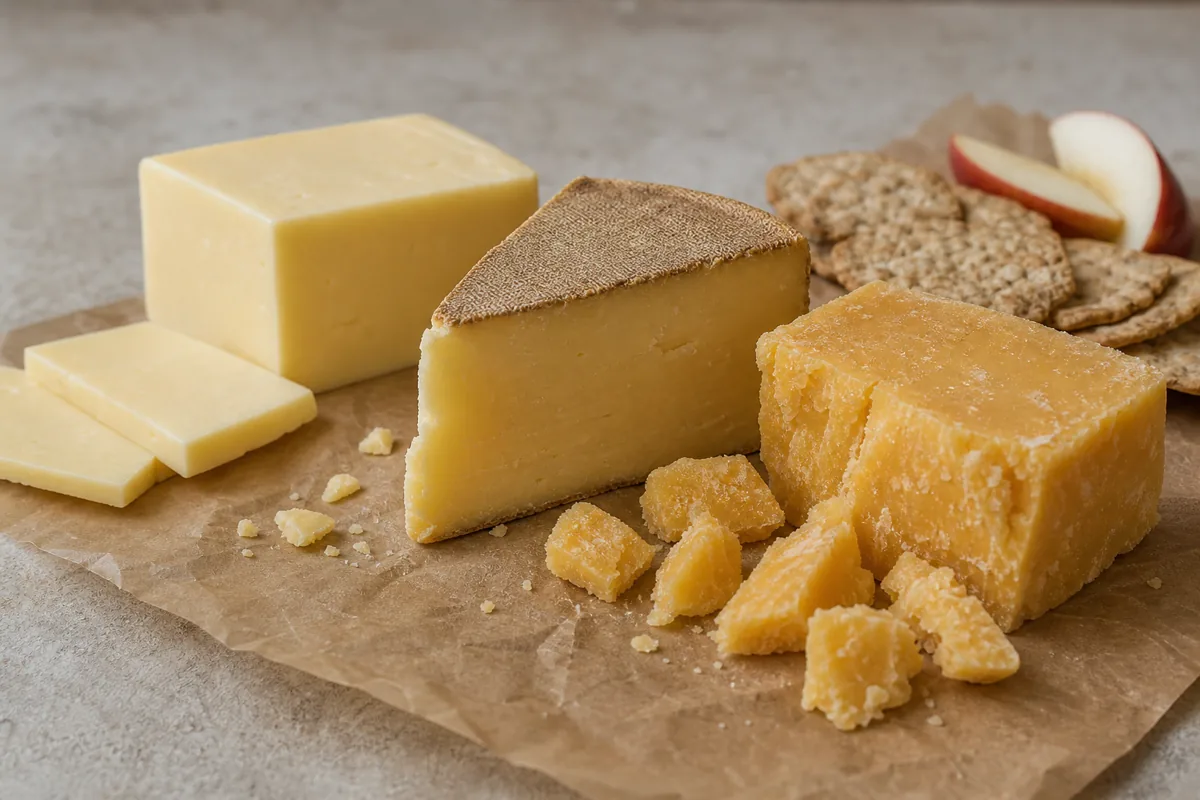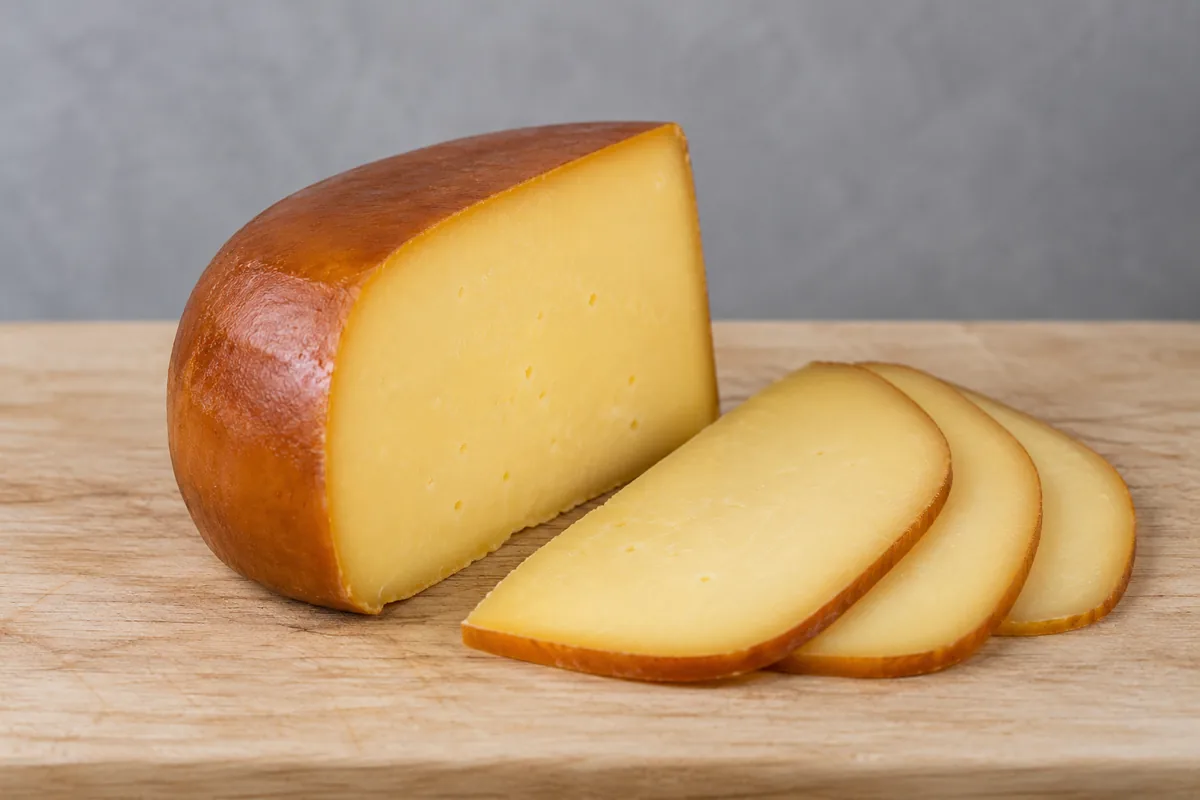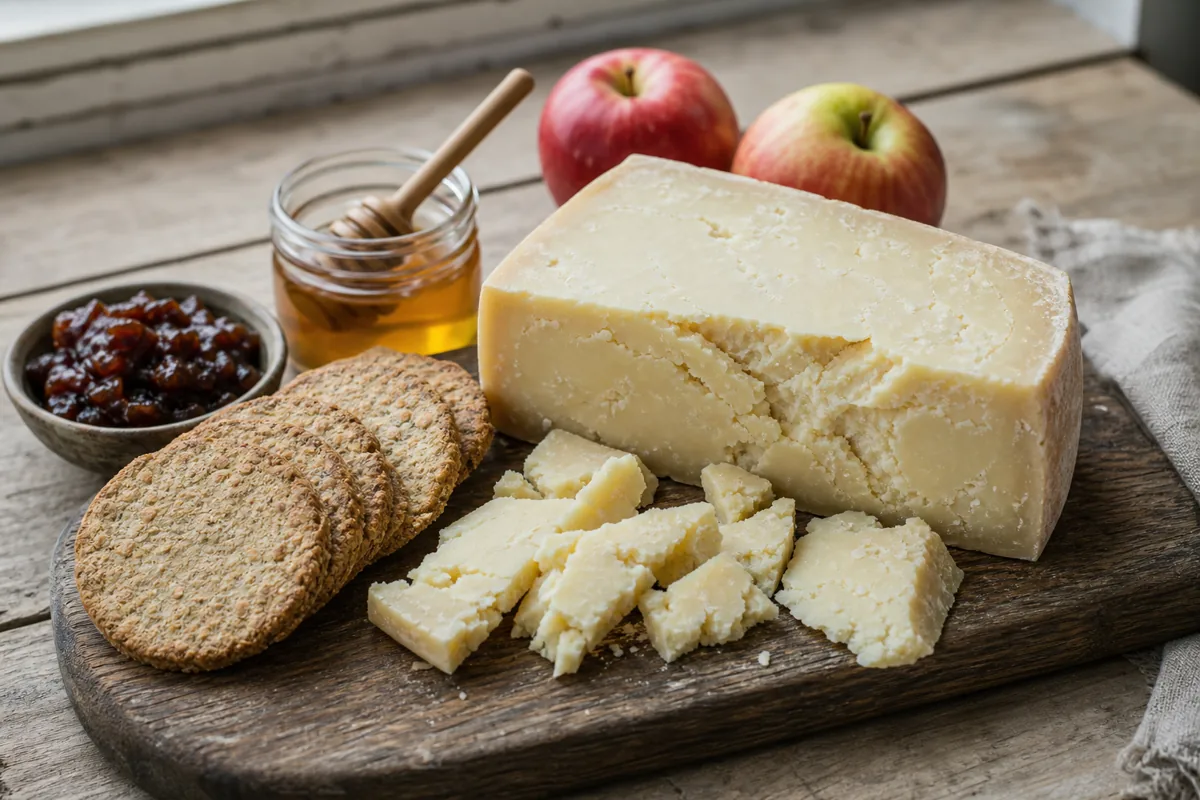
If you expect Anster to behave like a smooth block of Cheddar, its loose, crumbly cut will surprise you. This raw cow's-milk cheese from Fife is made in a Cheshire-style process, then brings a mild lactic tang, a citrus finish and earthier flavours near its natural rind.
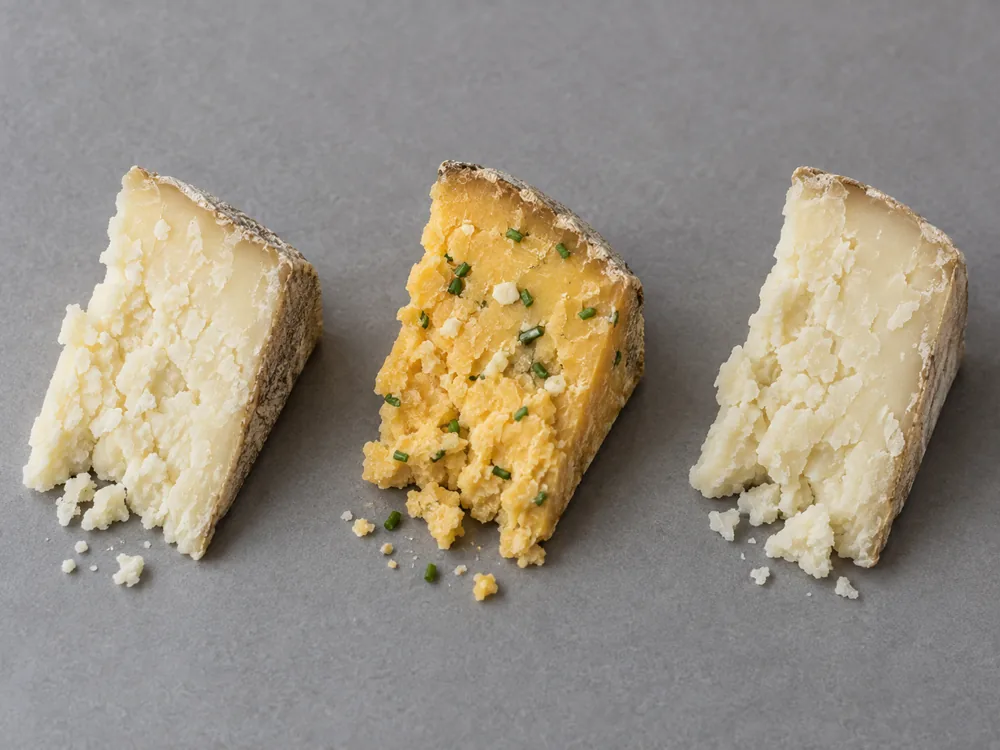
You can buy it plain, coloured and seasoned as Red Anster, or gently oak-smoked. The version on the label matters, because those three cheeses share a name but not the same flavour.
In This Article
Where Anster Comes From
Anster is the old name for Anstruther, a fishing town on the Fife coast. The cheese carries that local name and is made by St Andrews Farmhouse Cheese Company from the farm's own unpasteurised Holstein Friesian milk.
Jane Stewart began making the cheese in 2008 after the family dairy diversified into farmhouse cheesemaking. A visit to the farm describes roughly 200 cows, old cast-iron presses and 10 kg truckles, so this is a working farmhouse cheese rather than a generic regional style.
The milk does not travel in from an anonymous pool: it comes from the farm's home-bred Holstein Friesian herd.
That connection keeps the cheese's identity tied to one farm and one milk supply rather than to a broad Scottish style.
The town name also helps you separate Anster from other crumbly British cheeses. You are looking for the St Andrews Farmhouse Cheese Company name and a Fife origin, not merely a pale wedge described as “Anster-style.”
Why Does Anster Crumble?
Anster is often compared with Caerphilly because both can feel fresh, pale and pleasantly lactic. Its make is closer to Cheshire: the curd acidifies quickly, sheds whey and forms a structure that breaks into moist flakes instead of bending into smooth slices.
Fast acidification is the useful clue. It explains why your knife may leave rough edges and loose crumbs even when the cheese is not dry or stale.
As acidity builds, the curd contracts and releases whey quickly. The resulting protein structure has less elasticity than a smooth, supple Cheddar, so pressure from a knife follows small fault lines through the paste instead of producing a polished slice.
This also explains why descriptions such as “creamy,” “dry” and “crumbly” can all appear around the same cheese. Creaminess describes what the paste does in your mouth, while crumble describes how its structure breaks; the two are not opposites.
| Comparison | What it tells you |
|---|---|
| Caerphilly | A useful guide to the mild, lactic character and crumbly eating texture. |
| Cheshire | The closer guide to the fast-acidified make and whey-draining method behind the crumble. |
What Changes as Anster Ages?
The producer gives a typical age of two to four months, while individual retailers have listed pieces from about eight weeks to five months. When you are choosing between wedges, ask for the age rather than assuming every Anster has reached the same point.
A younger piece should keep the cheese's pale, lactic side in front, while a longer-aged piece may feel firmer and more concentrated. That progression is a buying guide rather than a guaranteed tasting schedule, because milk and handling still vary from wheel to wheel.
Retail ages from about eight weeks to five months overlap the producer's usual two-to-four-month window rather than defining separate products. If a counter has two cut wedges, the age and cut date will tell you more than choosing the one that simply looks darker.
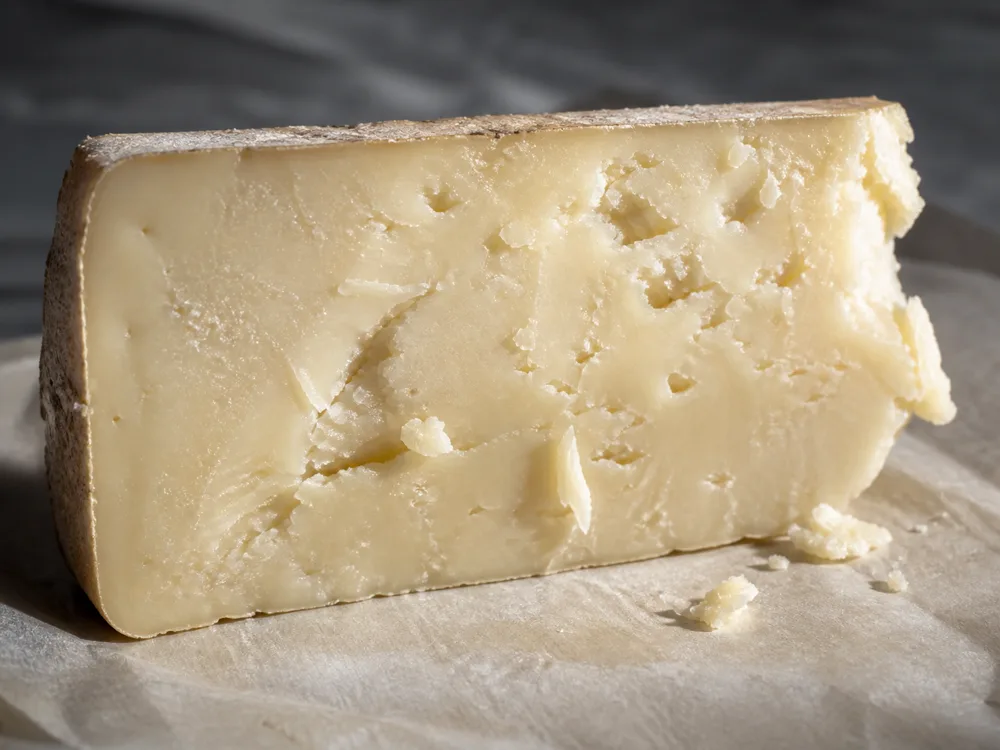
The most consistent flavour markers are a clean tang and a lemon-like finish. Near the rind, you may also notice cellar, mushroom and earthier notes, so tasting the centre and the rind edge separately gives you a better sense of the wheel.
The natural rind therefore changes more than appearance.
A bite from the centre shows the lactic, citrusy core, while a thin rind-edge piece lets you decide whether the earthier finish improves the cheese for you or starts to dominate it.
Plain, Red, or Smoked Anster?
Plain Anster gives you the clearest view of the raw milk, citrus tang and natural rind. The other versions start with that base and add either seasoning or smoke, so they suit different uses even though the texture remains recognisably crumbly.
Red Anster adds annatto, fresh garlic and fresh chives, while Smoked Anster goes to a local smokery in St Monans for an oak-chip treatment. Neither change turns it into an older or denser cheese; the difference sits in seasoning and aroma.
| Version | What changes | Best reason to choose it |
|---|---|---|
| Plain Anster | Pale, mild and citrusy, with earthier notes near the rind | You want the farmhouse cheese without an added flavour |
| Red Anster | Annatto adds colour; fresh garlic and chives add a savoury onion-like finish | You want a more seasoned cheese for bread or a simple plate |
| Smoked Anster | Oak-chip smoking adds gentle smoke while the cheese stays pale | You want smoke without moving to a dense smoked Cheddar |
Red Anster should look warmer and show flecks from the chives, while Smoked Anster may not look dramatically darker than the plain cheese. Read the name before judging by colour alone, especially when several cut wedges share a counter.
The farm also makes a separately named St Andrews Farmhouse Cheddar, including smoked versions.
If a seller offers “smoked St Andrews,” check whether the label actually says Anster, because the maker name by itself does not identify the cheese.
How Can You Serve Anster?
Anster's acidity and crumble make it easy to scatter through a dish without turning it into a uniform cheese sauce. In Jane Stewart's asparagus risotto, 100 g of grated Anster is stirred into 200 g of rice at the end in place of Parmesan.
The late addition is a useful clue for your own cooking.
It lets the crumbles soften into the hot rice while some texture and acidity remain, rather than boiling the cheese until its character disappears.
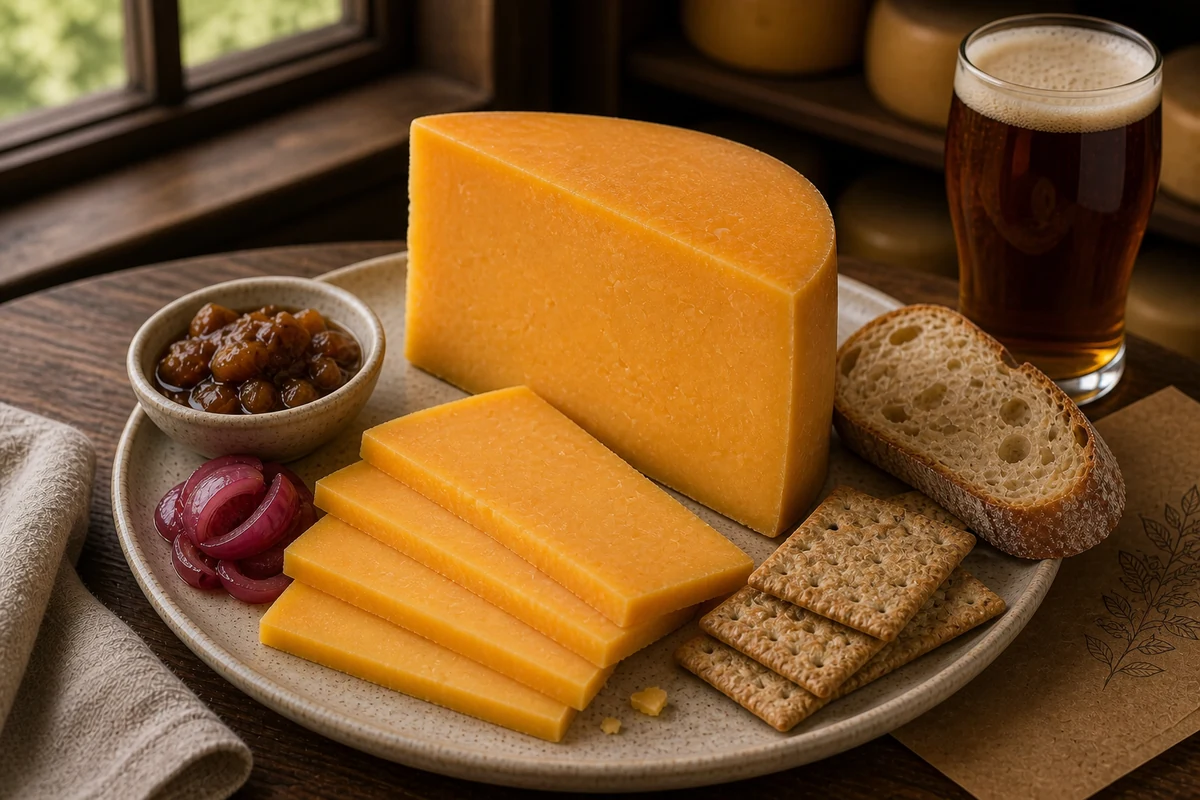
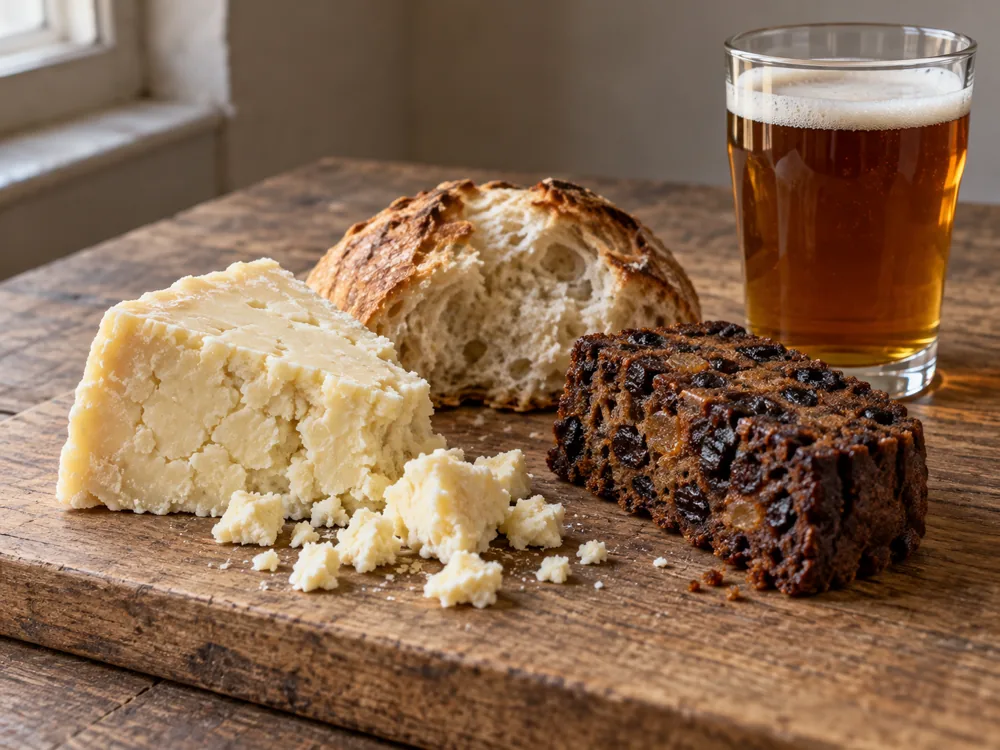
On a simple plate, crusty bread and fruitcake give the cheese two useful contrasts: one neutral and chewy, the other dark and sweet. Ale, whisky, cider and red wine can all meet its acidity, but you will usually get a clearer pairing from a drink that does not bury the mild centre.
For wine, use the same balance that guides a broader wine-and-cheese pairing: enough acidity to stay fresh, without heavy oak or tannin that overwhelms the young paste. A dry or gently fruity cider with cheese follows the same logic and echoes the fruitcake without making the plate sweeter.
Plain Anster is the easiest version to pair this way. Red Anster already brings garlic and chives, while Smoked Anster carries its own oak aroma, so those versions need simpler bread and a less assertive drink.
How Should You Buy and Store It?
The producer cuts Anster in 200 g, 500 g and 1 kg portions, with hand-cut weights allowed to vary slightly. For a first purchase, a 200-250 g wedge is easier to finish while the cut surface is still fresh.
Specialist sellers also offer larger pieces, including kilogram cuts.
Those make sense for a gathering or recipe, but a bigger wedge is not better value if the crumbly cut face dries before you can use it.
One specialist retailer gives its delivered wedge a two-week shelf life, but your own pack date takes priority. Keep it cold and well wrapped using the same principles as other firm farmhouse cheeses, then let only the portion you plan to eat lose its refrigerator chill.
When you unwrap it, distinguish normal crumble from deterioration. A clean broken face and loose ivory flakes fit the style; a dried, darkened cut face or an aroma that has moved well beyond the rind's usual cellar note is a reason to inspect the piece more carefully.
If Anster is unavailable, crumbly Lancashire, Cheshire or Wensleydale can cover a similar table or cooking role. They are substitutes for texture and acidity, not replicas of a raw-milk cheese from Fife, so check the milk and rennet if those details matter to you.
Choose Cheshire when the crumbly make is your priority, and Lancashire when you want a buttery British alternative that still breaks apart easily. For the risotto, either can work, but you may need to adjust salt and acidity after the cheese has melted into the rice.
What Do Raw Milk and Animal Rennet Mean for You?
Anster uses traditional animal rennet, so it is not vegetarian. It is also made from raw milk, and that detail needs to stay attached to any pregnancy advice.
NHS guidance permits pasteurised or unpasteurised hard cheeses, while CDC guidance lists hard cheese made with pasteurised milk among safer choices. Because Anster is variously sold as firm or semi-hard, use the pregnancy guidance for cheese in your country and ask a clinician if the category is unclear.
Its Cheshire-style make acidifies the curd quickly and drains whey, leaving a structure that breaks into moist flakes rather than smooth slices.
The producer gives a typical window of two to four months, but retail pieces have been listed from about eight weeks to five months. Ask for the age of the wedge you are buying.
No. Caerphilly is a useful flavour and texture comparison, while Anster is a distinct Fife cheese made with a Cheshire-style process.
No. It is made with traditional animal rennet.