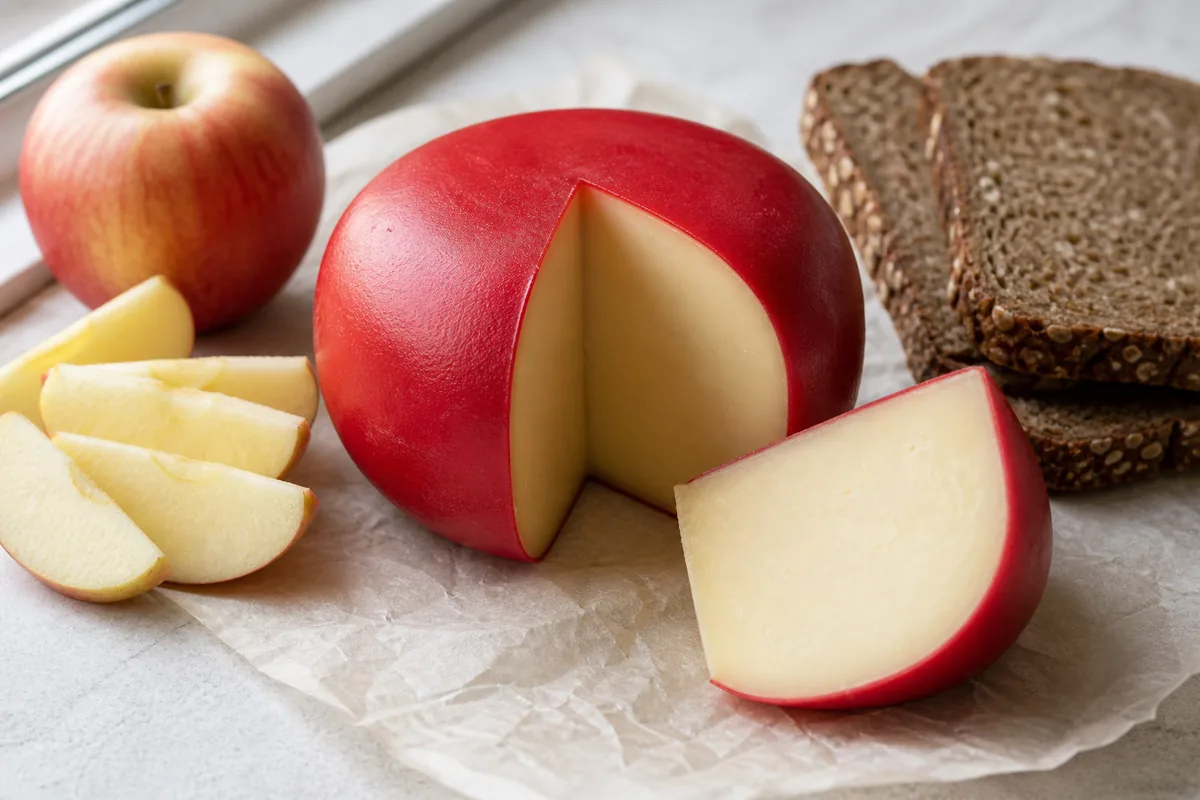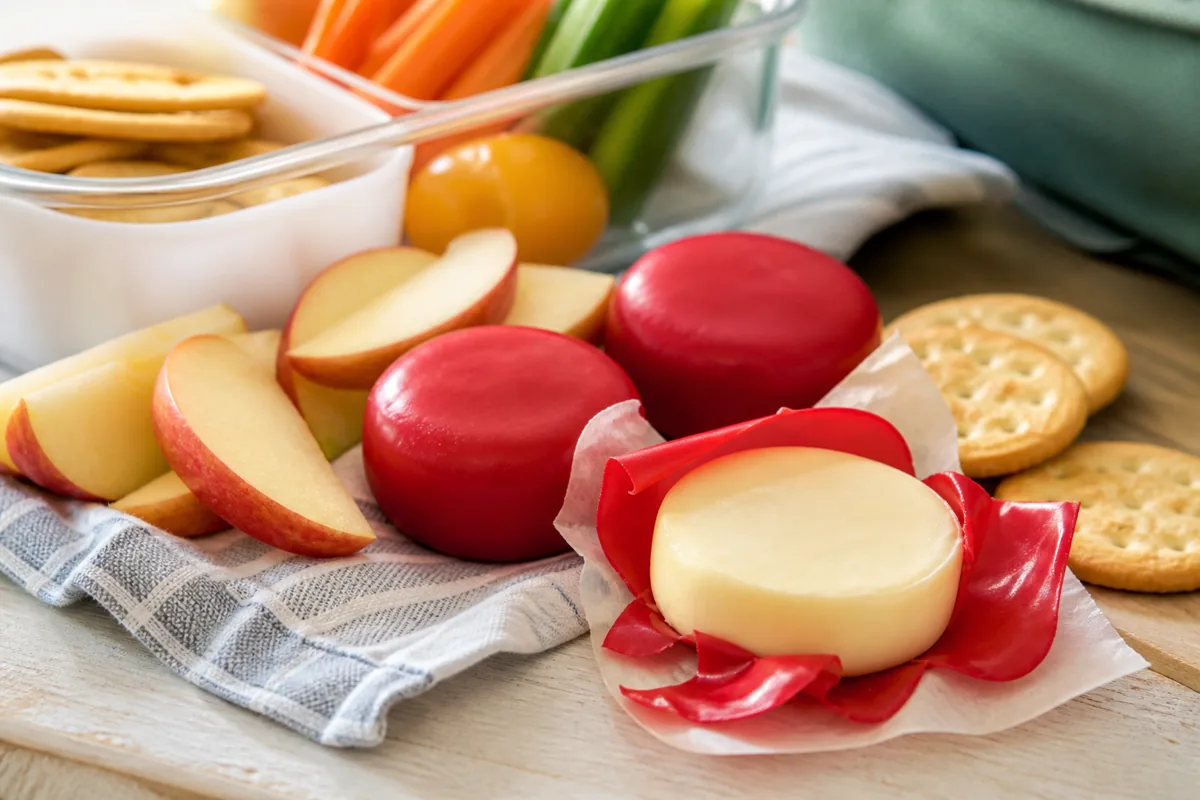
Babybel is a brand of small, individually wrapped snack cheeses from the French company Groupe Bel. Its red-wax Original is an Edam-style cow's-milk cheese, made by the traditional Edam process.
Babybel does not recommend eating the wax, even though it calls the wax food-safe.
The Babybel name also covers a plant-based snack and Gouda, Mozzarella, White Cheddar and Monterey Jack versions, so the ingredients and label figures below belong to the red-wax Original unless another pack is named.
In This Article
What Is Original Babybel Made From?
Original Babybel is 98% milk, and Groupe Bel's global ingredient list fills the remaining 2% with lactic ferments, a pinch of salt and vegetable rennet. When Babybel's US site promises "100% real cow's milk", it is describing the milk itself, not the milk's share of the ingredients.
On a US pack, the ingredient line reads pasteurized cultured milk, salt and microbial enzymes. Babybel says the US Original has no artificial growth hormones, colors, flavors or preservatives.
The coagulant appears as microbial enzymes on the US label and as vegetable, vegetarian or microbial rennet elsewhere, and none of these is animal rennet: Babybel uses no rennet of animal origin.
On its global page, Groupe Bel says the milk comes from cows that graze at least 150 days a year and are fed without GMOs.
The texture class depends on who labels it: Babybel's US site calls Mini Babybel "100% real semisoft cheese" in a palm-size snack, Wikipedia's infobox says semi-hard, and Cheese.com says semi-hard in its header and semi-soft in its text.
| Question | Answer | Given by |
|---|---|---|
| Style | Edam-style, made by the traditional Edam process | Wikipedia; Cheese.com also calls it Edam-style |
| Milk | Pasteurized cow's milk | Cheese.com |
| Ingredients on the US pack | Pasteurized cultured milk, salt, microbial enzymes | Babybel US product page |
| Ingredients on the global brand page | 98% milk, lactic ferments, a pinch of salt, vegetable rennet | Groupe Bel |
| Animal rennet | None; no rennet of animal origin is used | Babybel US FAQ |
| Name for the coagulant | Microbial enzymes; vegetable rennet; vegetarian rennet; microbial rennet | In that order: the Babybel US label, Groupe Bel, Wikipedia, Cheese.com |
| Texture class | Semisoft or semi-hard | Semisoft: Babybel US FAQ. Semi-hard: Wikipedia's infobox. Both: Cheese.com, semi-hard in its header and semi-soft in its text |
| Country | France | Cheese.com |
Where Is Babybel Made?
Half of Mini Babybel's global production comes from Évron in northwest France. Most packs sold in the United States come from Babybel's Kentucky and South Dakota plants, with some imported from France, so a pack on a US shelf can come from any of the three places.
The South Dakota plant, in Brookings, opened in March 2016 with Bel Brands projecting 1.5 million wheels a day.
Babybel goes back to 1931 by Groupe Bel's count, with its official mark in 1934, availability throughout France from 1952, and the Mini Babybel arriving in 1976 and reaching the United States in 1979. Cheese.com gives 1952 as the year Babybel originated in France, which is Groupe Bel's year for nationwide availability, not for the 1931 start.
Can You Eat Babybel Wax?
Babybel advises against it: the wax meets FDA requirements for food-safe wax, but the maker's own advice is "We do not recommend eating it."
The coating is a blend of paraffin and microcrystalline waxes with a natural dye, and it works as a protective layer that helps keep the cheese fresh for longer.
Once you peel the wax off, air dries the cheese out, and Babybel says to eat it right after peeling.
To open one, pull on the two tabs and peel off the wax casing. Each piece sits in its wax coating inside a cellophane wrapper made of wood pulp, cotton or other vegetation, and the pieces are sold in a netted bag.

Cheese.com counts Babybel as an expensive cheese by weight and ties the price to that individual wrapping: each piece's own wax coating and packaging, which it says take extra resources.
What Does Each Wax Colour Mean?
The Original wears red wax in every market the table below lists. The table also covers Cheddar, a Gouda version, Monterey Jack, Mozzarella and a plant-based snack, and gives most flavours their own wax colour.
| Flavour | Wax colour | Markets named |
|---|---|---|
| Original (Edam) | Red | All locations |
| Light (Edam) | Red, with a light blue stripe on the red cellophane | All locations |
| Cheddar | Black | Canada and the United States (purple in several European markets) |
| Emmental version | Yellow | Several European markets, including Belgium, France and Germany |
| Gruyère | Yellow | Canada and Switzerland |
| Goat's cheese | Green | Canada, France, Ireland and the United Kingdom (all marked discontinued) |
| Gouda | Brown or orange | Canada, Germany, United States |
| Monterey Jack | Turquoise | United States |
| Mozzarella version | Green | United States |
| High Protein | Black | Australia, Belgium, Czechia, Germany, Norway, Portugal and the United Kingdom (discontinued in Italy and the Netherlands) |
| Sharp Original | Magenta | United States |
| Plant-based | Green wax and a green wrap with leaves | Five markets, including Canada and the United States |
Several of these colours are marked discontinued in some markets, so the pack in your store may not match the table.
Four flavours arrived in stages: Emmental in 1998, goat cheese in 2006, Gouda in 2013 and the plant-based version in 2022. The goat's cheese is marked discontinued in all four markets the table names for it.
Red is also the wax colour of an Edam wheel, where the wax seals in moisture, which fits the Original's Edam-style description.
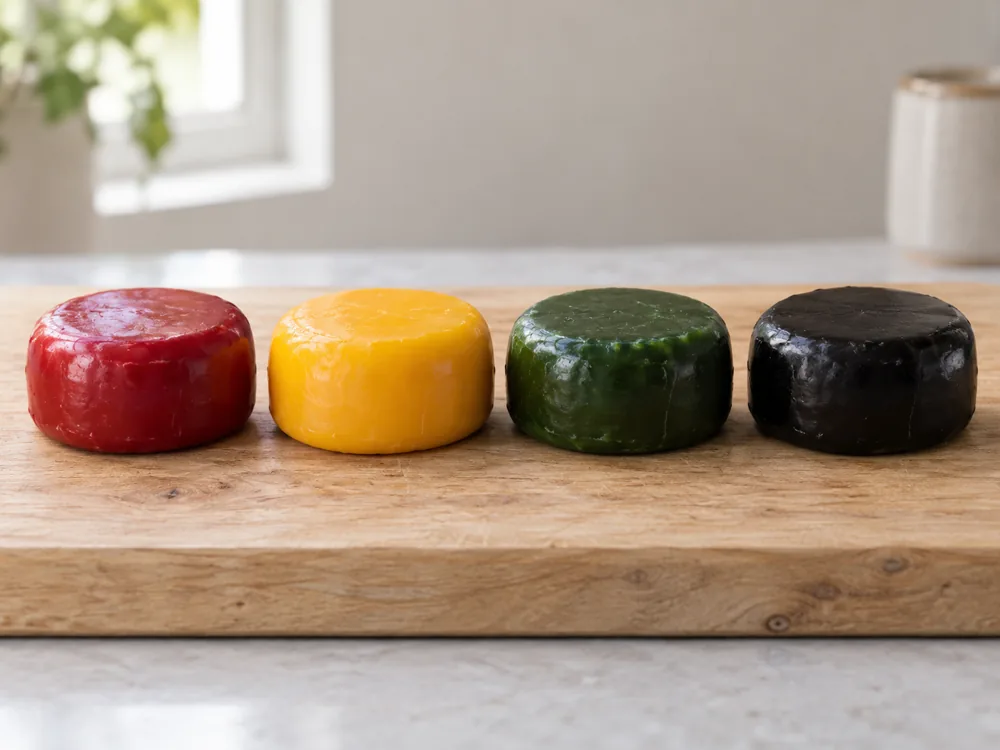
The same colour can mean different cheeses depending on where you buy. Black is Cheddar in Canada and the United States but High Protein in Australia and several European countries, and yellow is Emmental in several European markets but Gruyère in Canada and Switzerland.
Green needs a second look in the United States, where it is both the Mozzarella and the plant-based snack. The plant-based pack has a green wrap with leaves and comes in a pouch instead of a net bag.
Light is also red, with a light blue stripe on the red cellophane, so look at the cellophane stripe to tell it from the Original.
Wax colour is not one code worldwide: black, yellow and green each stand for different cheeses in different markets, so the pack name and the cellophane matter as much as the wax.
How Do Other Babybel Packs Differ from the Original?
Beyond the round Original, other Babybel packs change what is inside, the shape or both.
| Pack | Cheese and what changes | Markets named | Given by |
|---|---|---|---|
| Light | Edam; was sponsored by WeightWatchers in Canada | All locations | Wikipedia |
| Organic Edam | Light green and white wrap marked "Bio"; listed as vegetarian | Belgium, France, Netherlands, Portugal, United Kingdom | Wikipedia |
| Protein | 98% milk (100% French), cheese cultures and salt | France, from 2025 | Groupe Bel |
| Mini Rolls | Edam only | Canada, France, Germany, Italy, Netherlands, Spain, Switzerland | Wikipedia |
| Maxi | Edam only | Belgium, France, Germany, Netherlands | Wikipedia |
| Slices | Edam only | Belgium, France, Germany, Switzerland | Wikipedia |
The Protein pack has 5.7 g of protein per 22 g portion, with 18% more protein and 33% less fat than the Original. The US label for the Original gives 4 g of protein per 20 g piece, so the two figures use different portion sizes.
The Mini Rolls, Maxi and slices are listed for European markets and Canada, so those formats matter mainly if you shop there. The label figures further down apply to the Original only.
What Does Babybel Taste Like?
Descriptions of the Original agree on mild: Babybel calls it "Mild, creamy and delicious" snack cheese, and Cheese.com calls the flavour mild and nutty, like Edam, with a smooth, pale yellow interior.
For serving, Babybel suggests cheese and crackers or pretzels, while Cheese.com suggests fruit and crackers or eating it on its own, and adds that the cheese turns up in salads and sandwiches.
How Many Calories Are in a Babybel?
One 20 g piece of the Original has 70 calories on the US label, and its 5 g of fat is a quarter of the piece by weight.
On calcium the figures differ: the label gives 140 mg, or 10% of the daily value, while Cheese.com, which matches the label's 70 calories, puts calcium at about 15% of the recommended daily intake.
Babybel has slightly reduced serving sizes of Original, Light, Gouda and Mozzarella, so check the serving size on your pack's label against the 20 g piece above.
How Long Can Babybel Stay Out of the Fridge?
Babybel asks you to refrigerate Mini Babybel at all times when you are not eating it. For perishable food, dairy included, the CDC says never to leave it out for more than 2 hours, or 1 hour if the temperature is above 90°F.
The CDC also says to keep your refrigerator at 40°F (4°C) or below.
Babybel asks you not to freeze the cheese, because freezing affects its quality, and to enjoy it by the date on the package.
How Should You Cut Babybel for Children Under 4?
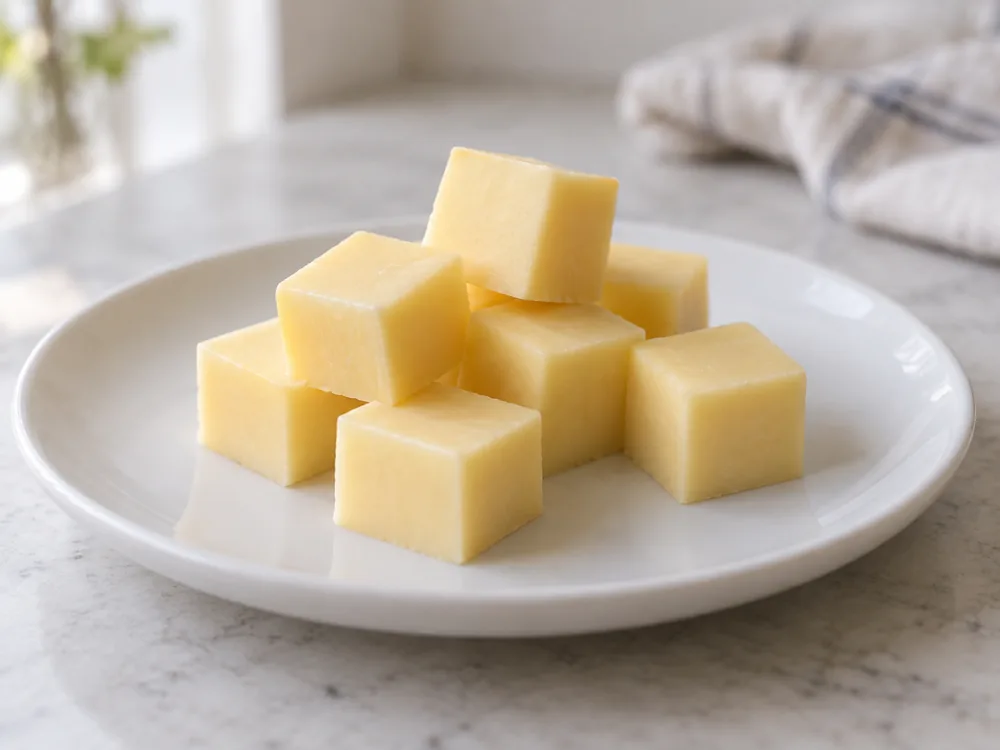
Babybel says to cut the cheese into bite-size pieces to avoid choking hazards for children under 4, and to supervise children while they eat.
Is Babybel Vegetarian or Lactose-Free?
Babybel calls Mini Babybel great for lacto-vegetarian diets, since no animal rennet is used, but its products are not certified kosher or halal.
The US Original lists milk as its allergen.
Whether it contains lactose depends on the description: Wikipedia calls the Original naturally lactose-free, while Cheese.com says Babybel contains lactose, the natural sugar in milk.
The US label lists 0 g carbohydrates and 0 g sugars per 20 g piece, so if you manage lactose intolerance, check the nutrition panel on your pack. Edam is low in lactose, but that describes the style, not a figure for Babybel.
Babybel Plant-Based is a cheese alternative made without milk, from water, modified food starch, coconut and sunflower oils and fava bean protein. It is made in the same facility and on equipment that also processes milk.
Can You Eat Babybel While Pregnant?
Babybel's milk meets the legal pasteurization requirements of the USDA and FDA, so the pregnancy question turns on which cheese category the Original fits.
The NHS lists pasteurised semi-hard cheeses, such as edam, and pasteurised soft cheeses as safe to eat. The CDC lists pasteurized soft cheeses heated to an internal temperature of 165°F or until steaming hot as safer.
Served cold, Babybel is described as a pasteurized semisoft or semi-hard cheese, a type the CDC list does not cover, so if you are pregnant, ask a midwife or doctor and see the pregnancy rules for cheese.
What Can You Substitute for Babybel?
Cheese.com lists Edam, Cheddar and Appenzeller as substitutes and compares each with Babybel on flavour.
| Edam | Slightly nuttier, with a similar texture and mild taste |
| Cheddar | Sharper and more distinct, from mild to extra sharp |
| Appenzeller | More intense and complex, nutty with herbal undertones |
Edam is the closest match in style, because the Original is Edam-style and Edam is semi-hard, the class Babybel carries in some descriptions. Edam ripens for a few weeks to a few months and turns drier and sharper as it ages, so a young Edam is the nearer pick for Babybel's mild taste.
Edam was traditionally made from skimmed milk, and fat levels now vary by producer and region, so the Edam wedge you buy can differ from a Babybel piece in fat as well as age.
Cheddar is sharper than Babybel and ranges from mild to extra sharp, so a mild Cheddar is the nearer pick if you want a similar taste. Babybel's own variations include a White Cheddar version.
The Swiss Appenzeller is robust and full-bodied, nutty with herbal undertones, a long way from the mild Original, and Cheese.com suggests it for fondue, soups or gratins.
SOURCES & REFERENCES
The Original is an Edam-style cheese made from pasteurized cow's milk, and other Babybel flavours use other cheeses. Babybel's US site calls Mini Babybel semisoft, Wikipedia calls it semi-hard, and Cheese.com uses both terms.
Babybel says the wax meets FDA requirements for food-safe wax but does not recommend eating it.
Yes: Babybel asks you to refrigerate it whenever you are not eating it. The CDC says perishable food should not stay out for more than 2 hours, or 1 hour above 90°F.
Babybel calls Mini Babybel suitable for lacto-vegetarian diets because no rennet of animal origin is used. Its products are not certified kosher or halal.
No. Babybel asks buyers not to freeze Mini Babybel because it affects the quality.
Cheese.com lists Edam, Cheddar and Appenzeller as substitutes. Edam is the closest in style because the Original is Edam-style.