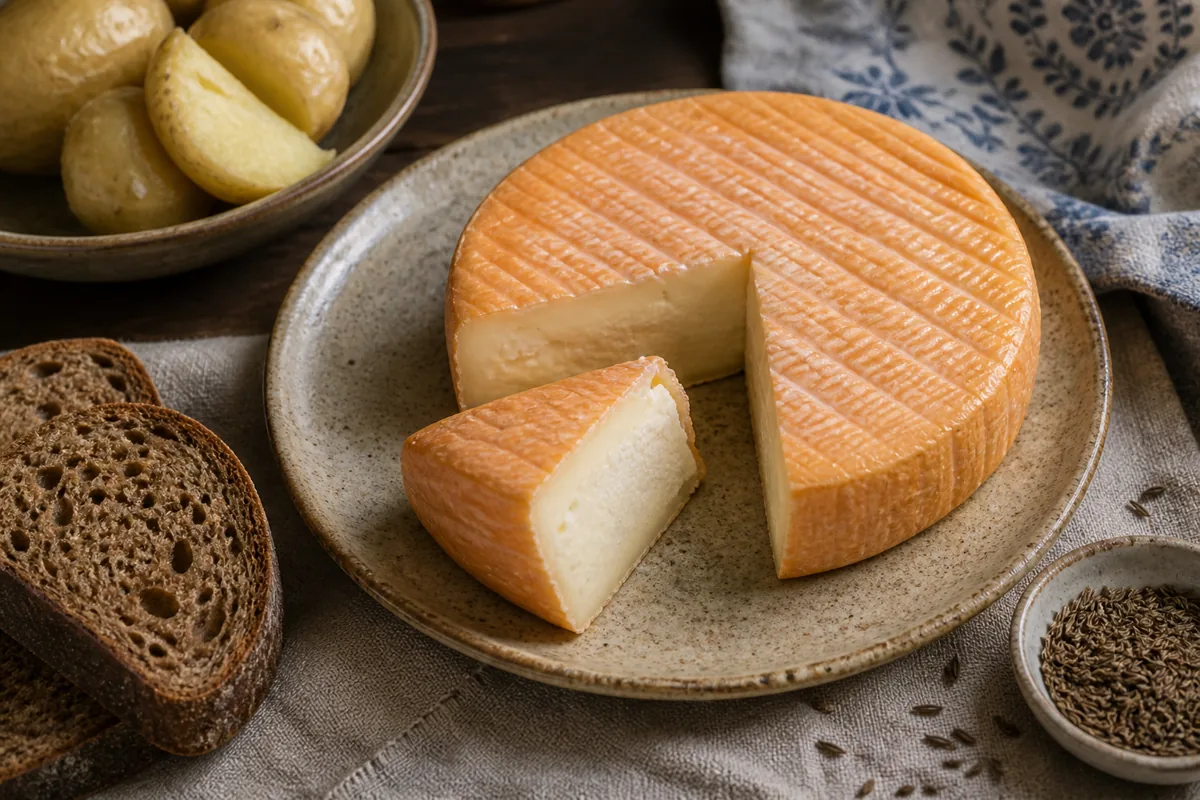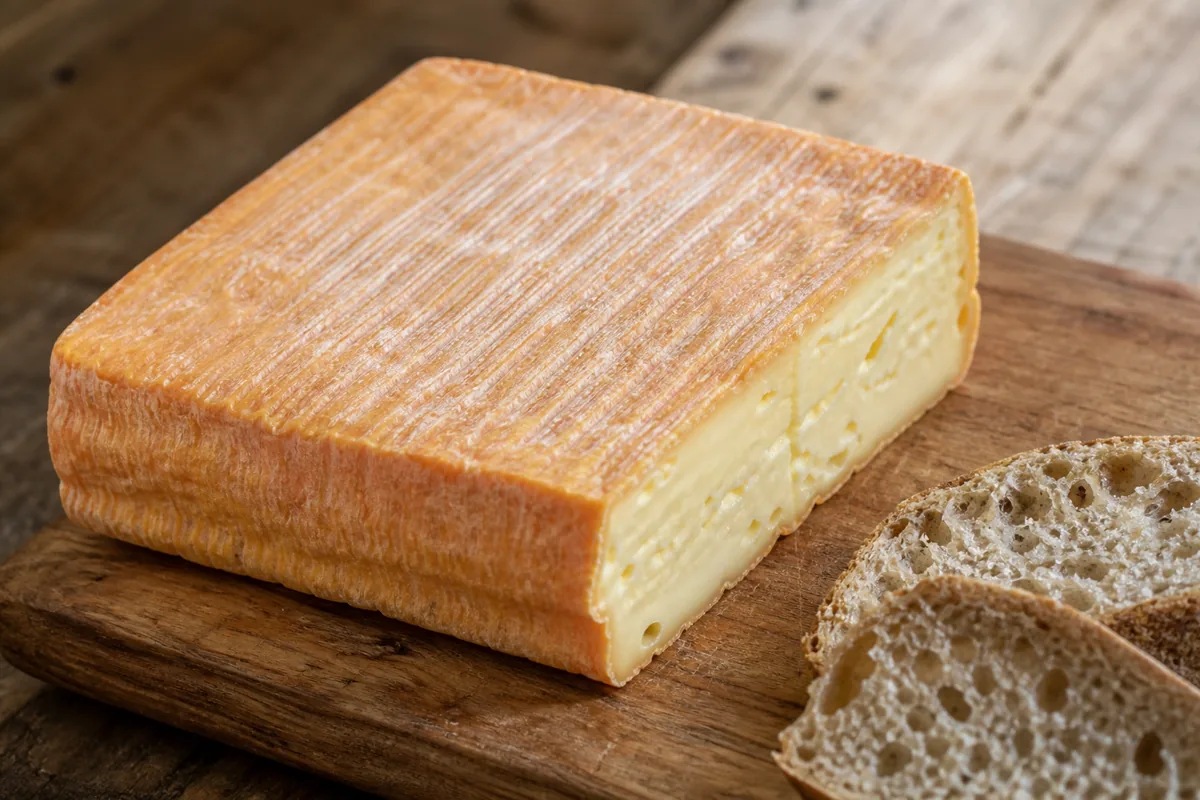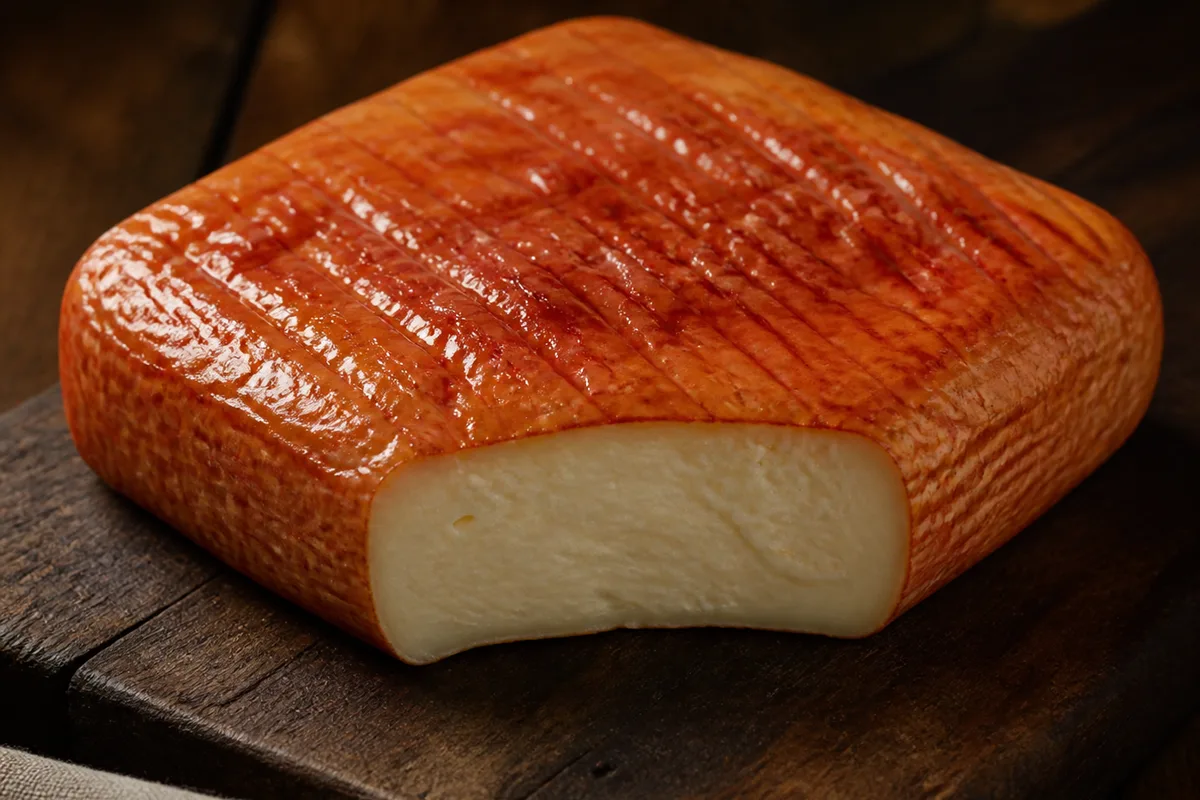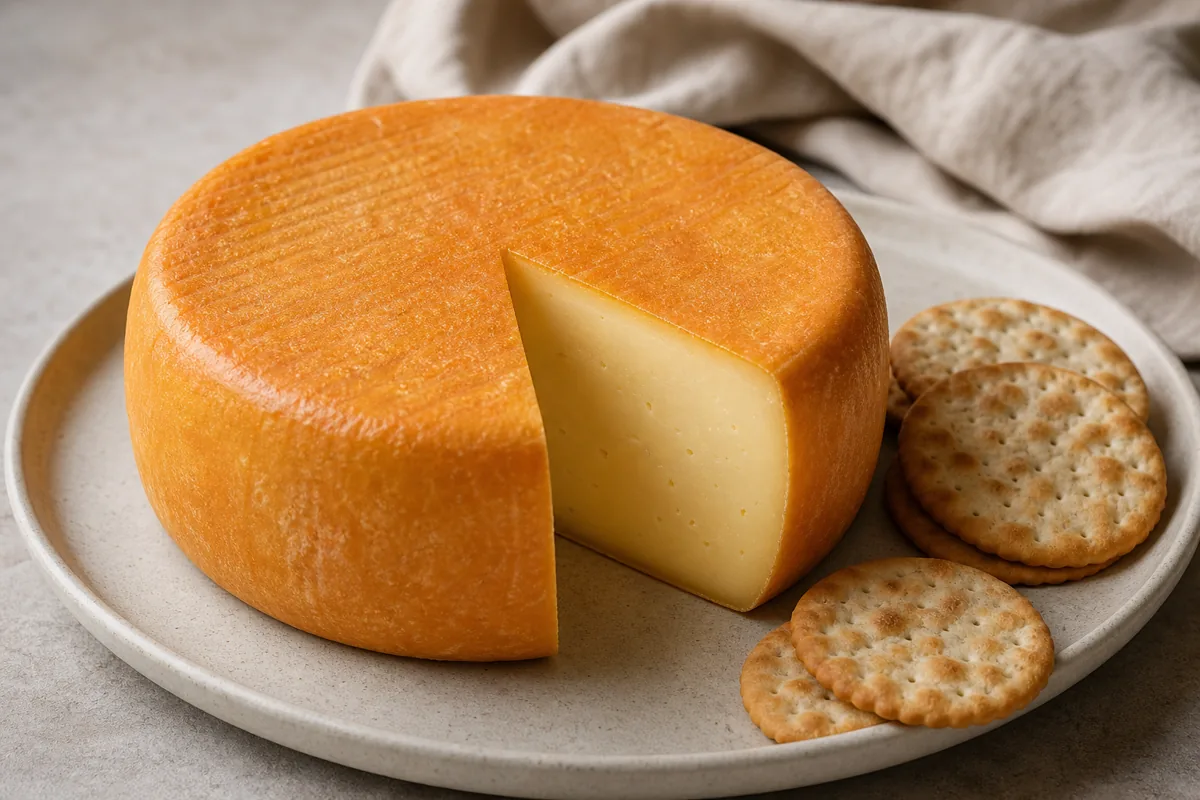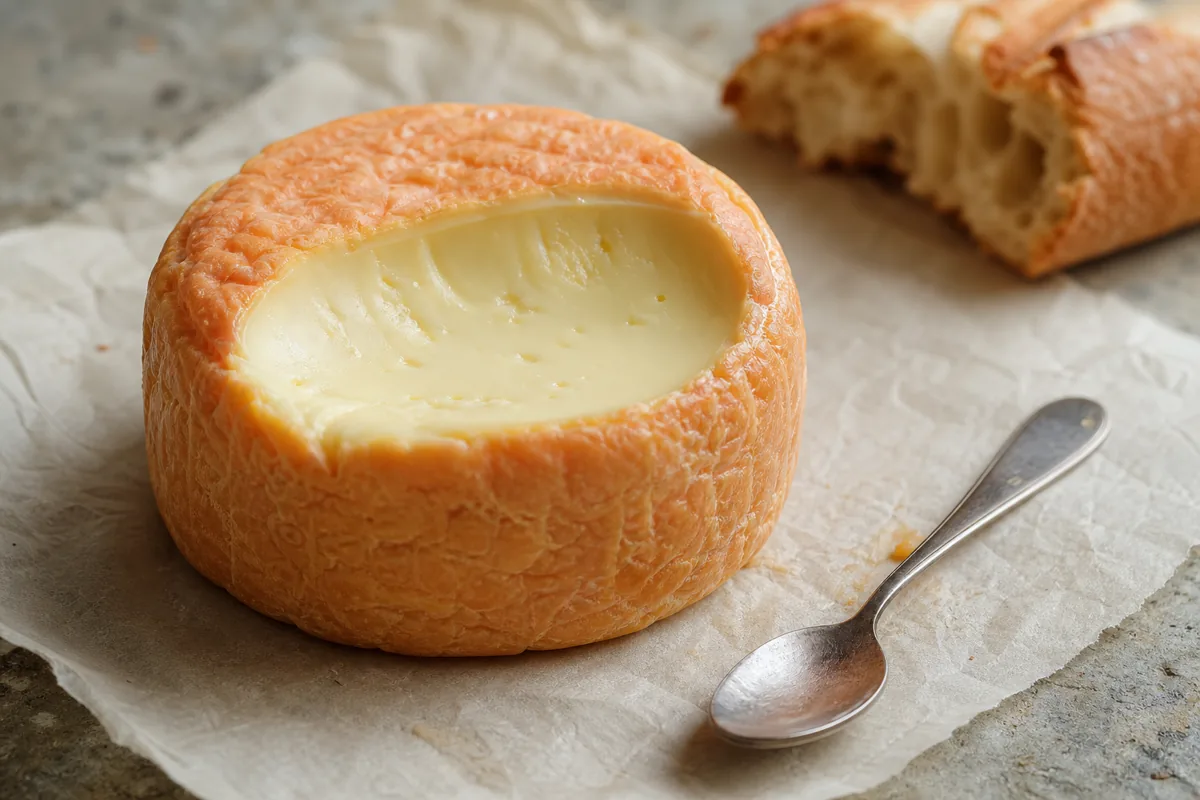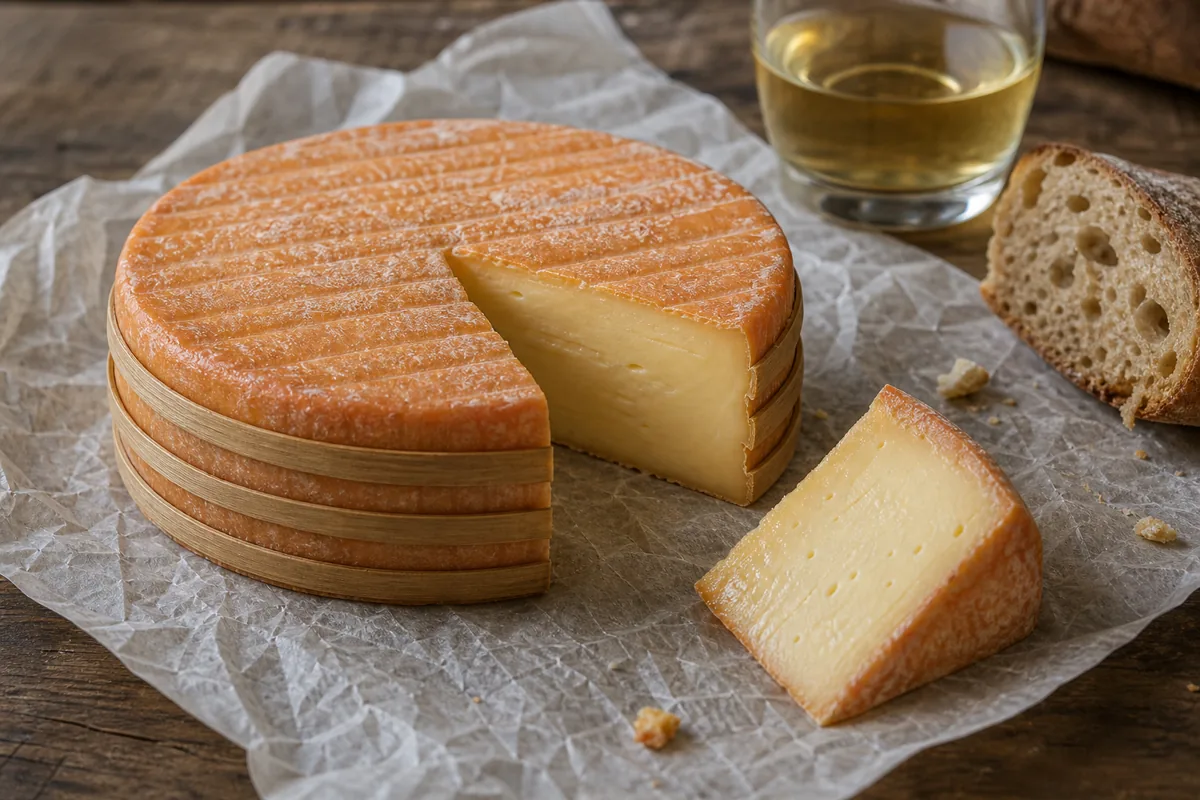
Livarot is a Normandy AOP soft cheese with a washed rind and plant bands around the wheel. Its aroma can be powerful, while the protected description keeps the paste supple, slightly salty, and smooth rather than harsh or collapsed.
The bands identify the form and help it hold its shape. They do not prove exact age, milk treatment, or safety, so the package and condition of the cheese still control a buying decision.
In This Article
What the AOP protects
INAO describes Livarot as a soft washed-rind cheese made exclusively with milk from Normande cows. Its protected area follows the Pays d'Auge across parts of Calvados, Orne, and Eure, and production is available in four formats.
The rind ranges from straw yellow to reddish, and regular washing during maturation develops the surface and aroma. The paste should remain supple and melting, with floral, hay, animal, and smoked notes appearing in the official sensory description.
AOP identity does not replace package facts.
Read the individual label for milk treatment, ingredients, net weight, nutrition, date, and storage range.
Why Livarot has bands
INAO calls the plant strips laîches and says they are fitted during maturation to maintain the moulded shape. The five bands on a full Livarot also explain the nickname “the Colonel”, after the five stripes associated with that rank.
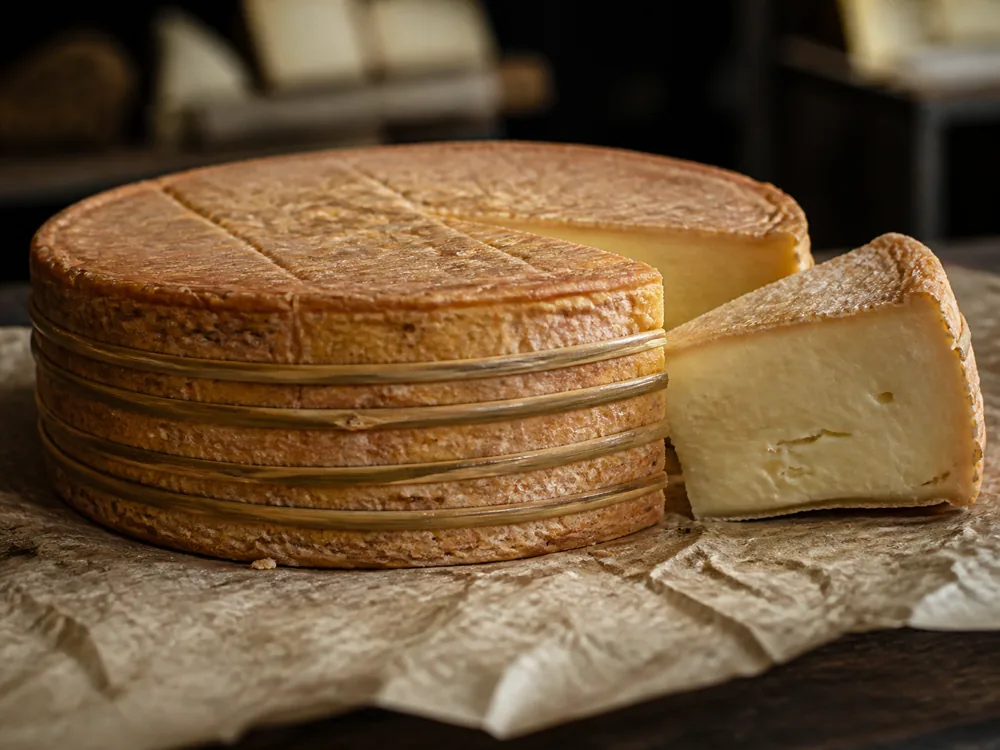
Look for bands that sit securely around the side and a wheel that still holds its round form.
Also inspect the seal, label, rind, and cut surface because intact bands cannot rule out poor handling.
Use the bands to recognize the protected form, then use the label and condition to choose the cheese. A banded wheel can still be too warm, damaged, or past the texture you want.
How Does Livarot Taste, and What Shows Ripeness?
A younger Livarot can show more hay and floral notes, while a more mature wheel can develop stronger animal and smoked aromas. These are official profile cues, not a schedule that assigns every wheel the same flavor on the same day.
For clean wedges, choose a paste that yields but still stands after cutting. For softer serving, look for more even give beneath the rind, while avoiding broken packaging, unexpected discoloration, unexplained swelling, or a paste that has collapsed into liquid.
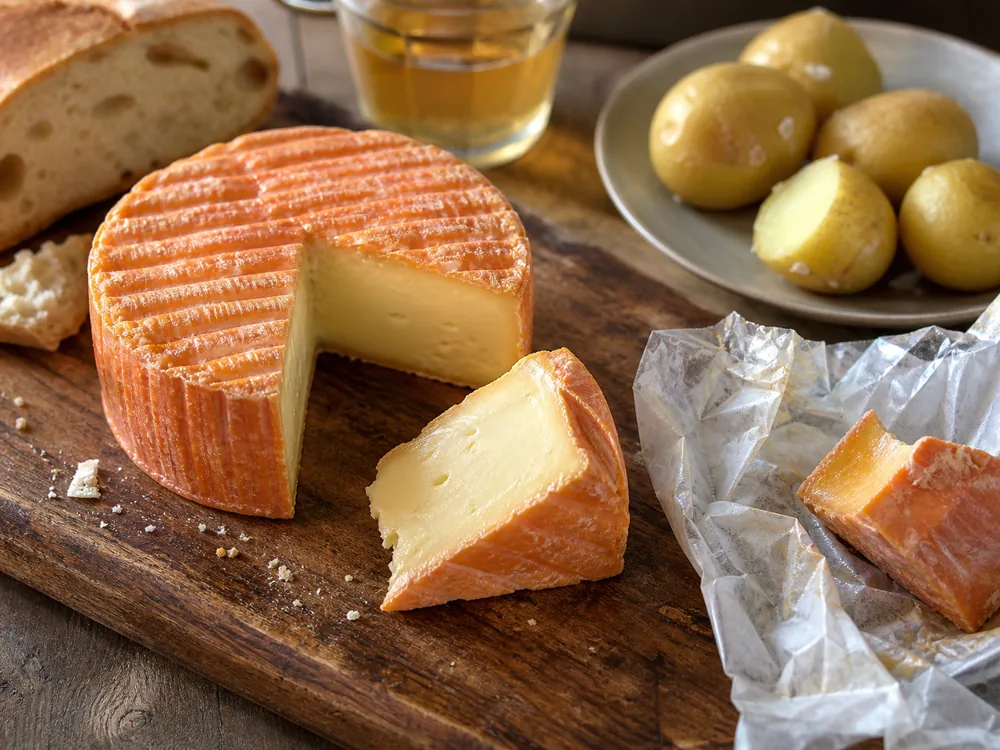
Washed-rind aroma can be strong when the cheese is sound.
Smell and appearance help you choose texture and intensity, but they cannot prove safety because harmful contamination may have no visible or sensory warning.
How Should You Cut and Serve Livarot?
Cut a round Livarot into narrow wedges from center to rind so each portion includes both paste and surface. Small portions make it easier to balance the powerful rind with the softer center.
Plain bread and boiled potatoes give the cheese a neutral base. Dry cider adds acidity and light tannin, while tart apple supplies fresh crunch.
| Pairing | Type | Why It Works |
|---|---|---|
| Plain bread | Food | A neutral base carries the soft paste without competing with the rind. |
| Boiled potatoes | Food | Mild starch supports a small serving of the cheese. |
| Tart apple | Food | Acidity and crunch refresh the palate after the washed rind. |
| Dry cider | Drink | Acidity and gentle tannin balance the creamy paste. |
| Light white wine | Wine | A bright, low-oak wine keeps the pairing from becoming heavy. |
| Sparkling water | Drink | Carbonation provides a simple alcohol-free counterpoint. |
Let the package and your service plan decide when to take it from the refrigerator.
There is no universal tempering time for every format, room temperature, and degree of ripeness.
What Should You Check on the Livarot Label?
Look for the Livarot name and EU AOP logo, then read the package for milk treatment. AOP dairy material records raw, thermised, and pasteurized production, so the protected name alone does not tell you which treatment applies to the wheel in your hand.
- Identity: Check the protected name and AOP logo.
- Condition: Choose secure bands, an intact package, and a paste suited to how you plan to serve it.
- Product facts: Use that package for milk treatment, nutrition, date, and storage information.
Milk treatment is a label fact, not a dependable flavor ranking. Producer, format, maturation, cold chain, and the condition of the individual cheese can all change the result.
How Do You Store Livarot After Purchase?
Keep Livarot refrigerated at the temperature printed on the package. The FDA advises holding a refrigerator at or below 40°F (4°C) and returning perishable food to refrigeration within two hours, or one hour when the air temperature is above 90°F (32°C).
No universal opened-life window applies to every Livarot format and producer.
Protect the cut face, keep the cheese covered, use clean utensils, follow the printed date, and use it promptly.
Discard a package with a broken seal, unexplained swelling, or evidence that it remained above safe refrigeration limits. An aroma that seems normal for Livarot cannot confirm safe handling.
Can You Eat Livarot During Pregnancy?
Livarot is a soft washed-rind cheese. Current French public-health guidance tells pregnant people to avoid washed-rind soft cheeses when eaten cold, including pasteurized versions, and to remove cheese rinds.
The same French guidance allows raw-milk cheese when it has been cooked thoroughly in a dish. The CDC lists pasteurized soft cheeses heated to an internal temperature of 165°F (74°C) or until steaming hot as safer, and soft cheese made from unpasteurized (raw) milk as riskier.
The NHS lists pasteurised soft cheeses as safe to eat and says foods made from unpasteurised milk must be thoroughly cooked. Served cold, a pasteurized Livarot is described as a pasteurized soft washed-rind cheese, a type the CDC list does not cover, so ask a midwife or doctor.
Check the milk statement, follow the guidance for your country, and ask your clinician if you have been given individual advice.
Which Cheeses Can Substitute for Livarot?
Munster can provide another French washed-rind profile. Pont-l'Évêque keeps the Normandy context with a different square form, while Taleggio offers a soft washed rind for recipes and boards.
No substitute reproduces the Livarot bands or protected identity.
Choose by the job you need, then read the substitute's own package for milk treatment, storage, nutrition, and date.