Pepper Jack is Monterey Jack with bits of pepper mixed through it, and the chile on the label sets the heat. A jalapeño-only block and a jalapeño-and-habanero block can sell under the same name at very different heat levels, so the ingredient line is where you tell them apart.
In This Article
What Is Pepper Jack Cheese?
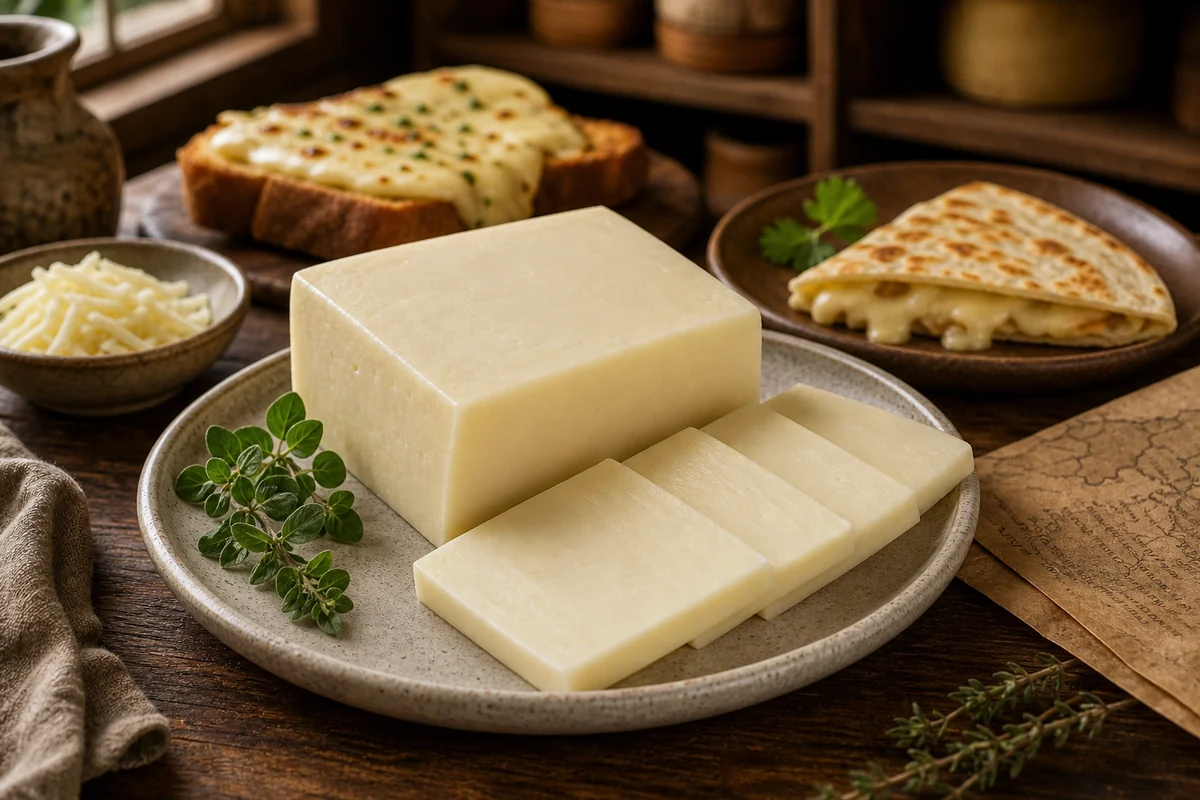
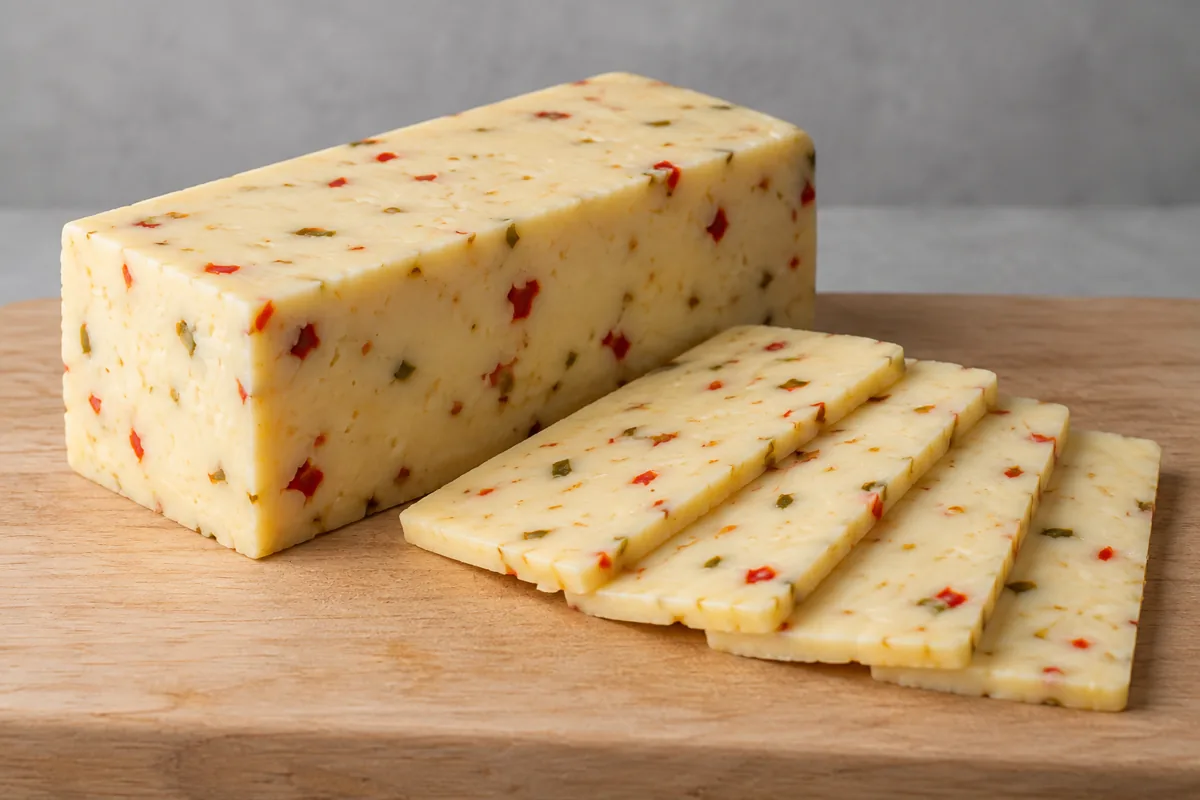
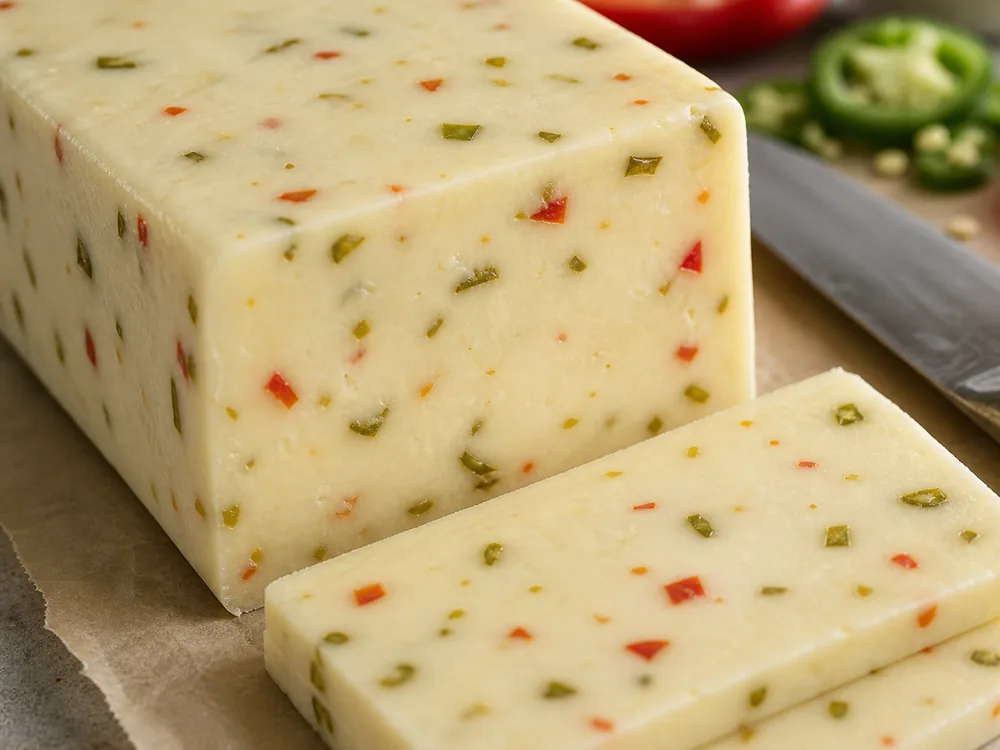
The cheese itself is a semi-soft cow's milk cheese with an open texture, a variant of Monterey Jack with pepper added. The paste is pale yellow with red and green pepper specks.
Accounts of the make differ on when the pepper goes in. Wisconsin Cheese has the curd washed and drained of whey, then salted and mixed with bits of pepper before it goes into cheesecloth for shaping and more draining.
Cheese.com, in an outline it introduces as similar to other cheeses, has the curds cut, cooked and stretched into blocks, with the peppers added last.
Ageing runs several weeks to several months, and Cheese.com's outline also ends with several weeks of ageing.
Which Chiles Are in Pepper Jack?
Jalapeño is the most common pepper in Pepper Jack, and some versions add serrano or habanero to raise the heat. All four labels in the table list jalapeño, and two of them add habanero.
| Product | Peppers on the label | Other ingredients |
|---|---|---|
| Tillamook Pepper Jack slices (two-pack page) | Jalapeño | Cultured pasteurized milk, salt, enzymes |
| Cabot Pepper Jack block | Jalapeño | Pasteurized milk |
| Sargento Pepper Jack slices | Jalapeño and habanero | Pasteurized milk, cheese culture, salt, enzymes |
| Tillamook Hot Habanero Jack | Habanero and jalapeño | Cultured pasteurized milk, salt, enzymes |
Sargento puts habanero in its regular Pepper Jack, while Tillamook keeps habanero for a separately named Hot Habanero Jack. Tillamook sells the two together in one two-pack of slices, which puts the jalapeño-only and habanero versions side by side.
Beyond the chiles, red and green bell peppers, cayenne and garlic powder are common additions, and sweet peppers, rosemary and garlic turn up alongside jalapeño and habanero.
Spicy Pepper Jack goes further, with serrano, chipotle and ghost pepper among its chiles and peppercorns as another addition.
The Tillamook, Cabot and Sargento packs in the table list none of those extras or hotter chiles, so if you want them, or want to avoid them, read the ingredient line on the pack.
How Hot Is Pepper Jack?
Most Pepper Jack sits at the milder end. Cheese.com puts the usual level at mild to medium, and Wisconsin Cheese describes a noticeable kick that is usually not overwhelming.
The chile decides how far past that a block goes, as these Scoville ranges for the peppers named for Pepper Jack show:
| Chile | Scoville heat units (Wisconsin Cheese) | Where it appears |
|---|---|---|
| Jalapeño | 2,000 to 8,000 | Tillamook, Cabot and Sargento Pepper Jack, and Tillamook Hot Habanero Jack |
| Habanero | 100,000 to 350,000 | Sargento Pepper Jack and Tillamook Hot Habanero Jack |
| Ghost pepper | Up to 1.5 million | The hottest pepper Wisconsin Cheese names for Pepper Jack |
A Scoville unit is the number of times a pepper must be diluted before its heat can no longer be detected. On that scale even the mildest habanero listed, at 100,000, is more than 12 times the hottest jalapeño at 8,000.
Those figures belong to the chiles, and how hot a block turns out also depends on how much pepper the maker adds and varies with the brand and the recipe. Two jalapeño blocks can still differ.
Spicy Pepper Jack runs from medium to a five-alarm burn, depending on the peppers, so that hotter end belongs to blocks made with habanero, serrano, chipotle or ghost pepper and not to a jalapeño-only block.
Hotter still, the Carolina Reaper measures around 2 million Scoville units, and it is tied to a Wisconsin cheddar.
If you are serving a mixed group, the jalapeño-only Tillamook and Cabot Pepper Jack are the lower-heat picks of the four labels in the table.
The chile on the label sets the range: jalapeño alone measures 2,000 to 8,000 Scoville units, while a habanero version starts at 100,000. How much pepper the maker adds still moves the result, so two blocks that list the same chile can differ.
What Does Pepper Jack Taste Like?
Most descriptions put the heat first and a smooth or buttery finish after. Wisconsin Cheese describes a burst of spicy flavor followed by a delicate buttery finish, and Sargento a spicy, hot kick with a smooth, delicate finish.
Sargento says habanero plus jalapeño covers both ends of the flavor scale. Wisconsin Cheese adds a slight sweetness to the buttery base, says the creamy, buttery texture balances the burn, and calls the chile heat vegetal, on top of a mild, buttery Monterey Jack base.
The base note is where the descriptions part. Cheese.com calls the flavor slightly tangy and ties that tang to fermentation by the starter culture, while Sargento and Tillamook describe the cheese as smooth or creamy.
Where Did Monterey Jack and Pepper Jack Come From?
Monterey Jack was likely first made by Spanish missionaries in California, and Franciscan friars in the Monterey area are named as its first makers.
David Jacks, a Scottish immigrant and Monterey businessman, was one of the first to sell the cheese widely, and he marketed it heavily in the 1880s, after which the cheese took his name.
In the Wisconsin Cheese account, as production grew, cheesemakers began experimenting and mixed small bits of spicy pepper into the curd.
Pepper Jack's own start is not well documented. It is thought to have been developed by Mexican-American cheesemakers, and it is believed to have started in California in the late 19th century.
How Do You Cook with Pepper Jack?
Pepper Jack melts well thanks to its high moisture, and most of the dishes named for it are hot ones. Its smooth, buttery texture melts evenly, so the pepper reaches every bite.
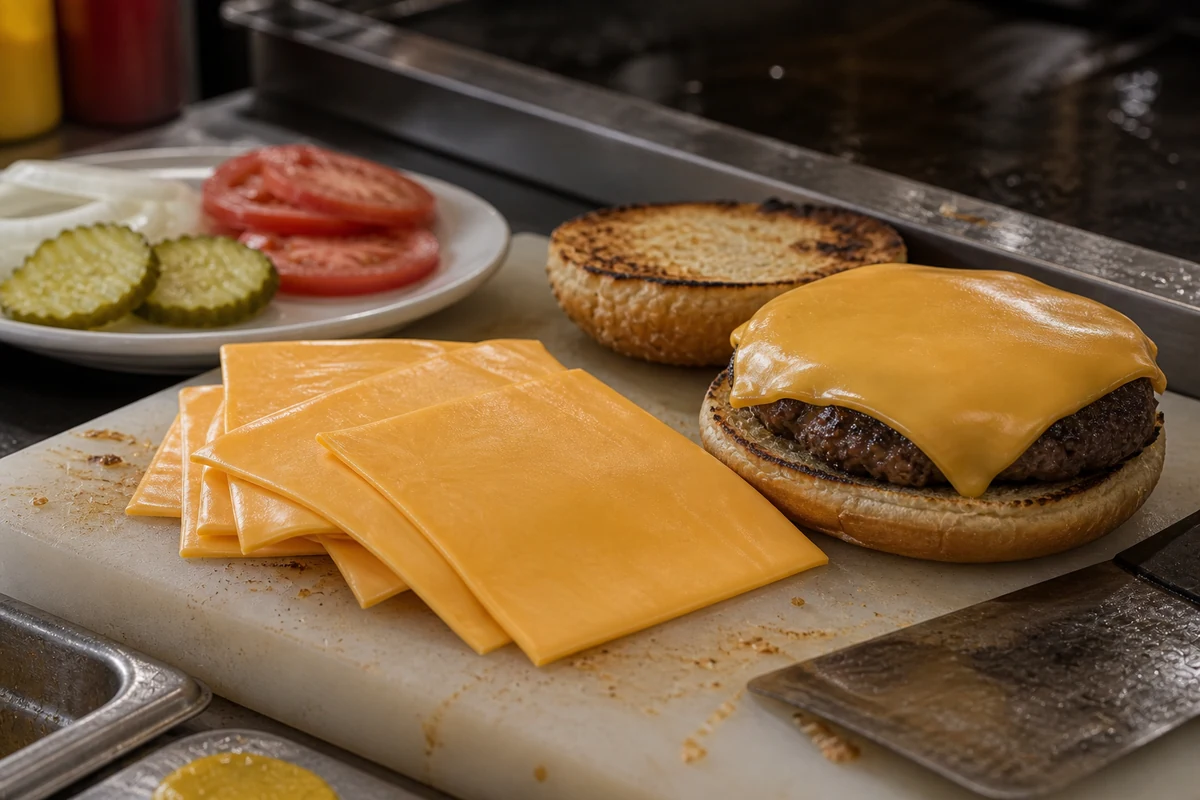
Wisconsin Cheese and Cheese.com both name it for burgers, where a slice melts over the patty, for nachos, which Cheese.com has shredded over the plate, and for a grilled cheese.
Wisconsin Cheese also puts Pepper Jack in any mac and cheese recipe, and in baked chicken with bacon and barbecue sauce. For a smokier macaroni it names smoked Pepper Jack, and it shreds the cheese into chicken corn chowder.
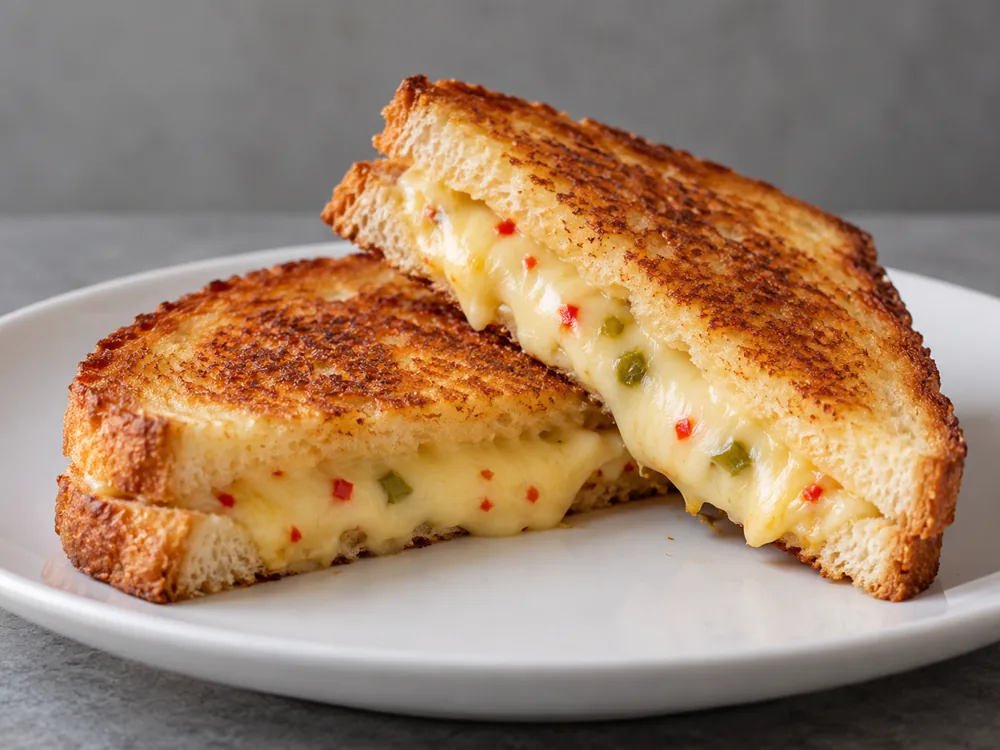
Cold slices have a job too. Sargento suggests its slices on a turkey or roast beef sandwich or with crackers, and Cheese.com pairs deli-style Pepper Jack sandwiches with smoked meats.
When you want just enough kick in a wrap or sandwich without overwhelming it, Wisconsin Cheese's guide suggests thin slices.
| Use | How It Works |
|---|---|
| Quesadillas and tacos | Named in the Wisconsin Cheese pairing guide. |
| Casseroles and egg strata | Wisconsin Cheese has casseroles in a supporting role and egg strata getting the punch. |
| Omelets and pizza | Also on the Wisconsin Cheese list of dishes. |
| Dips | Wisconsin Cheese melts it into a warm dip for pretzels, tortilla chips or bread. |
| Mild white fish | Wisconsin Cheese lists it as a dish that gets a punch from the cheese. |
| Enchiladas, pasta and grilled vegetables | Named on the Wisconsin Cheese spicy Pepper Jack page. |
What Goes with Pepper Jack?
Wisconsin Cheese pairs Pepper Jack two ways, with bold foods and drinks that stand up to the heat or light and sweet ones that contrast with it, so decide first which you want. It splits its pairings into savory and sweet foods.
Stout, brown ale and a big red zinfandel take the first route, while lager, red ale, riesling and prosecco take the second.
On beer, its pairing guide says pale ales and lagers mellow the burn in a beer and cheese match, while IPAs amplify it.
IPA gets opposite advice on another Wisconsin Cheese page, which lists it with lager and wheat beer as a cleansing contrast and says an imperial stout intensifies the cheese. If you want a beer that cools the heat, lager is the one all three Wisconsin Cheese pages place on the cooling side.
In wine, the guide matches the heat with a zinfandel and softens it with the sweetness of Moscato, prosecco or off-dry riesling. It also names sparkling water, limeade and citrusy drinks such as margaritas as refreshing contrasts.
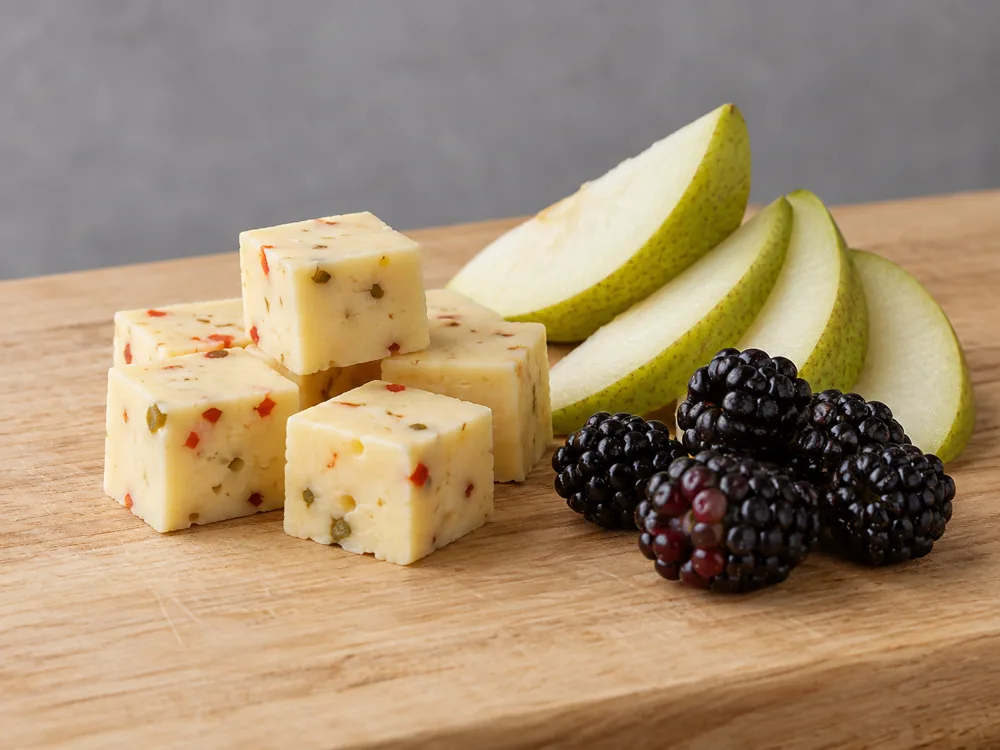
On the sweet side, Wisconsin Cheese says raspberry jelly offsets the buttery heat, and its guide adds fresh grapes, apples, melon and pineapple. It also suggests slicing the cheese into triangles for skewers with grapes, charcuterie or olives.
| Pairing | Type | Why It Works |
|---|---|---|
| Pears and blackberries | Food | Sweet fruit named by Wisconsin Cheese. |
| Dried mango and strawberries | Food | Also on the Wisconsin Cheese sweet list. |
| Olives, radishes and pickled vegetables | Food | Savory matches from Wisconsin Cheese. |
| Spicy cured meats | Food | Named by Wisconsin Cheese, which also lists salami, chorizo, smoked turkey and summer sausage. |
| Crusty bread and honey | Food | Suggested for serving in the Wisconsin Cheese pairing guide, which also names spicy chutneys. |
| Zinfandel, off-dry Riesling, Moscato | Wine | Wisconsin Cheese names fruity or sweeter wines against the spice. |
| Lager, pale ale, stout | Drink | Beer styles listed by Wisconsin Cheese. |
What Can Replace Pepper Jack?
Choose the stand-in by the job: the Wisconsin Cheese guide matches each one to the same melt, a mild base, or a different kind of heat.
| Cheese | Heat | Texture and flavor | Wisconsin Cheese's pick for |
|---|---|---|---|
| Monterey Jack | None | Same texture, mild and creamy | Melting |
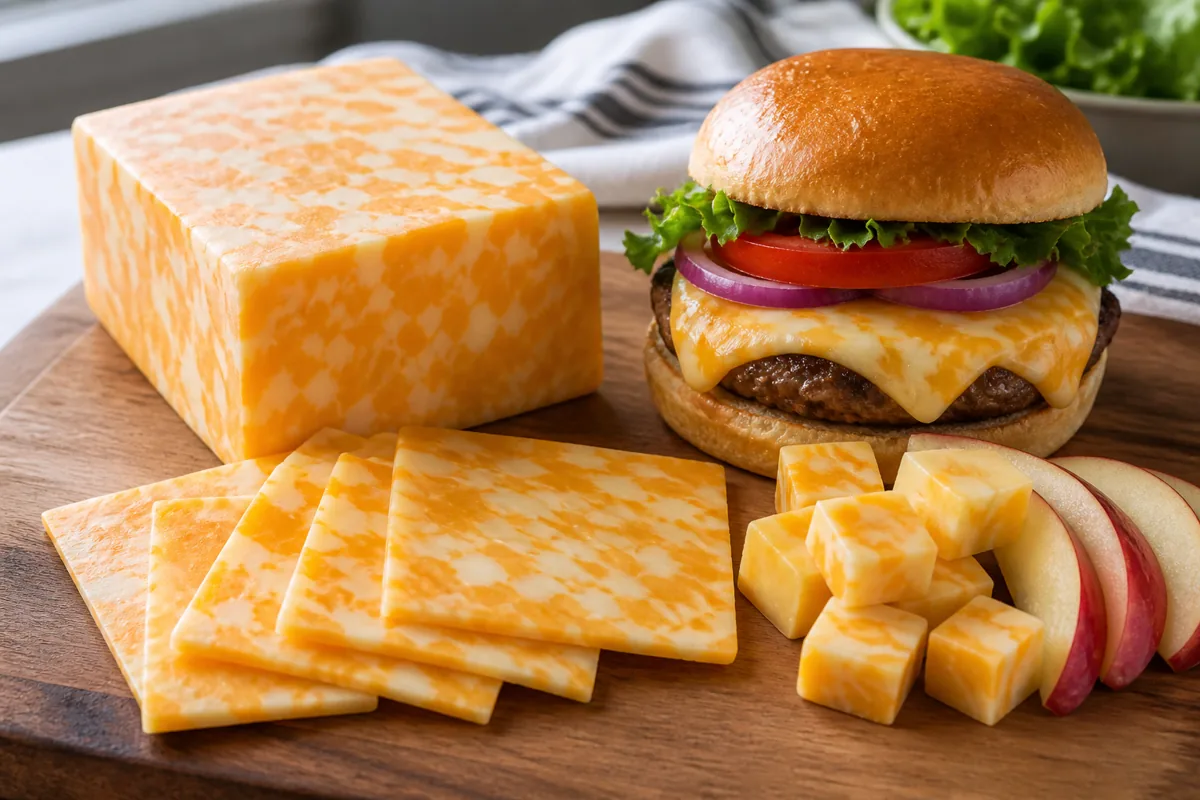
| Colby jack | None | Blend of colby and Monterey Jack, mild, creamy and slightly tangy | Sandwiches and cheese boards |
| Spicy cheddar | A kick of heat | Firmer and sharper | A sharper, bolder flavor |
| Havarti with peppers | Added spice | Creamy and mild | Not stated |
Plain Monterey Jack, the cheese Pepper Jack is a variant of, has the same texture and no spice, and the guide picks it for melting.
Wisconsin Cheese calls colby jack a great melting cheese too, even though its guide gives melting to Monterey Jack and sandwiches and cheese boards to colby jack.
Meister Cheese builds its pepper version on colby jack instead. Its Muscoda Mayhem is a pepper-jack-style cheese on a colby jack base with a mellow yet fiery flavor.
Other makers vary the pepper or the finish. Henning's makes its Pepper Jack with jalapeño and habanero, Springside Cheese makes a Monterey Jack with jalapeño, and Jim's Cheese makes a cold-smoked Pepper Jack with a creamy texture and a peppery bite.
How Do You Store Pepper Jack, and Can You Freeze It?
Tillamook advises against eating stirred-curd cheeses such as Monterey Jack, Colby and Pepper Jack after the code date, because they hold more moisture, even though its naturally aged cheddar can keep sharpening past the best-by date.
That moisture is the same property credited for Pepper Jack's melt, so what suits a hot pan also gives a stirred-curd cheese a shorter life than a naturally aged one.
How long an opened pack keeps depends on whether it is a block, slices or shreds.
| Question | Answer | Given by |
|---|---|---|
| How long does an opened block keep? | About 2 to 3 weeks for Pepper Jack; about 3 to 4 weeks for any Tillamook cheese | Wisconsin Cheese (2 to 3 weeks, written for Pepper Jack); Tillamook (3 to 4 weeks, all its cheeses) |
| How long do opened slices keep? | Within five days for Sargento's Pepper Jack slices; about 1 to 2 weeks, or 3 to 5 days in Tillamook's mold-prevention tips | Sargento (five days); Tillamook (1 to 2 weeks, or 3 to 5 days) |
| How long do opened shreds keep? | About 1 week, or 3 to 5 days in the mold-prevention tips | Tillamook |
| How should you wrap it? | Wax or parchment paper, then an airtight container, with no plastic wrap; or refold the original wrapper, press foil or plastic over the cut end, then seal it in an airtight bag or container | Wisconsin Cheese (wax or parchment); Tillamook (wrapper with foil or plastic) |
| Where in the fridge? | The coldest part of the fridge, under 40 F, in the crisper drawer if possible | Tillamook; Wisconsin Cheese says the refrigerator |
Tillamook's windows cover every cheese it makes, while the Wisconsin Cheese figure is written for Pepper Jack. For an opened block, that makes Wisconsin Cheese's 2 to 3 weeks the more cautious plan.
For opened slices, Sargento's five days falls inside the shorter of Tillamook's two windows, which makes 3 to 5 days the cautious plan for slices.
Air exposure can dry out or mold sliced cheese, and shreds belong in a freezer bag or airtight container, sealed against moisture loss and mold.
Plastic wrap gets opposite advice: Wisconsin Cheese says no plastic wrap because it can trap moisture, while Tillamook presses foil or plastic over the cut end of a block to keep it from drying out.
For Tillamook's cheeses, Pepper Jack among them, freezing prolongs the cheese's life and slows mold growth, but it leaves the cheese dry and crumbly. Thawed cheese shreds easily but is hard to slice.
If you plan to cook with it, as in the hot dishes above, shredded cheese can go in the freezer. If you want slices, Tillamook advises slicing before freezing and eating thawed cheese as soon as possible.
Tillamook's way to freeze cheese is in the unopened package, or in portions of one pound or less wrapped in plastic or foil inside an airtight bag, then thawed in the fridge with the wrapper on.
What Is in a Serving of Pepper Jack?
A slice runs 80 calories on both the Tillamook and Sargento labels, and both of those columns are for one 21 g slice, while Cheese.com's figures are for an ounce.
| Nutrient | Tillamook slice (Hot Habanero Jack and Pepper Jack two-pack), per 21 g | Sargento slice, per 21 g | Cheese.com, per 1 oz (28 g) |
|---|---|---|---|
| Calories | 80 | 80 | About 110 |
| Total fat | 7 g | 7 g | Not given in grams |
| Saturated fat | 4.5 g | 4 g | Not given |
| Sodium | 160 mg | 140 mg | Not given in milligrams |
| Protein | 4 g | 5 g | About 7 g |
| Calcium | 130 mg (10% DV) | 10% DV | About 16% DV |
Tillamook prints one panel for the whole two-pack, so its column covers both cheeses in it. Scaled to 28 g, an 80-calorie 21 g slice comes to about 107 calories, close to Cheese.com's 110.
Sodium is where the slices differ, at about 213 mg per ounce for Tillamook against 187 mg for Sargento, and protein runs from about 5.3 g for Tillamook to 6.7 g for Sargento against Cheese.com's 7 g. For the pack you buy, the label on that pack is the number to use.
Cabot labels its Pepper Jack block lactose-free and gluten-free. That claim belongs to Cabot's block, so if you need it, look for it on the pack of whichever brand you buy.
Is Pepper Jack Safe During Pregnancy?
Whether you can eat Pepper Jack while pregnant turns on two things about your piece: whether the milk is pasteurized, and whether it was sliced at a deli counter.
Tillamook, Cabot and Sargento all list pasteurized milk on the labels in the chile table above, so look for the same line on your own pack.
The NHS guidance on cheese during pregnancy lists pasteurised semi-hard cheeses such as edam and pasteurised soft cheeses as safe, and says any cheese cooked until steaming hot is safe.
The CDC lists unheated deli-sliced cheese among the riskier choices, and says deli-sliced cheeses heated to 165°F or until steaming hot and pasteurized soft cheeses heated to an internal temperature of 165°F or until steaming hot are safer. Served cold from a pack, Pepper Jack is described as a pasteurized semi-soft cheese, a type the CDC list does not cover, so ask a midwife or doctor about it.
The CDC notes that pregnant women are 10 times more likely to get a Listeria infection. Pepper Jack sliced at a deli counter is the case to heat to 165°F or until steaming hot before eating, for example in a grilled cheese.
SOURCES & REFERENCES
What Else Do People Ask About Pepper Jack?
Usually not. Cheese.com puts most Pepper Jack at mild to medium, and versions with habanero run hotter than jalapeño-only blocks.
Jalapeño is the common base. Sargento's regular Pepper Jack also contains habanero, while Tillamook and Cabot list jalapeño only.
It is Monterey Jack with pepper mixed into the curd before shaping, according to Wisconsin Cheese.
Wisconsin Cheese suggests Monterey Jack for melting, colby jack for sandwiches and cheese boards, spicy cheddar for a sharper bite, and havarti with peppers for a creamy cheese with spice.
Yes. Wisconsin Cheese credits its high moisture and lists burgers, nachos, grilled cheese and mac and cheese among its uses.
Wisconsin Cheese pages agree that a lager cools the heat. They disagree on IPA, which one page says amplifies it.
Yes, for cooking. Tillamook says frozen cheese turns dry and crumbly and is hard to slice after thawing, but it shreds easily.
Tillamook, Cabot and Sargento list pasteurized milk on their Pepper Jack labels, and the NHS lists pasteurised semi-hard and pasteurised soft cheeses as safe to eat. The CDC lists unheated deli-sliced cheese as riskier and deli-sliced cheese heated to 165°F or until steaming hot as safer, but its list does not cover pasteurized semi-soft cheese eaten cold, so ask a midwife or doctor about cold Pepper Jack from a pack.