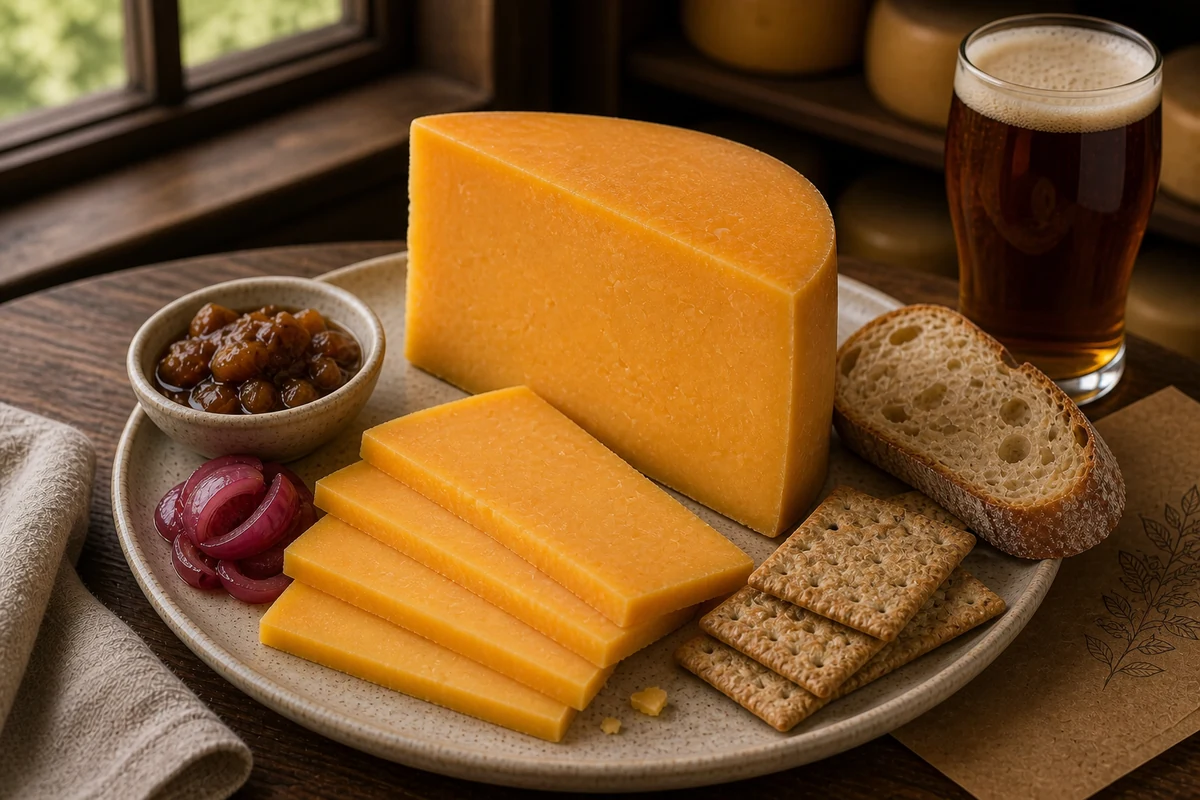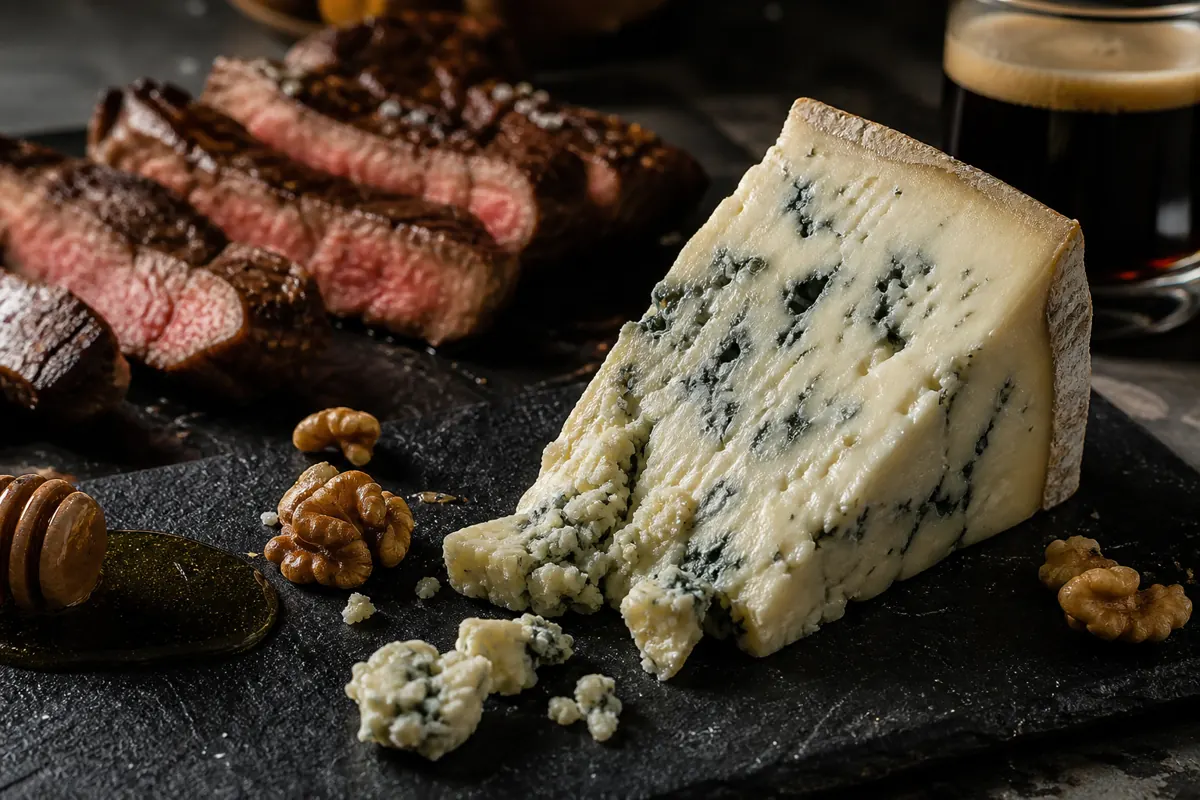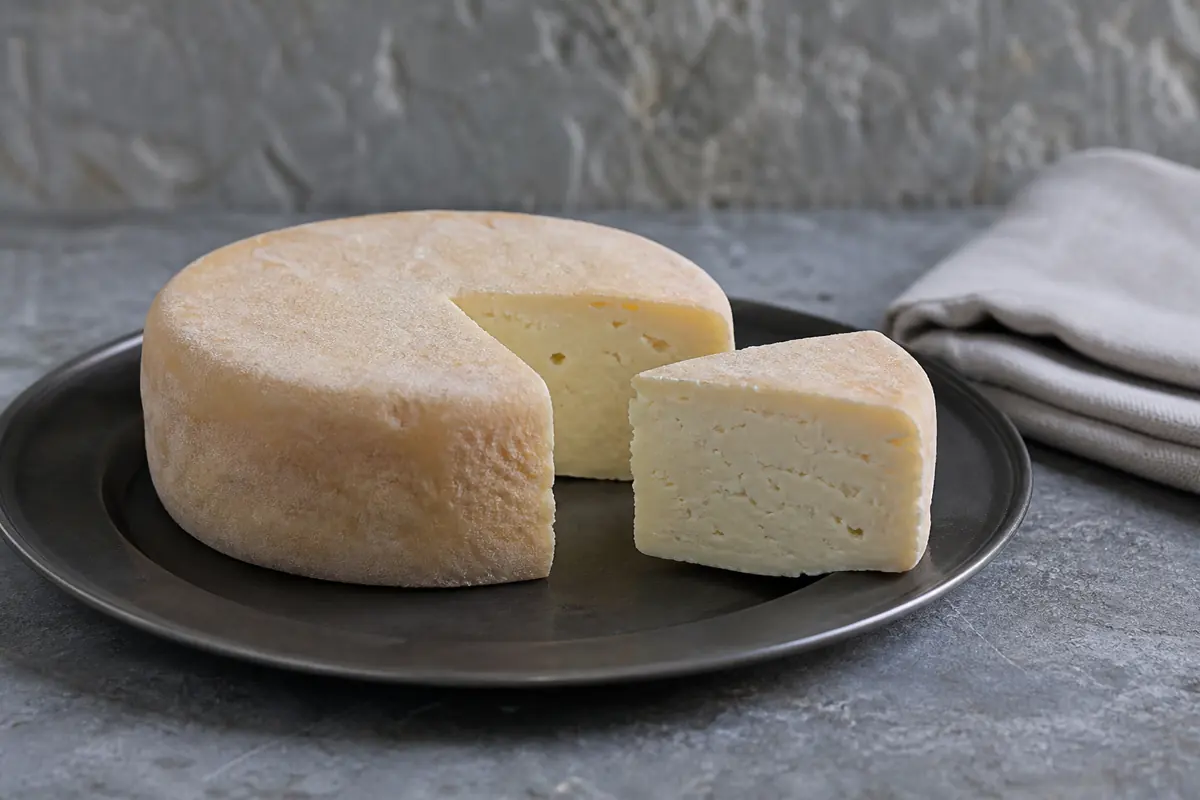
Cotherstone is a young, semi-hard Dales-style cheese made from cow's milk in Teesdale, County Durham. Neal's Yard Dairy sells the current cheese from Gordon Cross, who restarted production in 2024 after his mother Joan retired.
The wheel on sale today uses pasteurised milk, while Slow Food describes unpasteurised milk for the traditional cheese, so the maker and the date behind a description matter as much as its tasting notes.
In This Article
What Is Cotherstone?
Cotherstone belongs to the Dales family of crumbly northern English cheeses. Neal's Yard Dairy places it in the same traditional style as Wensleydale and Swaledale, and describes the cheese it sells today as "a milky, semi-hard cheese, not unlike a Wensleydale; it is made overnight, like a Stilton."
The cheese is made in Teesdale, just across the river from the village whose name it carries.
Culture magazine calls it one of only a handful of traditional Dales cheeses still in existence, and says the farmland in this part of the Dales does not suit large herds.
Cheese here was small-scale and came from a farm's own few cows, and Culture says farm kitchens often made it for the family's own use, fitting the make around the daily chores.
Why Did Cotherstone Nearly Disappear?
The Cross family began making Cotherstone in 1947, when a winter storm snowed in the farm and the milk could not be collected. Making cheese kept that milk, and the family kept making it.
Joan Cross made it from the family recipe for more than 40 years and retired in 2023. Her son Gordon revived the cheese in 2024, the third generation of the family to make it.
Neal's Yard Dairy says Cotherstone might have joined the British cheeses that went extinct when their makers retired, and that Gordon Cross is balancing cheesemaking with a career in tech and a life abroad to keep it going.
The name is much older than the family's cheese. The Teesdale Mercury printed "Cotherstone Cheese" in 1883, and by the late nineteenth century the cheese travelled by rail to London markets and beyond.
When Gordon's grandmother married into the family in the 1920s, 20 or 30 farms in the valley made a cheese known as Cotherstone, and Neal's Yard Dairy says the Cross family are the only ones left.
The shrinking was national. The dairy's founder, Randolph Hodgson, told Saveur in 2007 that when he started in 1979 only a handful of farmers were left, and that the rest had given up or switched to commercial products with "pasteurised milk and wax coatings."
Neal's Yard Dairy describes the cheese Gordon Cross makes now, so this article takes its facts about the current cheese from that page. Slow Food and Culture magazine describe it differently, and the table in the next section sets them side by side instead of blending them.
How Do the Sources Describe the Wheel?
Neal's Yard Dairy writes about the cheese it sells today, Slow Food's Ark of Taste entry covers traditional Cotherstone, and Culture's undated entry describes the cheese while Joan Cross was still making it. Milk, age and rind change from one description to the next.
| Point | Neal's Yard Dairy | Slow Food Ark of Taste | Culture |
|---|---|---|---|
| Milk | Pasteurised cow's milk from a nearby farm | Unpasteurised cow's milk | Cow's milk, with pasteurisation listed among the changes to Joan Cross's make |
| Age | 6 weeks on the product page; about 8 weeks of maturing on the blog | 1 to 3 months | Fresh at 2 to 3 weeks locally; aged elsewhere, with no figure |
| Rind | Natural, with grey moulds on the ideal rind | Pinky-gold when matured in a humid atmosphere | A delicate natural rind on the aged cheese |
| Paste | Buttery and supple, warm yellow, occasional small openings | Pale creamy yellow, a few small irregular holes | Moist yet crumbly, dense and light at once |
Milk, age and rind are where the sources split, so the maker and date on the label settle more than any single description.
Is Cotherstone Sold Fresh or Matured?
Both exist, and the split follows geography. Culture says people in County Durham eat Cotherstone fresh at two to three weeks old, while the cheese found elsewhere is most likely aged and has a delicate natural rind.
Neal's Yard Dairy confirms that most Cotherstone is enjoyed locally as a fresh, unripened cheese, and presents its own salting and maturing as the exception. The dairy's blog says Joan Cross sold her cheeses locally while they were still very fresh, often coating them in wax to prevent mould growth on the rind.
The dairy began maturing cheeses from those same batches with a natural rind to bring out more complex flavours, so the waxed fresh cheese and the grey-moulded matured one start from the same make.
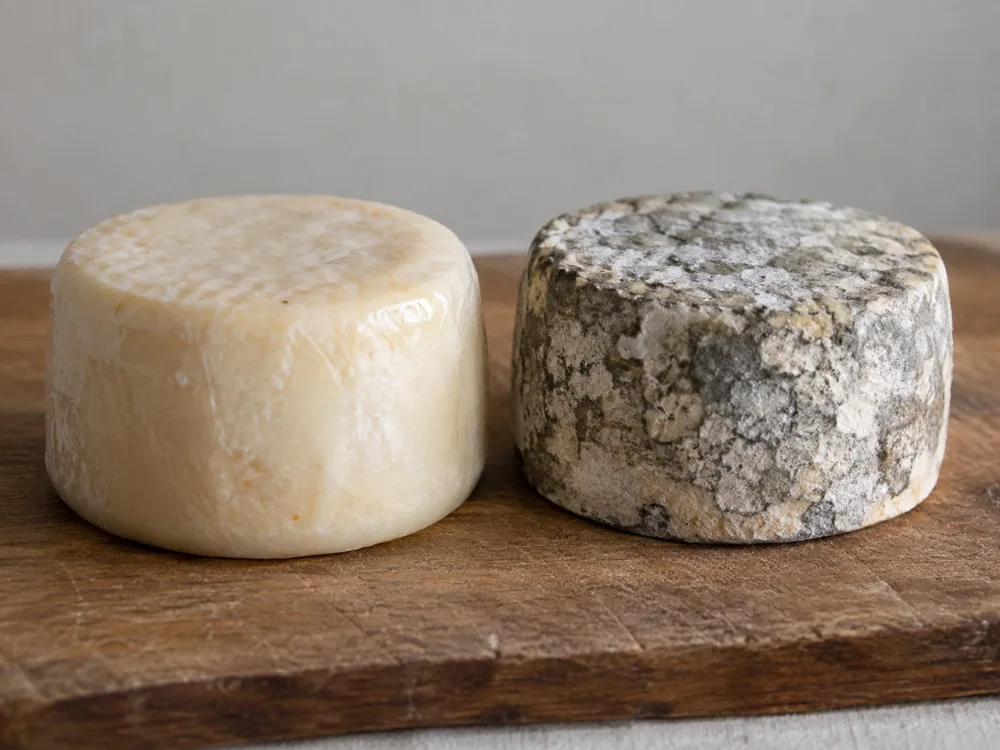
When the dairy sent Joan a matured piece, she praised its interesting flavour and aroma and said she preferred her Cotherstone fresh from the press. The dairy sees the same split over mature Cheshire, whose deep flavours many of its customers love, and says traditional cheeses can be enjoyed at several stages of maturity, each showing a different side of the same recipe.
By these accounts a wax coating goes with the fresh style and a natural rind with the matured one. Slow Food's entry, a pinky-gold rind and one to three months, matches neither description exactly.
Is Today's Cotherstone Made the Way It Used to Be?
Mostly the recipe, with changes. Culture says the starter culture, pasteurisation and the use of vegetarian rennet changed over Joan Cross's years, while the basic recipe stayed close to the one her mother used.
The old method used no starter culture at all: milk soured naturally overnight in a milk can, kept at the right temperature with a container of hot water in the milk and heavy coats or blankets around the can. None of the sources gives today's make step by step, so how much of that overnight souring survives in the current cheese is not documented.
Culture says the traditional season ran from May until the first frost in autumn, while the Crosses made it almost year round by the time of its entry.
Neal's Yard Dairy's product page says it expects more variety to come with the change in cheesemaker, so Gordon Cross's batches may not match descriptions written about his mother's cheese.
How Is Cotherstone Matured, and How Does It Change With Age?
Neal's Yard Dairy rests each young cheese for a day on wooden boards in a cool, humid room. It then dry-salts the surface of each cheese by eye, and the salt dissolves into a light brine in the cheese's own moisture.
The product page says the salt draws out excess moisture and helps form a firmer rind. The dairy once tried a brine bath, which encouraged "more ruddy rind communities," and kept dry-salting because it preferred the flavour and character of those cheeses.
The blog has the cheeses turned daily during the first week while natural mould develops, and the product page describes turning several times a week for about a month.
The dairy's blog puts the maturing at about eight weeks before wrapping and cold storage. Its product page lists a six-week cheese and about a month in the maturing rooms, so six to eight weeks is the range the dairy itself gives.
The second stage starts once the rind reaches the desired texture. The dairy then wraps the cheese and moves it to a cold room, where, it says, the texture softens and the flavours deepen.
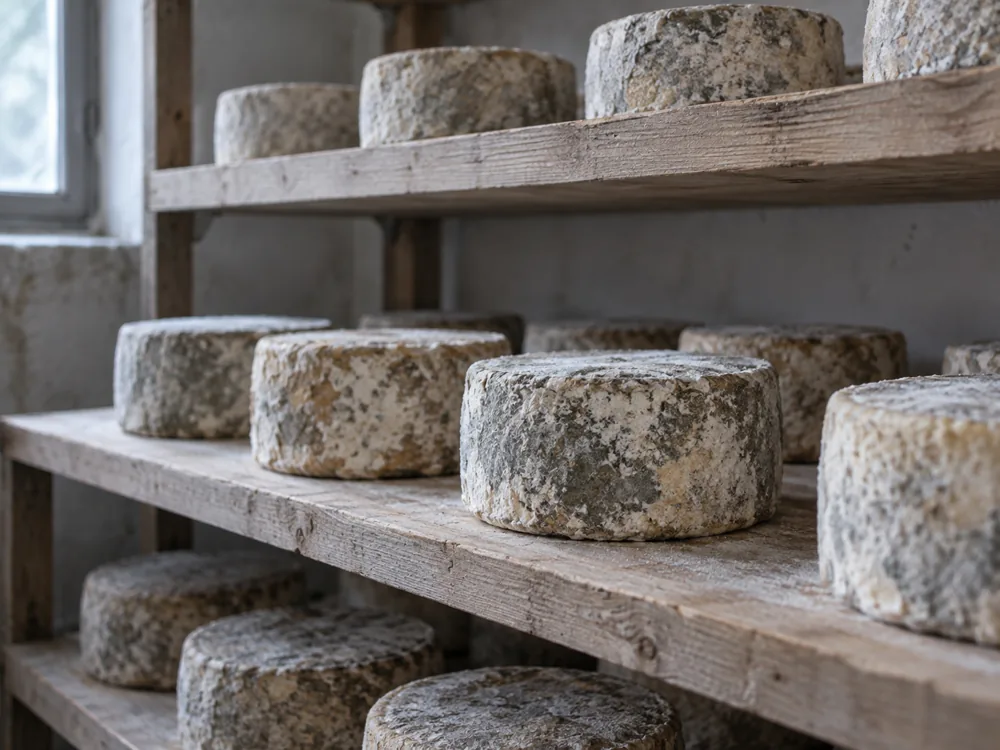
The dairy's ideal rind is "populated by a range of natural grey moulds, giving it a beautifully variegated appearance and a gently earthy cellar aroma."
Younger Cotherstone shows delicate freshness, according to Neal's Yard Dairy, and longer maturation brings deeper savoury notes.
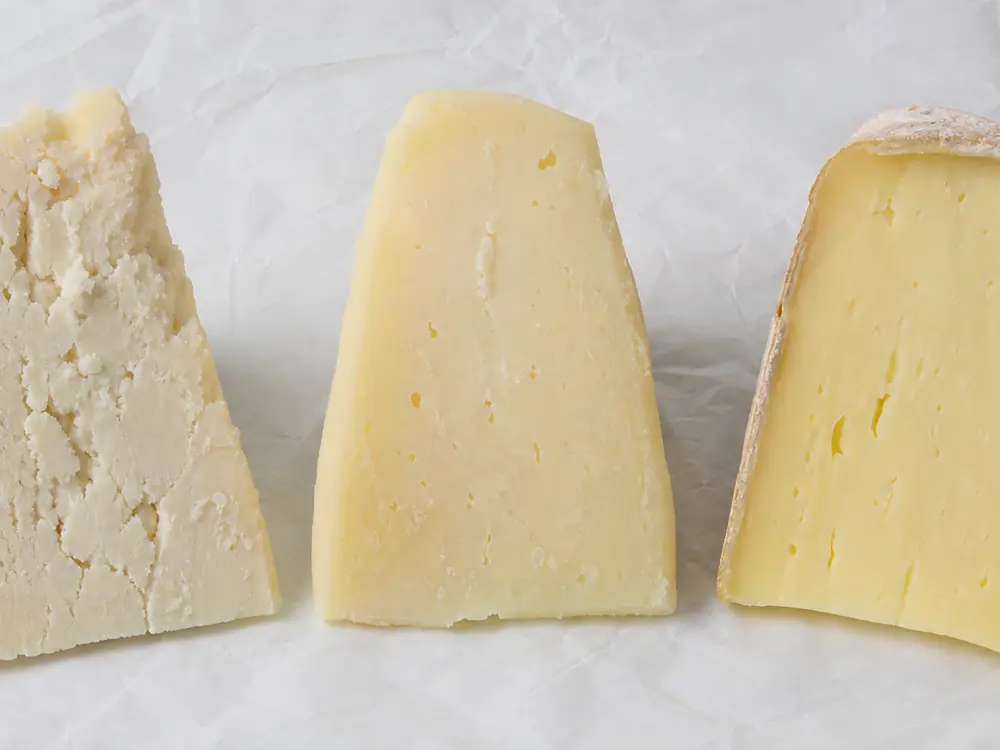
The product page describes the texture as ranging from fresh, flaky and acidic to smooth and custardy. It does not say which end belongs to which age, although the dairy says the cold-room stage softens the texture.
What Does Cotherstone Taste Like?
Every description centres on a fresh, acidic dairy flavour, though each source picks its own words for it.
- Neal's Yard Dairy: fresh and lactic.
- Slow Food: a fresh, slightly acid flavour with a buttery lactic aftertaste, and a cheese eaten young.
- Culture: bright and lemony with notes of earth and cellar, dominated by the fresh citric flavour of soured milk.
Culture traces the citric note to soured milk, which is also what "lactic" means in the dairy's wording. Butter shows up in Slow Food's aftertaste and in Neal's Yard Dairy's buttery paste.
The texture words spread further than the flavour words. Culture calls the cheese moist yet crumbly, dense and light at once, the dairy's matured paste is "buttery and supple," and the product page's range runs from flaky to custardy.
Culture's "earth and cellar" and the dairy's "gently earthy cellar aroma" for the grey-mould rind both use the cellar word for the aged cheese, which suggests that note belongs to the matured style rather than the fresh one.
Neal's Yard Dairy adds that the cheese's character "varies subtly from batch to batch, reflecting the changing milk and variations in the make."
How Does Cotherstone Compare With Wensleydale?
Neal's Yard Dairy treats the two as close cousins, and its Wensleydale counter shows where they part. Wensleydale, the dairy says, has been taken up by several producers, a new wave of small dairies making complex cheeses with raw milk.
| Cheese | Maker | How the dairy describes it |
|---|---|---|
| Cotherstone | Gordon Cross | Pasteurised milk; fresh and lactic, with a buttery paste |
| Stonebeck | The Hattan family | Seasonal, with a "lip-smacking grassy butteriness" |
| Whin Yeats | The Noblet family | Mild and mushroomy, from a 1933 recipe |
| Yoredale | Curlew Dairy | Bright and lemony, made year-round |
Cotherstone has one maker, so its differences arrive from batch to batch, where Wensleydale changes from dairy to dairy. The overlap is lemon: the dairy calls Yoredale "bright, lemony," and Culture uses "bright and lemony" for Cotherstone.
A buyer after grassy butteriness or a mild mushroomy note has them in Stonebeck and Whin Yeats on these descriptions, while Cotherstone's described flavour is fresh, lactic and citric.
What Can You Do With Cotherstone?
The sources say little about cooking, and none says how Cotherstone melts or names a recipe that cooks it. Culture's serving ideas are plain ones: oatcakes, a bowl of hot oatmeal at breakfast, a pint of stout before dinner, and a Ploughman's lunch with pâté, pickled onions and country bread.
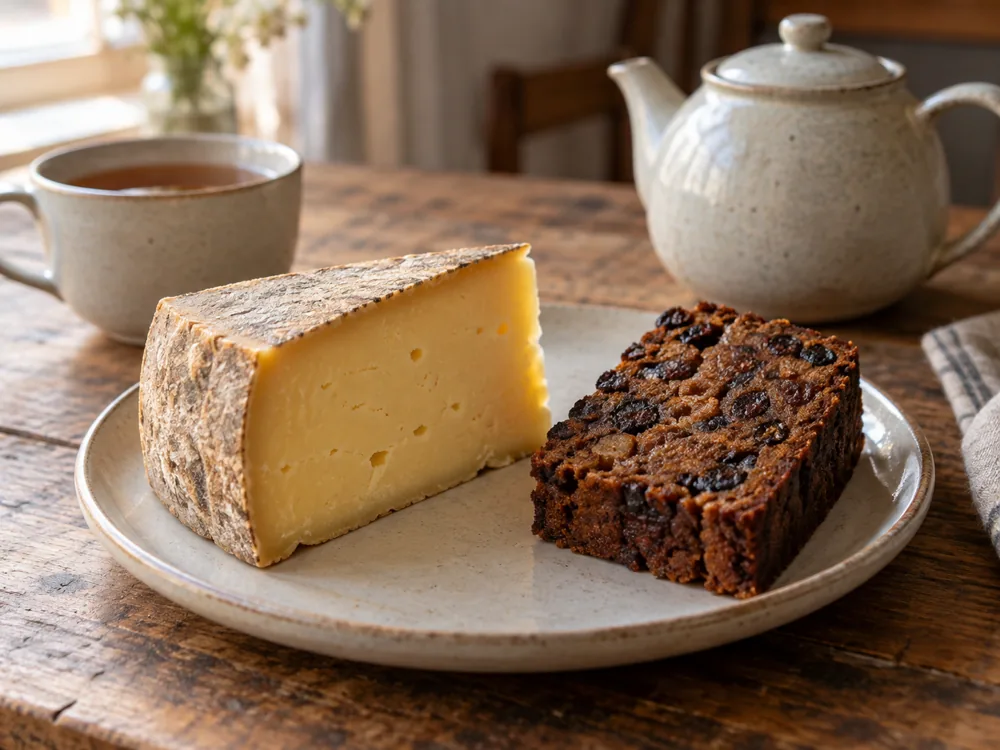
The most specific pairing comes from the maker: Gordon Cross says in Neal's Yard Dairy's post that Cotherstone is "a perfect match for fruitcake" and that his family always ate the two together by the fire with a pot of tea.
| Pairing | Type | Why It Works |
|---|---|---|
| Fruitcake | Food | Gordon Cross's family pairing, eaten with the cheese beside the fire. |
| Tea | Drink | The pot of tea that goes with the fruitcake in the same family habit. |
| Oatcakes | Food | Culture's first serving idea, with hot oatmeal at breakfast and a pint of stout before dinner as others. |
How Should You Buy and Store It?
Neal's Yard Dairy sells Cotherstone by weight in four portions: an eighth of 245 to 290 g, a quarter of 490 to 579 g, a half of 980 to 1,158 g and a whole of 1,965 to 2,316 g.
Culture lists the wheel it describes as 8 inches across and 4 inches high, weighing 6 to 7 pounds, against roughly 4 to 5 pounds for the dairy's whole, and neither source explains the gap.
Neal's Yard Dairy's general care advice, which does not mention Cotherstone, is to wrap cut cheese in waxed paper, which it says balances preventing drying against letting the cheese breathe, or parchment or greaseproof paper if you have none. It warns against cling film and foil because they can make the cheese sweat.
The same advice is to store cheese in the salad drawer or a cardboard box, away from the refrigerator door, which is overly drying. The dairy intends cut pieces to be eaten within 14 days of arrival.
The dairy adds a reason to cut only what will be served: each time a piece comes up to room temperature, its live cultures and moulds start working, which can shorten the time it stays at its best. It also says cheese served too cold can taste bland and shows more layers of flavour as it warms.
The dairy says to take cheese out before serving, still wrapped so it does not dry out, and the CDC says perishable food should not be left out for more than 2 hours, or 1 hour above 90°F. None of the sources covers freezing Cotherstone.
Is Cotherstone Safe During Pregnancy?
None of the health sources names Cotherstone, so what applies to cheese in pregnancy has to be matched to its milk, age and style.
The NHS says pasteurised or unpasteurised hard cheeses such as cheddar are safe in pregnancy.
It also lists pasteurised semi-hard cheeses such as edam as safe. Neither the NHS nor the CDC names Cotherstone, so those lists do not settle which line it falls under.
The CDC calls hard cheese made with pasteurized milk safer and soft cheese from unpasteurized milk riskier, and says pregnant women are 10 times more likely to get a Listeria infection.
Neal's Yard Dairy's own pregnancy page advises pregnant women to avoid soft, semi-soft and mould-ripened cheeses. That is the seller's own policy, not an NHS or CDC rule.
The ingredients are pasteurised cow's milk, salt, cultures and vegetarian coagulant, so the cheese contains milk and is unsuitable for anyone with a milk allergy.