A cheese can supply useful nutrients while also making a substantial contribution to your daily sodium or saturated fat intake. Neither a high protein claim nor a reduced-fat label answers both questions.
In This Article
What does cheese contribute?
Dairy cheese can provide protein and calcium, although the amounts vary between products. The Nutrition Facts panel is more useful than assuming every fresh, aged or full-fat cheese has the same nutritional value.
Read protein and calcium alongside calories, saturated fat and sodium. If you are choosing cheese specifically for protein, check how much the portion you enjoy supplies rather than choosing by the cheese's reputation.
How Should You Compare Cheese Labels?
Start with the serving weight in grams. FDA explains that the serving size on a U.S. label describes an amount people typically consume, not a recommendation for how much you should eat.
A smaller labelled serving can make a product appear lower in sodium even when it contains more sodium gram for gram. This hypothetical example shows why the serving weights matter.
| Hypothetical label | Sodium per labelled serving | Sodium per 100 g | Sodium in a 30 g portion |
|---|---|---|---|
| Cheese A: 20 g serving | 200 mg | 1,000 mg | 300 mg |
| Cheese B: 30 g serving | 240 mg | 800 mg | 240 mg |
Cheese A has the smaller number on its label, but cheese B supplies less sodium at equal weight. These are invented numbers for explaining the calculation, not measurements or rankings of actual products.
To calculate your portion, divide the labelled nutrient amount by the serving weight, then multiply by the grams you will eat. The same calculation works for protein, saturated fat or calories, allowing for rounding on the label.
FDA's general rule is that 5% Daily Value or less per serving is low and 20% or more is high. Check the nutrient being described and the number of servings you eat, since doubling the serving doubles its listed contribution.
What about full-fat cheese?
Current U.S. recommendations differ. The federal Dietary Guidelines for Americans, 2025-2030 includes full-fat dairy without added sugars, while also saying saturated fat should not exceed 10% of total daily calories.
The American Heart Association's dairy guidance, reviewed in May 2026, recommends fat-free or low-fat dairy for adults and children aged two and older and minimizing full-fat cheese. That is a different recommendation from the federal guidance on dairy fat.
Including full-fat dairy in a dietary pattern does not remove the need to account for its saturated fat. If your clinician has set a cholesterol-related eating plan or a saturated-fat target, use that plan when choosing cheese rather than treating either headline as individual medical advice.
Compare the actual products before buying a reduced-fat version. Less fat does not by itself tell you whether it also has less sodium or how much protein and calcium it provides.
How much fits your meal?
There is no single cheese portion that answers every person's needs. The useful amount depends on the rest of the meal, the rest of the day and any dietary targets you are following.
For example, weigh the cheese you normally put in a sandwich once and calculate that amount from its label. This shows what your usual sandwich contains without assuming the manufacturer's serving matches your slice or handful.
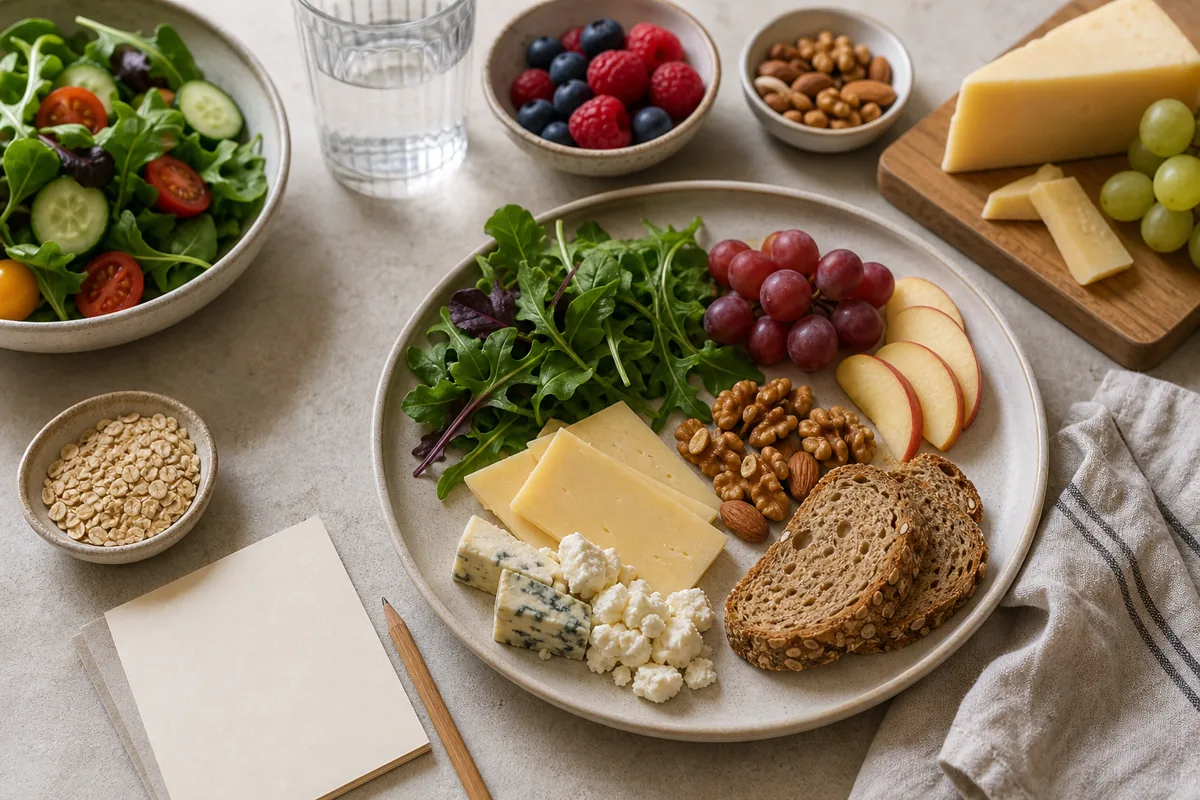
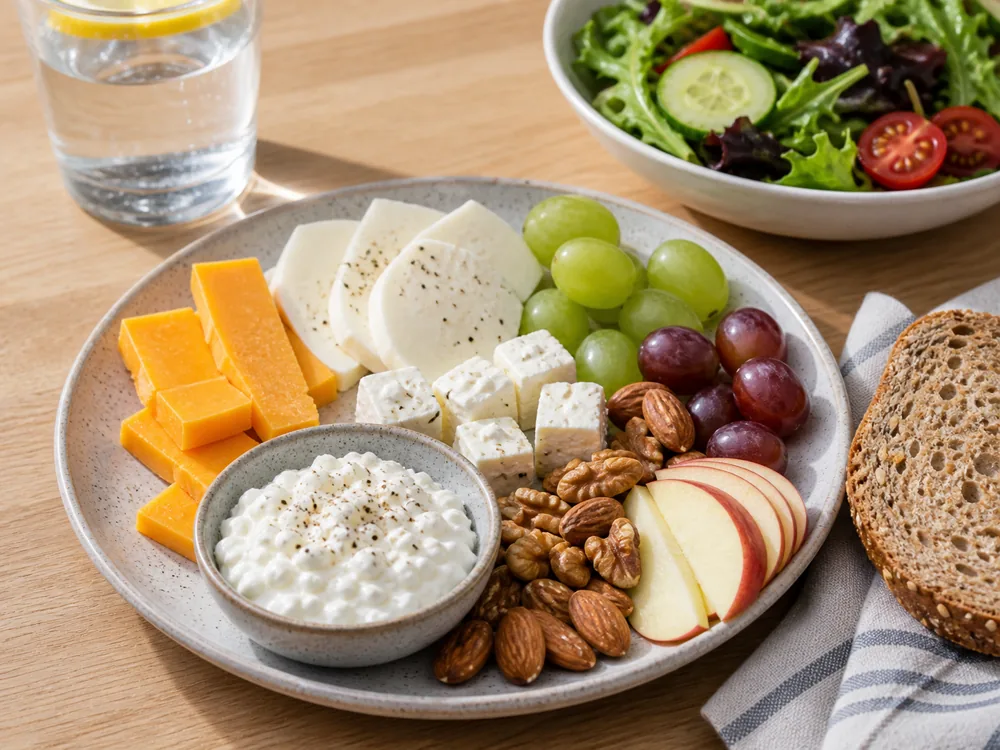
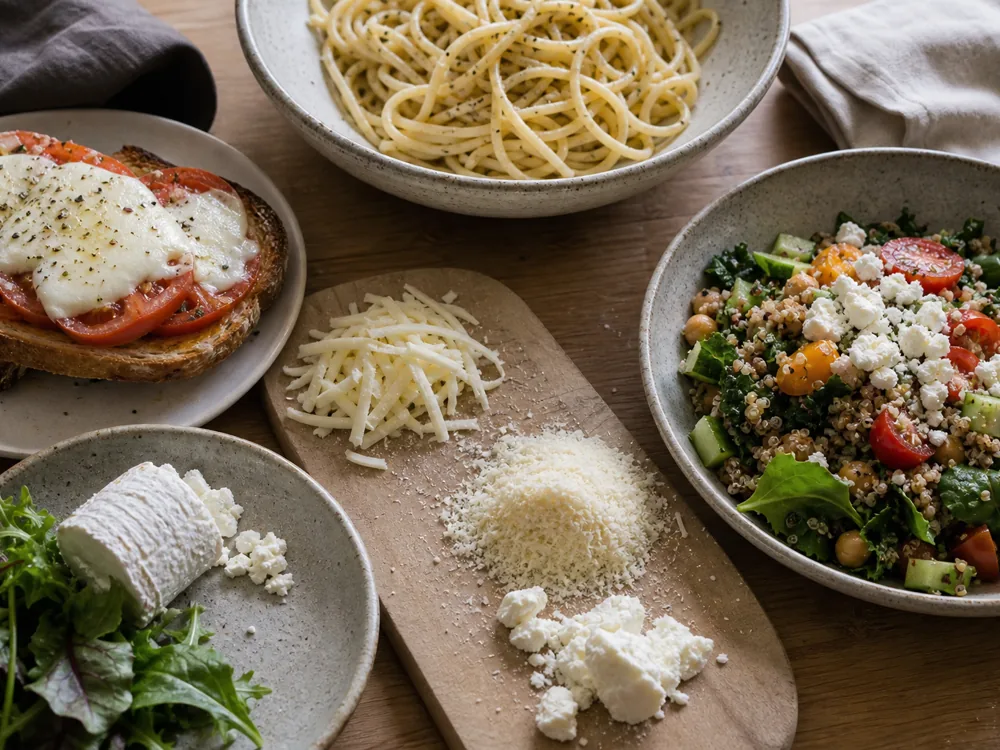
Cheese can accompany vegetables, beans or whole grains, such as a crumble over a bean salad or a spread of ricotta on toast. These are serving ideas, not evidence that adding cheese automatically improves a meal's nutrition.
When does the answer need to be personal?
A general nutrition comparison cannot decide whether a particular cheese suits a food allergy, a prescribed kidney diet or another medical restriction. Follow advice specific to your condition and check the product label each time.
Digestive tolerance and pregnancy safety also involve different questions from protein or calories. Check the particular product and advice relevant to your condition; for pregnancy, see the separate guide to cheese during pregnancy.