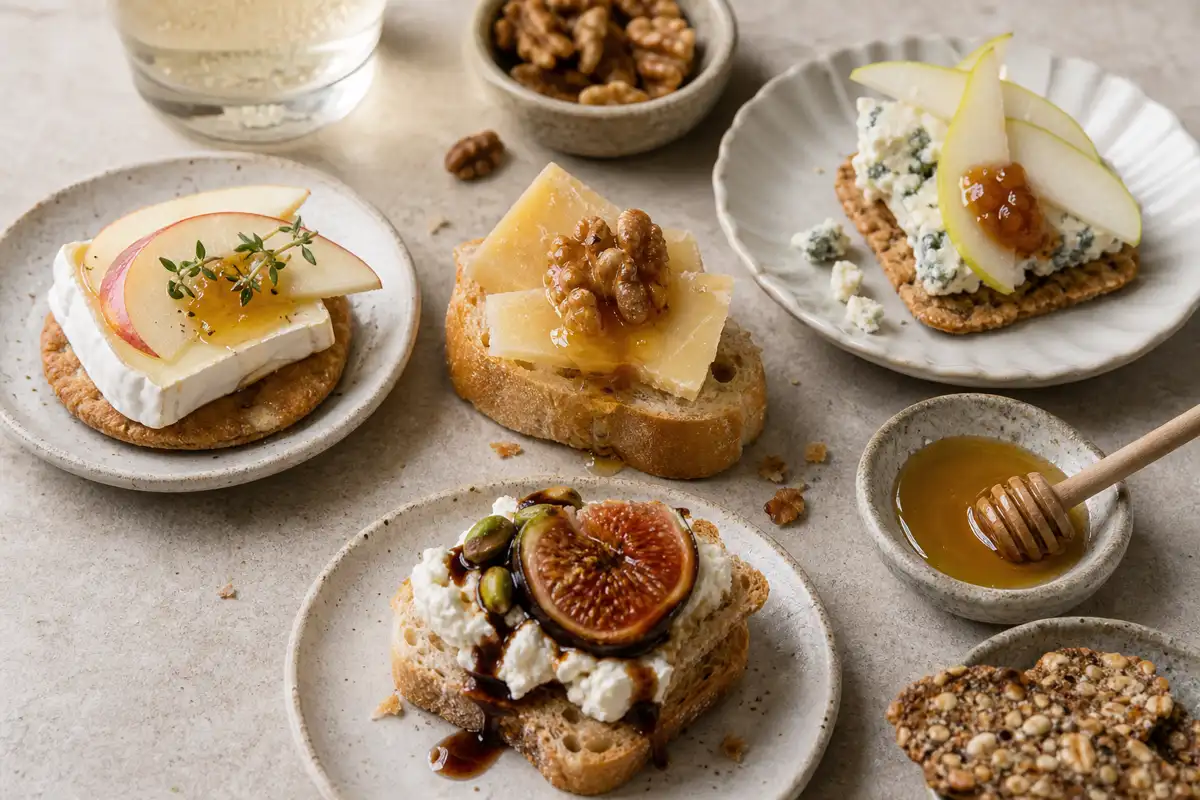
There is no fixed proportion that makes a bite perfect for everyone. A thin cracker with a soft spread behaves differently from bread carrying a hard cheese shard, so adjust the ingredients rather than trying to make them fit a ratio.
In This Article
How Do You Assemble a Single Cheese Board Bite?
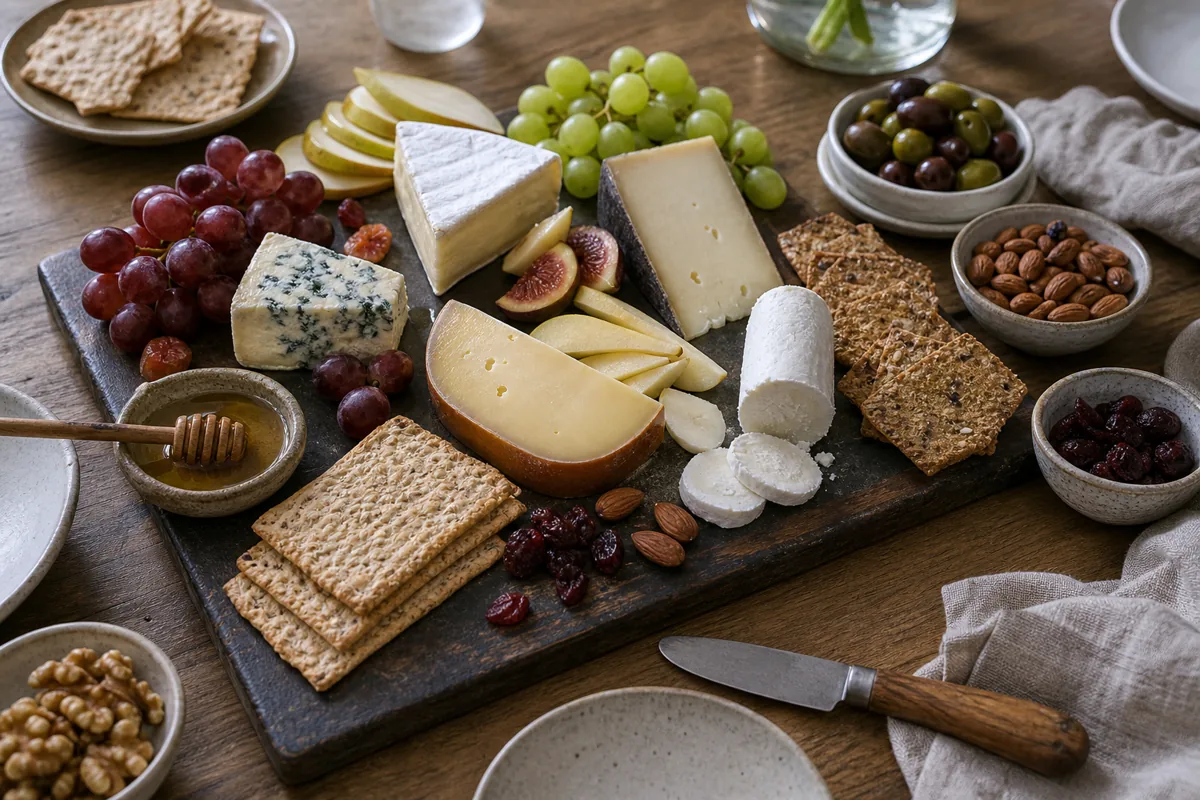
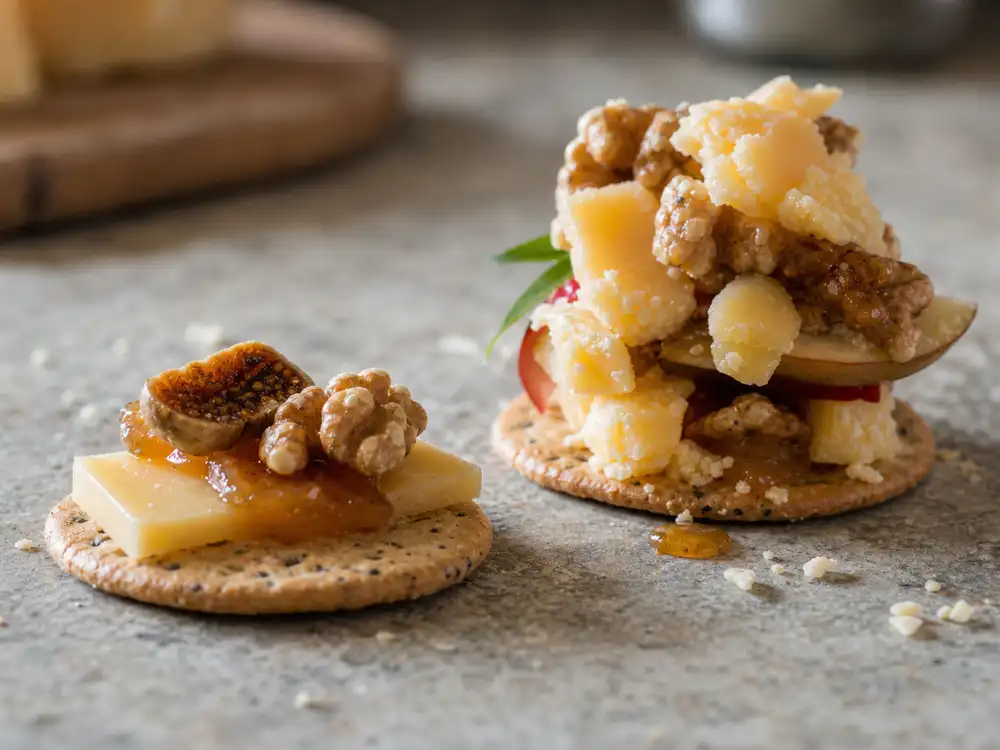
A small cracker, a piece of bread or a firm fruit slice can provide a base. Choose one that supports the cheese without requiring a tall stack of toppings.
Spread soft cheese or place a slice, shard or crumble on the base. Add a topping you want to try, keeping loose nuts and wet condiments modest enough that the bite can be lifted.
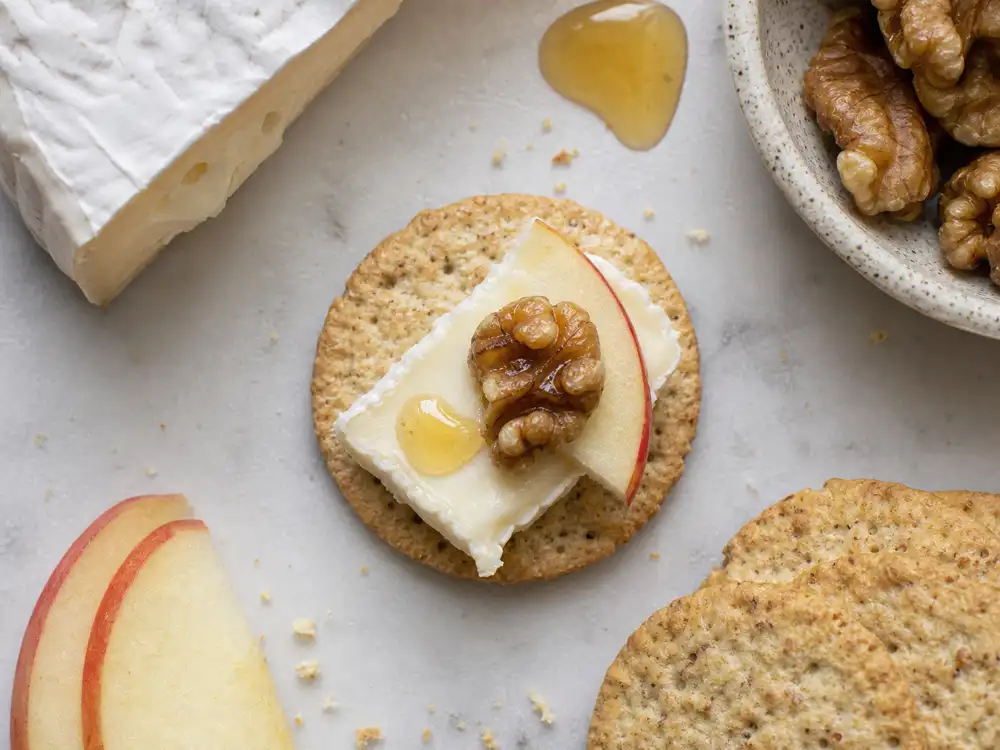
There is no need to stop at exactly one contrasting ingredient, or to include every available topping. Try the cheese by itself first if you want to notice what each addition changes.
For a group, an example bite can suggest a combination while the remaining ingredients stay separate. Guests can then omit a topping they dislike or assemble a smaller portion.
Which Pairing Combinations Can You Try?
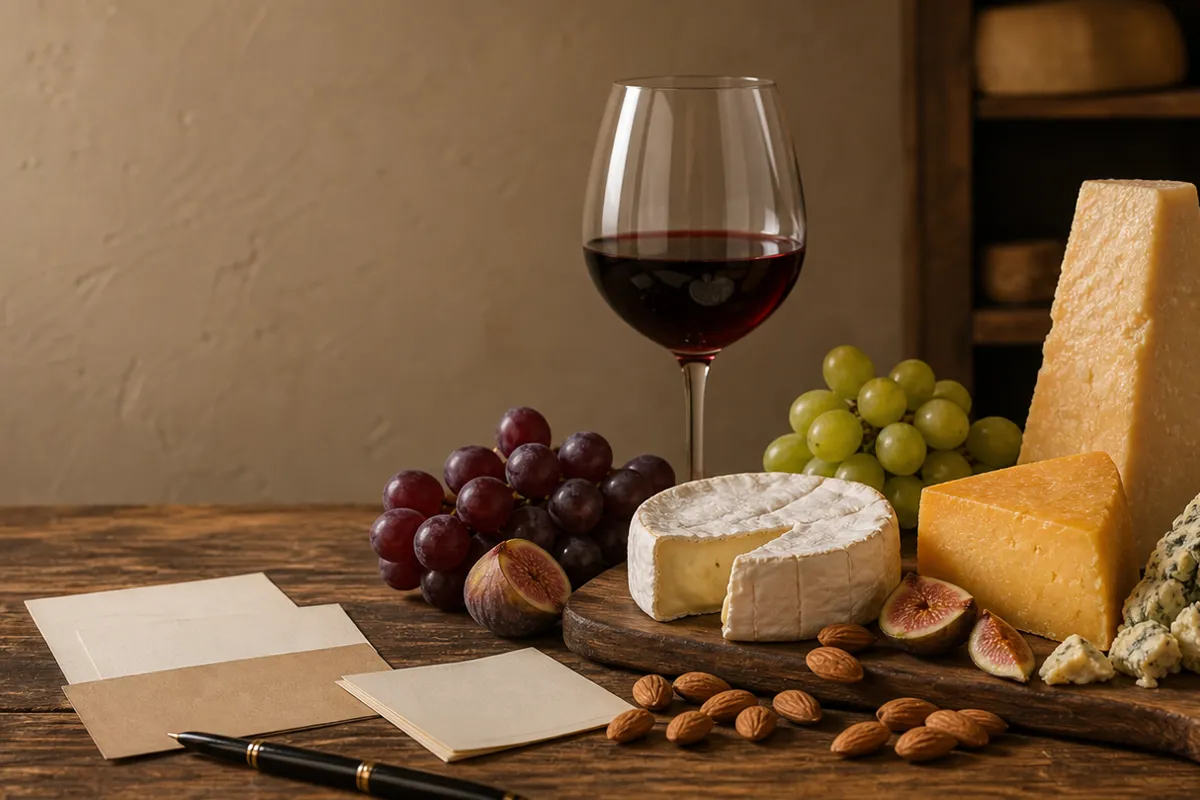
Castello's Canadian board guide suggests dried pear and pita chips with its Brie. It pairs Tickler Extra Mature Cheddar with salted nuts, honey and water crackers, and Extra Creamy Blue with ginger snaps and cherry jam.
These are Castello's suggestions for its named cheeses. A different Brie, cheddar or blue may call for different amounts as its strength and texture change.
The examples offer a useful starting point: a fruit-and-crisp combination, a nut-and-honey combination, or a sweet biscuit with blue cheese. Try one with what you have before buying ingredients for every possibility.
Castello's global tasting guide gives a different set of examples: dried cranberries and a piece of honeycomb alongside a Creamy White; fig marmalade, fresh fig and thyme on a cracker with an Extra Mature Cheddar; dark chocolate at 70 to 80 per cent cocoa alongside a Creamy Blue; and coconut flakes with fresh mint for a Pineapple and Almond Cream Cheese Ring.
These contrast with the Canadian examples: the same style of blue cheese appears with cherry jam on one board and with dark chocolate on another. Both work, and they show that the pairing is a starting point rather than a formula.
More ideas for individual cheeses are collected in pairings for fresh goat cheese. For amounts and platter layout, see planning a board for your guests.
How Do You Fix a Bite That Does Not Taste Right?
Change one element at a time so you can tell whether it helped. If you enjoy the cheese alone but lose its flavour in the assembled bite, start by reducing the strongest topping.
- The cracker turns soft: add wet toppings closer to serving, drain them where appropriate, or put them beside the cheese.
- The stack slides or falls apart: lower its height and cut large fruit pieces smaller. A larger base is not always necessary.
- Jam is all you taste: use less on the next bite or omit it. Fruit may already supply the sweetness you wanted.
- The cheese is too strong for you: use a smaller piece or choose a milder cheese. Extra toppings do not have to rescue something you dislike.
How Should You Prepare and Store Board Components?
Castello's tasting guide recommends taking the board out of the fridge about 30 minutes before serving so the cheese softens and its flavour develops at room temperature. Count that tempering time when calculating total time at room temperature.
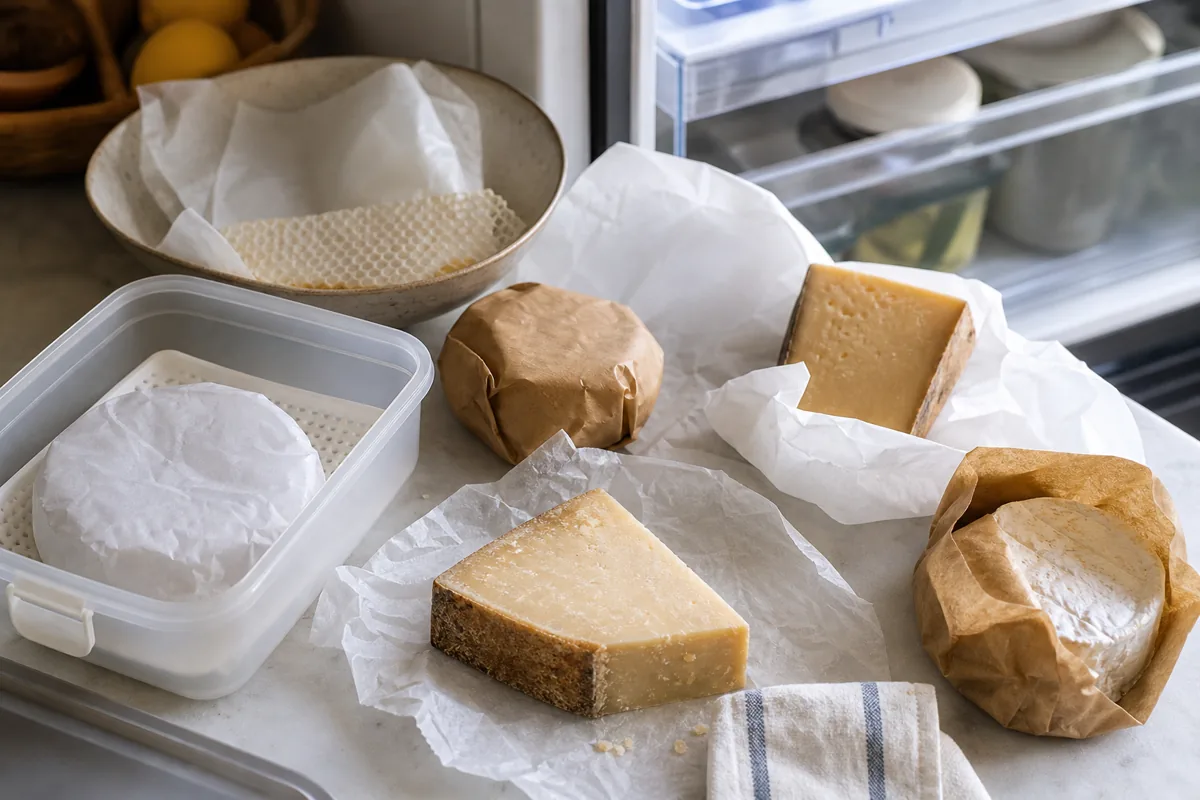
Prepare the cheese and toppings separately, covering and refrigerating perishable components until needed. Assemble crisp bases close to serving so they do not sit underneath moist cheese or fruit for longer than necessary.
FDA's household buffet guidance says to discard perishable food left at room temperature for more than two hours, or one hour above 90°F (32°C), unless kept safely hot or cold. Count preparation, tempering and serving in that total.
Keep cold backups at 40°F (4°C) or below and bring out small portions on fresh platters. Refrigerate safely handled leftovers promptly within the applicable limit, rather than waiting until the party ends.
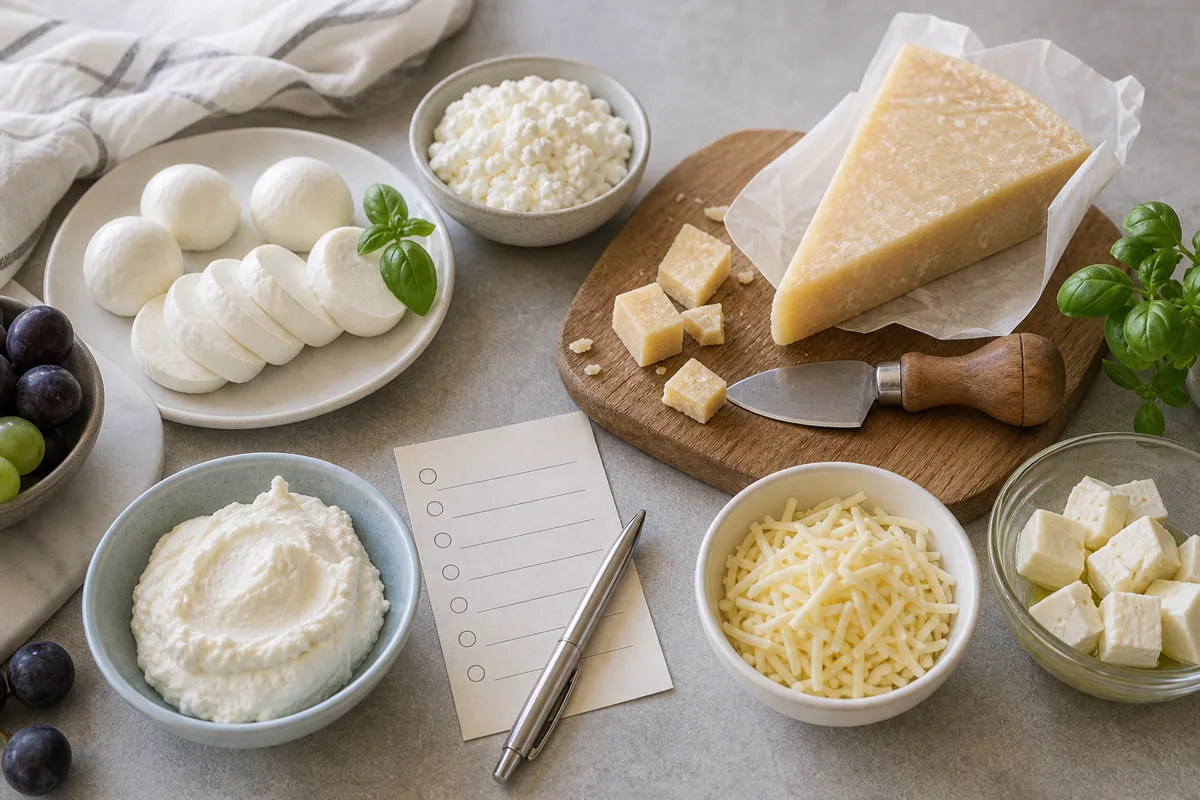
Per-person quantities vary with the occasion. Castello uses 25 to 50g per person for a snack serving, 50 to 75g for a dessert course, 75 to 125g for a light lunch, and 250g at dinner.
Keep crackers separate from leftover moist ingredients and wrap each cheese appropriately. The storage advice for opened cheese applies only after you have established that the leftovers were handled safely.