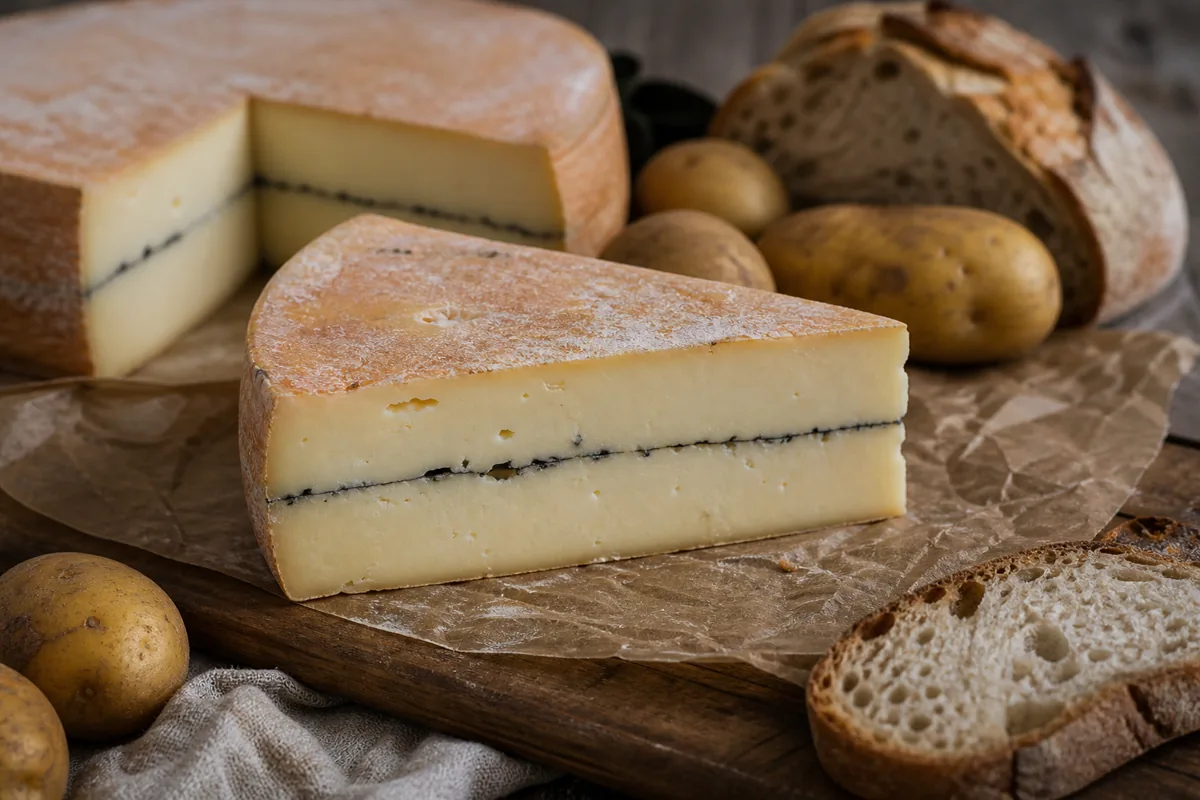
Morbier is the raw-milk cheese with a thin black line running through every cut slice. That line is vegetable charcoal, and once you know what it means, the more useful buying decision becomes age: younger Morbier is smooth and milky, while longer maturation brings fruit, toast and spice.
You can serve it in wedges, melt it over potatoes or fold it into a baked dish. The same supple paste handles both jobs, but the age you choose changes how strongly the cheese speaks through the rest of the meal.
In This Article
Why Does Morbier Have a Black Line?
The line began with Jura cheesemakers protecting a layer of curd between milkings. France's agriculture ministry describes soot covering the first curd until another layer could be added.
Modern Morbier keeps the visual signature through a controlled method.
The Morbier consortium explains that a pre-pressed block is cut in two, vegetable charcoal is applied to one half, and the halves are reunited before pressing continues.
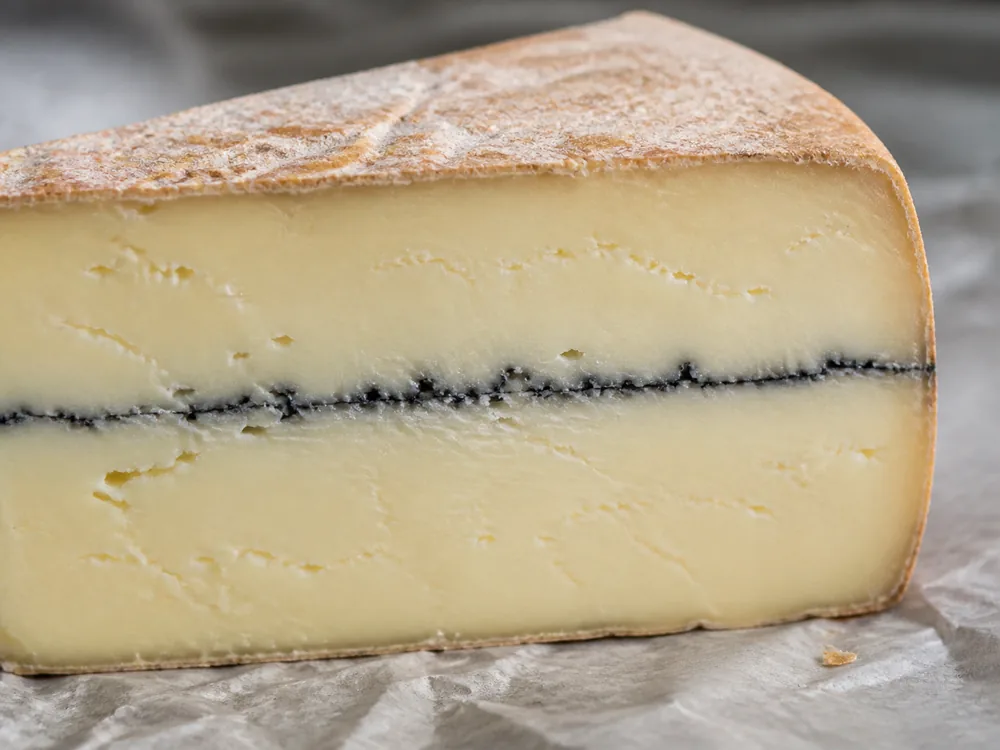
The charcoal line is edible and belongs inside the protected cheese.
It has no connection to the blue mould veins found in blue cheese.
A perfectly straight line identifies the style but tells you little about age or quality, and rind aroma gives you no cold-chain record. The designation, producer, date and condition of the wedge complete the buying picture.
What Makes Morbier a Protected Jura Cheese?
Morbier AOP is an uncooked pressed cheese made from raw cow's milk. Its protected area covers the Jura massif, mainly Doubs and Jura, with specified communes in Ain and Saône-et-Loire within the broader world of French cheeses.
The milk comes from Montbéliarde or Simmental Française cattle. Farms feed them grass and hay, exclude fermented feed, and maintain at least one hectare of grassland for each dairy cow under the production conditions.
Those rules preserve a close relationship between the milk and its landscape, yet they still leave room for seasonal and dairy-to-dairy variation. When two wedges of the same age taste different, the protected name has defined the method and place without erasing the milk's character.
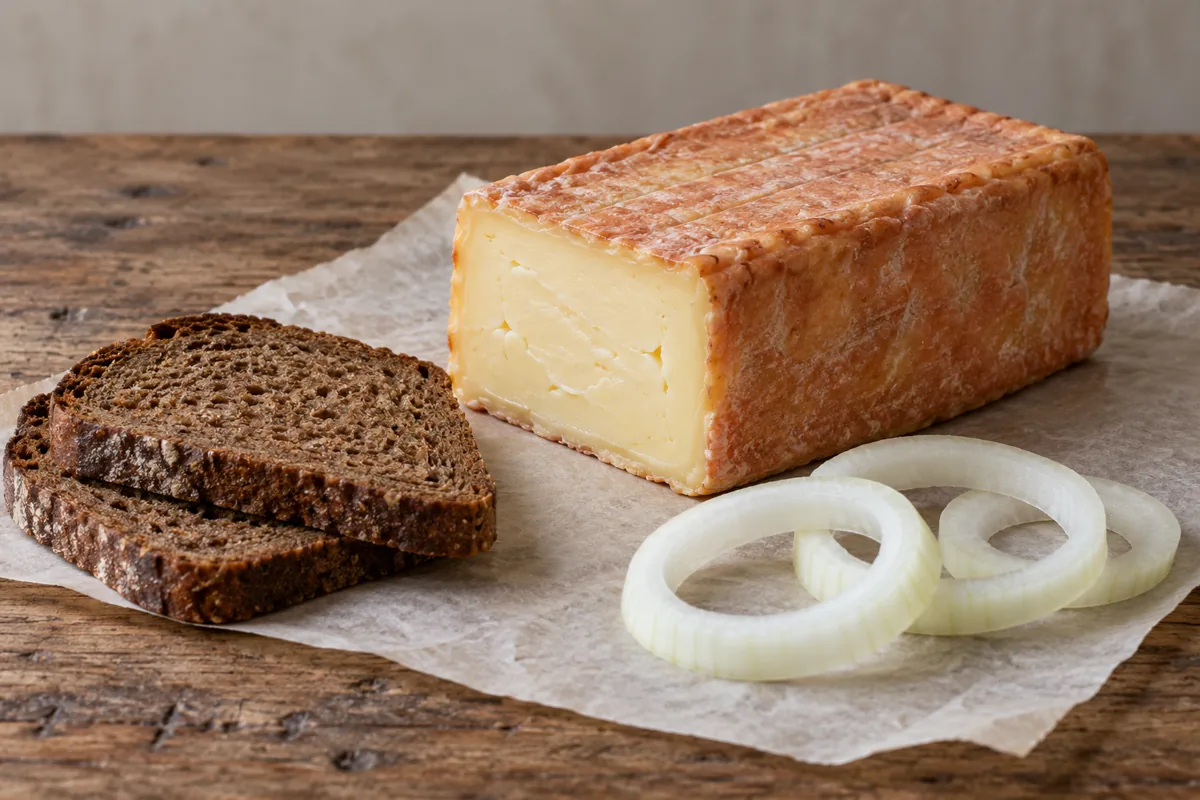
A complete wheel weighs 5-8 kg, measures 30-40 cm across and stands 5-8 cm high. Salt-water care during maturation develops a light powdery rind that can range from pink to orange-beige.
How the Wheel Takes Shape Around the Line
The charcoal step happens after an initial pressing has formed a block sturdy enough to split. Reuniting the two halves and pressing again binds them into one wheel while leaving the dark layer visible through the center.
Salt-water care then works on the outside as the wheel matures for at least 45 days. The line stays inside as a historical signature, while the rind develops the colour, aroma and surface character you encounter first.
This sequence explains why the centre line and the rind tell you different things. The charcoal identifies Morbier visually; the rind and paste reveal how maturation has changed the wheel.
The cheese remains in cellars at 7-15°C during production, where humidity and regular care support ripening. Those figures belong to a controlled maturation room, so they should never become the temperature setting for your refrigerator at home.
How Does Age Change Morbier's Flavor?
Every Morbier matures for at least 45 days. From there, the consortium's age-based flavour descriptions give you a practical way to ask a cheesemonger for the style you want.
| Age | Consortium Description | When It Fits |
|---|---|---|
| About 45-60 days | Cream, yogurt, warmed milk and a light vanilla note | A mild mixed board or a first taste of Morbier |
| About 60-90 days | Apricot, plum and caramel join the dairy notes | A board where the cheese can carry more of the flavour |
| Beyond 100 days | Hazelnut, coffee, toast and five-spice character | A smaller serving, a robust board or a dish where the cheese must remain distinct |
These bands show the direction in which flavour develops, and individual wheels still move at their own pace. Ask for the actual age when you can, then use the cut face and aroma to choose within that stage.
For a cheese board with several gentle cheeses, a younger Morbier keeps the line visually distinctive without dominating the plate. A mature wedge earns more space and works better with plain bread, pear or apple than with a busy spread of sweet condiments.
The middle range often gives you the clearest bridge between both styles: the paste remains supple while apricot, plum and caramel begin to move beyond fresh dairy. It is a useful choice when the same wedge needs to work on a board and later in a cooked dish.
After 100 days, use a slightly smaller portion and allow the cheese more time to stand on its own. Roasted and spiced notes can disappear when too many chutneys, cured meats and heavily oaked drinks compete around them.
How to Buy a Wedge That Fits Your Plan
Start with the Morbier AOP name, the producer and the date, then ask how old the wheel is. If the seller cannot give an exact age, describe the flavour you want: milky and mild, fruitier, or roasted and more assertive.
- For a broad audience: look near the 45-60-day stage.
- For a feature cheese: ask for a fruitier or more mature wheel.
- For melting: choose a supple piece without a dried cut face.
- For traceability: retain the original label, use-by date and storage directions.
The rind should match the expected pink-to-orange-beige range, and the paste should remain supple rather than cracked or desiccated. A piece with damaged wrapping or an uncertain cold chain is a poor purchase even when its charcoal line looks perfect.
For a counter-cut wedge, ask the seller to transfer the wheel's date and storage temperature to the new wrap. If the age is known, write that down too, because it will be far more useful at serving time than trying to infer maturity from the darkness of the line.
Packaged Morbier gives you stronger traceability, while a counter cut lets you see the paste before paying. We would choose the option that gives you the clearest combination of label history and visible condition.
Should You Eat the Morbier Rind?
Morbier's salt-water-treated rind carries more cellar aroma and a firmer texture than the paste. Taste a small complete bite first, because trimming it automatically can remove the contrast that gives the wheel part of its character.
For a board, a thin rind edge keeps that contrast proportional to the supple center. Very thick cuts can make the surface feel dominant, especially on a mature wheel whose roasted and spiced notes are already pronounced.
In cooking, keeping the rind pushes the result toward a fuller Morbier flavour. Trimming part of it gives potatoes, bread or a sauce more room to lead while the paste still contributes its melt.
Rind preference and rind safety answer different questions.
You can leave a sound rind on the plate when you dislike its flavour, while a failed seal, temperature breach or unexpected deterioration makes the whole piece a poor risk.
The expected powdery pink-to-orange-beige colour gives you a product-specific baseline. Compare the wedge with that description and its original label, since natural surfaces vary too much for one generic colour rule.
How Do You Cut and Serve Morbier So the Line Stays Visible?
Cut across the wedge so each portion carries paste from above and below the line. That preserves the feature people came to see and gives everyone a comparable taste of the same wheel.
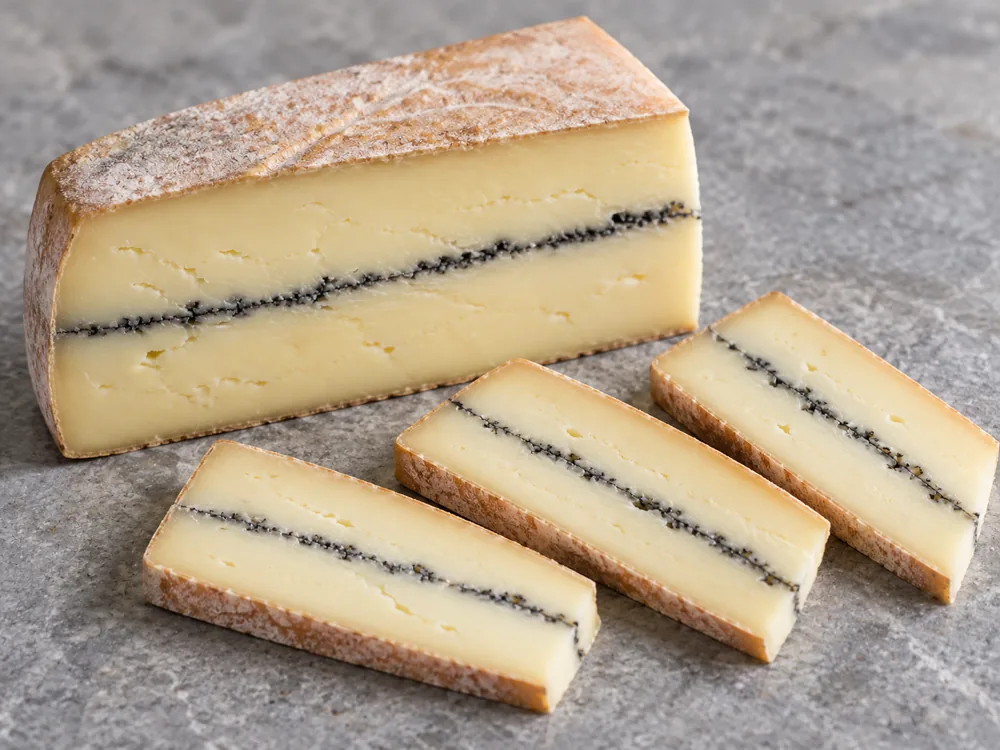
The consortium recommends bringing out the serving portion for at least 30 minutes, which relaxes the paste and opens the aroma. Keep the rest refrigerated, then serve the cheese with crusty bread and sliced pear or apple.
A white Jura wine keeps the pairing regional and supplies acidity beside the supple paste. If you are building a larger board, use fewer sweet accompaniments as the cheese gets older because its roasted and spiced notes already bring more complexity.
Let the portion warm enough to become supple, then cut it just before serving so the faces stay moist. Thick cubes hide the line and make the rind-to-paste ratio uneven, while thin cross-cut pieces show the cheese clearly and remain easy to eat.
If the wheel is very young, crisp apple gives the mild dairy notes some contrast. With a mature wedge, plain bread and wine are often enough because the cheese already carries fruit, roast and spice of its own.
Can You Cook with Morbier?
The consortium's recipe collection puts Morbier into pizza, pies, croque-monsieur and raclette-style dishes. You can use it for full melting, provided the recipe accounts for the moisture and heat of the dish rather than assigning one cooking time to every format.
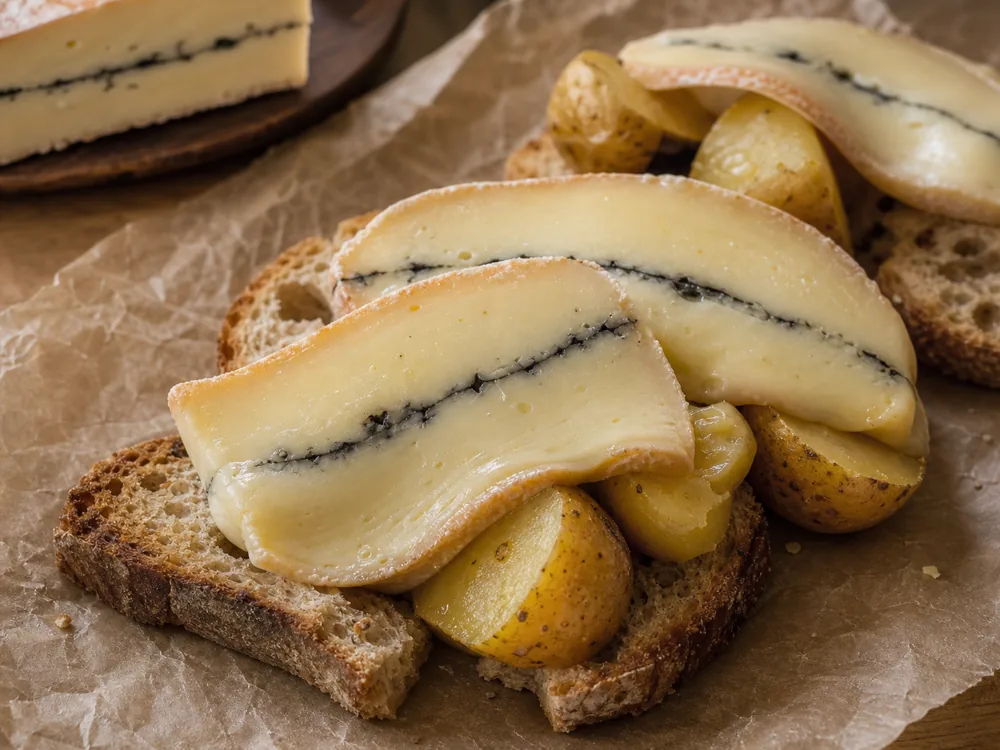
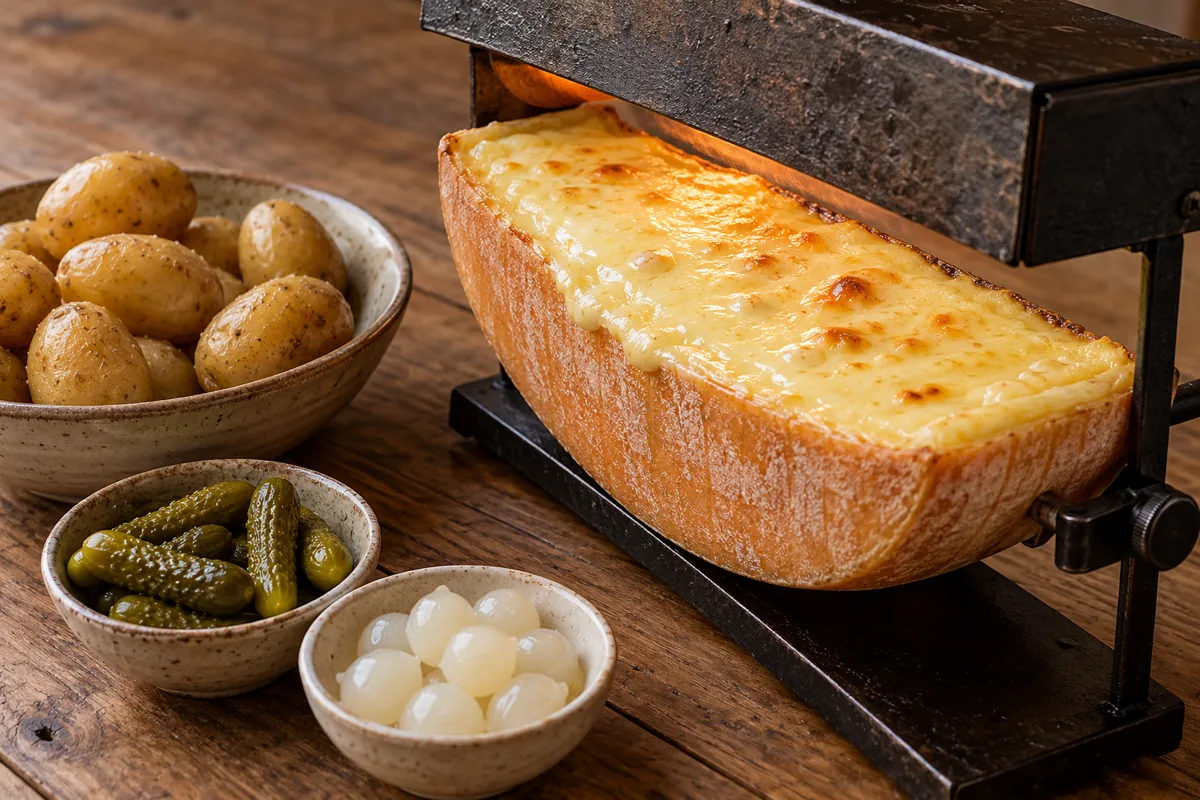
For a potato supper, Raclette gives you the familiar scrape-and-melt tradition, while Morbier adds its own raw-milk identity and charcoal line before melting. The line will not remain visually dramatic in every sauce, so use Morbier because you want its flavour as well as its name.
Morbiflette adapts the logic of tartiflette to Morbier, combining the cheese with potatoes in a baked dish. A piece around the middle age range brings more fruit and caramel character, while a very young wedge gives a milder result.
Stretch, browning and sauce stability can lead you toward different cheeses.
Morbier is most compelling when you want a supple melt and its Jura flavour to remain part of the dish.
Keep some rind when you want the finished dish to retain more of the cheese's cellar character. Trimming a portion gives you a gentler melt, which can be useful in a sandwich or sauce where another ingredient should lead.
A pizza, croque-monsieur and potato bake expose the cheese to different amounts of moisture and direct heat. Follow a method written for the dish, then use the age of your Morbier to decide how assertive a layer the recipe can carry.
Is Morbier Safe for Everyone, and How Should You Store It?
Keep your wedge wrapped or covered in the refrigerator and follow its use-by and after-opening directions.
The FDA recommends 40°F (4°C) or below, with no more than two hours at room temperature or one hour above 90°F (32°C).
Maturing cellars run at 7-15°C because trained producers are developing the cheese under controlled conditions. At home, follow the package temperature and protect the cut face rather than treating professional ripening conditions as household storage instructions.
France's agriculture ministry advises pregnant people, people with weakened immune systems and young children, especially those under five, to avoid raw milk and raw-milk cheese. Since raw milk is part of Morbier AOP, choosing a younger or milder wedge does not change that classification.
Public-health categories and cooking exceptions vary by country, so follow your local agency or clinician. Check current recalls as well, because a product-specific alert can override general advice.
The charcoal line is an edible part of Morbier's identity, while raw milk, packaging and the cold chain determine the safety questions. Current public-health advice should guide that decision because the line has no preservative role inside a cut wedge.
SOURCES & REFERENCES
What Else Do People Ask About Morbier?
Yes. Modern Morbier uses vegetable charcoal to create the line, and it is part of the protected cheese rather than a layer you need to remove.
The line is vegetable charcoal. Blue mould grows as veins or pockets within blue cheese and is a different feature.
Younger Morbier is smooth and milky, then fruit and caramel emerge around 60-90 days. Beyond 100 days, the consortium describes more hazelnut, coffee, toast and spice.
Yes. The Morbier consortium uses it in pizza, pies, croque-monsieur and raclette-style dishes, while the exact cooking method should match the heat and moisture of your recipe.
Morbier AOP is made from raw cow's milk. That protected requirement matters for people following pregnancy or other higher-risk food-safety guidance.