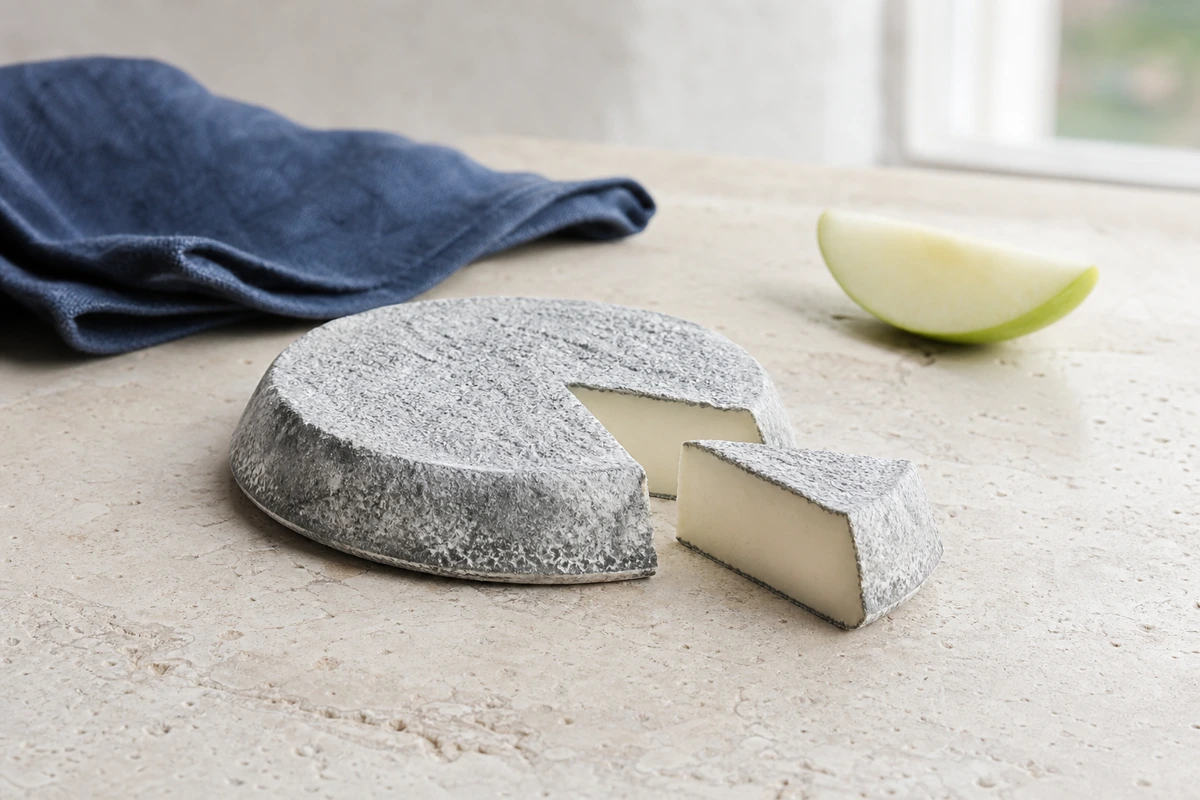
Selles-sur-Cher is a soft goat's milk cheese from central France, shaped as a low disk about 9 cm across and 3 cm thick and coated in grey vegetable charcoal.
Under the rules published by INAO, the French national body for origin labels, the protected name allows only whole raw goat's milk and requires at least 10 days of ripening counted from renneting.
The flat shape goes back, the specification says, to the ripeners who once bought farm cheeses and imposed mould sizes on the producers, and INAO traces the coat to ash used during ripening on the farm.
In This Article
What Is Selles-sur-Cher?
INAO describes it as a soft goat's milk cheese whose rind forms during ripening and fills with a varied flora of fungi.
It has been an appellation d'origine since the decree of 21 April 1975. The production area lies between Touraine, Berry and Sologne, on a wide plateau cut by the Cher valley.
The area covers 137 communes, 20 in Cher, 48 in Indre and 69 in Loir-et-Cher, and milk production, curd freezing, cheesemaking and ripening all have to take place inside them.
The specification measures the fat figure on the cheese after complete drying, so it does not describe the fat share of the cheese you carry home. It states the 55 g as a total weight of dry matter.
Why Is the Disk Flat and Coated in Ash?
The ripeners who bought farm cheeses are the ones who fixed the shape. Late in the 1800s, egg and poultry collectors called coquetiers began picking up cheeses on their farm rounds, and some specialised in ashing and ripening them before sale.
The main collecting and resale centre was the town of Selles-sur-Cher, so the cheeses took the name of the place where they were ripened. Ripeners' account books wrote "Selles" for these cheeses and "carré" for the pyramid shape.
The ripeners imposed mould dimensions on the producers, which standardised the form, and the specification counts the ease of cutting it and a weight suited to the way people eat it among the shape's advantages.
Ash came first, and INAO traces it to the farm: the cheese began as a domestic product, often made by women, and was ripened in the cellier, a room beside the farm that was often on the north side, where ash and later charcoal powder mixed with salt kept the quality safe during ripening.
Produits Laitiers AOP says traditional cheesemakers used burnt vine shoots for the coating, and the specification now asks for vegetable charcoal, most often mixed with the salt.
Today, the specification says, the vegetable charcoal and salt work with the surface flora as a layer that regulates exchange with a ripening cellar kept at a fairly high, steady temperature. It says this layer helps shape the texture of the paste and the development of aromas.
What Do Selles-sur-Cher Goats Eat?
Each goat's yearly ration must hold on average at least 75% feed from the production area, which the specification puts at 825 kg of dry matter, and at least 550 kg of roughage.
INAO says that whole raw milk lets the cheese carry the flavours of the Sologne meadow flora. Produits Laitiers AOP credits the range of flavours to the 400 plant species identified in the production region.
| Item | Rule per dairy goat |
|---|---|
| Feed from the production area | At least 825 kg of dry matter a year, 75% of the ration |
| Roughage | At least 550 kg of dry matter a year |
| Forage land | At least 1,000 m², on the farm or behind bought fodder |
| Wrapped bales (enrubanné) | Up to 350 kg of dry matter a year, at over 50% dry matter |
| Supplements | Up to 550 kg of dry matter a year, at least 275 kg of it grown in the area |
| Silage | Grass and maize silage banned |
| Housing | At least 1.5 m² indoors |
| Genetically modified crops | Banned on every plot of a farm that supplies the milk |
A diet built on straw and concentrates is banned, and a farm may feed its own whey back to the goats.
At least 80% of replacement kids must be born and raised in the area, which the specification presents as a guarantee of genetic control and local know-how.
The sandy and clay-sandy soils of the western Sologne and the Cher valley, together with the climate, call for feed systems built on dry forage. On land with little value for other crops, goats were quickly seen as the poor person's cow.
That climate is mild, with 650 to 750 mm of rain a year spread through the seasons and averages of 4.8 °C in January and 18.9 °C in July.
How Is Selles-sur-Cher Made?
The specification describes a mainly lactic cheese: whole raw goat's milk receives a small amount of rennet, and the curd forms slowly through acidity.
Under the specification, milk may not be stored on the farm for more than 2 days, and it may mature before renneting. The specification also calls the lactic flora of the surroundings, which seeds the milk as soon as milking ends, a very important factor in the cheese's character.
Rennet is the only coagulant allowed, and pure-strain starter cultures are banned. The only other permitted ingredients are vegetable charcoal, harmless cultures from the trade or grown from the milk's own flora, calcium chloride and salt.
The specification names présure as the coagulant, while Culture's entry lists vegetable rennet, so if the rennet matters to you, ask the seller which one your cheese uses.
| Step | What the specification says |
|---|---|
| Setting the curd | 18 to 48 hours at under 25 °C |
| Moulds | Perforated truncated cones, 9.3 to 9.6 cm wide at the base, with a 94 to 96 degree angle between base and sides |
| Unmoulding | 18 to 48 hours after moulding |
| Renneting to unmoulding | 44 to 72 hours in total |
| Salt | On the surface, before or after unmoulding, never in the mass before moulding |
| Charcoal | Applied during or after unmoulding |
| Ripening | At least 10 days from renneting, in rooms at 10 °C or warmer |
| Packing | No modified atmosphere for fresh or ripening cheese |
The specification says that moulds with a base, the 18 to 48 hours of setting and the draining time in the moulds send a relatively wet curd into ripening, and it notes that the disk is large for a lactic cheese.
Moulding is done by hand, and the specification bans both draining the curd on cloth beforehand and concentrating the milk by removing some of its water before it coagulates.
The specification also allows cutting the curd and mixing curd with whey before moulding, by hand or with a mixer limited to 40 rpm and 10 minutes, so the curd stays even.
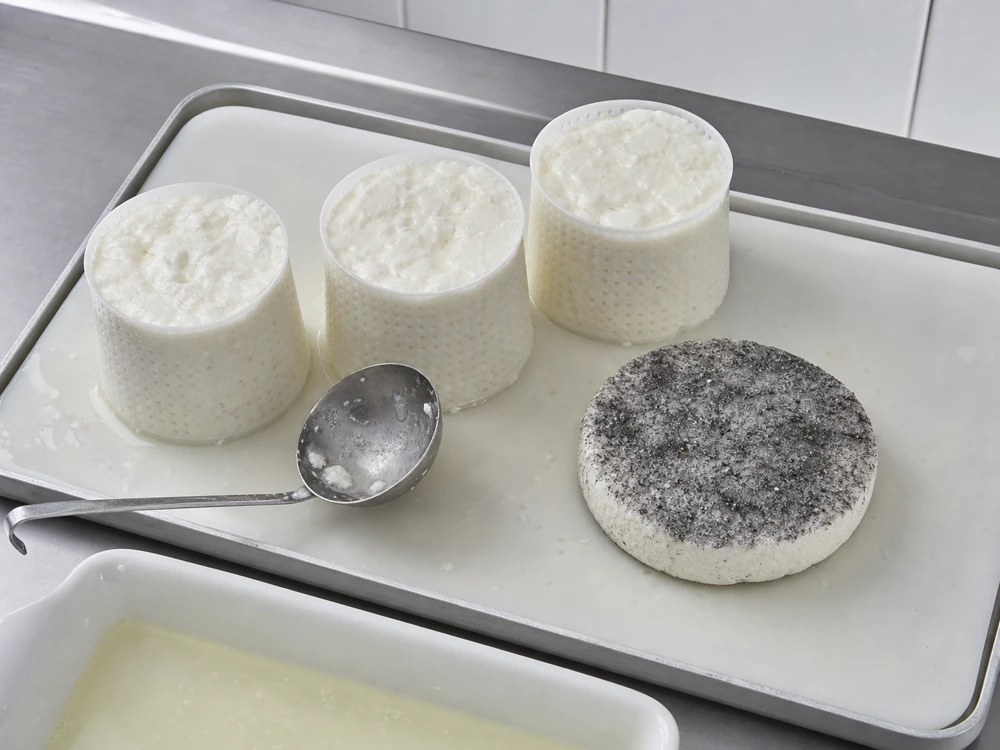
Raw milk does not mean every disk starts from fresh curd. The specification lets makers carry production over as frozen curd and add back up to 50% of it, with the frozen curd at no more than 30% dry matter, and it bans frozen curd from 1 April to 31 July.
How Does Selles-sur-Cher Change as It Ripens?
The specification describes the smell as fresh goat early in life, moving toward mushroom and goat notes at the end of ripening. The texture is fresh, yielding and very slightly pasty, with salty, acidic and bitter tastes in balance.
The specification says the lactic character fades gradually during ripening, so if you want that lactic taste, choose a younger disk.
The ten days run from renneting, not from unmoulding. By the specification's own timings the curd spends 44 to 72 hours in the moulds first, so roughly 7 to 8 of the 10 days pass after unmoulding.
Only warm days count toward the minimum. A ripener may move cheeses at a temperature above freezing but below 10 °C for up to 48 hours, and the specification does not credit that time to the ten days.
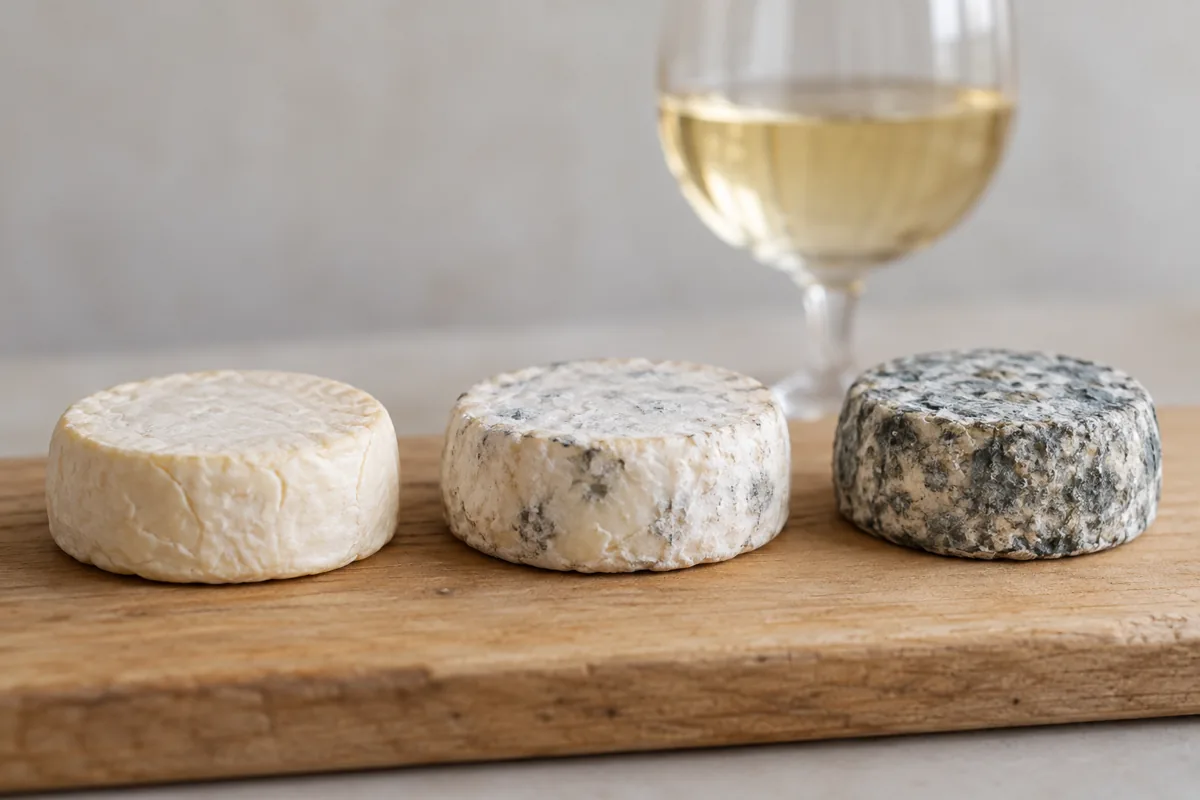
The coat changes colour too: the specification gives it as grey-white at the start and grey-blue as the cheese ripens, made mainly of Geotrichum and yeasts. Blue spots, mainly Penicillium, can appear during ripening, and the specification includes them in its description of the cheese.
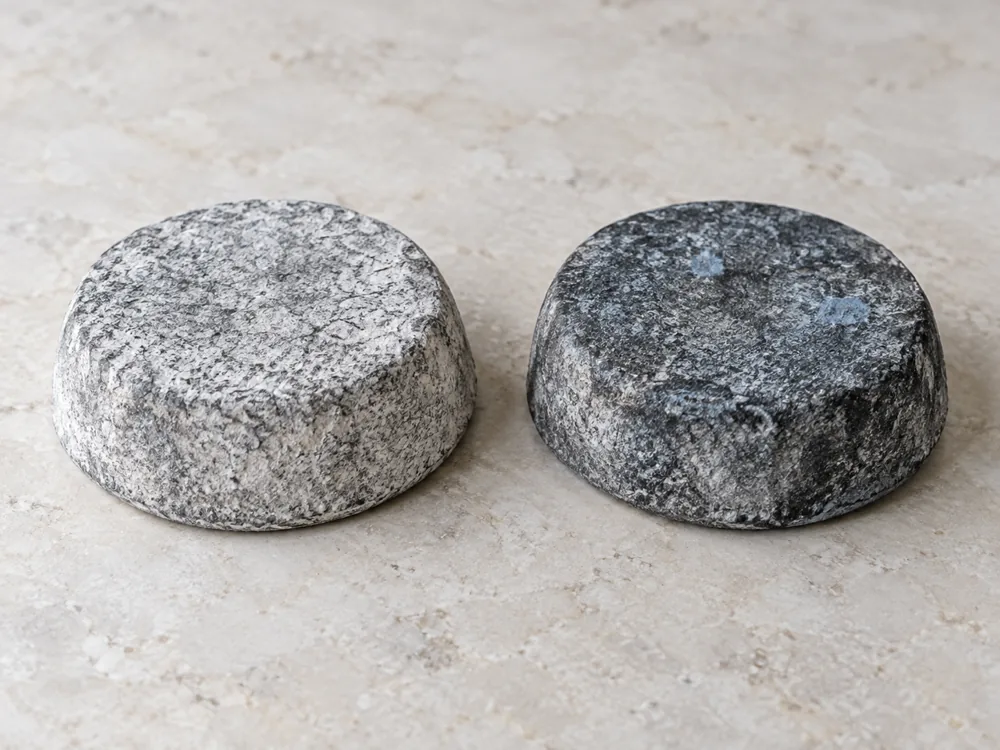
| Younger Cheese | Older Cheese |
|---|---|
| Grey-white coat; fresh goat smell (specification) | Grey-blue coat, blue spots possible; mushroom and goat notes (specification) |
| Slightly acidic and sweet taste (Produits Laitiers AOP) | Saltier, goatier rind and hazelnut in the paste (Produits Laitiers AOP) |
| Fresh, yielding and slightly pasty (Produits Laitiers AOP) | Firm, tight and sleek (Produits Laitiers AOP) |
| Ready to eat after 10 days (Produits Laitiers AOP) | At its best after about 20 days (Produits Laitiers AOP) |
The paste firms with age in Culture's description as well as Produits Laitiers AOP's, and Culture adds that its whiteness turns light white-gold under the rind.
Culture describes bright, citrus-like flavours with hints of minerals, grass and hay in a young cheese, and aromas of cellar and earth in an older one. It also says the rind becomes firm and dry after about four weeks.
Culture adds that the cheese is available year round but is best in spring and autumn, and the specification lets farmers de-season all or part of a herd, which means getting goats to give milk outside their natural season.
How Big Is a Selles-sur-Cher, and How Long Is It Aged?
A Selles-sur-Cher is about 9 cm across and 3 cm thick in the INAO specification, the legal description, while Culture gives 3 to 3.5 in across and 1 in high, about 7.6 to 8.9 cm by 2.5 cm, and a weight of 6 oz, about 170 g.
| Point | INAO specification | Produits Laitiers AOP | Culture |
|---|---|---|---|
| Size | About 9 cm across, 3 cm thick | A puck shape | 3 to 3.5 in across, 1 in high |
| Weight | Not stated | Not stated | 6 oz |
| Age | At least 10 days from renneting | Ready after 10 days, best after about 20 | Rind firm and dry after about four weeks |
| Milk | Whole raw goat's milk, required | Raw and whole | Goat's milk; some are raw |
| Rennet | Présure | Not stated | Vegetable |
| Coat | Vegetable charcoal, required | Natural rind, grey and ashen | Usually a thin black ash coating over a bloomy rind; some have none |
The three age figures answer different questions: INAO sets the legal floor of 10 days from renneting, Produits Laitiers AOP says the cheese is at its best after about 20 days, and Culture says when the rind turns firm and dry, after about four weeks.
How Do You Buy Real Selles-sur-Cher?
Start with the label. The specification requires the name Selles-sur-Cher on it in letters at least two-thirds the size of the largest letters there, together with the AOP logo.
Culture says some Selles-sur-Cher are made from raw milk, a kind it says is not currently found in the United States, so read the milk line on the label of the disk you buy.
Produits Laitiers AOP lists 40 milk producers, 18 farmhouse producers, 4 production plants, 4 maturing plants and 1,066 tons marketed in 2020, and Culture says production can be fermier, cooperative or industrial.
A cheese called "Fermier" must come from a farm producer that processes only its own milk on the farm. If a ripener finished it elsewhere, the label must also say "fabriqué à la ferme" and name the ripener after the words "affiné par".
Farmhouse production has its own rule in the specification: a farmhouse Selles-sur-Cher is made with raw milk no more than 24 hours after the first milking, with no frozen curd added. That sets farm cheese apart from the makers who may add frozen curd.
The specification also requires traceability that identifies the producer on the package all the way to the place of sale, and the AOP checks include an analytical and sensory examination of the cheese.
The specification ties rind colour to ripening, so the coat gives you a rough sign of how far along a disk is.
Culture says some cheeses sold as Selles-sur-Cher have no ash coating. The specification requires vegetable charcoal on the surface, so a plain-rinded disk is not following it.
Can You Eat the Rind?
Yes. The producers' syndicate recommends eating Selles-sur-Cher with its rind so that it expresses all its flavours and aromas.
Produits Laitiers AOP puts the saltier, goatier flavours on the rind of an aged cheese, so the rind carries more of an older disk's edge. The coating itself is vegetable charcoal, which the specification lists as a permitted ingredient.
How Do You Serve Selles-sur-Cher?
You can serve it at any moment of the day, the syndicate says, not only on the traditional cheese board at the end of a meal. It singles out the apéritif, with the cheese cut in thin slices.
It recommends serving the cheese at room temperature, with wines from the Loire Valley or the Coteaux du Cher, white or red.
When you cut it, Produits Laitiers AOP suggests cutting wedges outward from the middle of the cheese, so every piece keeps some rind, which the syndicate recommends eating.
| Pairing | Type | Why It Works |
|---|---|---|
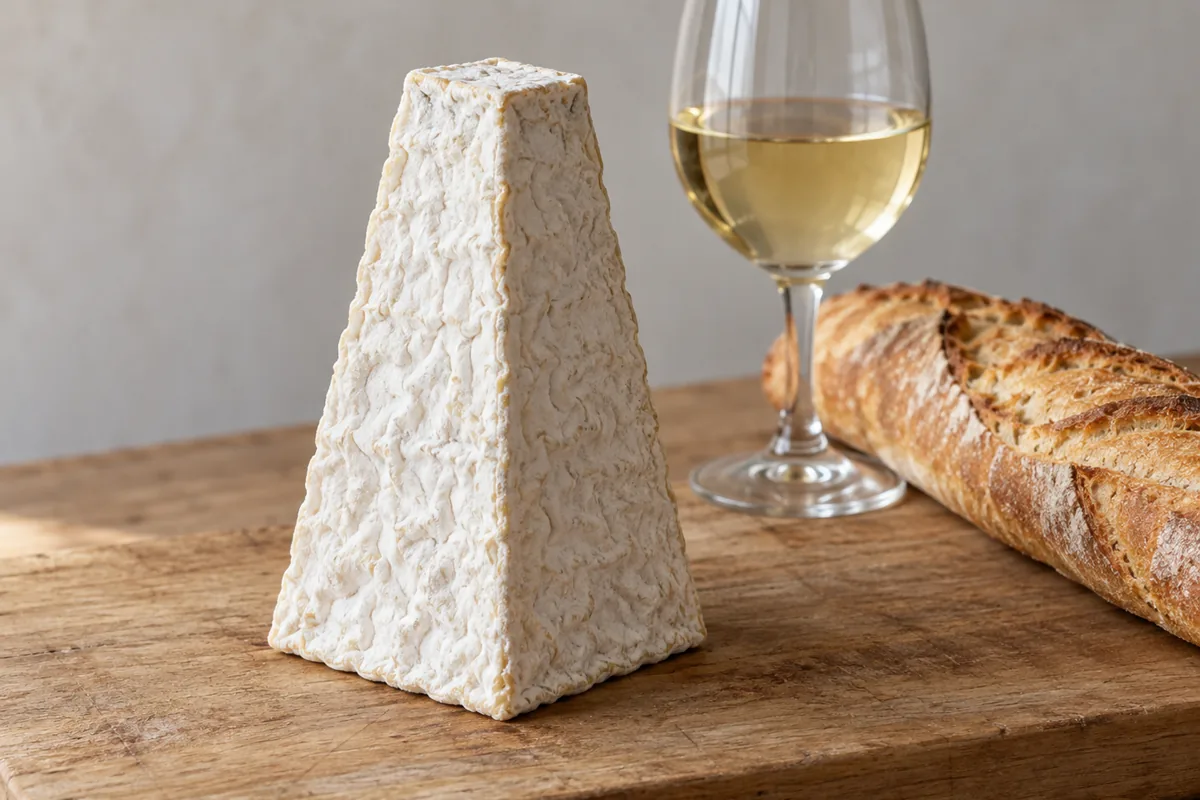
| Seeded Baguette | Food | Produits Laitiers AOP also names Vienna bread, traditional baguette and fruit bread. |
| Chenin de Touraine | Wine | A white wine named by Produits Laitiers AOP. |
| Cheverny Red | Wine | The red wine Produits Laitiers AOP names. |
| Sauvignon Blanc | Wine | Culture lists it among Loire whites for this cheese. |
| Rosé | Wine | Culture names rosé as a match. |
| Lighter Cabernet Franc | Wine | Culture's lighter red pick. |
The wine advice is local: the syndicate says the wines of the cheese's own terroir suit it, and Produits Laitiers AOP and Culture also name Loire wines.
The syndicate's own site publishes recipes that use the cheese, from a thin courgette tart to a crème brûlée.
| Use | How It Works |
|---|---|
| Apéritif Slices | The syndicate singles out thin slices before a meal. |
| Courgette Tart | The syndicate lists a thin courgette tart made with the cheese. |
| Strawberry Carpaccio | A syndicate recipe combines strawberries, basil and honey with it. |
| Crème Brûlée | The syndicate lists a crème brûlée made with the cheese. |
What Can Replace Selles-sur-Cher?
If you cannot find it, two other French goat cheeses with INAO product pages share its raw goat's milk and its ash crust. Neither is a pasteurized alternative.
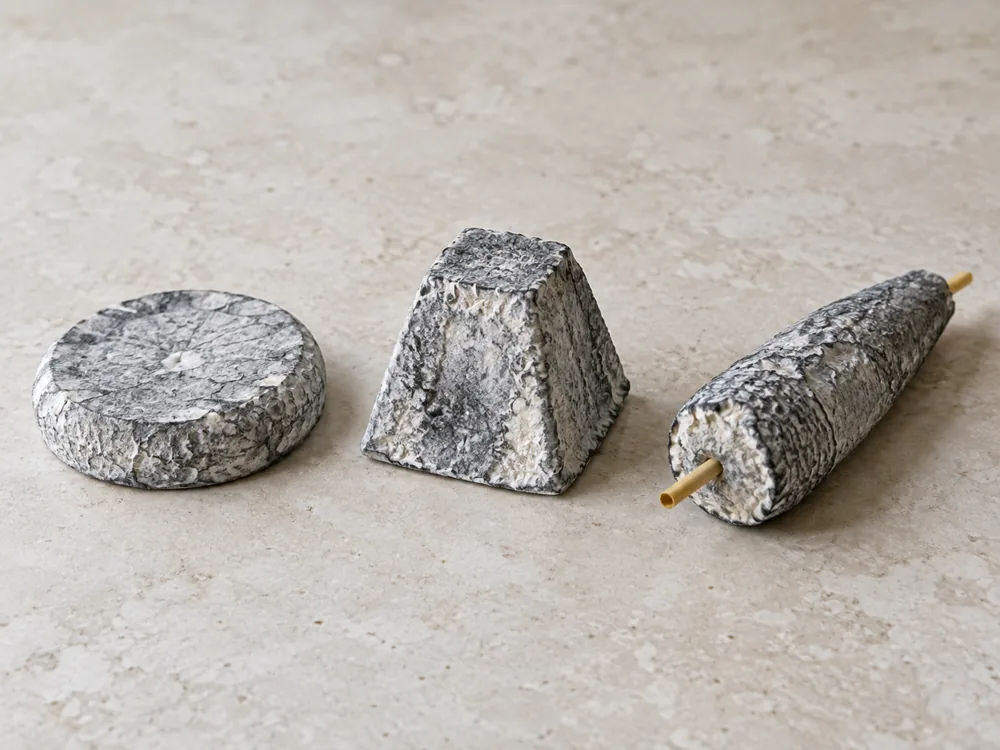
| Cheese | Shape | Rind | Paste and flavour | Other INAO facts |
|---|---|---|---|---|
| Selles-sur-Cher | Flattened truncated disk, about 9 by 3 cm | Charcoal coat, grey-white to grey-blue | Fresh, yielding and very slightly pasty; salty, acidic and bitter with goat and mushroom notes | Raw goat's milk; appellation since 1975 |
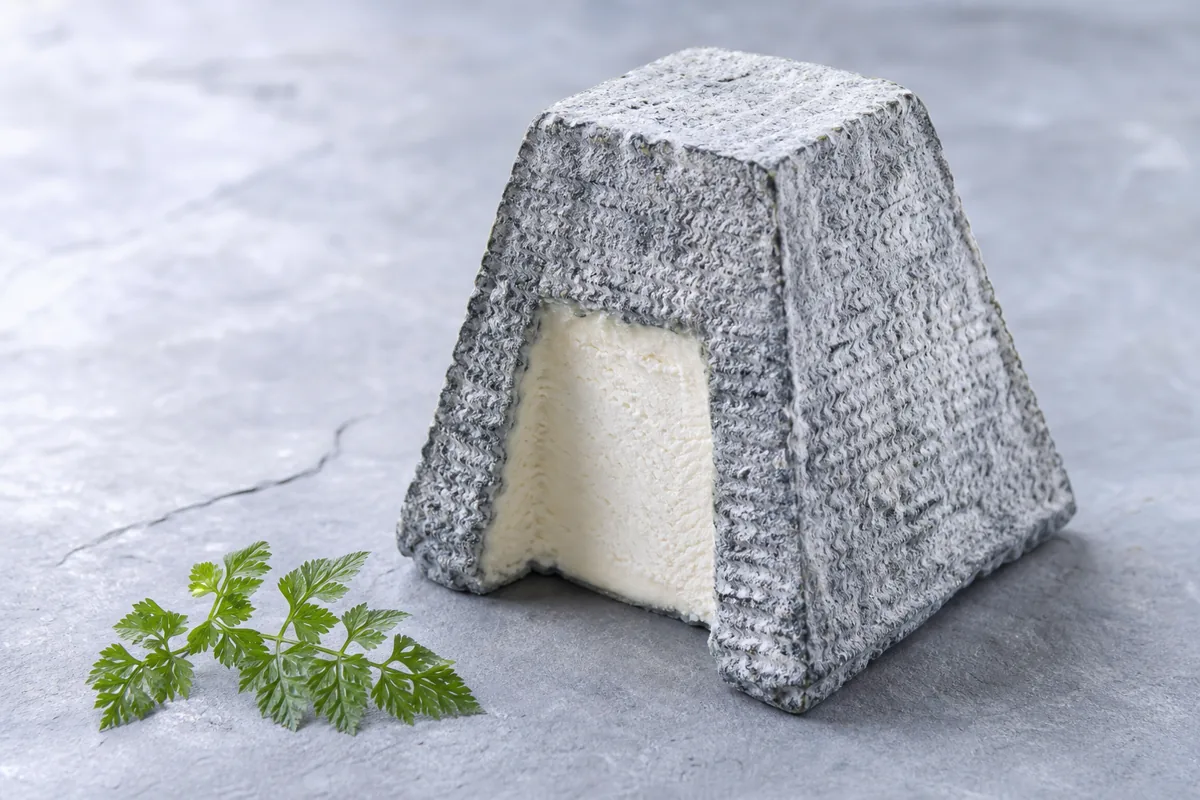
| Valençay | Truncated pyramid | Ash crust, light grey to blue-grey | Firm and yielding, with dried-fruit flavours, hazelnut in particular | Raw goat's milk; appellation since 1998 |
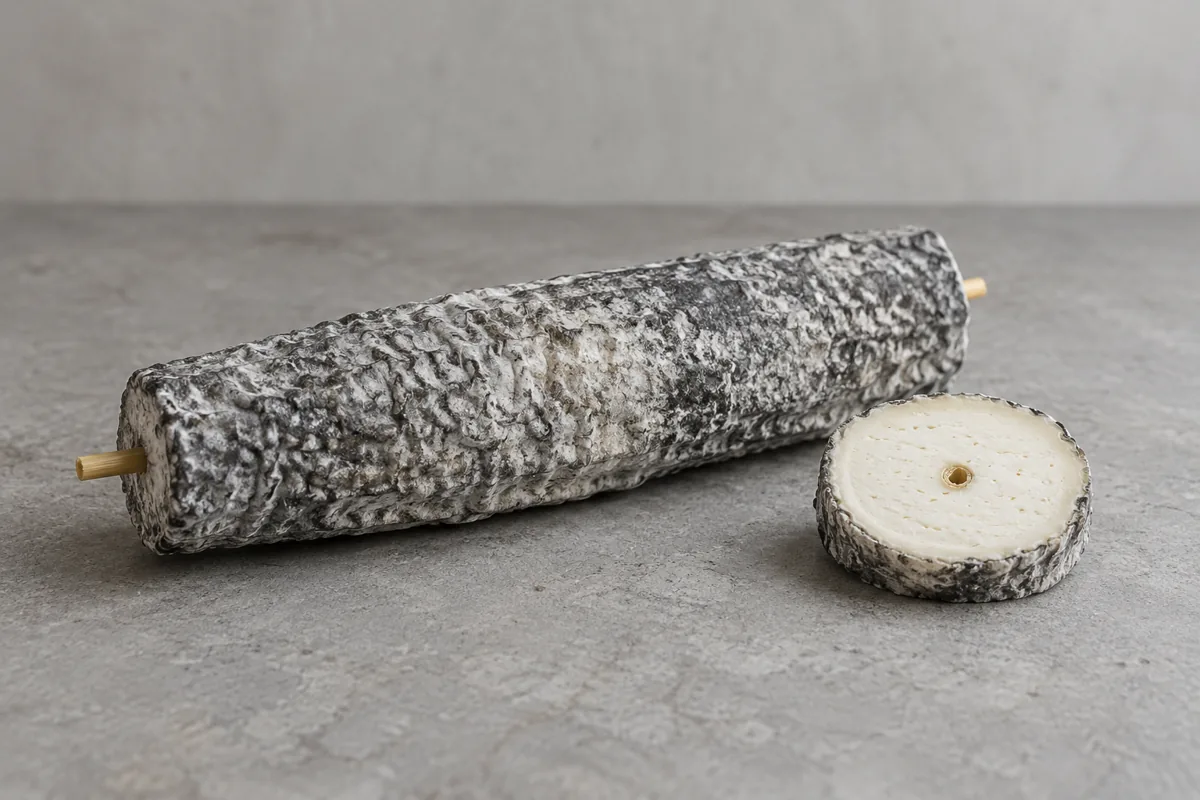
| Sainte-Maure de Touraine | Truncated cone with a cereal straw through the middle | Ash-coloured, bluish, fine and regular crust | Creamy, yielding, pure white paste; goat taste with fruity and nutty nuances | Whole raw goat's milk; ripened at least 10 days; appellation since 1990 |
Valençay shares its ash crust, which INAO describes as light grey to blue-grey, but on a truncated pyramid. INAO says it is especially appreciated in spring for its lightness and freshness, and its page ties the salt-and-charcoal coating to an ashed cheese that keeps longer.
Sainte-Maure de Touraine swaps the disk for a cone-shaped log, and INAO says its paste is pure white. The cereal straw originally held the fragile paste together, and INAO says each straw is signed with the producer's name, approval number and the appellation.
Is Selles-sur-Cher Safe in Pregnancy?
The specification allows only raw whole goat's milk and INAO calls the cheese soft, so no pasteurized AOP version exists to choose instead.
The CDC lists soft cheese made from unpasteurized milk, including blue-veined cheese and queso fresco-type cheese, as a riskier choice. As a general fact about food safety, it also says pregnant women are 10 times more likely to get a Listeria infection.
The NHS says any foods made from unpasteurised milk, such as soft ripened goats' cheese with a white coating on the outside, must be thoroughly cooked. It says the same of pasteurised or unpasteurised mould-ripened soft cheeses with a white coating, chèvre among them.
The specification describes a coat that starts grey-white and turns grey-blue, so whether the NHS white-coating line applies to a charcoal-coated cheese is an open question. The CDC category and the NHS line on foods made from unpasteurised milk both turn on the milk, which is always raw here.
Both agencies sort cheese in pregnancy by milk treatment and cheese type. If you are pregnant, ask a doctor or midwife before eating Selles-sur-Cher.
How Do You Store Selles-sur-Cher?
At home, the CDC says to keep a refrigerator at 40°F (4°C) or below. The producers' syndicate also advises keeping the cheese in the bottom of the refrigerator, away from light, for example in its wrapping paper.
The CDC adds that perishable food, dairy included, should not stay out for more than 2 hours, or 1 hour above 90°F, which caps how long a disk can sit at the room temperature the syndicate recommends for serving.
SOURCES & REFERENCES
What Else Do People Ask About Selles-sur-Cher?
INAO describes a balance of salty, acidic and bitter after 10 days of ripening, with goat and mushroom notes. Produits Laitiers AOP says a young cheese tastes slightly acidic and sweet.
Yes. The specification allows only whole raw goat's milk from Alpine goats, Saanen goats or crosses of the two.
The specification says ash, and later charcoal powder mixed with salt, kept quality safe during ripening in the farm cellier. Today vegetable charcoal and salt work with the surface flora to regulate exchange with the ripening cellar.
At least 10 days from renneting, in rooms at 10 °C or warmer. Produits Laitiers AOP puts its best moment at about 20 days, and Culture says the rind becomes firm and dry after about four weeks.
Yes. The producers' syndicate recommends eating it with the rind, and Produits Laitiers AOP says an aged cheese's saltier, goatier flavours sit on the rind.
It is always made from raw whole goat's milk, and the CDC lists unpasteurized soft cheese as a riskier choice. The NHS says any foods made from unpasteurised milk, such as soft ripened goats' cheese with a white coating, must be thoroughly cooked, so ask a doctor or midwife before eating it.