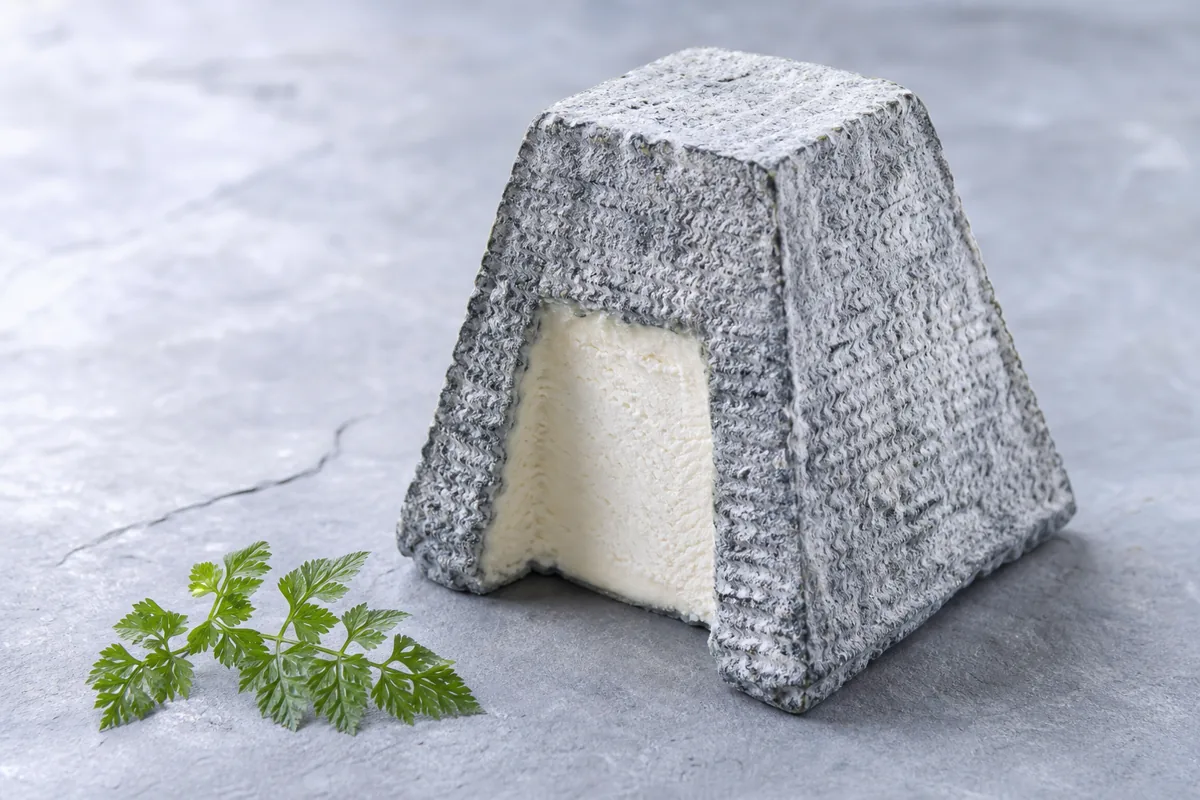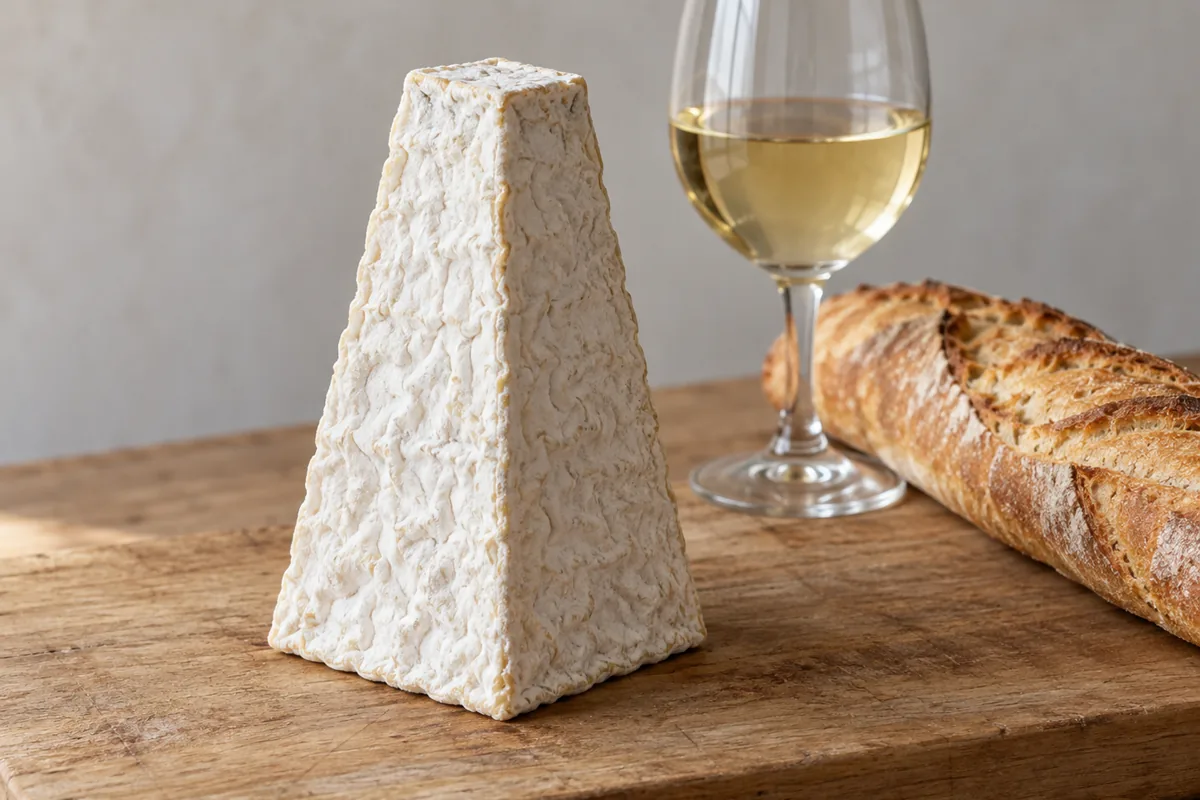
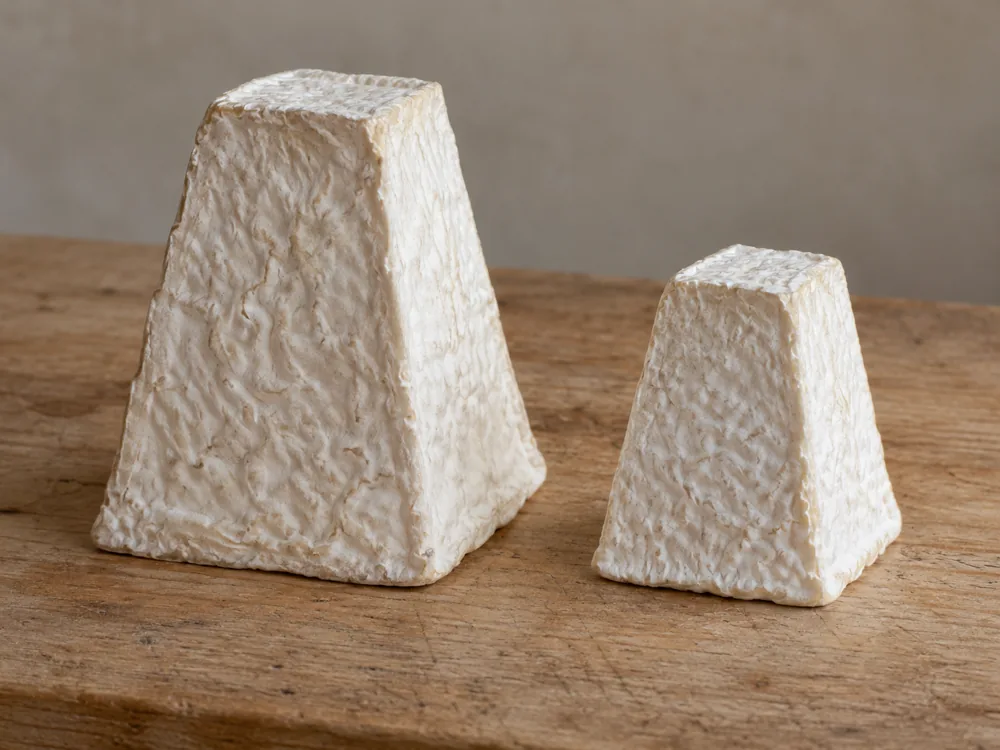
Pouligny-Saint-Pierre is a soft cheese made from raw whole goat's milk in the Brenne, in the Indre department of France, and you can spot it by its tall pyramid on a square base. Its producers' syndicate says it became the first goat cheese with an AOC, by a decree of January 1972.
The pyramid has a small flat top rather than a point, so the official shape is a truncated pyramid that the syndicate describes as slender.
In This Article
Where Does Pouligny-Saint-Pierre Come From and Why Is It a Pyramid?
The appellation covers 22 communes in the Indre department, inside the Brenne regional natural park according to the PDO dairy products site. French Wikipedia says the appellation has the smallest production area of the French goat cheese AOCs.
The 1972 decree quoted by the syndicate requires the milk, the cheesemaking and at least two weeks of ageing to happen inside that area. It covers the cantons of Le Blanc and Tournon-Saint-Martin in full, plus Azay-le-Ferron, Mauvières and Saint-Hilaire-sur-Benaize, so under that text a pyramid made outside it could not carry the name.
The pyramid is said to copy the clock tower of the village church, the PDO dairy products site reports, and French Wikipedia passes on the same bell tower story as something people say.
French Wikipedia also records a legend in which Bonaparte, tired of a pyramid that recalled his Egyptian expedition, cut off the top, and it marks that story as lacking a source.
The same page says moulds of wood and rye straw gave the 18th-century cheese its shape, which sets it apart from other goat cheeses made in France.
It began on farms: the syndicate says each farm once made a few cheeses for the family, and farm women carried the rest in wooden baskets to the market at Le Blanc. The syndicate adds that people then thought of it as food for the poor.
French Wikipedia says two dairies started making it for sale in the 1960s, and the syndicate dates its own founding to 1969, three years before the AOC.
What Do the AOP Rules Fix for Shape, Milk and Ageing?
The decree quoted by the syndicate sets a square-based truncated pyramid with a base of at least 65 mm a side and a top of 25 mm. It also asks for at least 45 g of fat per 100 g of dry matter and at least 90 g of dry matter in each cheese.
The fat figure is measured on the cheese after all its water has been removed, so the fat share of the cheese as sold is lower than the figure suggests. The same text calls the paste soft, lightly salted and uncooked, with moulds on the surface.
French Wikipedia says the curd sets by lactic coagulation with a small amount of rennet. The syndicate adds that this slow set gives the even curd the cheese needs.
Cheesemakers then ladle the curd into the moulds by hand, which the syndicate says gives the paste its fineness, and let it drain naturally for at least 24 hours.
The PDO dairy products site says the cheese is salted after moulding and aged for ten days to reach a white, smooth, soft paste.
The milk comes from Alpine and Saanen goats. The syndicate says at least 75% of their feed, forage and cereals, must come from the appellation area.
Published figures for size and ageing do not match. The syndicate says the 1972 decree asked for at least two weeks of ageing in the area, and that later decrees in 1976 and December 1986, the one still in force, set out the cheese in detail.
Part of the ageing gap comes from where the clock starts. French Wikipedia counts its 10-day minimum from the day the milk is renneted, so the 24 hours of draining fall inside it, while the PDO dairy products site describes ten days of ageing after moulding and salting.
None of these pages gives an age at which the cheese tastes best, so the figures mark how long it ripens, not when it peaks.
| Point | Producers' syndicate | PDO dairy products site | French Wikipedia |
|---|---|---|---|
| Shape | Truncated pyramid, square base (decree text) | Pyramid; tall shape with regular edges | Truncated pyramid, square base |
| Size | Base at least 65 mm, top 25 mm | Not given | Base 9 cm, top 2.5 cm, height 12.5 cm |
| Weight | About 250 g, or 150 g for the small size | Not given | 250 g, or 150 g for the small size |
| Ageing | Two weeks minimum in the 1972 decree | Ten days | 10 days minimum from renneting |
| First protection | AOC by decree of 14 January 1972 | Labelled 1972 | Decree of 14 February 1972; AOP on 29 October 2009 |
Should You Choose the White Rind or the Bluish Rind?
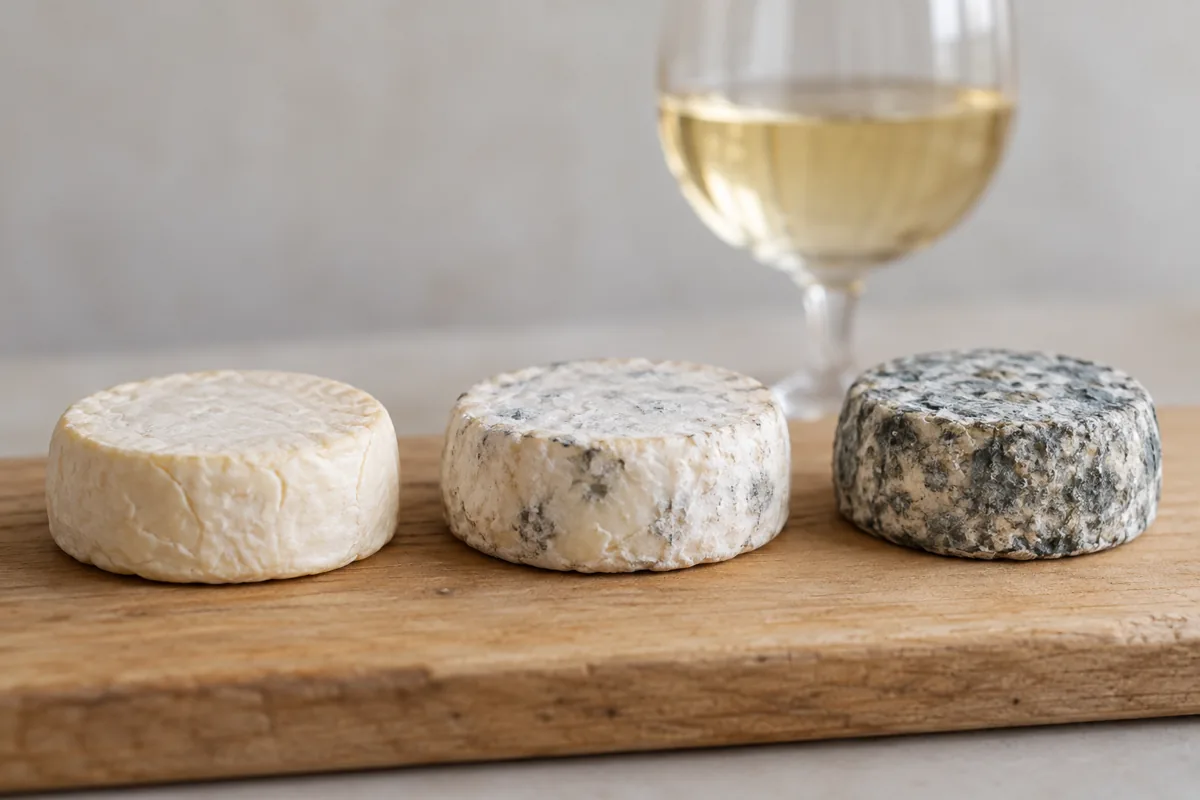
Pouligny-Saint-Pierre is sold in two ripening styles, and the colour of the rind coating tells you which one you have.
French Wikipedia says the white style ripens under Geotrichum and tastes tangy and lightly salted, with dried-fruit aromas, a floral and fruity smell and a texture it calls fondante. The syndicate says this white-to-ivory version tastes and smells mainly of milk and goat.
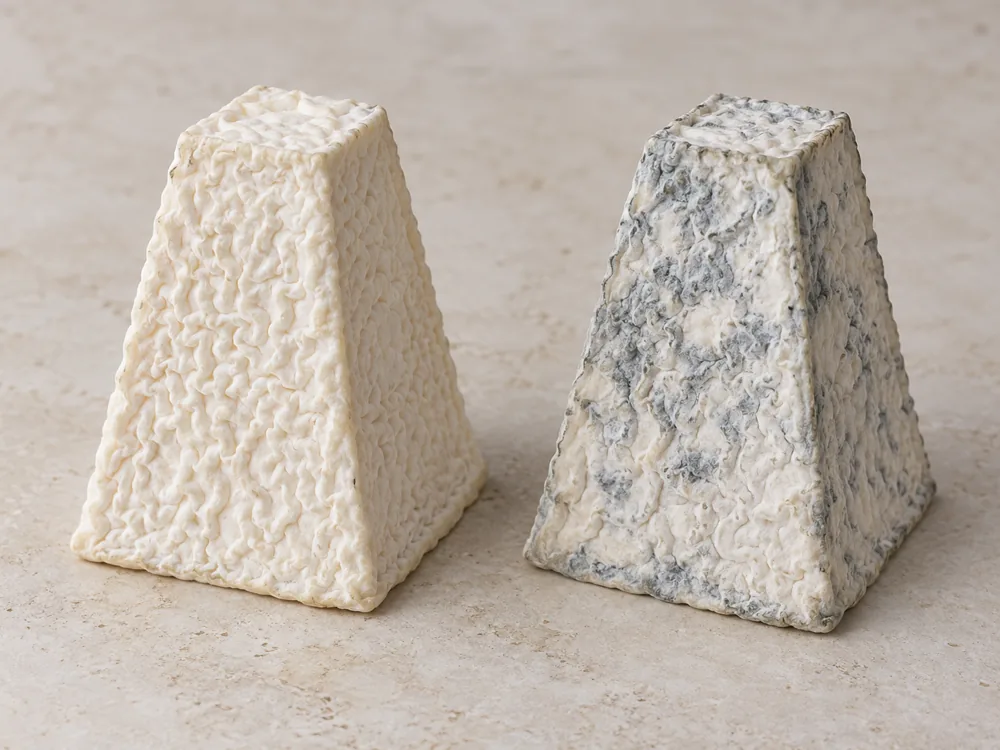
The bluish style ripens under Penicillium album, which French Wikipedia says gives a stronger goat flavour, hazelnut notes and a firmer texture. For the syndicate, mushroom leads both its taste and its smell.
The PDO dairy products site sums the cheese up as acidic, balanced and mushroomy, with smells of goat, milk, mushroom and undergrowth and a creamy texture.
The same site says the layer of mould appears on the rind as the cheese matures, and French Wikipedia files the cheese as both a natural-rind and a bloomy-rind soft cheese.
The two descriptions of the bluish style only partly agree, since French Wikipedia stresses a stronger goat flavour and a firmer paste while the syndicate puts mushroom first. For a buyer, the white-to-ivory coat points to the milk-led pyramid the syndicate describes, and the bluish coat to the goat and mushroom notes.
White to ivory leads with milk and goat for the syndicate and with a melting texture for French Wikipedia. Bluish leads with mushroom for the syndicate and with stronger goat flavour and a firmer texture for French Wikipedia.
What Should You Check on the Label When You Buy?
The label colour and the weight are the two things to read at the counter, and the syndicate sets strict rules for label colour and wording. Every label must state the weight, and a farmhouse label is allowed only when the maker works with milk from their own farm.
French Wikipedia adds that the red label covers industrial, dairy and artisanal cheese, while the green label marks farmhouse cheese. Neither the required text nor the colour names the ripening style or an age, so the coat on the rind is the only cue to which style is in hand.
By weight, French Wikipedia puts 250 g cheeses at 65% of the 2014 tonnage and 150 g cheeses at 35%, so about one tonne in three sold was the small size.
French Wikipedia, citing a newspaper piece on the seasons of cheese, gives June to October as the best period to eat it.
Who Makes Pouligny-Saint-Pierre and How Is the Name Checked?
The syndicate brings together dairy farmers, ripeners and dairy companies, and counts eight farmhouse producers, two dairies collecting milk from 29 farms and one ripener working with a single farmhouse supplier.
Supply is small: the PDO dairy products site counts 20 milk producers, 10 farmhouse producers, 2 production plants and 1 maturing plant, with 235 tonnes sold in 2020. The syndicate's own counts differ and carry no date.
French Wikipedia lists commercial production of 319 t in 2014, 291 t in 2015 and 293 t in 2016, so the 235 t of 2020 is roughly a quarter below 2014, although the figures come from different pages.
For 2014 it splits the total into 90 t of farmhouse and 192 t of dairy cheese, about 28% farmhouse, while another line on the page gives a farmhouse share of 41% without a year. On either figure, red-label cheese is the larger part of what is made.
To keep the name, every maker's cheeses also go before a tasting panel. The syndicate describes a monthly check, while French Wikipedia says the panel meets every two months at the Maison de l'agriculture in Le Blanc, tasting one cheese and analysing another from each producer.
According to French Wikipedia, the panel checks taste, texture, rind, shape and hold, and scores each producer out of 20 on appearance, cut and taste, with taste the criterion that can eliminate. A score under 10 earns a warning, and three warnings bar the producer from using the name for thirty days.
How Should You Cut, Serve and Store Pouligny-Saint-Pierre?
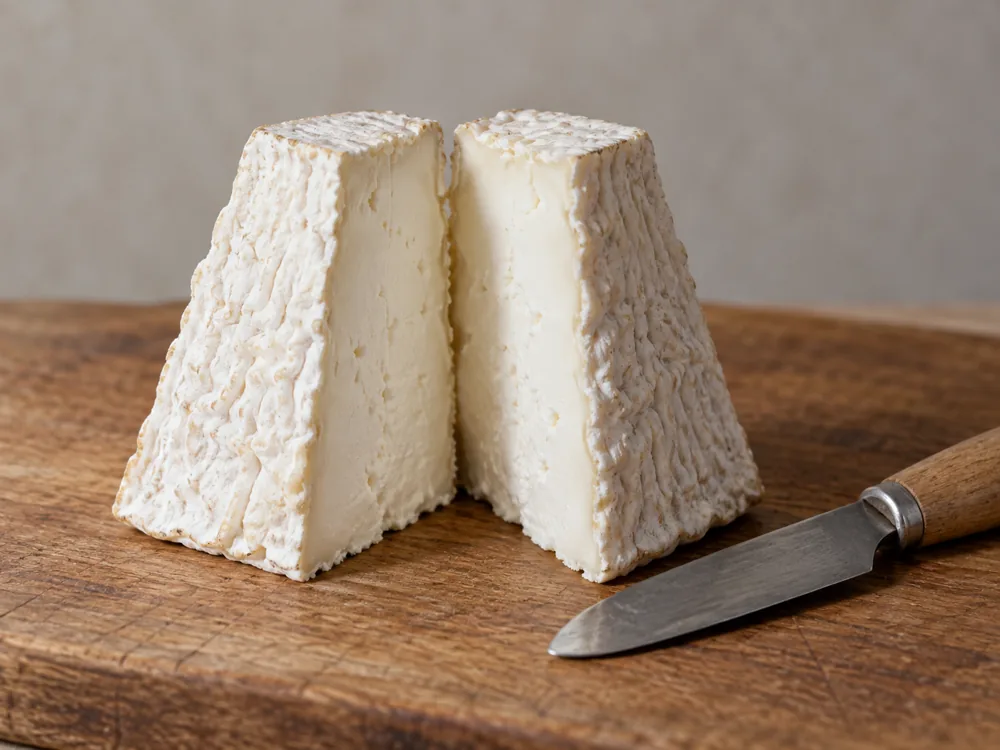
The PDO dairy products site gives one cutting rule: slice vertically from the top of the pyramid down to the base.
Keep the cheese in its original packaging, in a refrigerator at 40°F (4°C) or below, as the CDC advises. The syndicate says to take it out one hour before eating.
The CDC says perishable food, dairy included, should not stay out for more than 2 hours, or 1 hour above 90°F, so the hour of warming the syndicate suggests uses up half of the 2-hour limit.
The syndicate recommends the pyramid on a cheese board.
What Do the Syndicate's Recipes Do With the Cheese?
The syndicate's recipe sheets show the pyramid used well beyond the board, and each sheet names a wine to go with the dish.
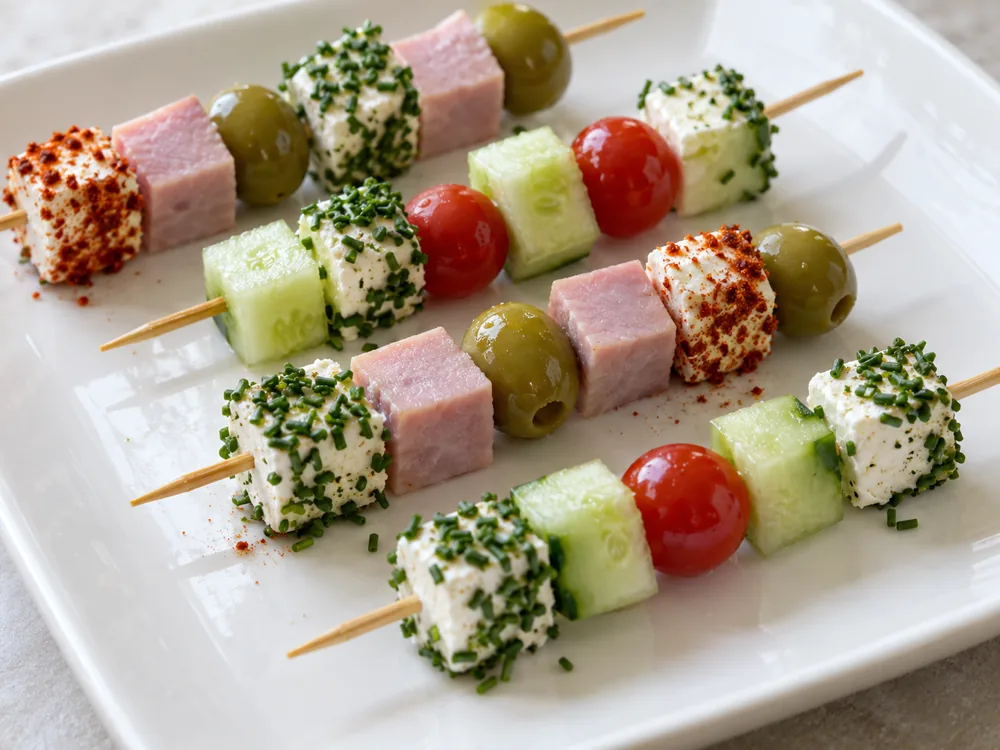
The skewer sheet cuts half a pyramid (125 g) into 24 cubes: eight rolled in chives, eight in paprika and eight left plain. The chive cubes alternate with ham and green olives and the paprika cubes with cucumber and cherry tomatoes, and the sheet says to eat the skewers immediately.
In the pork dish, seared medallions of pork tenderloin get shavings of cheese and herbes de Provence and go under a grill until the cheese takes colour. The sheet uses two pyramids for 750 g of pork.
For the monkfish, three 1 cm cubes of cheese go in the middle of a 5 cm slice seasoned with espelette pepper and fleur de sel. The slice is rolled in film and cooked 4 minutes in boiling water.
The filo sweets melt 50 g of cheese into 30 ml of cream and stir it into a béchamel with ham and dried basil before the parcels are sautéed in butter.
The mousse is a cold dessert: a whole pyramid is worked smooth with whipped cream, lemon zest, whipped egg white and gelatine, chilled for 4 hours and served with apricots.
| Use | How It Works |
|---|---|
| Salads | Diced and dressed with walnut oil, as the syndicate suggests. |
| Warm toast | Named by the syndicate as a way to serve it. |
| Galettes | A farçou-style batter with 100 g of cubed cheese, chard and sausage meat, pan-fried 8 minutes in duck fat. |
| Cake | Pieces of 5 mm baked 45 minutes at 180°C with walnuts, currants and grated Gruyère. |
Which Wines and Breads Go With Pouligny-Saint-Pierre?
The syndicate pairs Pouligny-Saint-Pierre with a dry, fruity white wine from the valleys and slopes of the Cher and the Loire. It names six appellations, and the PDO dairy products site repeats the same list.
| Pairing | Type | Why It Works |
|---|---|---|
| Sancerre | Wine | Dry white named by the syndicate. |
| Quincy | Wine | Dry white on the syndicate's list. |
| Reuilly | Wine | Another dry white the syndicate names. |
| Menetou-Salon | Wine | Dry white on the same list. |
| Valençay | Wine | A white that shares its name with a neighbouring goat cheese. |
| Sauvignon de Touraine | Wine | The Touraine white the syndicate names. |
| Traditional baguette | Food | One of four breads on the PDO dairy products site. |
| Fruit bread | Food | Also listed there, with seeded baguette and Vienna bread. |
The recipe sheets give each dish its own wine: Menetou-Salon for the skewers, Quincy for the monkfish, Reuilly white for the galettes and the filo sweets, Reuilly white or Coteaux-du-Loir for the mousse, and Châteaumeillant for the cake.
Only the pork sheet names a red wine, Bourgueil or Reuilly red, while the pairing for the cold pyramid on the board stays white.
The PDO dairy products site prints the same four breads on its Valençay and Selles-sur-Cher pages, so the bread list is a general suggestion for these goat cheeses and not something particular to Pouligny.
Pouligny-Saint-Pierre vs Valençay and Other Loire Goat AOPs
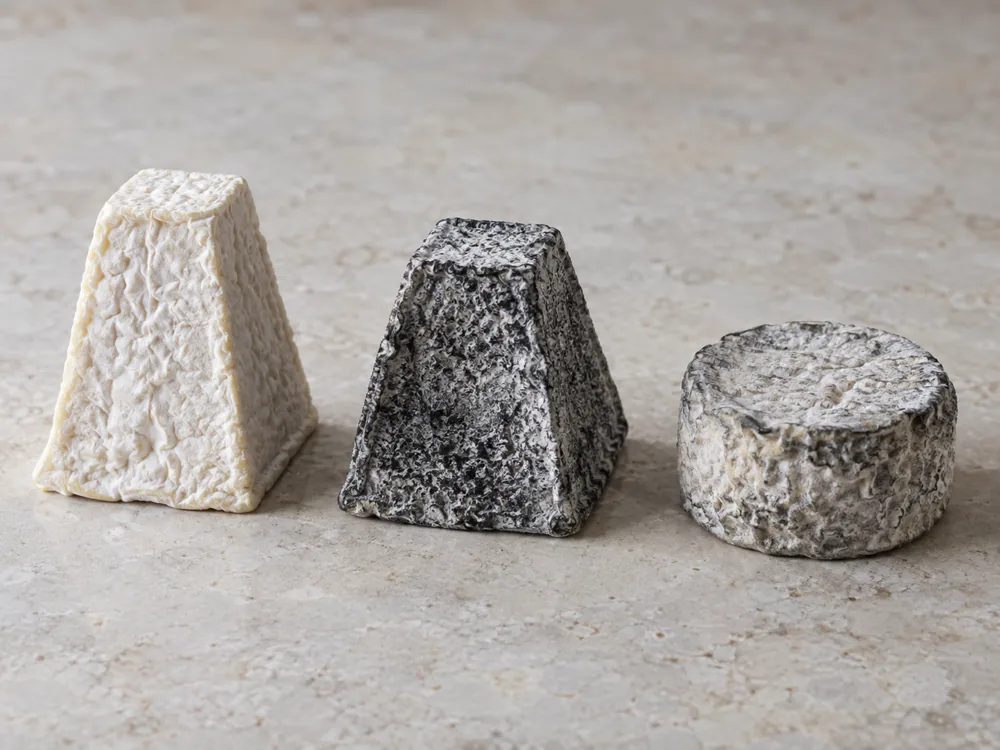
Valençay is the closest match in shape: the PDO dairy products site describes it as a truncated pyramid of raw whole goat's milk, the same shape the Pouligny decree sets. The visible difference is the coat: Valençay is salted and dusted with charcoal ash after unmoulding, while the Pouligny pages describe a white-to-ivory mould coat that can turn slightly bluish.
The same site repeats a story about that shape. Valençay began as a slender pyramid, and Talleyrand had the tops cut off so the cheeses he served Napoleon would not remind him of his defeat in Egypt.
The Valençay page gives tasting notes of undergrowth and hazelnut, and the same site lists undergrowth among the smells of Pouligny. It says Valençay can be eaten young with a creamy, melting paste or older with aromas from fresh walnut to dried fruit.
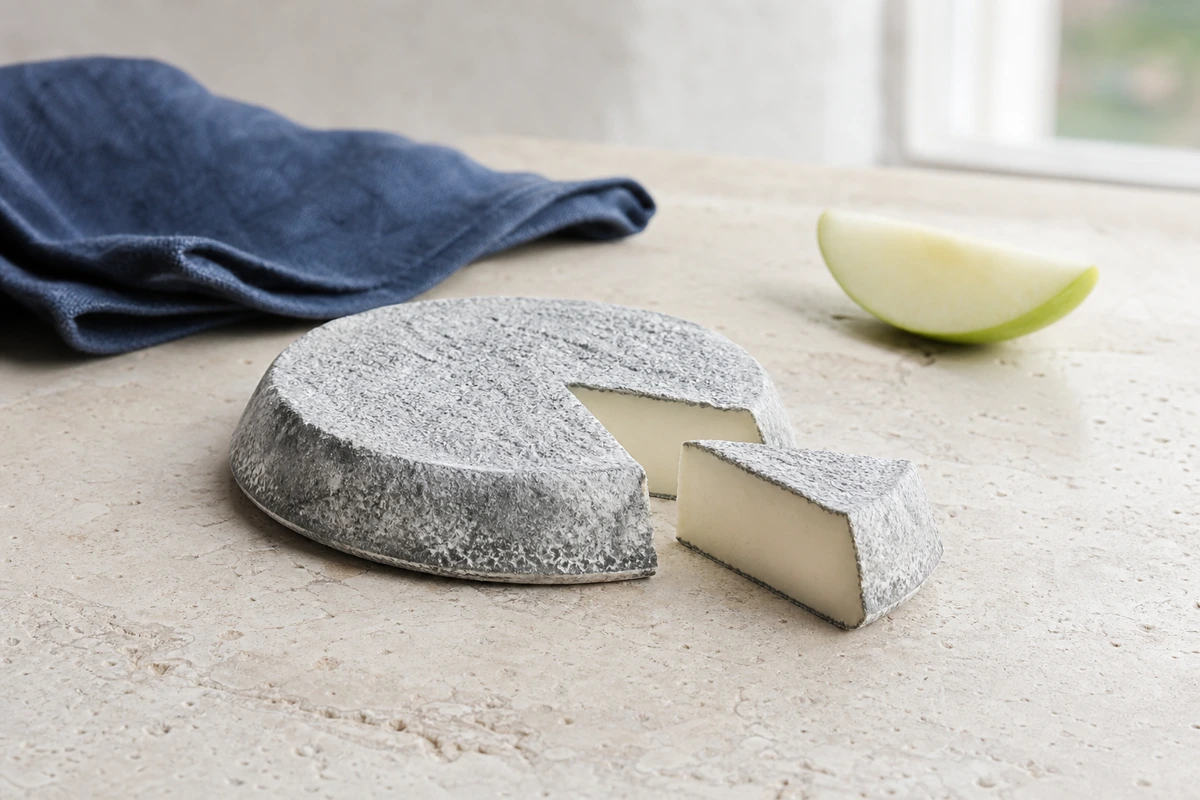
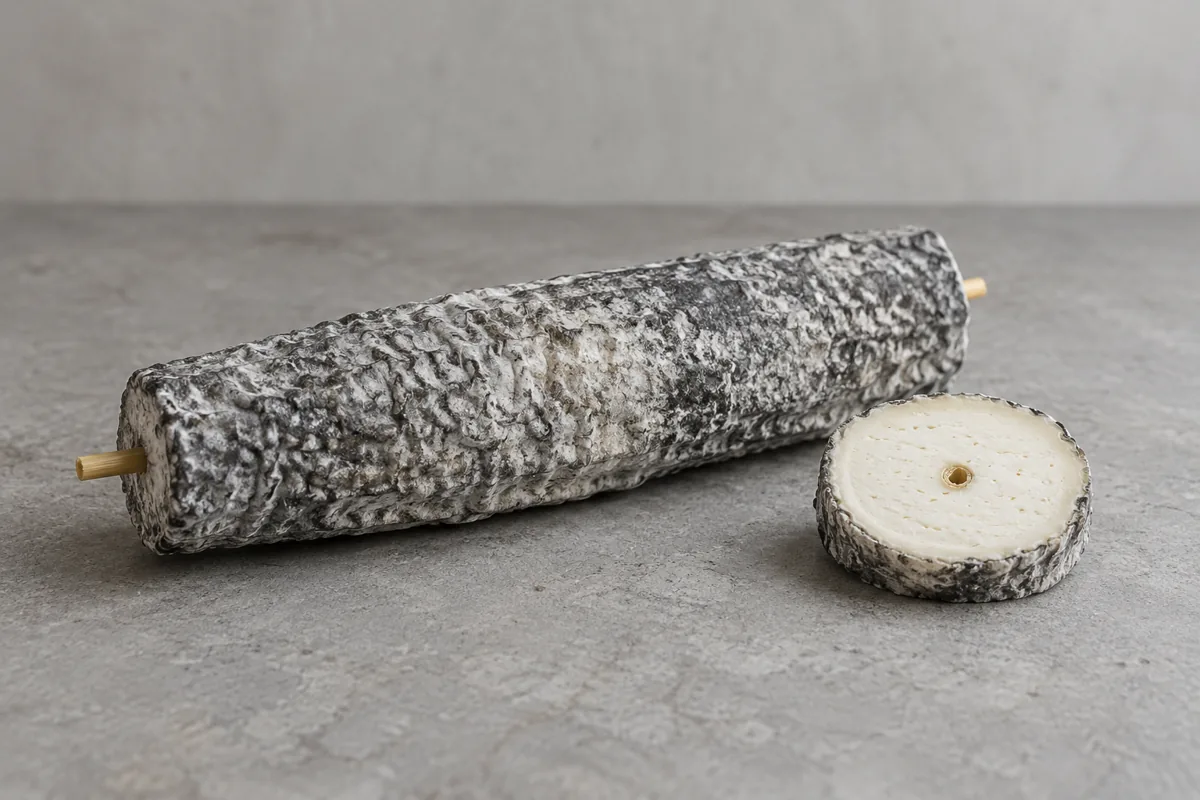
Selles-sur-Cher is a raw-milk goat puck coated in charcoal and salt, ready after 10 days and at its best after about 20 days, according to the site.
That gives it an age to aim for that no Pouligny page supplies: the site says its texture goes from fresh, yielding and slightly pasty to firm and sleek, with salt, goat flavour and hazelnut growing stronger as it ripens.
| Point | Pouligny-Saint-Pierre | Valençay | Selles-sur-Cher |
|---|---|---|---|
| Shape | Pyramid, tall with regular edges | Truncated pyramid | Puck or cylinder |
| Surface | Wrinkled or bloomy, white to ivory, can be slightly bluish | Charcoal ash; bloom from light grey to bluish grey | Charcoal and salt; grey and ashen |
| Year of labelling | 1972 | 1975 | 1975 |
| Tonnes sold in 2020 | 235 | 298 | 1,066 |
| Ready to eat | After ten days | From the 11th day | After 10 days, best at about 20 |
As a stand-in, Valençay keeps the pyramid and the raw goat's milk but adds an ash coat. Selles-sur-Cher keeps the raw goat's milk and changes the shape to a puck.
The PDO pages for the two siblings are broader on wine than Pouligny's white-only list: Valençay is matched with Valençay AOC wine in red, white and rosé, and Selles-sur-Cher with Cheverny, a red, or Chenin de Touraine.
Is Pouligny-Saint-Pierre Safe in Pregnancy?
Pouligny-Saint-Pierre is always made from raw goat's milk, so it falls in the groups that UK and US pregnancy advice on cheese treats with caution.
The NHS says foods made from unpasteurised milk, such as soft ripened goats' cheese with a white coating, must be thoroughly cooked. It gives the same rule for pasteurised or unpasteurised mould-ripened soft cheeses with a white coating, such as chèvre, and lists any cheese cooked until steaming hot as safe.
The CDC lists soft cheese made from unpasteurized milk as a riskier choice and says pregnant women are 10 times more likely to get a Listeria infection. It lists pasteurized soft cheeses heated to an internal temperature of 165°F or until steaming hot as safer, a line that covers pasteurized cheese only.
SOURCES & REFERENCES
What Else Do People Ask About Pouligny-Saint-Pierre?
The PDO dairy products site calls it acidic, balanced and mushroomy. The syndicate says the white-to-ivory style tastes mainly of milk and goat, while the bluish style leans to mushroom.
No. The decree quoted by the syndicate describes a truncated pyramid on a square base, with a base of at least 65 mm and a flat top of 25 mm.
Both are truncated pyramids of raw goat's milk. Valençay is dusted with charcoal ash, while the Pouligny sources describe a white-to-ivory rind that can turn slightly bluish.
Yes. The syndicate says it is made from raw whole goat's milk.
The syndicate names dry, fruity whites from the Cher and the Loire: Reuilly, Quincy, Menetou-Salon, Sancerre, Valençay and Sauvignon de Touraine.
Yes. The syndicate suggests it on warm toast and publishes skewer and pork tenderloin recipes that use it.