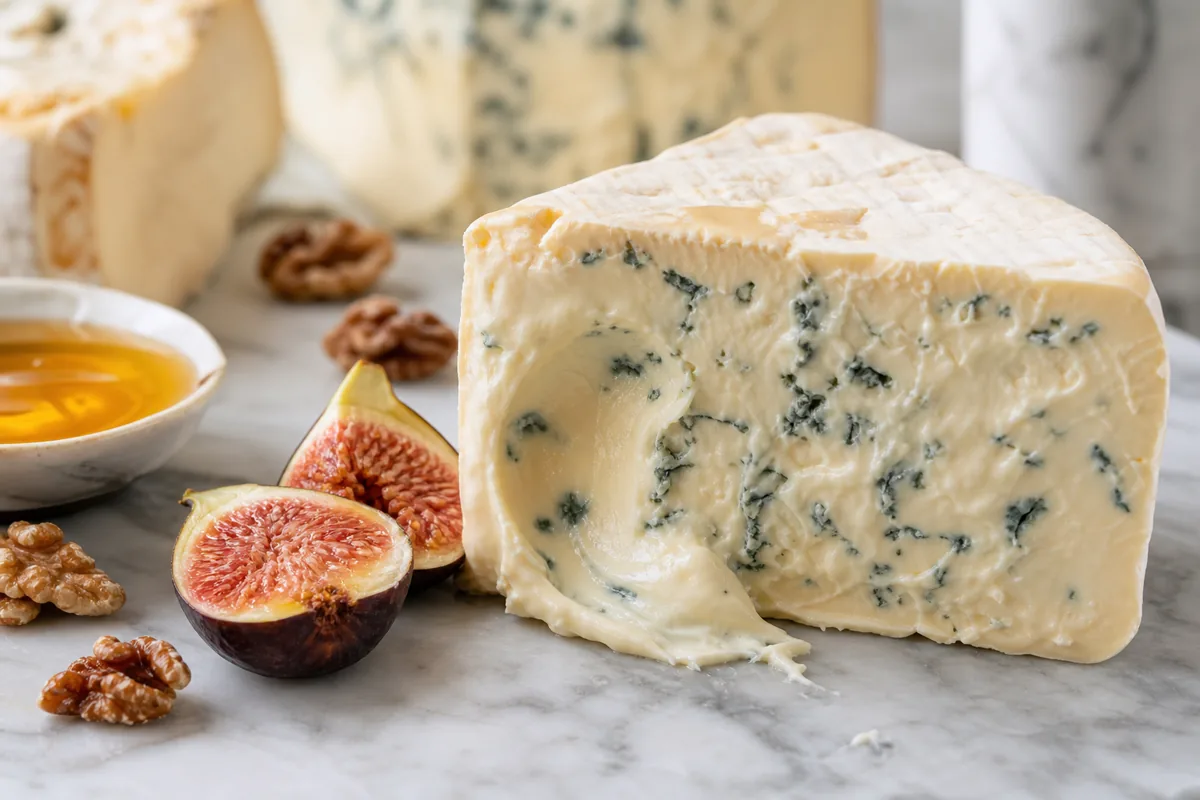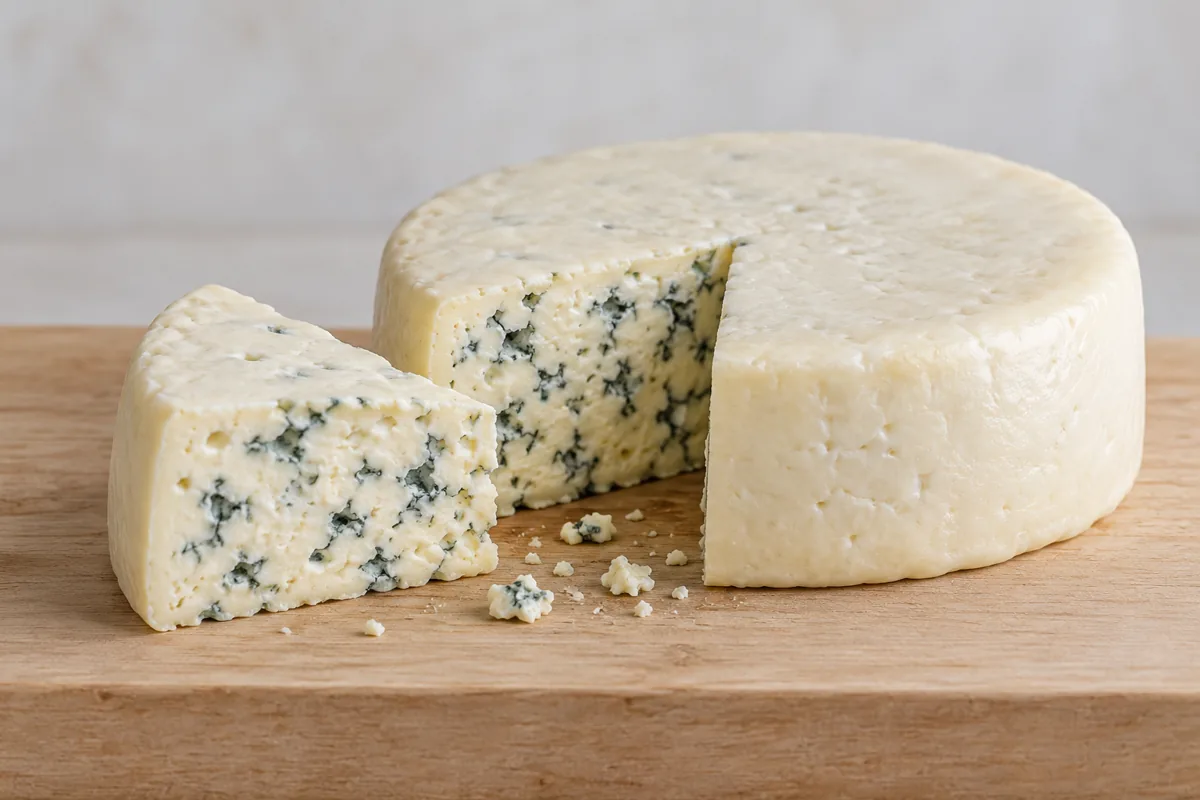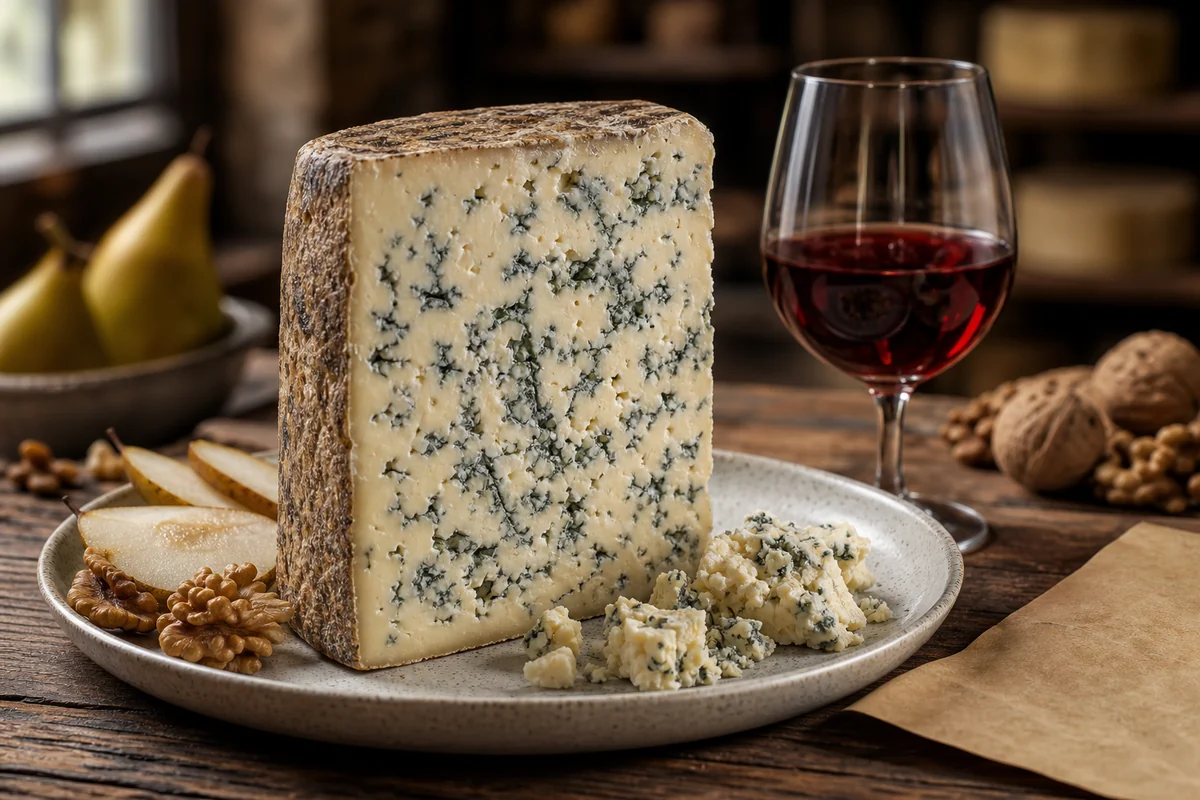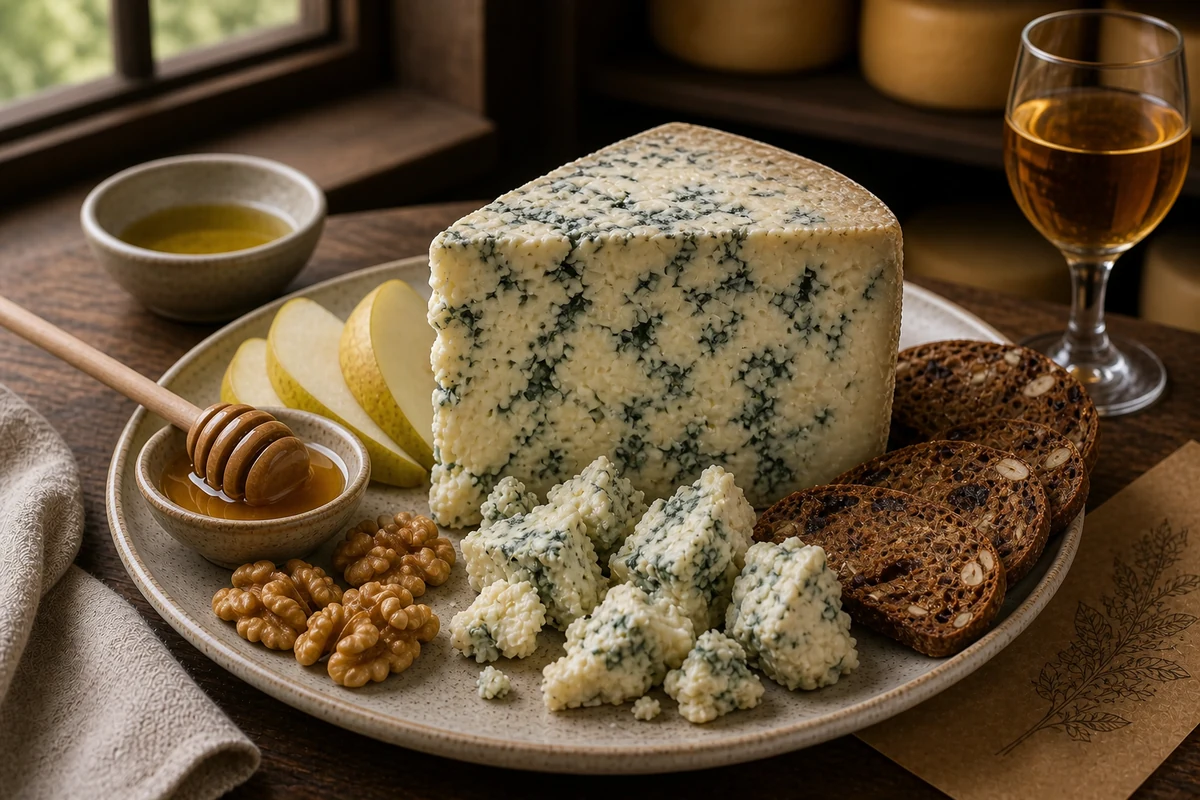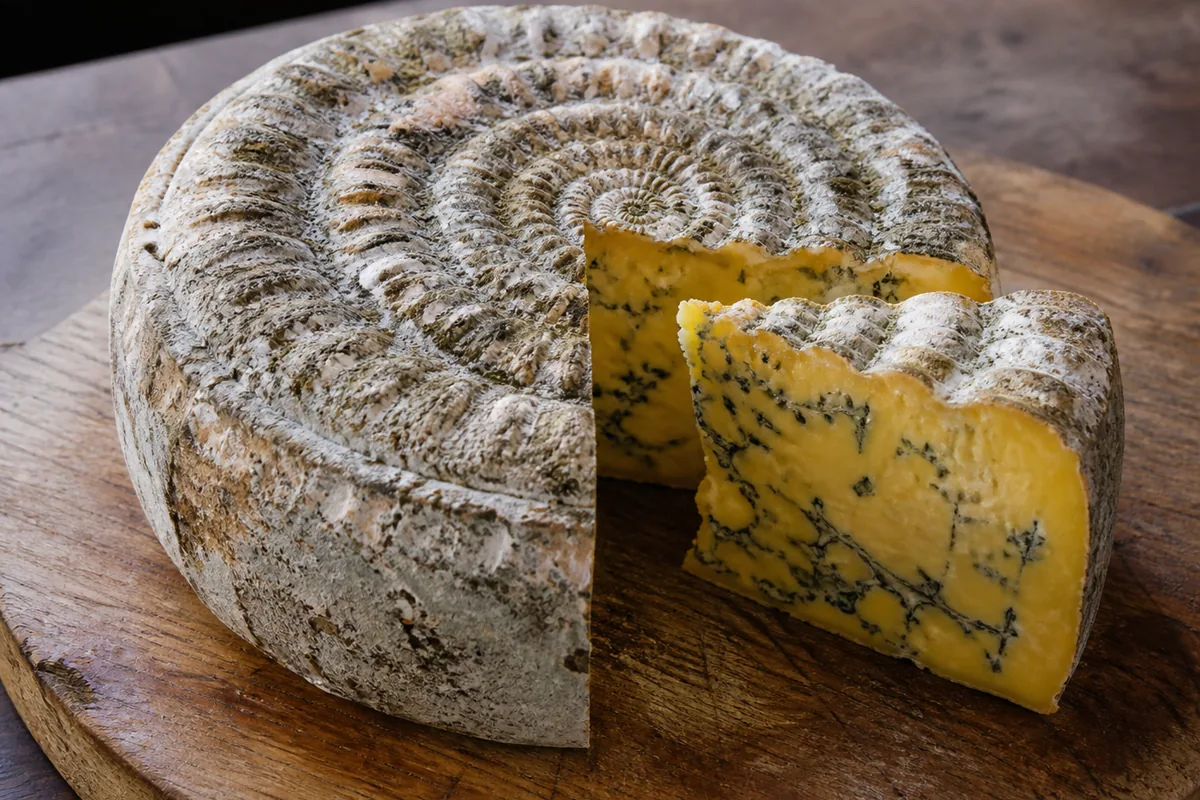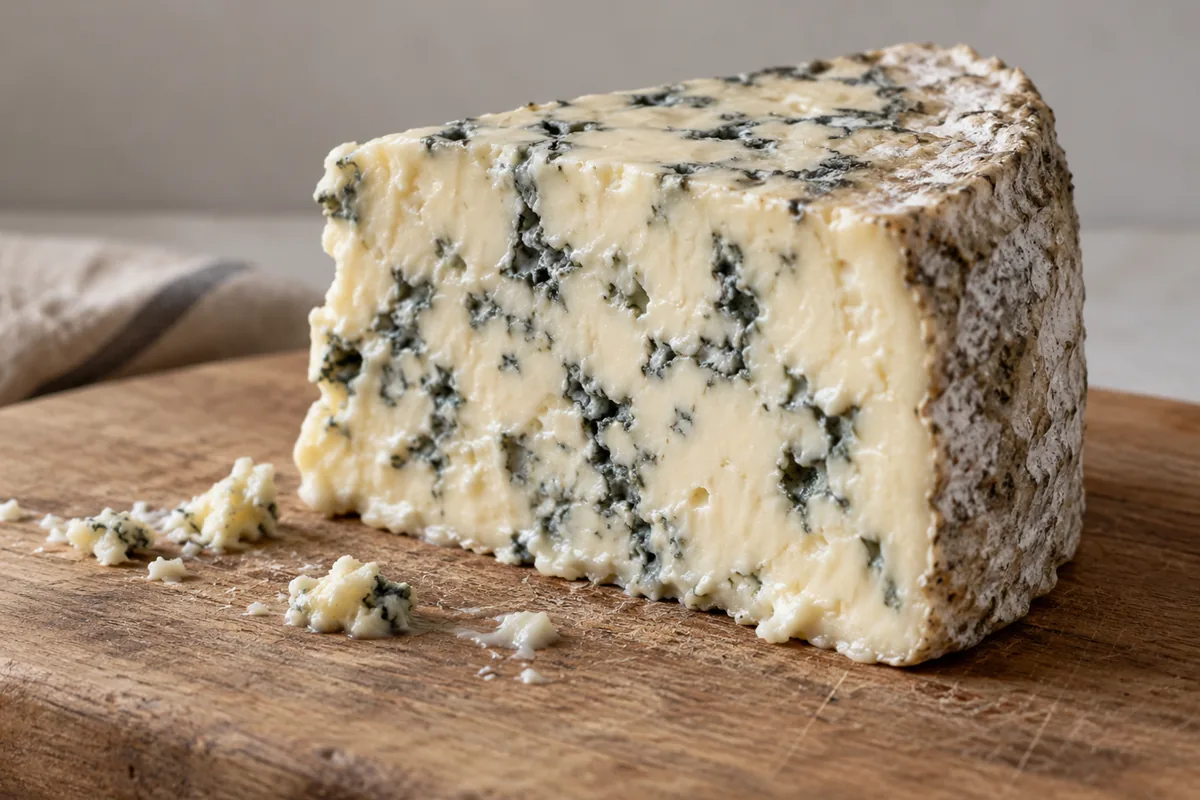
Oxford Blue is an English cow's milk blue cheese that was launched in 1995 and is aged for 14 to 16 weeks. It is described as creamy, with tangy and spicy notes and an unexpected hint of white wine and chocolate.
It was first made in Derbyshire and spent several years in Wales before production settled in Burford, Oxfordshire, in 2013.
In This Article
Why Is It Called Oxford Blue?
Oxford Blue was developed by an Oxford cheese business, but it was made in Derbyshire and then in Wales until production moved to Burford, Oxfordshire, in 2013. Its creator, Robert Pouget, came to cheese through art and furniture design, and in 1983 he and his friend Gerry Stevens, a pop group manager, opened a cheese shop in Oxford's Covered Market.
The shop led to the Oxford Cheese Company in 1986, which also wholesaled fine cheeses to Oxford colleges and city restaurants. Oxford Blue followed nine years later.
Most accounts date it to 1995: in BBC News's 2013 account, it was developed that year by Oxford Fine Food, now owned by Robert Pouget, while CooksInfo has it created in 1993 or 1994 and launched commercially in 1995.
The business behind it appears under three names: Oxford Fine Food in BBC News's report, the Oxford Cheese Company on the creator page, and Oxford Blue Cheese Company as the brand on the shop listing, which sits on the Oxford Cheese Company's site.
BBC News described the move of production to Burford as giving the cheese "a proper link to its name".
Who Is Robert Pouget?
Robert Pouget, the creator of Oxford Blue, is described as a French-born painter-turned-cheesemaker, and his full name is Robert Pouget De Saint Victor. He is described as a French baron and is reported to prefer not to use the full title.
His early life moved between Chateau St Victor and Paris in an artistic family.
Besides Oxford Blue, the creator page lists the Oxford Isis and Oxford Sauce brands, vegetarian food production, the Vaults and Gardens Cafe and the Alphabar whole-food takeaway in Oxford.
It adds that he now divides his time between his business in Oxford and painting in Cornwall.
Where Has Oxford Blue Been Made?
Oxford Blue is made in a converted barn dairy at Burford, Oxfordshire. It reached that address after two earlier homes.
| Period | Where | What happened |
|---|---|---|
| 1995 to 2009 | Hartington Creamery, Derbyshire | The creamery closed in 2009. |
| 2009 to 2013 | Carmarthenshire, Wales | BBC News reported in April 2013 that it was still made there. |
| 2013 onward | Burford, Oxfordshire | A disused barn near the A40 was being converted into a dairy. |
The maker gives 2013 as the year production settled in Oxfordshire, and BBC News reported in April 2013 that the barn conversion had only just started and that the new dairy was expected to be in use by December.
The barn is at Upton, just outside Burford.
Wikipedia's opening sentence says the cheese was produced in Burford in 1995, but Wikipedia's own history section, BBC News and CooksInfo all put production in Derbyshire until 2009, so the Burford dairy dates from the 2013 conversion.
BBC News also reported that the company had agreed to take milk from a herd of about 100 cows in Banbury, after previously using milk from outside the county.
Is Oxford Blue Vegetarian, and Is the Milk Pasteurised?
On the rennet, yes: the two records that give the rennet list it as vegetarian, but the maker's own website gives the milk both ways.
| Question | Answer |
|---|---|
| Is the rennet vegetarian? | Yes, but only in the Oxford Cheese Company's shop listing, which files Oxford Blue under its Vegetarian category, and in CooksInfo, which lists vegetarian rennet. |
| Is the milk pasteurised? | Pasteurised on the maker's Whole Oxford Blue product page, on the Oxford Cheese Company shop listing and in CooksInfo; unpasteurised on the maker's About page and in Wikipedia, whose description closely follows the About page. |
If you avoid raw milk or animal rennet, check the label on your pack or ask the Oxford Cheese Company.
What Does Oxford Blue Taste Like?
Oxford Blue is described as creamy and tangy, and, outside the maker's own pages, as salty.
The producer lists tangy and spicy notes with an unexpected hint of white wine and chocolate, in a moist, creamy cheese with a sticky, wet rind, and its shop listing adds "a good mellow depth of flavour".
For salt, CooksInfo describes "a mild but salty taste with a bit of sharpness", and BBC News calls it a salty and tangy cheese.
Its texture is "semi hard, smooth creamy" on the shop listing and in the Oxford Blue site's heading, and "soft, creamy, and aromatic" in the site's longer description.
The 14 to 16 weeks of ageing is said to be what develops the sticky, wet rind and the moist texture.
On richness, it is called a full fat creamy blue and listed at 30% fat.
How Is Oxford Blue Connected to Stilton?
Oxford Blue was first made in a dairy that also made Stilton, and it is described as an alternative to Stilton with a milder tone, and as having a flavour less strong than Roquefort or Stilton. That dairy was Hartington Creamery in the Peak District, where the producer says Oxford Blue was created initially, to capture the essence of the most traditional blue cheeses.
It is described as made in the tradition of Stilton but with a creamier consistency, especially when the cheese is allowed to mature, and as a French-style English blue.
Pouget is reported to have wanted a blue without the strength of Stilton or Roquefort, and to believe that it could one day rival Stilton.
Can You Eat Oxford Blue While Pregnant?
If you are pregnant, cook Oxford Blue until it is steaming hot before you eat it: the Oxford Blue site's longer description calls it soft, and the NHS says pasteurised or unpasteurised soft blue-veined cheeses, such as Danish blue, gorgonzola and roquefort, must be thoroughly cooked and lists any cheese that's been cooked until steaming hot, including soft or blue cheese, as safe to eat.
If you follow US advice on cheese in pregnancy, check the label for the milk: the producer's pages list it as both pasteurised and unpasteurised.
If you follow US advice, ask a midwife or doctor before you eat an Oxford Blue without a label that says pasteurised milk, even cooked: the CDC lists unpasteurized (raw) milk and dairy products made from raw milk, and soft cheese made from unpasteurized (raw) milk, as riskier, and its safer line for heated soft cheese names pasteurized soft cheeses heated to an internal temperature of 165°F or until steaming hot.
If you follow US advice, heat a pasteurised Oxford Blue to an internal temperature of 165°F or until steaming hot, or ask a midwife or doctor before you eat it cold.
The CDC lists pasteurized soft cheeses heated to an internal temperature of 165°F or until steaming hot as safer, and served cold, a pasteurised Oxford Blue is described as a pasteurized semi hard, soft, smooth, creamy, moist or aromatic blue-veined cheese, a type the CDC list does not cover. It says pregnant women are 10 times more likely to get a Listeria infection.
The Oxford Cheese Company shop listing and the Oxford Blue site's heading call it semi hard, and the NHS lists pasteurised semi-hard cheeses as safe to eat and says any foods made from unpasteurised milk must be thoroughly cooked.
How Do You Serve Oxford Blue?
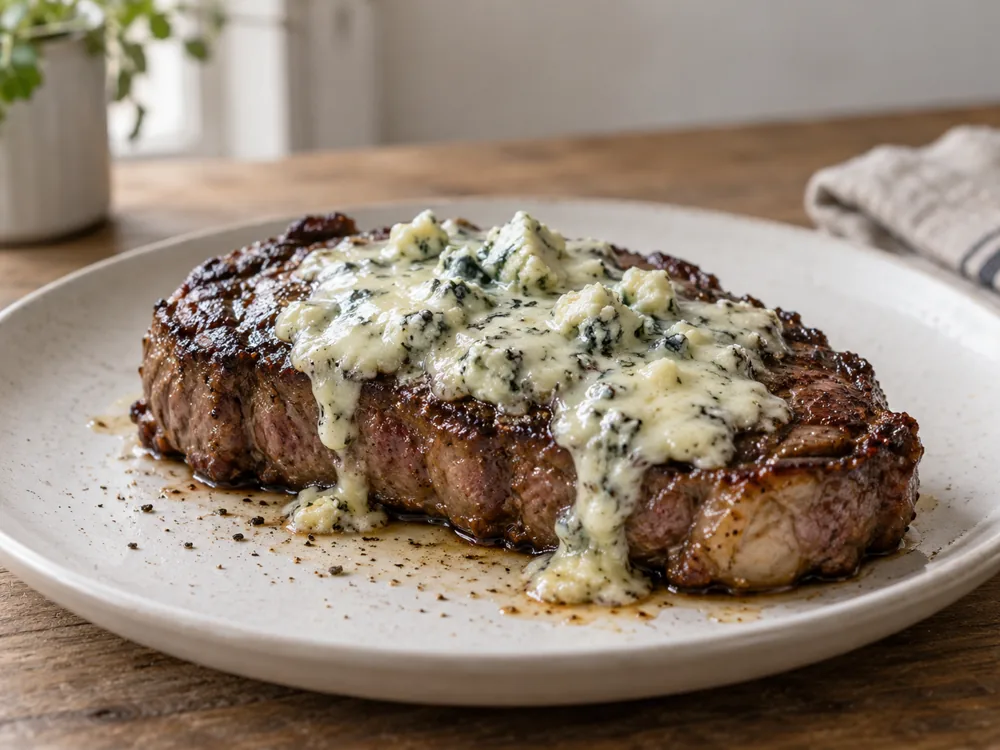
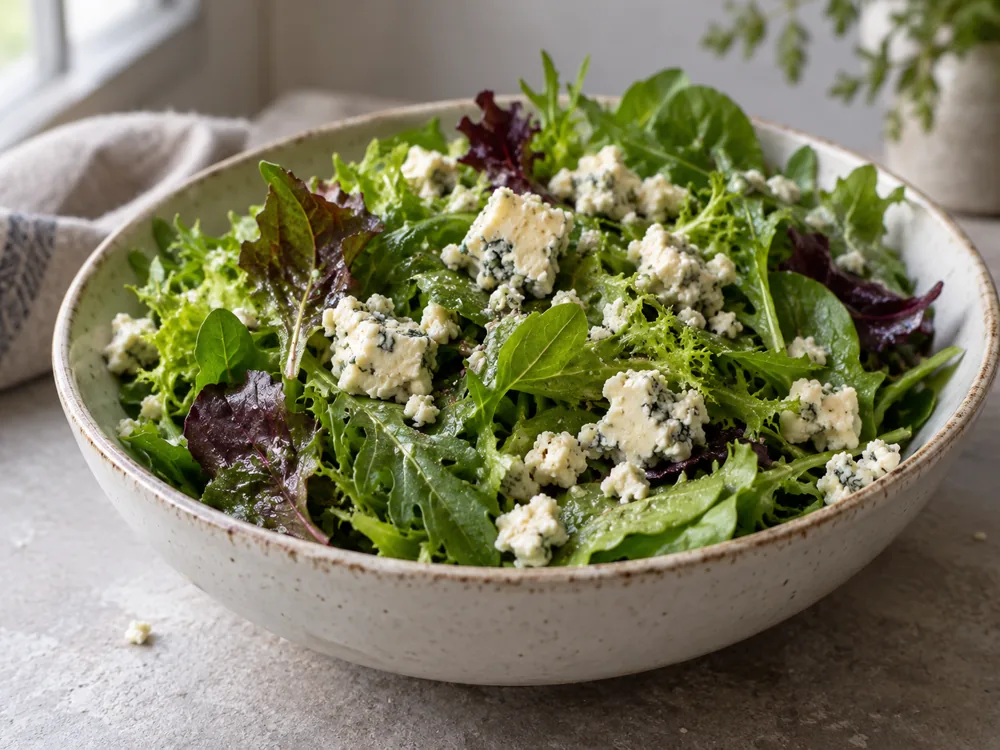
Oxford Blue is suggested for three uses: melted over a warm steak, crumbled into a fresh salad, or served with fruit or dark chocolate as a dessert.
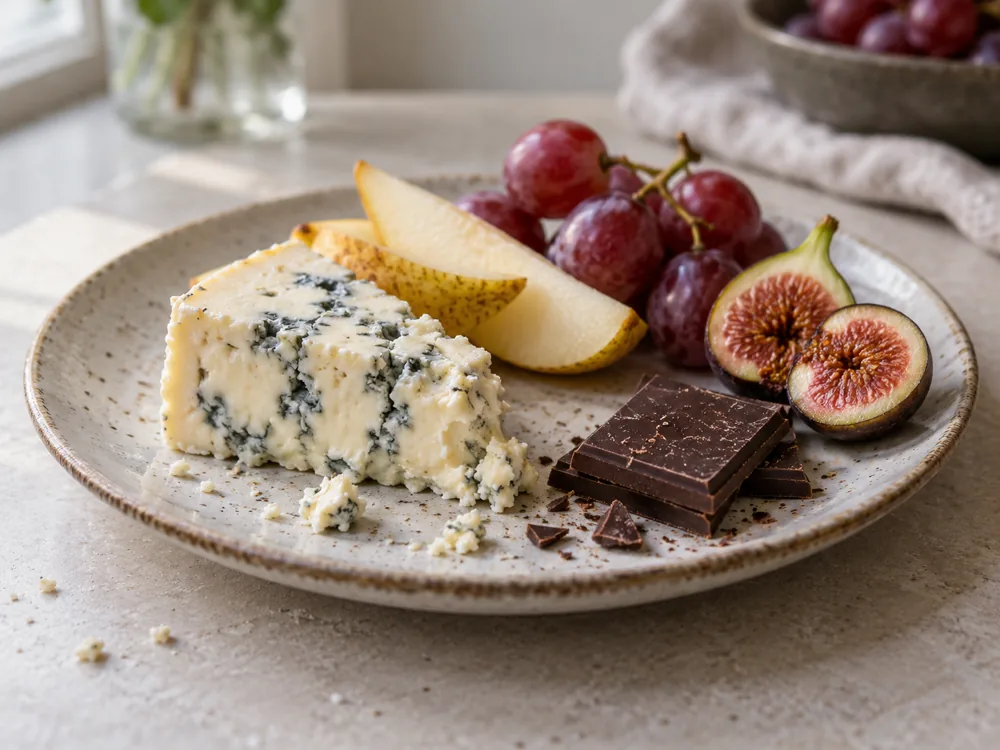
Wine is also suggested with it.
Where Can You Buy Oxford Blue, and What Does It Cost?
You can order it from the Oxford Cheese Company's own online shop in 250g, 500g and 1kg sizes, and in October 2026 the shop listed them at these prices.
The three prices work out at £32.20 a kilogram at every size, so you pay the same per kilogram whether you buy 250g or 1kg.
The Oxford Blue site also lists a Mini Oxford Blue of about 350g, individually wrapped and pitched as a gift, along with a portion jar and pre-packs.
What Can You Use Instead of Oxford Blue?
Dolcelatte and St Agur are the two cheeses named as similar in style to Oxford Blue.
Pouget is reported to have wanted a soft, creamy blue similar to St Agur or Dolcelatte.
The producer also sells Oxford Dolce, which it describes as a new English blue with an Italian flavour.