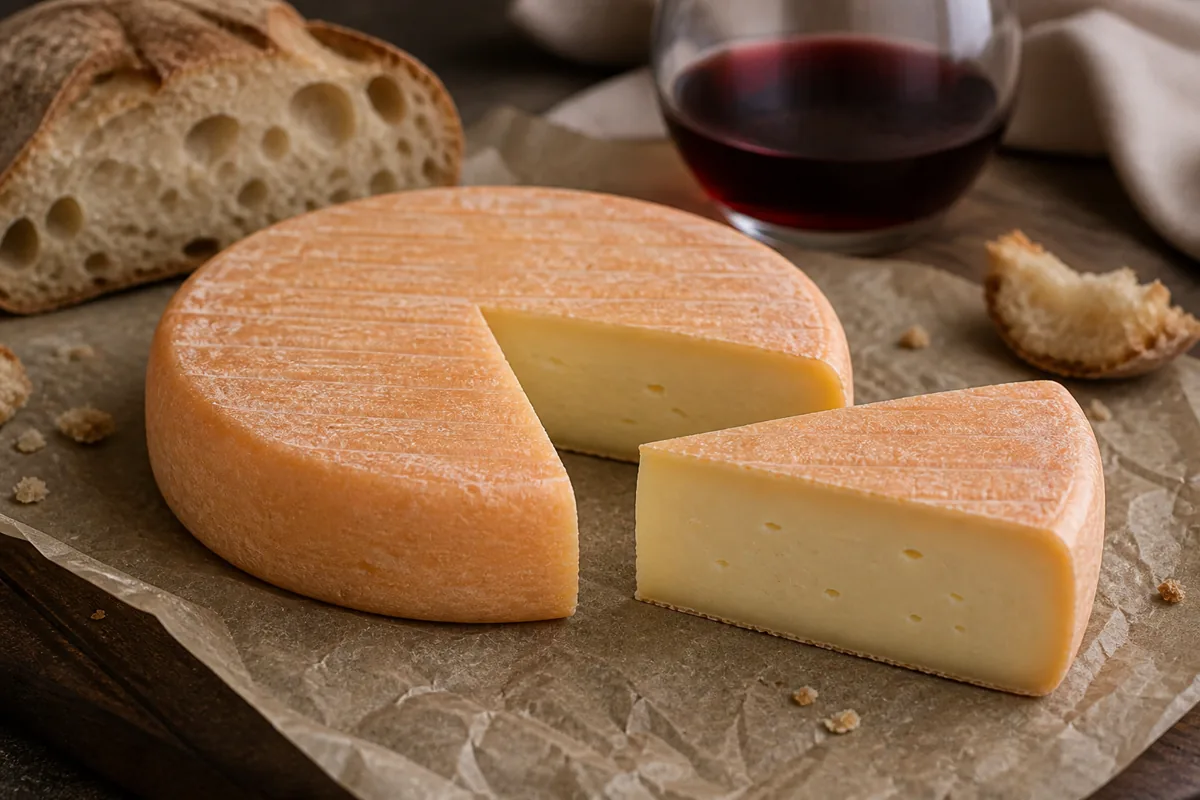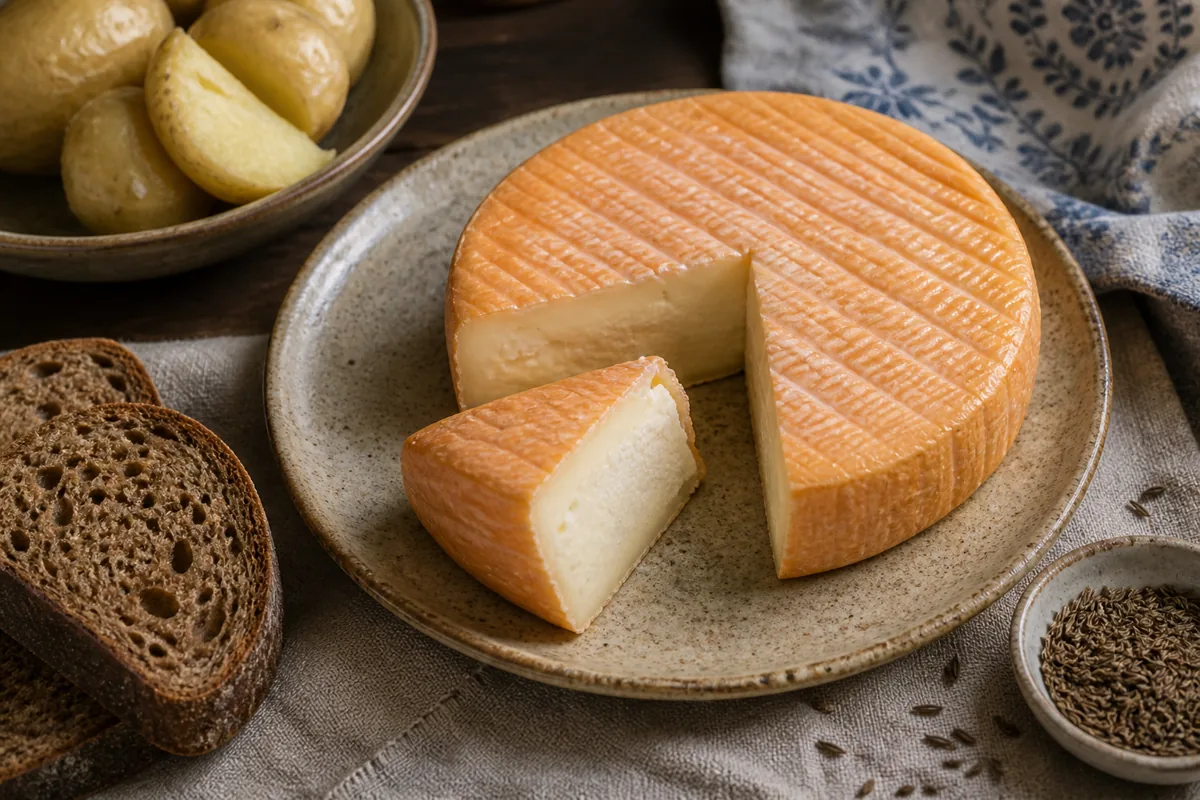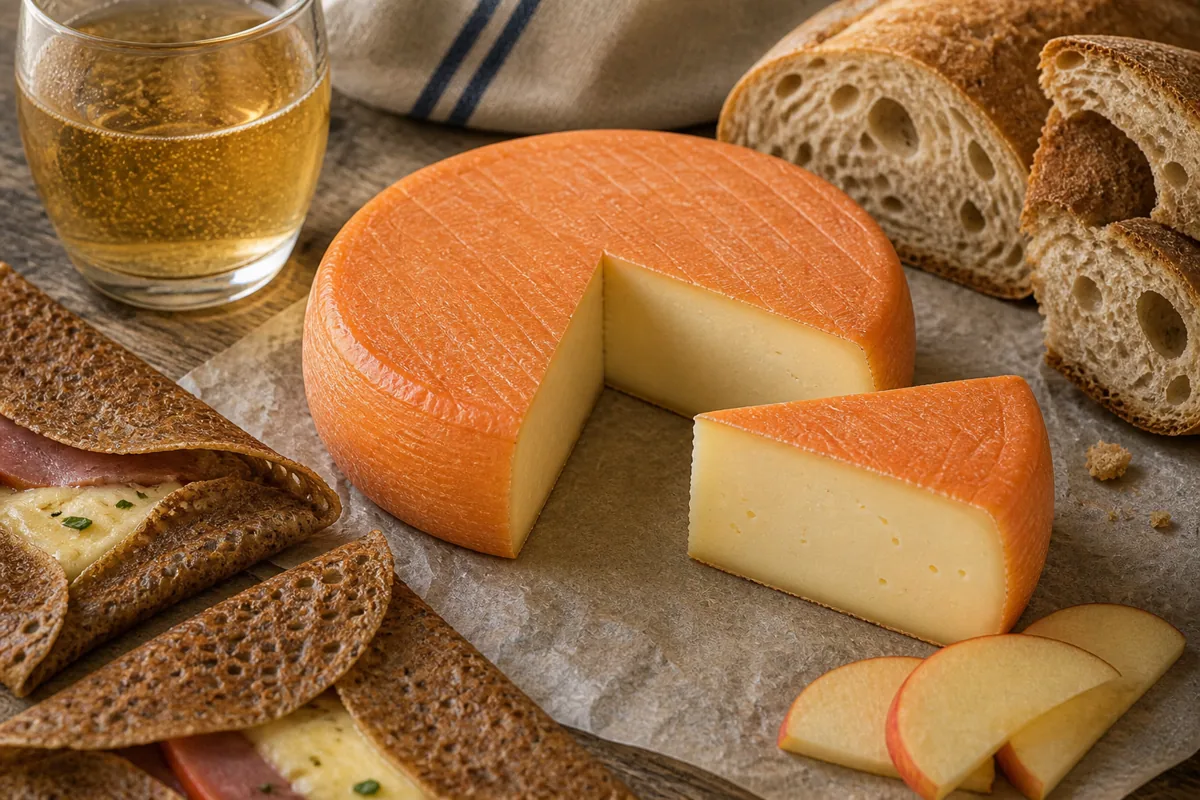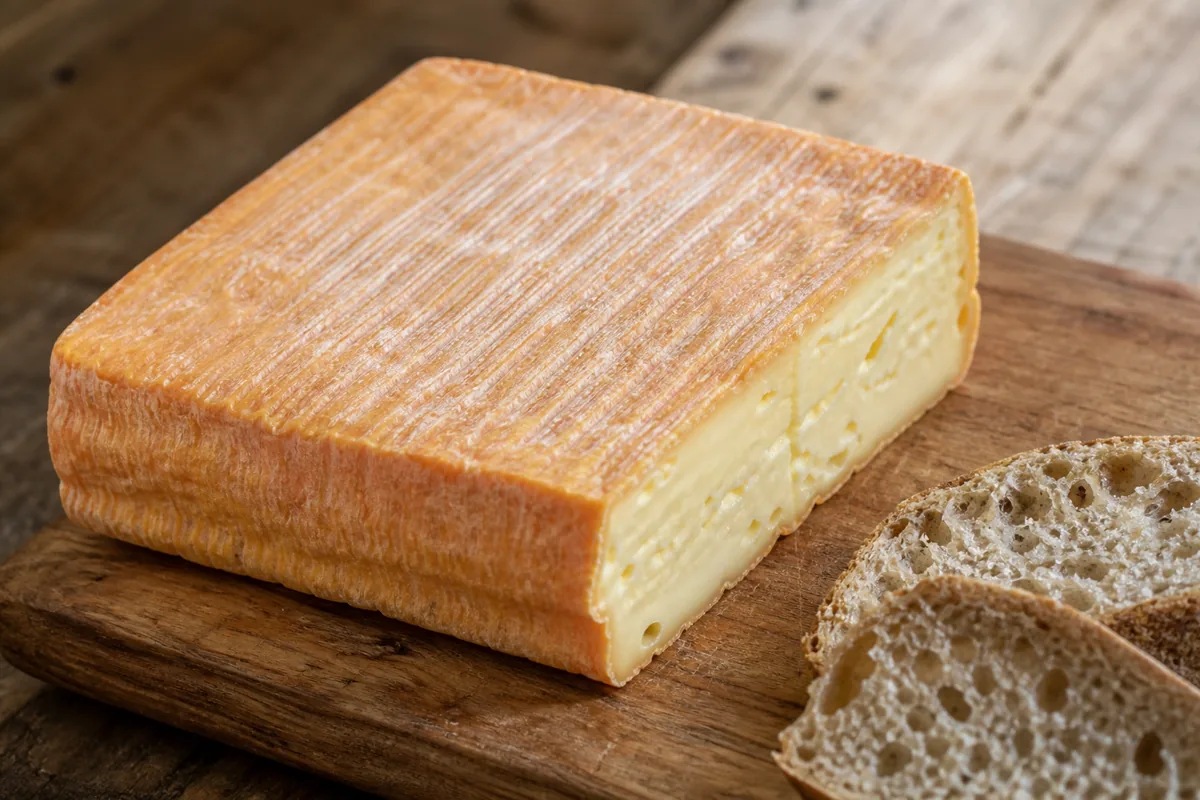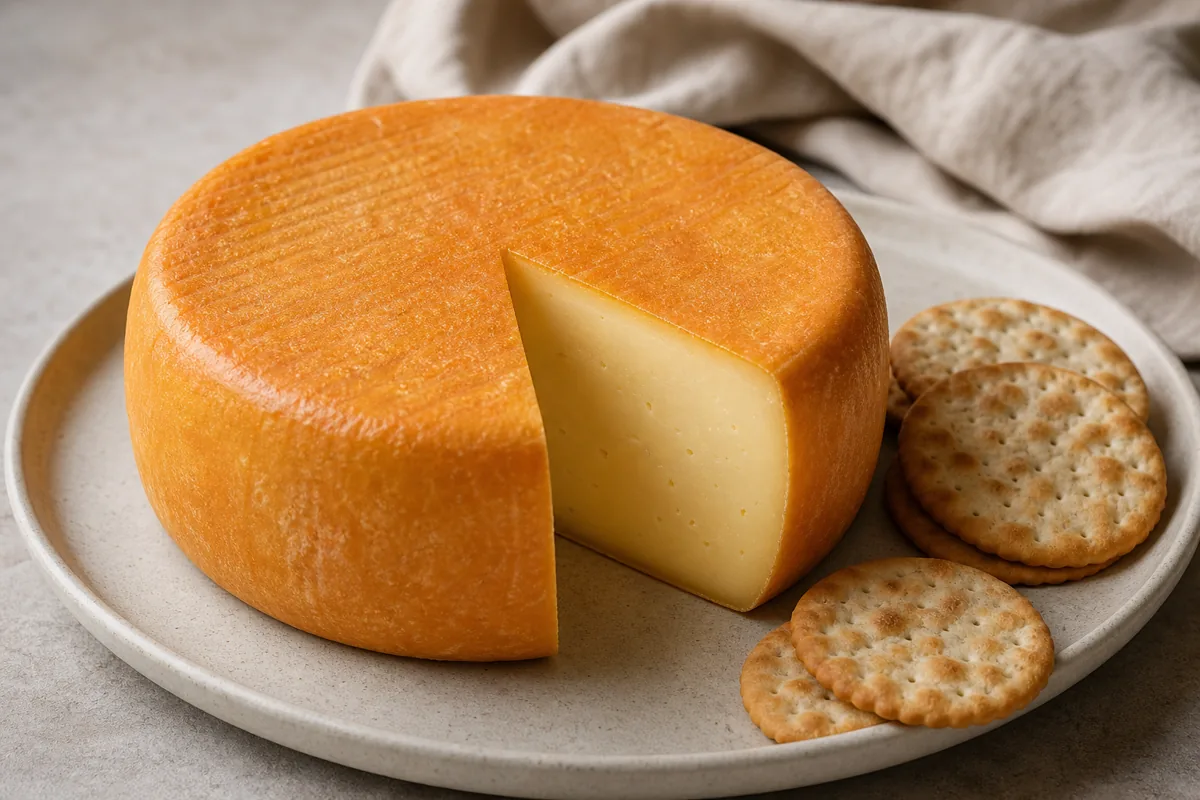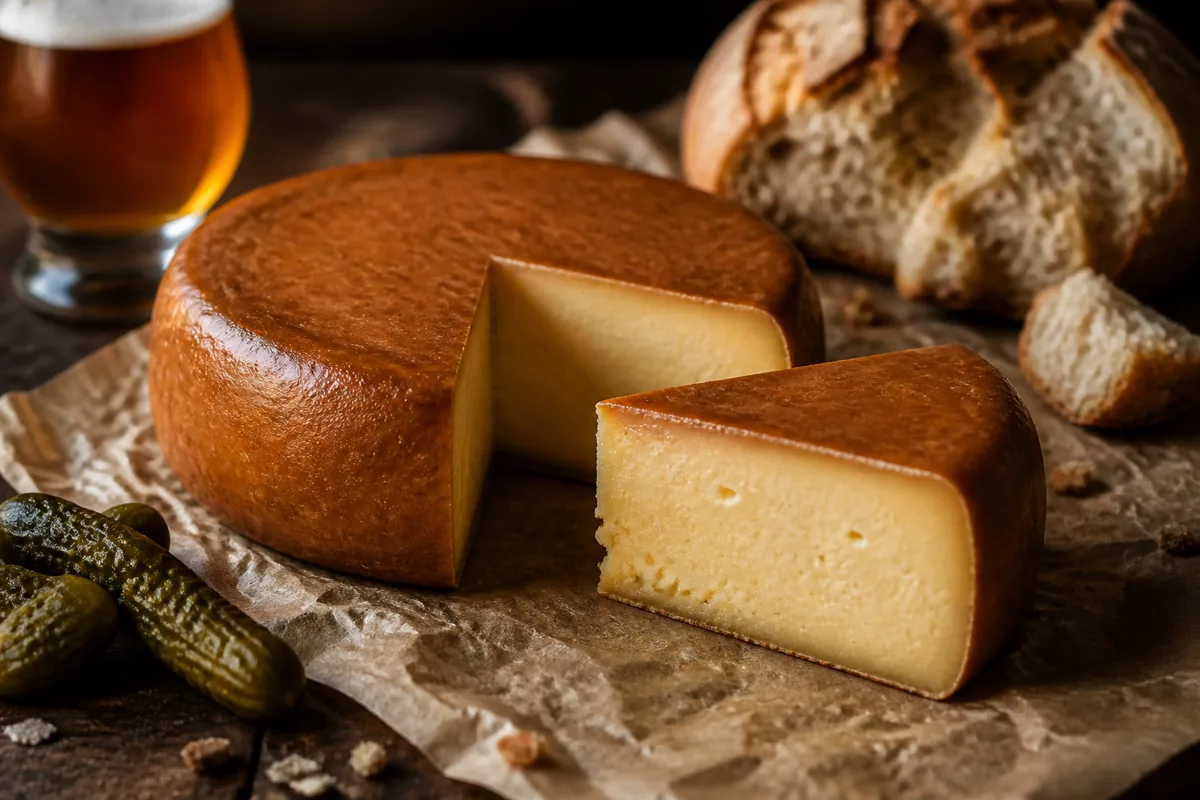
Abbaye de Belval is a northern French abbey cheese with a beer-washed rind, mild cow milk paste, and a small bitter edge near the surface. It stays firmer and less pungent than many washed-rind cheeses.
The clean distinction is milk and place.
Belval is raw cow milk from Troisvaux in Pas-de-Calais, not Basque sheep-milk Belloc or Burgundy Citeaux.
Buy it when you want a sliceable, gently aromatic cheese for bread, beer, light red wine, and small boards. Skip it when you need a hard grating cheese or a dramatic washed-rind centerpiece.
The brown rind, elastic paste, exact variant, and cut date tell you more at the counter than the abbey name alone.
In This Article
What Is Abbaye de Belval Cheese?
Abbaye de Belval is an uncooked pressed cow-milk cheese matured at Notre-Dame de Belval in Troisvaux. French dairy references commonly describe raw milk, a smooth brown rind, and a dense beige paste with small openings.
The rind and center perform different jobs. Repeated beer washing builds yeast aroma and a light bitter edge at the surface, while the elastic center remains mild enough for slices, sandwiches, and aperitif plates.
Belval appears in small 400 gram discs as well as wheels near 1.8 to 2 kilograms. A cut from the larger format may develop more slowly, so the exact variant, cut date, and rind condition matter more than size alone.
If a shop describes Belval as a huge stinker, ask to taste it. Classic Belval should be aromatic at the rind but restrained at the center.
Freshness matters because Belval's format is small enough for the cut face to change quickly.
A good wedge should still taste like cheese first and beer wash second.
If the rind smells clean but the center tastes flat, use it with bread and pickles rather than making it the main cheese-course focus.
The useful buying question is not simply whether Belval is strong. Ask whether the piece is plain Belval or a variant, how recently it was cut, and whether the rind aroma still smells clean.
What Does the Beer Wash Change?
The beer wash gives Belval its brown rind, yeasty aroma, and gentle bitter edge. Produits Laitiers says the cheese is produced by Mont-des-Cats monks, then aged 6 to 8 weeks at Notre-Dame de Belval.
The wash changes the rind more than the center. It builds yeast aroma, brown color, and a small beer-like bitterness while the paste stays beige, dense, and mild.
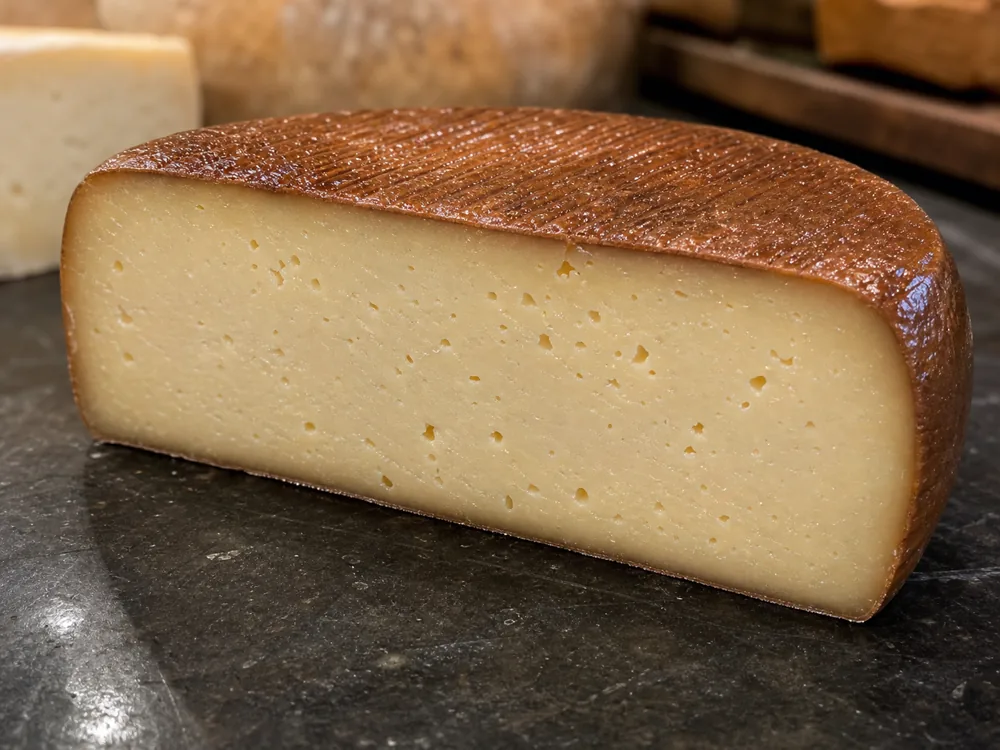
French dairy references connect production to Mont-des-Cats monks and aging to Notre-Dame de Belval. Repeated rind care at the aging site develops the brown surface over several weeks, so its clean yeasty aroma comes from maturation rather than a final splash of beer.
The short aging window keeps the paste supple and limits the dry salt, crystals, and long nutty finish found in hard aged wheels. Belval is built around a fresh rind and mild center.
Beer is a surface treatment here, not a promise that the paste will taste like a glass of ale. Moisture, yeast, salt, oxygen, and repeated turning change which microorganisms thrive on the rind, while most of the interior remains protected from direct contact.
This is why bitterness should stay near the surface and remain modest. If the entire bite tastes harsh, the wedge may be overripe, poorly stored, or paired with a drink whose bitterness amplifies the rind.
Cut one center-only piece and one rind-and-paste piece before serving. The comparison tells you whether the beer wash is in balance and whether guests need thinner rind portions.
Which Belval Variation Are You Buying?
Hauts-de-France gastronomy sources also describe Belval Biere, Enclos de Belval, and Floral de Belval. Those variants change the rind story: hop flower for Biere, a creamier direction for Enclos, and dried flowers such as cornflower, lavender, and rose for Floral.
- Plain Belval: Beer-washed brown rind with mild elastic paste.
- Belval Biere: A hop-flower direction for a more beer-led surface.
- Enclos de Belval: A creamier version noted in regional references.
- Floral de Belval: Flower-covered rind, not the same surface experience as plain Belval.
Ask for the exact version before buying.
A flowered or hop-led rind should not be judged like plain Belval.
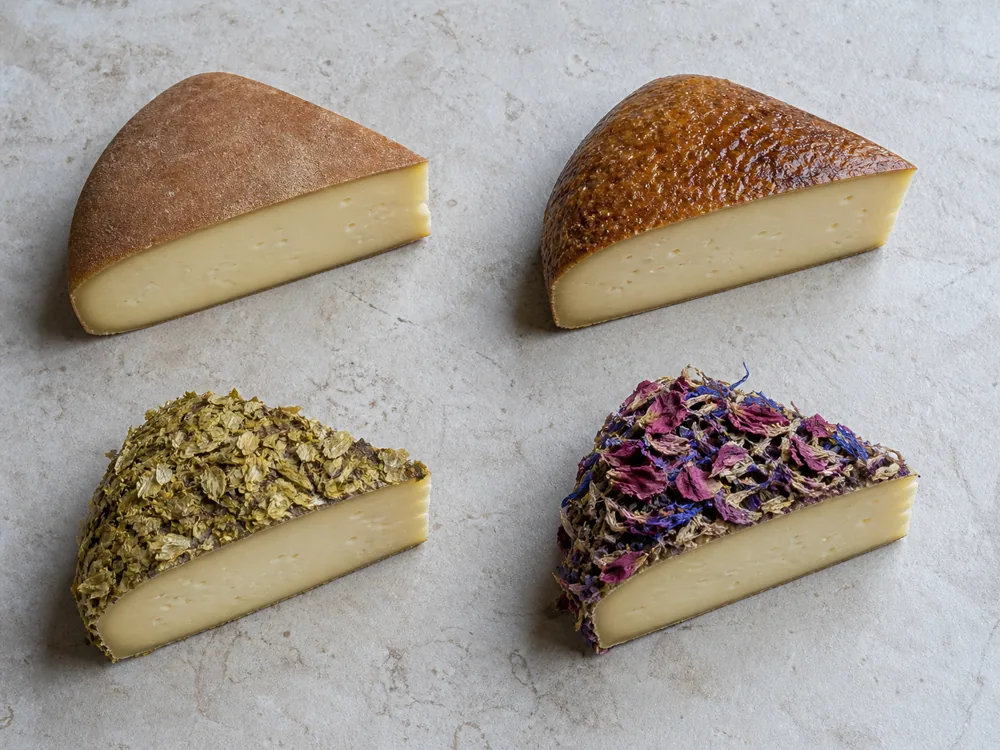
If the rind has hop flowers or dried flowers on it, judge that surface before deciding the drink, bread, or fruit beside it. Details for plain Belval should not be transferred automatically to Biere or Floral.
| Version | First thing to assess | Serving direction |
|---|---|---|
| Plain Belval | Clean brown rind and mild elastic paste | Bread, cornichons, light beer, or fresh red wine |
| Belval Biere | Hop aroma and surface bitterness | Malt-forward beer with restrained hops |
| Enclos de Belval | Creamier body and ripeness | Plain bread and a lighter drink |
| Floral de Belval | Whether the dried flowers smell fresh rather than perfumed | Quiet bread and fruit, without another aromatic condiment |
The variants suit different plates, so there is no universally strongest or best Belval. Choose the version whose surface treatment fits the plate you are building.
How Is Belval Different From Other Abbey Cheeses?
Burgundy abbey Citeaux uses Montbeliarde milk and a softer washed-rind style, while Belval has a firmer northern French paste and beer-led surface.
Breton Timadeuc sits closer to mild Port-Salut. Belval adds a more noticeable yeast aroma and bitter edge without becoming as forceful as a pungent washed-rind cheese.
Saint-Paulin can suggest the mild elastic paste, but it does not copy Belval's beer-washed surface. Milk, rind treatment, and texture identify the cheese more reliably than the abbey name.
Herve is a useful sensory comparison because both cheeses put more aroma at the rind than in the paste. Herve's protected regional identity and brine-washed orange surface make it a different cheese, while Belval remains tied to Troisvaux, abbey affinage, and its beer-led brown rind.
That distinction matters when shopping by photograph. A small brown or orange monastery cheese can resemble several washed-rind families, so the label must resolve place, milk, and exact variant before appearance does.
What Does Abbaye de Belval Taste Like?
The flavor should stay mild at the center and more savory near the rind. Expect dairy, yeast, cellar, gentle salt, and a light bitter note that recalls beer.
The paste should feel firm and elastic, not runny. French dairy sources describe a dense beige to ivory paste with small holes and a washed rind.
Those small holes are a useful visual cue.
They keep the paste from reading like a compact grating cheese, and they match Belval's role as a sliceable table cheese.
Temperature changes the balance quickly. Refrigerator-cold Belval hides the milk and exaggerates firmness, while an over-warm piece releases more rind aroma and can make the surface bitterness seem larger.
Rest a modest portion for about 20 minutes, then press the cut face lightly. It should yield without sagging, and the aroma should open before oily beads appear.
- Center paste: Mild cow milk, firm body, and low sweetness.
- Near the rind: Yeast, cellar, beer wash, and light bitterness.
- Texture: Dense and elastic rather than runny or crumbly.
- Best temperature: Briefly rested from the refrigerator, not warm and sagging.
Can You Cook With Abbaye de Belval?
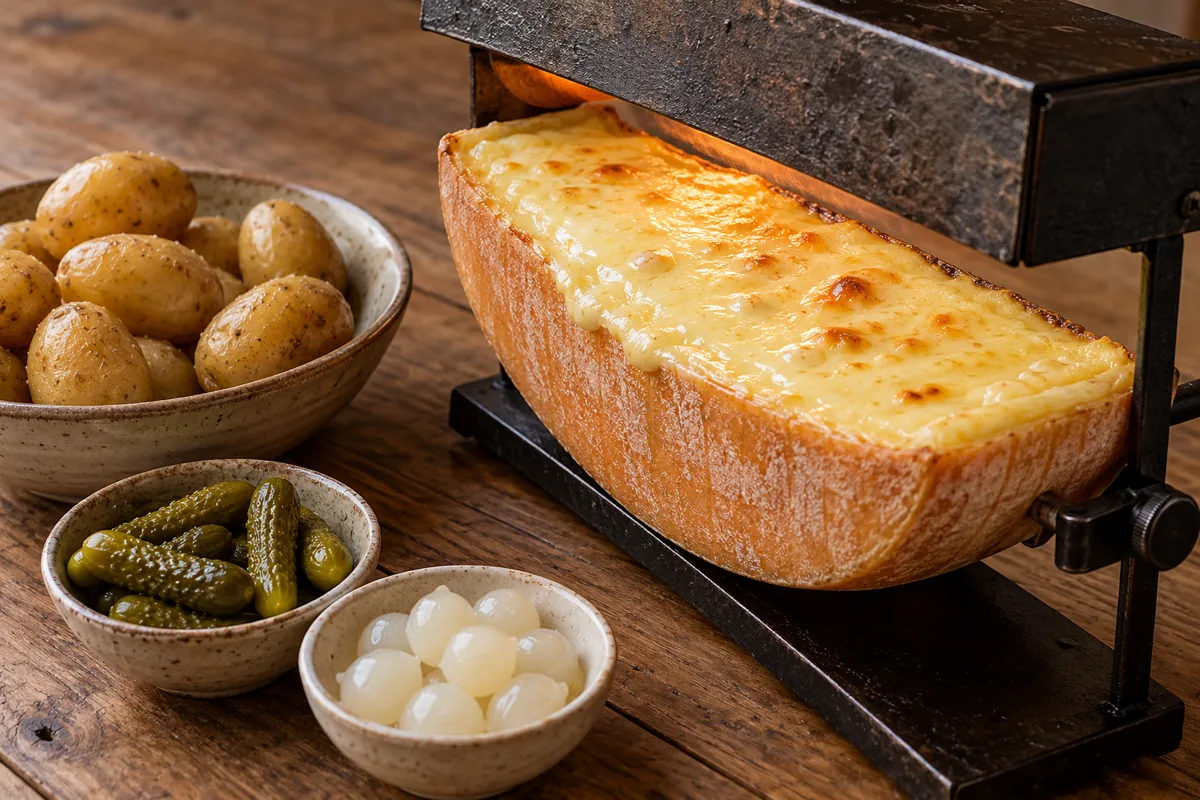
Use Belval where the rind can stay visible: small board wedges, aperitif cubes, simple sandwiches, and warm tartines. It can soften gently, but it is not built for fondue or hard grating.
| Use | How It Works |
|---|---|
| Beer plate | Serve with bread, pickles, and abbey-style beer. |
| Warm tartine | Melt lightly over bread without burying the rind. |
| Simple sandwich | Slice thinly with ham, mustard, or cornichons. |
| Cheese course | Place before stronger washed rinds or blue cheeses. |
Belval can also sit near stronger washed-rind Munster on a tasting board, but serve Belval first. Its mild center will taste flatter after a pungent rind or a salty blue.
A warm tartine works because heat relaxes the elastic paste while bread absorbs the surface fat. Keep a strip of rind on each slice so the beer-wash character remains present, then use mustard or cornichons for acidity rather than adding a second strong cheese.
For warm use, keep the heat light.
Belval can soften over bread or potatoes, but long baking can push the rind bitter while the center loses its clean milk flavor.
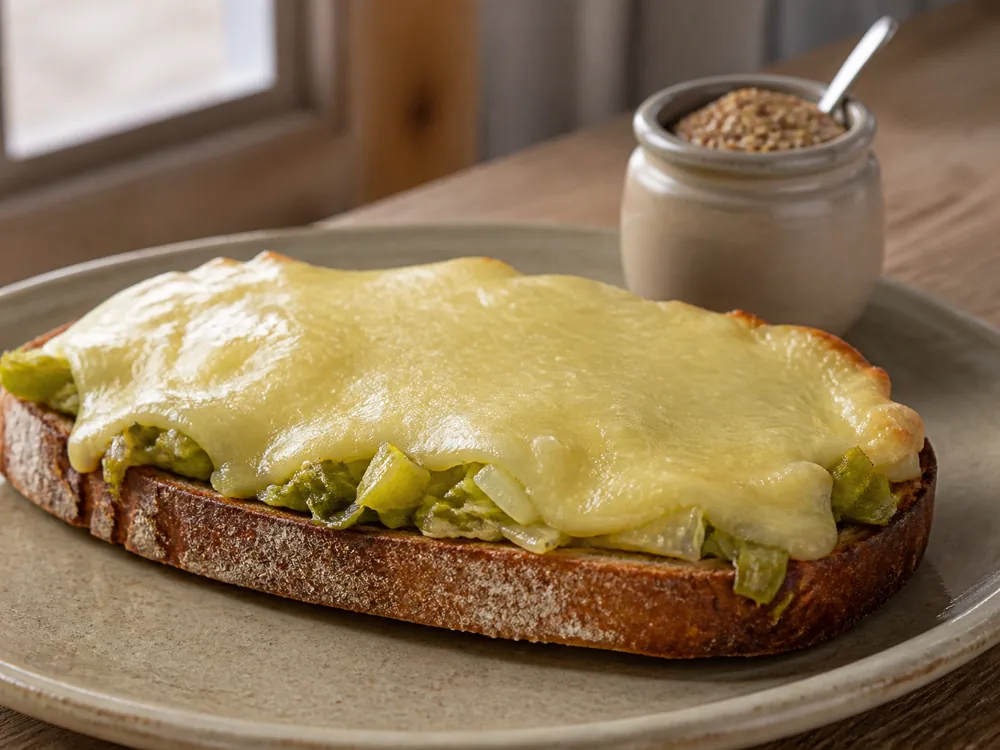
For sandwiches, thin slices are better than thick blocks. The rind flavor spreads more evenly, and the elastic paste does not dominate the bread.
For boards, put Belval between mild cow milk cheeses and stronger rind cheeses.
That order lets the beer-washed surface register without flattening the next cheese.
Serve a few slices rather than a large warm wedge. That amount lets the beer-washed rind season the plate without making its light bitterness seem stronger than the mild center.
- Best first bite: paste and rind together on plain bread.
- Best drink: beer with moderate bitterness, not a heavy sweet stout.
- Best warm use: quick tartine heat, not long baking.
- Best board order: after mild slices and before stronger washed rinds.
What Pairs With Abbaye de Belval?
Beer is the most literal pairing because the rind already carries beer-wash logic. Light Beaujolais or Chinon can also work because fresh red fruit handles the rind without heavy tannin.
| Pairing | Type | Why It Works |
|---|---|---|
| Abbey-style beer | Drink | Malt and gentle bitterness echo the beer-washed rind. |
| Beaujolais | Wine | Light red fruit keeps the mild paste from tasting flat. |
| Cornichons | Food | Acidity cuts the dense elastic paste. |
| Country bread | Food | A plain base keeps the rind and milk clear. |
Use the same intensity logic as beer-and-cheese pairing: keep bitterness moderate, and let carbonation refresh the fat. Avoid sweet chutney when you want to taste Belval itself.
On a mixed cheese board, place Belval between mild cow milk cheeses and stronger washed rinds. Pair it with bread, pickles, and one fruit element rather than a crowded spread.
If you pour wine, keep tannin modest. Heavy oak or high alcohol can make the rind taste bitter, while lighter red fruit keeps the cheese in balance.
Let the exact variant decide the pairing.
Hop-led Belval Biere can take beer more directly, while Floral de Belval needs quieter partners so the flowers do not become perfume.
How Should You Buy and Store Abbaye de Belval?
Buy Belval by rind and cut face. Choose a smooth brown rind with yeasty aroma, and avoid sour wetness, harsh ammonia, cracked paste, or oily seepage.
The cut face should look dense and beige to ivory. If it looks dry at the edge but wet under the rind, the wedge may have been held too long after cutting.
Ask when the wheel or wedge arrived and which variant the shop received. Those two answers predict flavor more reliably than a generic “abbey cheese” shelf tag because age affects rind force and each surface treatment changes the first aroma.
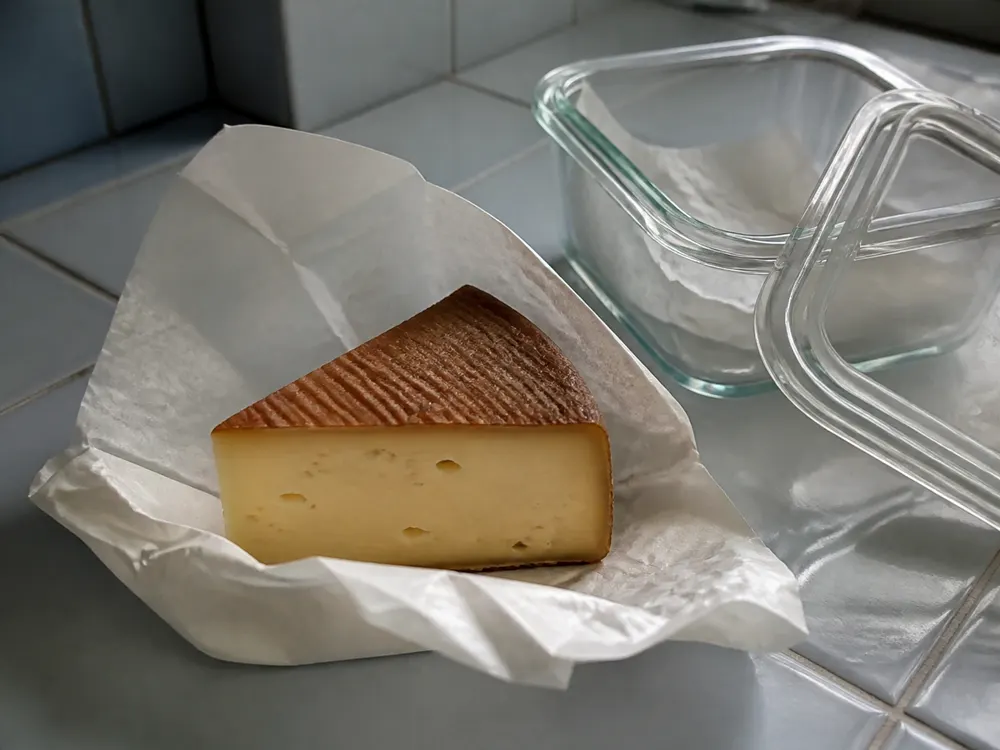
At home, use cut-face wrapping and a separate container.
Belval should smell like beer, yeast, and cellar, not sour dampness.
Loosen the wrapping before serving and smell the rind first. Clean beer, yeast, and cellar notes are useful.
Sour wet paper or sharp ammonia means the storage, not the cheese style, is controlling the flavor.
Pregnancy guidance depends on the exact label and the agency you follow. French dairy references describe Belval as raw cow milk, so do not use the abbey name or short aging period as safety clearance; our advice on choosing cheese during pregnancy separates current CDC and NHS guidance.
What Can You Substitute for Abbaye de Belval?
For substitutes, choose by job. Port-Salut covers the mild monastery-style slice, Pont-l'Eveque gives a softer French washed-rind alternative, and Munster gives more force than Belval.
Use Port-Salut for sandwiches or guests who want less rind aroma. Use Pont-l'Eveque for a softer French cheese course, and use Munster only when a stronger washed-rind presence is acceptable.
For cooking, a young Raclette-style cheese will melt more predictably but will lose Belval's beer-led surface. For a board, Timadeuc keeps the monastery association and mild cow-milk direction while moving away from beer bitterness.
Belval's value is the rind-paste balance, not a creamy melt.
Belval is best treated as an accent cheese. A few small pieces give enough rind aroma and milk fat without asking a rare abbey cheese to carry the whole meal.