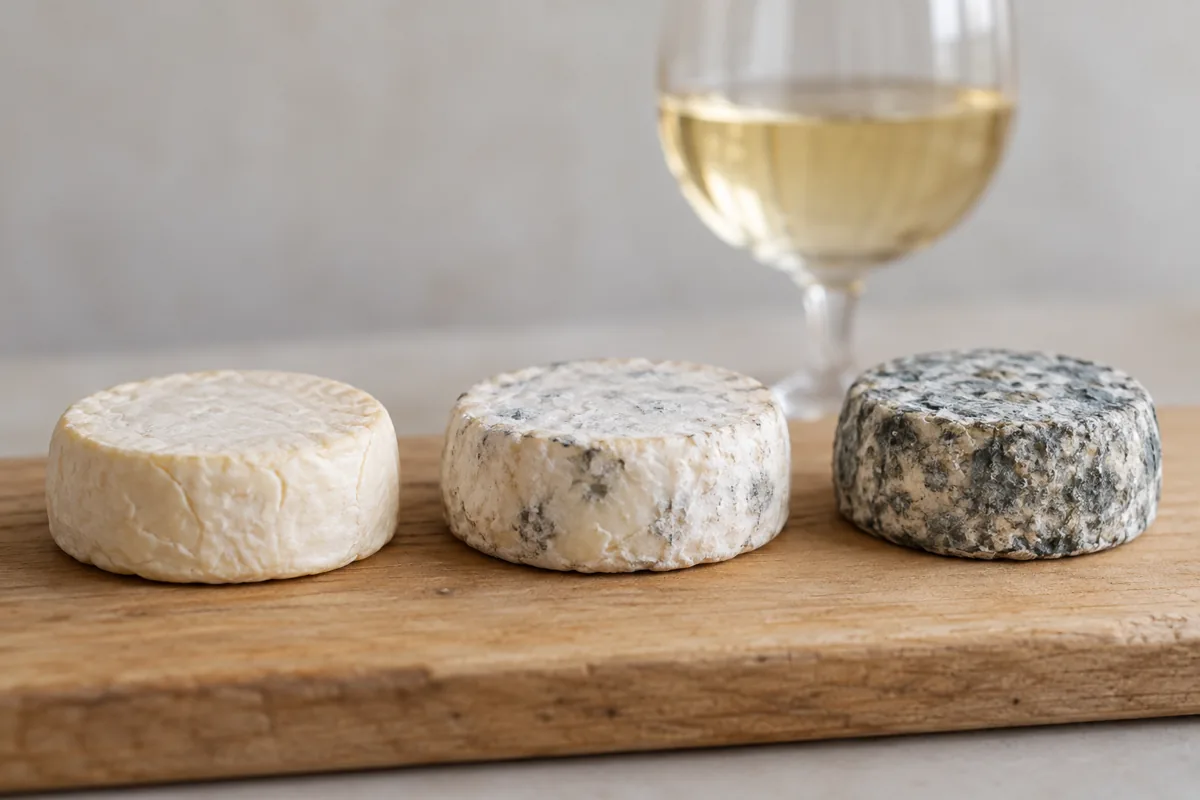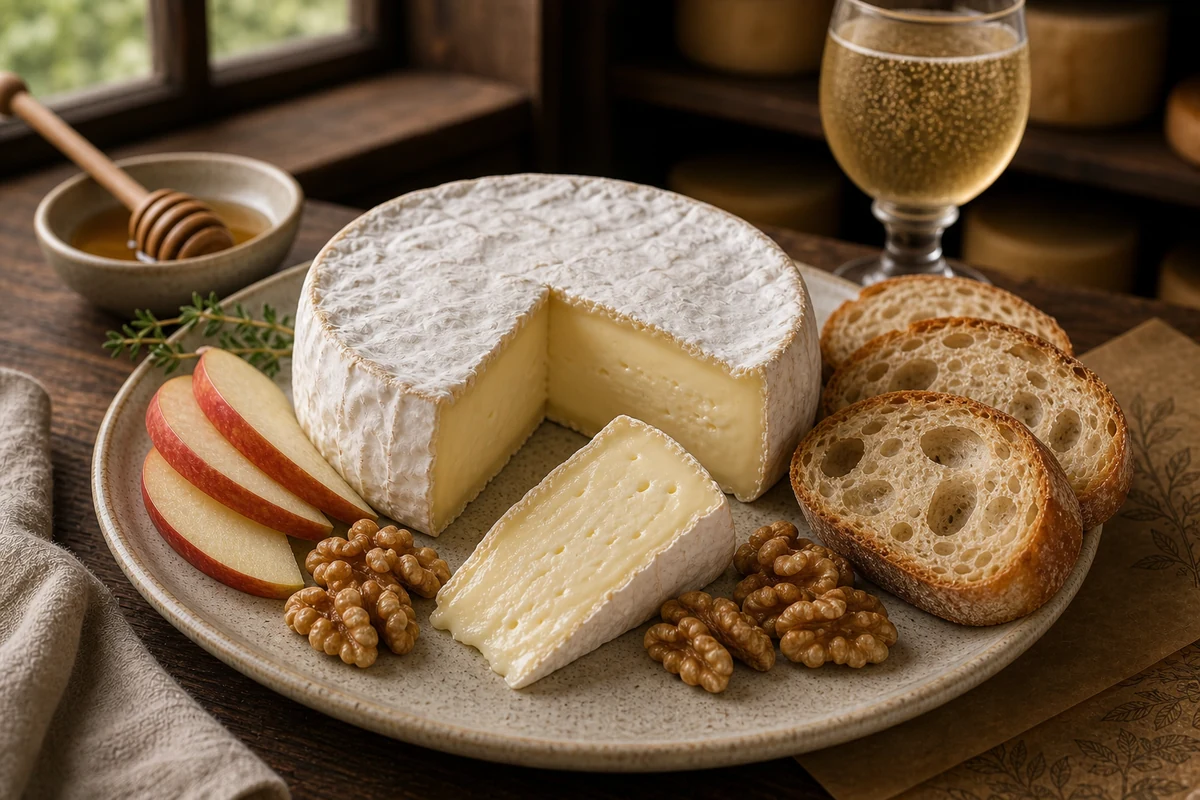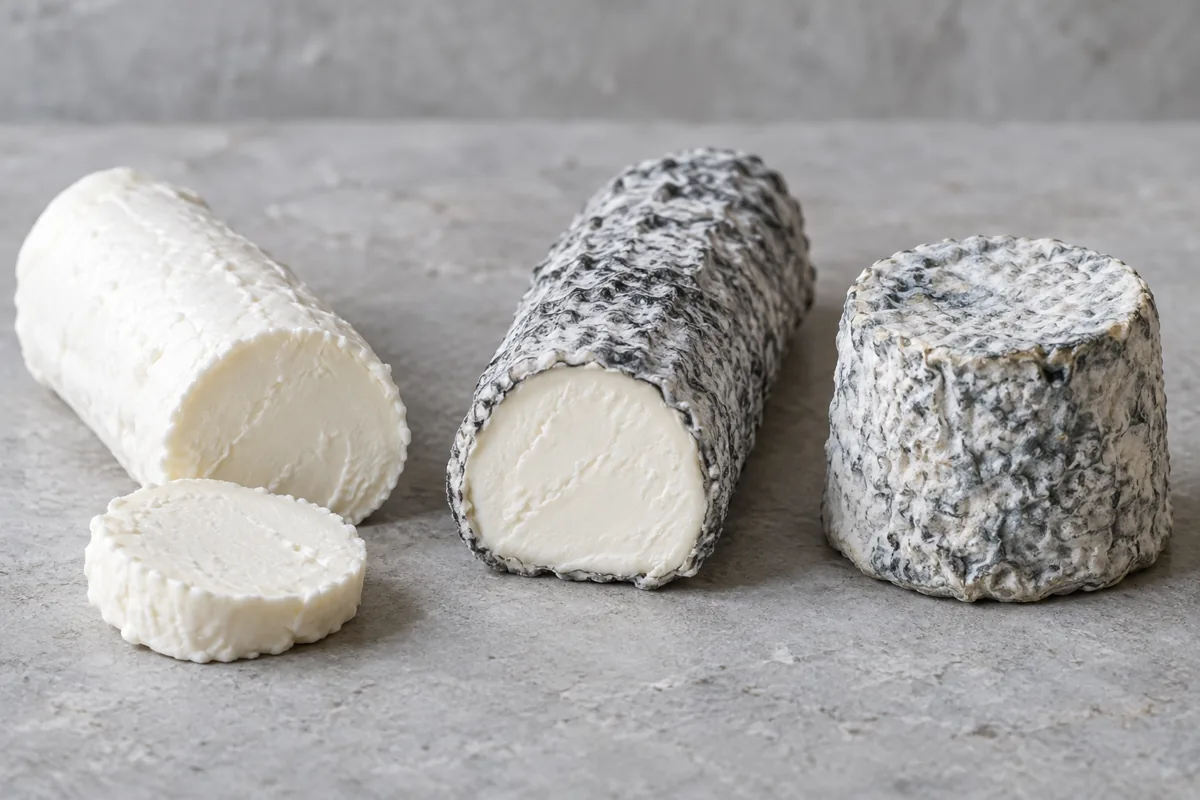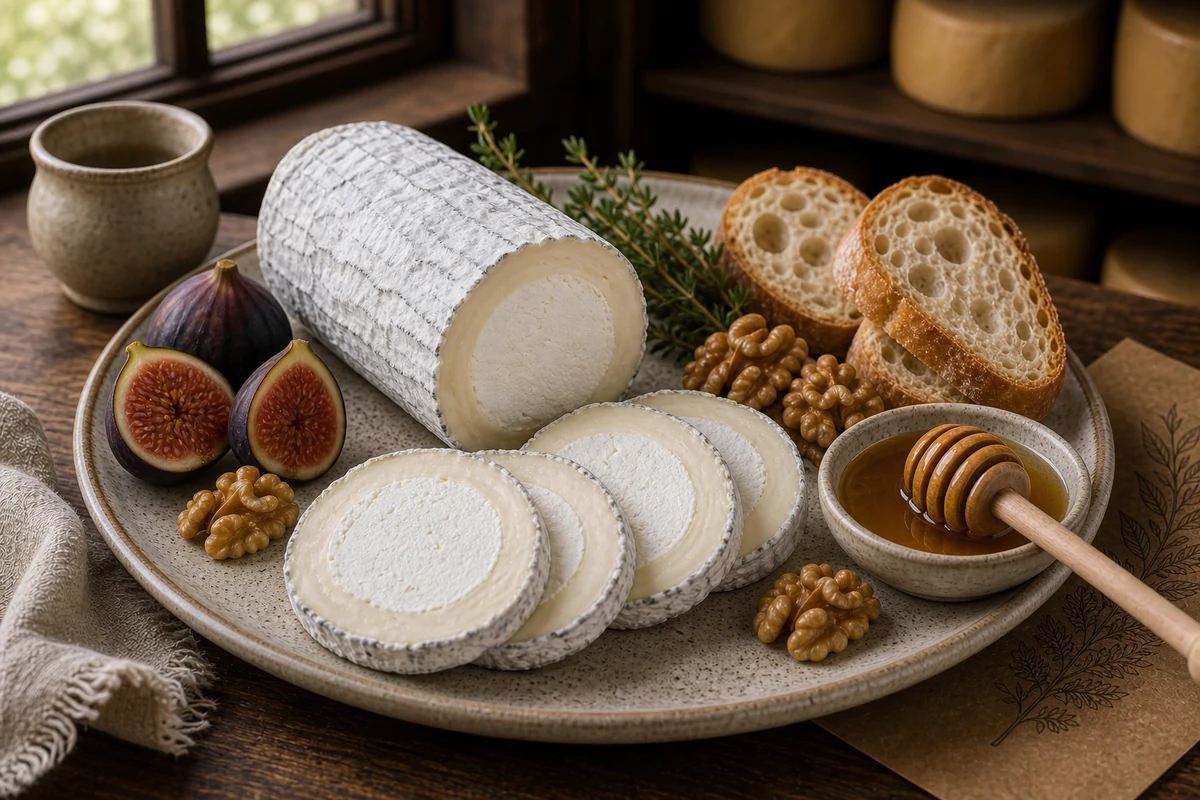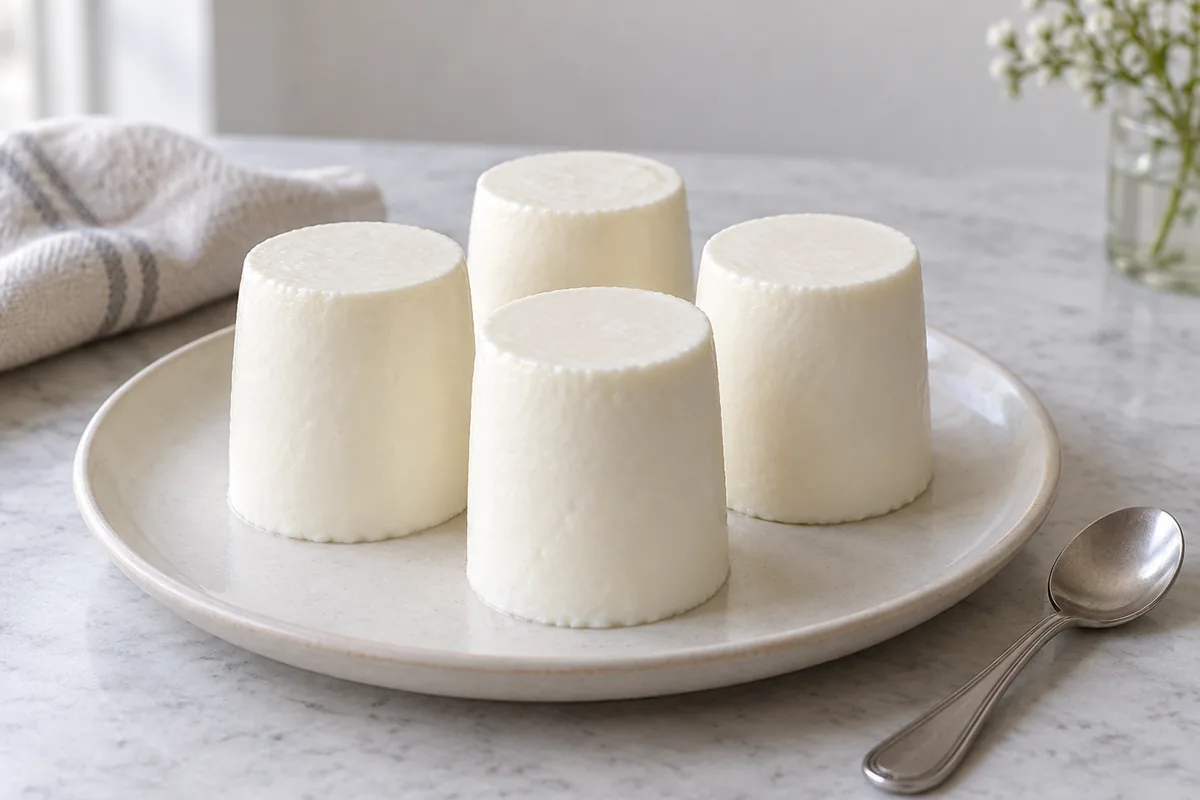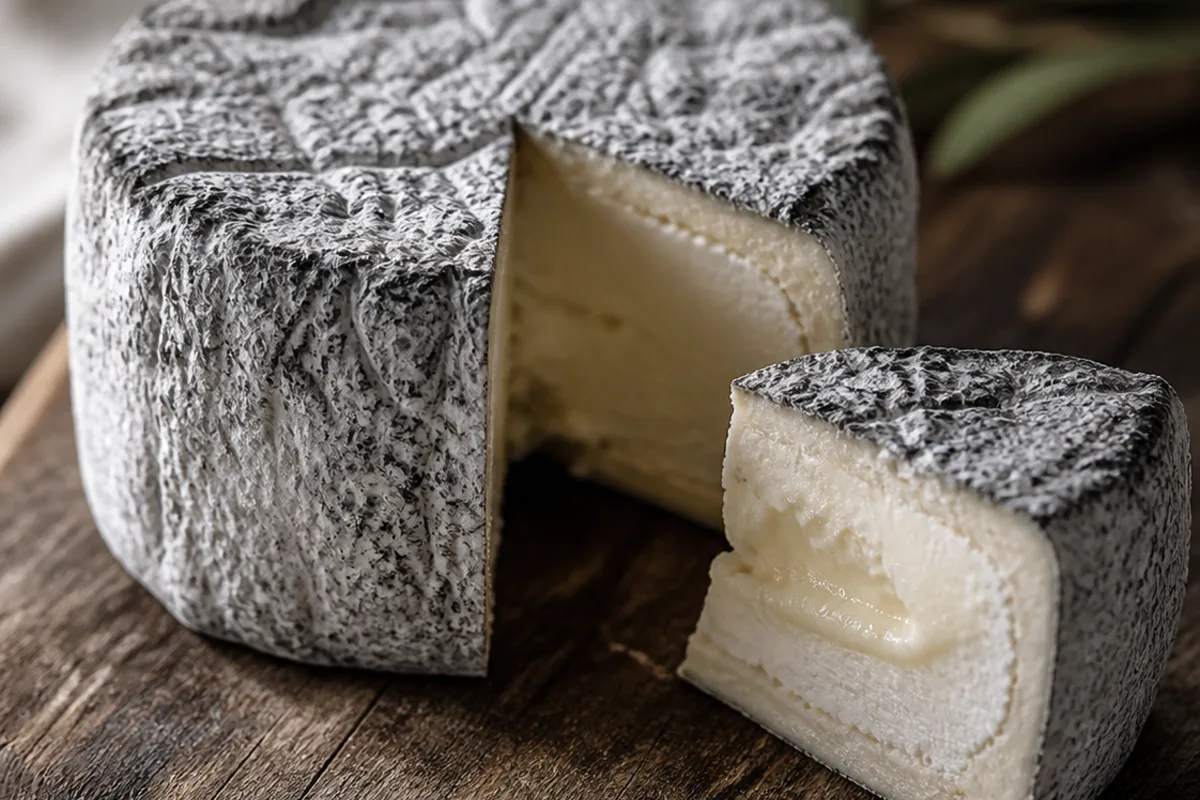
Edith is an ash-coated goat's cheese from Woodside Cheese Wrights in the Adelaide Hills of South Australia. Woodside calls it a French-style Geotrichum mould cheese that starts firm and chalky and turns velvety and runny as it ages.
Cheese.com files it in the Brie family as a soft-ripened cheese made from pasteurized goat's milk.
In This Article
What Does Edith Taste Like Young and Ripe?
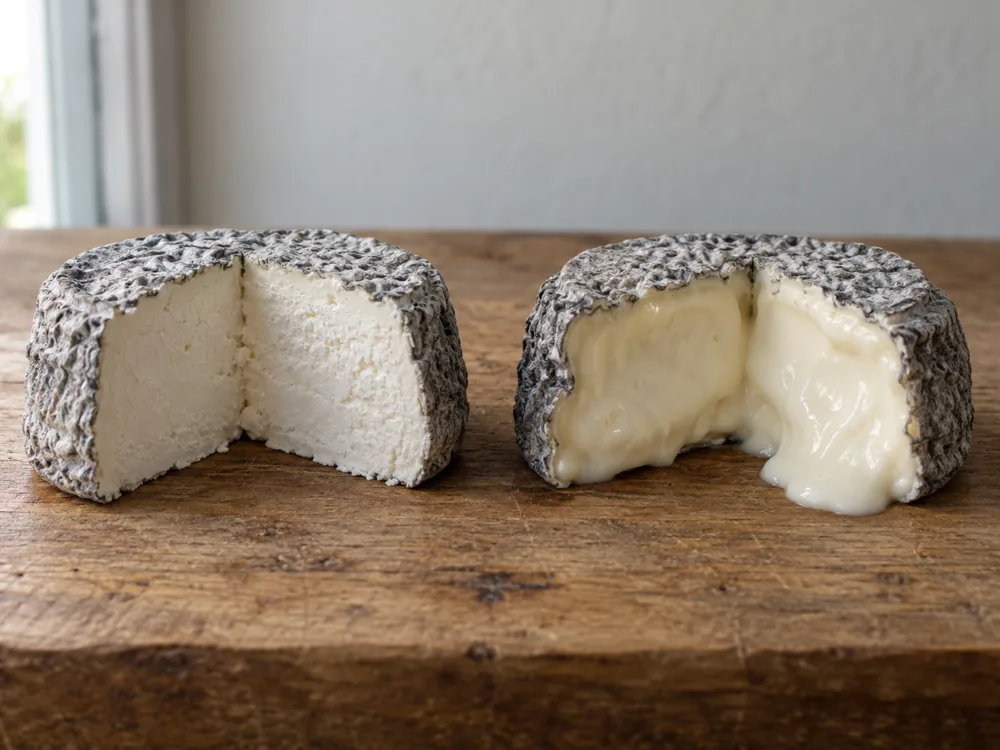
Woodside describes two stages of Edith: a young cheese with a firmer, chalky texture under the ash-coated rind, mild aromas and nutty, savory flavours, and a ripe one with a velvety, runny interior and flavours that deepen.
Descriptions of ripe Edith agree on velvety and runny, down to Le Fromage Yard's "wonderfully runny" centre, and Le Fromage Yard also calls the young cheese chalky and firmer.
| Stage | Texture | Flavour | Aroma |
|---|---|---|---|
| Young | Firmer, chalky texture under the ash-coated rind (Woodside); chalky and firmer (Le Fromage Yard) | Nutty, savory (Woodside, Le Fromage Yard); mild and balanced, with a slight blue flavour and pleasant acidity (Cheese.com) | Mild aromas (Woodside) |
| Ripe | Velvety, runny interior (Woodside); velvety, runny texture (Cheese.com); velvety, decadent, wonderfully runny center (Le Fromage Yard) | Flavours deepen (Woodside); intense sharpness on the palate (Cheese.com); a deeper, richer experience (Le Fromage Yard) | Not stated |
| Whole cheese, no stage given | Creamy, fudgey, mousse like (Le Fromage Yard) | Tangy, sweet, earthy and somewhat gamey (Le Fromage Yard) | Mild (Cheese.com) |
Young Edith is where the flavour words split: Woodside and Le Fromage Yard say nutty and savory, while Cheese.com gives mild and balanced, with a slight blue flavour and pleasant acidity.
Cheese.com also stands apart on the ripe cheese, with intense sharpness on the palate, while Woodside says the flavours deepen and Le Fromage Yard calls the ripe stage "a deeper, richer experience".
If a strong goat smell puts you off, both descriptions of the aroma are mild: Woodside gives the young cheese mild aromas, and Cheese.com lists the aroma as mild.
The gamey note is a flavour word. Le Fromage Yard gives the flavour as tangy, sweet, earthy and somewhat gamey, and the texture as creamy, fudgey and mousse-like, for the cheese as a whole.
Why Does Edith Go From Chalky to Runny?
Woodside names Edith's rind mould as Geotrichum, and that mould releases enzymes that break down proteins and fats, which soften a surface-ripened cheese into a creamy, melt-in-your-mouth texture.
Cheese Scientist calls Geotrichum candidum "a yeast-like fungus that straddles the boundary between yeast and mould," one that spreads across a cheese's surface in an intricate mycelial network.
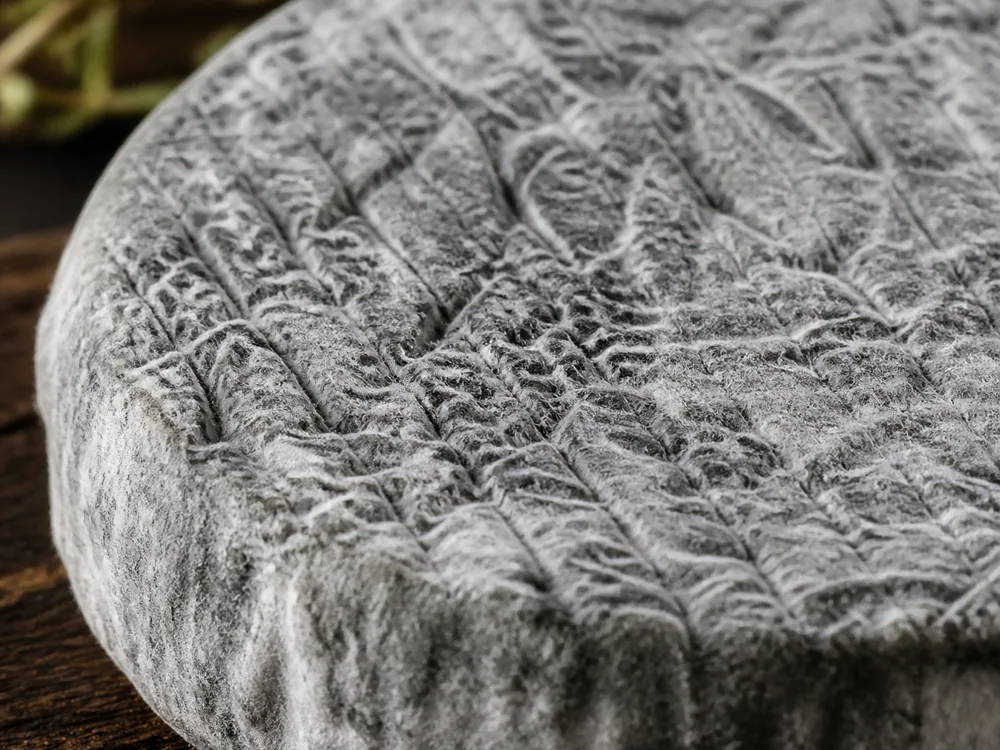
Over time the mould also mellows a cheese's acidity and replaces spiciness with richness, which sits against the intense sharpness Cheese.com gives ripe Edith.
Cheese.com says Edith's bloomy rind is rolled in ash "to push further development of white mould and also impart a savoury flavour."
That white mould and Woodside's Geotrichum can be the same thing, since Woodside's Time Capsule page calls its retired Duet "a white mould geotrichum cheese."
Woodside calls Edith French-style, and a large number of French goat's milk cheeses depend on Geotrichum candidum, among them Crottin de Chavignol, whose wrinkly rind it forms.
What Should You Serve and Drink with Edith?
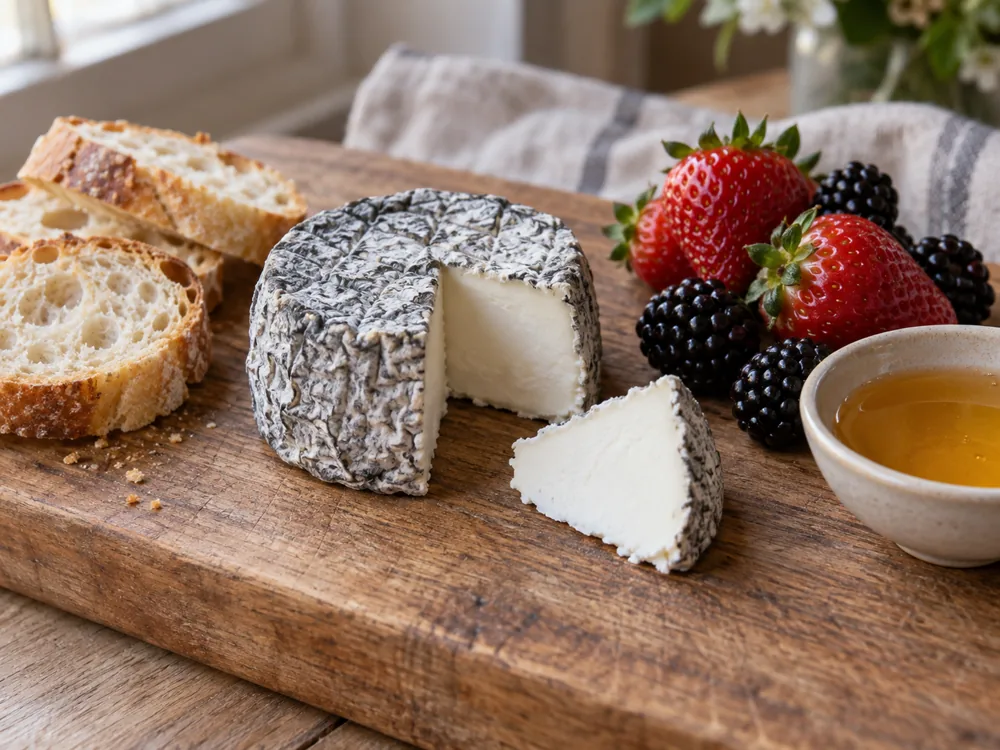
Woodside's serving advice is a cheese board with crackers or a warm baguette, roasted nuts, fresh fruit and honey, and Le Fromage Yard also puts honey and fruit beside Edith, naming fresh berries and fig spread.
For wine, the two lists have no bottle in common: Woodside suggests a light red such as Sangiovese or a light white such as pinot grigio, and Le Fromage Yard a crisp, dry Sauvignon Blanc or a sparkling rosé.
| Pairing | Type | Why It Works |
|---|---|---|
| Crackers or warm baguette | Food | Woodside suggests crispy crackers or a crusty warm baguette to highlight Edith's creamy texture. |
| Nuts, fruit and honey | Food | Woodside's board suggestion is roasted nuts, fresh fruit and honey; Le Fromage Yard also says honey is always a winner with goat's cheese. |
| Berries or fig spread | Food | Le Fromage Yard says fresh berries or a fig spread add sweetness against Edith's earthy notes. |
| Tomato and basil pasta | Food | Cheese.com says Edith tastes delicious served with tomato and basil pasta. |
| Sangiovese or pinot grigio | Wine | Woodside suggests a light red such as Sangiovese for a rich pairing, or a light white such as pinot grigio. |
| Sauvignon Blanc or sparkling rosé | Wine | Le Fromage Yard recommends a crisp, dry Sauvignon Blanc or a sparkling rosé, saying the acidity and bubbles balance the creamy richness. |
Where Can You Buy Edith?
On 1 October 2026, Woodside's own product page for Edith returned a not-found error, and Edith did not appear in the shop's cheese range.
Le Fromage Yard, an Australian retailer, lists Edith at 20 Australian dollars, but its page showed the cheese as out of stock on 1 October 2026, with an option to request an email when it returns.
Before that, Woodside sold Edith as a 150 g cheese for 12 Australian dollars through its online shop, with pickup at its factory outlet and delivery limited to the Adelaide metro area, according to a copy of the page archived on 13 August 2025.
Ask Le Fromage Yard for the weight before setting its 20 dollars against Woodside's 12 dollars for 150 g, a price from August 2025.
How Do You Store Edith?
Woodside's storage advice for Edith covers the cheese once it is opened.
Can You Eat Edith During Pregnancy?
Cheese.com lists Edith as made from pasteurized goat's milk and files it as a soft-ripened cheese with a bloomy rind of white mould. When you are eating cheese while pregnant, the NHS line for that kind of rind applies whether the milk is pasteurised or not.
The NHS says pasteurised or unpasteurised mould-ripened soft cheeses with a white coating on the outside, such as brie, camembert and chèvre, must be thoroughly cooked. It also lists any cheese that's been cooked until steaming hot, including soft or blue cheese, as safe to eat.
The CDC lists pasteurized soft cheeses heated to an internal temperature of 165°F or until steaming hot as a safer choice, and it says pregnant women are 10 times more likely to get a Listeria infection.
Served cold, Edith is described as a pasteurized soft-ripened cheese, firm and chalky when young, velvety and runny when ripe, and creamy, fudgey and mousse-like overall, a type the CDC list does not cover, so ask a midwife or doctor.
Does Woodside Make Any Cheese Like Edith?
Virgo, the cheese Woodside calls a Geotrichum mould soft goat cheese "like Edith but without the ash," is retired, and so are Vesuvius and Duet, two more Woodside cheeses with goat's milk and an ash or Geotrichum rind.
| Cheese | Milk | Rind | Flavour and texture |
|---|---|---|---|
| Virgo | Goat | Geotrichum mould, no ash, with a very light white mould that keeps developing as the cheese ages | Extremely soft, almost fragile; pronounced goat cheese tang, very creamy, low acid levels |
| Vesuvius | Goat | Ash-coated white bloomy rind, named for its volcanic shape | Mild and balanced when young, creamy, with slight acidity and a fresh lactic nature |
| Duet | Half cow, half goat | Crinkly bloomy rind from inoculation with Geotrichum candidum | Slightly acidic, fresh and lactic when young; rich and creamy later |
Woodside's descriptions differ beyond the ash: Virgo was extremely soft, almost fragile, with a pronounced goat cheese tang, while young Edith is firmer and chalky with nutty, savory flavours.
Woodside described Virgo with an almost runny layer next to the rind and a paste that grew firmer toward the centre while keeping a curd-like look.
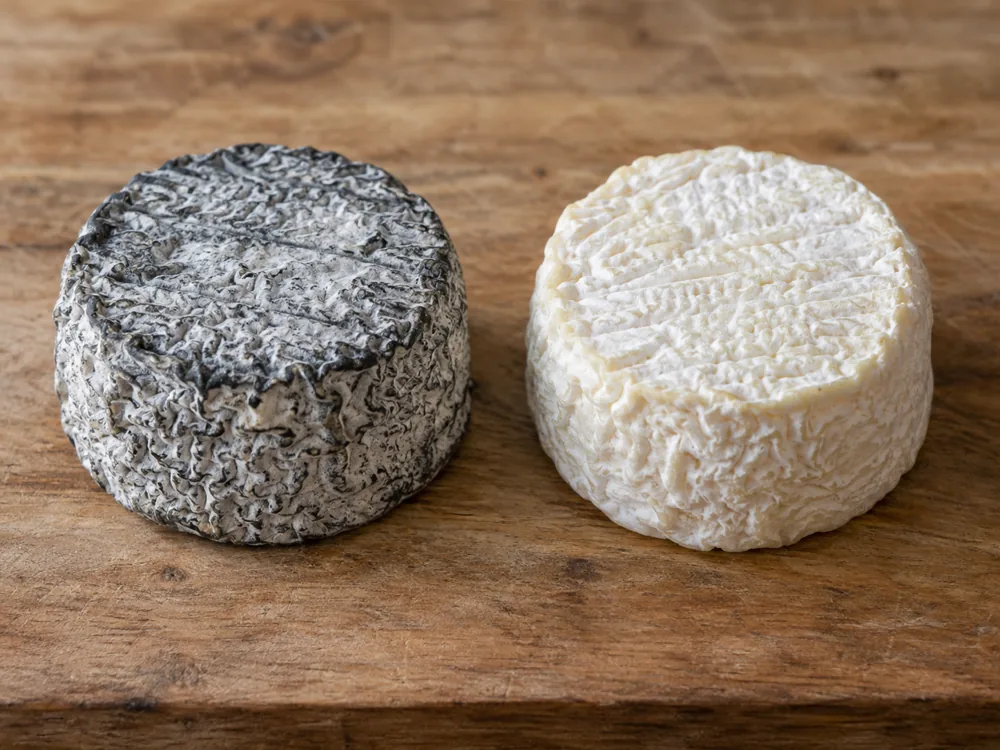
Vesuvius, also ash-coated, went the other way with age: it was mild and balanced when young and "starts turning firmer" as it matures, while Edith turns runny.
Duet is the only one of the three that mixed milks, half cow and half goat.
How Does Edith Compare with Humboldt Fog?
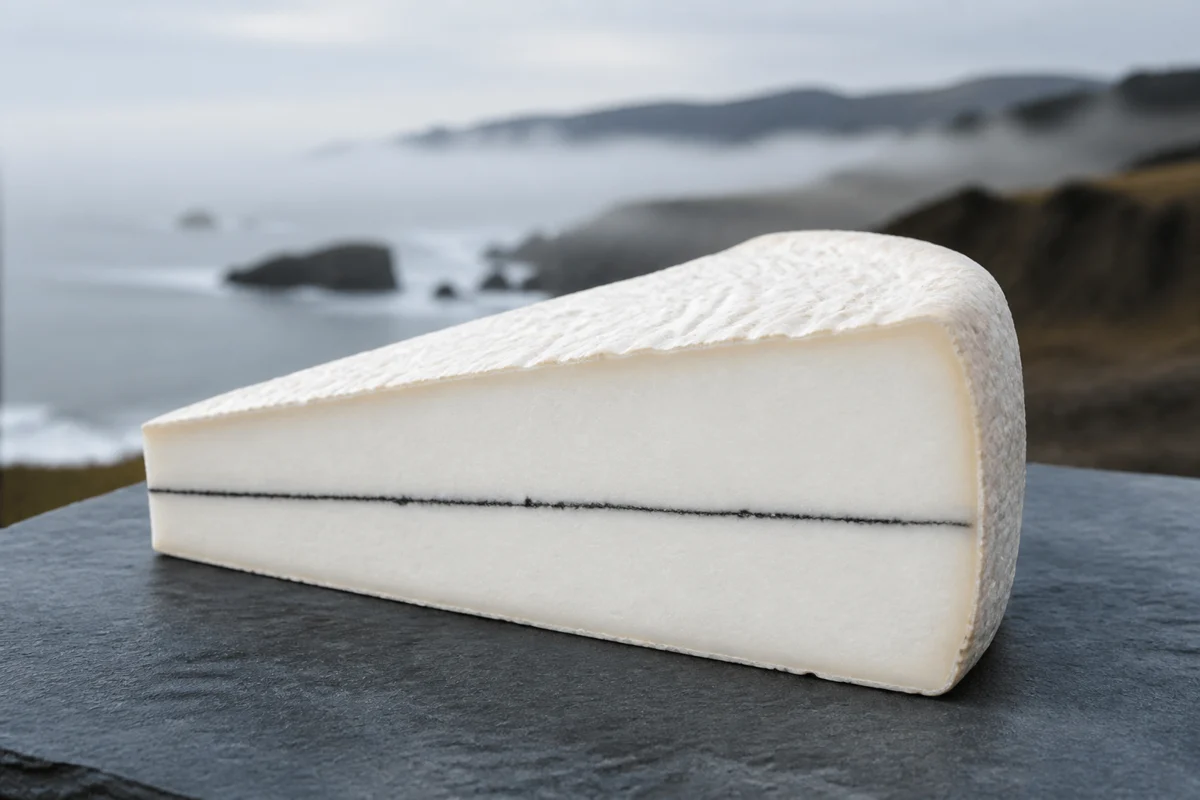
Cypress Grove's Humboldt Fog, made in Arcata, California, is another pasteurized goat's cheese marked with ash. It carries its ash in a central ribbon of edible vegetable ash, where Edith's ash coats the rind.
| Attribute | Edith | Humboldt Fog |
|---|---|---|
| Maker | Woodside Cheese Wrights, South Australia | Cypress Grove, Arcata, California |
| Milk | Pasteurized goat's milk (Cheese.com) | Pasteurized cultured goat milk (Cypress Grove) |
| Ash | Coats the rind (Woodside, Cheese.com) | A central ribbon of edible vegetable ash (Cypress Grove, Wikipedia) |
| Rind | Geotrichum mould (Woodside) | Bloomy mold exterior (Wikipedia) |
| Texture | Firm and chalky when young; velvety and runny when ripe | Creamy, with a cream line that develops as it matures |
| Flavor | Nutty and savory when young (Woodside); tangy, sweet, earthy, somewhat gamey overall (Le Fromage Yard) | Buttermilk and fresh cream, floral and herbaceous, with a clean citrus finish |
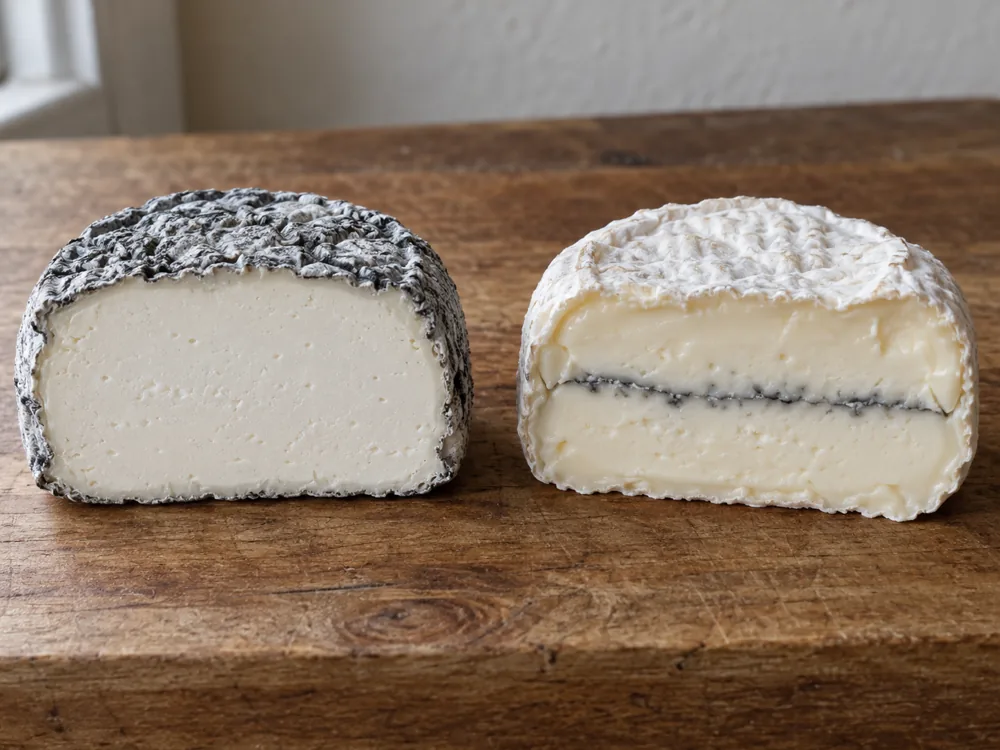
Humboldt Fog ripens from its bloomy mould exterior inward, leaving a core of fresh, crumbly goat cheese inside a runny shell, and more of the core turns soft as it matures. Woodside describes young Edith as firmer and chalky under the ash-coated rind, and ripe Edith with a velvety, runny interior.
Wikipedia likens Humboldt Fog's central ash line to the one in Morbier and says its bloomy mould and ash rind are edible but have little distinct taste.
The flavour words for the two cheeses have none in common: Cypress Grove gives Humboldt Fog buttermilk and fresh cream, floral and herbaceous notes and a clean citrus finish, while Edith's descriptions run from nutty and savory to tangy, earthy and somewhat gamey.
Cypress Grove pairs young Humboldt Fog with IPAs and Sauvignon Blanc and ripe wheels with Pinot Grigio and rosé, so Sauvignon Blanc, pinot grigio and rosé appear on the wine lists for both cheeses.
Is Edith Hard to Make?
Woodside calls Edith "notoriously difficult to create but worth every minute of effort," and says it was glad to have the cheese back "after a few years of perfecting her."
On its Time Capsule page, Woodside says it dropped Duet because "Geotrichum mould and blended cow and goat milk proved difficult to maintain consistent," and dropped Vesuvius as "another time consuming and tricky cheese to make."
Why Is the Cheese Called Edith?
Edith is named after a woman, and the two accounts of her differ. Woodside says the cheese is "Named after the French woman who taught us the art of making this extraordinary cheese," while Cheese.com says a young woman of the same name first made it in a small town near Burgundy.
Who Makes Edith, and What Has It Won?
Woodside Cheese Wrights began in 1994 as a cheese factory in the Adelaide Hills, and Kris Lloyd took charge in 1999 with no cheesemaking experience, then studied cheese and the cheesemaking process.
Woodside says it makes every cheese by hand, with methods from Switzerland, Italy and France that Lloyd adapted to Australian milk, conditions and cheesemaking practices, and that its cow and goat milk comes from nearby local dairies.
Woodside's history names Kris Lloyd's son Mitchell Lloyd as senior cheesemaker, leading its team of cheesemakers since 2015.
Woodside says it was first awarded the Grand Dairy Award for best goat cheese in Australia in 2002, for Edith. Cheese.com lists gold medals at the 2010 and 2012 Royal Queensland Food and Wine Show and the 2012 Brisbane Cheese Awards, and says there are many more.