
Petit Suisse means "Little Swiss," but it was invented in Normandy, France, not Switzerland. Untangling why the name stuck anyway is worth doing before anything else about the cheese.
It has stayed a real, traceable commercial product since the 1850s, not just an old regional recipe that faded out.
In This Article
Why Is It Called "Little Swiss" If It's French?
The Normandy origin itself is well documented and not in dispute. In the 1850s, cream was added to enrich a fresh curd at a small Normandy dairy, creating what became petit suisse.
Exactly why "Swiss" ended up in the name is where accounts genuinely disagree. One version credits a Swiss dairy worker who suggested the cream-enrichment step in the first place.
Other versions differ on who exactly introduced the Swiss connection, and no single account has become the settled, agreed-upon story.
That is worth stating plainly rather than picking one version and presenting it as fact. The cheese is genuinely French; exactly why "Swiss" stuck to the name is simply not something the record settles.
Who Invented Petit Suisse?
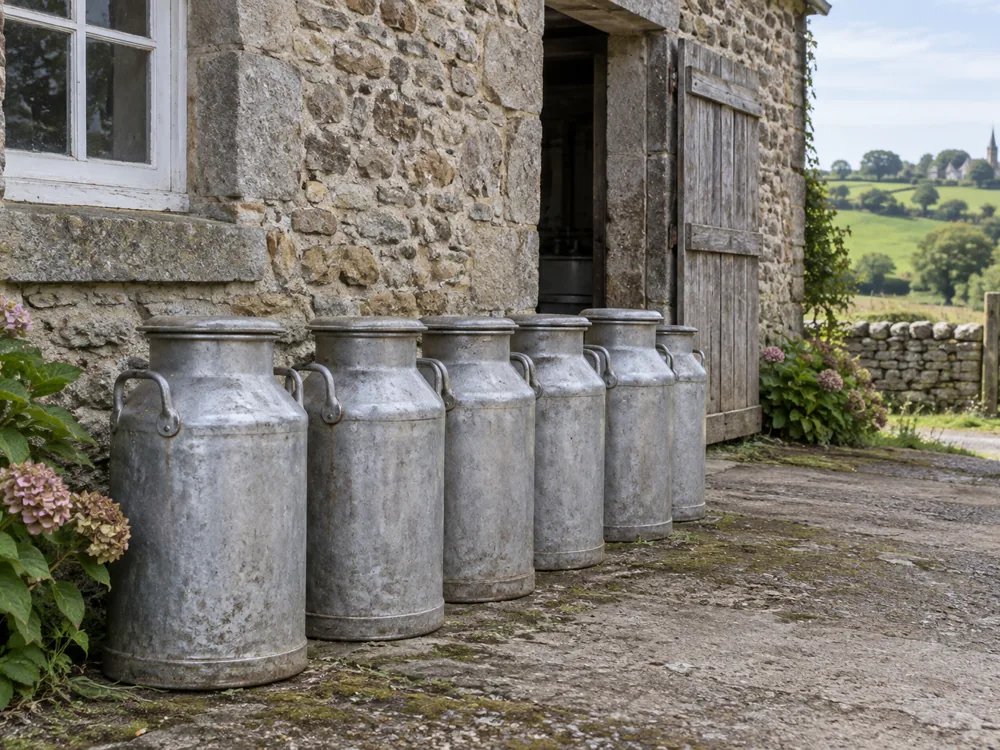
The traceable business history is clearer than the naming question. Madame Hérould ran the small Normandy dairy where the cheese was first made and sold locally.
A young Parisian named Charles Gervais tasted it, partnered with her to open a larger factory, and began selling it commercially from 1852, first into Paris and then across France.
He later bought out her stake in the business entirely, turning what had started as a shared local partnership into a company he ran outright.
The company Gervais built did not disappear when he died in 1892. It merged with Danone in 1973, and Petit Suisse is still sold today under the Gervais name as part of that brand.
That continuity matters for how the cheese is bought now. A shopper picking up a pack today is buying a direct descendant of the exact 1852 product, not a modern reinvention of an old idea.
How Was Petit Suisse Originally Packaged and Sold?
The name outlasted the original packaging, but the format itself has barely changed. Each cheese was originally wrapped in thin paper and packed six to a wooden box, with a single 60-gram cheese simply marked "suisse" rather than carrying any brand name.
Before supermarkets existed, these boxes moved through Les Halles, the central Paris food market, typically sold in units of six or twelve.
The cylinder mold itself has stayed close to its original size. The smaller version runs about 4cm high by 3cm across, the larger about 5cm by 4cm, dimensions that have carried through from the 1850s into the pots sold today.
Is Petit Suisse Vegetarian?
Yes, in practice. The cheese sets mainly through lactic acid from fermentation rather than through rennet doing the main work.
Where rennet plays any role at all, it is typically microbial rather than animal-derived, which keeps the finished product vegetarian.
Is Petit Suisse Pasteurised, and Can You Eat It Pregnant?
Yes. Commercial petit suisse is made from pasteurised milk and cream.
That puts it in the standard safe category in pregnancy for a fresh, unripened cheese, without the extra caution some other cheeses on this site require.
What Does Petit Suisse Taste Like, and How Is It Eaten?
Texture is the defining feature here more than flavour. It sits closer to a very thick yogurt than to a typical cheese, smooth rather than grainy or crumbly.
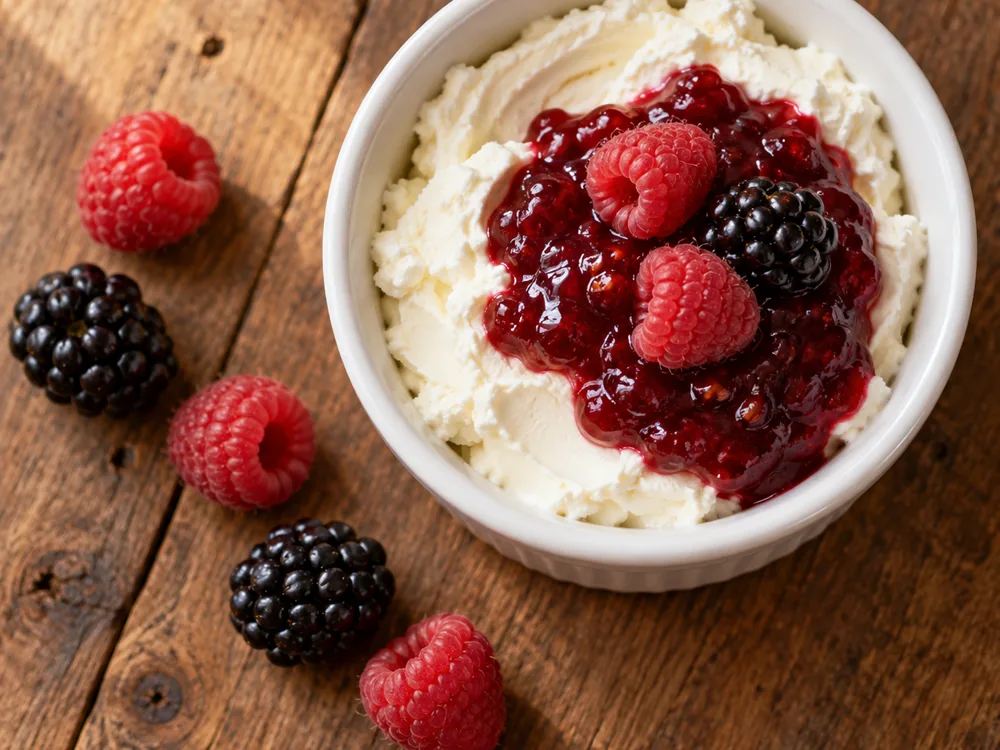
On its own the flavour is mild and creamy. Sweet is the more familiar route, topped with sugar, jam or honey.
Savoury is just as traditional, though: salted, peppered or mixed with herbs. It also turns up cooked into savoury meat stuffings, including rabbit preparations finished with mustard.
How Much Fat Does Petit Suisse Have?
The figure printed on a pack depends on which number is being measured, which trips people up.
Dry solids run around 40 percent fat. In the finished product, once water content is accounted for, that works out to roughly 9 to 20 percent fat depending on the specific line.
Cream enrichment is what pushes that number up compared to a plain fromage frais, and it is the defining reason petit suisse tastes richer than an unenriched fresh cheese.
Is Petit Suisse a Good Snack for Kids?
It is positioned that way for a reason. A single 60g pot runs roughly 70 to 90 calories, with around 150mg of calcium and 6g of protein per 100g.
That combination of calcium and protein in a small, easy portion is exactly why it has long been marketed as a children's snack in France rather than only as a dessert cheese.
The plain, unsweetened version is the one that actually delivers that profile cleanly. Flavoured or heavily sweetened versions can carry meaningfully more added sugar, which works against the same nutritional case the plain pot is sold on.
Where Can You Buy Petit Suisse Cheese?
Look for the Gervais name specifically. It is sold today as a Danone brand, made at a dairy in Le-Molay-Littry in Normandy.
It is widely available in supermarkets across France and Switzerland. In the UK, it reaches shoppers through French import specialists such as French Click and Colex, usually in packs of six or twelve 60g pots.
What to Use Instead of Petit Suisse
Quark gives the closest texture and mild flavour match, without petit suisse's added cream richness.
Thick natural yogurt or fromage blanc are more widely available fallbacks, workable for the same sweet or savoury serving styles even if the texture is not an exact match.


