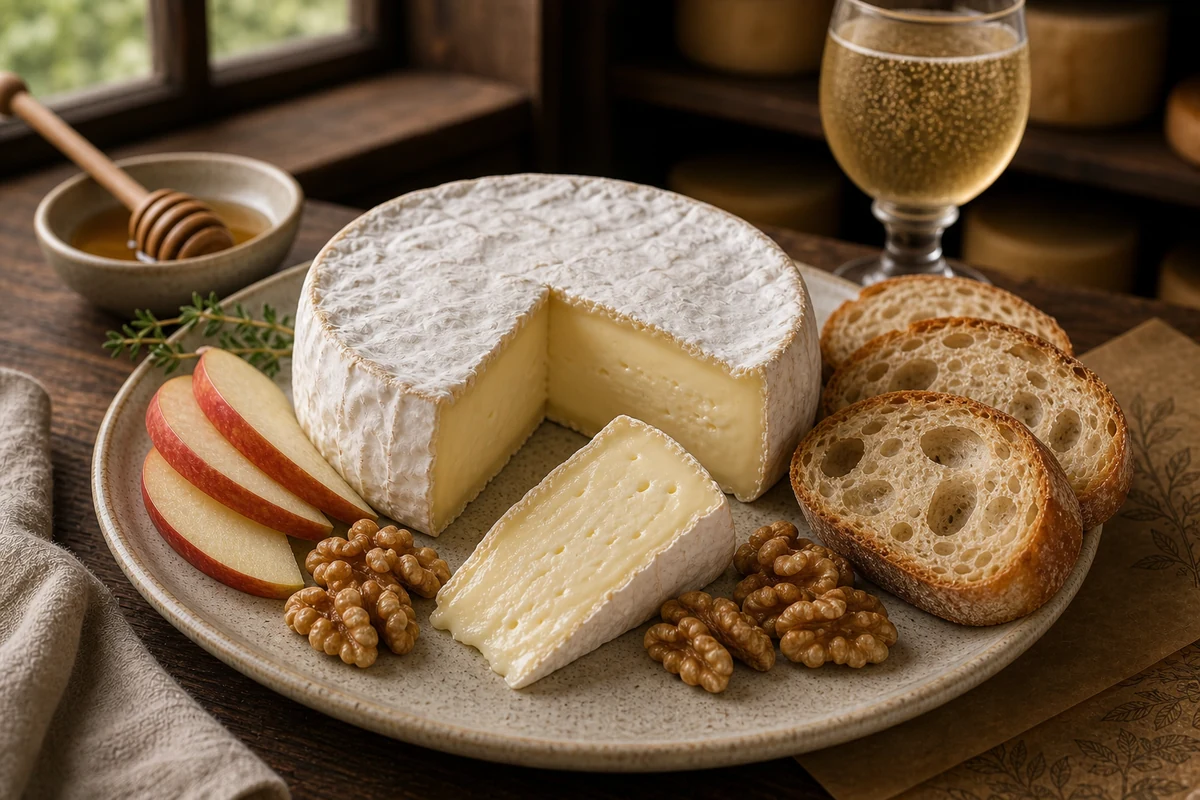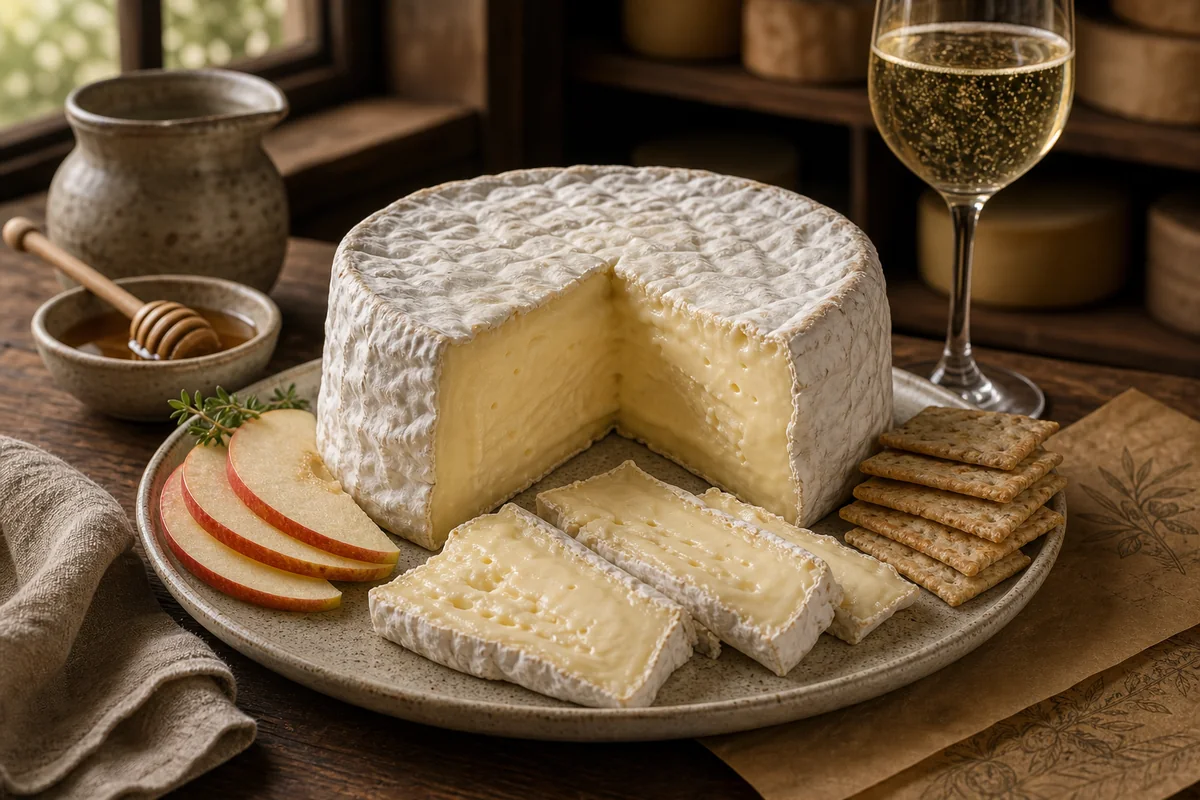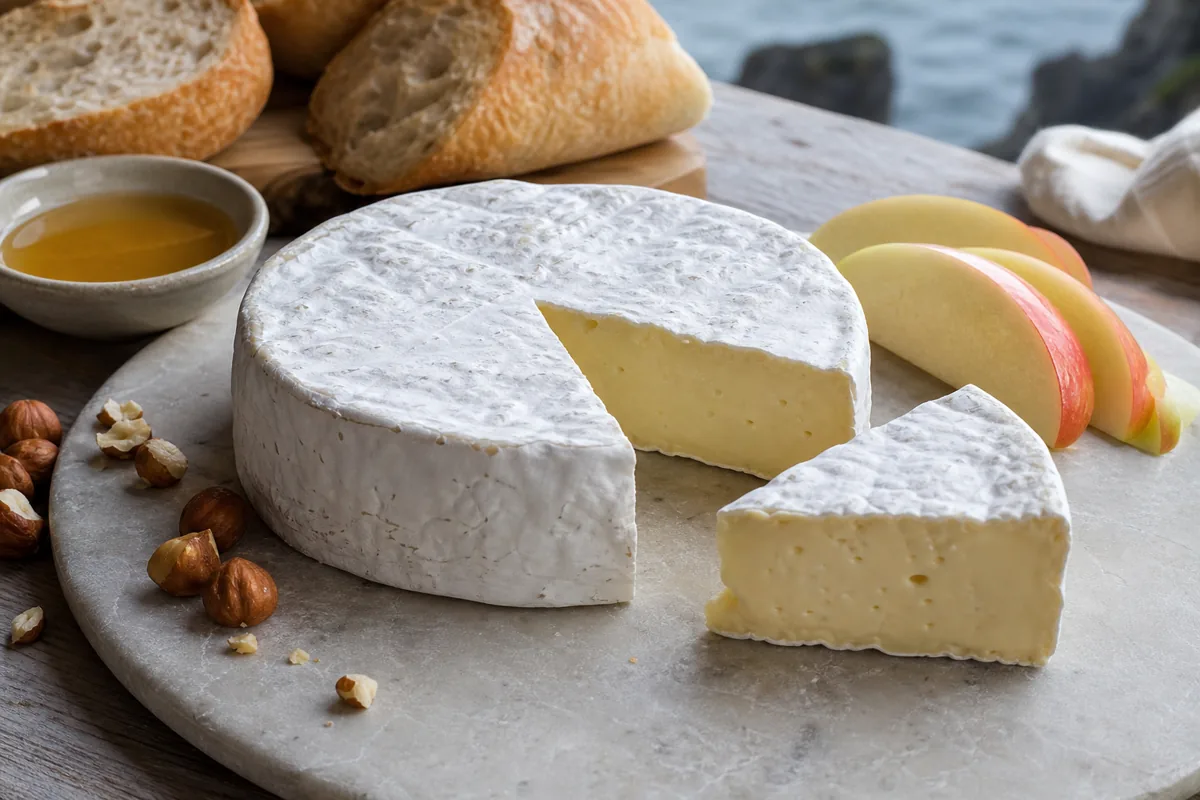
Comox Brie is a Canadian Brie-style soft cheese with a white bloomy rind and creamy cow milk paste. Buy it when you want a mild soft-rind cheese for bread, fruit, nuts, honey, or a small board.
The answer should come before the romance. This is a soft table cheese, not a washed-rind funk bomb and not a truffled specialty cheese.
If you already know classic Brie-style texture, Comox Brie will feel familiar. Its strengths are gentle cream, soft rind, and easy pairing.
In This Article
What is Comox Brie?
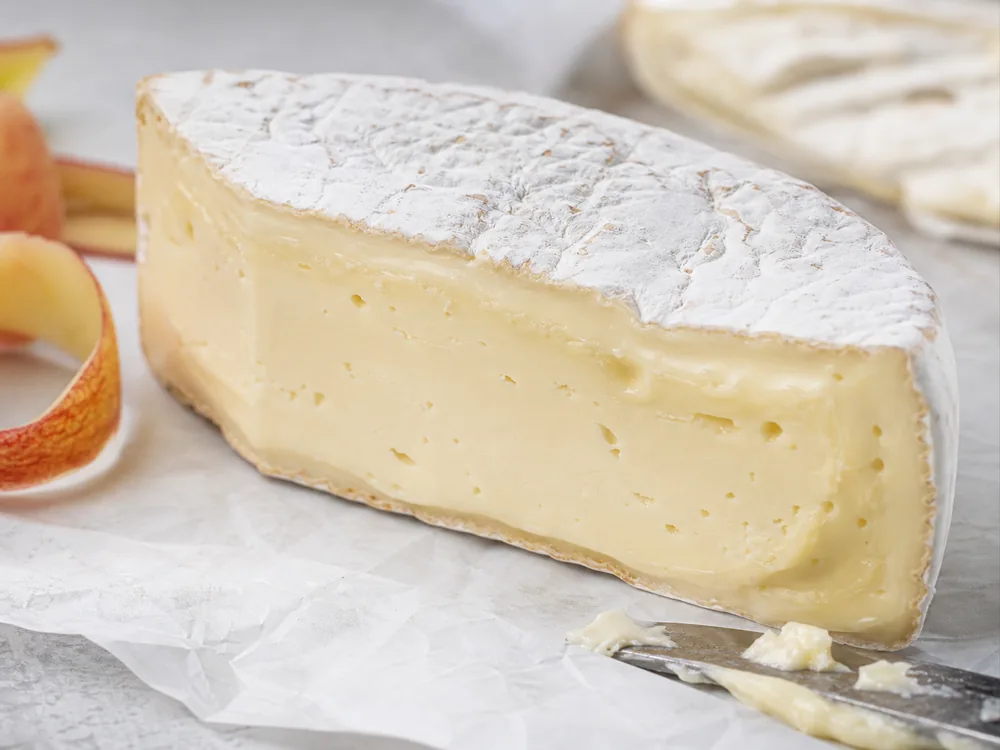
Comox Brie is a bloomy-rind cheese from British Columbia. It is usually described as a Brie-style cow milk cheese, which means the white rind ripens the paste from the outside inward.
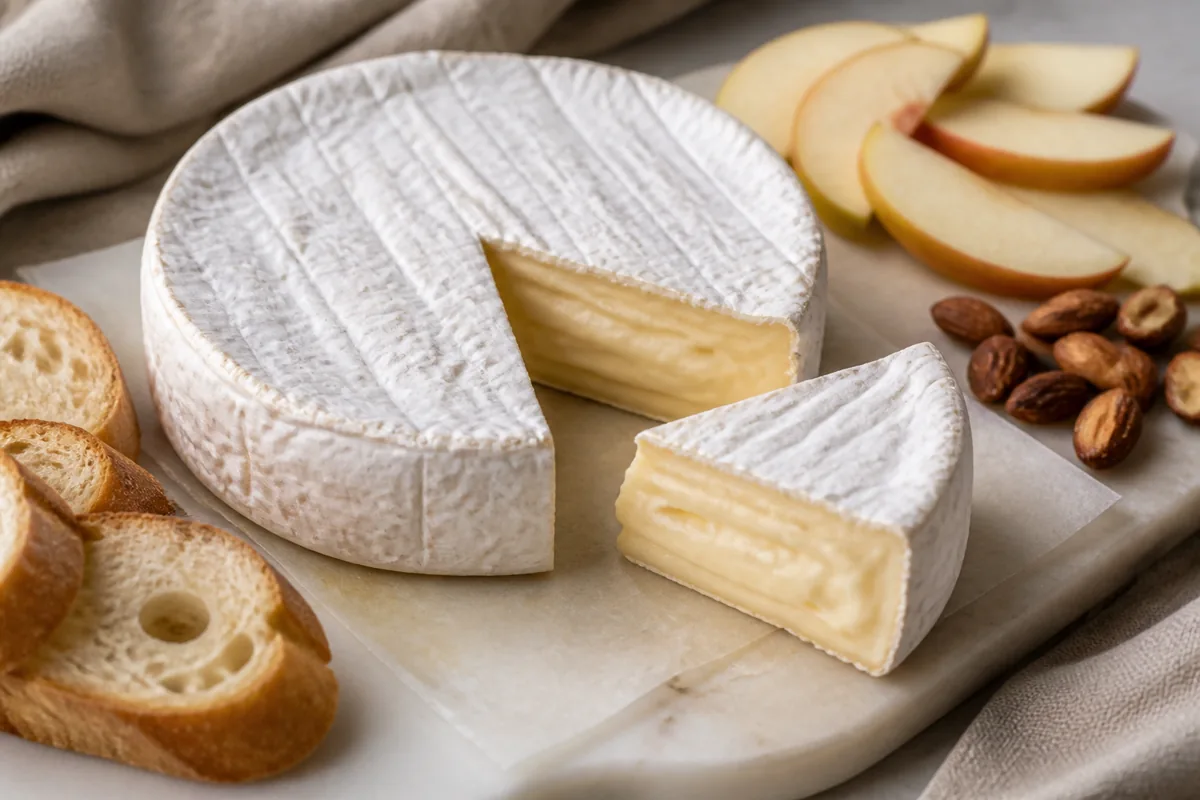
The wheel should look soft and pale, with a rind that feels edible and a paste that gets creamier near the edge as it ripens.
The Comox name matters for defining detailship, but the buyer's decision is mostly texture and ripeness. If you need a soft, mild, white-rind cheese, this is the right direction.
That sets it apart from Brie in general. You are choosing this wheel, not every French soft cheese.
They need to know whether this specific Canadian wheel is ready for a plate tonight.
- Best first description: Canadian Brie-style soft cheese.
- Main texture cue: creamy edge with a center that may stay firmer.
- Main flavor cue: mild cream, butter, mushroom, and rind.
- Main serving job: bread, fruit, nuts, honey, and crisp drinks.
What does Comox Brie taste like?
Comox Brie should taste mild, creamy, buttery, and lightly mushroomy from the rind. A ripe piece may smell more savory, but it should not hit like a washed-rind cheese.
The paste changes with ripeness. A younger piece can taste milky and firmer in the center.
A riper piece tastes fuller and spreads more easily.
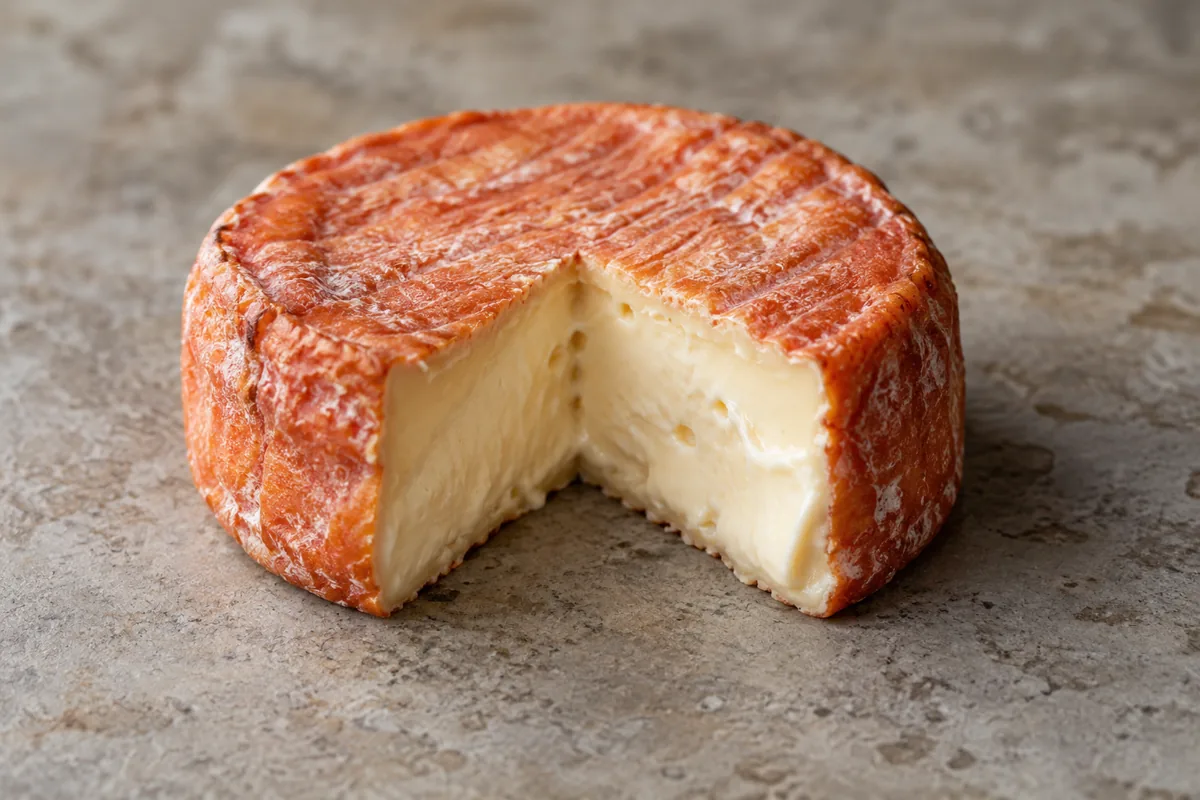
Compared with a stronger soft-rind style, Comox Brie should feel more approachable. Compared with an orange washed-rind cheese, it is much less rind-forward.
If you want the cheese to lead a board, let it warm slightly and use simple partners. If it is only one mild cheese among many, serve smaller wedges.
A young wheel can taste quiet, but that is not a flaw if the plate needs a gentle soft cheese. A riper wheel brings more mushroom and butter, which makes it better as the board's soft centerpiece.
The rind should support the paste. If the rind tastes bitter or harsh, trim a small amount and keep the portion smaller rather than forcing a large rind-heavy bite.
The best bite includes rind and paste together. Paste alone can taste like mild cream.
Rind alone can taste too mushroomy. Together they explain why this is a soft-ripened cheese.
How ripe should Comox Brie be?
Look for a clean white rind and a paste that softens near the edge. The center can still be slightly firmer, especially if the cheese is young.

If the center is chalky and the flavor is bland, give it more time. If the rind smells sharply ammoniated or the paste has collapsed into liquid, it has gone too far for a clean board.
Serve Comox Brie when the edge is creamy and the wheel still holds its shape. That gives spreadability without the messy overripe flavor that scares mild-cheese guests.
Cut wedges from rind to center so each person gets the same ripeness range. Do not scoop out only the soft middle and leave rind behind for everyone else.
If the cheese is too firm for tonight, use thinner slices and warmer bread. If the cheese is very ripe, use a small spoon or soft knife and serve it with more crackers to control the texture.
Do not bake it just to solve ripeness. Baking can be delicious, but it changes the article's main job from soft-rind table cheese to hot dip.
Best ways to serve Comox Brie
Bring Comox Brie out briefly before serving. Cool-room temperature helps the paste relax.
In a warm room, shorter counter time is safer and cleaner.
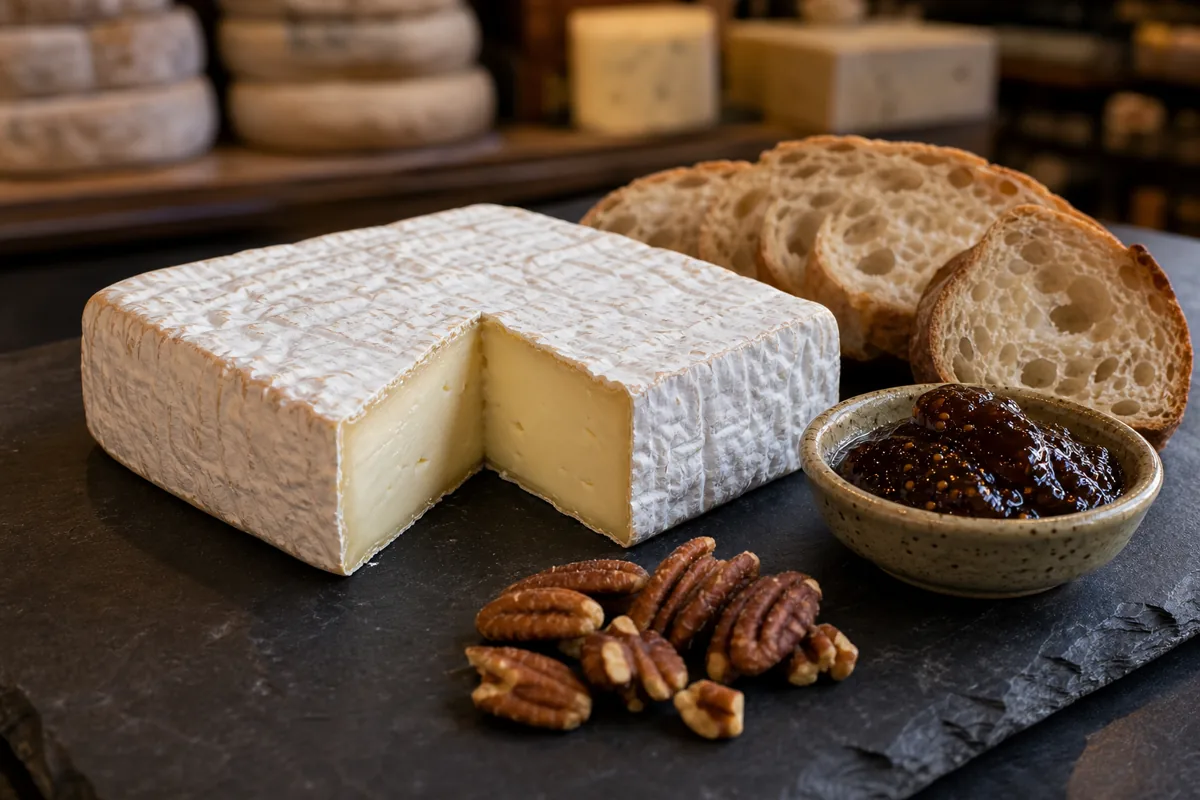
Bread, apple, pear, hazelnuts, almonds, mild honey, and plain crackers work because they do not compete with the gentle rind.
| Pairing | Why It Works |
|---|---|
| Apple | Fresh crunch keeps the creamy paste light. |
| Hazelnuts | Nutty flavor supports mild rind notes. |
| Mild honey | Sweetness works when used lightly. |
| Crusty bread | Gives the soft paste a clean base. |
For a larger board, place Comox Brie beside one firm cheese and one salty cheese. It can cover the soft-mild role in a simple board structure.
Keep the plate clean. Strong chutneys, garlic crackers, and smoked meats can bury the mild rind.
Fresh apple, pear, and nuts give enough contrast without taking over.
For brunch, use it with toast, fruit, and a small amount of honey. For dinner, use it before the main course, not after a chile-heavy or smoked dish.
- Young wheel: slice thinner and use warmer bread.
- Ripe wheel: serve with more crackers and bubbles.
- Board role: mild soft cheese beside a firm and a salty cheese.
What drinks pair with Comox Brie?
Choose drinks that lift cream without crushing the rind. Sparkling wine, crisp white wine, dry cider, and light beer all work.
| Sparkling wine | Best for cutting creamy paste. |
| Dry cider | Good with apple, nuts, and bread. |
| Crisp white wine | Works when the cheese is mild and cool. |
| Heavy red wine | Usually too tannic for the soft rind. |
If you want a more exact wine guide, follow the wine pattern for Brie. Bubbles, acidity, and restraint matter more than power.
Beer works when it is clean and not too bitter. A very hoppy beer can make the rind taste sharp.
If the wheel is still young and firm, lean harder on crisp drinks and fresh fruit. If it is very creamy, bubbles matter more because the palate needs a reset.
Temperature matters here too. Cooler Brie can handle a slightly softer drink because the paste is tighter.
Warmer Brie needs more acid or bubbles because the fat feels fuller.
For nonalcoholic pairings, use sparkling water, tart apple juice, or unsweetened iced tea. Sweet soda usually makes the rind taste dull.
- Use bubbles: when the cheese is ripe and creamy.
- Use cider: when apple and nuts are on the plate.
- Skip heavy reds: when the rind is mild and delicate.
How is Comox Brie different from Comox Camembert?
Comox Brie and Comox Camembert are sibling soft-rind ideas, but the search job is different. Brie-style cheese usually signals a milder, creamier, wider-appeal soft cheese.
Camembert-style cheese often implies a smaller format and stronger rind character. That does not mean every wheel follows the stereotype, but it helps shoppers choose.
| Cheese | Best reason to pick it |
|---|---|
| Comox Brie | Mild creamy soft-rind cheese for broad serving. |
| Comox Camembert | Use when you want a stronger soft-rind sibling. |
| Plain Brie | Easy substitute when the exact Canadian cheese is unavailable. |
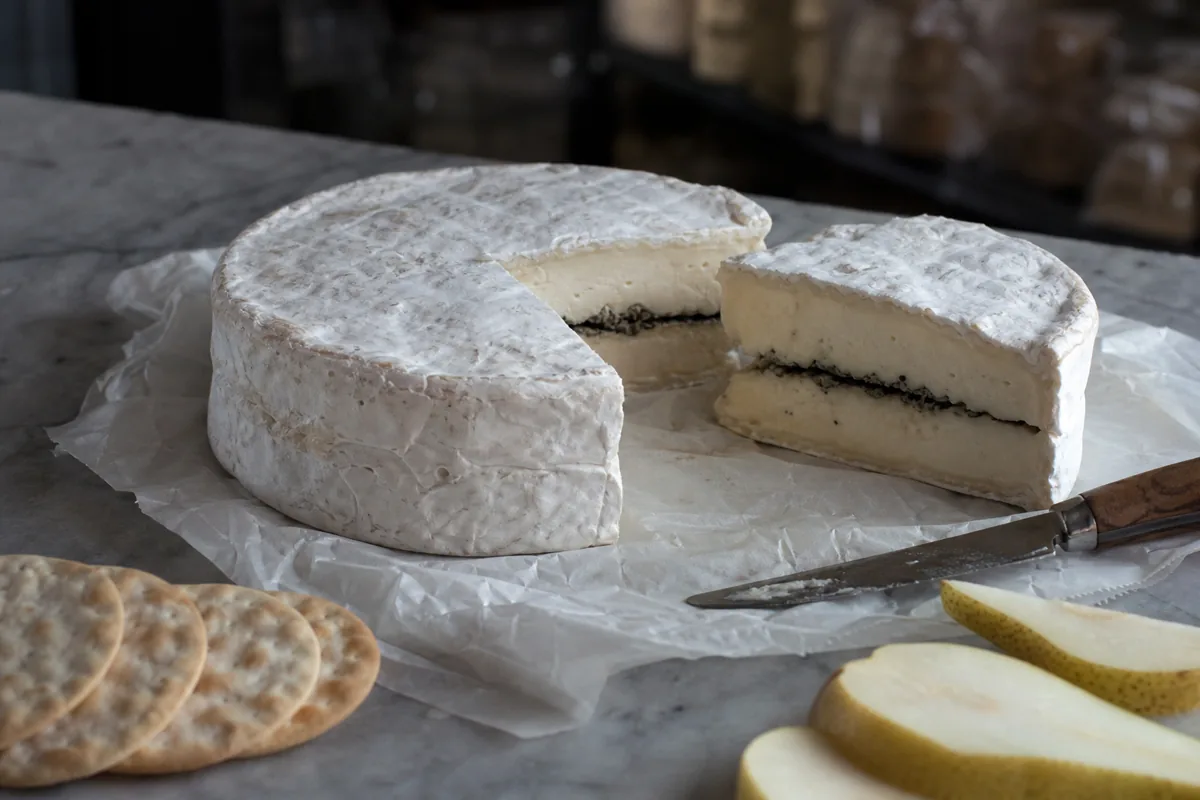
| Truffled bloomy cheese | Use only when truffle aroma is the point. |
If the board needs mild cream, choose Comox Brie. If it needs stronger rind, choose the Camembert sibling or a washed-rind cheese.
Comox Brie does not answer every Brie question. The broader Brie versus Camembert decision helps when the shopper is deciding between styles rather than this specific Canadian wheel.
For a board with three cheeses, Comox Brie can take the mild soft slot while the board structure handles the firm and salty slots around it.
- Comox Brie: mild, creamy, and easy to place on a board.
- Comox Camembert: better when the shopper wants stronger rind character.
- Truffled soft cheese: only right when truffle aroma is the point.
Buying and storage
Buy Comox Brie from a cold case. The rind should look clean and white, not slimy, cracked, or wet.
The package should not be swollen.
Ask whether the cheese should be served now or held. A good shop can tell you if the wheel is still young.
That answer is more useful than guessing from the date alone.
Wrap leftovers in cheese paper or parchment and store them in a container. Keep the cut face covered so it does not dry out.
Pregnancy and high-risk serving depend on pasteurization and handling. Check the label and use the same caution explained in the soft-cheese pregnancy notes.
Once cut, protect the paste from drying. A dry cut face makes mild Brie taste flat before it looks obviously spoiled.
If the rind aroma builds in the container, unwrap it for a few minutes before serving. If the paste still smells clean and creamy, the cheese may simply need air.
If the paste smells sour or the rind is wet and broken, airing will not fix it. Replace the wheel rather than building a board around a flawed soft cheese.
Best substitutes for Comox Brie
The closest substitute is another mild Brie-style cow milk cheese. Choose one with a clean white rind and a paste that is creamy but still controlled.
| Use | How It Works |
|---|---|
| Use 1 | Use plain Brie when you need the closest easy substitute. |
| Use 2 | Use Camembert when stronger rind flavor is welcome. |
| Use 3 | Use triple cream when the plate needs more butter and less rind. |
| Use 4 | Use cream cheese only for spreads, not for a rind-and-paste board role. |
If a recipe needs a soft spread, cultured spreadable cheese can work, but it will not give rind flavor. If the board needs a true soft-rind cheese, use Brie instead.
When a guest wants a more buttery upgrade, choose a triple-cream style. When the plate needs more savory rind, step toward washed-rind cheese rather than more Brie.
A richer substitute such as triple-cream soft cheese gives more butter and less restraint, so use it when the board needs indulgence instead of mild balance.
Do not use mozzarella as the first substitute just because it is mild. Fresh mozzarella has no bloomy rind, and low-moisture mozzarella answers a melting job rather than a soft-rind board job.
If the cheese is going into a sandwich, choose a melting cheese instead of forcing Brie into the role. Comox Brie is best when the rind and paste remain visible.
If the exact Canadian cheese matters to the guest, do not pretend a French Brie is the same. It can match the eating job, but it does not replace the identity.
That distinction is useful for shopping too. If you only need mild Brie behavior, buy the best ripe soft-rind wheel available.
If you need Comox Brie specifically, check the maker and label.
If you are planning a cheese course, Comox Brie should appear before stronger cheeses. Its mild rind reads better while the palate is still fresh.
That order also helps cautious guests. They can taste the rind while it is still gentle, then move to stronger cheeses if they want more intensity.
It keeps the mild Canadian wheel from being judged after louder cheeses later.
SOURCES & REFERENCES
It is a mild British Columbia soft-rind cheese made for the Brie-style role on a board: creamy paste, edible white rind, and easy pairings.
The flavor is gentle and dairy-led when young, then more rounded near the rind as the paste softens.
The rind should be clean and white, and the paste near the rind should be creamy while the wheel still holds its shape.
Bread, apple, pear, hazelnuts, almonds, mild honey, plain crackers, sparkling wine, dry cider, and crisp white wine all work.
Use another mild Brie-style cheese. Camembert works if stronger rind flavor is welcome, while triple cream works when you want more butter and less rind.