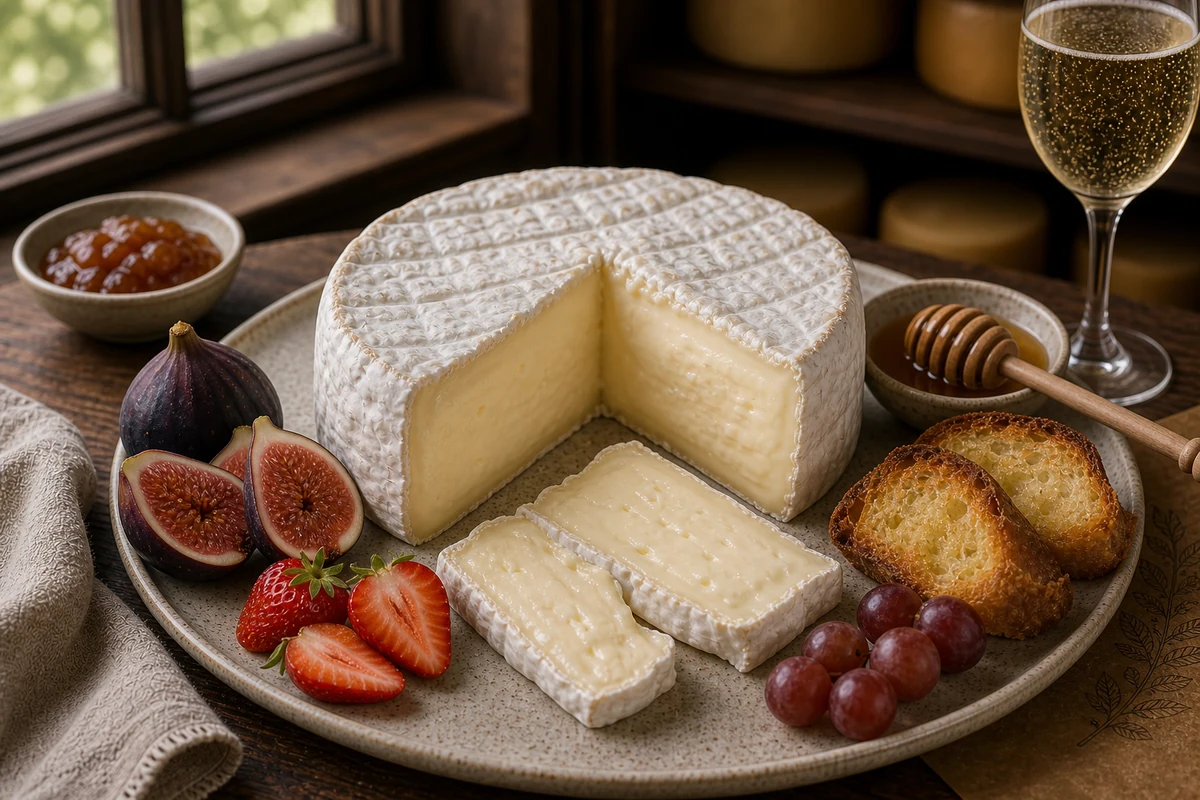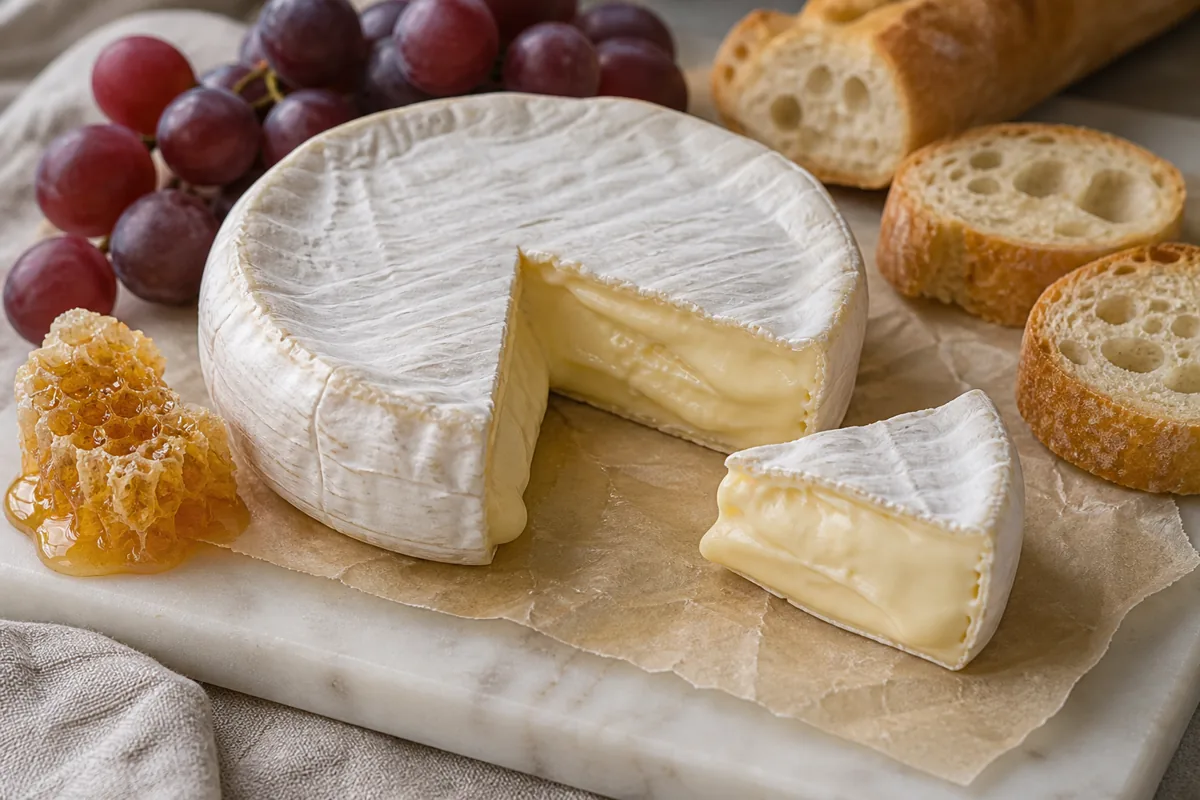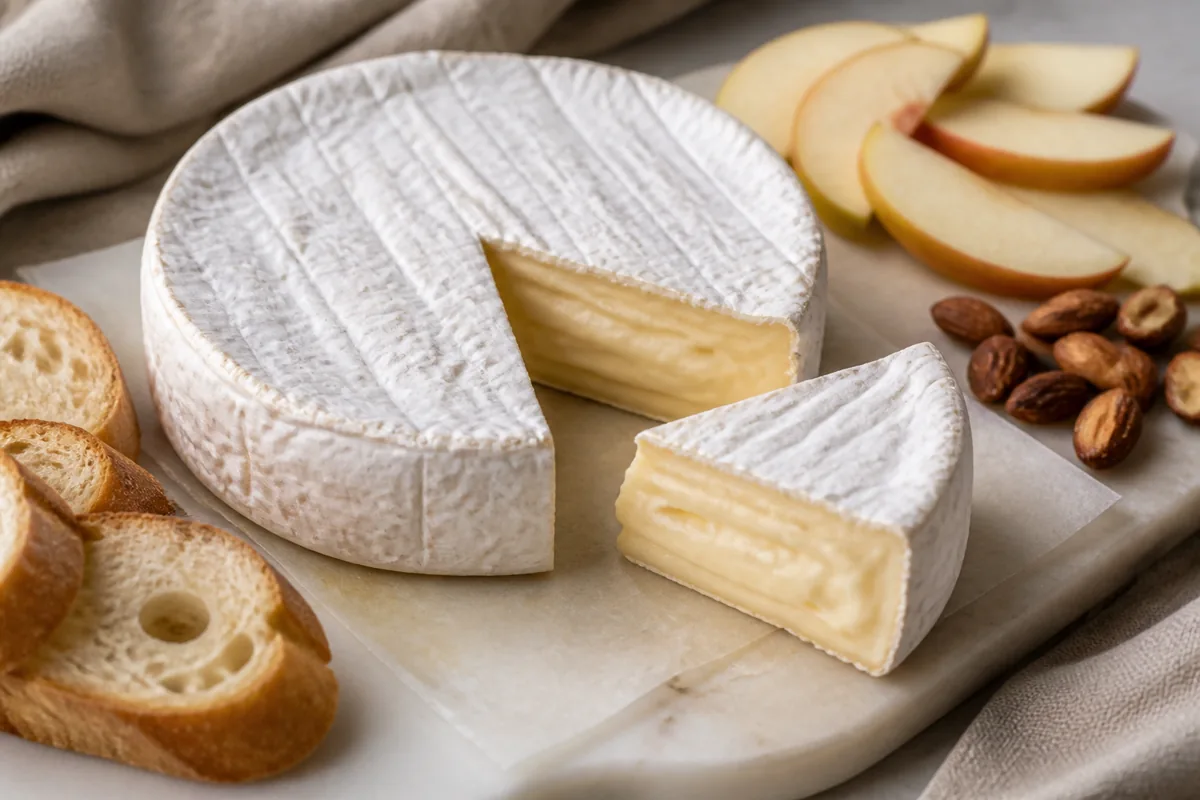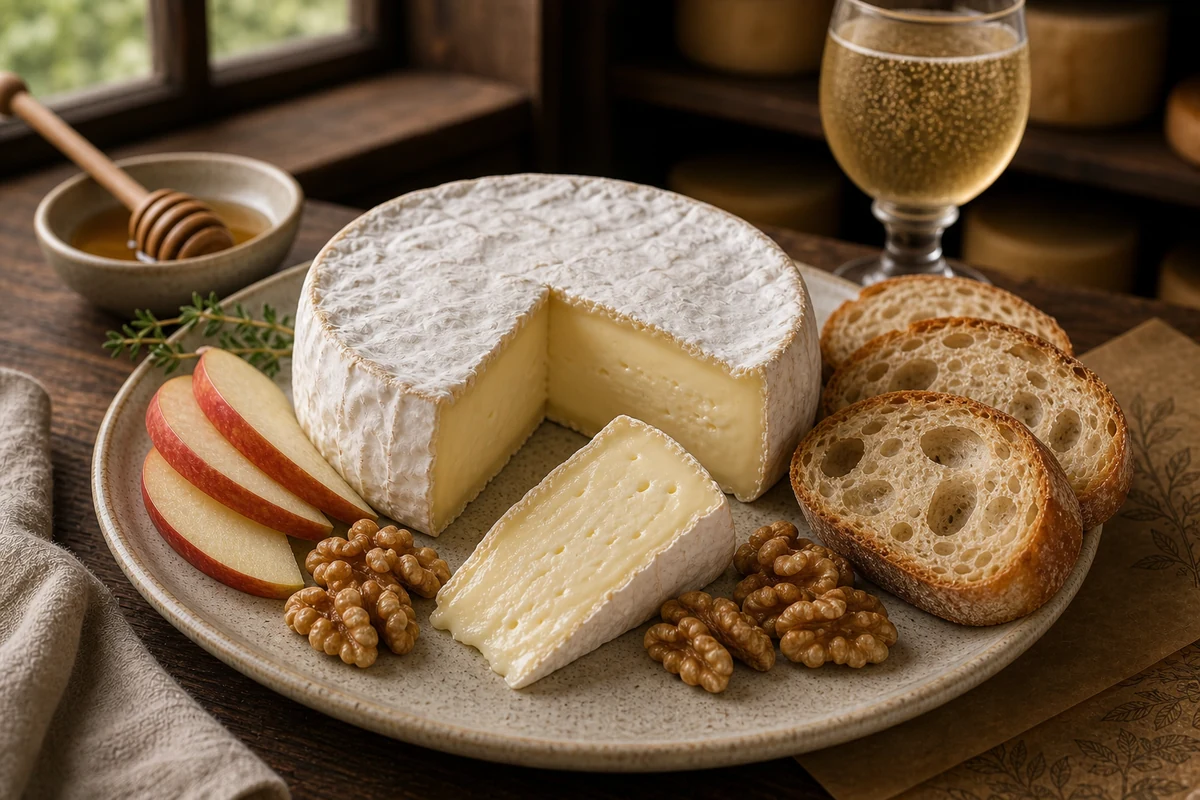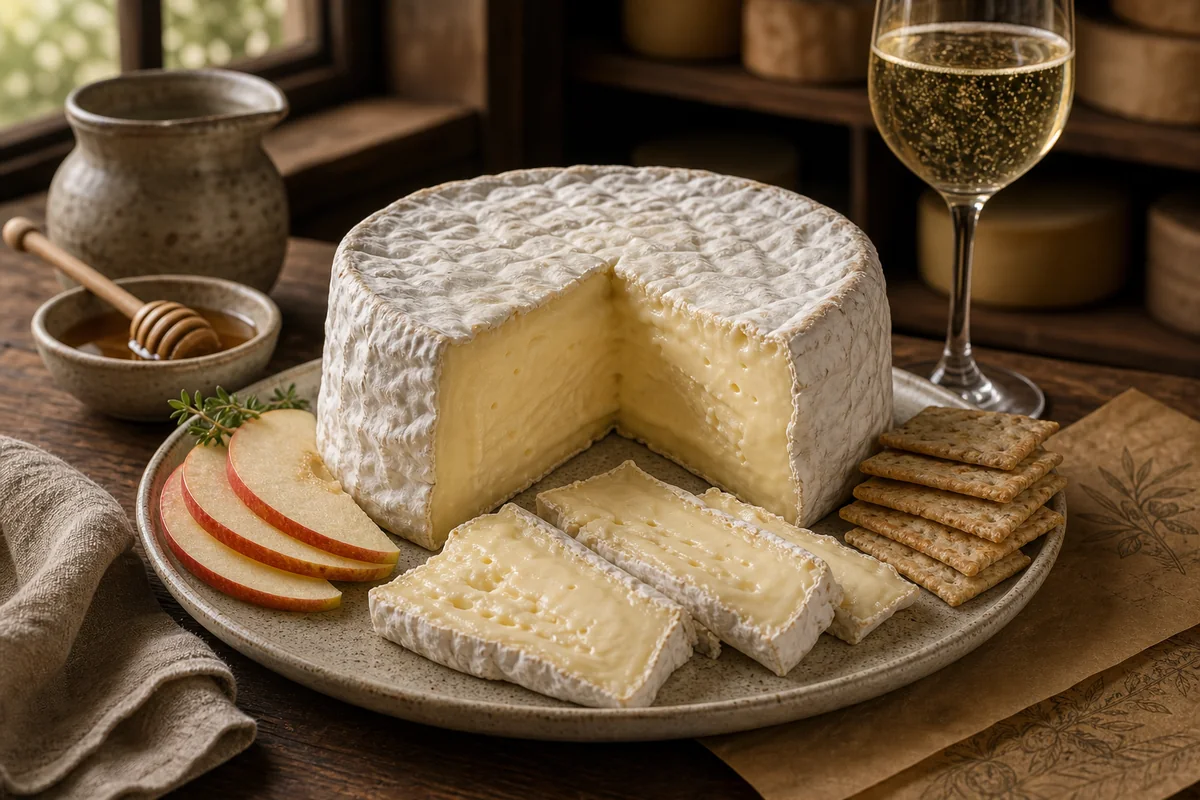
Saint-André is a French triple-cream, bloomy-rind cheese made from pasteurized cow's milk and cream. Among our French soft cheeses, it fills the rich, mild board role with a denser center than a ripe Brie.
The current 200 g Savencia export record lists 44.5 g fat per 100 g, so small portions carry substantial richness. This profile focuses on buying, serving, and storing that soft-ripened product rather than treating every white-rind wheel as interchangeable.
In This Article
How Do You Decide Before Buying Saint-Andre?
The fastest way to buy Saint-André well is to match the round to the service job because temperature and ripeness change it more than recipe technique.
| Decision | Best Choice | Why It Matters |
|---|---|---|
| Same-day board | Softer edge, clean white rind | Brief tempering softens the paste without leaving the whole round out for the full service. |
| Next-day board | Slightly firmer round | It travels and holds shape before warming at the table. |
| Warm use | Use a recipe written for the cheese | Gentle heat gives more control than treating it as a generic baked-Brie wheel. |
| Wine pairing | Dry sparkling wine or crisp white | Acid and bubbles cut the triple-cream fat cleanly. |
| Pregnancy decision | Follow current local guidance | NHS says mould-ripened soft cheese with a white coating must be thoroughly cooked. CDC lists pasteurized soft cheeses heated to an internal temperature of 165°F or until steaming hot as safer. |
This is the Saint-André decision in miniature. Buy it for a rich, mild board role, keep it refrigerated according to the package, and temper only the portion you plan to serve.
What Saint-Andre Is and Why Triple-Cream Changes the Job
Saint-André is a soft, external mold-ripened cheese from France's bloomy-rind family. Academy of Cheese lists the current geographical origin as Normandy, France, with pasteurized cow's milk and a vegetarian-rennet make.
The triple-cream category is the defining fact because cream is added to the milk before setting. The current Savencia record for the 200 g product gives 44.5 g total fat per 100 g, while a separate 2 kg trade specification states 75% fat in dry matter.
- Make style: Saint-André is a soft, predominantly lactic-set cheese with external mold and yeast ripening.
- Milk treatment: The current 200 g Savencia export record lists pasteurized cow's milk and cream.
- Rind type: The bright white bloomy rind is edible and usually milder than the rind on a forceful Camembert.
- Common sizes: Academy of Cheese lists an approximate 1.9 kg wheel and a 200 g miniature variation.
- Protected status: Saint-André has no PDO or AOP protection, so brand and handling matter more than a legal origin seal.
That makes Saint-André a different decision from standard Brie wheels. Brie gives you classic soft-ripened mushroom depth, while Saint-André gives you added cream, a denser center, and a gentler rind voice.
Fat in dry matter excludes the water in the cheese, so 75 percent on the large-format specification is not the same as 75 g fat per 100 g of cheese. The exact 200 g product record reports 44.5 g total fat per 100 g.
Why Does Saint-Andre Have a Mousse-Like Center?
Saint-André was originally developed at a dairy in Villefranche-de-Rouergue, but Academy of Cheese says it has been made on the Normandy coast since 1974, which connects its modern identity to Normandy's cream-rich dairy tradition.
The make also explains the texture. A slow lactic set keeps the curd delicate, so the finished paste feels smooth, pale, and mousse-like instead of elastic or slice-clean.
The mousse-like center is the practical clue because Saint-André should feel dense and plush when cool, then loosen into a soft spread after a proper room-temperature rest.
The cheese should not behave like a runny Camembert with extra fat. Its best stage keeps enough body to hold a wedge while still tasting like cultured cream.
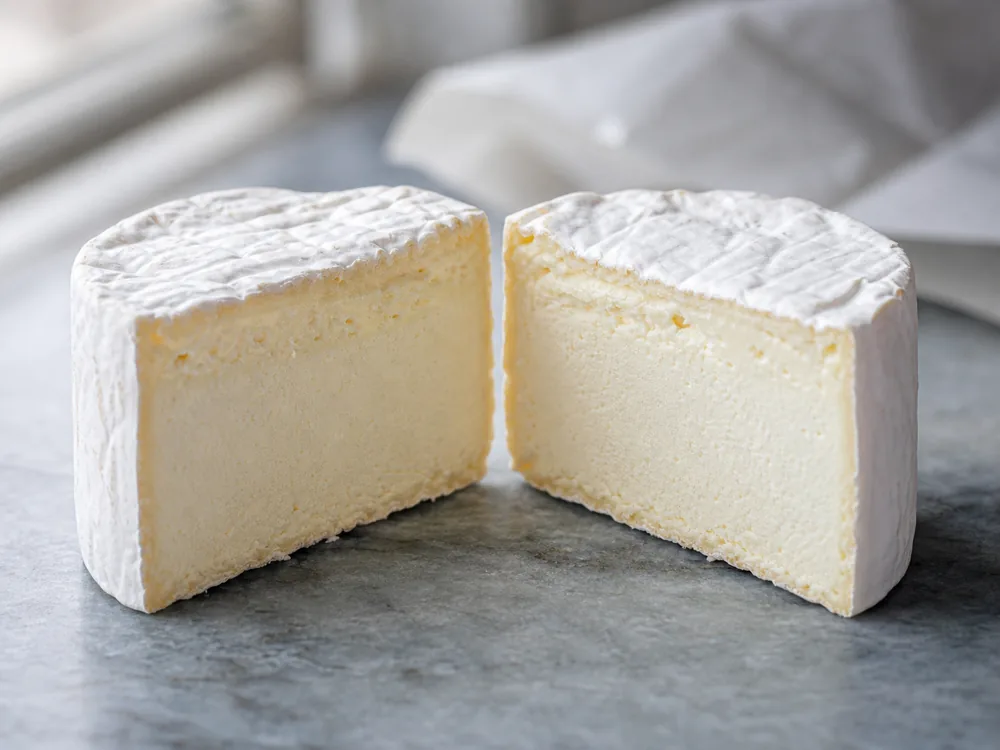
The sweet spot is the moment when the cool mousse turns spreadable without smelling sharp or ammoniated, not an age printed on a label.
This is where Saint-André differs from small Normandy Camembert. Camembert pushes rind intensity and ooze, while Saint-André keeps the center cream-led and more restrained.
If the edge softens before the center, cut a smaller serving portion and let that temper briefly rather than leaving the whole round out.
A whole 200 gram round keeps most of its paste enclosed by rind. Once either size is cut, the exposed face begins drying while the rind continues to soften the edge.
The miniature also gives every wedge a higher rind-to-paste ratio than a broad slice from the large wheel, so its mild mushroom edge can read more clearly even when the center is equally ripe.
How Does Saint-Andre Taste?
Saint-André tastes rich, buttery, and softly tangy, with a mild mushroom edge from the rind and the creamy, dense texture described by Academy of Cheese.
The rind should frame the paste, not dominate it. If the edge tastes harsh, bitter, or ammonia-heavy, the round has moved past the clean table window.
The balance is almost lopsided, because creaminess dominates while salt, sourness, and rind bitterness stay low enough for fruit, bread, and bubbles to work.
- Center note: The paste tastes like cultured butter, thick cream, and mild sour cream before it tastes mushroomy.
- Rind note: The rind adds light mushroom and a little bitterness, especially near the edge of a riper round.
- Salt level: The salt stays moderate, so Saint-André feels richer than it feels sharp.
- Temperature shift: Cold Saint-André can taste muted, while a tempered round opens into a softer, sweeter finish.
That cream-led profile can feel gentler on a mixed board than more pungent soft-ripened cheeses. It gives guests the white-rind experience without asking them to love barnyard aromas.
Taste a small piece with both center and rind before deciding whether it needs fruit or jam. A clean, young round already has enough lactic lift for plain bread, while a very ripe piece benefits more from crisp apple than added sweetness.
If a guest likes Brie but cuts away the rind, Saint-André is often the better buy. The rind is mild enough that the whole bite still tastes creamy.
When Saint-Andre Beats Brie, Brillat-Savarin, or Mascarpone
Saint-André wins when you want a rich board cheese that feels special but does not need a long explanation. It sits between everyday Brie and higher-end triple-cream cheeses in both shopping behavior and table role.
Choose by format, richness, and cooking limits rather than flavor alone.
- Over Brie: Choose Saint-André when you want more butterfat, a denser center, and a milder rind than many standard Brie wheels.
- Over Brillat-Savarin: Choose Saint-André when availability matters more than protected-origin or affineur-counter prestige.
- Over mascarpone: Choose Saint-André when the cheese needs a rind, a sliceable form, and a finished cheese-course identity.
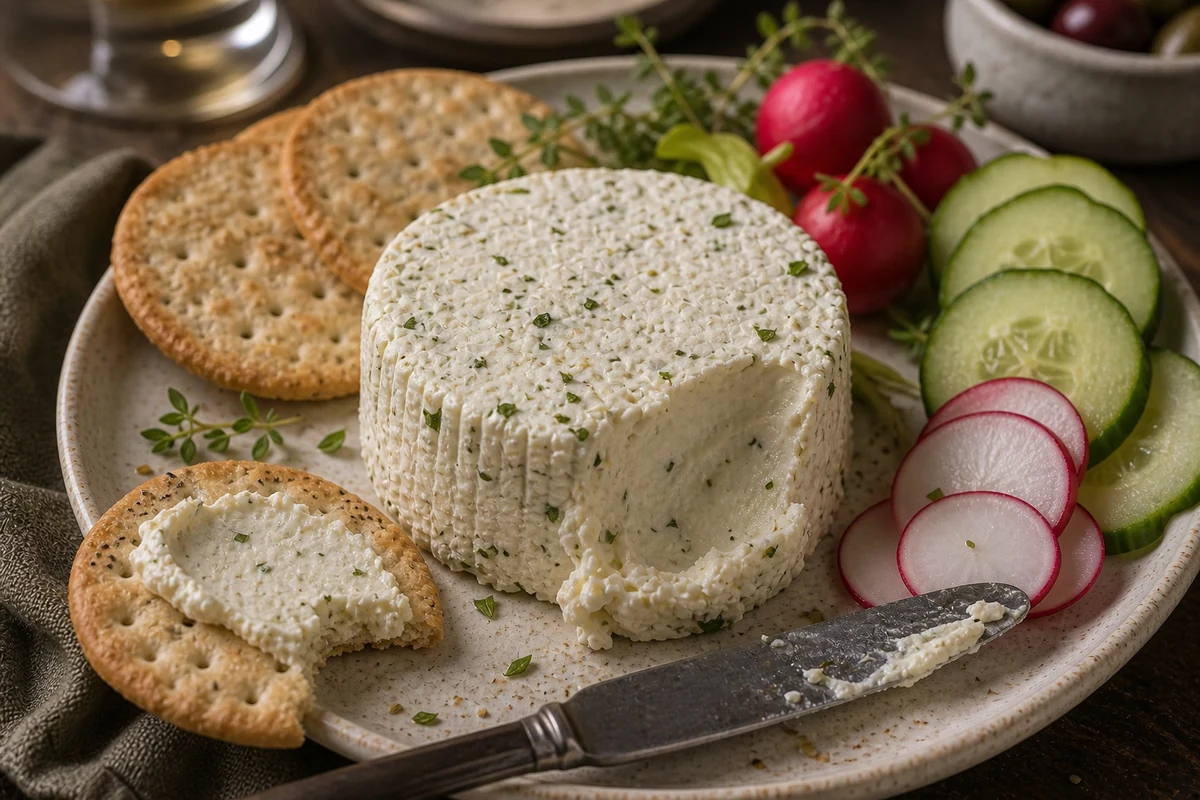
- Over Boursin: Choose Saint-André when you want natural rind character instead of a flavored spread.
The closest luxury neighbor is the richer Brillat-Savarin, but Saint-André usually feels easier to buy and easier to finish.
It also solves a different job than rindless mascarpone richness, which belongs more often in desserts and sauces.
Brillat-Savarin comes closest when the priority is triple-cream intensity, but its counter positioning and ripeness can be less predictable for a casual purchase. Saint-André is the more direct choice when you want a compact branded round that is ready for a small gathering.
The richness is the point. How poorly it takes high heat is the warning that has to sit beside it.
Best Uses for a 200 Gram Round
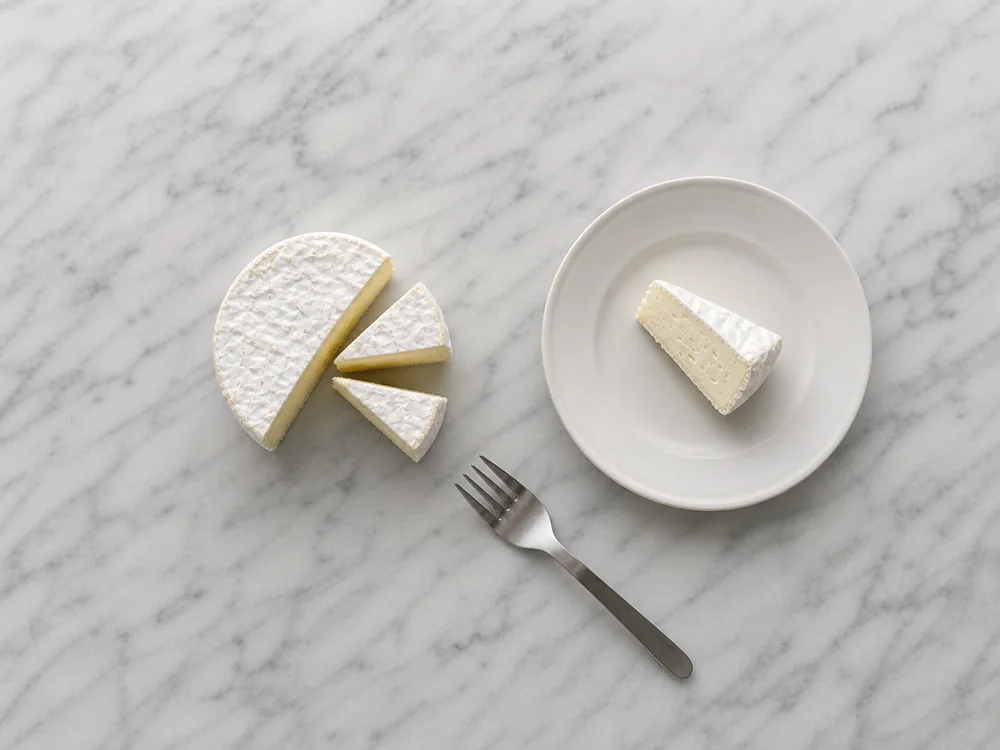
The 200 g miniature format warms quickly, serves a small table neatly, reduces leftovers, and lets each narrow serving carry rind and center together.
That small size also makes it a strong add-on for a balanced cheese board. One round can act as the rich soft cheese while firmer wedges, fruit, and crackers do the contrast work.
| Use | How It Works |
|---|---|
| Cheese board | Serve as the rich soft slot with plain baguette, apples, pears, or crisp crackers. |
| Canapes | Spread thinly on toasted bread and top with pear, walnut, or a tiny spoon of bright jam. |
| After-dinner cheese | Serve a small wedge with sparkling wine when dessert would feel too sweet. |
| Gentle warming | Let room temperature do the work instead of baking the cheese until the fat breaks. |
Keep the plate simple because smoked meats, heavy chutneys, and sticky sauces can flatten a cheese that is already this rich.
- Use plain bread: Baguette or water crackers let the butter and rind notes stay readable.
- Add crisp fruit: Pears and apples cut the fat without burying the mild flavor.
- Keep portions small: A small wedge feels richer than a larger serving of a lower-fat soft cheese.
- Avoid hard baking: Direct oven heat can turn the center greasy before the rind feels appealing.
If the real goal is a hot appetizer, use a recipe written for the exact cheese and format. Saint-André is most predictable here as a cold or briefly tempered board cheese.
Cut the mini into narrow wedges and hold any portion you do not need in the refrigerator. This gives each serving both rind and center without warming the whole round during a long service.
Which Foods and Drinks Pair with Saint-Andre?
Saint-André needs acidity, bubbles, and crunch because the cheese brings so much fat on its own. Pairings should refresh the palate, not add another heavy layer.
Academy of Cheese names crusty baguette, orchard fruit, sparkling wine, and Calvados as natural partners because clean fruit and bright drinks keep the finish lively.
| Pairing | Type | Why It Works |
|---|---|---|
| Dry sparkling wine | Wine | Champagne, Cremant, or another dry sparkling wine cuts the fat with acid and bubbles. |
| Normandy cider | Drink | Dry cider echoes the regional dairy-and-orchard logic without adding tannic weight. |
| Pears or apples | Food | Crisp orchard fruit gives crunch, acidity, and a clean finish against the cream. |
| Plain baguette | Food | Bread gives structure without fighting the mild rind or butter-led paste. |
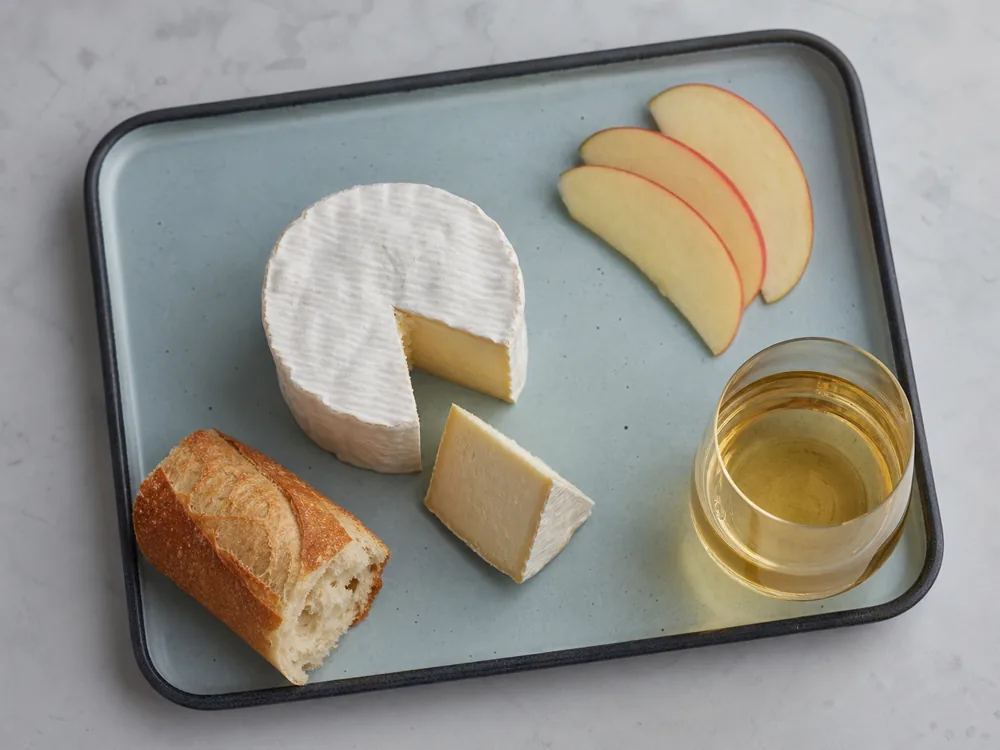
Avoid big tannic reds when Saint-André is the main cheese. Tannin can make rich soft cheese taste metallic or bitter, especially when the rind is already more mature.
The same logic applies when choosing among Saint-André, Délice de Bourgogne, and ultra-smooth d'Affinois, since each needs a drink bright enough to reset the palate.
- Best wine lane: Dry sparkling wine, crisp white wine, and dry cider refresh the palate without fighting the rind.
- Best food lane: Pear, apple, plain baguette, and lightly toasted nuts give texture without making the board heavy.
- Use restraint: A thin smear of bright jam works, but thick sweet preserves can make the cheese taste flat.
- Skip power pairings: Smoked meat, oaky wine, and tannic reds can make the rind seem bitter.
The pairing job is balance, not amplification. Saint-André already supplies the luxury note, so the rest of the plate should create lift.
Dry cider is usually easier than Calvados for a full serving because cider adds acidity with little alcohol heat. Calvados works better as a small after-dinner pour when the cheese portion is restrained and no sweet preserve is competing beside it.
How to Buy and Store Saint-Andre Before the Rind Runs Ahead
Buy Saint-André by service timing. A firmer round suits tomorrow, while a softer round suits tonight if the rind stays white and the aroma stays clean.
Because Saint-André is soft and mould-ripened, the package date and refrigeration directions should control storage before and after opening.
The current Savencia 200 g technical record specifies refrigerated storage at 4 to 6°C for that export product. Other markets can print different directions, while FDA guidance for U.S. home refrigerators says 40°F or below, so follow the exact package and the stricter local rule.
Wrap the cut face in cheese paper or wax paper, then place it in a loose container. A soft-cheese wrapping routine matters here because Saint-André has an active rind and a rich paste that declines quickly after cutting.
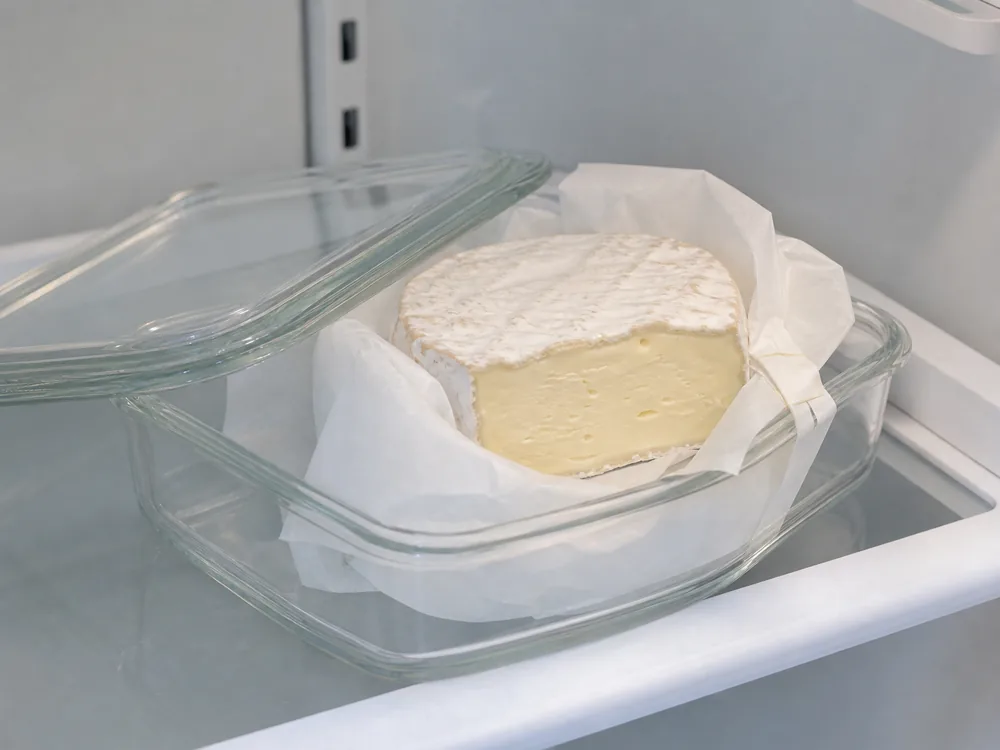
The best buying cue is controlled softness. Saint-André should feel ready, not tired.
Choose a whole mini round when possible because a pre-cut wedge exposes the paste and dries the center before you get the full mousse-like texture.
If you must buy a cut piece, look at the rind-to-center line. The edge should look creamy and clean, while the center should still look pale and smooth rather than broken or grainy.
- For tonight: A round with gentle edge yield is useful if the rind still smells clean.
- For tomorrow: A firmer round gives you more control during transport.
- For a buffet: Put out smaller portions and replenish from the refrigerator instead of leaving one soft cheese warm for hours.
- For leftovers: Cut narrow wedges so the remaining paste has less exposed surface.
This is where triple-cream value can disappear. A beautiful round kept too warm, cut too early, or wrapped too tightly can taste expensive but tired.
Move the wrapped round away from the refrigerator door because a stable shelf temperature protects the rind better than colder storage followed by repeated warming.
Which Cheeses Are Good Alternatives to Saint-Andre?
The right substitute depends on which part of Saint-André you were using. Richness, rind, and spreadability point to different cheeses.
Do not replace it by shape alone because a small white-rind round can taste far earthier, leaner, or sharper than Saint-André.
- Brillat-Savarin: Best when you want the closest French triple-cream neighbor and do not mind a more premium counter buy.
- Brie: Best when you need a milder soft-ripened wheel that can handle baking better than Saint-André.
- Camembert: Best when you want a smaller wheel with more mushroom, rind, and Normandy character.
- Boursin: Best only when spreadability matters more than rind, ripening, or cheese-course presence.
- Fromager d'Affinois: Best when you want silky crowd-pleasing softness with less overt triple-cream weight.
For recipe swaps, soft-ripened cheese substitutes should be chosen by use. Boards can handle richer alternatives, while baked dishes need a cheese that will not break as quickly.
If the table needs a true triple-cream identity, stay close to Saint-André or Brillat-Savarin. If the table needs a simple spread, flavored fresh Boursin becomes the easier answer.
A rindless cream cheese or mascarpone swap can copy richness, but it cannot copy the bloomy-rind edge that makes Saint-André feel like a finished cheese course.
For baking, move away from Saint-André on purpose. Brie and Camembert give you more structure under heat, while Saint-André gives you a better cold or tempered table experience.
For a cold canapé, Fromager d'Affinois offers similar silkiness but often a looser texture, while Brillat-Savarin offers comparable richness with a different lactic balance. Test a small portion before replacing Saint-André in any preparation that depends on clean slices.
What Are the Nutrition Facts and Pregnancy Rules for Saint-Andre?
The current Savencia technical record for the 200 g product reports nutrition per 100 g: 448 calories, 44.5 g fat, 31 g saturated fat, 1 g carbohydrate, and 10.9 g protein. These figures belong to that export record, so use the package in your market when planning a serving.
- Portion logic: Serve smaller wedges than you would for a lower-fat soft cheese because the mouthfeel is much richer.
- Product basis: Do not transfer the 200 g export figures to a large food-service wheel or a package with a different label.
- Milk allergen: The product contains cow's milk and cream.
- Safety context: Soft-ripened cheeses need stricter cold handling than dry aged wedges, even when made with pasteurized milk.
Pasteurization does not turn every soft-ripened cheese into the same pregnancy category. The NHS says pasteurised or unpasteurised mould-ripened soft cheeses with a white coating must be thoroughly cooked, while the CDC lists pasteurized soft cheeses heated to an internal temperature of 165°F or until steaming hot as safer.
Served cold, Saint-André is described as a pasteurized soft, mould-ripened cheese, a type the CDC list does not cover, so ask a midwife or doctor. The exact label still matters because it identifies the product and milk treatment.
For everyday eating, use the exact package nutrition panel and choose a portion that fits the rest of the meal. A generic Brie value or the separate 2 kg trade specification is not a substitute for the 200 g label.
SOURCES & REFERENCES
What Else Do People Ask About Saint-Andre?
These questions cover the buying, serving, and safety decisions that change the outcome most for Saint-André.