In This Article
Brillat-Savarin: The IGP Triple-Cream Built Around Ripeness
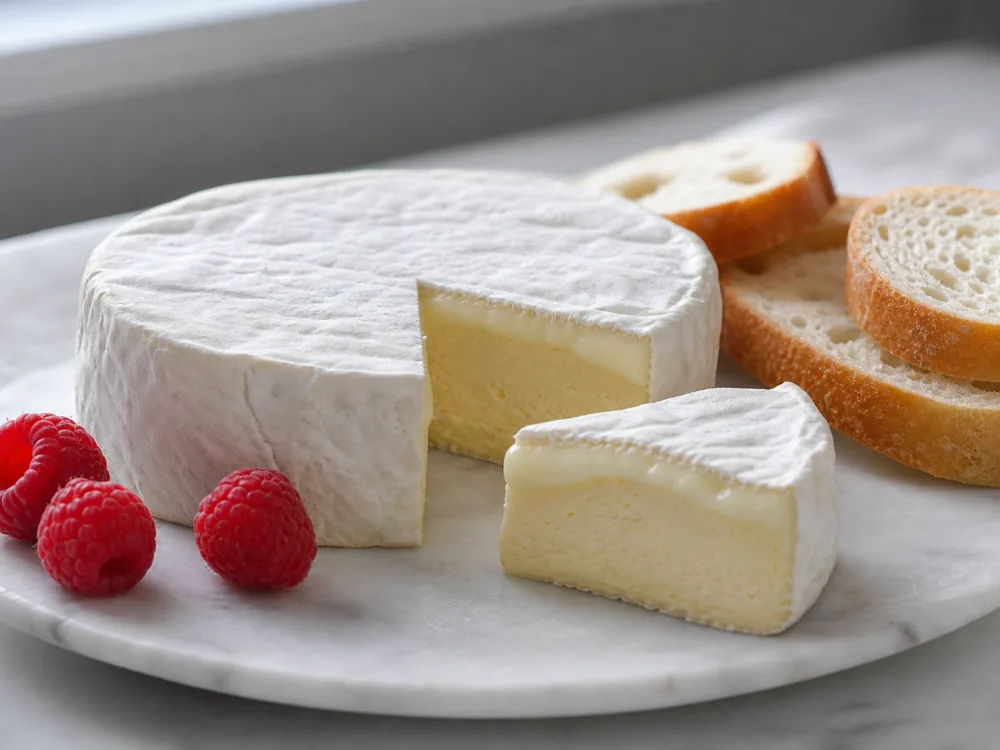
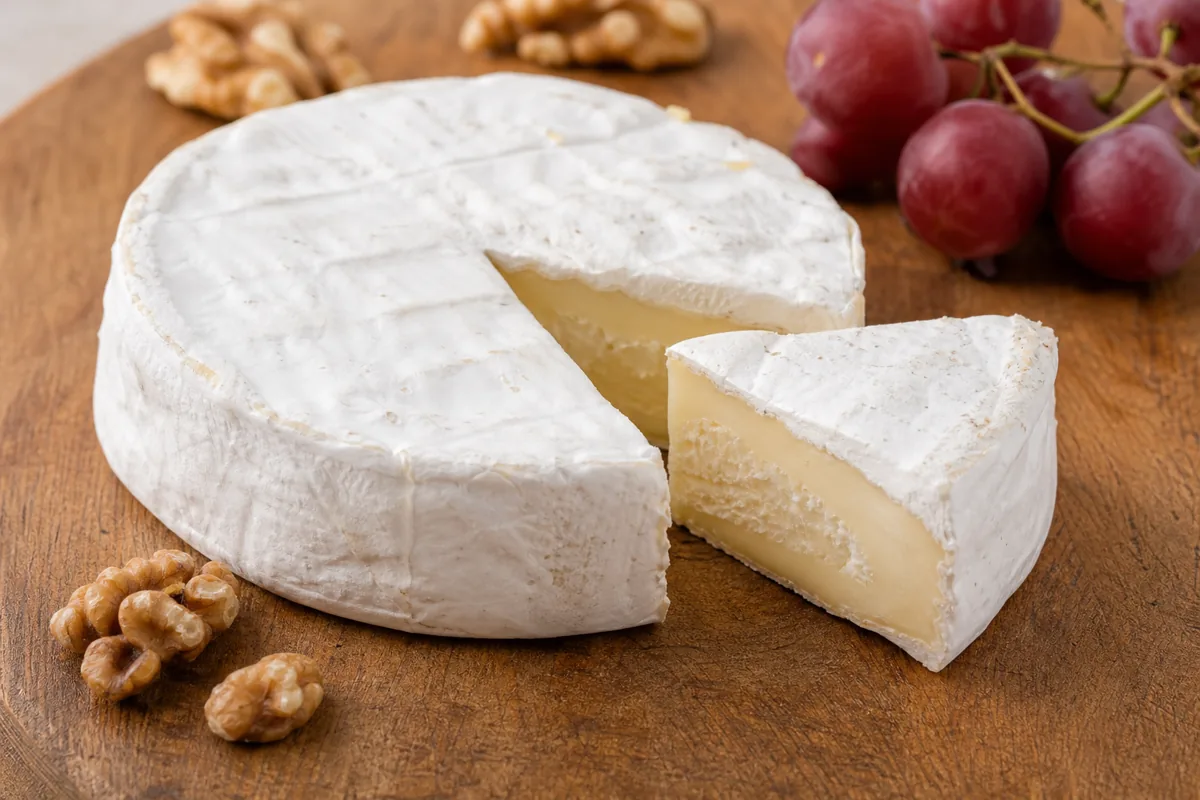
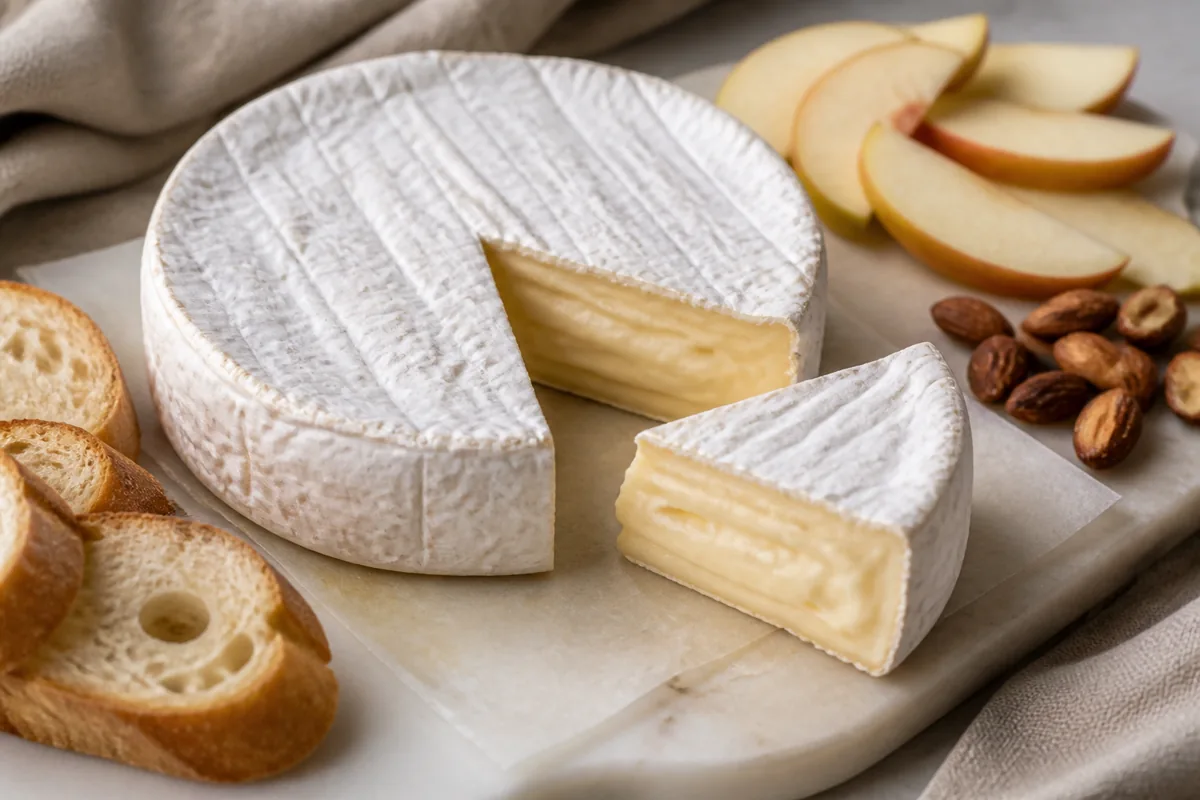
Brillat-Savarin is a French triple-cream cheese with a soft white bloomy rind, and our soft-ripened cheese references place it at the richest end of the style. It is made in Normandy by enriching whole cow's milk with additional heavy cream before culturing and molding.
Remember it later
Planning to try this recipe soon? Save it for a quick find later!
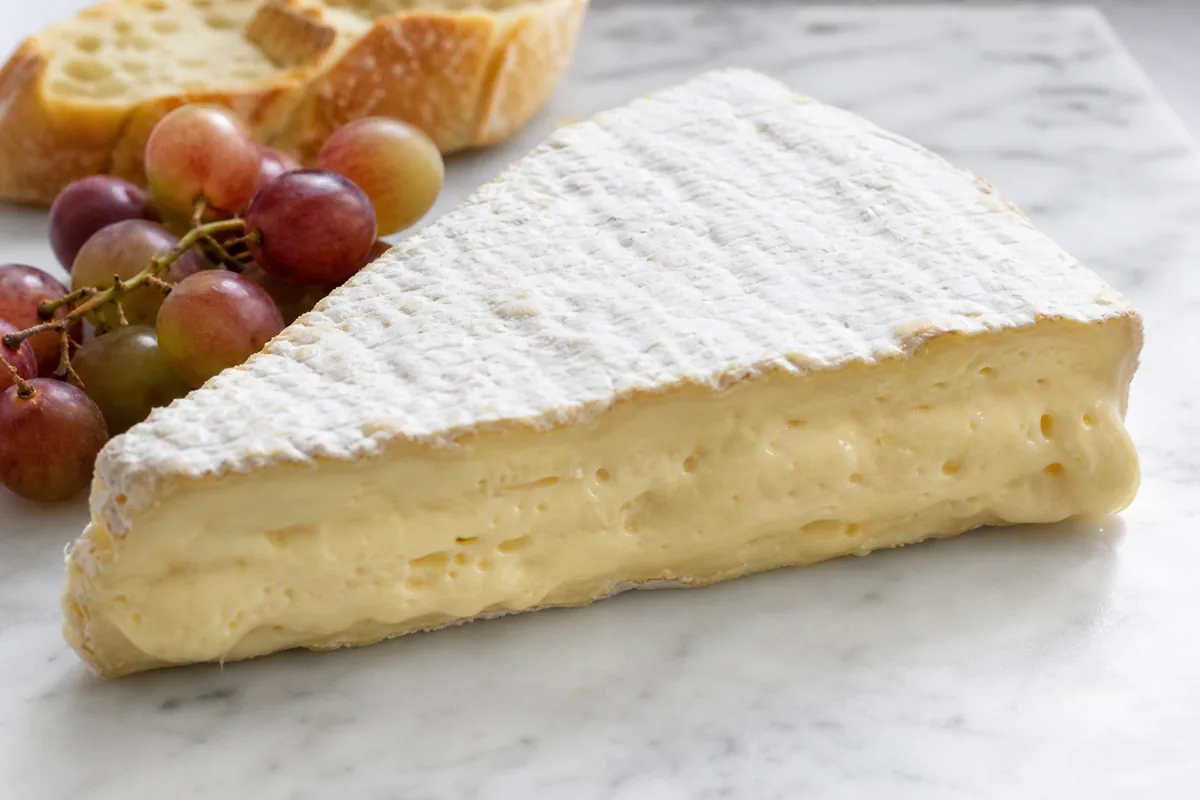
That added cream pushes the paste to the triple-cream threshold and gives the cheese its whipped-butter texture.
The cheese is named after Jean Anthelme Brillat-Savarin (1755–1826), a French lawyer and gastronome whose book The Physiology of Taste became one of the foundational texts of modern food writing. Henri Androuët, a Parisian affineur and cheese merchant, created the cheese in the 1930s and gave it that name as a tribute.
Brillat-Savarin received Protected Geographical Indication status in 2017, which formally ties it to Normandy and Île-de-France production.
The IGP matters because the cheese can look deceptively simple from the outside. A small white round only becomes Brillat-Savarin when the milk, added cream, rind development, and regional production fit that protected identity.
- Triple-cream designation: Requires a minimum of 75% fat in dry matter. This is a regulatory threshold, not a description of total fat in the cheese. Total fat runs 36–40% because the cheese is still mostly water
- Rind: Thin, white, delicate. Formed by Penicillium candidum cultures applied to the surface after molding. Edible throughout, but more pronounced and slightly bitter in older specimens
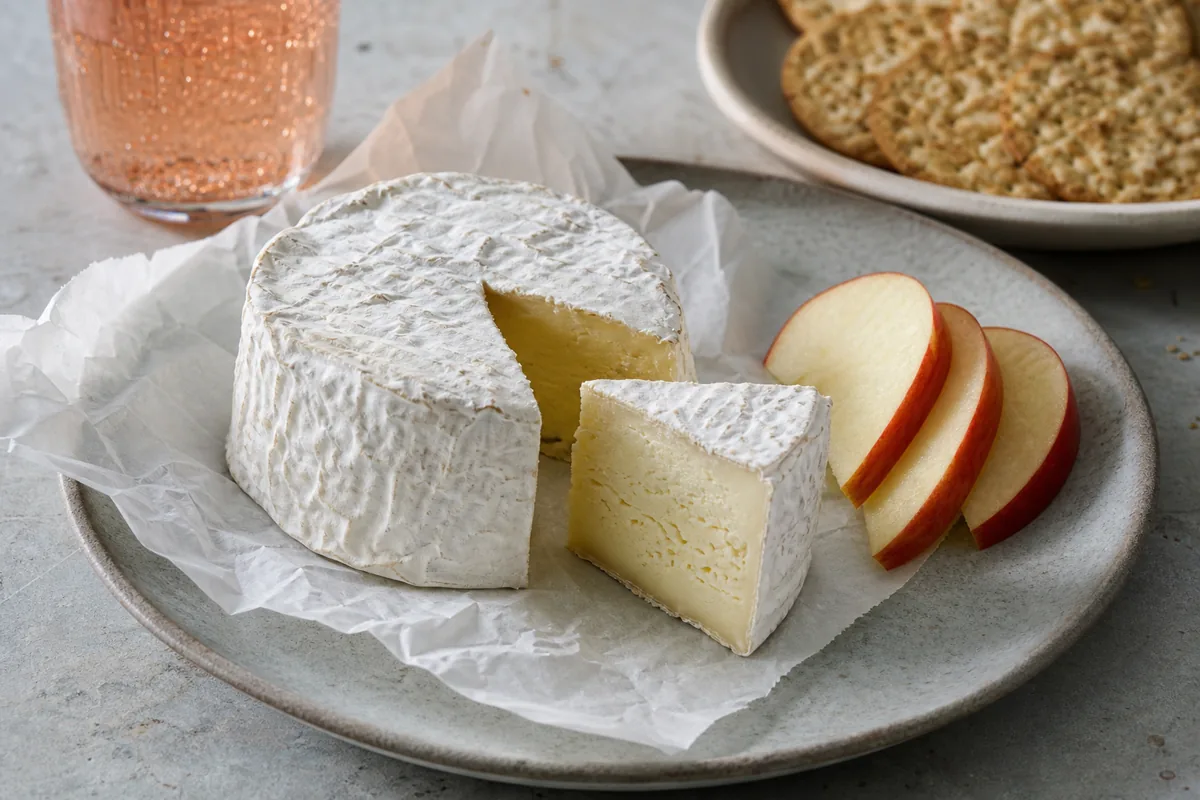
- Size: Sold as small rounds (about 200 g / 7 oz) or larger 500 g wheels. The small rounds are more common in American specialty retail
- IGP zone: Production is restricted to Normandy and neighboring Île-de-France departments since the 2017 designation
In the bloomy-rind family, Brillat-Savarin is the rich end of the spectrum. Standard Brie wheels and ripe Camembert rounds are single-cream cheeses with more pronounced earthy and mushroom notes from the rind.
Brillat-Savarin uses the same rind culture but buries that earthiness under a much higher fat content, producing a milder, creamier, more luxurious profile.
Richness is the defining characteristic and it registers on the palate before any other note. The cream fat creates a texture that lingers and coats rather than dissolving cleanly.
Underneath the richness is a mild lactic tang, a faint mushroom or earthy note from the rind, and a clean, milky sweetness. Salt is deliberately low.
The cheese is designed to taste like fresh cream with a rind wrapped around it, which is more or less what it is.
Triple-Cream: What the Fat Number Actually Means
Triple-cream is a legally defined category in French cheese regulation, not a marketing term. To qualify, the fat content in dry matter must reach or exceed 75%.
The dry matter qualification exists because cheese is primarily water, and measuring total fat against total weight would give a misleadingly low number for any soft cheese with high moisture.
Here is how the calculation works in practice. Brillat-Savarin weighs roughly 60% water and 40% solid matter.
Of that solid matter, 75%+ is fat. So the overall fat content is approximately 75% of 40%, which lands around 30–40% total fat by weight.
That is roughly double the fat content of full-fat cream cheese and five to six times the fat content of whole milk.
That richness places Brillat-Savarin beside another French triple-cream, but the two do not eat exactly alike. Saint-Andre usually feels denser and more buttery, while Brillat-Savarin can turn almost spoonable near peak ripeness.
- Single-cream: 50%+ fat in dry matter. Standard Brie falls in this category
- Double-cream: 60%+ fat in dry matter. Rich but not quite triple-cream territory
- Triple-cream: 75%+ fat in dry matter. Brillat-Savarin, Saint-André, and Explorateur are the most widely known examples
- How it is achieved: The cheesemaker adds heavy cream to whole milk before culturing, raising the fat percentage of the milk base before any fermentation or molding takes place
Frais vs. Affine: The Ripeness Choice That Changes Everything
Brillat-Savarin is sold at two distinct maturity stages, and the difference matters for flavor and texture.
In France, affiné versions are the standard. In the United States, most imported Brillat-Savarin arrives in the frais stage because it travels better and has a longer retail window.
If you find an affiné version at a specialist counter, it is worth the premium for the fuller flavor.
Use ripeness as your buying decision, not only brand name. The freshest wheels serve like cultured cream, while fully ripened examples move closer to ripe Explorateur texture with more rind aroma and a looser center.
Serving Brillat-Savarin Without Losing the Cream
Brillat-Savarin should be served at room temperature. Remove it from the refrigerator at least 45–60 minutes before serving.
Cold fat registers as greasy rather than creamy, and the full texture of a triple-cream cheese only develops when the fat warms slightly.
The rind is edible and should be eaten. It provides a slight bitterness and earthiness that contrasts with the richness of the paste.
If you find the rind overpoweringly bitter on a fully ripened wheel, you can remove the top layer of rind and eat the interior alone, but this diminishes the contrast that makes the cheese interesting.
Cut a small wheel into wedges only after it has warmed. If you slice it cold, the center can fracture instead of flowing and the rind may pull away from the paste.
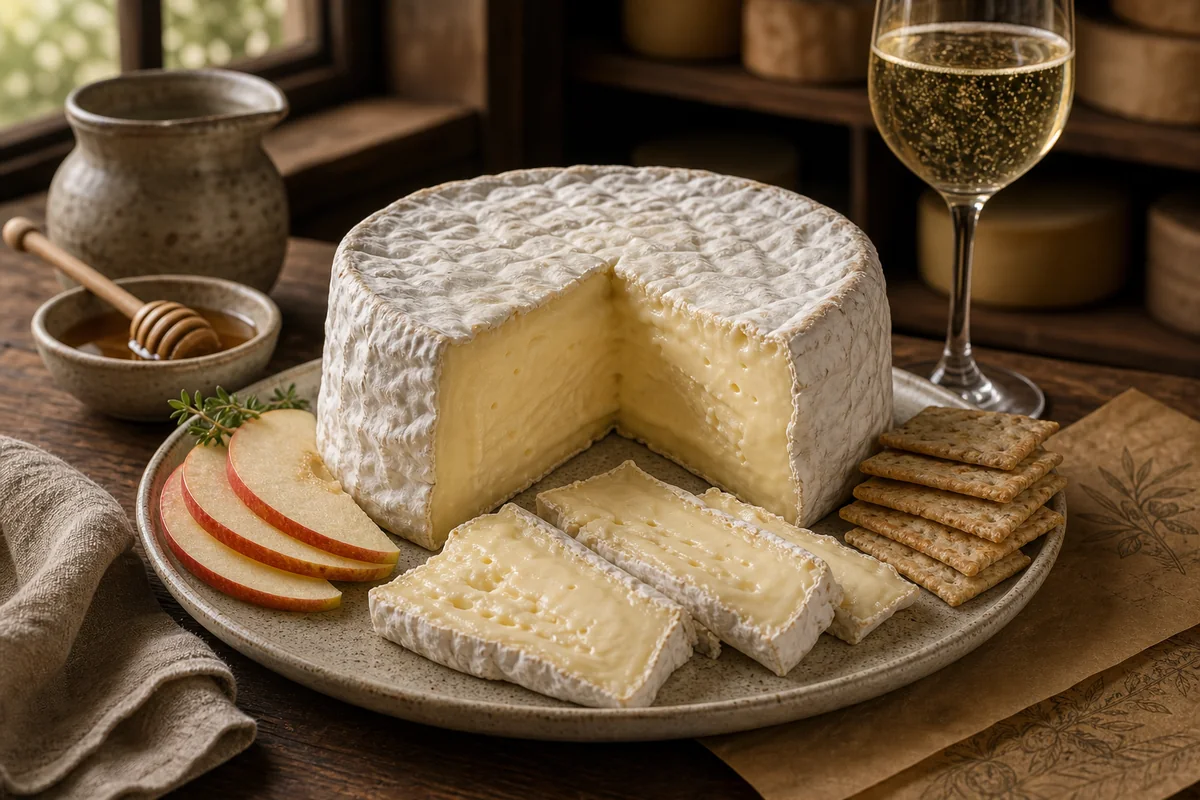
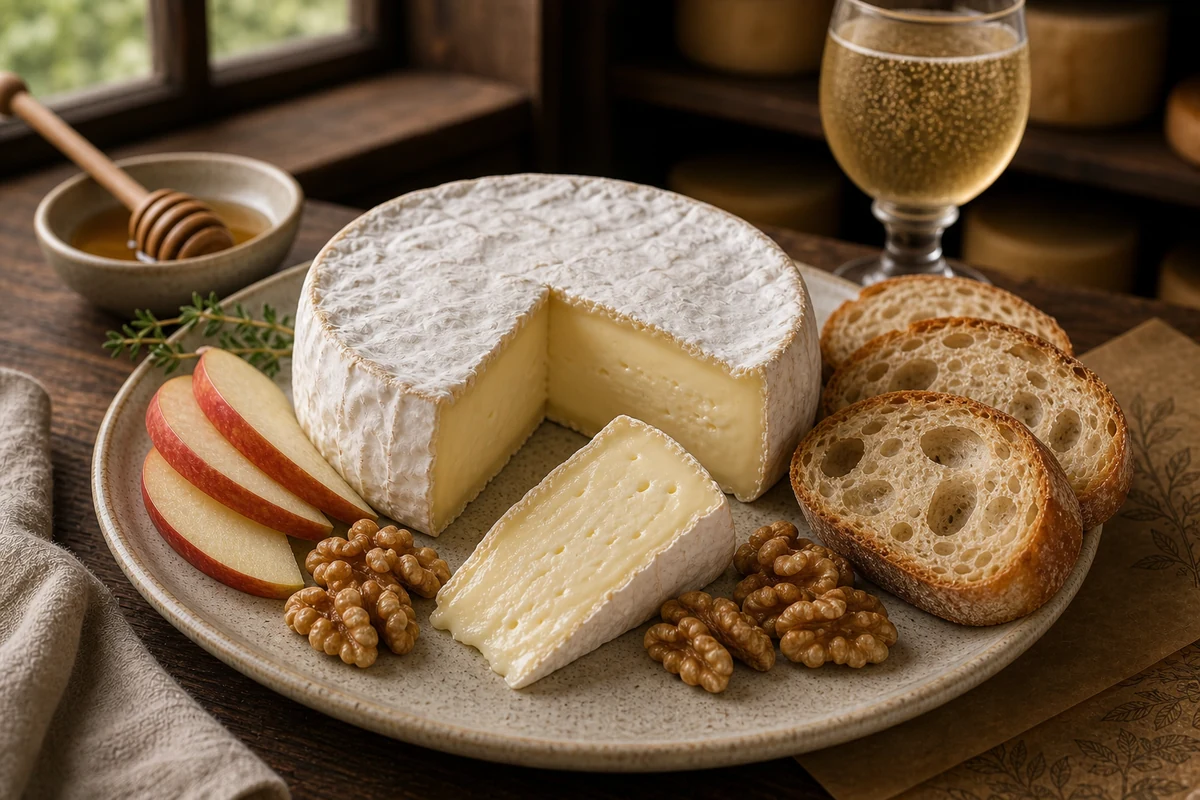
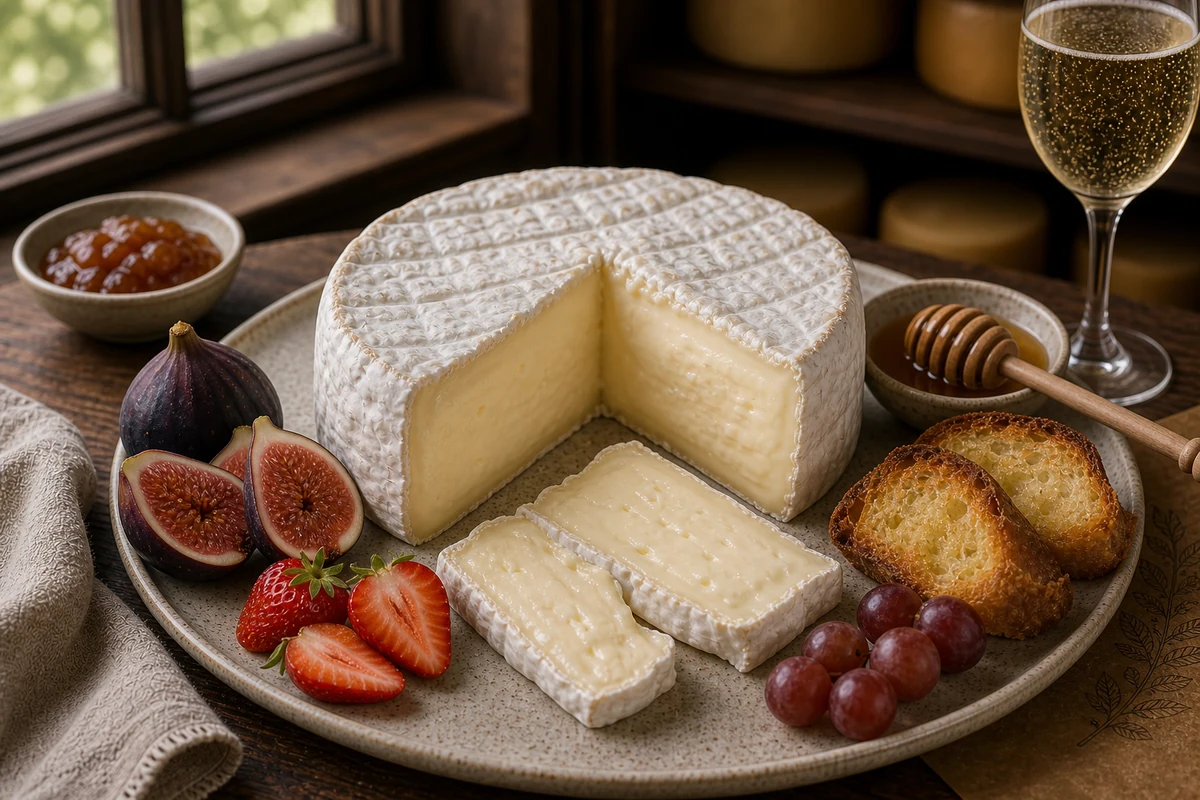
Serve Brillat-Savarin on its own round with plain water crackers or a fresh baguette. Accompaniments should be simple: a drizzle of honey, a few fresh raspberries or strawberries, or a small cluster of walnuts. Rich triple-cream cheese is easily overwhelmed by strong accompaniments and does not need help from smoked meats, aged chutney, or complex jams.
For a larger board, keep Brillat-Savarin away from washed-rind cheeses and smoked meats. The cheese tastes best when the surrounding flavors make the cream feel cleaner, not heavier.
Pairings: Champagne and the Classic French Approach
The classic pairing for Brillat-Savarin is Champagne or dry sparkling wine. High acidity and fine bubbles cut through the fat and refresh the palate between bites in a way that still wine, which shares the richness of the cheese, cannot.
Blanc de blancs Champagne (100% Chardonnay) is the most frequently recommended match because the wine's citrus and mineral character contrasts cleanly with pure cream. Acid and fat pairings explain why the match works.
For non-sparkling options, a crisp, unoaked white wine (Chablis, Sancerre, dry Alsatian Riesling) works by the same acid principle. Avoid full-bodied reds: their tannins clash with dairy fat and turn the cheese bitter.
Light, low-tannin reds like Beaujolais are the exception and work reasonably well.
If you want the same soft-rind mood with less fat, Brie gives you gentler sparkling and white-wine options. Brillat-Savarin needs more acid because the paste is richer.
- On a cheese board: Brillat-Savarin works as the anchor of a cheese board when you want one showpiece cheese rather than a range. Pair it with a firm aged cheese (Comté, aged Gruyere) and a blue for contrast
- With fruit: Fresh strawberries, raspberries, and figs are the most natural pairings. The tartness of the fruit cuts the fat cleanly
- With honey: A light floral honey (acacia, linden) drizzled directly on the cut face of the cheese is a classic French bistro presentation
- Avoid: Strong charcuterie, smoked fish, and highly spiced accompaniments. The cheese's delicacy is easily overwhelmed
Brillat-Savarin vs. Brie and Camembert
All three are French bloomy-rind cow's milk cheeses, but they occupy different positions on the fat and flavor spectrum.
The key distinction is fat level. Brillat-Savarin is designed to taste like cream in cheese form.
Brie and Camembert are designed to taste like milk with earthy depth from the rind. Neither is better in absolute terms, but they serve different moments on a table.
Use Brie and Camembert when you are choosing between classic bloomy-rind wheels. Use Brillat-Savarin when the meal needs one rich final cheese with a sparkling wine beside it.
Brillat-Savarin vs. Mascarpone
Both cheeses are associated with extreme richness and both draw Italian and French triple-cream contrasts. Italian mascarpone is an uncultured cream cheese made by directly acidifying cream, with no rind and no lactic tang.
Brillat-Savarin is cultured and rinded. Mascarpone is used primarily as a cooking and baking ingredient (tiramisu, sauces, frosting).
Brillat-Savarin is primarily a table cheese served whole and eaten at room temperature.
If you want a rindless spread with French grocery-store availability, Fromager d'Affinois texture sits closer to a smooth double-cream wedge than to Brillat-Savarin's protected triple-cream identity.
When Brillat-Savarin Is Worth the Premium
Brillat-Savarin is worth paying for when the cheese is the final course, not when it disappears into a recipe. The added cream, IGP identity, and short ripeness window make more sense on a plate than in a hot dish.
Use it when you want one rich soft cheese with Champagne, berries, honey, or plain bread. Skip it when the board already has several creamy cheeses, because the effect becomes heavy fast.
It also works when guests want bloomy-rind cheese but dislike strong mushroom or barnyard notes. Brillat-Savarin gives the rind family without making the rind the loudest part of the bite.
- Worth it: Dessert boards, Champagne service, small cheese courses, and premium soft-rind flights.
- Not worth it: Baked pastry, hot sandwiches, blended dips, or boards already full of rich soft cheeses.
- Best portion: Smaller wedges than Brie, because the fat carries farther on the palate.
- Best contrast: Acidic wine, tart fruit, bitter greens, or plain bread.
The practical test is simple. If the cheese will be noticed as Brillat-Savarin, buy it, but choose a less expensive soft cheese when it would become anonymous creaminess.
Buying IGP Brillat-Savarin and Reading the Ripeness Cues
Brillat-Savarin is a specialty cheese item unavailable at most supermarkets. Look for it at Whole Foods Market, Murray's Cheese, Di Bruno Brothers, and independent cheesemongers.
In French cheese specialty shops or well-stocked import retailers, you may find affiné versions at better maturity than the standard import.
For a similar domestic or more accessible option, flavored fresh French cheese sits in the same dairy-case neighborhood, though it lacks the rind and the triple-cream designation. Saint-André is the most widely available US supermarket triple-cream alternative and performs identically to Brillat-Savarin in most applications.
A good wheel should feel slightly springy at the edge and softer in the center. If the rind smells strongly ammoniated or the paste leaks through the wrapper, the cheese has moved past service peak.
After opening, the cut face tells you more than the date. If it stays clean, creamy, and faintly lactic, the wheel still has a useful serving window.
For a slightly larger bloomy-rind table cheese with less added-cream drama, Coulommiers rind cues help you judge the rind and center. Brillat-Savarin asks for the same visual attention, but the fat content makes the serving window feel shorter.
Nutrition and Pregnancy Notes
Brillat-Savarin is a high-fat cheese even though the 75% figure refers to fat in dry matter. The eating consequence is still real: a small wedge can feel as rich as a much larger piece of standard Brie.
That is why portion size matters more here than with many bloomy-rind cheeses. Serve thin wedges or spoonable small portions, then let bread and fruit carry the rest of the bite.
For pregnancy, the main question is not the triple-cream classification. It is whether the cheese is pasteurized, cold-held, and eaten within a safe window, especially because it is a soft surface-ripened cheese.
- Fat cue: Triple-cream means richer dry matter, not a cheese that is 75% fat by total weight.
- Portion cue: Use less than you would use for standard Brie or Camembert.
- Pregnancy cue: Choose pasteurized versions and avoid damaged, overheated, or overly ammoniated wheels.
- Storage cue: Treat cut pieces as short-window soft cheese, not as a long-keeping aged wheel.
The cheese earns its reputation through richness, but the best service keeps that richness controlled. Brillat-Savarin should finish the meal cleanly, not exhaust the palate.
Brillat-Savarin remains one of the few cheeses where the name tells you exactly what you are getting. It is the richest, most indulgent expression of a bloomy-rind French cheese, built to end a meal with cream, rind, and restraint in balance.
Sources
- Jenkins, Steven. Cheese Primer. Workman Publishing, 1996. Triple-cream category definitions and Brillat-Savarin production history
- Masui, Kazuko and Tomoko Yamada. French Cheeses. DK Publishing, 1996. Complete reference on French AOC and IGP cheese categories
- INAO (Institut National de l'Origine et de la Qualité). Brillat-Savarin IGP specification, 2017. inao.gouv.fr
- Brillat-Savarin, Jean Anthelme. The Physiology of Taste. 1825. Historical context on the namesake gastronome