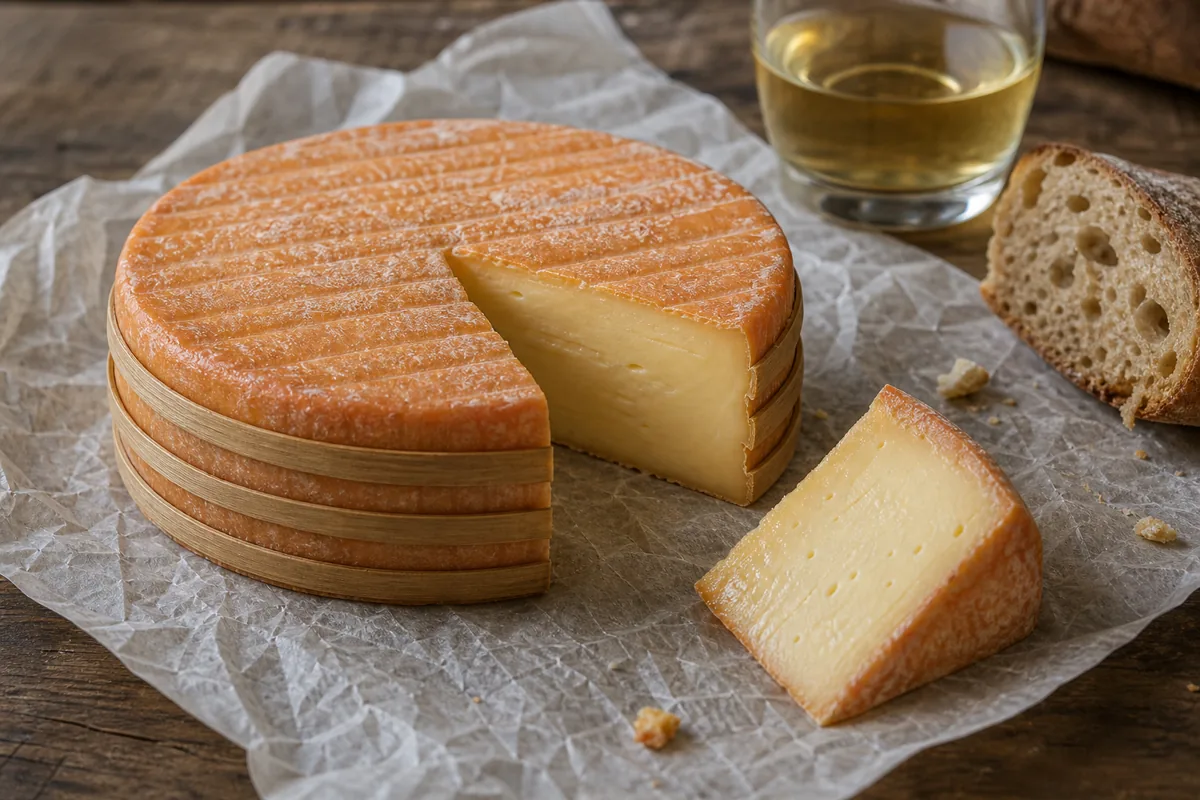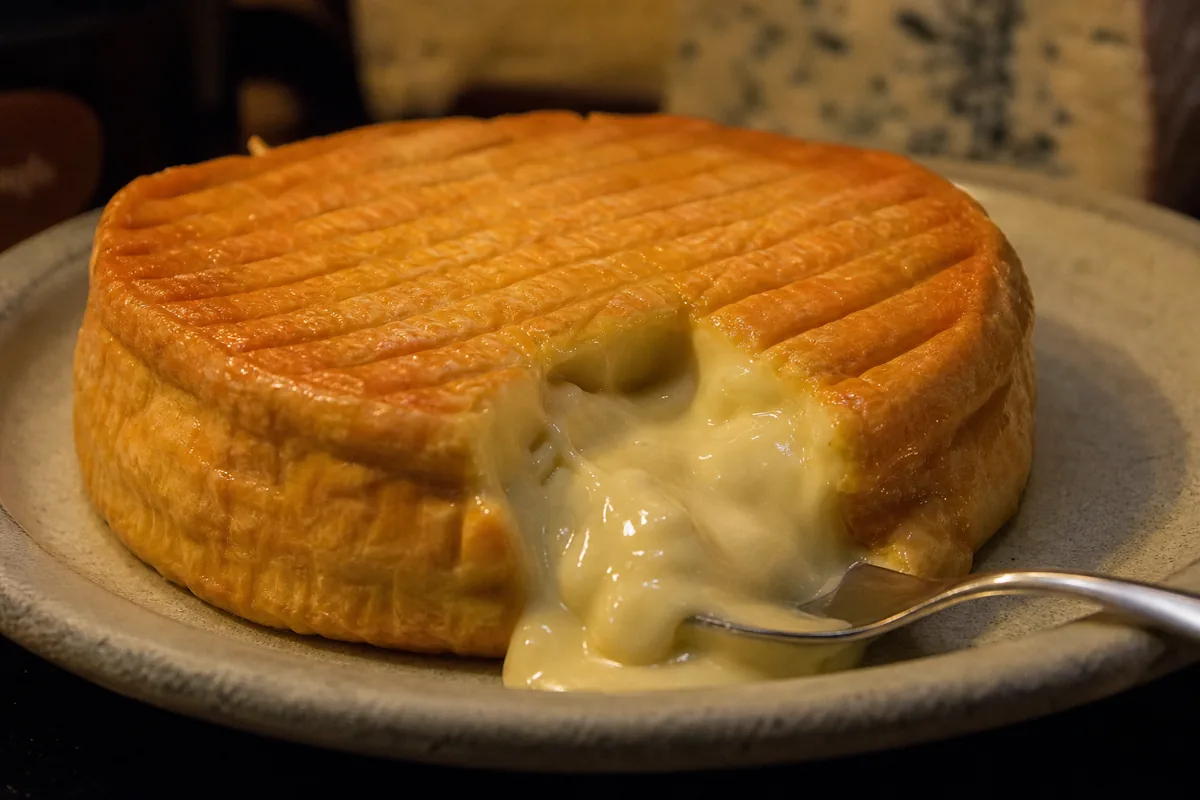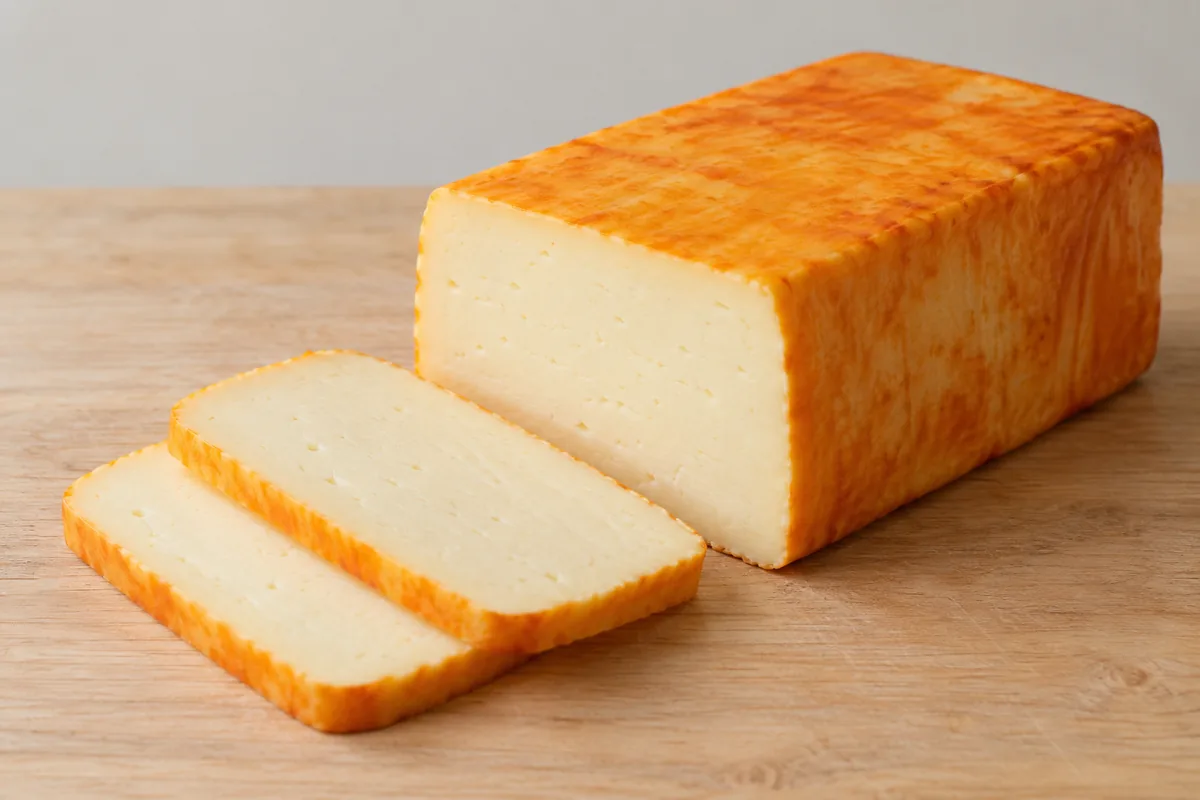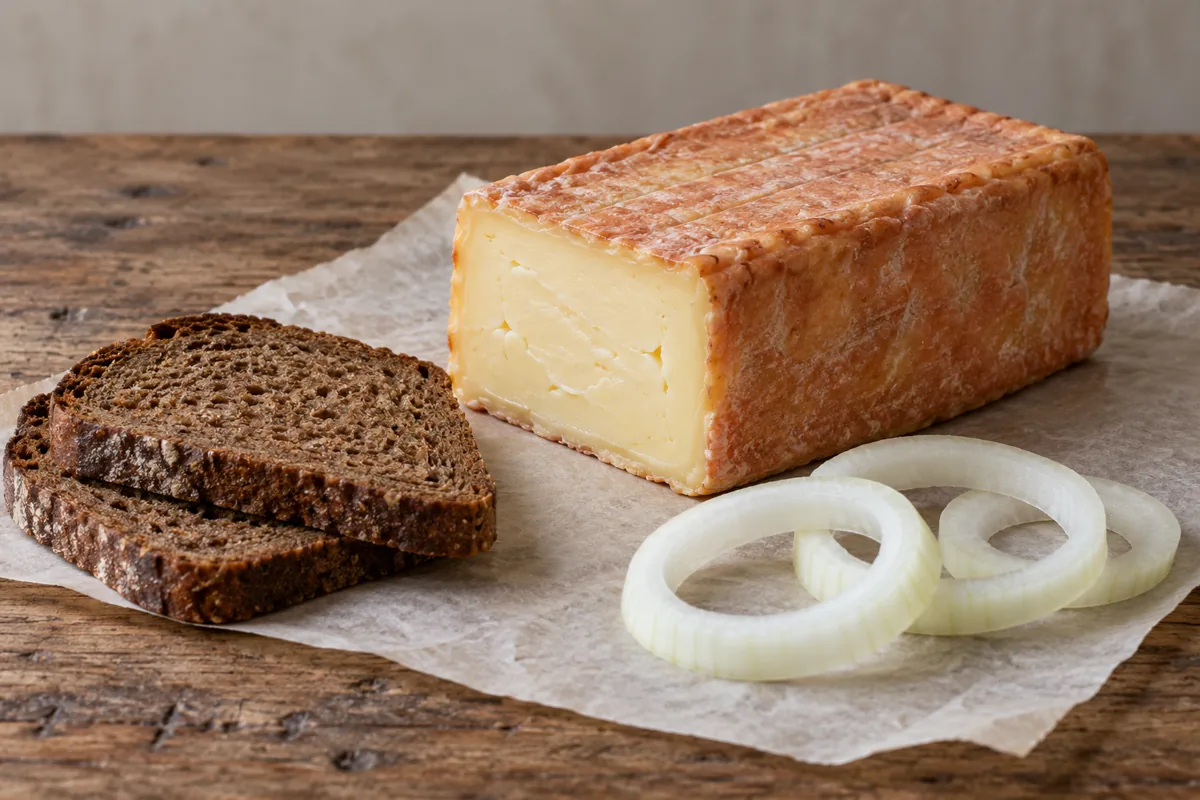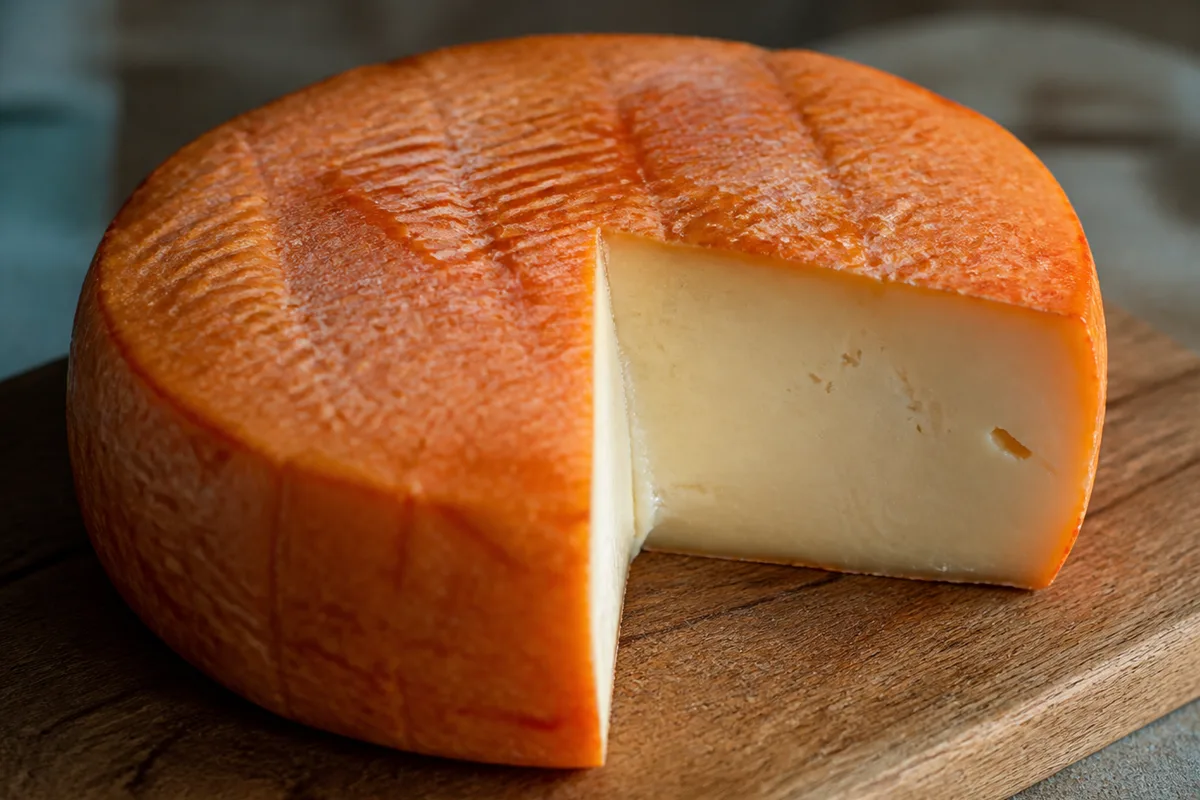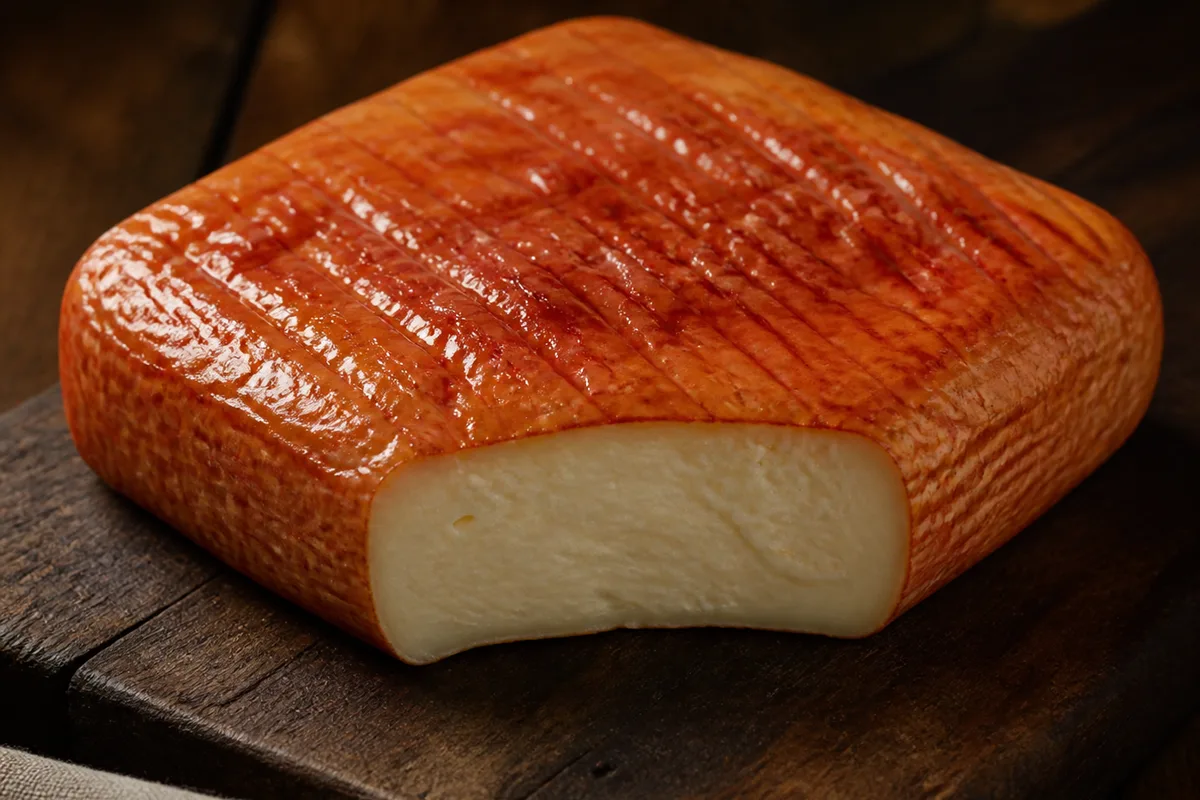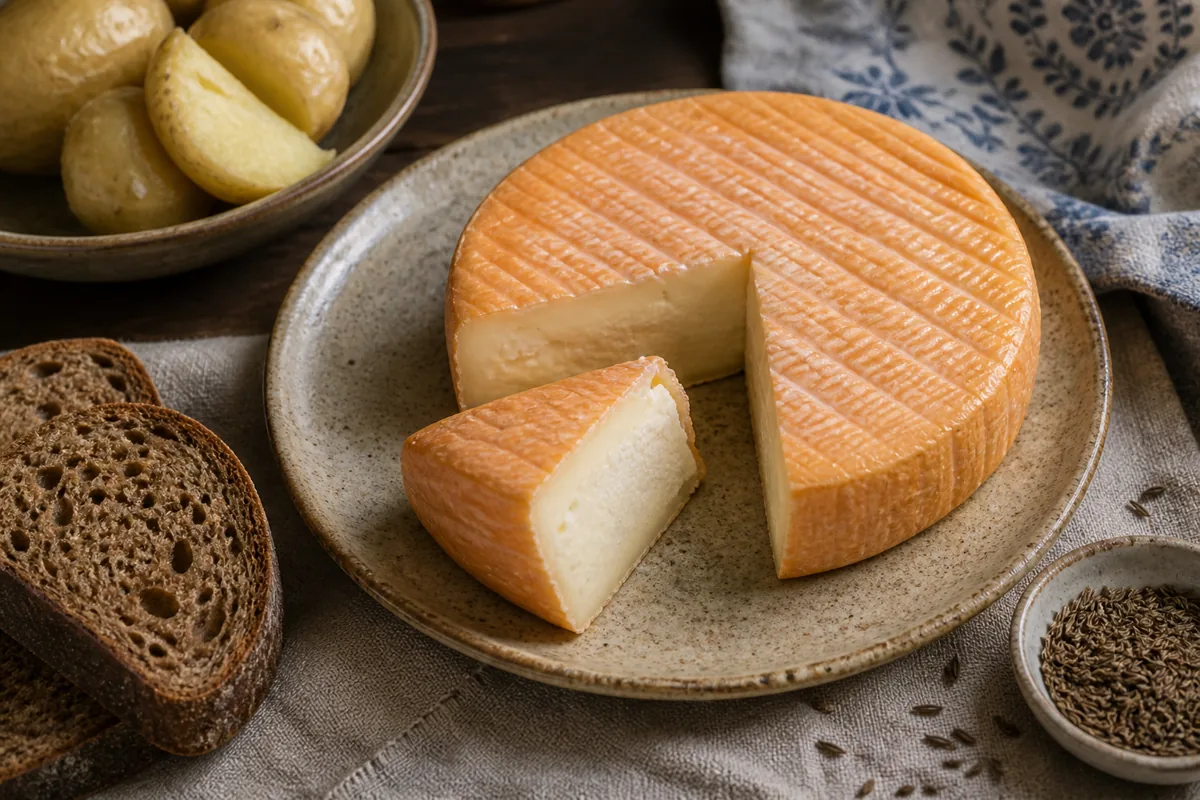
French Munster is a soft PDO cheese with a washed orange rind and a gentler paste than its aroma may suggest. If you are picturing a mild American deli slice, you are thinking of Muenster, a separate cheese with a similar spelling.
Once you have the French cheese in front of you, ripeness becomes the practical question. A firmer center gives you cleaner wedges, while a more mature wheel softens under the rind and spreads its washed-rind character more fully through the paste.
In This Article
How Does French Munster Differ from American Muenster?
Munster takes its name from the Alsatian town of Munster, and the protected Munster-Géromé form reflects the cheese's history on both sides of the Vosges. It belongs to the traditions of Alsace and Lorraine within the wider family of French cheeses.
American Muenster is usually smooth, mild and sold in deli slices. When a recipe or shop sign drops the accent of place and relies on pronunciation alone, check whether it means the French washed-rind wheel or the American slicing cheese.
| Cheese | What You Usually Encounter | What It Means for You |
|---|---|---|
| French Munster PDO | Soft wheel with a moist orange washed rind and protected production rules | Choose by ripeness, serve in wedges or cook where its rind character is welcome |
| American Muenster | Mild, smooth deli cheese commonly sold in slices | Use when easy slicing and gentle melting matter more than washed-rind aroma |
Knowing which cheese the name refers to prevents the most common shopping error. It also keeps you from applying advice about the French cheese's rind, aging and pregnancy safety to an American deli cheese.
The names also lead you toward different counters. French Munster appears as a small wheel or wedge among specialty cheeses, while American Muenster commonly sits with sliced sandwich cheeses.
What Washing the Rind Does
The protected description gives Munster a thin, slightly moist rind ranging from ivory-orange to reddish-orange, with a flexible paste that may contain a few small openings. During maturation, humid conditions and repeated surface care create an environment very different from a dry natural rind or a white bloomy rind.
The surface develops first, which is why aroma can feel much stronger at the rind than in the center. A good wedge may smell cellar-like while the paste underneath remains milky, savoury and comparatively restrained.
The current specification recognises three size categories and sets a minimum maturation of 14 or 21 days according to format. Those minimums establish when a cheese can carry the name, while the paste in front of you shows how far that particular wheel has progressed.
Surface washing reaches beyond the outer millimetre as the cheese matures. The paste beneath the rind softens, carrying that developed aroma into the whole eating experience.
That movement gives you a practical reason to inspect a cut wheel. The minimum age tells you the producer met the PDO rule; the width and consistency of the softened layer tell you whether the wheel suits your plate or recipe.
Milk treatment remains a package-level fact because the protected definition centres on cow's milk, place and make. Keep the retail label when you need the heat treatment for a dietary or safety decision.
Should You Judge Munster by Aroma, Texture, or Both?
Your first impression comes from the rind because that is the surface exposed to the air. The paste reaches you only after cutting, and in a sound wheel it can feel milder, creamier and less aggressive than the aroma suggested.
Ripeness narrows that gap as the softened layer moves inward. A young wheel can smell developed outside while keeping a restrained center, whereas a mature wheel carries more of the rind's savoury character through each bite.
If you buy by smell alone, you can still go home with the wrong texture. The cut face gives you a better answer when you explain whether you want clean wedges, a spreadable paste or a cheese that will disappear into a gratin.
Temperature adds another layer. A cold slice feels firmer and releases less aroma, while a serving portion that loses its chill becomes softer and more expressive.
Bring out only what you plan to serve, then give the cheese time to open on the plate. You get a more representative taste without warming the rest of the package repeatedly.
How Do You Match the Paste to the Meal?
A younger Munster tends to cut more cleanly and retain a firmer center. As it matures, the paste can soften first beneath the rind, giving you a creamier edge around a more structured middle.
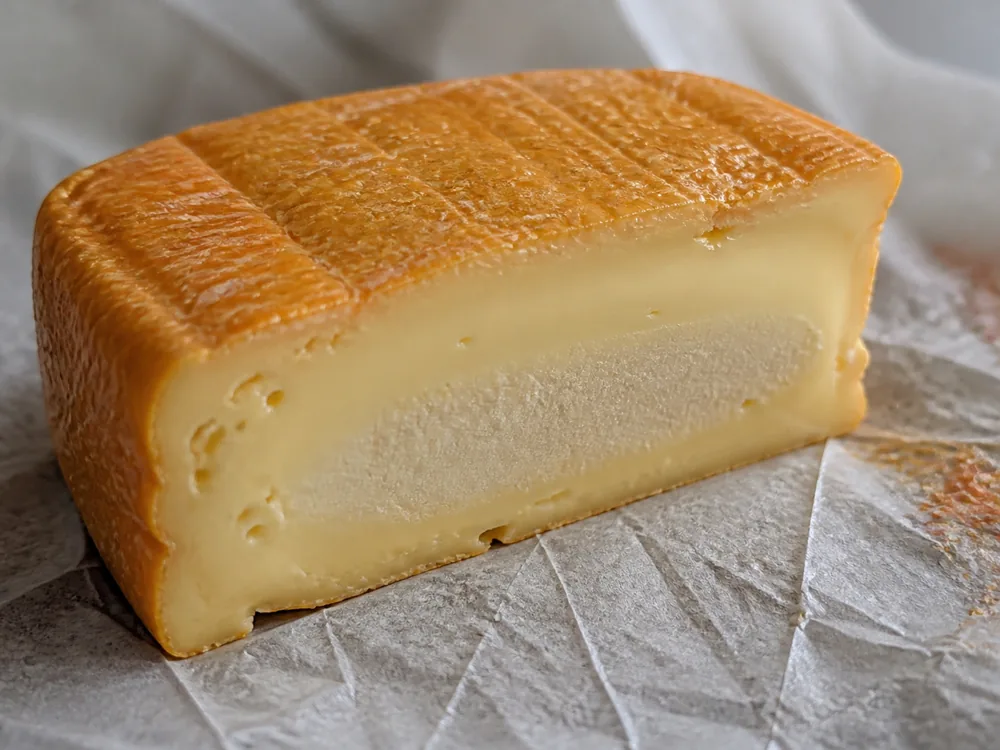
Choose the center for the use you have planned. A firmer wheel gives you tidy radial wedges, while a more evenly yielding paste suits spreading, potatoes and dishes where the cheese should soften into the food.
Rind colour sits within a protected range, and a deeper orange tells you little about quality on its own. Intact packaging and a paste that suits your meal are more useful, along with the absence of swelling, leakage or signs that the cheese remained warm.
When a cheesemonger can cut from the wheel, ask for a view from rind to center. A small sample from the outer edge alone may taste mature while hiding a much firmer middle.
A sound, ripe Munster can smell forceful even when its paste is balanced. Dates, seals and storage history tell you about cold-chain safety; aroma tells you what style of cheese is waiting inside.
How Should You Serve Munster with Enough Contrast?
Cut a round wheel radially so each portion carries rind, soft outer paste and center. That approach gives every person the same progression and keeps the washed rind from accumulating on only a few pieces.
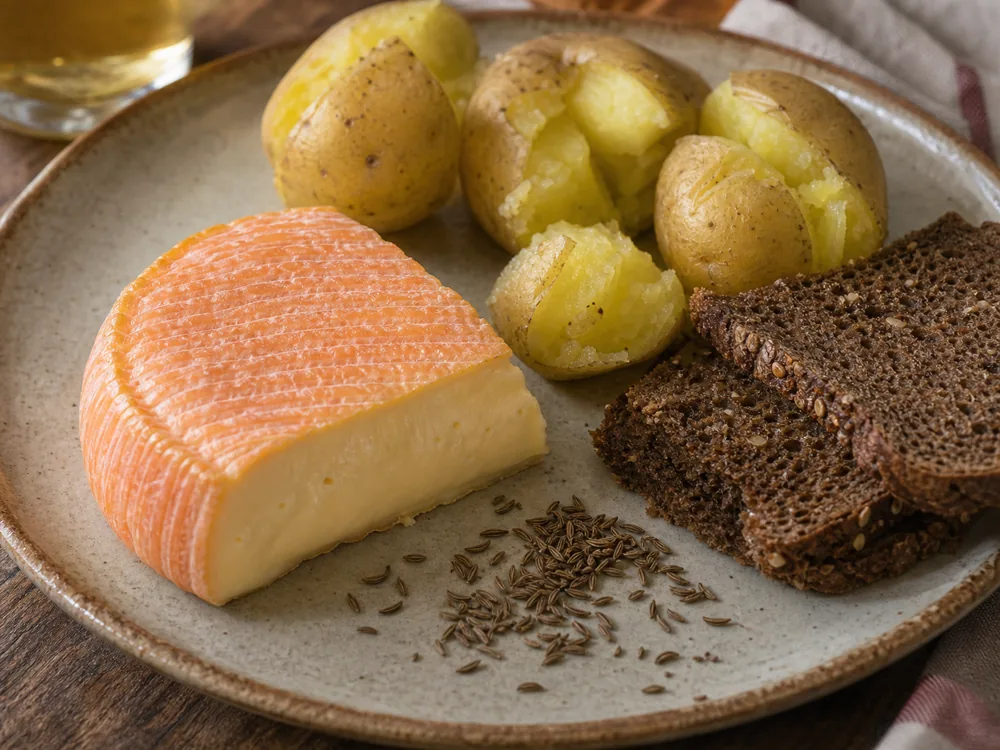
Boiled potatoes and rye bread absorb the soft paste without adding much sweetness. Crisp apple cuts the richness, and a small amount of caraway brings the dry herbal note associated with regional service.
| Pairing | Type | Why It Works |
|---|---|---|
| Boiled potatoes | Food | A mild starch carries the soft paste and balances the rind. |
| Rye bread | Food | Its firm crumb gives the cheese structure without extra sweetness. |
| Crisp apple | Food | Acidity and crunch offset the rich paste. |
| Caraway seeds | Food | A small amount adds a dry herbal note. |
| Dry Alsace white wine | Wine | Acidity refreshes the palate between bites. |
| Dry cider | Drink | Apple acidity echoes the fresh fruit pairing. |
On a larger cheese board, give Munster some space from delicate fresh cheeses so its rind aroma does not dominate before anyone tastes them. One fruit and one bread are usually more useful than several strongly flavoured condiments.
Serve the milder items first and bring Munster later in the sequence. Guests can then notice its soft paste and savoury balance before the rind aroma becomes the only thing they remember.
A dry Alsace white wine refreshes the palate, while dry cider echoes the apple without adding much sugar. Both work because acidity resets the richness between bites rather than trying to match the rind's intensity.
Does Cooking Let the Paste or Rind Take the Lead?
Munster melts into potatoes, gratins and savoury tarts. Keep the rind when you want the full washed-rind character, or trim a portion when a gentler paste-led result suits the dish better.
A younger wheel gives you a cleaner, milder melt, while a mature one carries more aroma through cream, eggs or potatoes. Add a mature Munster in smaller amounts first because heat disperses its rind character throughout the whole dish.
If easy melting is your only priority, a mild semi-soft cheese will interfere less with the rest of the dish. Munster earns its place when you want the dish to taste specifically of a washed-rind cheese.
For a gratin, distribute thin pieces across the surface so the cheese melts before one area becomes oily. In a tart, smaller pieces spread the flavour through the filling and keep one mature-rind bite from overwhelming the rest.
Trimming the rind reduces some aromatic force, but it also removes part of what makes Munster distinct. Taste a small piece first, then decide how much rind your dish can carry.
What Should the PDO Mark and Retail Label Tell You?
Look for Munster or Munster-Géromé and the EU PDO logo in the same field of vision. The protected name confirms the cheese's identity, while the retail label tells you the producer, weight, milk treatment, ingredients, nutrition, date and storage range.
- Identity: confirm the protected name and PDO mark.
- Ripeness: choose a firmer or more yielding paste for your intended use.
- Condition: avoid a failed seal, unexplained swelling or a broken cold chain.
- Product facts: keep the milk statement, date and storage directions with a counter-cut piece.
The official specification summary describes the protected cheese rather than every retail package. That is why you should not copy one producer's nutrition panel or milk-treatment statement onto another wheel.
Counter cutting creates one more information step. Ask the seller to transfer the original use-by date, milk statement and storage temperature onto the new wrapper, especially when you will not serve the cheese the same day.
Choose quantity with aroma as well as appetite in mind. A small ripe wheel can have more presence than its weight suggests, so buying a modest portion often gives you a fresher cut and less storage pressure.
Where and How Should You Store Munster?
Keep Munster at the temperature printed on its package. The FDA advises 40°F (4°C) or below for a household refrigerator and limits perishable food at room temperature to two hours, or one hour above 90°F (32°C).
After opening, protect the cut face, use clean utensils and follow the earliest applicable date. Choose a wrap that limits drying without trapping surface moisture, while the exact package remains the authority for temperature and after-opening instructions.
Washed-rind aroma naturally grows as the cheese matures, so smell alone gives you an incomplete safety check. Discard Munster when its packaging has failed, its cold history is uncertain or its surface and paste have broken down beyond the product you bought.
Store it away from uncovered butter and other foods that easily absorb odours. Taking out one serving portion also reduces repeated temperature swings for the rest of the cheese.
Freezing can leave a softened texture that is better suited to cooking than to a board. If you bought Munster for the rind-to-center progression, a smaller refrigerated portion protects that value more effectively.
Can You Eat Munster During Pregnancy?
Munster is a soft washed-rind cheese. Current French guidance names Munster among cheeses to avoid cold during pregnancy, including pasteurized versions in this surface-ripened category.
For a cooked dish, heat the cheese until it is steaming hot throughout. The CDC lists pasteurized soft cheeses heated to an internal temperature of 165°F (74°C) or until steaming hot as safer, and soft cheese made from unpasteurized (raw) milk as riskier.
The NHS lists pasteurised soft cheeses as safe to eat and says foods made from unpasteurised milk must be thoroughly cooked. Served cold, a pasteurized Munster is described as a pasteurized soft washed-rind cheese, a type the CDC list does not cover, so ask a midwife or doctor.
Remove the rind where your local guidance tells you to, check the exact milk statement and follow any more specific advice from your clinician. Milk treatment, rind type and thorough cooking remain separate conditions, so one package detail cannot settle the whole decision.
When Another Washed-Rind Cheese Fits Better
Livarot offers a firmer Normandy structure, while Taleggio gives you an Italian washed-rind cheese with its own protected character. Époisses is another soft French option when you want a distinct regional specification and a very yielding paste.
Choose a substitute by asking how you need it to feel and behave in the dish, then compare aroma. Each package still controls milk treatment, date and storage, even when the cheese belongs to the same broad washed-rind family.
SOURCES & REFERENCES
What Else Do People Ask About Munster Cheese?
They are separate cheeses. French Munster is a PDO soft washed-rind cheese from Alsace and Lorraine, while American Muenster is a mild cheese commonly sold in deli slices.
The washed rind can smell more forceful than the paste tastes. A younger wheel is firmer and milder, while a more mature one softens beneath the rind and carries more savoury cellar character.
The washed rind is part of the cheese and carries much of its aroma. You can eat it when the surface matches the product and the package and cold chain are sound, or trim some for a gentler cooked result.
Check the exact package. The PDO specification defines a cow's-milk cheese, while the retail label states whether the wheel you are buying uses raw or heat-treated milk.
Current French guidance says to avoid cold washed-rind soft cheese such as Munster during pregnancy, including pasteurized versions. In a cooked dish, heat it until steaming hot throughout, and the CDC lists pasteurized soft cheeses heated to an internal temperature of 165°F (74°C) or until steaming hot as safer, but served cold, a pasteurized Munster is a soft washed-rind cheese its list does not cover, so ask a midwife or doctor.