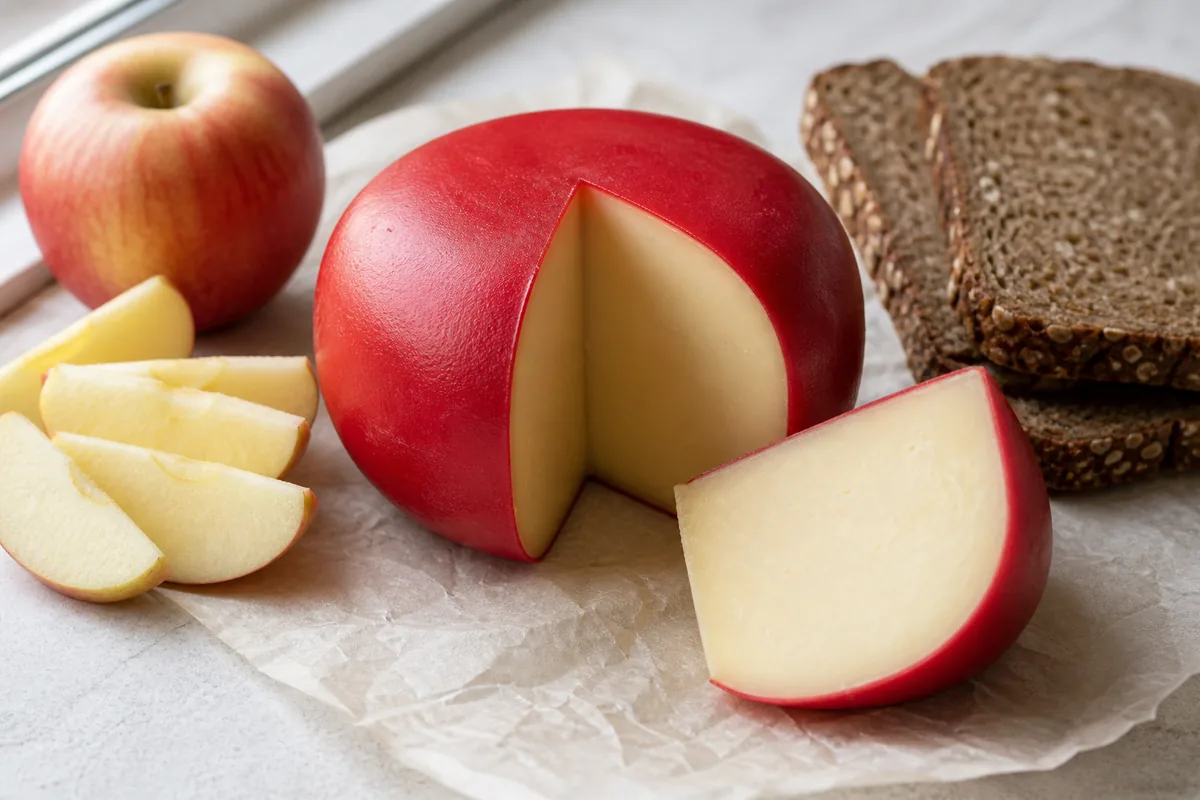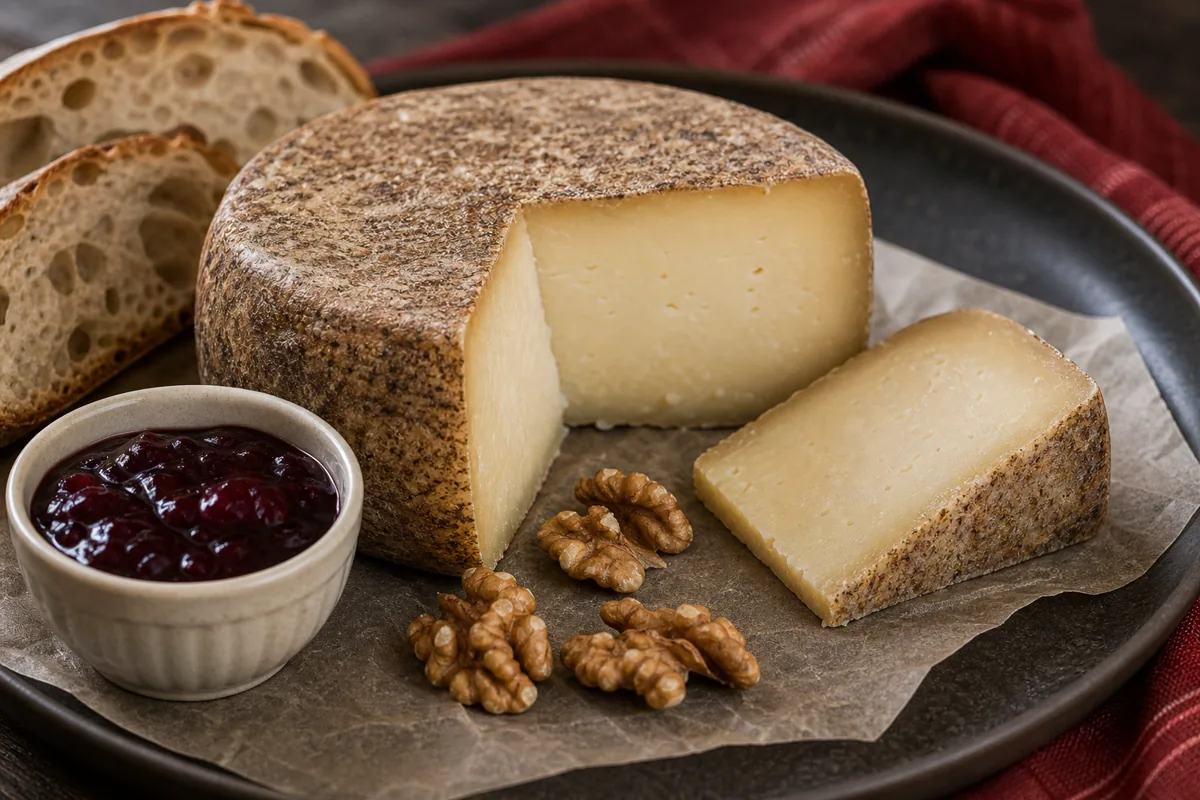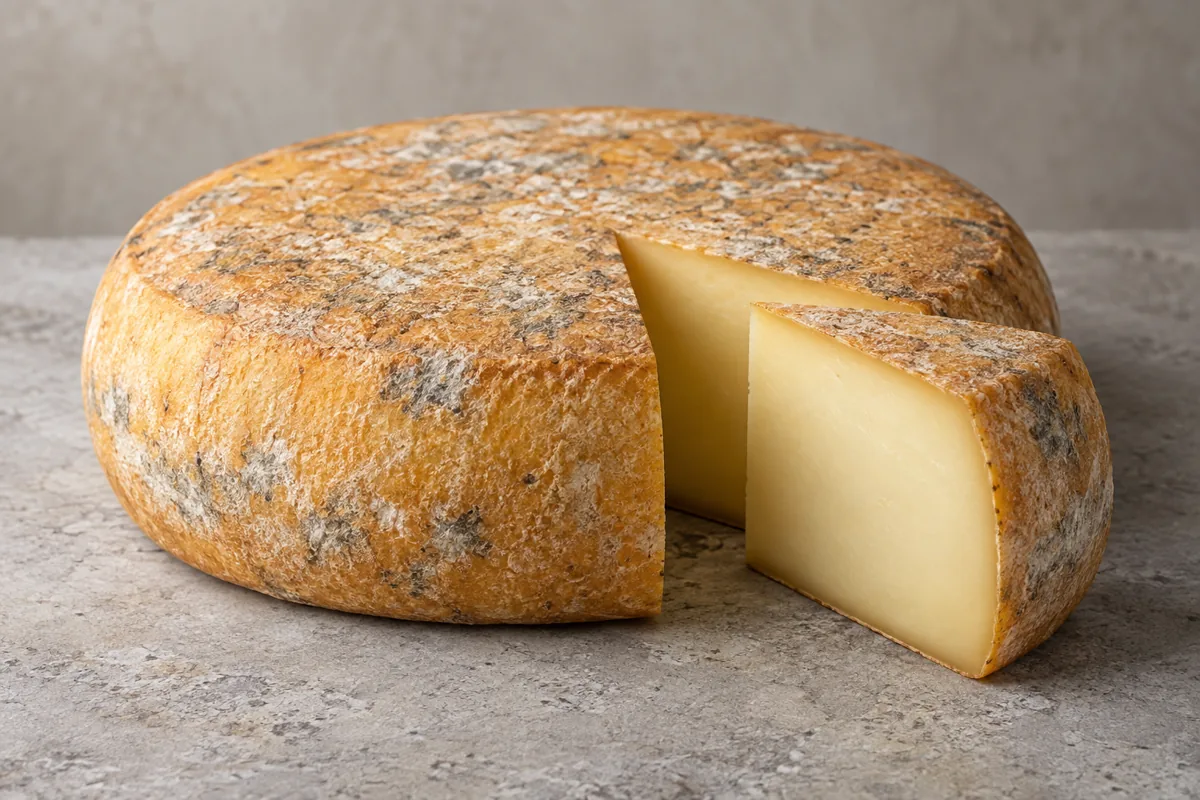
Ardi Gasna is Basque for sheep cheese, and sources disagree on whether it is a generic name or one company's brand. What sits under it ranges from a raw-milk farmhouse wheel to a pasteurized sliced pack.
The wheels in the records are pressed, uncooked sheep's-milk cheeses from the French Basque Country, and some are also sold as protected Ossau-Iraty. Milk treatment, ageing and maker change from one product to the next, so the label carries more information than the name.
In This Article
Is Ardi Gasna a Brand or Just Basque for Sheep Cheese?
The words are plain Basque. Slow Food translates ardi gasna literally as "sheep's cheese", and French Wikipedia gives it as the Navarro-Labourdin form, with ardi gazta as the unified Basque spelling.
Who owns the name is where the records split.
| Source | What it says |
|---|---|
| Agour blog, 2022 | Ardi Gasna is neither a cheese nor a brand, only the translation of sheep cheese, and most Agour cheeses are Ardi Gasna |
| French Wikipedia | A registered trademark of Fromagerie Agour Gasnategia in Hélette, with a trademark-register record cited |
| Cheese.com | A registered trademark of the Agour Gasnategia cheese company |
| Culture magazine | A private-brand specialty made by larger dairies such as Onetik and Agour |
| Formaggio Kitchen | Sells an Ardi Gasna from the Loyatho farm in Gamarthe (Ekiola) and another from Fromagerie Pardou in Laruns |
Two makers other than Agour sell under the name at Formaggio Kitchen, so in practice it is not limited to one dairy. We did not check the trademark register ourselves, and the ownership claim above is reported as Cheese.com and French Wikipedia state it.
Agour's own rule is the practical one: a genuine Ardi Gasna is made in the Basque Country, and the pack sometimes adds Euskal Herriko Ardi Gasna, meaning sheep cheese of the Basque Country.
Is Ardi Gasna the Same as Ossau-Iraty?
Sometimes: French Wikipedia says the Agour trademark sits on one of the many cheeses made under the Ossau-Iraty AOP, and Formaggio Kitchen sells the Loyatho farm's Ardi Gasna Fermier as an Ossau-Iraty AOP cheese.
The AOP rulebook limits the milk to three local sheep breeds and sets a minimum age by wheel size: 80 days for 2 to 3 kg wheels and 120 days for 4 to 7 kg wheels. English Wikipedia quotes those figures from the AOC specification.
Ardi Gasna covers more than that rulebook. Agour's blog lists Ossau-Iraty as one kind of Ardi Gasna beside versions with Espelette pepper or truffle, a small creamy cheese called Saint Sauveur des Basques, and a lactic cheese called Pikorra.
Is Ardi Gasna Made With Raw Milk?
Often but not always, because the records split by maker and the split shows on the ingredient line.
| Product | Maker | Milk | Source |
|---|---|---|---|
| Ardi-Gasna (trademark version) | Agour Gasnategia, Hélette | Raw sheep's milk, rind rubbed with Espelette pepper purée | French Wikipedia |
| Ekiola Ardi Gasna Fermier | Désiré and Kati Loyatho, Gamarthe | Raw sheep's milk, salt, rennet, lactic starters | Formaggio Kitchen |
| Pardou Ardi Gasna | Fromagerie Pardou, Laruns | Raw sheep's milk, salt, rennet, lactic starters | Formaggio Kitchen |
| Ardi-Gasna wheel | Not named in the listing | Raw sheep's milk | Androuet |
| Ardi Gasna sliced, 40 slices | Erlita brand, made and aged by Agour | Pasteurized sheep's milk | Onacook |
Agour's blog lists Ardi Gasna au lait cru as its own line beside plain Ardi Gasna, and a second Agour post says the company works with both raw and pasteurized milk.
Rennet is animal-based in the one record that states it, since Formaggio Kitchen lists animal rennet for Ekiola. Cheese.com also marks Ardi Gasna as not vegetarian.
Fermier means farmhouse. Slow Food's Basque Pyrenees presidium describes fermier producers as people who use only their own animals' raw milk and take their flocks up to mountain pasture in summer, and English Wikipedia says an Ossau-Iraty sold as fermier must be made from raw milk.
How Long Is Ardi Gasna Aged?
The records run from about 3 months to 12, and the age tracks the size of the wheel. In the Agour range described on French Wikipedia, the small Petit Ardi-Gasna is aged 3 months at 0.7 kg and the standard wheel 12 months at 4.5 kg.
| Source | What it describes | Age | Size |
|---|---|---|---|
| French Wikipedia, from Agour | Petit Ardi-Gasna | 3 months | 0.7 kg |
| French Wikipedia, from Agour | Ardi-Gasna | 12 months | 4.5 kg |
| Agour product listing | Raw sheep's milk Tommette, a format Agour's blog counts as Ardi Gasna | 3 to 4 months | About 750 g |
| Cheese.com | Ardi Gasna | 4 to 6 months before sale | Not given |
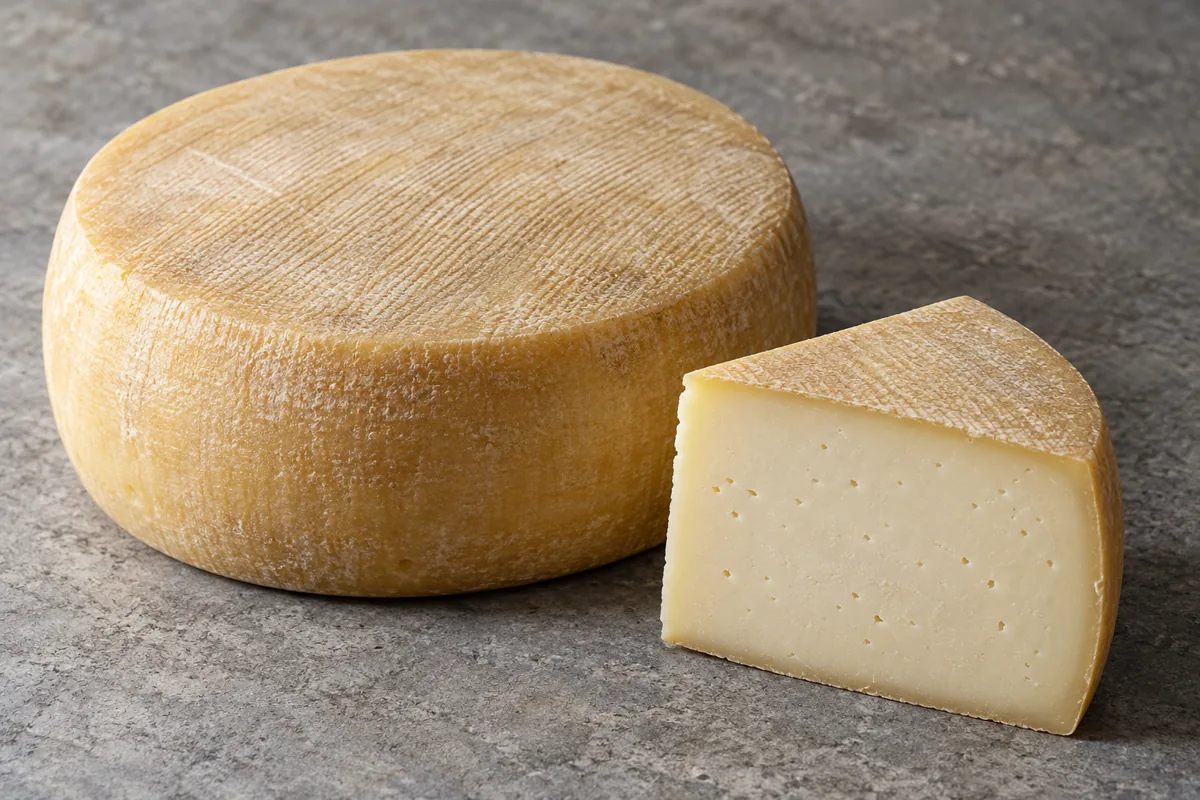
| Androuet | Ardi-Gasna wheel | Minimum 5 months | 4 to 5 kg, 30 to 35 cm across and 6 to 8 cm thick |
| Slow Food | Basque mountain sheep cheeses | 80 to 120 days minimum | Varies |
Slow Food says the flavor of the mountain cheeses starts to become more distinctive from 80 to 120 days, and Androuet says the character and piquancy arrive with time.
No single age describes Ardi Gasna, so the weight and the age on the pack are the two figures that identify which version you are holding.
What Does Ardi Gasna Taste and Look Like?
Each record describes a different product, which is why the flavor words differ.
- Cheese.com: mild, nutty and sharp, with a fresh aroma and the sweetness of mountain flowers
- Androuet: a hazelnut flavor with a little piquancy that grows with age
- Formaggio Kitchen on Ekiola: bright and fruity, with fresh mountain-flower sweetness, wild grass and a nutty finish
- Formaggio Kitchen on Pardou: salty, fatty and toasty
- Slow Food on the Irati mountain cheeses: aromas of warm fat and wool, hot milk, hay, pepper, dried fruit and nuts, citrus, cacao and caramel, with a fatty, soft paste
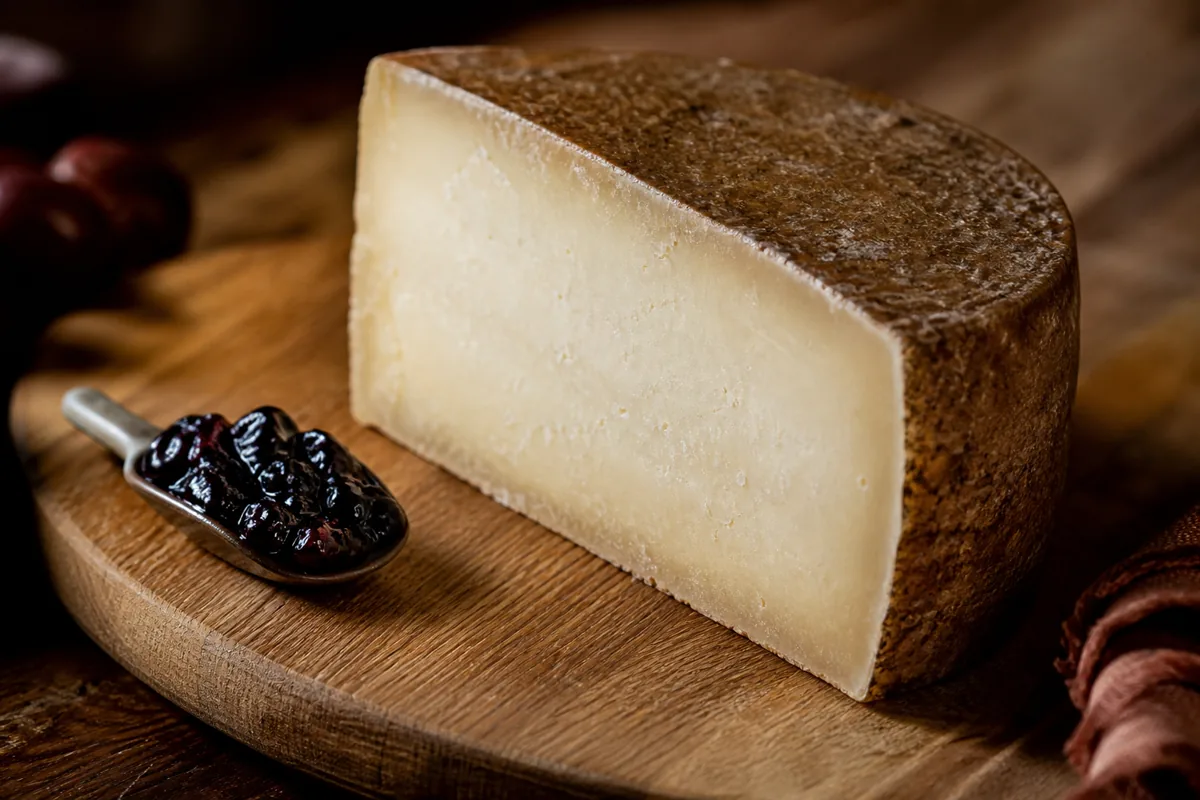
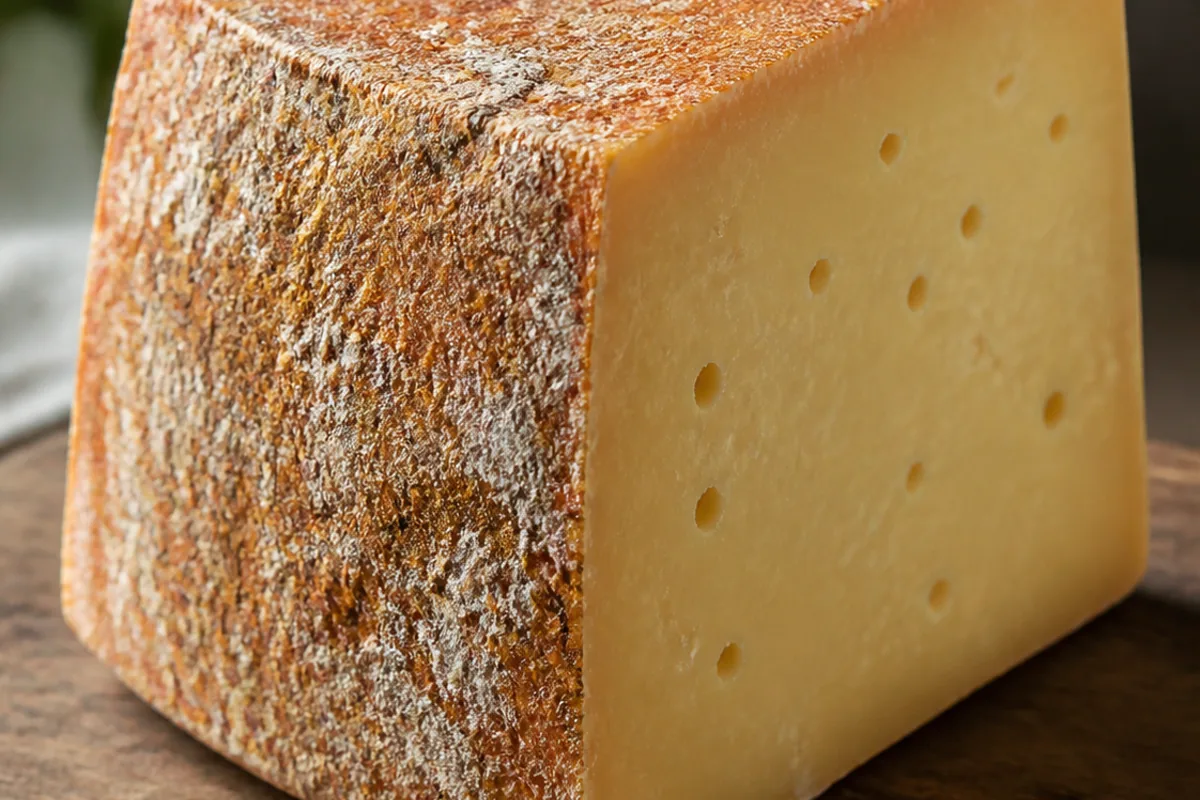
The rind reads differently by record. Androuet describes a natural yellow-orange rind with small patches of mould, and Slow Food gives yellow-orange to ash grey.
Cheese.com lists the rind as washed, while French Wikipedia says the Agour version's rind is rubbed with a purée of Espelette peppers during ageing.
Inside, Cheese.com describes a pale yellow paste that is firm and supple, and Androuet also gives firmness with suppleness.
Milk season is another point of disagreement. Androuet and Cheese.com say spring and summer give the best flavor, and French Wikipedia says summer and autumn.
Which Sheep and Which Valleys Make It?
Slow Food names three local breeds for the Basque mountain cheeses: Manex Tête Noire (increasingly rare), Manex Tête Rouge and Basque-Béarnese. Agour's blog gives the same three for Ossau-Iraty as Manech tête noire, Manech tête rousse and Basco-Béarnaise.
Androuet puts its Ardi-Gasna in the valleys of the Nive, Arnegux-Esterençuby and the Aldudes, in the Basque Country, while Cheese.com lists the region as Midi-Pyrénées.
The mountain end of the tradition is the Irati forest, a beech wood of 17,000 hectares of which only 4,000 lie on the French side. Slow Food counts 20,000 sheep and 2,000 cattle brought there to graze each summer, and says only a few dozen herders still move flocks up the mountain.
How Do You Serve Ardi Gasna?
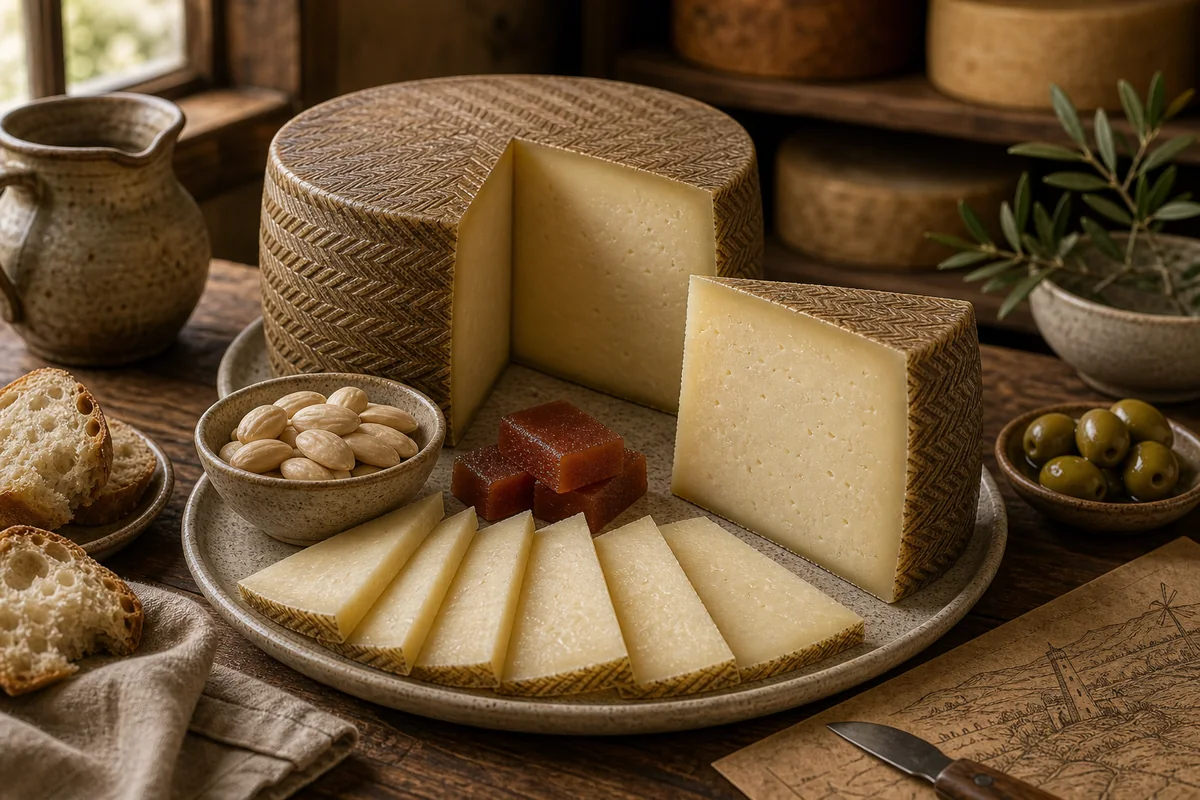
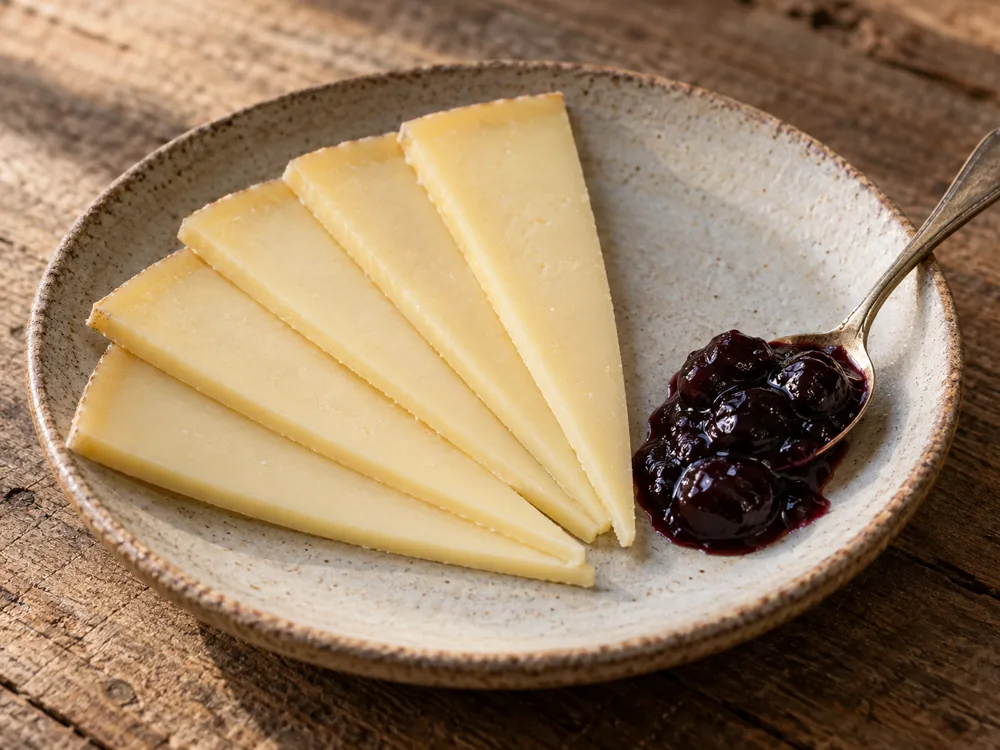
The traditional partner is black cherry jam. Agour calls jam from Itxassou the most traditional sweet pairing for Ossau-Iraty, and Androuet lists cherry jam for Ardi-Gasna beside Espelette pepper jelly and honey.
Androuet's drinks for Ardi-Gasna are Chinon, brut cider or Riesling. Agour suggests supple reds and sweet whites for Ossau-Iraty, and French Wikipedia cites sweet white wine and rosé from Béarn or Champagne.
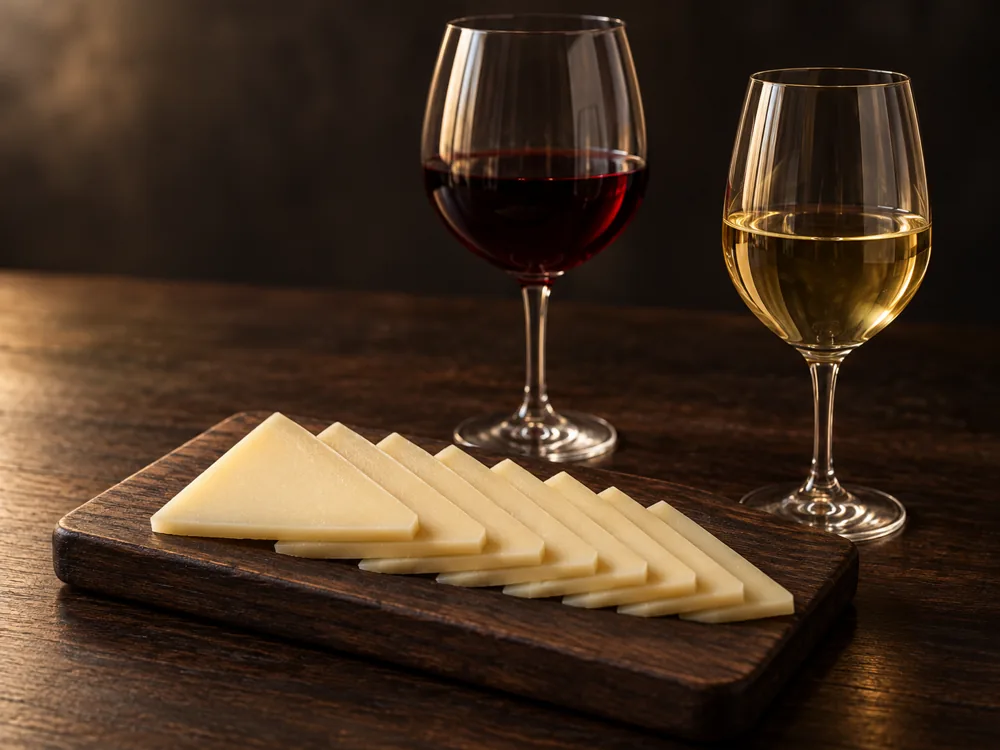
Sellers also treat it as an everyday cheese for grating and slicing, not only for the board.
| Use | How It Works |
|---|---|
| Grated | Androuet lists grating over local Basque dishes. |
| Snack or cheese course | Androuet also lists it as a snack or at the end of a meal, with cherry jam, Espelette jelly or honey. |
| Sandwiches and talos | The Erlita sliced pack is sold for sandwiches and talos, the Basque corn galettes. |
| Gratin and boards | The same Onacook listing names gratins and charcuterie boards. |
| Cheese flowers | Agour's raw-milk Tommette listing suits slicing with a girolle into thin curls. |
What Is on the Ardi Gasna Nutrition Label?
Two Agour-made products publish label figures and the two match per 100 g.
| Product | Energy | Fat | Saturated fat | Carbohydrate | Protein | Salt |
|---|---|---|---|---|---|---|
| Erlita sliced Ardi Gasna, pasteurized (Onacook) | 450 kcal | 38 g | 28 g | 2 g | 25 g | 1.7 g |
| Agour raw sheep's milk Tommette (Agour) | 450 kcal | 38 g | 28 g | 2 g | 25 g | 1.7 g |
The Onacook pack holds 40 slices in 1 kg, so a slice weighs about 25 g. By our arithmetic from the label, that is roughly 113 kcal, 9.5 g fat, 6.3 g protein and 0.43 g salt per slice.
Is Ardi Gasna Safe to Eat in Pregnancy?
It depends on the milk on the label, and neither the NHS nor the CDC names Ardi Gasna.
The NHS lists pasteurised or unpasteurised hard cheeses such as cheddar, gruyère and parmesan as safe, and pasteurised semi-hard cheeses such as edam. The CDC lists hard cheese made with pasteurized milk among the safer choices and soft cheese made from unpasteurized milk among the riskier ones.
Cheese.com calls Ardi Gasna hard and Androuet calls it semi-hard, so which agency category applies is our reading.
A pasteurized Ardi Gasna fits the safer side of both lists, while a raw-milk wheel is covered only by the NHS hard-cheese rule, and the general rules for cheese during pregnancy differ between countries.
What Can You Buy Instead?
Stay with sheep's milk from the same mountains first. Ossau-Iraty is the closest match, since the AOP rules name the same three breeds and some Ardi Gasna is sold as Ossau-Iraty.
Etorki is another French Basque sheep's-milk cheese, made from pasteurized milk in Mauléon-Licharre and matured for seven weeks, so it is the pasteurized route when a raw-milk wheel is not an option.
Across the border, Idiazabal is made from unpasteurized Latxa and Carranzana sheep's milk in the Spanish Basque Country and must age at least two months. Its denomination allows optional smoking, so check the wedge if you want an unsmoked cheese.
Manchego is made from Manchega sheep's milk, raw or pasteurised, and is sold from fresh to viejo at one to two years. Its curado, at 3 to 6 months, is the age closest to the ranges above.
SOURCES & REFERENCES
What Else Do Buyers Ask About Ardi Gasna?
The sources disagree. Agour's blog says it is neither a cheese nor a brand, while Cheese.com and French Wikipedia call it a registered Agour trademark, and other makers' products carry the name at Formaggio Kitchen.
Ekiola, Pardou and the Androuet listing are raw sheep's milk, while the Erlita sliced pack is pasteurized. The ingredient line on the exact pack is the only reliable answer.
Cheese.com marks it as not vegetarian, and Formaggio Kitchen lists animal rennet for Ekiola. Ask other makers about their rennet.