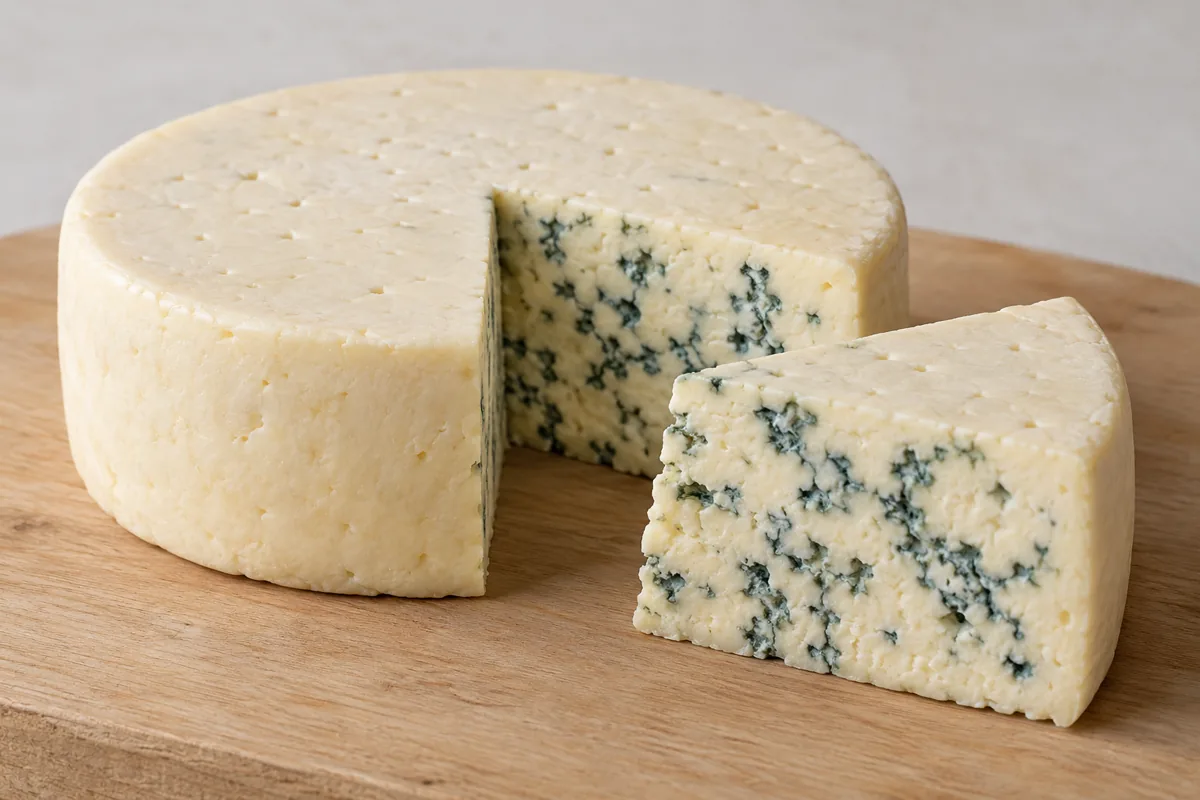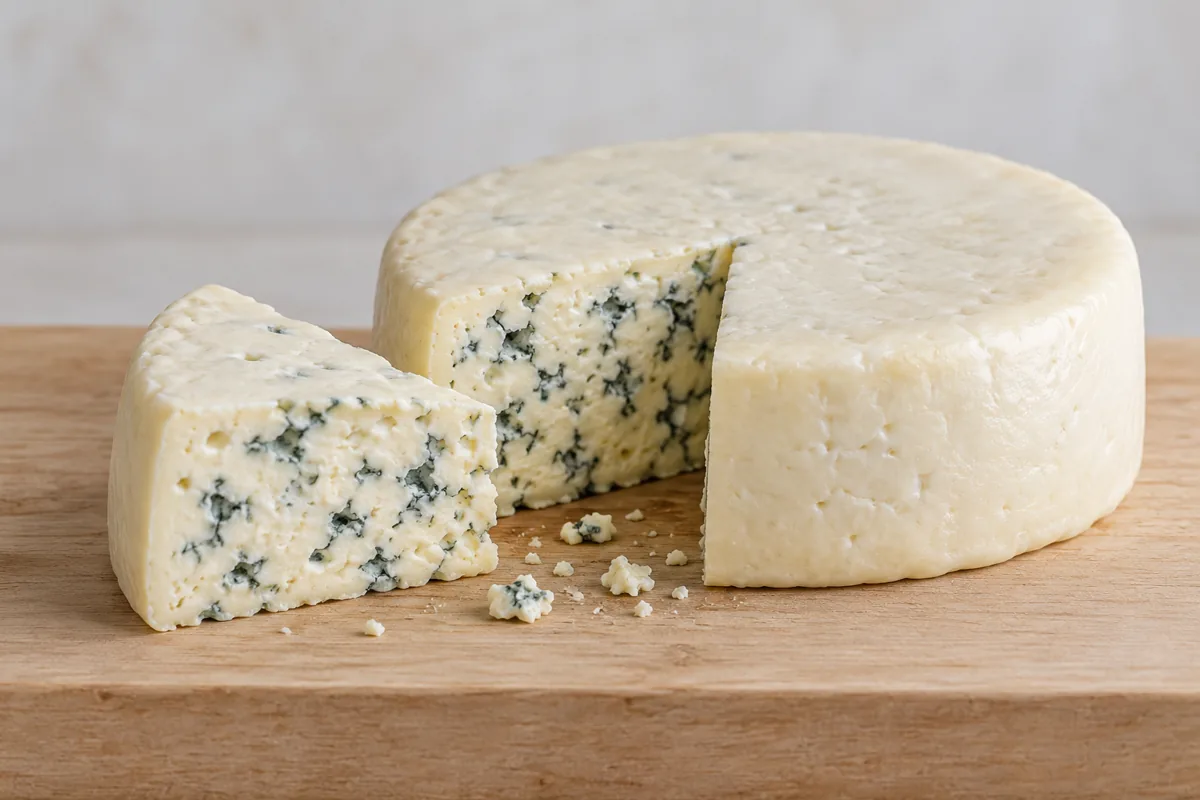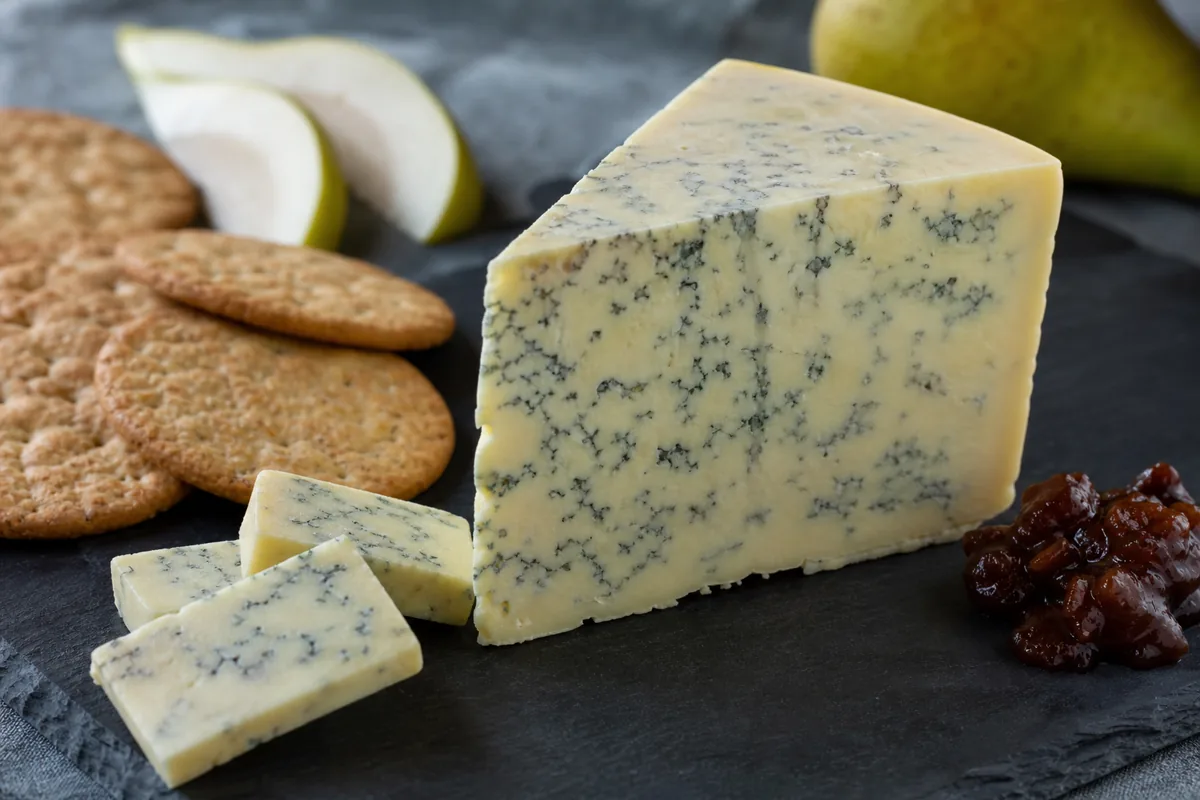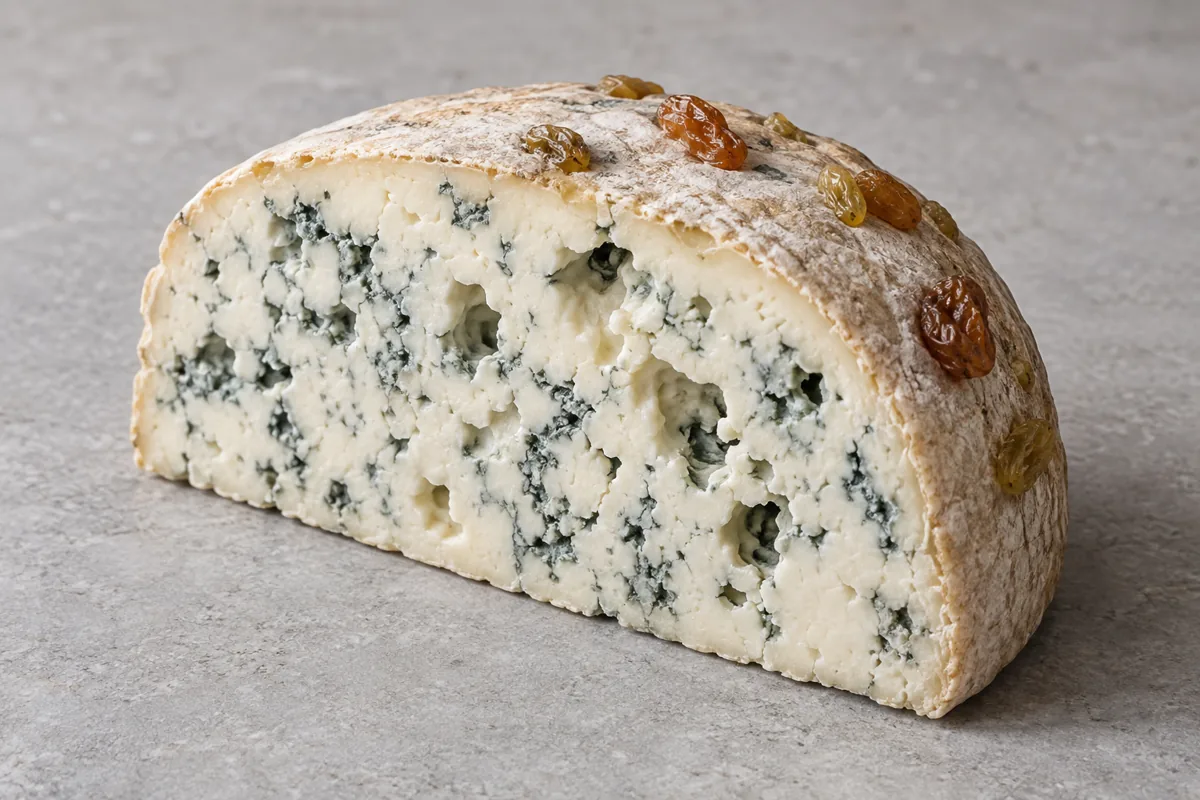
Basajo® is a blue cheese from La Casearia Carpenedo in Veneto, Italy, made from raw sheep's milk with a minimum ageing of 6 months. The producer describes it as aged in white passito wine and raisins.
In This Article
Who Makes Basajo, and What Is in It?
The Italian producer La Casearia Carpenedo is based in Camalò di Povegliano, in the province of Treviso, and lists Basajo among its blue cheeses.
The name comes with two stories. The producer traces it to an exclamation by Antonio Carpenedo's young granddaughter, Ernesto's daughter, while a Borough Market interview with the UK distributor L'Ubriaco has a niece who could not pronounce formaggio saying "Basajo".
The producer lists two formats, a 1.4 kg piece and a 150 g fixed-weight portion, and gives raw sheep's milk and a 6-month minimum for both. Casoin Online calls the 1.4 kg format a half form.
Casoin Online, a retailer in the province of Venice, lists these ingredients for Basajo: raw sheep's milk, salt, rennet, lactic ferments and Penicillium roqueforti, plus raisin white wine at a minimum of 1.9% and dehydrated Chilean grapes at a minimum of 0.1% in the rind. The listing also declares sulphur dioxide, the line to read on your label if you avoid it.
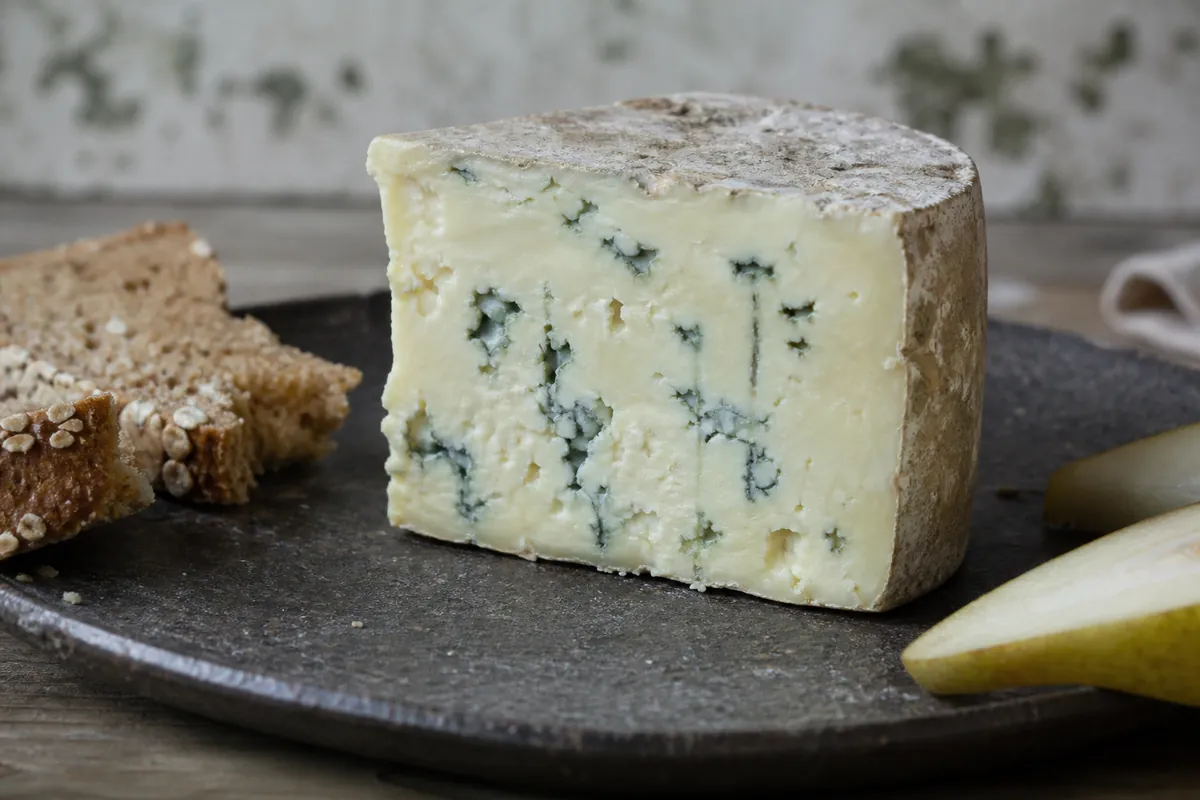
On the cut face, the same listing describes white paste against green and blue marbling, with the Chilean grapes on the rind adding green and yellow notes. Williamson Wines describes big pockets of blue in the paste and wine-plumped golden raisins clinging to the outside of the wheel.
The producer writes the name with the ® symbol as a registered brand, and its news item reports a bronze medal at the 2022 World Cheese Awards.
How Is Basajo Aged in Wine, and for How Long?
The producer describes Basajo as aged in fine white passito wine and raisins in its 2022 news item, written in Italian, and its product page says Basajo combines the strength of sheep's milk with the sweetness of white passito wine.
Williamson Wines names the wine as Passito di Pantelleria, a sweet Sicilian wine, and Williamson Wines, The Cheese Lady and Cheese.com each give about three weeks in a Sicilian wine.
| Question | Answer | Given by |
|---|---|---|
| Which wine? | White passito wine (product page); white passito wine and raisins (2022 news item) | La Casearia Carpenedo |
| Which wine? | A passito from Sicily made with sun-dried grapes | The UK distributor, in a Borough Market interview |
| Which wine? | Passito di Pantelleria, a sweet Sicilian wine | Williamson Wines |
| Which wine? | A sweet wine from Sicily | The Cheese Lady |
| Which wine? | Sweet Sicilian wine | Cheese.com |
| How long in the wine? | About three weeks | Williamson Wines, The Cheese Lady, Cheese.com |
| How long in the wine? | Not stated | La Casearia Carpenedo, product page and 2022 news item |
| How old before the wine? | Six months | The UK distributor, in a Borough Market interview |
| What wine and grapes are on the ingredient list? | Raisin white wine, minimum 1.9%; dehydrated Chilean grapes in the rind, minimum 0.1% | Casoin Online listing |
| Does alcohol enter the cheese? | No, because the wine stays on the outside | The UK distributor, in a Borough Market interview |
| How big is a wheel? | 2 kg, cut in half for retail | Williamson Wines |
If the exact wine or the timing matters to you, ask the maker, La Casearia Carpenedo.
Williamson Wines also describes 2 kg wheels cut in half for retail, while the producer lists a 1.4 kg format.
The UK distributor told Borough Market that no alcohol enters the cheese because the wine stays on the outside. If you avoid alcohol, ask the maker about residual alcohol in the cheese.
What Does Basajo Taste Like?
Basajo is described as creamy, or as soft and tending to creamy: Cheese.com calls it semi-soft and blue-veined with a creamy texture, a sweet flavour and a fruity aroma, and Casoin Online's listing calls it soft and tending to creamy and says the cheese melts in the mouth.
The same listing sets the strong flavour of sheep's milk against a sugary aftertaste of raisin wine.
Williamson Wines, The Cheese Lady and Cheese.com each say Basajo lacks the usual saltiness of blue cheese. Casoin Online's listing gives a figure: 1.8 g of salt per 100 g.
| Item | Per 100 g |
|---|---|
| Energy | 1513 kJ / 366 kcal |
| Fat | 33 g, of which saturated 21 g |
| Carbohydrate | 3.9 g, of which sugars 1.9 g |
| Protein | 14 g |
| Salt | 1.8 g |
The listing calls the 150 g piece a tasting for 10 people, which is 15 g each, or about 0.27 g of salt per portion at 1.8 g per 100 g.
What Should You Serve with Basajo?
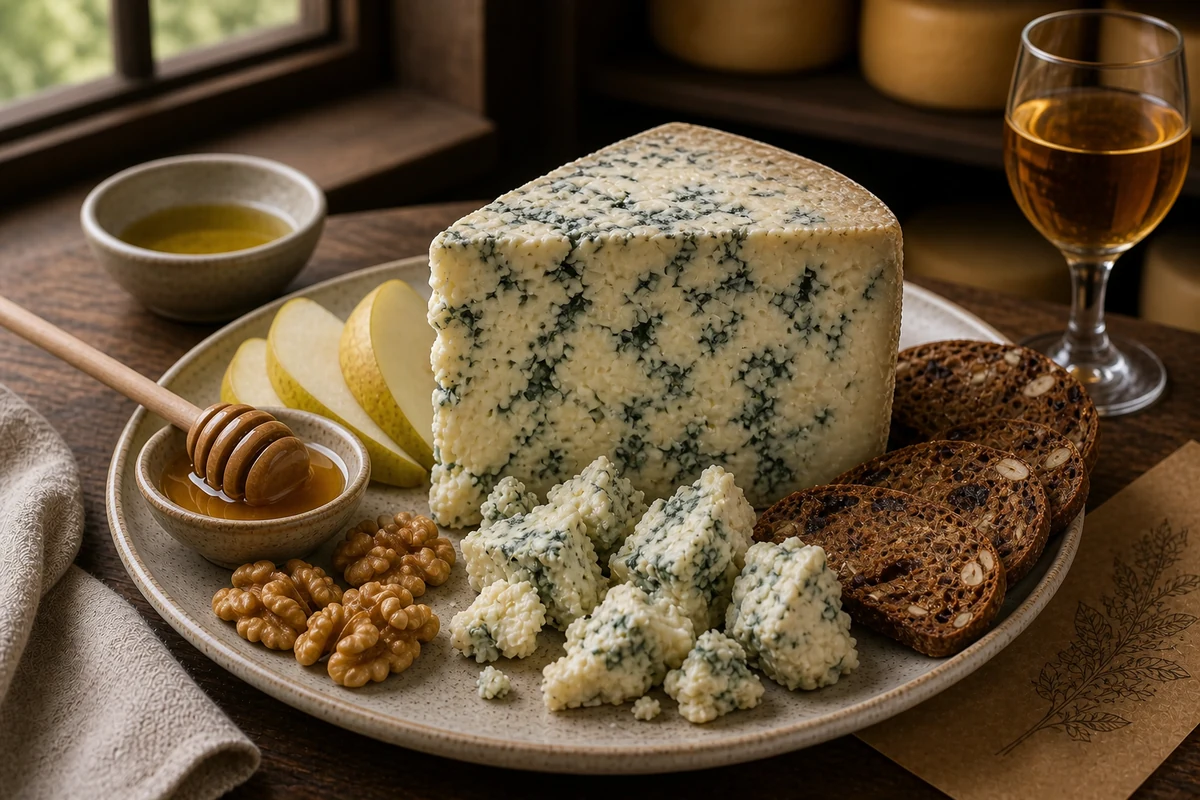
The Cheese Lady and Cheese.com both pair Basajo with ripe pears and a full-bodied dessert wine, and The Cheese Lady also files it under fortified wines.
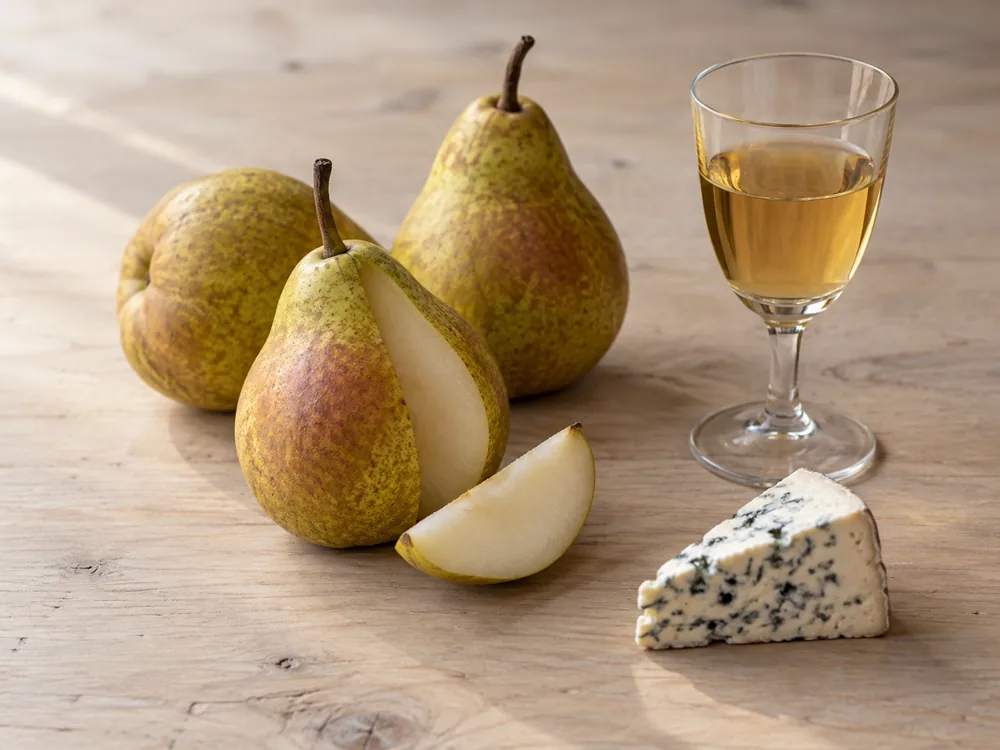
The Casoin Online listing adds more uses: on its own, with Chilean grapes, with delicate red onion sauces, in vegetable soups, as an appetizer, or at the end of a meal.
| Pairing | Type | Why It Works |
|---|---|---|
| Ripe pears | Food | Named by The Cheese Lady and Cheese.com. |
| Sauternes | Wine | Named by The Cheese Lady and Cheese.com as a full-bodied dessert wine. |
| Passito di Pantelleria | Wine | Named by The Cheese Lady and Cheese.com. |
| White passito wines | Wine | Named in the Casoin Online listing for the end of a meal. |
How Should You Buy and Store Basajo?
Before you buy, compare the label on your piece with Casoin Online's listing, which gives the raw-milk statement, the sulphur dioxide declaration and 1.8 g of salt per 100 g.
Williamson Wines says a cut wheel may weep moisture at room temperature and suggests patting it dry with paper towel.
Is Basajo Safe to Eat During Pregnancy?
Basajo is made from raw sheep's milk, and Cheese.com describes it as semi-soft and blue-veined while Casoin Online calls it soft.
The NHS says pasteurised or unpasteurised soft blue-veined cheeses, such as Danish blue, gorgonzola and roquefort, must be thoroughly cooked. It also says any foods made from unpasteurised milk must be thoroughly cooked.
Casoin Online's serving ideas include vegetable soups, and the NHS lists any cheese that's been cooked until steaming hot, including soft or blue cheese, as safe to eat.
The CDC lists soft cheese made from unpasteurized (raw) milk, for example queso fresco, brie, camembert, and blue-veined cheese, as a riskier choice. Its safer choices include pasteurized soft cheeses heated to an internal temperature of 165°F or until steaming hot.
That heated line names pasteurized soft cheeses, so if you follow US advice, ask a midwife or doctor before eating Basajo, even when it is cooked.
How Does Basajo Compare with Roquefort?
Roquefort from the Aveyron in France is another blue made from raw sheep's milk: Cheese.com describes it as a blue-veined PDO cheese from unpasteurized sheep's milk.
Cheese.com describes their texture and flavour differently, calling Roquefort semi-hard, crumbly, salty and tangy and Basajo semi-soft, creamy and sweet.
| Feature | Basajo | Roquefort |
|---|---|---|
| Milk | Unpasteurized sheep's milk | Unpasteurized sheep's milk |
| Texture | Semi-soft, creamy | Semi-hard, crumbly yet creamy |
| Flavour | Sweet, fruity | Saline and tangy, creamy and earthy |
| Protected name | Producer writes it as a registered brand (Basajo®); no PDO named | PDO |
| Ageing | Producer gives a minimum of 6 months | 3 to 5 months in the Combalou caves |
SOURCES & REFERENCES
Basajo is a blue cheese made by La Casearia Carpenedo in Camalò di Povegliano, Veneto, from raw sheep's milk and aged at least 6 months. The producer describes it as aged in white passito wine and raisins.
Yes. The producer, Casoin Online, Cheese.com, The Cheese Lady, Williamson Wines and Borough Market all give raw or unpasteurized sheep's milk.
The producer says white passito wine. Williamson Wines names Passito di Pantelleria, and Williamson Wines, The Cheese Lady and Cheese.com give about three weeks in a Sicilian wine.
Williamson Wines, The Cheese Lady and Cheese.com say it lacks the usual saltiness of blue cheese, and Casoin Online's listing gives 1.8 g of salt per 100 g.
Basajo is a raw sheep's milk blue, and the NHS says pasteurised or unpasteurised soft blue-veined cheeses must be thoroughly cooked and lists any cheese that's been cooked until steaming hot as safe to eat. The CDC lists soft cheese made from unpasteurized (raw) milk as riskier and its heated safer line names pasteurized soft cheeses, so under US advice ask a midwife or doctor before eating it, even cooked.
The Cheese Lady and Cheese.com suggest ripe pears with Sauternes or Passito di Pantelleria, and Casoin Online's listing suggests white passito wines, Chilean grapes, red onion sauces or vegetable soups.
Both are blue-veined cheeses from unpasteurized sheep's milk, but Cheese.com describes Roquefort as semi-hard, crumbly, salty and tangy and Basajo as semi-soft, creamy and sweet.