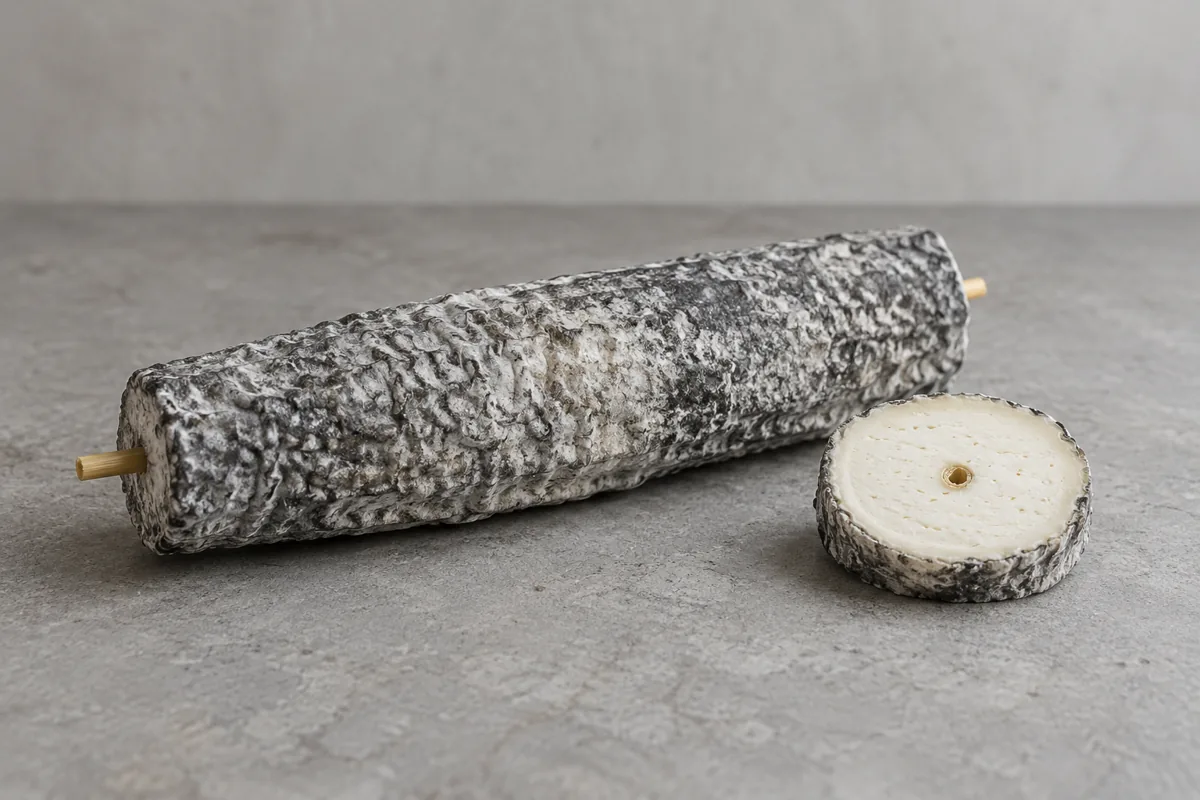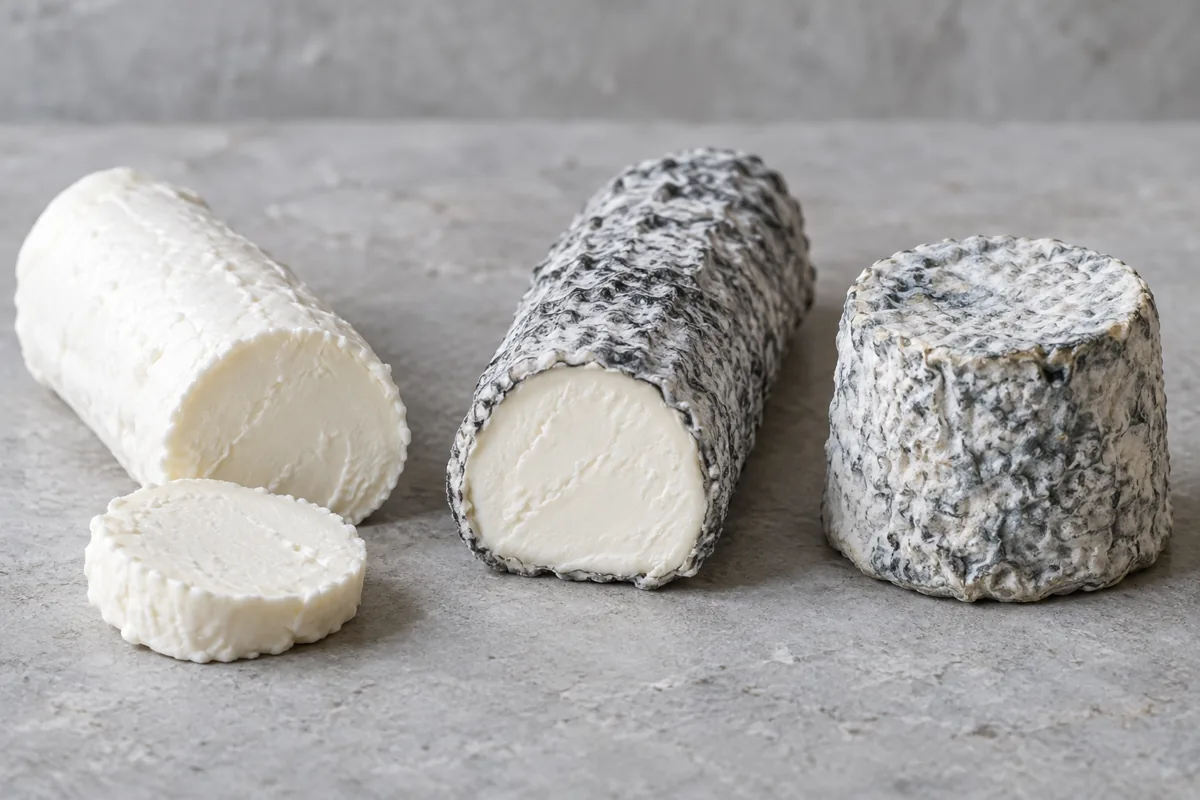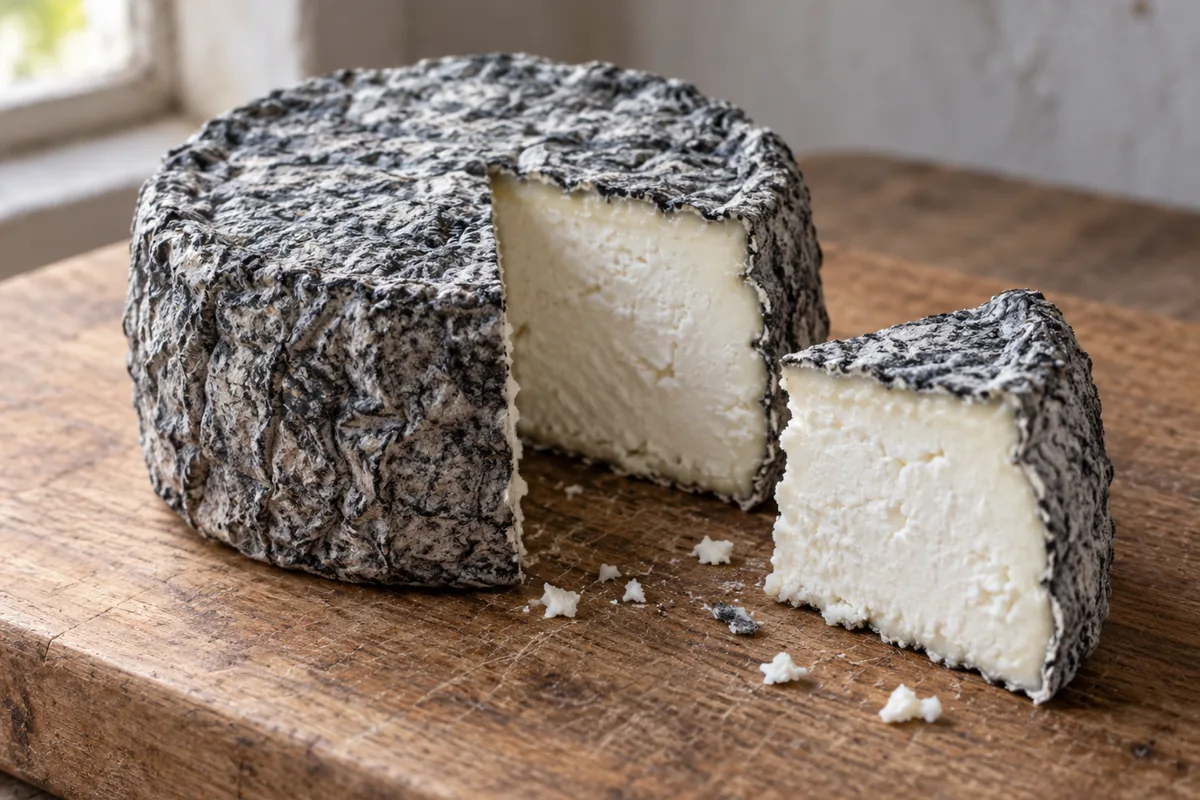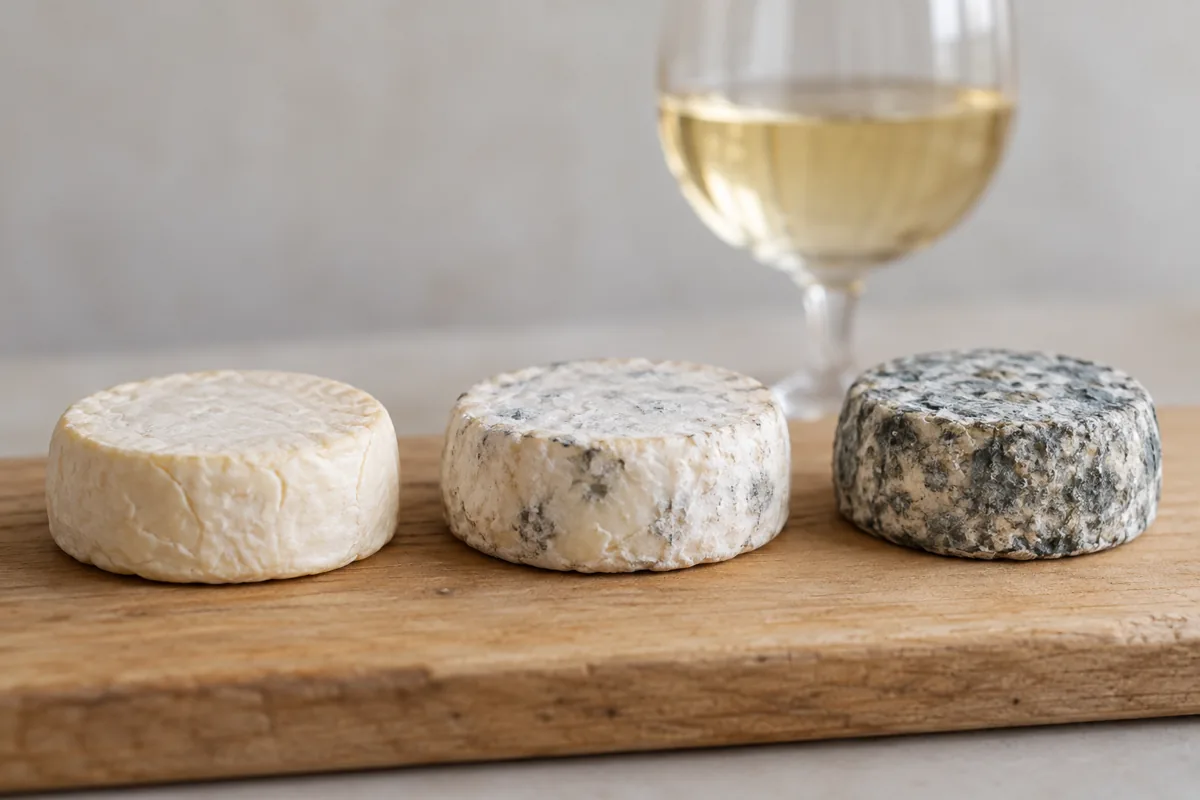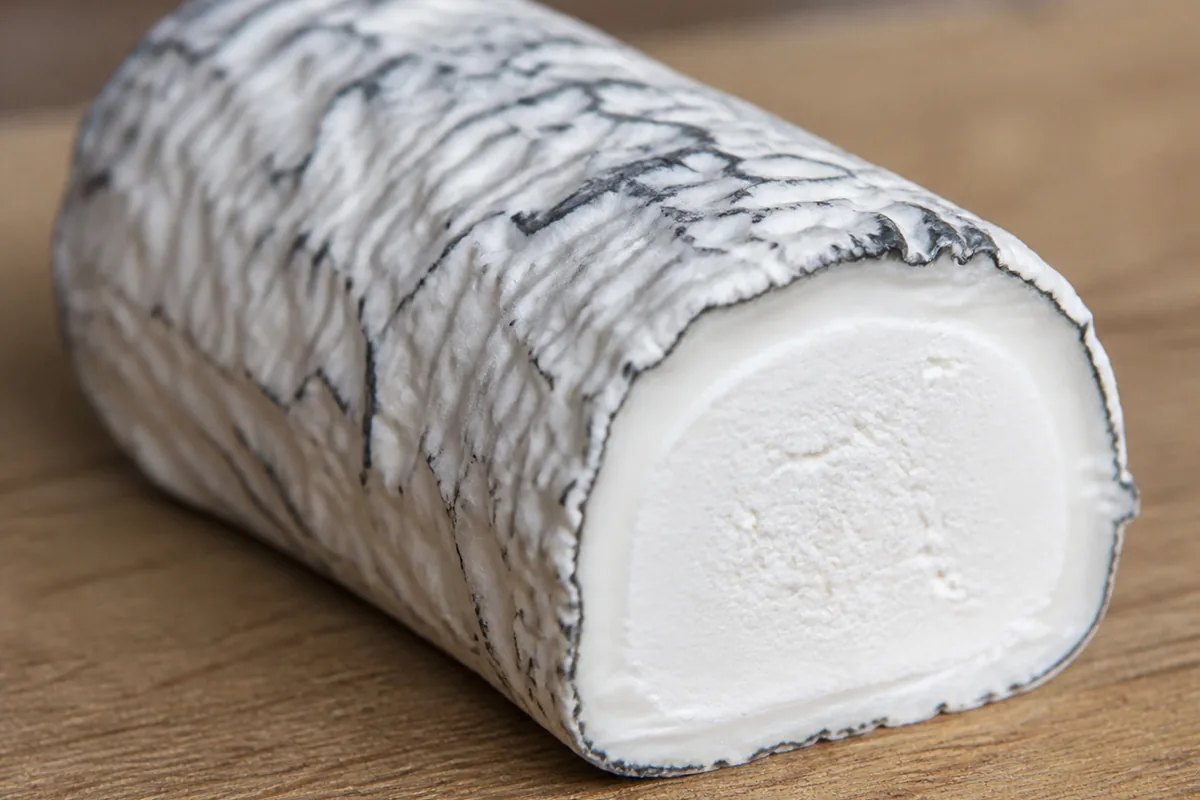
Bosworth Ash Log is a goat's milk log rolled in salted ash, made by Innes Cheese at Highfields Farm in Staffordshire. La Fromagerie says the dairy made it from the raw milk of its own goats, and Cheese.com lists it as unpasteurised.
If you are trying to buy one, the bigger question is whether it is still made, because two UK cheese-trade blogs reported Innes stopping cheesemaking in June 2020.
Cheese.com also lists a Bosworth wrapped in chestnut leaf, so the name covers two presentations. When a listing says only Bosworth, check whether it means the ash-rolled log, which is the one La Fromagerie and Pong Cheese describe.
In This Article
Who Made Bosworth Ash Log?
Stella Bennet started Innes Cheese in 1987 by converting a stable on the farm into a dairy, according to La Fromagerie.
The farm sits on the Thorpe estate, and Stella's son Joe and his partner Amiee ran the business with two other cheesemakers when La Fromagerie's team visited. The dairy became known in 1994, when its Innes Button won Supreme Champion at the first British Cheese Awards.
Is Bosworth Ash Log Still Made?
The reports that Innes stopped come from two posts published in June 2020, and neither is written by the dairy.
On 1 June 2020 the cheese shop Rennet & Rind published a farewell to Innes and said it had about 50 Chilcote bricks and 20 Bosworth Ash left, after which it was "over for the foreseeable future".
Three weeks later the blog Norton & Yarrow wrote that Joe and Amiee of Highfields Dairy had decided to move on from cheesemaking that month. It listed the Innes Brick, the Innes Log and their hard cheese Highfields as going with them, and said their goats had been sold to the cheesemaker Martin Gott.
Norton & Yarrow does not name Bosworth Ash itself. Its post sits in a wider account of British cheesemakers who stopped making cheese between 2016 and 2020.
The La Fromagerie visit account is the one source that speaks about the dairy in the present tense, and its page data carries the date 1 August 2022. The text says only that the visit was earlier this spring, with no year, so it tells you how the cheese was made rather than proving that it was still being made in 2022.
Cheese.com still carries a full Bosworth entry and La Fromagerie's account is written in the present tense, so ask the seller who made the cheese on offer and when.
How Bosworth Ash Log Is Made
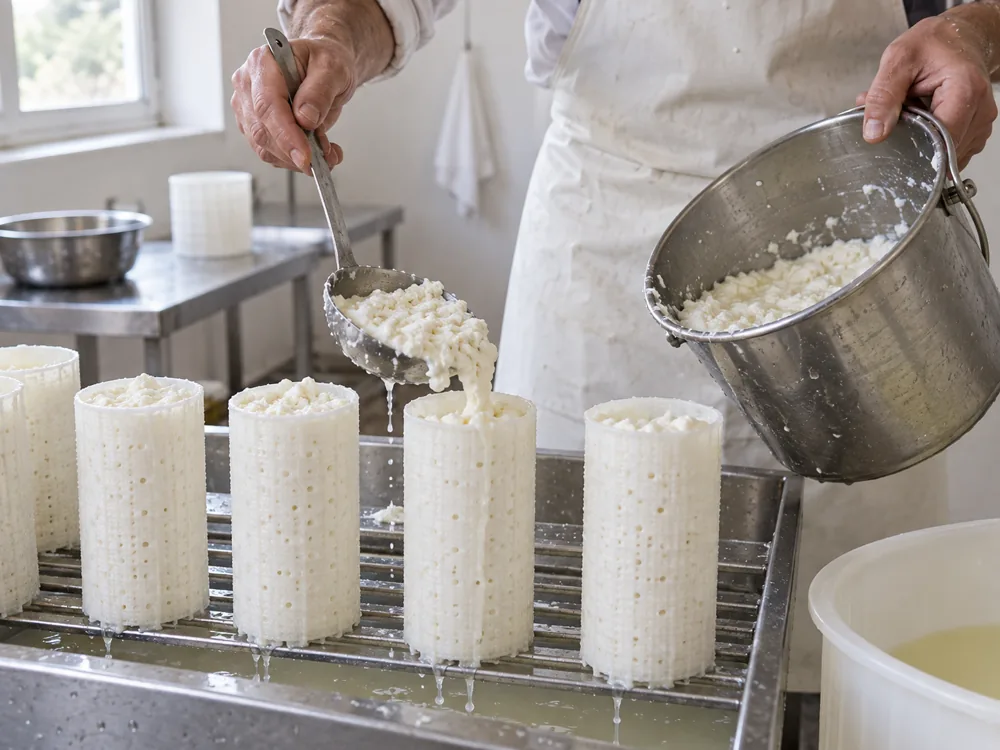
Pong Cheese says the cheesemaking starts straight after milking, while the milk is still warm. La Fromagerie adds that the dairy's whey goes in as a starter culture and the milk is left to ripen overnight.
The next morning's milk is added and the mix is poured into small buckets, which La Fromagerie calls ideal for producing excellent curd.
Once the right acidity is reached, a small amount of rennet goes in and the curd is left to form slowly until the following morning.
The curd is then ladled by hand into moulds, with logs used for Bosworth Ash and bricks used for Chilcote. The cheeses drain, then are salted and turned.
Maturing takes a few weeks, and La Fromagerie says the cheese develops its natural rind, texture and depth of flavour in that time.
What Are the Salted Ash and the White Rind?
Look at a cut slice and you see two layers on the outside: Cheese.com describes the cheese as rolled in salted ash beneath a layer of white rind. Pong Cheese says the salted ash gives the rind its flavour.
The 2013 blog Fromage Homage says what the white layer is: it describes Bosworth Ash as a goat log whose thick, white, bloomy rind comes from Penicillium candidum mould.
For what the ash itself does, the same post turns to a sibling cheese. For the Innes Log, which the Bennetts developed with Neal's Yard Dairy using Geotrichum candidum instead, it says ash rolled on when the cheese is young lowers the acidity at the surface and helps the moulds grow.
Fromage Homage describes that work as a shift from English cheesemaking toward the French methods behind goat cheeses such as Sainte-Maure de Touraine.
What Does Bosworth Ash Log Taste Like?
Cheese.com and Pong Cheese both call the flavour earthy, and the sources split on how goaty it is.
| Source | Flavour | Rind or texture |
|---|---|---|
| Cheese.com | Mild, salty and sweet, with earthy notes from the ash; aroma listed as goaty | White crumbly centre that softens toward the grey mould |
| Pong Cheese | Clean, bright and earthy | Balances smooth with firm textures |
| Fromage Homage (2013) | Fairly goaty | Thick white bloomy rind |
On the mild side of that split, Perry, the cheesemonger at Rennet & Rind, called Innes cheese his go-to "goats cheese converter" and wrote that the flavours were subtle and sophisticated.
On texture the sources sit closer together: Cheese.com gives a crumbly centre, and Pong Cheese calls Bosworth Ash a lovely, creamy goat's cheese.
What Goats Provide the Milk for Bosworth Ash Log?
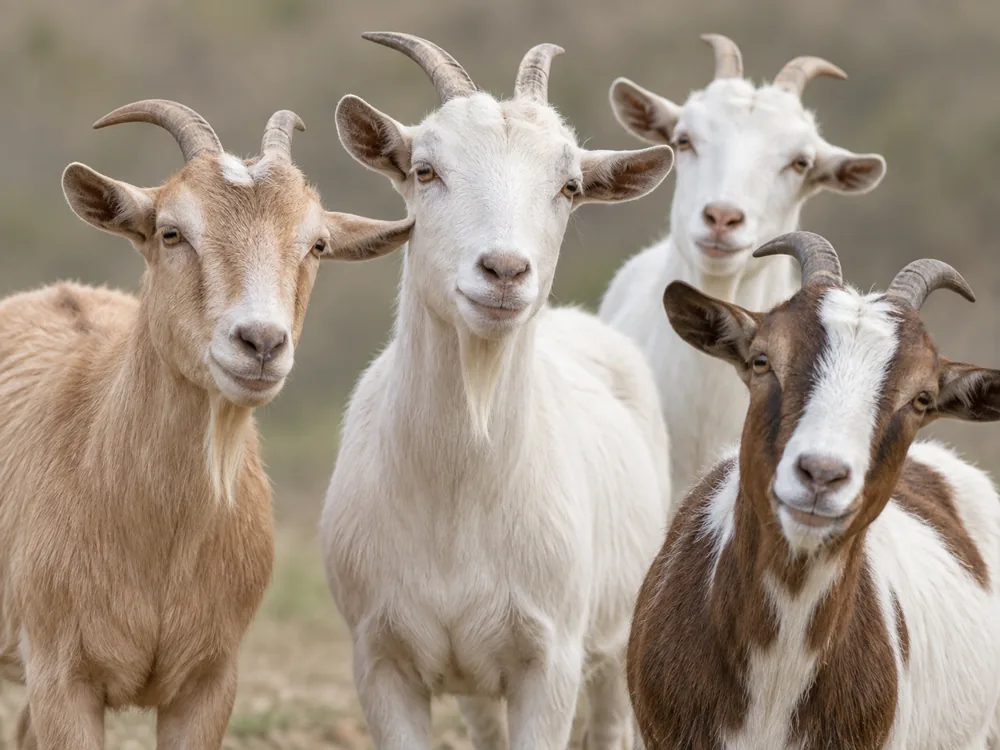
La Fromagerie describes a crossed-breed herd of British Saanen, British Toggenburg, British Alpine and Golden Guernsey goats, and Fromage Homage calls the herd mostly Saanen and Toggenburg crosses.
The head counts differ. La Fromagerie says the herd grew from 100 goats in 1987 to 350 at the time of its visit.
Fromage Homage put the herd at more than 350 goats, while a 2019 land-purchase case study by the agents Howkins & Harrison describes over 200 goats.
Fromage Homage says the goats are milked twice a day, year-round. Neal's Yard Dairy's dairy diary on the farm says they kid from February through July to keep the milk coming through the year.
Pong Cheese adds that the herd eats the dairy's own hay, made without artificial fertilisers or pesticides.
Is Bosworth Ash Log Vegetarian?
Two sources say animal rennet and one says vegetarian, so the cheese cannot be called vegetarian with confidence.
| Source | What it says |
|---|---|
| Pong Cheese (2017), Bosworth Ash | In its Bosworth Ash entry: they add a small amount of animal rennet and let the curd form slowly. |
| La Fromagerie visit account | A small amount of animal rennet is added once the right acidity is reached, in an account of the dairy's make as a whole. |
| Cheese.com, Bosworth | Lists it as an unpasteurised, vegetarian cheese. |
| Fromage Homage (2013) | The Bennetts switched from vegetarian rennet to kid's rennet when developing Innes Log. Bosworth Ash was already being made. |
| Cheese.com, Innes Log and Innes Button | Innes Log: animal rennet. Innes Button: vegetable rennet. |
Pong Cheese is the only source that names animal rennet in a Bosworth Ash entry. Cheese.com's own Innes entries also show rennet differing between the dairy's cheeses, so if you are vegetarian, treat Bosworth Ash as made with animal rennet unless a seller states otherwise.
Can You Eat Bosworth Ash Log During Pregnancy?
Bosworth Ash Log is a raw-milk cheese with a white coat, which places it under an NHS line: foods made from unpasteurised milk, such as soft ripened goats' cheese with a white coating on the outside, must be thoroughly cooked. It gives the same instruction for pasteurised or unpasteurised mould-ripened soft cheeses with a white coating, such as brie, camembert and chèvre.
The CDC lists soft cheese made from unpasteurized milk, such as brie and camembert, among the riskier choices. It adds that pregnant women are 10 times more likely to get a Listeria infection.
Which Other Cheeses Did Innes Make?
La Fromagerie names Bosworth Ash Log, Chilcote and fresh goat's curd as the dairy's cheeses at the time of its visit. Other sources add the Innes Button and the Innes Log.
| Cheese | What the sources state | Source |
|---|---|---|
| Innes Button | Won Supreme Champion at the first British Cheese Awards in 1994. Cheese.com lists a small, round, unpasteurised goat's milk cheese. | La Fromagerie; Cheese.com |
| Bosworth Ash Log | Log rolled in salted ash under a white layer, matured for a few weeks. | La Fromagerie; Cheese.com |
| Chilcote | Made in bricks, with the curd hand-ladled into brick moulds. | La Fromagerie |
| Innes Log | Thin rind with Geotrichum candidum, ash rolled on when young, kid's rennet. | Fromage Homage |
| Fresh goat's curd | Made from the dairy's raw goat's milk. | La Fromagerie |
What to Serve with Bosworth Ash Log
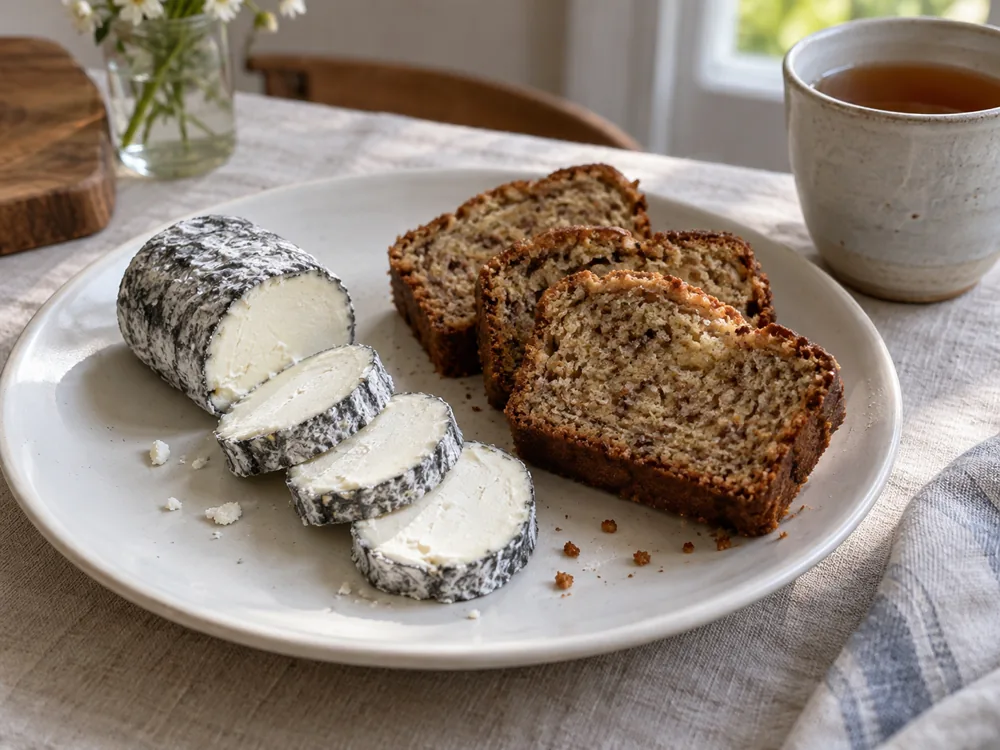
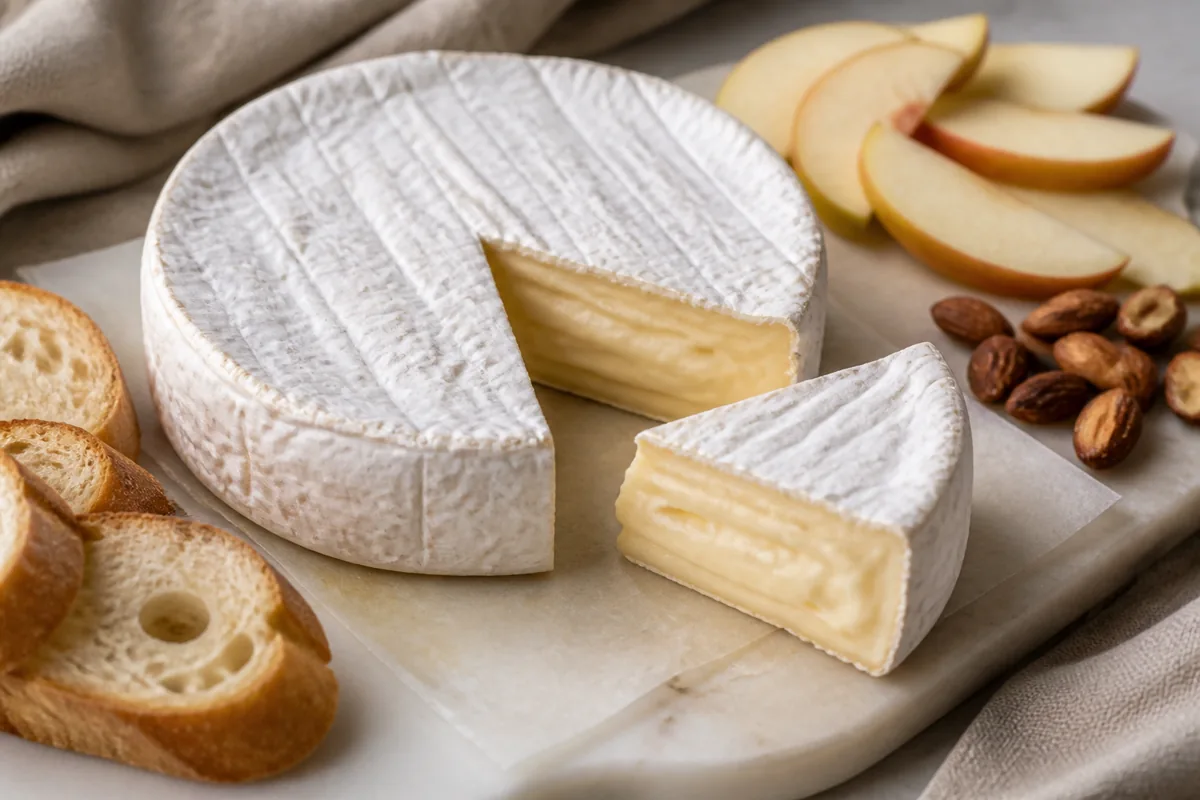
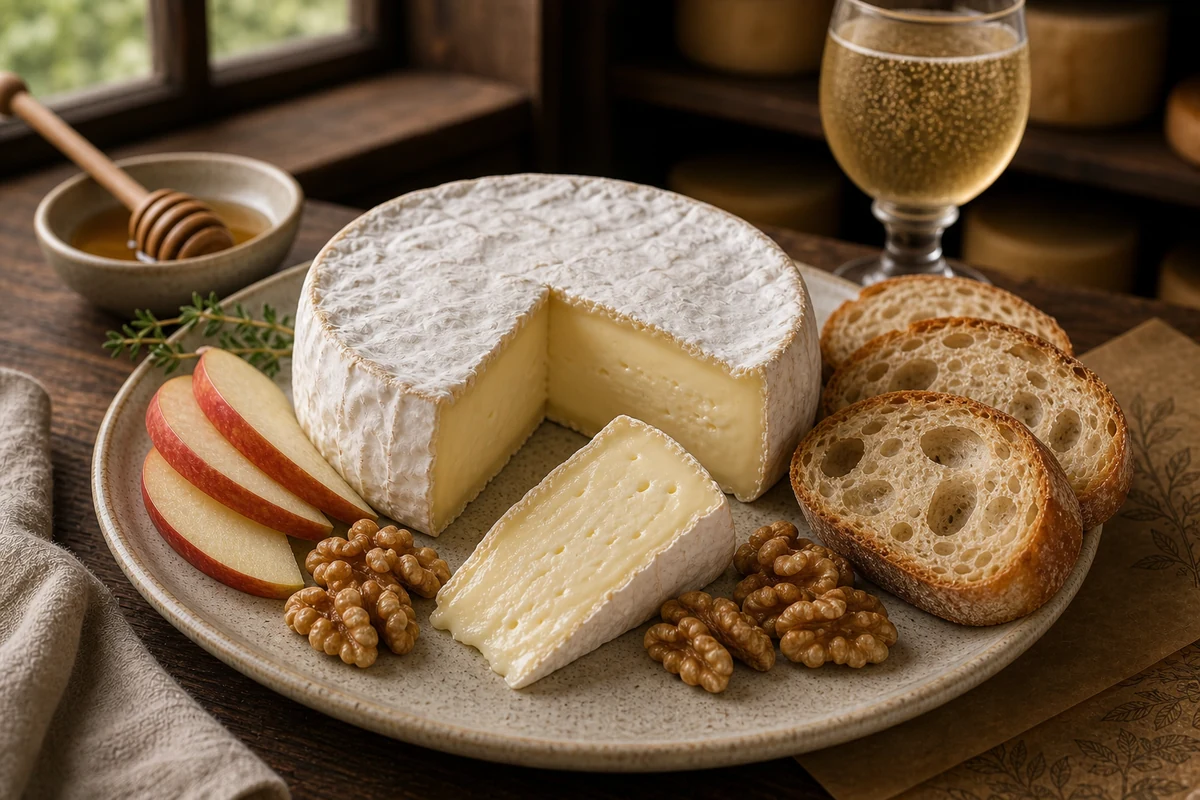
If you want a serving idea from people who ate it at the farm, take it from La Fromagerie's visit. The cheesemongers were given tea at the farmhouse and reported that Bosworth Ash Log with home-made banana bread went down especially well.
| Pairing | Why It Works |
|---|---|
| Home-made banana bread | Served with tea at the farmhouse during La Fromagerie's visit, where the team said it went down especially well. |
SOURCES & REFERENCES
What Else Should You Know About Bosworth Ash Log?
It is a goat's milk log rolled in salted ash beneath a white layer, made from raw milk by Innes Cheese at Highfields Farm in Staffordshire.
Two trade blogs reported Innes stopping cheesemaking in June 2020, and one shop said its last Bosworth Ash was almost gone.
Probably not. Pong Cheese says animal rennet is added to Bosworth Ash and La Fromagerie describes animal rennet in the dairy's make, while Cheese.com lists the cheese as vegetarian.
Cheese.com describes a mild, salty and sweet flavour with earthy notes from the ash. It also lists a goaty aroma, and Fromage Homage calls the taste fairly goaty.
It is a raw-milk soft cheese with a white layer. The NHS says soft ripened goats' cheese with a white coating made from unpasteurised milk must be thoroughly cooked, and the CDC lists unpasteurized soft cheese as riskier.