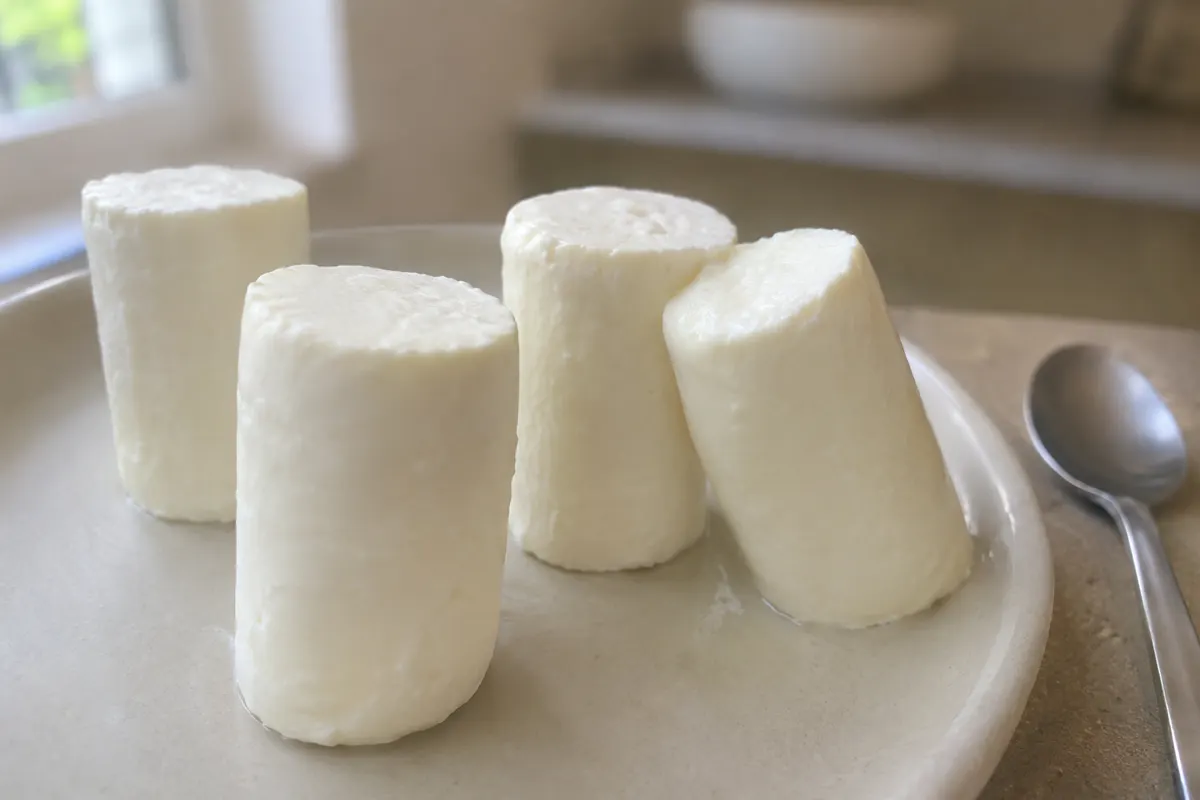
Petit suisse is a smooth, unsalted fresh cheese from France, made from cow's milk enriched with cream and sold as small cylinders of 30 or 60 grams.
The name means "little Swiss" because a Swiss dairy hand of the 1850s is said to have suggested adding cream, and the histories split on whether his dairy stood in Picardy or Normandy. You will see two fat figures for the same cheese, 40 to 60% in references and 9.5 g per 100 g on a Gervais pot, because one counts the dry matter and the other the whole cheese.
In This Article
Why Is It Called Petit Suisse If It Is French?
In the Picardy account, a Swiss cowherd on Madame Hérould's farm suggested adding cream to the milk the farm used for its bondons in the 1850s, and his nationality gave the cheese its name.
The helper is remembered only as the man or woman from Switzerland, and other histories give the original recipe to a Madame Étienne Pommel of Normandy, who sold it to Hérould.
Charles Gervais, who later built the Gervais brand, then printed a label claiming his cheeses came by post straight from Vaud, in Switzerland, which they did not.
Since a 1974 treaty between France and Switzerland, French makers may use "petit-suisse" for cheese made in France, and the name is barred in Switzerland, where the equivalent cheese made at Payerne in Vaud goes by heine.
Where and When Was Petit Suisse First Made?
You can say petit suisse comes from northern France in the 1850s, but where the first dairy stood is disputed: Picardy in French Wikipedia and Behind the French Menu, Normandy in English Wikipedia and Dairy Products From France.
| Question | Answer |
|---|---|
| Where the first dairy stood | Madame Hérould's farm at Villers-sur-Auchy, Oise, in Picardy, or a dairy at Auvilliers, in Normandy |
| Who suggested the cream | A Swiss employee, called a cowherd in one account and a young employee of a Norman cheesemaker in another, and never named |
| When | In the 1850s, or in 1850 |
Normandy turns up in both stories, because in the Picardy account Gervais and Hérould opened a larger factory across the regional border in Normandy.
Étienne Pommel was already making cream-enriched fresh cheeses at Gournay-en-Bray in 1828, which makes cream in fresh cheese older than either date, and in the Picardy account the Swiss cowherd's idea repeated a recipe Pommel already used.
How Did Charles Gervais Turn Petit Suisse Into a Brand?
In the Picardy account, Gervais was a clerk at the Les Halles wholesaler that took Madame Hérould's daily shipments. When the farm could no longer supply Paris, he took over a dairy under his own name at Ferrières-en-Bray and brought in Swiss cheesemakers, who had a name as excellent cheesemakers.
The cheeses also travelled badly: petits suisse tended to stick together on the way to Paris, so Gervais adopted the packaging of his rival Pommel, who sold only in Normandy, and he brought in single-use individual pots because they were judged more hygienic.
Pommel's business passed to the company Charles Gervais founded, which later merged with Danone. Its own copy credits a single founder: the Nature pot is billed as the original recipe, created by Charles Gervais in 1852 and made in a Normandy dairy, while the histories put the first step with a Swiss dairy hand.
How Is Petit Suisse Made?
In an industrial dairy the cream goes in after the curd has formed, and the steps run in this order:
- The dairy buys cow's milk from farmers.
- The collected milk is mixed, pasteurised and set with rennet.
- Pasteurised cow's cream is stirred into the curd.
- The mix is ground at length until smooth, then drained in a centrifuge.
At home the curd sets more slowly. A recipe from a cheesemaking supplier warms the milk to only 68 to 72°F (about 20 to 22°C), adds a culture and a few drops of rennet, and leaves it until the next morning, when a thin layer of whey sits over a very soft curd.
| Attribute | Factory | Home recipe |
|---|---|---|
| What sets the curd | Rennet, added to pasteurised milk | Mostly lactic acid from the culture, plus a few drops of rennet |
| Milk | Pasteurised cow's milk | Raw or pasteurised milk and cream |
| Draining | Ground at length, then a centrifuge | Gently, over as much surface area as possible |
| Ageing | None | None |
What Does Petit Suisse Taste and Feel Like?
When you open a pot of petit suisse, five things describe it.
- Texture: thick, smooth and creamy.
- Flavour: very mild, neither sweet nor savoury in Dairy Products From France's words.
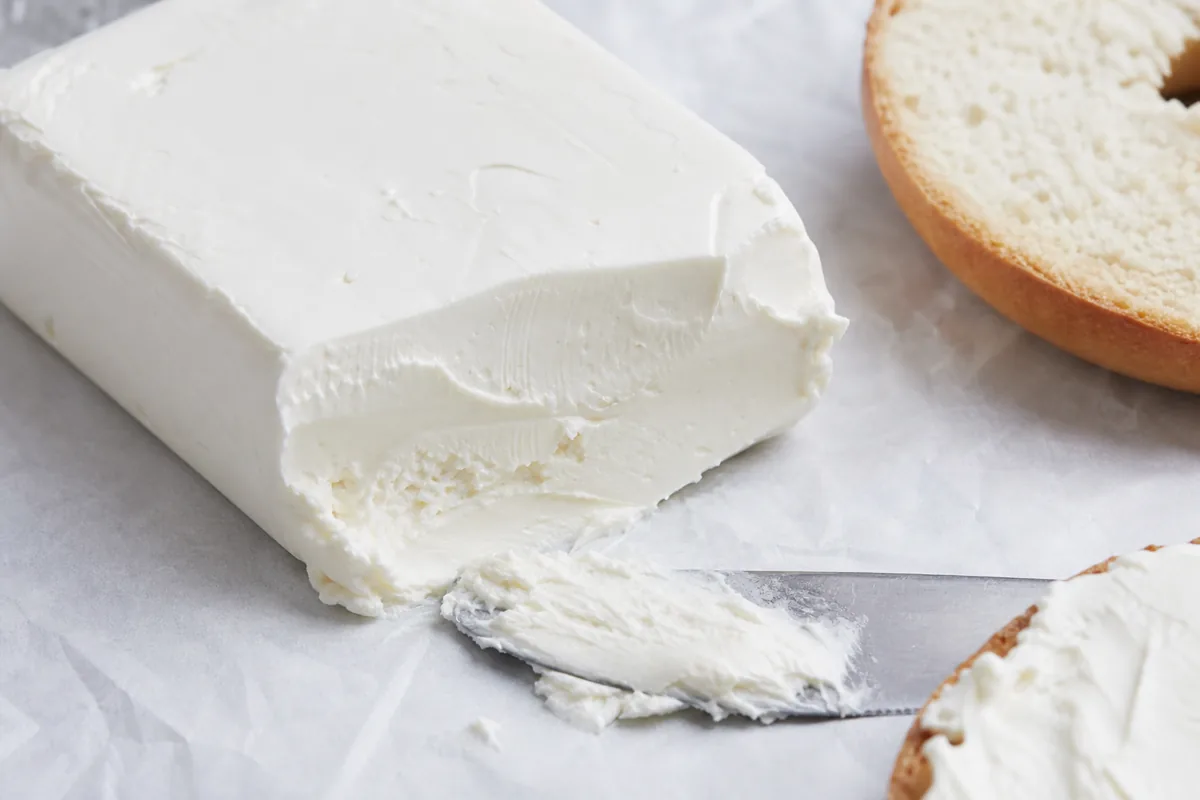
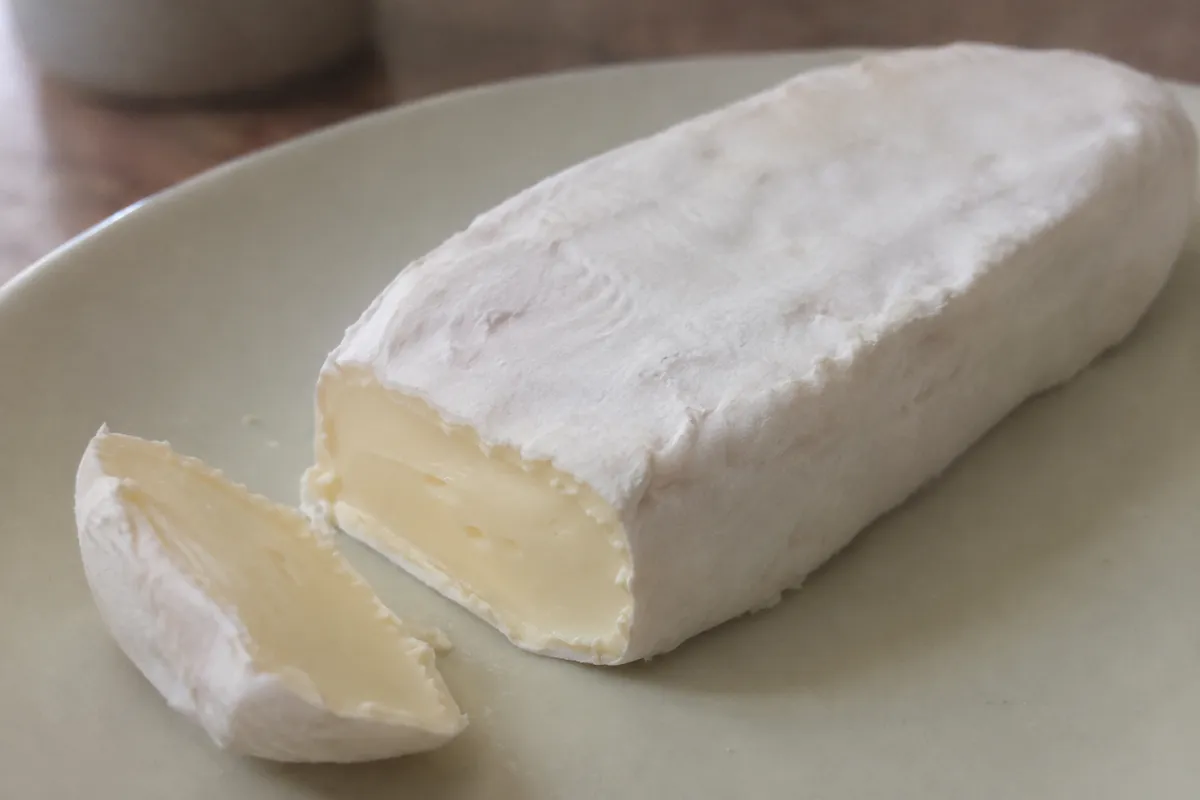
- Look: white with no rind, and a little whey may show on the surface.
- Salt: none added, and the plain Gervais Nature pot has 0.08 g of salt per 100 g.
- Unmoulding: Gervais sells Nature as firm enough to unmould easily and creamy in the mouth.
How Do You Eat Petit Suisse?
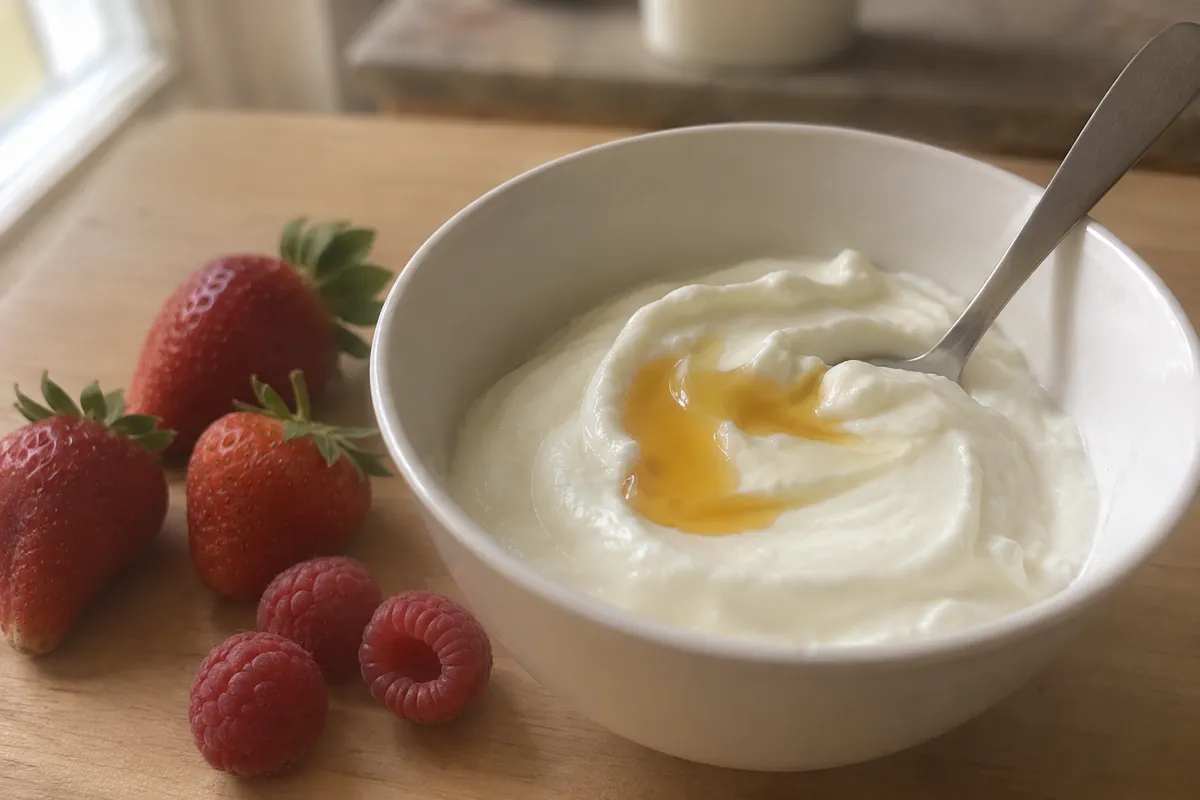
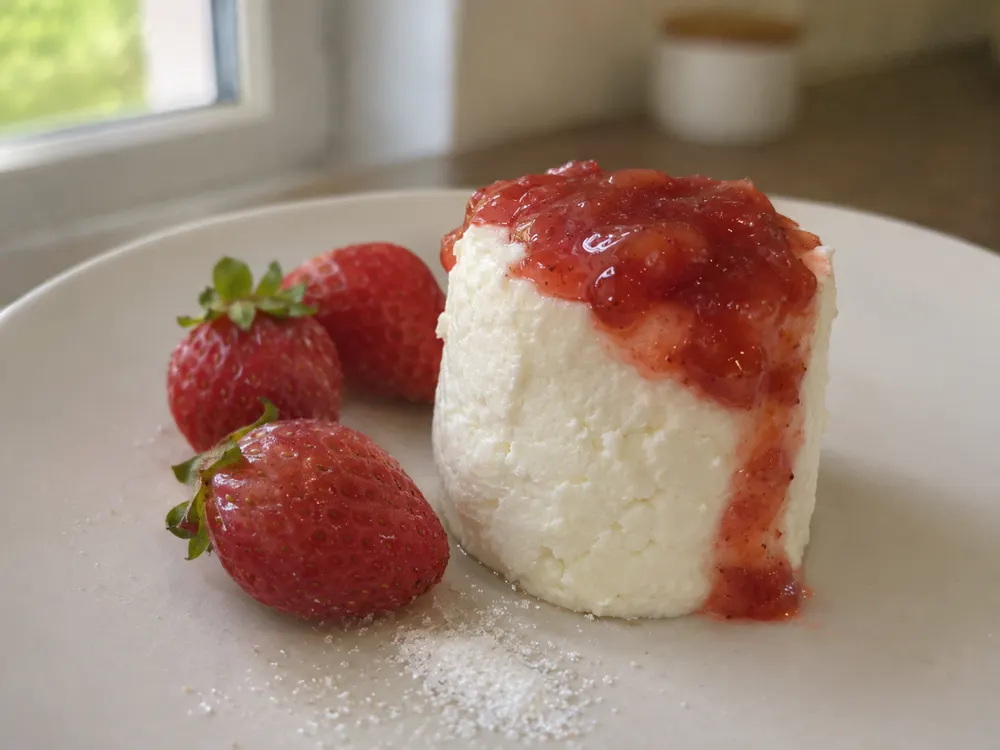
You can eat it the sweet way, with sugar as a dessert on its own, with jam or honey, or mixed with berries or strawberries. A cheesemaking supplier adds that in France it is regularly enjoyed at breakfast or as a snack.
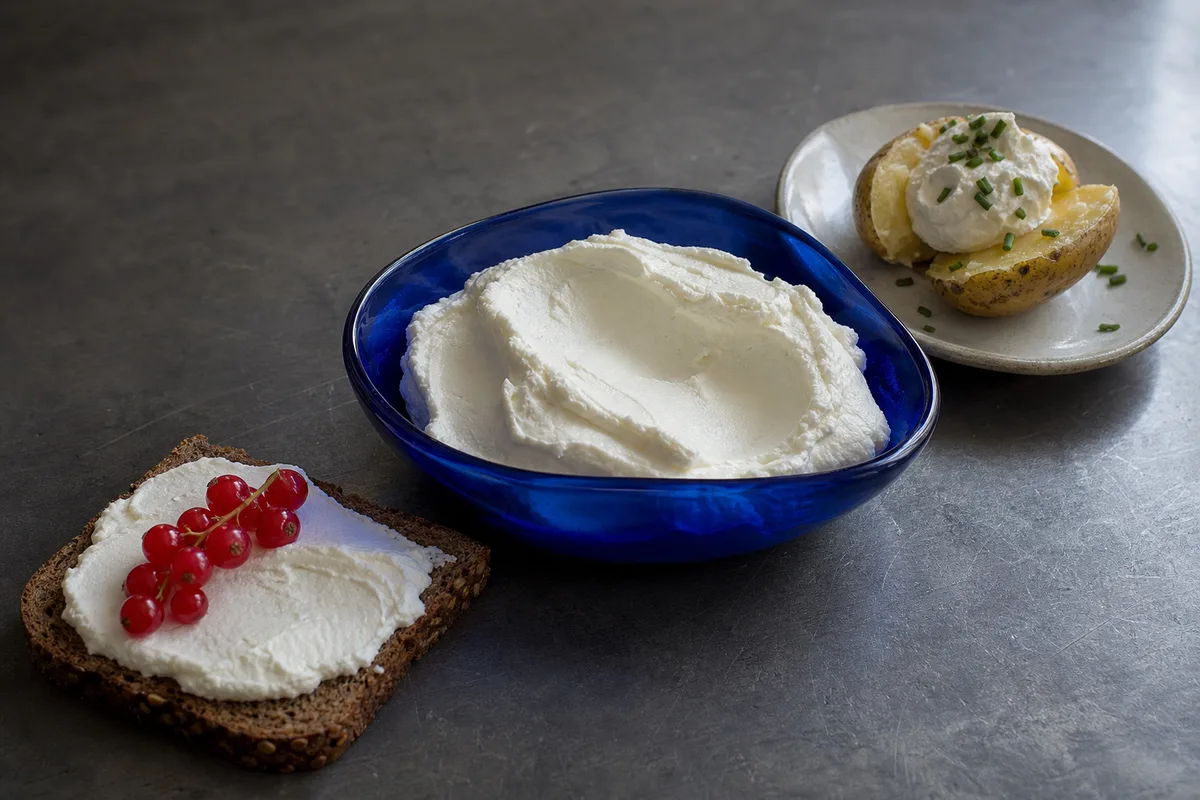
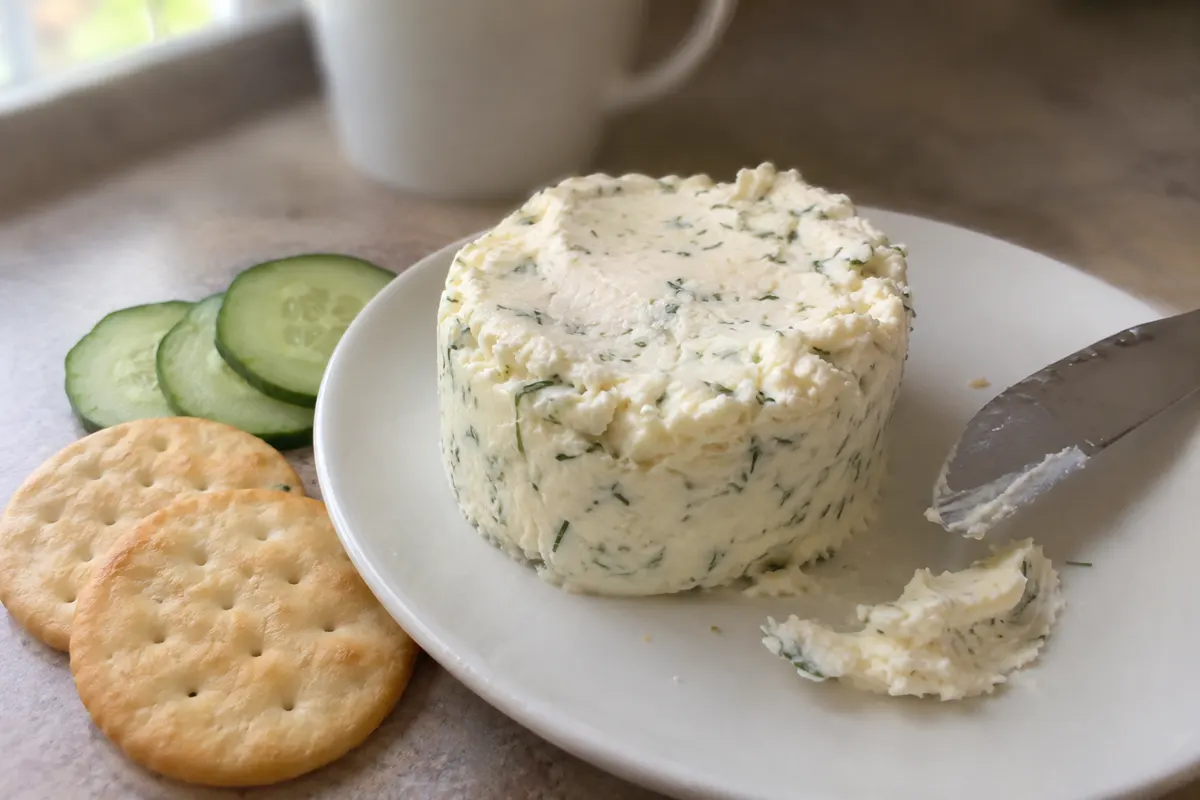
Because the cheese is unsalted, the savoury version is salted and peppered with herbs.
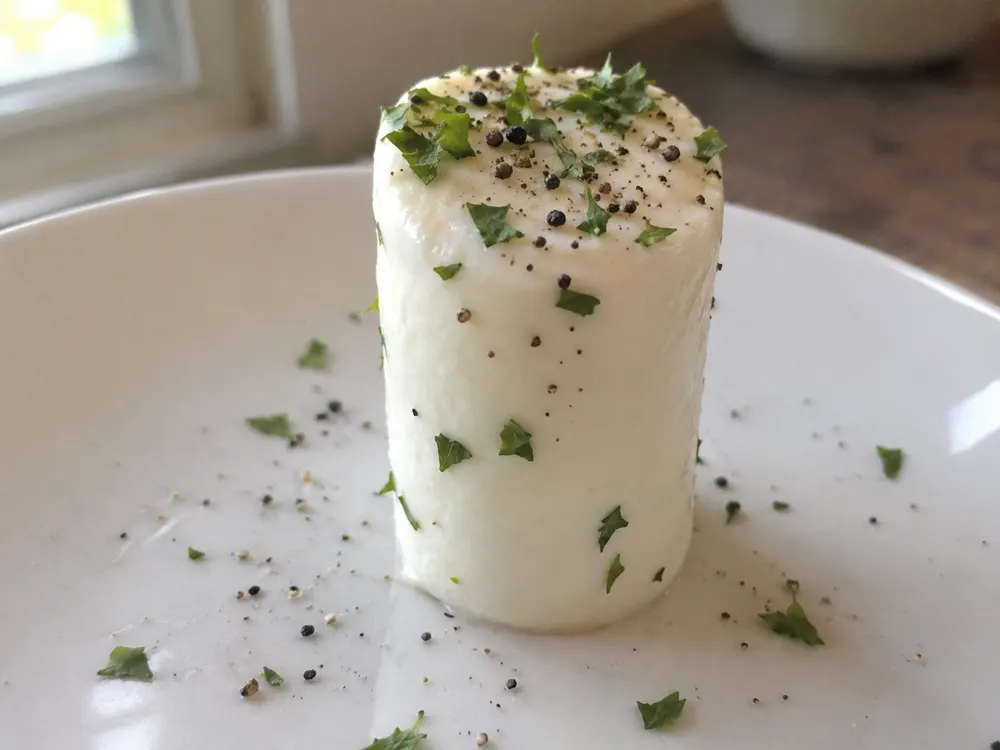
Cooks use it hot as well. They stuff poultry with it, mix it with mustard to coat rabbit so the meat does not dry out in cooking, and add it for creaminess in stuffings and sauces.
What Size and Packaging Does Petit Suisse Come In?
A petit suisse is a small cylinder, and the two sizes differ in weight and a little in width.
| Weight | Height | Across |
|---|---|---|
| 30 g | About 4 cm | About 3 cm |
| 60 g | About 5 cm | 3 to 4 cm |
On the shelf, a 60 g pot is often labelled plain petit suisse, and the name double petit-suisse is used where the plain name is kept for the 30 g.
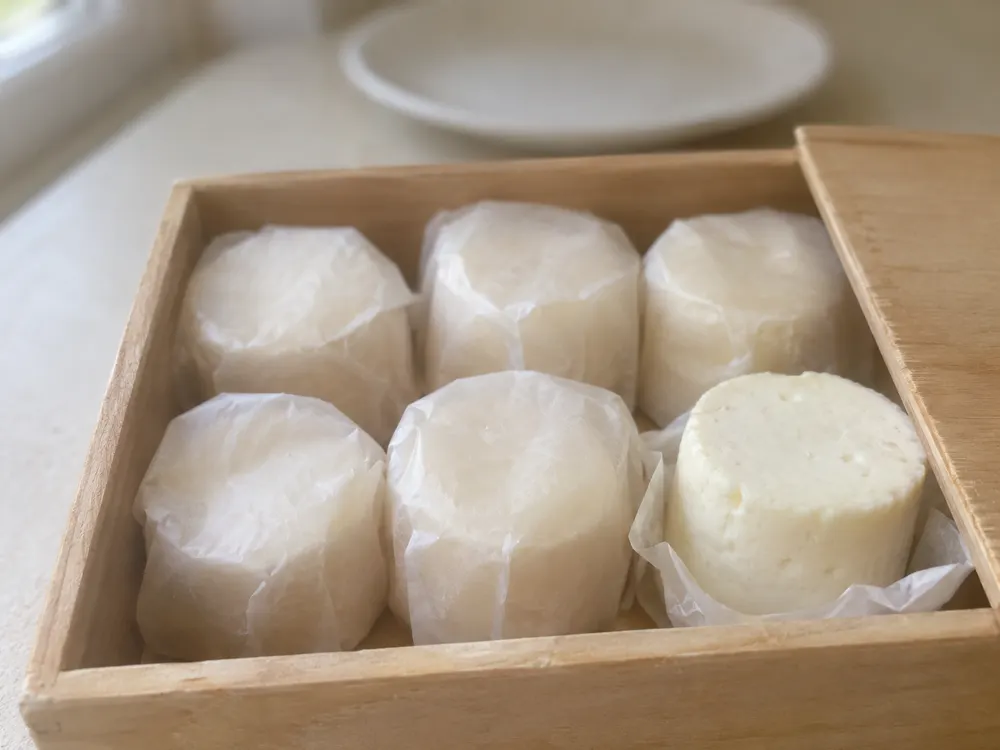
The pot is a later format than the first packs: Pommel sold his cheeses in a strip of paraffined paper, six or twelve to a small wooden box, and at Les Halles de Paris they were sold in packs of six or twelve.
What Do the Fat Percentages on a Petit Suisse Pack Mean?
A petit suisse carries two fat figures because fat can be counted two ways: 40 to 60% of the dry matter, which is the cheese without its water, or 9 to 18% of its total weight. A pot at 9.5 g per 100 g and a reference at 40% can describe the same cheese, since the French dairy trade site gives both figures for one petit suisse.
| Figure | What it counts | Where you meet it |
|---|---|---|
| 40 to 60% | Fat as a share of the dry matter | Reference works on the cheese |
| About 10 g per 100 g | Fat in the whole cheese | Reference works, rounded |
| 9.5 g per 100 g, of which 6.7 g saturated | Fat in the whole cheese | Gervais Nature, as listed on the Auchan product page |
| 5.7 g per pot | Fat in one 60 g pot | Gervais Nature, same product page |
Below that range, a cheese with only 20% fat in its dry extract, about 4% of its total weight, is technically fromage frais, not true petit suisse.
What Is in a Gervais Petit Suisse Nature?
The 9.5 g figure above comes from Gervais Nature, sold as six 60 g pots and made from pasteurised skimmed milk and cream, lactic ferments and the preservative potassium sorbate, with milk of French origin. Danone's listing says to keep the pots between +1°C and +6°C at most.
One 60 g pot gives about 82 kcal, 5.5 g of protein and 0.05 g of salt on the same listing. Those panels belong to the plain Nature pot and not to flavoured lines such as fruit-flavoured Petit Yoplait.
Is Petit Suisse Vegetarian?
Rennet is one of the industrial steps, and a home recipe uses a few drops, so you cannot assume a petit suisse is made without it. The same question comes up with quark: traditional quark can be made without rennet, but modern dairies typically add small amounts.
Before you buy for a vegetarian, ask the maker, Gervais included, whether the curd is set with animal or microbial rennet.
Is Petit Suisse Safe in Pregnancy?
Under NHS advice you can eat a pasteurised petit suisse as it comes, because the NHS lists pasteurised soft cheeses, such as cottage cheese and cream cheese, as safe to eat. The CDC says pregnant women are 10 times more likely to get a Listeria infection, and its table does not list a pasteurised petit suisse eaten cold in either column.
The CDC's safer column names hard cheese, when made with pasteurized milk, cottage cheese, cream cheese, string cheese, feta and mozzarella, when made with pasteurized milk, and pasteurized soft cheeses heated to an internal temperature of 165°F or until steaming hot. Behind the French Menu calls petit suisse a soft cheese made from pasteurized cow's milk, so under US advice you can heat a pasteurised pot that way.
| What you have | What to do |
|---|---|
| Label says pasteurised milk, NHS advice | You can eat it as it comes. |
| Label says pasteurised milk, US advice | Heat it to an internal temperature of 165°F or until steaming hot before you eat it. |
| No label, or the label does not say pasteurised | Cook it until it is steaming hot before you eat it. |
| Home-made batch | Follow the no-label row, because the recipe allows raw or pasteurised milk. |
| Cooked in a stuffing or sauce | Cook it until it is steaming hot, as the NHS lists any cheese that's been cooked until steaming hot as safe to eat. |
For the no-label row, the two agencies give different advice:
- Under NHS advice: the NHS says any foods made from unpasteurised milk must be thoroughly cooked and lists any cheese that's been cooked until steaming hot as safe to eat.
- Under US advice: a petit suisse without a label that says pasteurised milk is a riskier choice with no heated safer route, even cooked, because the CDC lists unpasteurized (raw) milk and dairy products made from raw milk, and soft cheese made from unpasteurized (raw) milk, as riskier.
For any other brand than Gervais, check the label for the milk.
Where Can You Buy Petit Suisse Cheese?
In France, Gervais, a Danone brand, sells its Nature petit suisse as a pack of six 60 g pots, for example at Auchan. Behind the French Menu names Yoplait, with fruit-flavoured Petit Yoplait and versions down to 0% fat, and Nestlé, with a Hello Kitty petit suisse, as competitors.
If you live in the US, a cheesemaking supplier says the cheese can be hard to find in local grocery stores as of November 2026.
How Does Petit Suisse Compare with Quark and Fromage Blanc?
Quark is the closest match on fat: creamy quark reaches the low end of petit suisse's range, and German quark is stirred continuously to keep it from hardening, which gives it a thick, creamy texture.
| Cheese | Fat | Counted against |
|---|---|---|
| Petit suisse | 40 to 60% | Dry matter |
| Creamy quark (Sahnequark) | 40% | Dry mass |
| Regular quark | 20% | Dry mass |
| Skimmed quark (Magerquark) | Under 10% | Dry mass |
Fromage blanc has a mild taste and a smooth mouthfeel like quark, and you can serve it over or under jam or in savoury dishes, the same sweet and savoury split as petit suisse.