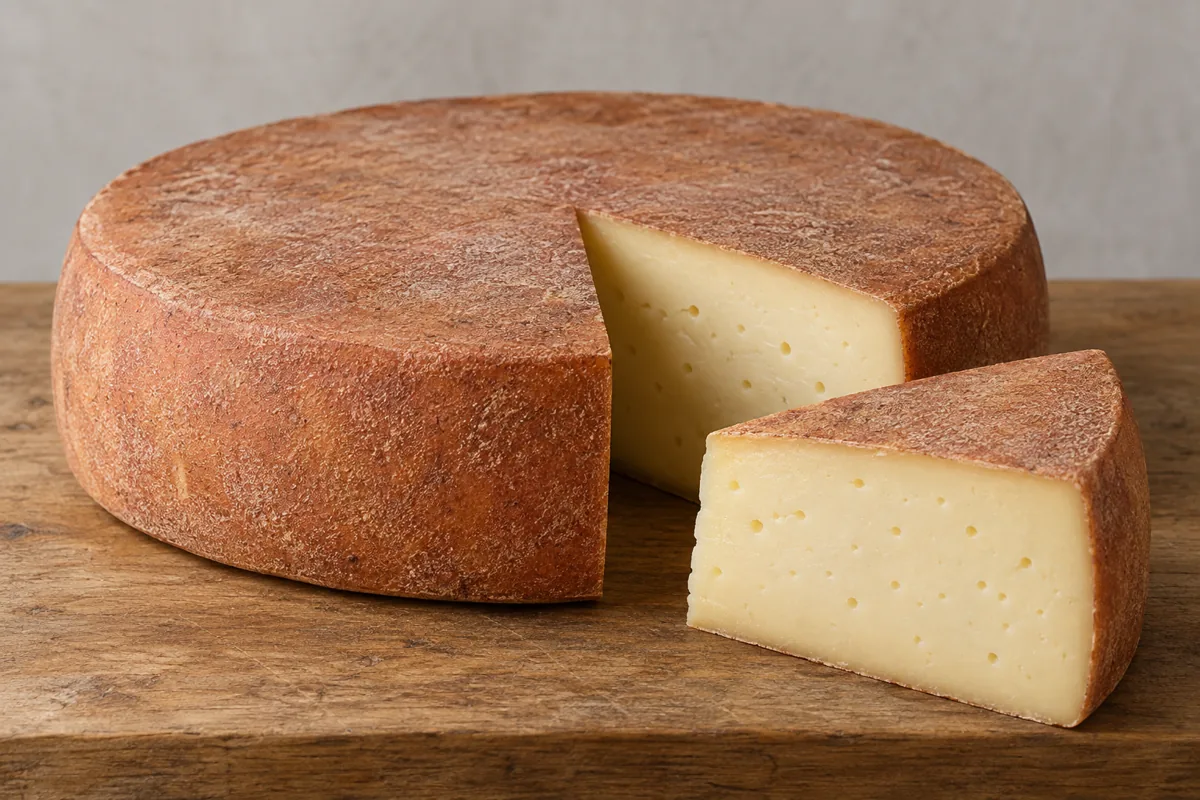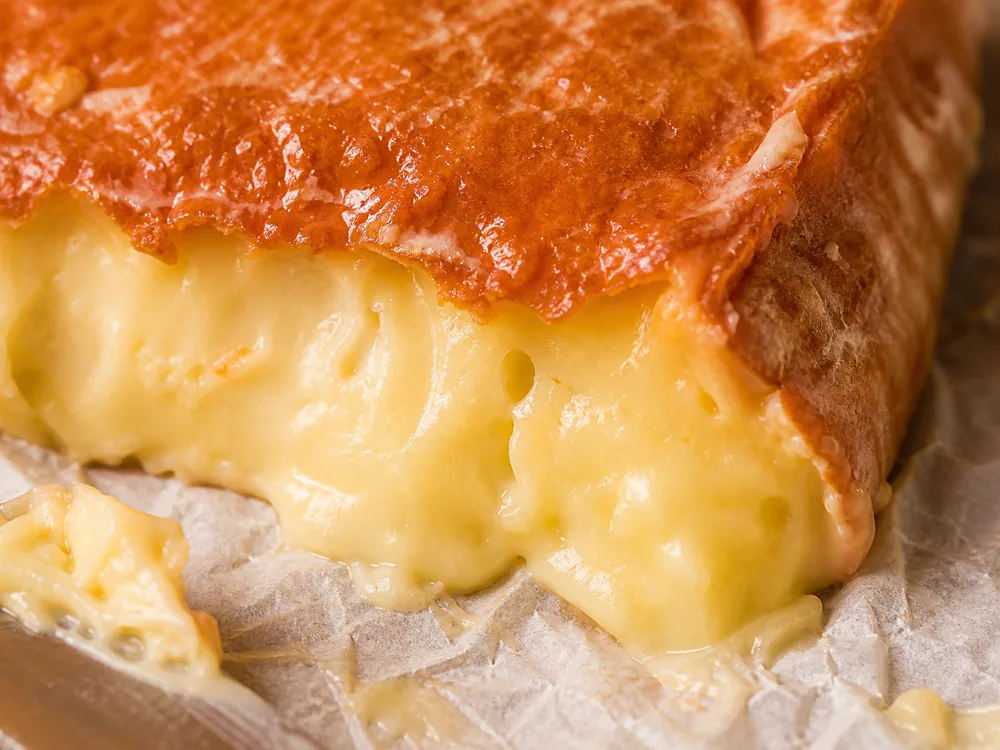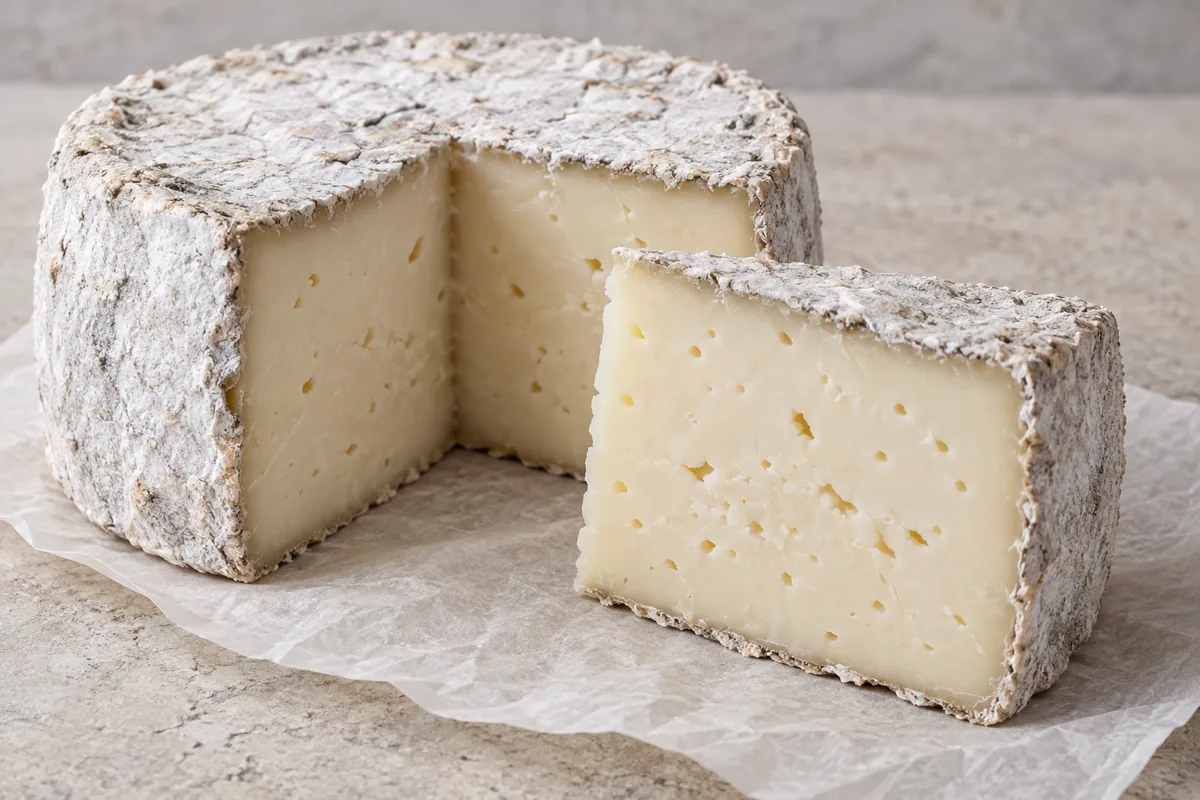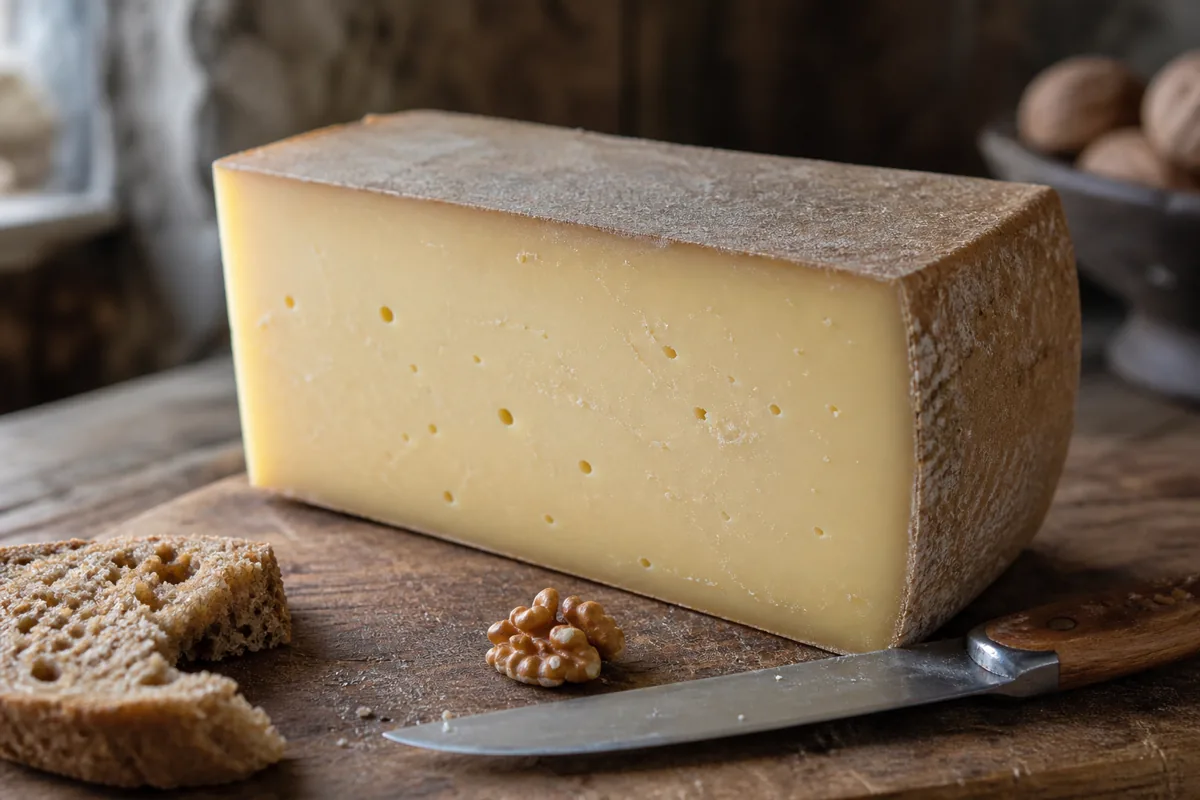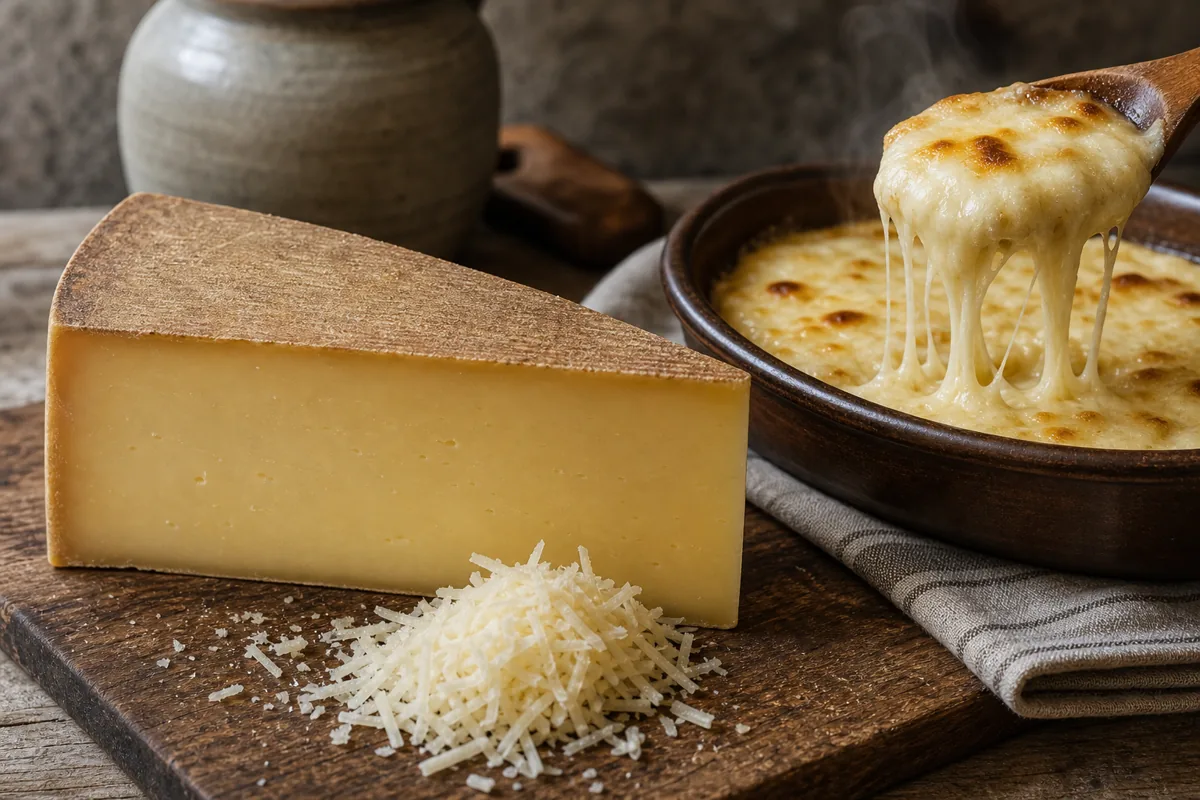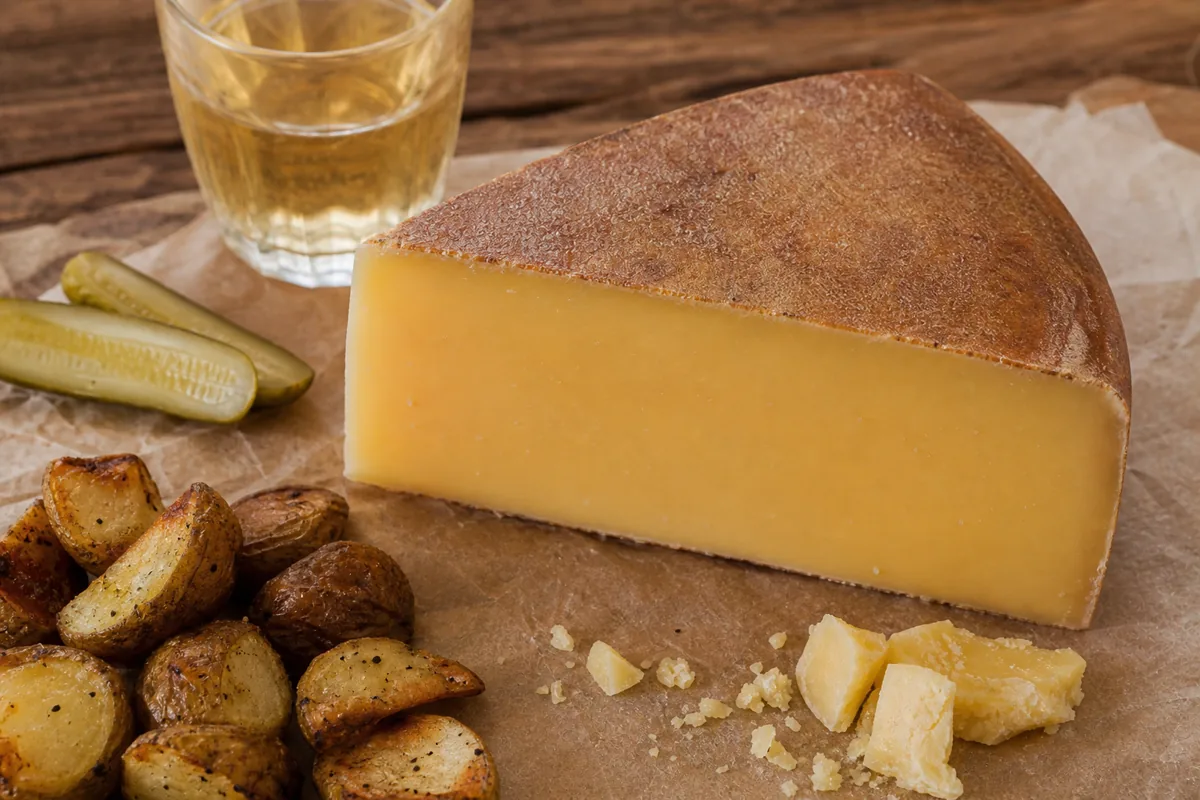
Alpha Tolman is Jasper Hill's firm Alpine-style cheese from Vermont, made with raw cow's milk and aged for eight to twelve months. It suits slicing and melting, with a flavour that becomes more savoury as the cheese matures.
The current recipe uses animal rennet, so Alpha Tolman is not vegetarian.
In This Article
Who Was Alpha Tolman?
The cheese is named for a philanthropic Greensboro dairy farmer who built the town library in 1900. His grandfather, Enoch, was one of the town's original settlers.
The Greensboro Free Library's own history credits a different member of the family: at a special town meeting on 4 December 1900, Judge Henry Stanley Tolman offered the town the deed to a building constructed for library use, and the town accepted.
How Alpha Tolman Differs From Harbison
Alpha Tolman uses milk from Jasper Hill's Andersonville herd and takes inspiration from Appenzeller. Its dense, pliant interior gives you a wedge to slice or grate.
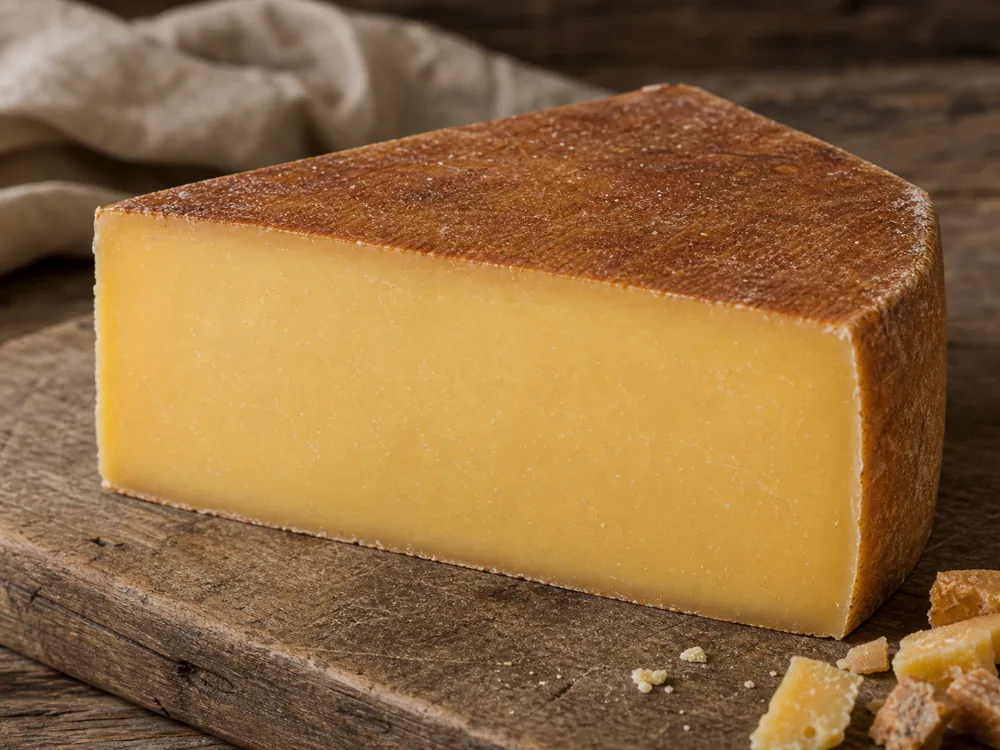
Harbison, from the same producer, is a pasteurized-milk soft cheese held in a spruce belt; a ripe wheel can be spoonable. A recipe or board planned around one will need a different serving method if you buy the other.
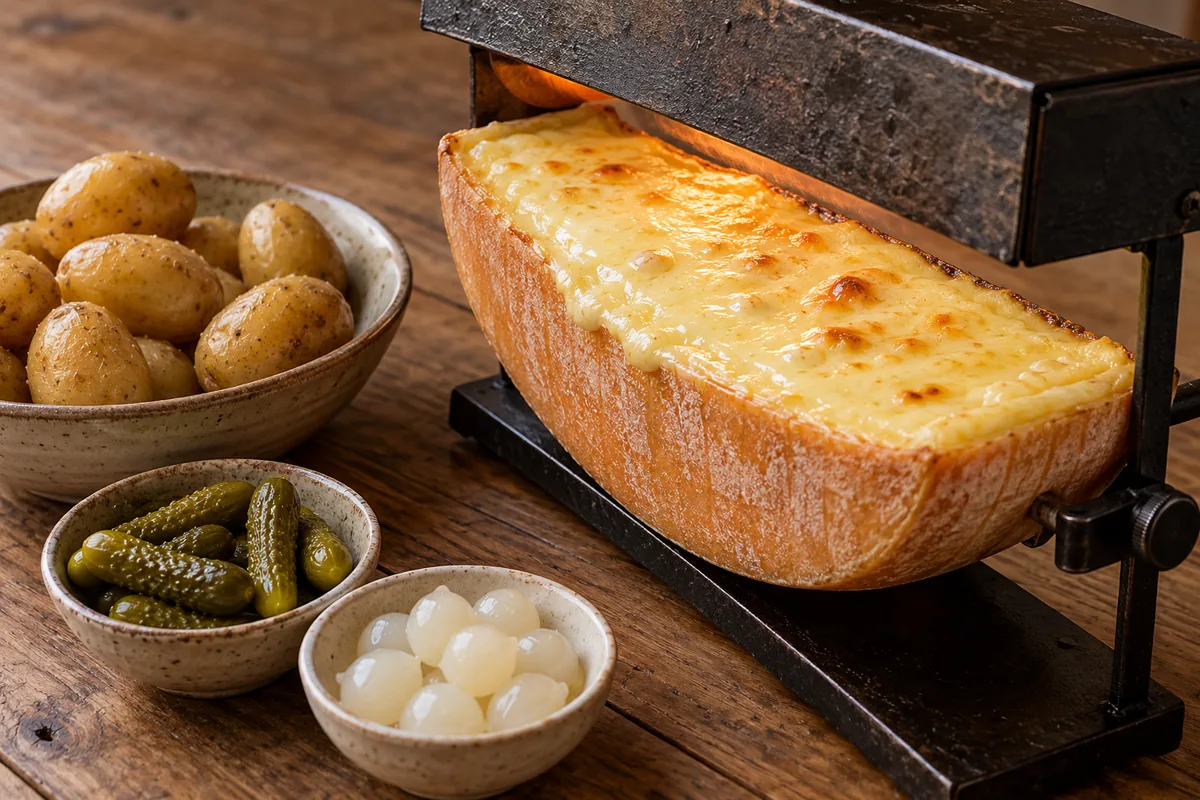
For a hot potato meal, Alpha Tolman's sliceable format makes it easy to distribute the cheese across several portions. Harbison's bark-wrapped presentation is a different purchase, even though both names appear in the same shop.
How Is Alpha Tolman Made?
Alpha Tolman follows the Alpine method of cooking and then pressing the curd. Culture magazine's cheese library credits that step with the tight, slightly elastic texture, and new wheels are washed regularly with a cultured brine that grows the red-orange rind.
The milk comes from a single herd. Jasper Hill runs milk production at its Andersonville Farm in nearby Glover for cheesemaking, and each batch comes from that one herd.
All of Jasper Hill's raw-milk cheeses, Alpha Tolman among them, are made in the original Greensboro creamery beside the barns, about 100 yards from the cellars. Older write-ups, Culture's included, place the make at the company's second creamery in Hardwick, so the current producer page is the better guide.
A 2020 renovation gave that creamery two copper vats from France's Comté region and a GSV system, a set of vacuum bells that draw excess whey from the curd. The system suits smoothly textured Alpine-style cheeses, and the vats are the kind used to make Comté in its home region.
The rennet is made on the farm as well. The producer mixes a de-albuminised whey it calls recuite with strips of calf stomach, and named the result Sax Rennet after its friend Anne Saxelby, who died suddenly in 2021.
Jasper Hill credits this coagulant with deepening the savoury, umami side of its raw-milk cheeses.
Alpha Tolman Matures in Jasper Hill's Cellars
After the make, the wheels ripen in the farm's underground cellars.
Young wheels of Alpha Tolman and Whitney first spend a few weeks in a hastening vault, where cool temperatures and higher humidity favour Brevibacterium linens, the microbe behind the pink-orange colour of washed rinds, along with yeasts.
Those microbes come from a mother culture the cellar team calls morge, a slurry carrying strains from earlier brines. The wheels then move to the Alpine vault, whose tall racks also hold Whitney and Calderwood.
There, each wheel is brushed and turned regularly, some by hand and many by robot. A vault specialist decides whether a batch needs more or less brining over its months-long affinage.
Butter and Nuts When Young, Caramelized Onion With Age
Younger Alpha Tolman has butter, fruit and nut notes, and it turns meatier with a caramelized-onion character as it ages. Jasper Hill sells it at 8–12 months, rather than a single fixed maturity.
The producer calls the texture dense and pliant, easily portioned and ideal for melting.
Those descriptions help set expectations; they do not promise that every wedge tastes identical. When buying for a cold plate, a sample or the cheesemonger's description of the current cut is more useful than assuming the oldest piece will suit you best.
Can You Melt Alpha Tolman Over Potatoes?
Jasper Hill suggests a raclette-style meal: melted Alpha Tolman over fingerling potatoes, with sour pickles. Raclette here means the way of serving it, since Alpha Tolman is a different cheese from the Swiss one.
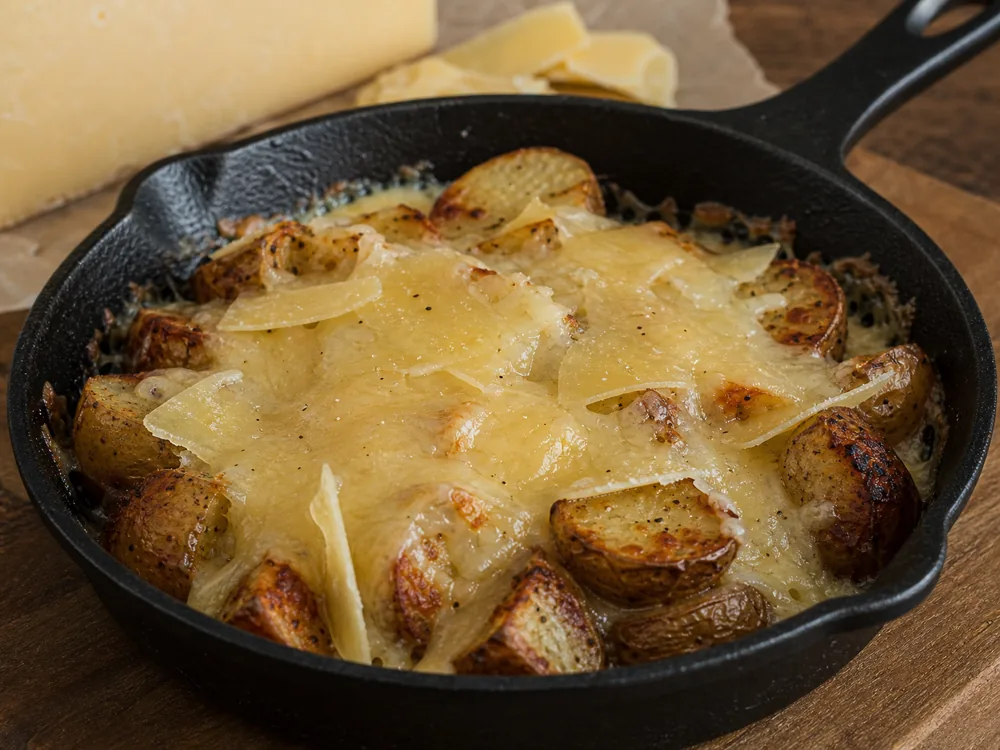
For an ordinary home setup, cook the potatoes first, place a portion in an ovenproof dish, and cover it with thin slices of cheese. Heat until the cheese has softened across the potatoes, watching the edges instead of waiting for a dramatic cheese pull.
Keep the pickles alongside so they stay crisp and their brine does not flood the dish. Removing a tough rind edge before slicing also keeps that edge out of the melted topping.
Cooking times vary: a thicker layer, a colder portion or a different oven will change how quickly the cheese warms.
Which Pairings and Substitutes Work for Alpha Tolman?
The producer pitches it at fans of Appenzeller and of fondue, and suggests robust ale, a plummy red wine and onion jam; sweetness is not automatically a poor pairing. Fairfield Cheese Company gives Nero d'Avola and nut brown ale as specific examples.
Serve the jam separately so someone can try the cheese plain before adding sweetness. For a non-alcoholic plate, bread and crisp apple give contrasting textures without requiring a drink match.
Gruyère is a practical replacement for a firm cheese topping, while Raclette suits a meal built around melted cheese and potatoes. Neither promises Alpha Tolman's precise flavour, and the replacement's ingredients still need checking if rennet or milk treatment matters.
Does Alpha Tolman Use Animal Rennet?
Jasper Hill identifies Sax rennet made with calf vells, along with cultures carried from previous cheesemaking. That animal origin is separate from the raw-milk question: choosing pasteurized milk would not by itself make a cheese vegetarian.
Jasper Hill publishes no nutrition panel or lactose figure for it. Use the label on your piece rather than numbers borrowed from another Alpine cheese.
Is Raw-Milk Alpha Tolman Safe in Pregnancy?
Jasper Hill makes Alpha Tolman from raw cow's milk, so under NHS advice cook it until it is steaming hot before you eat it: the NHS says any foods made from unpasteurised milk must be thoroughly cooked, and lists any cheese that's been cooked until steaming hot as safe to eat.
In the US, the CDC lists unpasteurized (raw) milk and dairy products made from raw milk as riskier, and its table gives no heated safer route for raw-milk cheese, so Alpha Tolman has no safer route in the US, even in a cooked dish.
Its eight-to-twelve-month age does not change either action.
Has Alpha Tolman Won Awards?
Jasper Hill's press page lists a Super Gold for Alpha Tolman at the 2012 World Cheese Awards and a Gold in 2022. At the American Cheese Society competition it lists Best in Class results in 2019, 2022 and 2024.
How Do You Buy and Store Alpha Tolman?
Alpha Tolman's whole wheel is about 22 lb by Jasper Hill's figure, and Culture lists one at 14 inches across and 5 inches high, so specialty shops sell it as cut wedges. Buy a portion that fits the number of meals you have planned, especially if it is your first time trying a mature wedge.
Keep it in its original wrapping, or use parchment or waxed paper inside a covered container or resealable bag, following Jasper Hill's storage advice. Refrigerate promptly at 4 C / 40 F or below and retain the supplied date and storage instructions.
Cellar age is not a home shelf-life guarantee after cutting. The CDC says to never leave perishable food out for more than 2 hours (or 1 hour if exposed to temperatures above 90°F); smell alone cannot establish safety.
Young wheels taste of butter, fruit and nuts. With more age it turns meatier, with a caramelised-onion note.
It is made from raw cow's milk and sold at eight to twelve months.
In Jasper Hill's original creamery in Greensboro, Vermont, next to the barns. The milk comes from one herd at the farm's Andersonville Farm in Glover.
Gruyère works for a firm melting topping, and Raclette for melted cheese over potatoes. Neither tastes quite the same, so check the rennet and milk on the label if those matter to you.