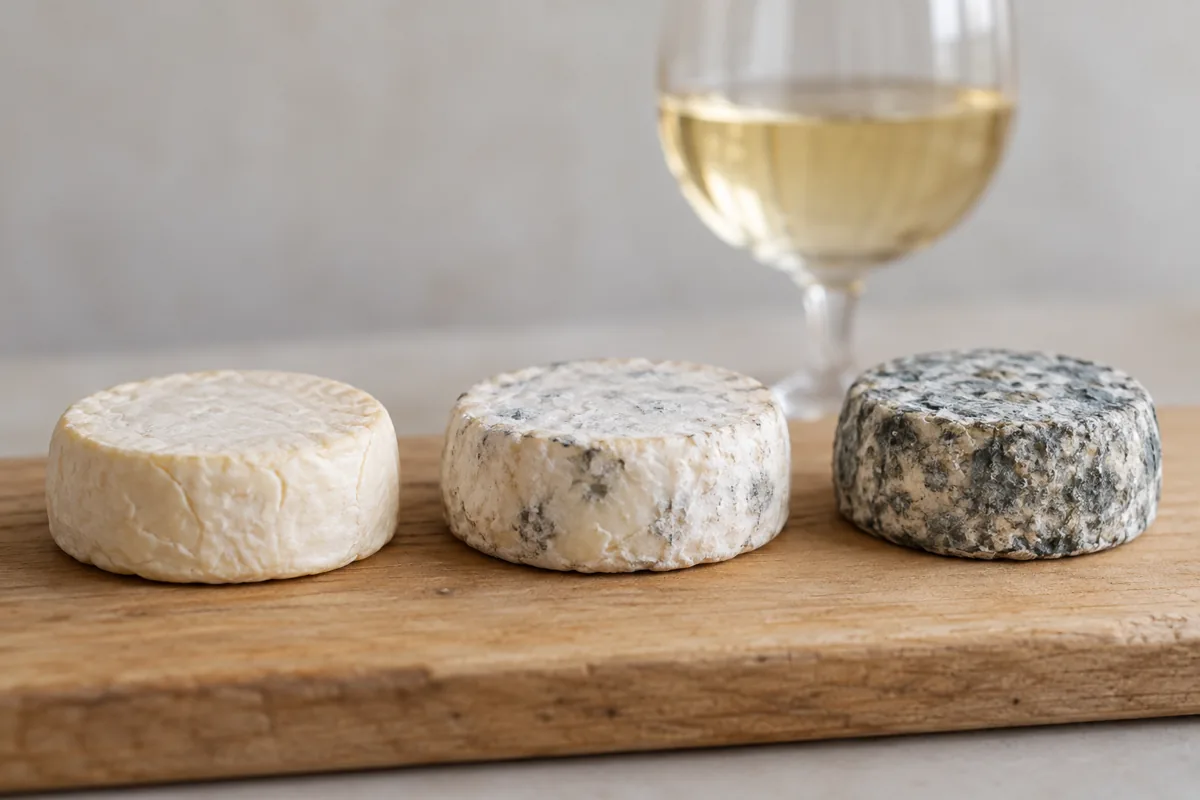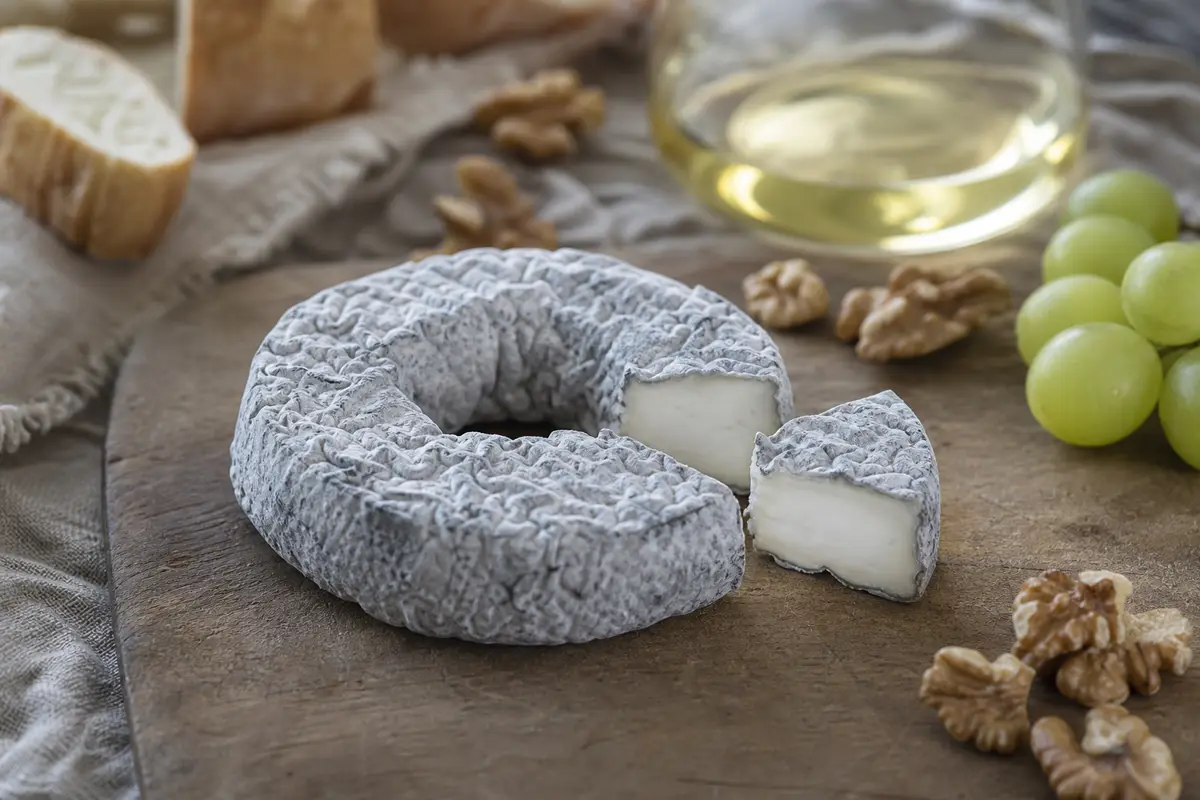
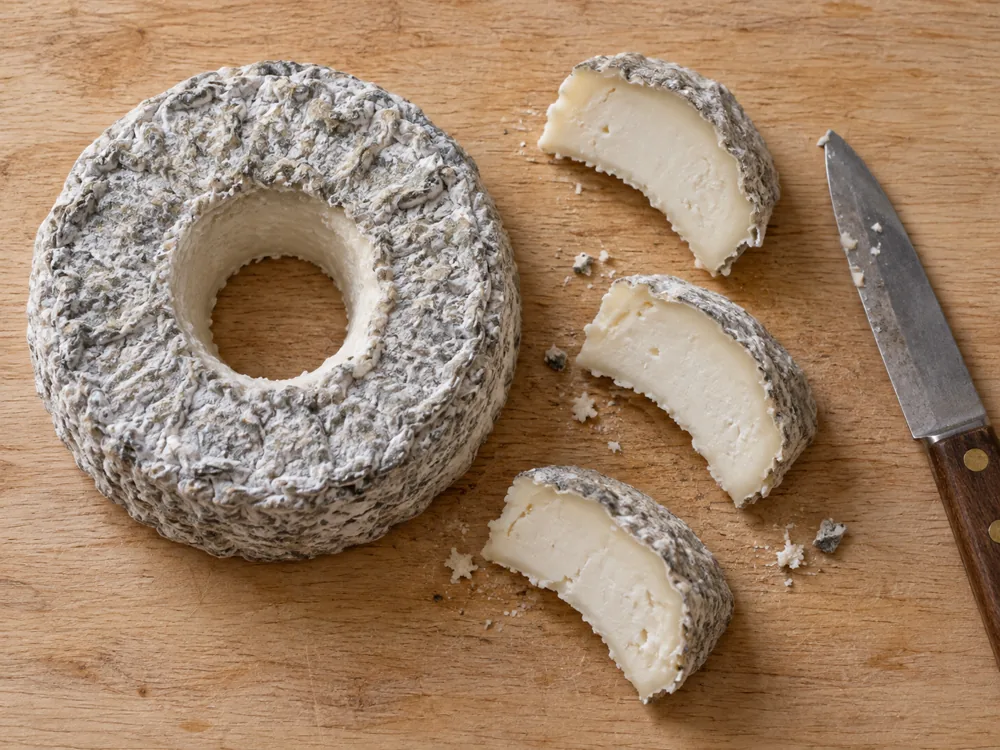
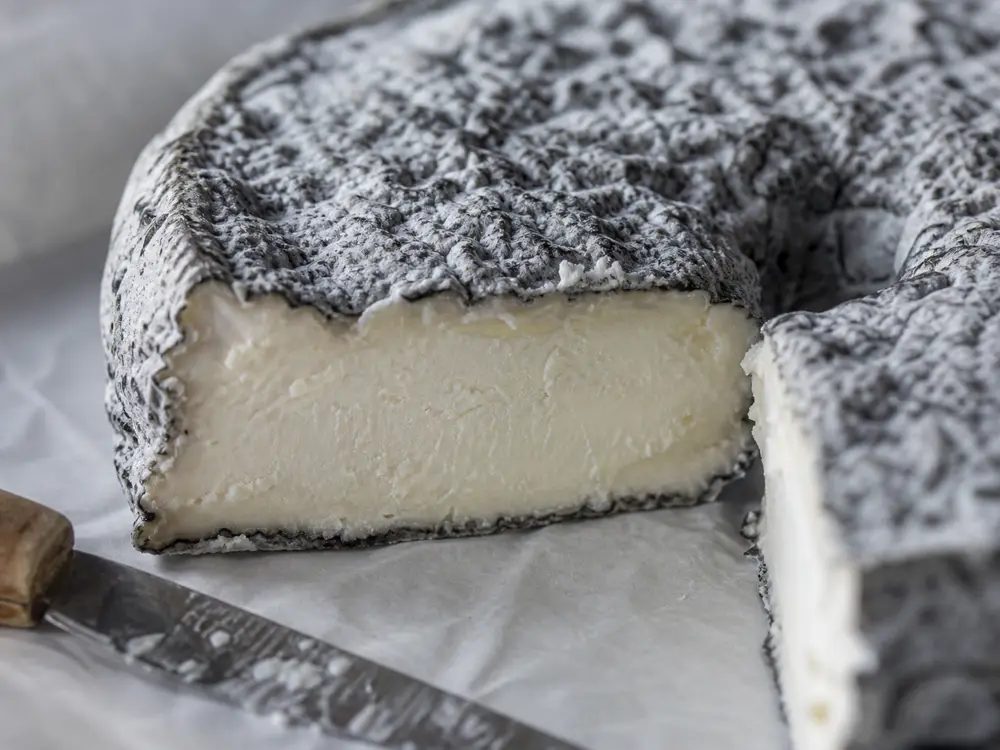
Anneau du Vic-Bilh is a small goat cheese from the Vic-Bilh area of the Pyrénées-Atlantiques, shaped like a ring about 10 cm across. It has a pale grey natural rind and a smooth white paste.
The milk may be raw or pasteurized depending on the maker, so check the label before you buy or serve it.
In This Article
Where Does Anneau du Vic-Bilh Come From?
Anneau means ring, and French Wikipedia places the cheese in the Vic-Bilh region of the Pyrénées-Atlantiques in southwest France.
French Wikipedia also says production must be certified organic under the AB label, which is a farming rule rather than a protected name.
How Big Is Anneau du Vic-Bilh, and Why the Hole?
Four sources agree on a 10 cm ring and differ on thickness, hole width and weight.
| Source | Diameter | Thickness | Hole | Weight |
|---|---|---|---|---|
| French Wikipedia | 10 cm | 2 cm | Not given | 200 to 250 g |
| Produits-laitiers.com | 10 cm | 1.5 to 2 cm | 2.5 cm | 210 g |
| Androuet | 10 cm | 2 cm | 3 cm | 200 to 300 g |
| Cheese.com | 10 cm | Not given | 2 cm | Not given |
Weight varies most, from 200 g to 300 g, so a ring at the counter can fall outside any single figure above.
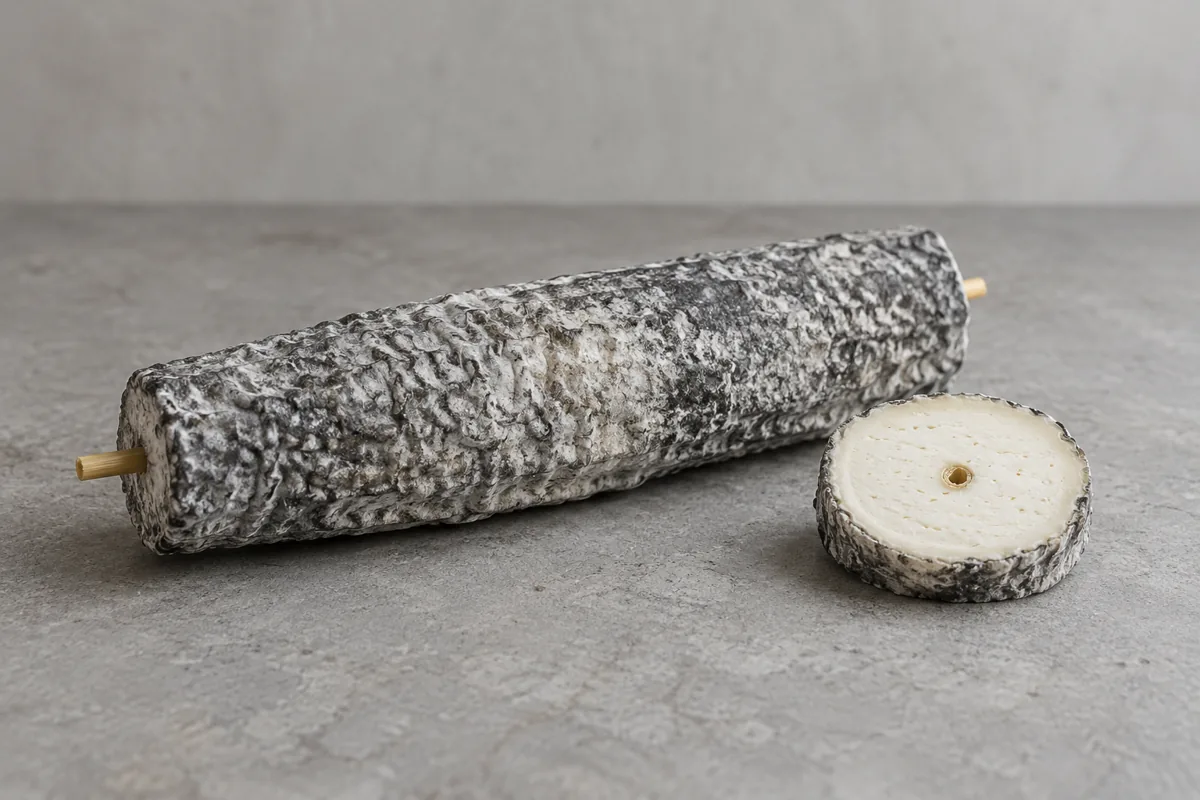
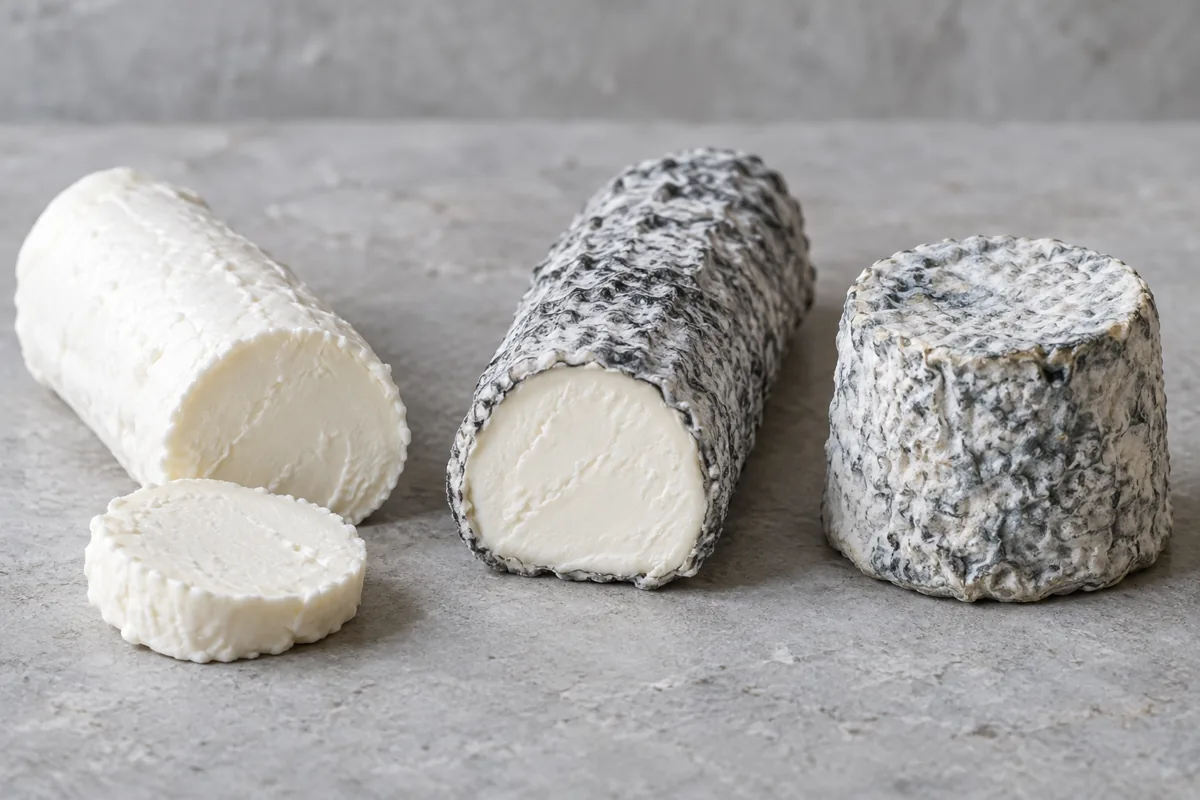
The hole works as the mark that separates this cheese from goat logs, pyramids and crottins.
What Do the Rind and Paste Look Like?
The sources agree on a grey natural rind dusted with ash or charcoal over a white paste, and they differ in how much detail they give.
| Source | Description |
|---|---|
| Produits-laitiers.com | Wrinkled, powdery, light grey natural rind over a soft, compact white paste with a creamy layer under the rind. |
| Androuet | Rind slightly bluish and dusted with wood ash; white paste. |
| Cheese.com | Charcoal gives the rind a slightly blue tint. |
French Wikipedia gives a minimum ageing of 10 days, so even a young ring has spent time on the rind. Of the sources used here, only Produits-laitiers.com describes a creamy layer under the rind, so treat that cue as one source's observation.
What Does Anneau du Vic-Bilh Taste Like?
Cheese.com lists the flavor as acidic, nutty, salty, and smoky. Produits-laitiers.com describes a balance between salty and acidic, and Androuet adds a hint of bitterness against the salt.
Salt appears in all three descriptions and acid in two.
Is Anneau du Vic-Bilh Safe During Pregnancy?
Cheese.com describes Anneau du Vic-Bilh as an unpasteurized goat's milk cheese made with animal rennet. Produits-laitiers.com lists raw milk and carries a health note for vulnerable groups.
French Wikipedia says the milk may be raw or pasteurized, so one ring can differ from the next.
For cheese in pregnancy, the CDC lists soft cheese made from unpasteurized milk as a riskier choice.
The NHS says any food made from unpasteurised milk, such as soft ripened goats' cheese with a white coating, must be thoroughly cooked, and it gives the same instruction for mould-ripened soft cheeses with a white coating, chèvre included, whether pasteurised or not.
Cheese.com lists animal rennet and marks the cheese as not vegetarian. Vegetarians need a pack that says otherwise.
How Should You Serve Anneau du Vic-Bilh?
Cut the ring into small arcs so each bite carries some rind and some paste, and the pieces sit easily on a cheese board.
The pairings below follow the flavor the sources report: acid, salt, and a nutty edge.
| Pairing | Why It Works |
|---|---|
| Baguette | Plain bread gives the rind and paste a neutral base. |
| Dry white wine | Acidity meets the acid and salt in the cheese. |
| Walnuts | Their bitterness echoes the nutty note some sources report. |
| Grapes or pear | Fresh fruit relieves the salt. |
| Honey | Use lightly so sweetness does not bury the cheese. |
How It Differs From Valençay and Sainte-Maure-de-Touraine
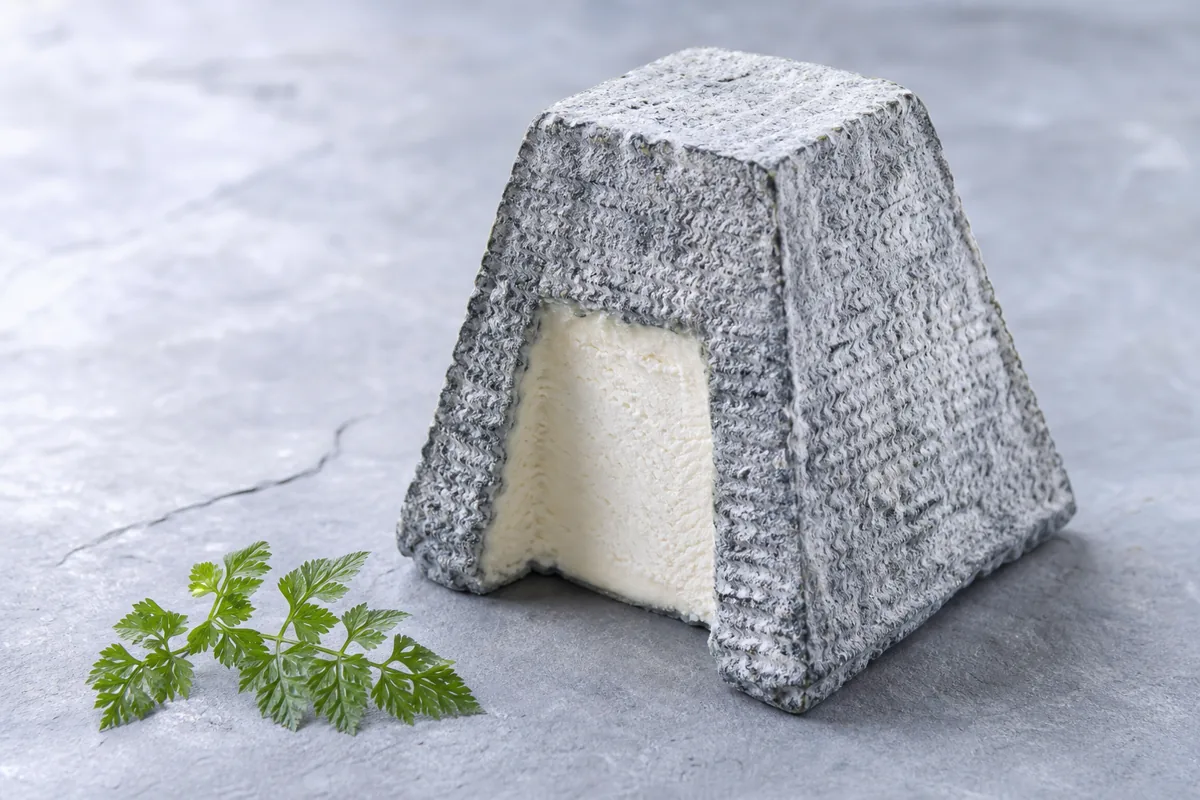
Valençay is a charcoal-dusted, flat-topped goat pyramid from the Indre in central France, so it shares the ash but not the ring or the region, and the official AOP specification gives it AOC status since 1998 and AOP since 2004.
Sainte-Maure-de-Touraine is an AOP goat log from the Loire, protected since 1990; Anneau du Vic-Bilh carries no AOC or AOP.
When and How Should You Buy Anneau du Vic-Bilh?
Produits-laitiers.com gives a production season from December to August, so a ring in autumn is worth a question about when it was made.
The pack should name the milk treatment, raw (lait cru) or pasteurized, and because French Wikipedia says production requires the AB organic label, that mark is worth looking for beside it.
| Label word | What it tells you |
|---|---|
| Lait cru | Made with raw milk; the pregnancy rules above apply. |
| Lait pasteurisé | Made with pasteurized milk; still a soft cheese, so check current guidance. |
| AB | The organic label that French Wikipedia says production requires. |
For storage life and serving temperature, go by the date and instructions on the pack.
What Can You Substitute for Anneau du Vic-Bilh?
The closest substitute is another small goat cheese with a natural or ash rind and a clean tang. Match the rind and the milk first, and the shape second.
| Closest ash-rind board role | Valençay or another small ashed goat cheese |
| Log-style French goat choice | Sainte-Maure-de-Touraine, when available |
| Easy shop substitute | Aged goat log with clean rind and tang |
| Fresh mild fallback | Fresh chèvre, only when rind flavor is not needed |
Brie is a poor first substitute, because a cow-milk bloomy rind takes a plate in a different direction from goat cheese.
SOURCES & REFERENCES
Anneau du Vic-Bilh is a goat cheese shaped like a ring about 10 cm across, made in the Vic-Bilh area of the Pyrénées-Atlantiques. It has a grey natural rind and a smooth white paste.
The hole, roughly 2 to 3 cm wide, is the ring format that identifies the cheese.
Cheese.com and Produits-laitiers.com describe raw goat's milk, and French Wikipedia says the milk may be raw or pasteurized. The label shows which one a given ring uses.
The CDC lists unpasteurized soft cheese as riskier, and the NHS says unpasteurised foods such as soft ripened goats' cheese with a white coating must be thoroughly cooked. A raw-milk ring is one to skip or cook until steaming hot, and a clinician can advise on a pasteurized one.
Sources describe acidic, salty, and nutty flavors with a hint of bitterness.
Use another small ash-rind goat cheese, such as Valençay, or an aged goat log when you need a practical shop substitute.