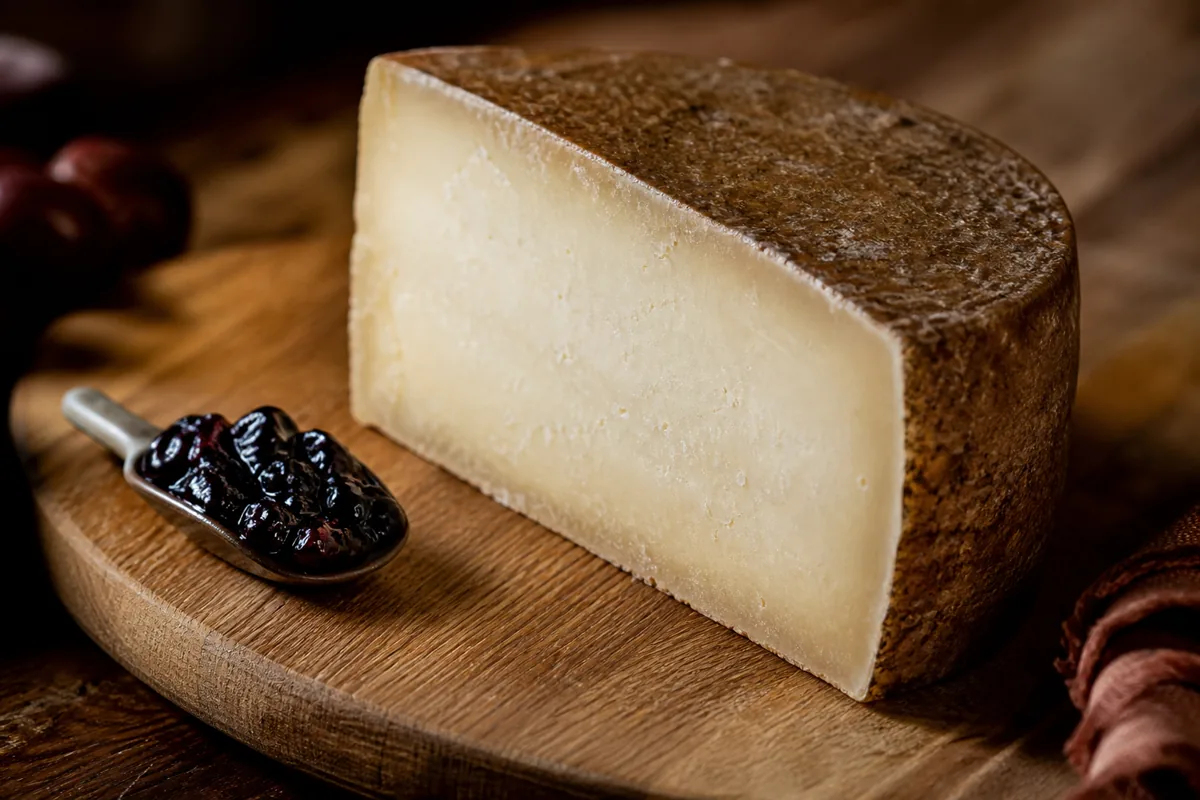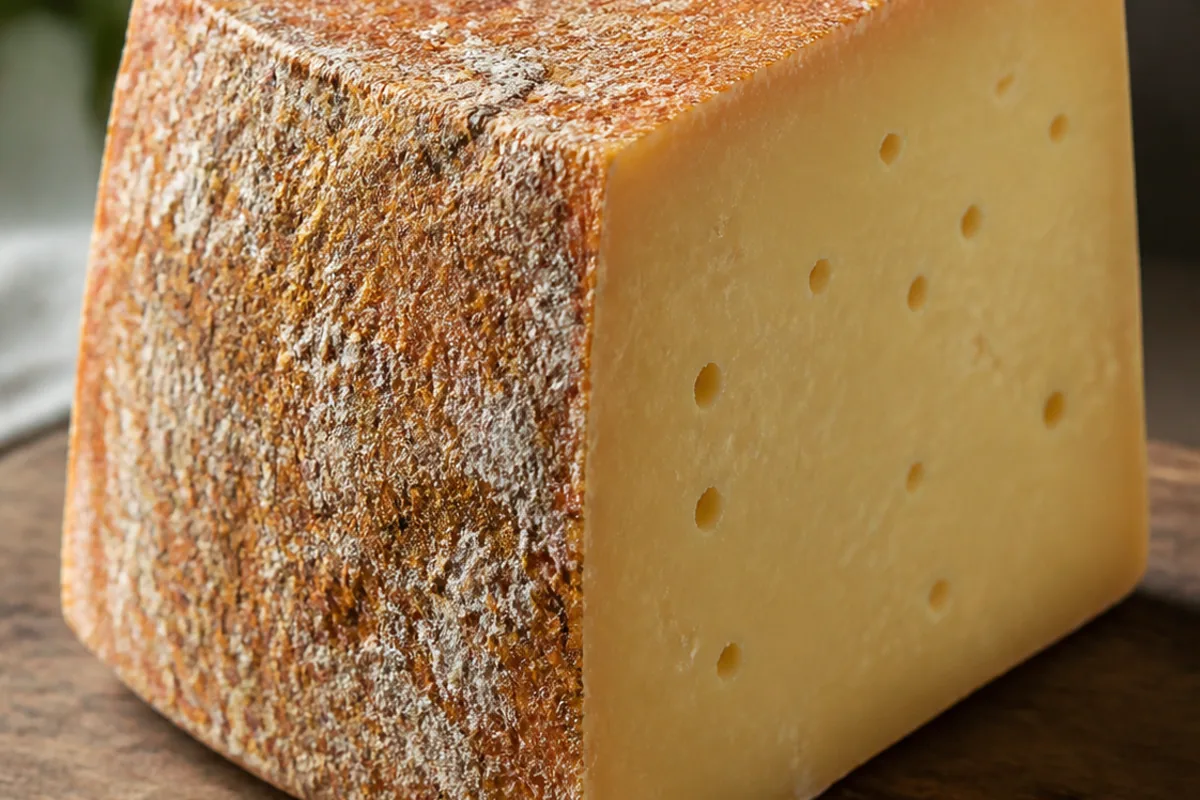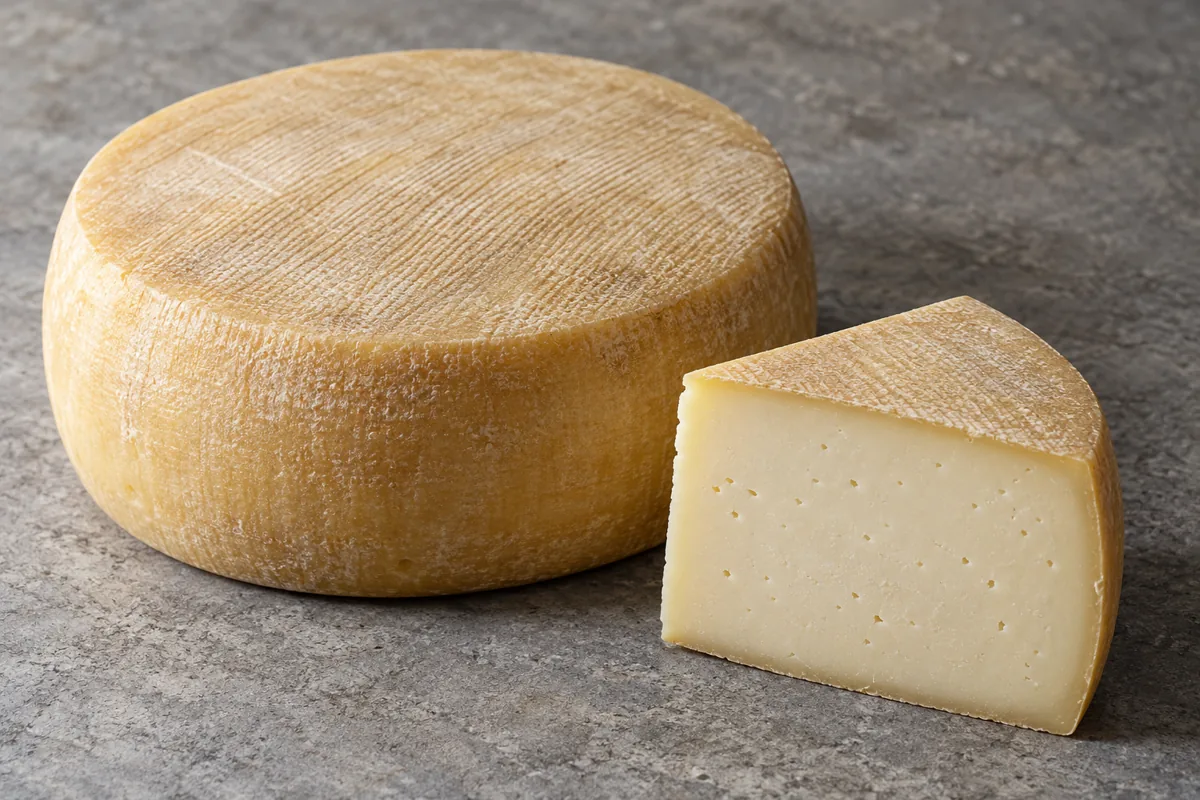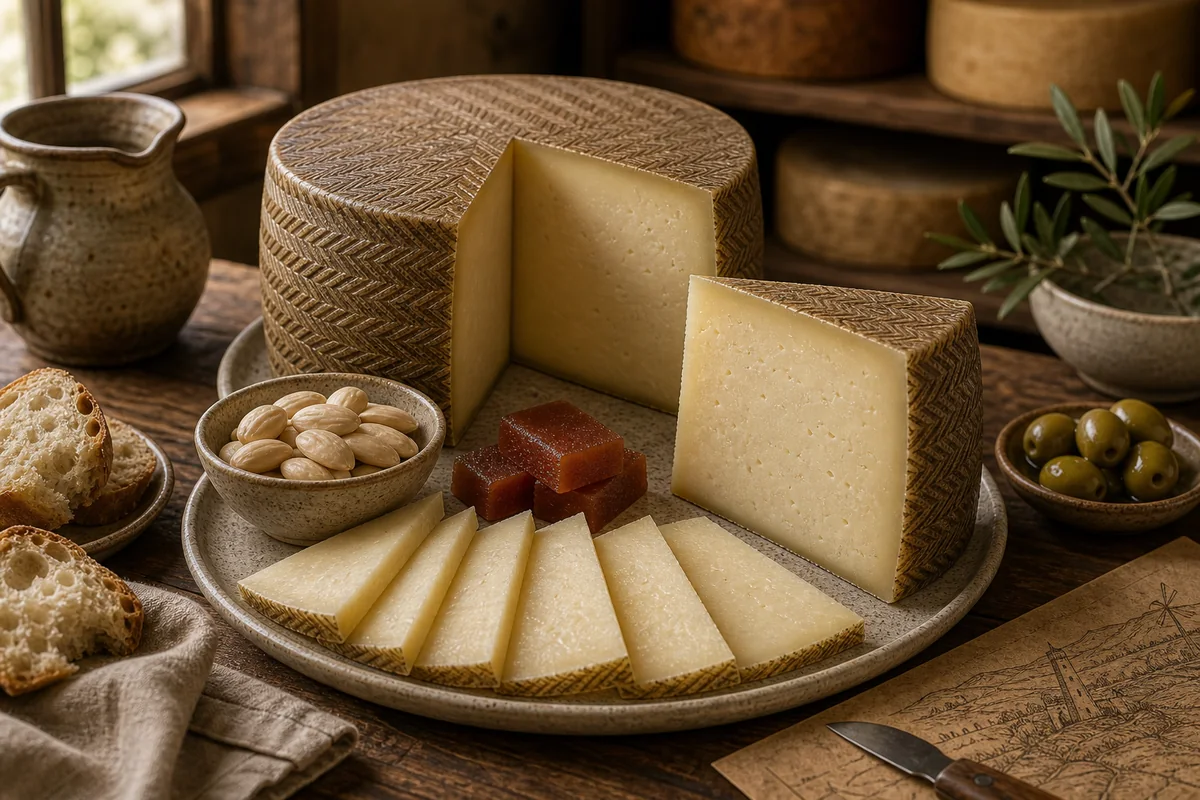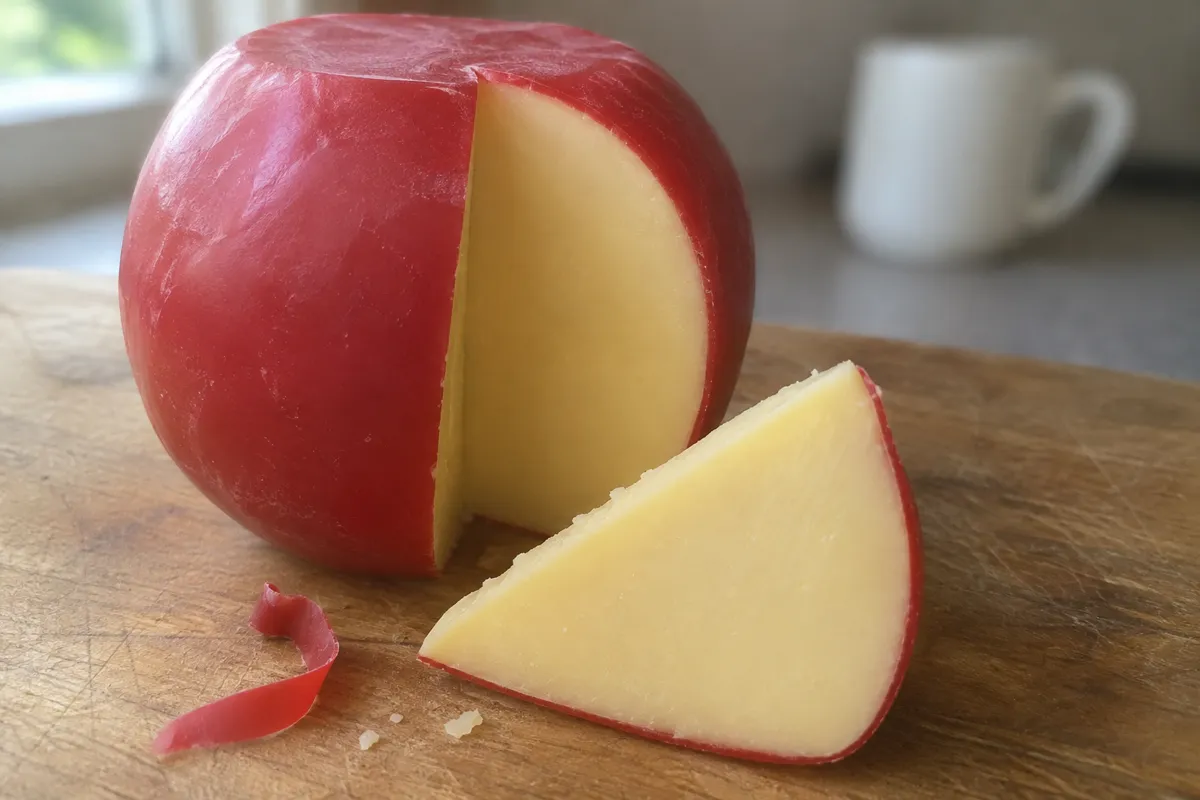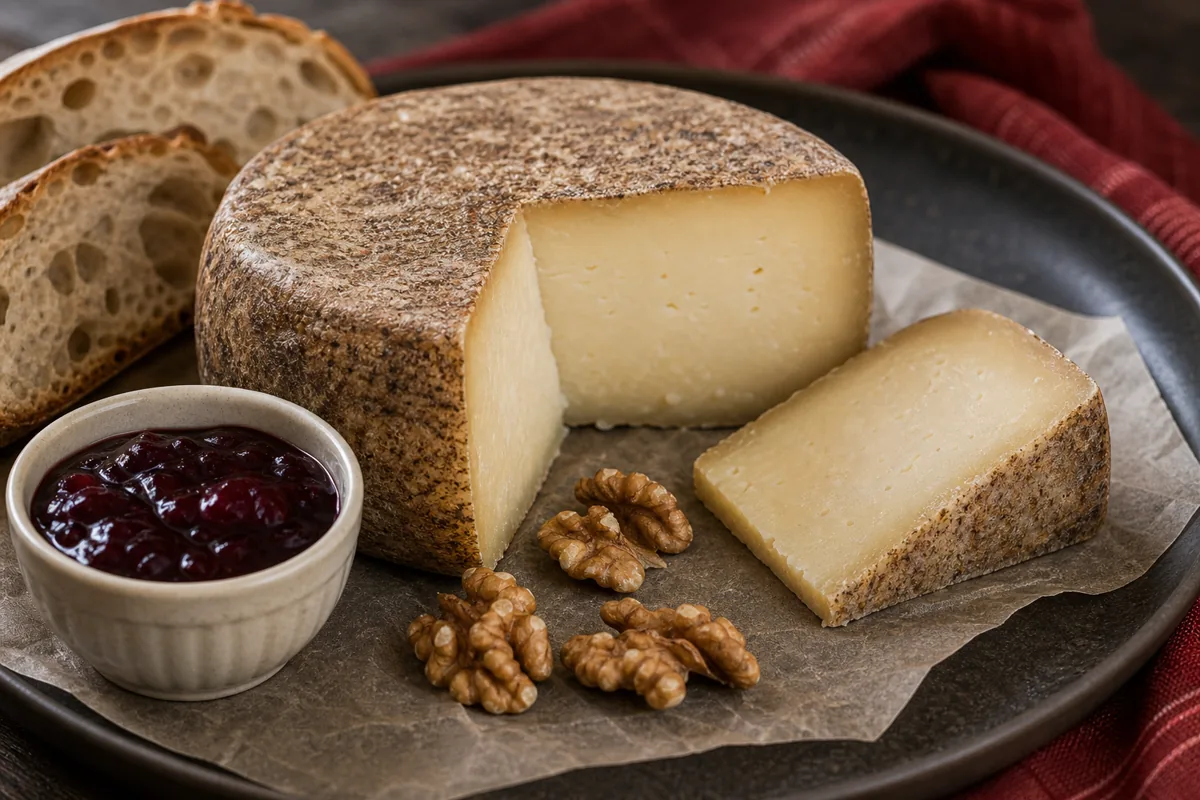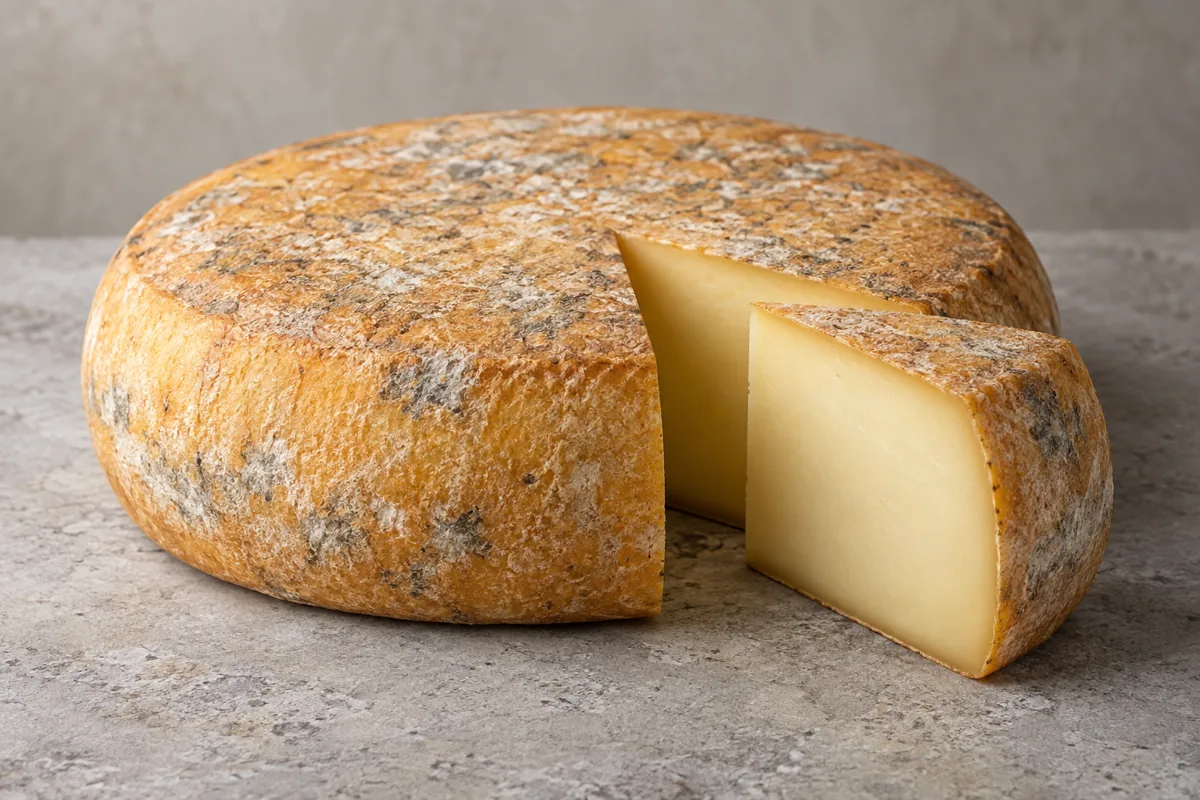
Choose Ardi Gasna by maker, milk treatment and wheel size. The Basque name covers raw farmhouse cheese and pasteurised sliced packs, so it cannot by itself tell you the age, flavour, rennet or pregnancy action for the piece you buy.
In This Article
Start with the product's milk and format
A raw-milk wheel and a ready-sliced pack serve different buying needs. The five product records below identify the milk on each named cheese, rather than assigning one treatment to everything called Ardi Gasna.
| Cheese and maker | Milk |
|---|---|
| Agour's Ardi-Gasna with an Espelette-rubbed rind, Agour Gasnategia, Hélette | Raw sheep's milk |
| Ekiola Ardi Gasna Fermier, Désiré and Kati Loyatho, Gamarthe | Raw sheep's milk, salt, rennet, lactic starters |
| Pardou Ardi Gasna, Fromagerie Pardou, Laruns | Raw sheep's milk, salt, rennet, lactic starters |
| Ardi-Gasna wheel sold by Androuet | Raw sheep's milk |
| Erlita sliced Ardi Gasna, 40 slices, made and aged by Agour | Pasteurized sheep's milk |
Agour's range includes Ardi Gasna au lait cru, and the dairy works with both raw and pasteurized milk. Read the ingredient line even when the maker is familiar.
For a farmhouse Ossau-Iraty, fermier means it must be made from raw milk. In Slow Food's Basque Pyrenees presidium, the farmhouse producers use only their own animals' raw milk and take their flocks to mountain pasture in summer.
For rennet avoidance, Ekiola specifies animal rennet, and the general cheese is listed as not vegetarian by Cheese.com. Ask the maker about any other piece rather than assuming a shared name means shared rennet.
Match age and weight before comparing wedges
The smaller Agour Petit is aged 3 months at 0.7 kg, against twelve months for the standard 4.5 kg wheel. The records span about three to twelve months, with no one standard age.
| Cheese | Age | Weight and size |
|---|---|---|
| Petit Ardi-Gasna (Agour) | 3 months | 0.7 kg |
| Ardi-Gasna standard wheel (Agour) | 12 months | 4.5 kg |
| Raw sheep's milk Tommette (Agour), a format Agour's blog counts as Ardi Gasna | 3 to 4 months | About 750 g |
| Ardi-Gasna wheel sold by Androuet | Minimum 5 months | 4 to 5 kg, 30 to 35 cm across and 6 to 8 cm thick |
The general directory entry is listed at 4 to 6 months before sale. Use that as its own description, since a named product's pack age and weight still decide.
For nutty character with growing piquancy, compare the actual product profiles below, and the words belong to the named cheeses and records. They do not describe every Ardi Gasna.
- Ekiola, Loyatho farm: Formaggio Kitchen describes bright and fruity, with fresh mountain-flower sweetness, wild grass and a nutty finish.
- Pardou: the Formaggio Kitchen profile gives salty, fatty and toasty.
- Androuet's wheel: its description gives a hazelnut flavor with a little piquancy that grows with age.
- Directory description: Cheese.com lists mild, nutty and sharp, with a fresh aroma and the sweetness of mountain flowers.
- Slow Food's Irati mountain cheeses: the presidium description gives aromas of warm fat and wool, hot milk, hay, pepper, dried fruit and nuts, citrus, cacao and caramel, with a fatty, soft paste.
For Agour's Espelette version, the rind is rubbed with a purée of Espelette peppers during ageing. The pale yellow, firm and supple description of the paste comes from Cheese.com.
Season is also record-specific: spring and summer milk give the best flavour in Androuet's and Cheese.com's accounts, compared with summer and autumn in French Wikipedia's. Those are competing descriptions, and they do not combine into one best season.
Check for the Protected Ossau-Iraty Name
The name translates literally as "sheep's cheese" and is the Navarro-Labourdin form, with ardi gazta as the unified Basque spelling. Some packs add Euskal Herriko Ardi Gasna, meaning sheep cheese of the Basque Country.
It does not identify a single maker: Ekiola Ardi Gasna Fermier comes from Désiré and Kati Loyatho's farm in Gamarthe, and Pardou Ardi Gasna from Fromagerie Pardou in Laruns. Onetik and Agour also make it as a private-brand specialty.
For trademark status, keep the conflict visible: Agour's 2022 blog called it neither a cheese nor a brand, while French Wikipedia and Cheese.com call it Agour Gasnategia's registered trademark in Hélette. Agour's own origin test is that genuine Ardi Gasna is made in the Basque Country.
Some products meet Ossau-Iraty AOP rules and others do not. The Agour Espelette-rubbed version is one of the many cheeses made under the Ossau-Iraty AOP, but the AOP name itself is what to check on a pack.
The specification uses three local sheep breeds and sets a minimum age by wheel size: 80 days for 2–3 kg wheels, 120 days for 4–7 kg wheels. Those size-specific rules do not establish the age of every smaller cheese sold under the broader name.
Agour's broader range includes Ossau-Iraty alongside Espelette and truffle versions, the small creamy Saint Sauveur des Basques and the lactic Pikorra. These names explain the range, and they are not all the pressed wheel or sliced product discussed here.
Keep the milk's Basque and mountain origins specific
Slow Food names three local breeds: the increasingly rare Manex Tête Noire, Manex Tête Rouge and Basque-Béarnese. For Ossau-Iraty, Agour spells them Manech tête noire, Manech tête rousse and Basco-Béarnaise.
For Androuet's wheel, the origin is the valleys of the Nive, Arnegux-Esterençuby and the Aldudes in the Basque Country, and the directory has it listed under Midi-Pyrénées. Summer grazing takes sheep and cattle into Irati, a beech wood of 17,000 hectares, only 4,000 hectares of which are on the French side.
Serve a slice, a grated finish or a sweet accompaniment
Try black cherry jam for the board: jam from Itxassou is the most traditional sweet pairing for Ossau-Iraty, and Androuet names cherry jam, Espelette pepper jelly and honey for Ardi Gasna.
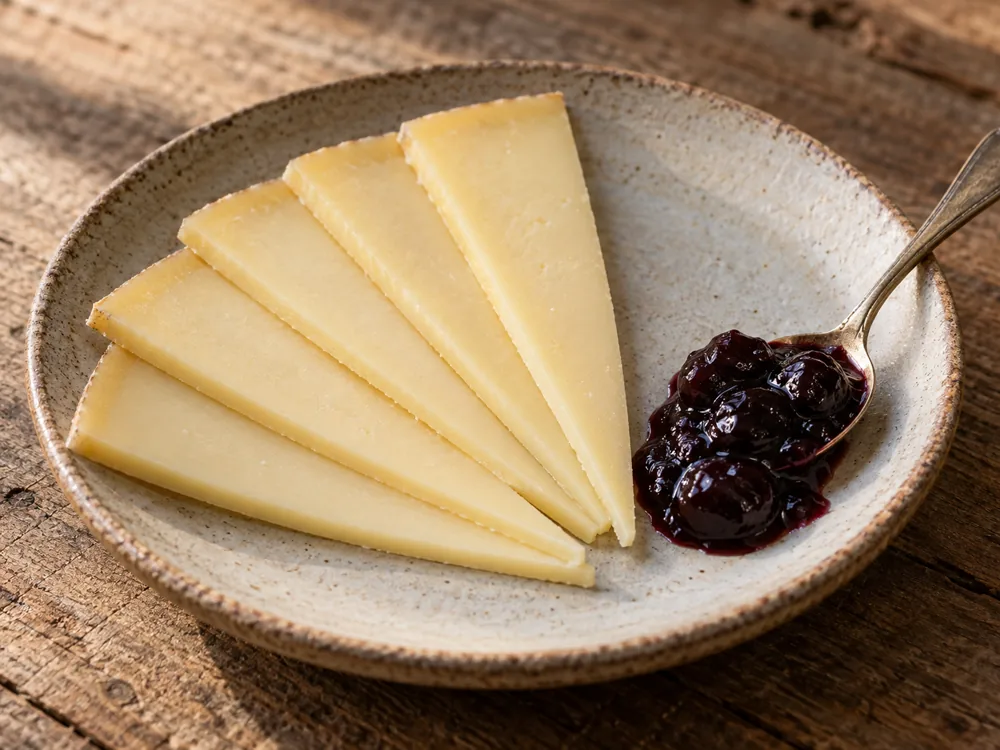
For wine, Agour's Ossau-Iraty suggestions are supple reds and sweet whites. Other records offer sweet white wine and rosé from Béarn or Champagne, Chinon, Riesling and brut cider, so choose a style to suit the meal.
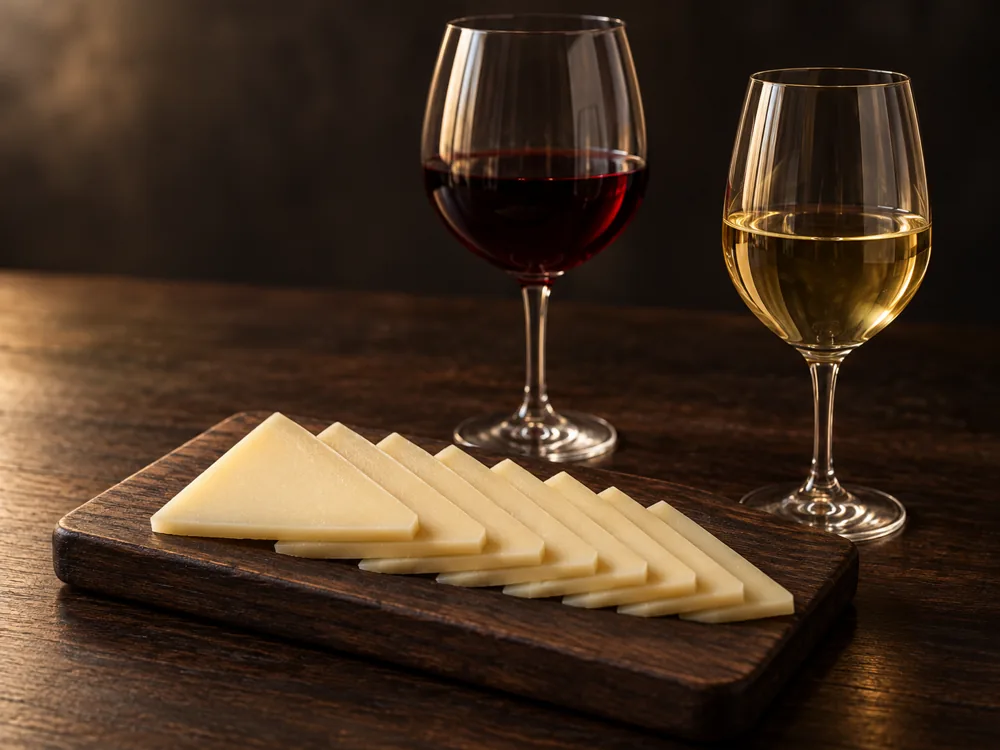
To fill a sandwich or talo, Erlita is sold ready-sliced, and the talo is a Basque corn galette. A raw Tommette can instead be cut into thin cheese flowers with a girolle, in Agour's suggestion.
| Use | How It Works |
|---|---|
| Grated | Androuet suggests grating it over local Basque dishes. |
| Snack or cheese course | Androuet also suggests it as a snack or at the end of a meal. |
| Sandwiches and talos | The Erlita slices are sold for sandwiches and talos, the Basque corn galettes. |
| Gratin and boards | The Erlita slices are also suggested for gratins and charcuterie boards. |
| Cheese flowers | Agour suggests cutting its raw-milk Tommette into thin curls with a girolle. |
Calculate portions from the named nutrition label
The Agour-made raw Tommette and pasteurised Erlita pack list the same values per 100 g. This is a comparison of those two records, and other farmhouse wheels may differ.
| Product | Energy | Fat | Saturated fat | Carbohydrate | Protein | Salt |
|---|---|---|---|---|---|---|
| Erlita sliced Ardi Gasna, pasteurized | 450 kcal | 38 g | 28 g | 2 g | 25 g | 1.7 g |
| Agour raw sheep's milk Tommette | 450 kcal | 38 g | 28 g | 2 g | 25 g | 1.7 g |
Erlita contains 40 slices in 1 kg, giving an average of about 25 g per slice. From the listed values, that is roughly 113 kcal, 9.5 g fat, 6.3 g protein and 0.43 g salt, and salt is not the same measure as sodium.
Separate hard and semi-hard pregnancy actions
Milk treatment alone does not settle every action for the pressed wheels and slices. Class is disputed: Cheese.com calls it hard, while Androuet calls it semi-hard, and that difference matters under NHS and US advice.
Confirmed hard cheese with either milk, and confirmed pasteurised semi-hard cheese, fit the NHS safe list. For a raw or unlabelled semi-hard or unclassified piece, cook thoroughly until the centre is steaming hot under NHS advice.
The CDC lists raw-milk dairy as riskier, so raw or unlabelled Ardi Gasna has no US safer route, even cooked. Only confirmed pasteurised hard cheese has the CDC hard-cheese permission, and pasteurised semi-hard or unclear class sits in neither CDC column.
| Product reading | NHS action | US action |
|---|---|---|
| Confirmed pasteurised hard | You can eat it. | You can eat it under the pasteurised-hard line. |
| Pasteurised semi-hard | You can eat it. | In neither CDC column, cold or heated. |
| Pasteurised but class unconfirmed | Check the label for the class, or cook it until steaming hot. | In neither CDC column, and the soft-cheese route does not apply. |
| Confirmed hard with raw or unlabelled milk | You can eat it under the hard-cheese line. | Riskier raw-milk dairy, with no heated safer route. |
| Raw/unlabelled semi-hard or unclassified | Cook thoroughly until the centre is steaming hot. | Riskier, since the heated line is pasteurised-only. |
For cheese during pregnancy, identify the class as well as the milk: a sliced format or a browned surface does not establish hard-cheese permission. These actions do not classify the other soft or lactic cheeses in Agour's wider range.
Choose a replacement by age and milk as well as origin
Ossau-Iraty is the closest starting point because its AOP rules name the same three breeds. Check the actual protected name rather than assuming every Ardi Gasna is that cheese.
Etorki is made from pasteurized milk in Mauléon-Licharre and matured for seven weeks, another French Basque sheep cheese with a younger stated age.
Across the Spanish border, Idiazabal is made from unpasteurized Latxa and Carranzana sheep's milk and must age at least two months. Its denomination permits optional smoking, so check your wedge if you want it unsmoked.
Manchego is made from Manchega sheep's milk, raw or pasteurised and ranges from fresh to viejo at one to two years. Curado, at three to six months, is the age band closest to the Ardi Gasna records above.