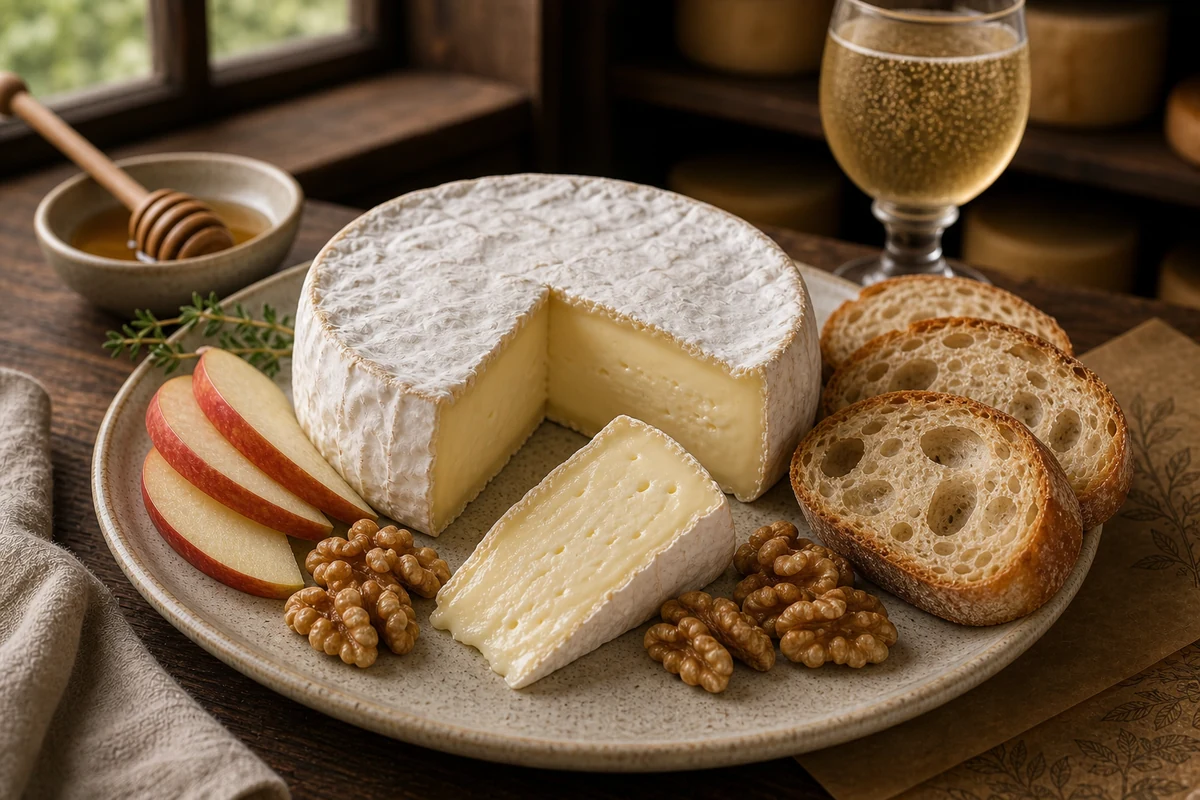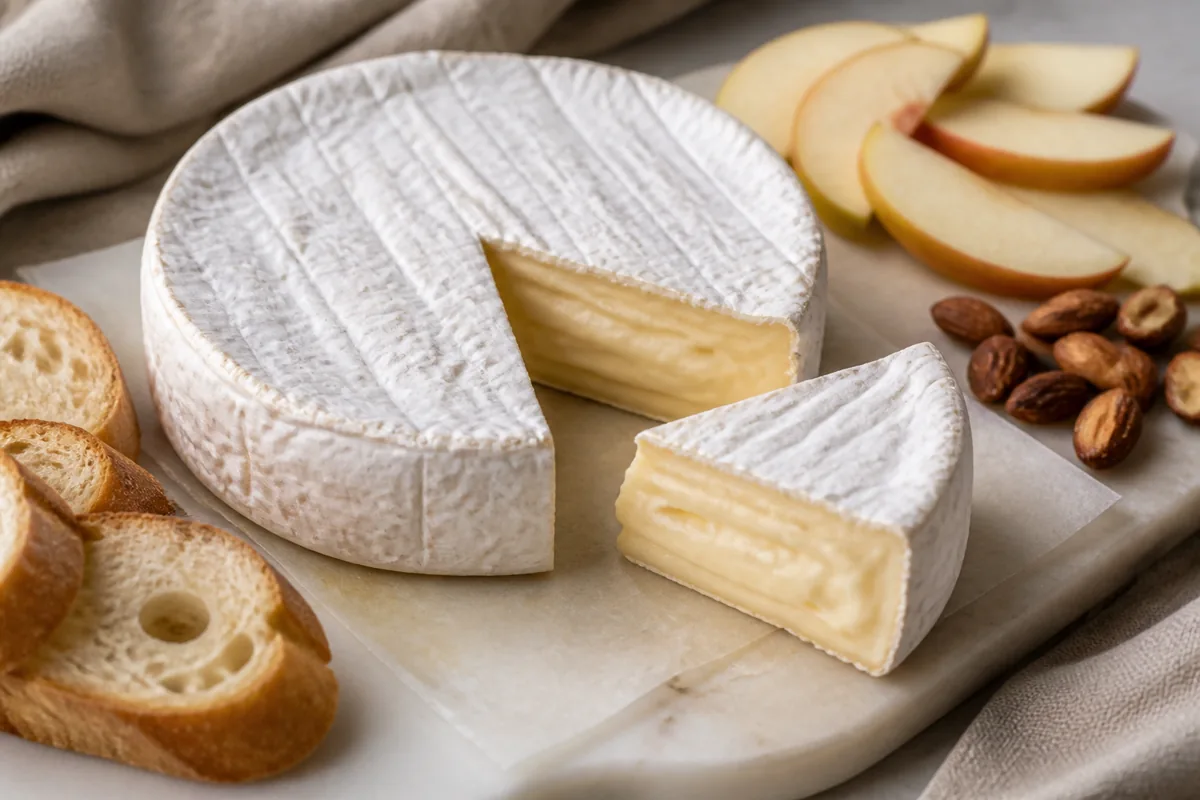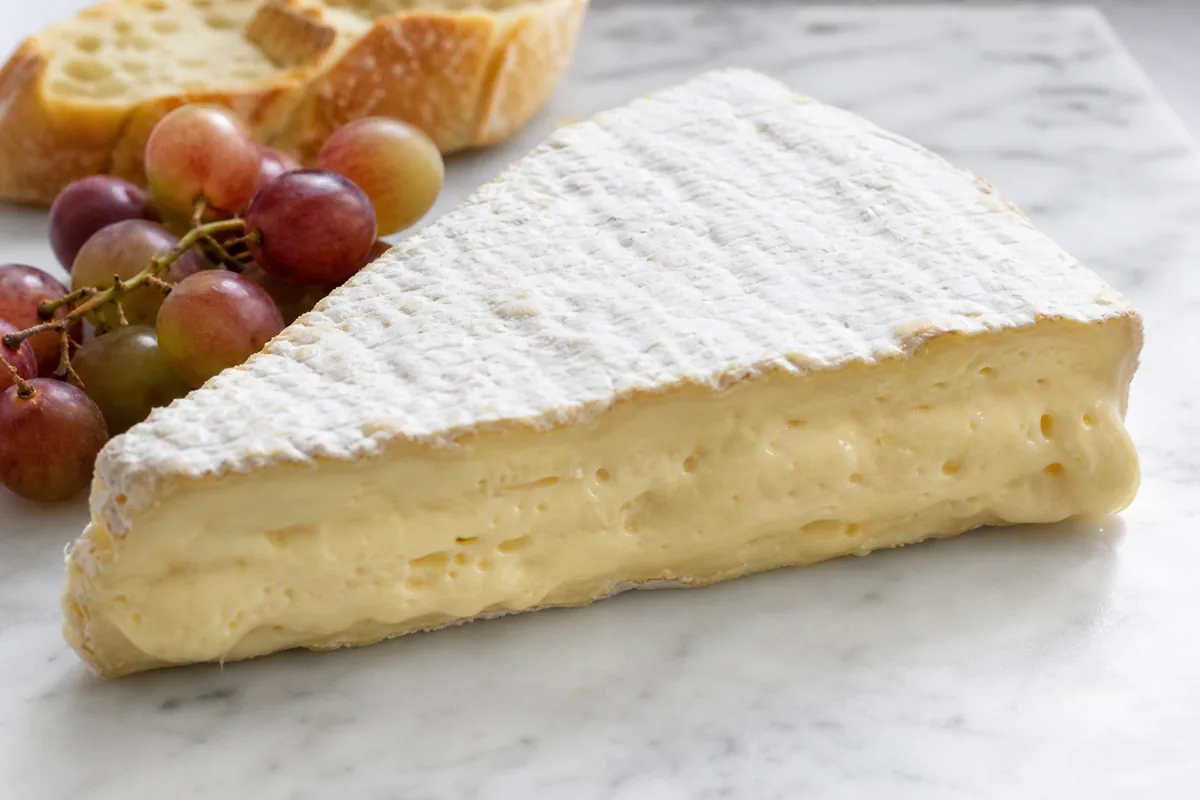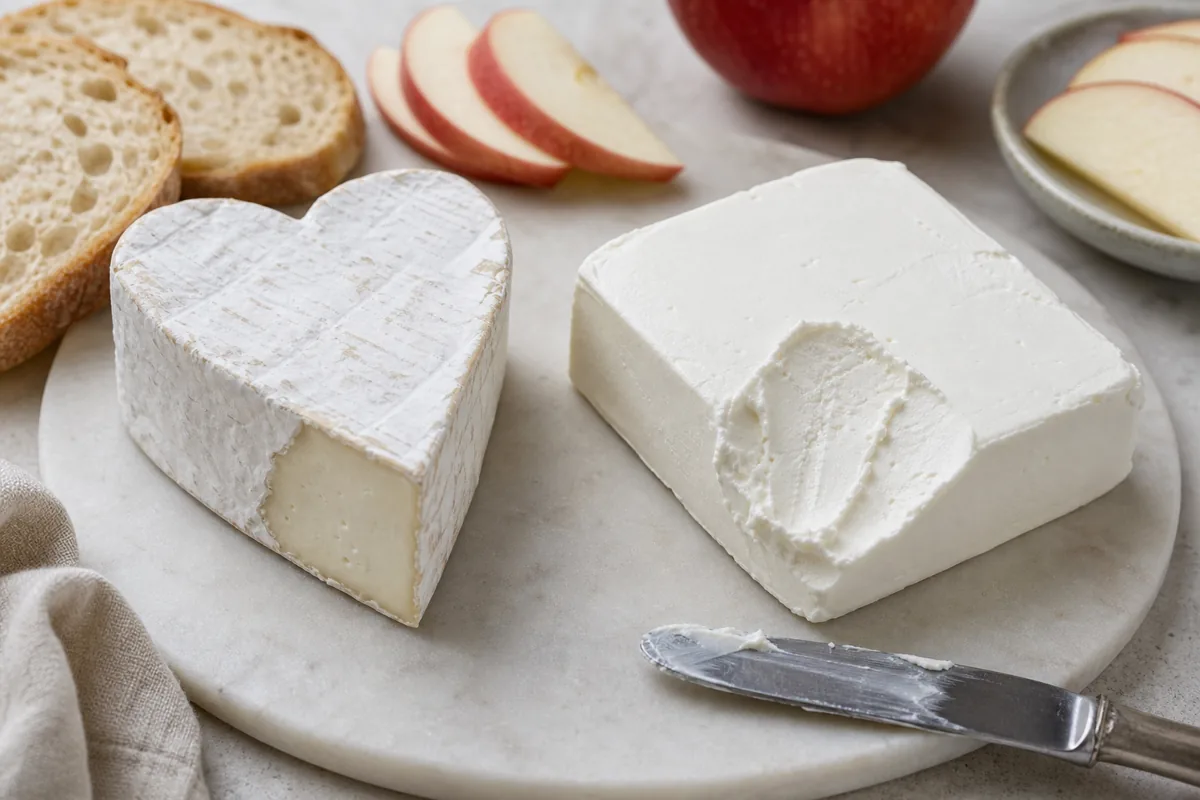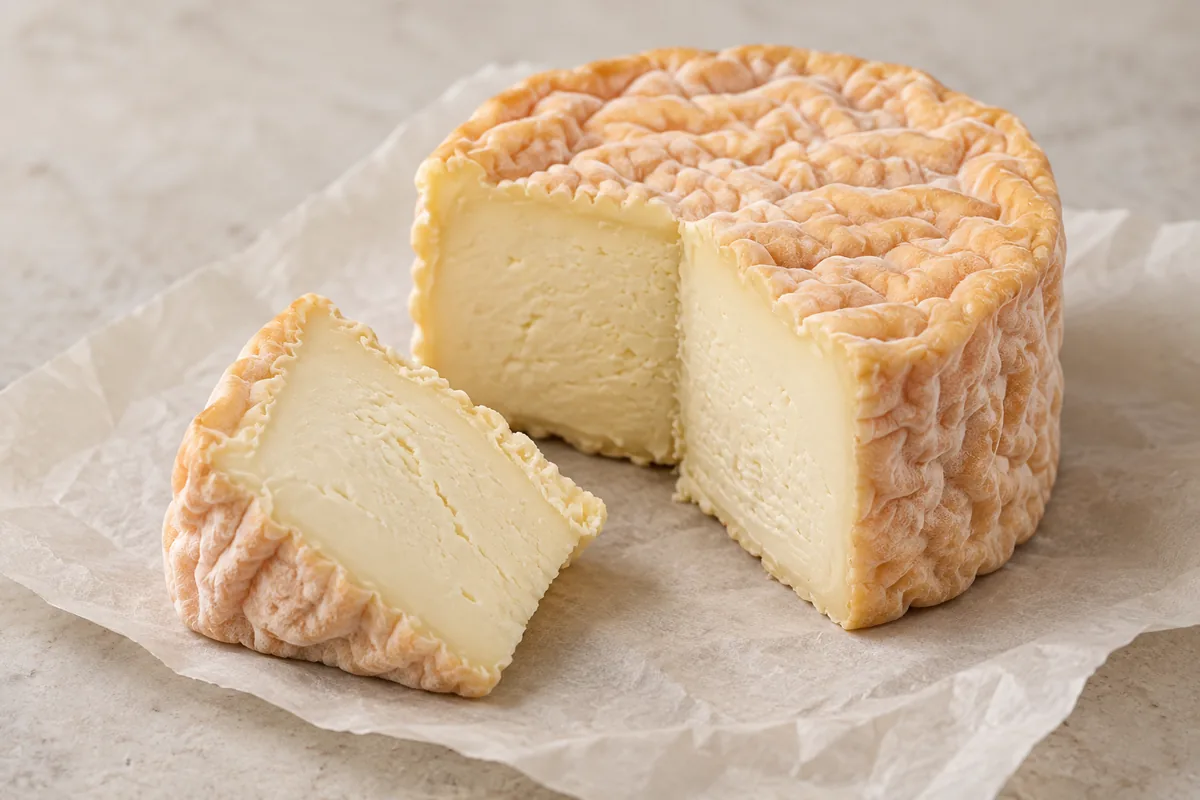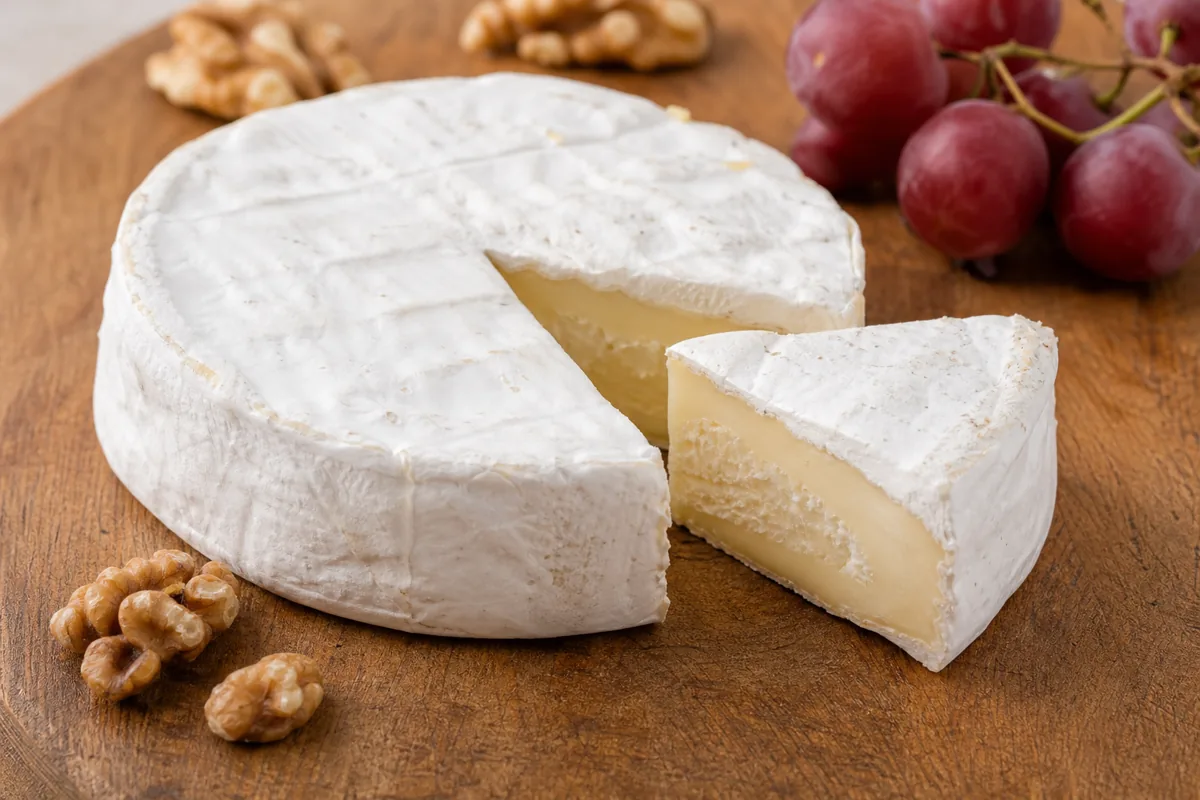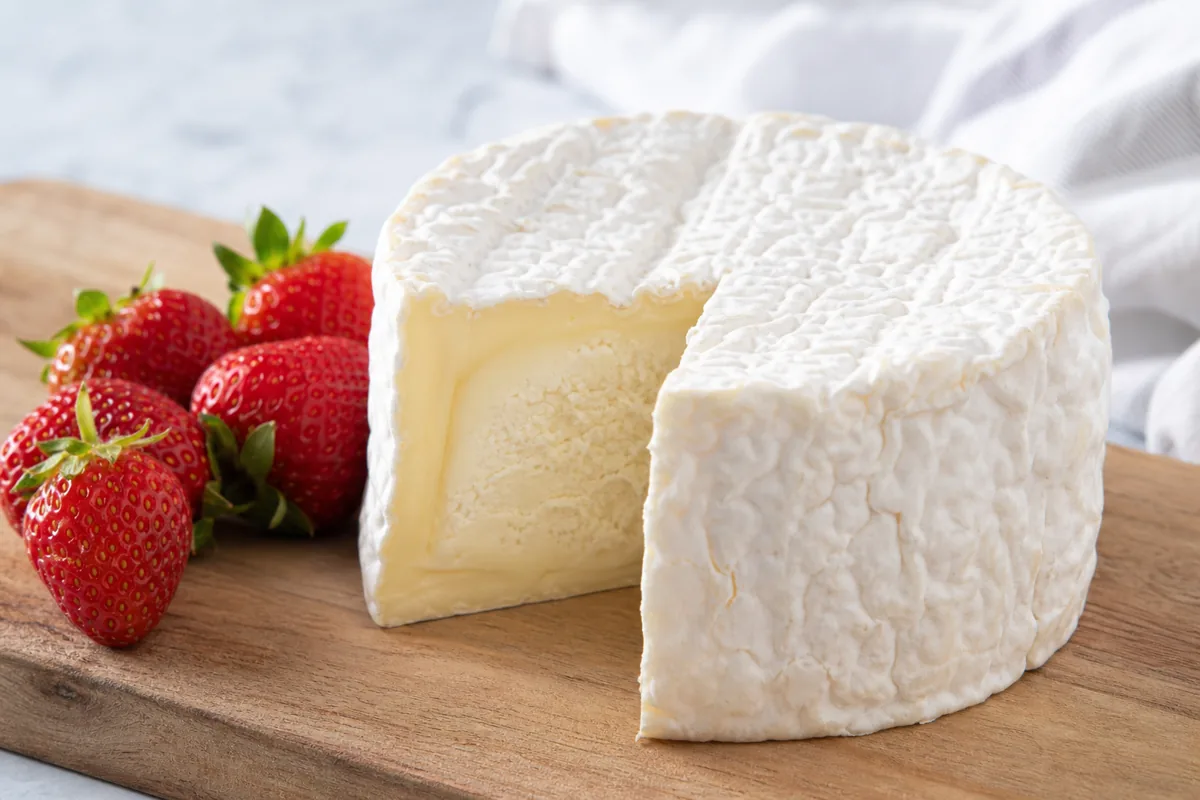
Chaource ripens from its white rind toward the center, so one cut wheel can give you two textures at once. A younger cheese may hold a fine, chalky core inside a creamy outer band, while further ripening lets that softer layer travel inward.
If you are buying Chaource for the first time, look at the cut face before asking whether it is “ripe.” The useful question is how much contrast you want between the fresh center and the yielding paste near the rind.
In This Article
What Does the Cut Face Tell You About Chaource?
The official Chaource description presents the paste as fine, firm and smooth at its minimum age, with cream, fresh mushroom, woodland and hazelnut notes. As the wheel matures, a creamy layer forms beneath the rind while the center can remain firmer.
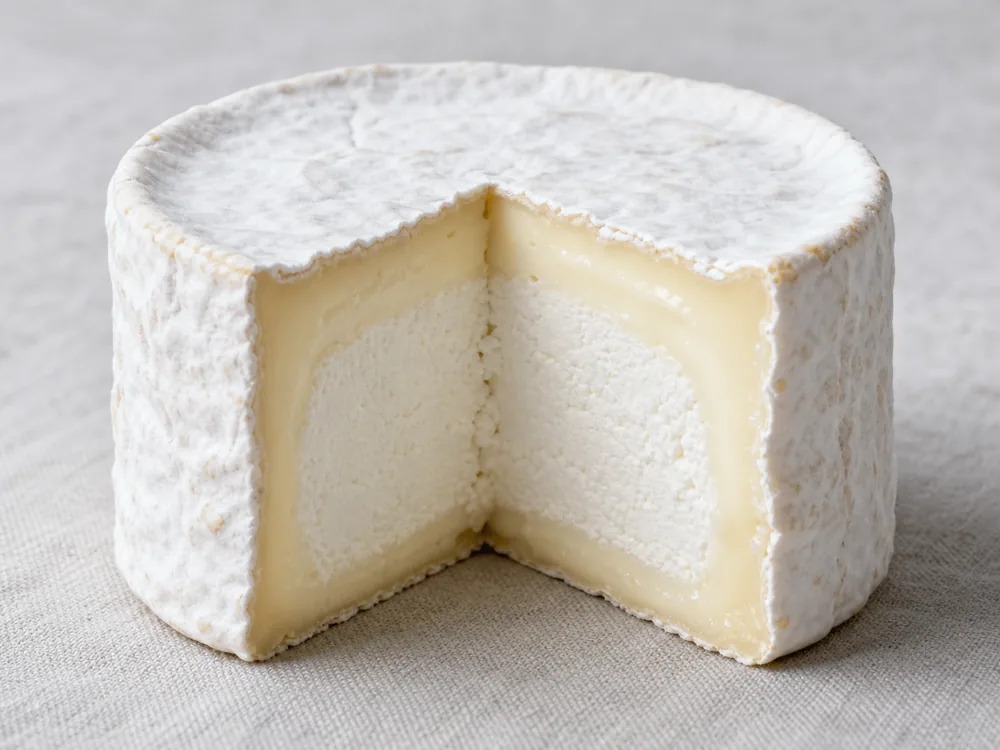
A clear pale core can therefore be exactly what you want when you prefer a fresh lactic bite and a neat wedge. Choose a broader creamy band when you want a softer mouthfeel and more developed mushroom character.
Pressing a wrapped wheel gives you only part of the picture because the surface softens before the middle. A cut sample, the package date and the seller's description work together more reliably than rind colour alone.
How Does Chaource Flavour Change From Edge to Center?
The creamy band and the firm core do more than feel different. Near the rind, maturation develops the mushroom and woodland side of the cheese, while the younger center holds onto a fresher cream-and-lactic impression.
Try a radial bite that includes both zones before tasting them separately. You will understand whether the contrast is the reason you like that wheel or whether you would prefer a more uniformly softened cheese.
A wheel with a large firm center suits someone who enjoys fresh acidity and a cleaner finish. As the outer band widens, the cheese becomes rounder and more savoury, which allows bread and crisp fruit to do more of the balancing work.
The official flavour language maps the direction of ripening across different producers. Your cut face then shows where the particular wheel in front of you sits within that range.
Why Does Chaource Ripen in Two Zones?
The texture begins with a slow lactic make. The producer association describes at least 12 hours of coagulation followed by roughly two days of natural drainage, and the curd turns in its mould at least once.
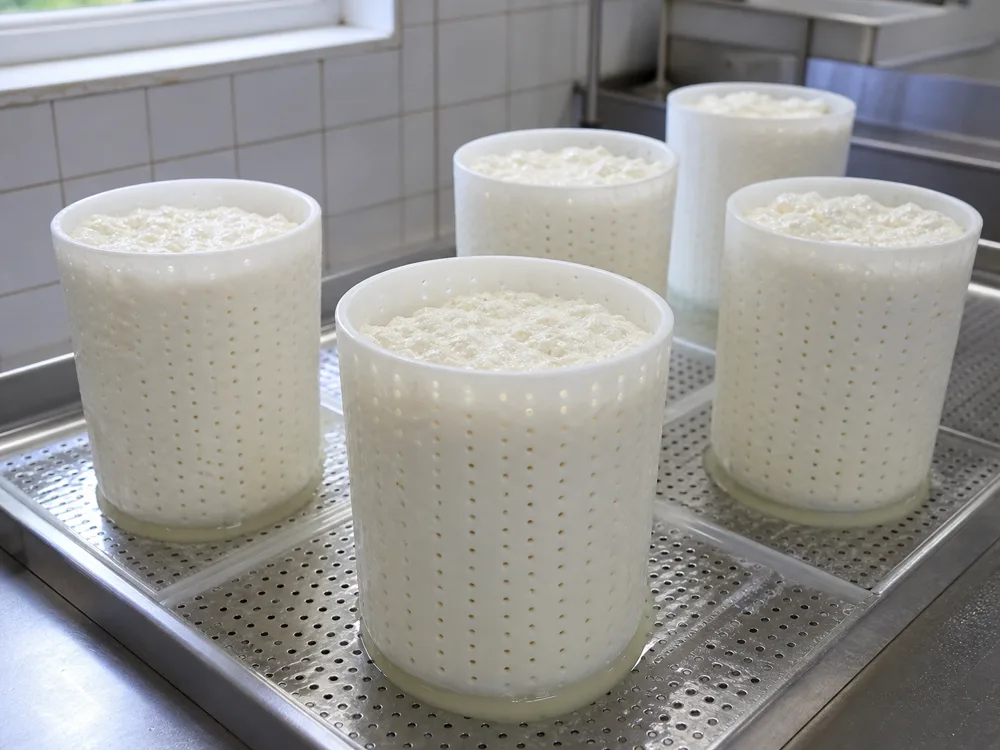
That long set and unpressed drainage build the fine, slightly crumbly young center. After dry salting, white surface mould changes the paste from the outside inward, so the wheel develops layers instead of becoming uniformly soft on one schedule.
The protected name begins at least 14 days after renneting. That legal minimum establishes eligibility for the name, while the width of the creamy outer band tells you more about the eating texture in front of you.
Natural drainage also explains the tall cylinder's delicate structure. When you handle a ripe wheel, support it from below instead of squeezing the sides, because pressure can collapse the softened band before you cut it.
The surface mould continues to work after the minimum age, but refrigeration slows that change once the cheese reaches your home. Buying the ripeness you want is easier than trying to accelerate a firm wheel on a kitchen counter.
What Does the Chaource PDO Name Guarantee?
Milk production, cheesemaking and ripening all take place within defined parts of Aube and Yonne in France. The cheese uses full-cream cow's milk, and the specification prevents makers from adding or removing fat and protein to standardise the milk.
The finished cheese is a flat-faced cylinder with a predominantly lactic paste and a surface covered mainly by white Penicillium candidum; Geotrichum may also appear. These rules give Chaource its identity, while your package supplies the producer, milk heat treatment, date and storage temperature.
The composition figures also need the right denominator. At least 48% fat in dry matter measures fat after water is excluded, so it cannot be read as 48 g of fat in every 100 g of cheese.
The PDO mark also protects the cylinder formats and production area, giving you more than a visual style. A generic white-rind cheese can resemble Chaource in a photograph while following a different milk, drainage and ripening method.
Do Small and Large Chaource Wheels Mature the Same Way?
The PDO specification defines two cylinders, which helps you buy the amount that suits your table. Shop labels often round them to familiar sizes such as 250 g or 500 g, while the protected ranges at minimum ripening are broader.
| Format | Weight at Minimum Ripening | Inside Mould Diameter |
|---|---|---|
| Small | 250-380 g | 85-90 mm |
| Large | 450-700 g | 110-115 mm |
A small wheel is convenient when you want every guest to see the rind-to-center progression in one radial wedge. A larger wheel makes sense for a crowd or a cheese counter, where you should inspect the fresh cut surface before deciding how much to take home.
Both protected sizes can give you a good wheel. The package date and the actual paste reveal whether the cheese matches the firmer or creamier experience you want.
The larger format may suit a counter because it can be sold in wedges, while the smaller wheel is easier to present whole. In either case, radial cutting keeps the surface-to-center progression visible in every portion.
How Do You Cut Chaource and Keep Every Ripeness Layer?
Chaource tells you how it has ripened as soon as you expose the cut face. A useful portion therefore runs from the white rind through the creamy outer band and into the firmer center, letting you taste the same progression you used to choose the wheel.
The tall cylinder makes that easier than it first appears, provided the cheese has enough support. A chilled wheel holds its shape more cleanly for the first cut, and the portion can then lose some of that chill on the plate before you taste it.
How Do You Cut a Whole Small Chaource?
For a small wheel, imagine the top as a clock and cut narrow radial wedges from the center to the edge. Each guest receives the same rind-to-center sequence, and the remaining wheel keeps a tidy face that is easier to cover after service.
A thin, sharp knife helps you cut soft cheese cleanly, while a broad blade can drag the creamy layer into the center. Wiping it between cuts also prevents the white rind and softened paste from coating every new surface.
Very ripe Chaource needs a lighter hand because pressure from the side can collapse the soft outer band. Support the base as you move it, then let the knife travel downward instead of sawing through the cylinder.
If the center is still distinctly firm, narrower wedges keep each bite balanced. Broad pieces can leave one person with mostly chalky center and another with a much higher proportion of creamy edge.
How Do You Cut a Wedge From a Large Chaource?
A counter-cut wedge has already lost the symmetry of a whole wheel, so follow the visible layers. Cross-cutting it into slim pieces usually preserves some rind, softened edge and center in each serving, whereas cubes erase the texture map that makes Chaource distinctive.
The first slice also helps you judge whether the seller's description matches the cheese you received. A broad glossy band suggests a more advanced texture, while a narrow band around a fine pale center points toward a fresher, more lactic experience.
Plan the number of cuts before the cheese becomes very soft on the table. You will handle it less, keep the portions more even and leave a cleaner remainder to wrap and refrigerate.
When only part of the wedge is needed, cut across the full face once and protect the new surface promptly. That approach keeps the remaining rind attached and gives you a clear reference for any further softening you see later.
How Should You Taste the Layers You Just Cut?
Begin with one complete bite from rind to center, because that combination is how the wheel presents its maturity as a whole. You can then taste a small piece from the creamy edge and another from the center to understand where its mushroom, cream and lactic notes are concentrated.
This sequence is especially useful when several people are deciding whether they like the rind. Everyone first tastes the same balance, and personal preference can guide what they leave on the plate after that shared reference.
Bread helps you reset between the two zones, while crisp pear adds contrast once you understand the cheese itself. Strong preserves at the first bite can hide the difference you preserved so carefully in the cut.
How Do You Serve the Chaource Ripeness You Chose?
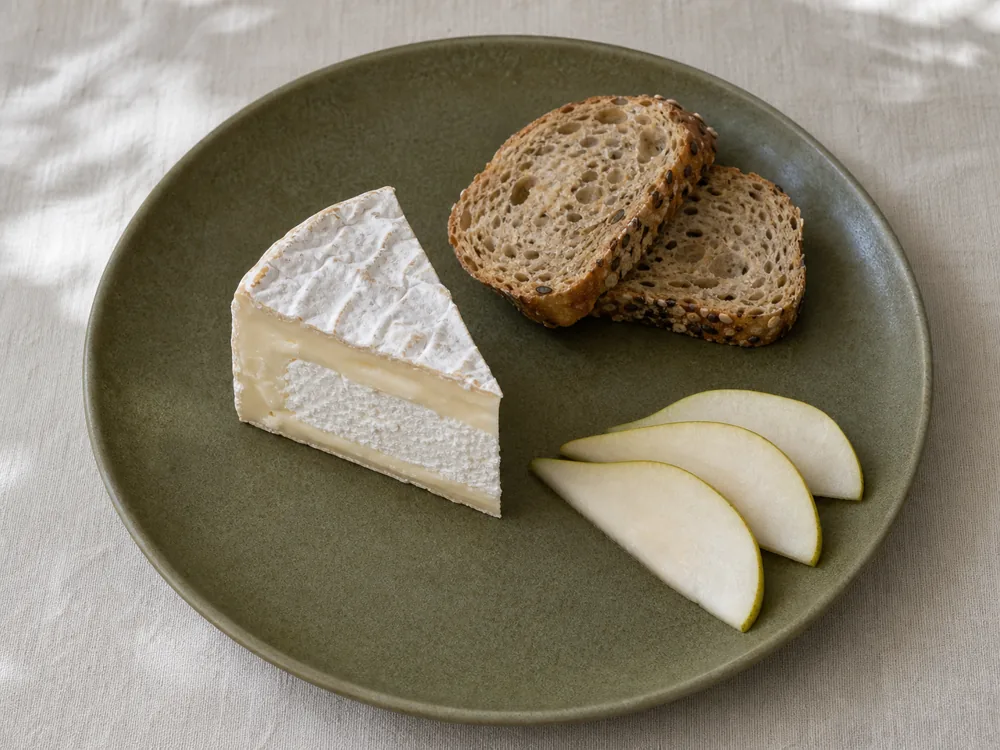
A firmer wheel holds clean slices for a cheese board, where pear and seeded bread can frame its lactic and mushroom notes. A softer wheel spreads more easily, though cooking it will blur the texture contrast that makes the cut face so informative.
Chaource and Brie both carry white surface mould, but their shapes and makes produce different eating patterns. Camembert is another useful reference point, and the paste you want will tell you more than the white rind they share.
The rind belongs in the first tasting because it carries the most developed mushroom character. Once you have tasted the whole bite, you can leave part of it behind if that flavour is more assertive than you enjoy.
Cooking a very ripe Chaource can turn its soft outer layer into an easy sauce, though you lose the contrast between the creamy band and the fresh core. A firmer wheel keeps more structure when it is warmed, making your choice of ripeness part of the recipe rather than a separate issue.
How Do You Buy Chaource With a Specific Texture in Mind?
Begin with the protected name and PDO mark, then use the package to confirm the producer, heat treatment, date and storage range. If a counter has opened the wheel, ask when it was cut and whether the original label is still available.
- For clean wedges: choose a distinct center with a narrower creamy band.
- For spreading: look for a broader soft layer without uncontrolled wet breakdown.
- For regional identity: confirm Chaource and the PDO mark together.
- For safety and storage: retain the milk statement, date and temperature directions.
The rind should look consistent with a white mould-ripened cheese, while the package should remain intact. Reject a piece when the seal has failed, the surface shows unexpected coloured growth or the cold-storage history is doubtful.
When a cheesemonger offers a cut sample, ask whether it came from the same wheel you will receive. The answer matters because two batches at different ages can show noticeably different center-to-edge development.
A prepacked wheel gives you the clearest date and milk statement, while a counter-cut piece lets you inspect the paste before buying. Your better option is the one that supplies the information you need for the day you plan to serve it.
When Should You Buy Chaource for Your Serving Day?
If you want a pronounced center-to-edge contrast, buy a wheel that already shows it. Home refrigeration slows further change, and leaving soft cheese warm to hurry ripening creates a separate food-safety problem.
A wheel for the same evening can be chosen almost entirely from its current cut face. When you are buying a few days ahead, the package date, seller's storage advice and existing width of the creamy band all matter because the cheese will continue to move inward.
For a whole small wheel, decide who will eat it and how much other cheese is on the table. The 250-380 g protected range can provide several radial portions, while a crowded board may need only part of a larger wheel.
Take the cheese out only long enough for the serving portion to lose its refrigerator chill. You want the paste to show the ripeness you bought, while the unopened remainder stays cold and keeps its labelled shelf life.
If the meal depends on a very soft Chaource, tell the cheesemonger that texture is the requirement. “Ripe” can mean aroma, age or softness in casual conversation, whereas asking for a broad creamy band makes your preference visible and specific.
How Does Storage Slow the Change in Chaource?
Chaource continues to change as it sits in your refrigerator, so storage affects both condition and texture. Keep it at the temperature printed on the package and use the stated use-by date.
Food Standards Agency guidance keeps a domestic refrigerator between 0 and 5°C (32 and 41°F). Wrap a cut piece so its surface does not dry out, while leaving the white rind enough air exchange to avoid trapping excess moisture.
A total factory shelf life cannot tell you how many days remain after a counter cuts the wheel. Keep the original date with the cheese, then judge changes against the paste and rind you bought.
Store the cheese away from foods with strong aromas and avoid repeated warm-and-cold cycles. Taking out one serving portion protects the remainder while still letting the piece on the table soften enough to show its texture.
Is Chaource Safe During Pregnancy?
Chaource is a soft cheese with a white mould-ripened surface. Under current UK NHS guidance, it should be cooked until steaming hot during pregnancy, including when the package says pasteurized.
Current U.S. CDC guidance lists pasteurized soft cheeses heated to an internal temperature of 165°F (74°C) or until steaming hot as safer. One Lincet 250 g product identifies pasteurized cow's milk, but you should still check the wheel you are buying because the PDO name itself does not set one heat treatment.
The CDC lists soft cheese made from unpasteurized (raw) milk as riskier, and served cold, a pasteurized Chaource is described as a soft, lactic cheese with a white surface mould, a type the CDC list does not cover, so ask a midwife or doctor.
SOURCES & REFERENCES
What Else Do People Ask About Chaource?
Surface mould ripens Chaource from the outside inward. A creamy layer develops beneath the rind before the center softens, so a younger wheel can combine both textures.
The white mould-ripened rind is part of the cheese and helps create its creamy outer layer. Eat it when the surface matches the expected product and the package and cold-storage history are sound.
Check the package. The PDO specification sets full-cream cow's milk but does not impose one heat treatment across every producer; the cited Lincet 250 g product is a pasteurized example.
Keep the printed date and follow your package or seller's after-opening direction. A PDO minimum age describes production, while the remaining life of your cut piece depends on its date, packaging and storage history.
The NHS says pasteurised or unpasteurised mould-ripened soft cheeses with a white coating on the outside must be thoroughly cooked. The CDC lists pasteurized soft cheeses heated to an internal temperature of 165°F (74°C) or until steaming hot as safer, and a cold pasteurized Chaource is a type its list does not cover, so ask a midwife or doctor.