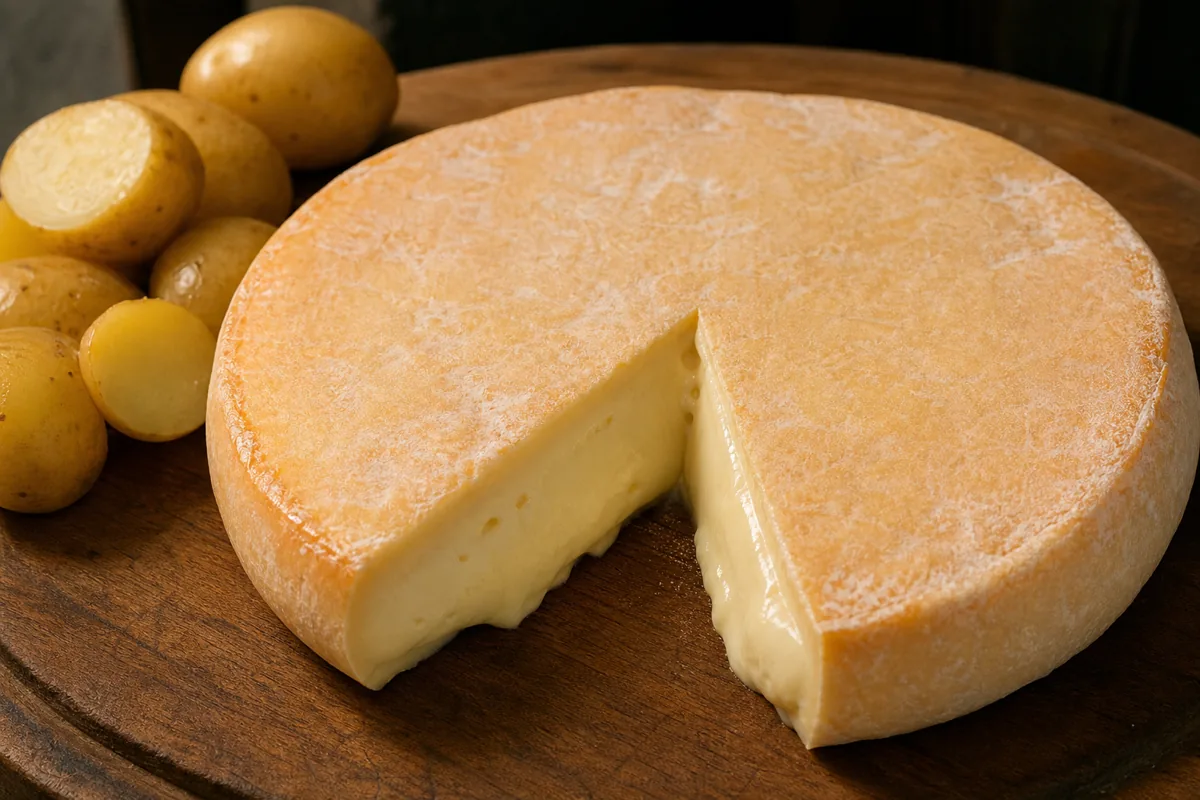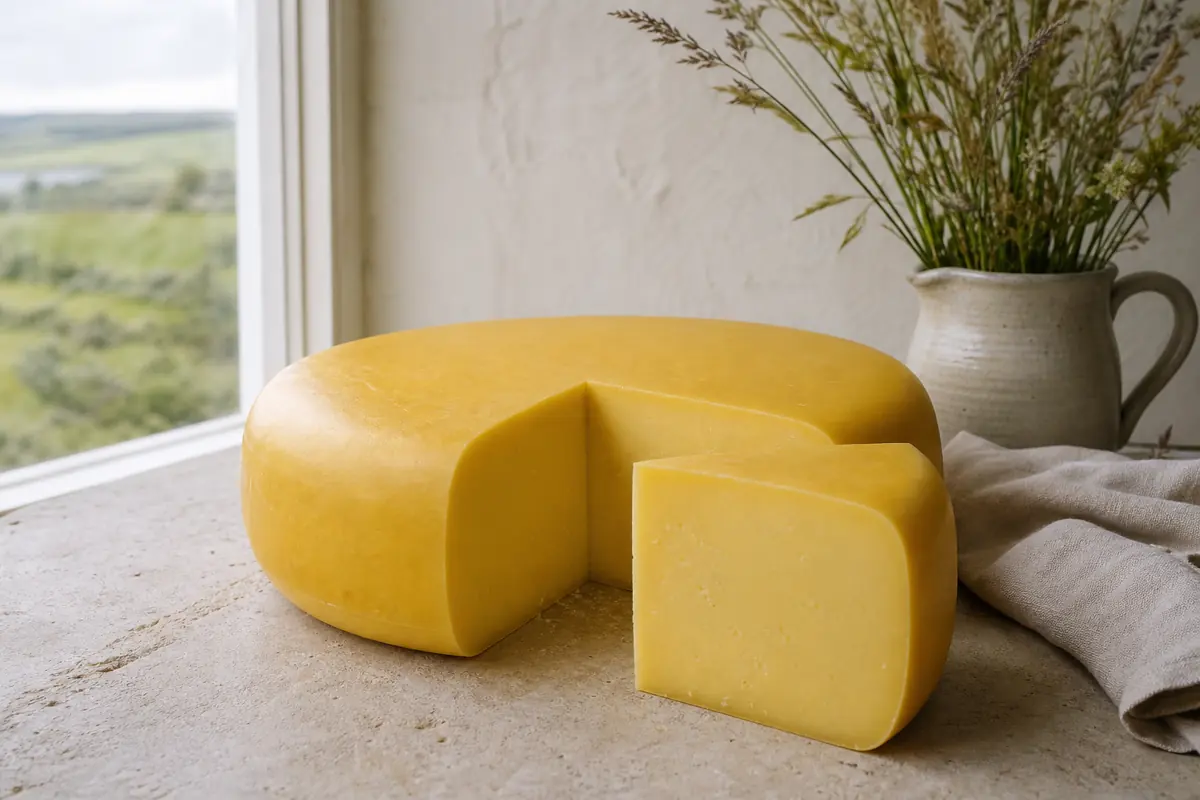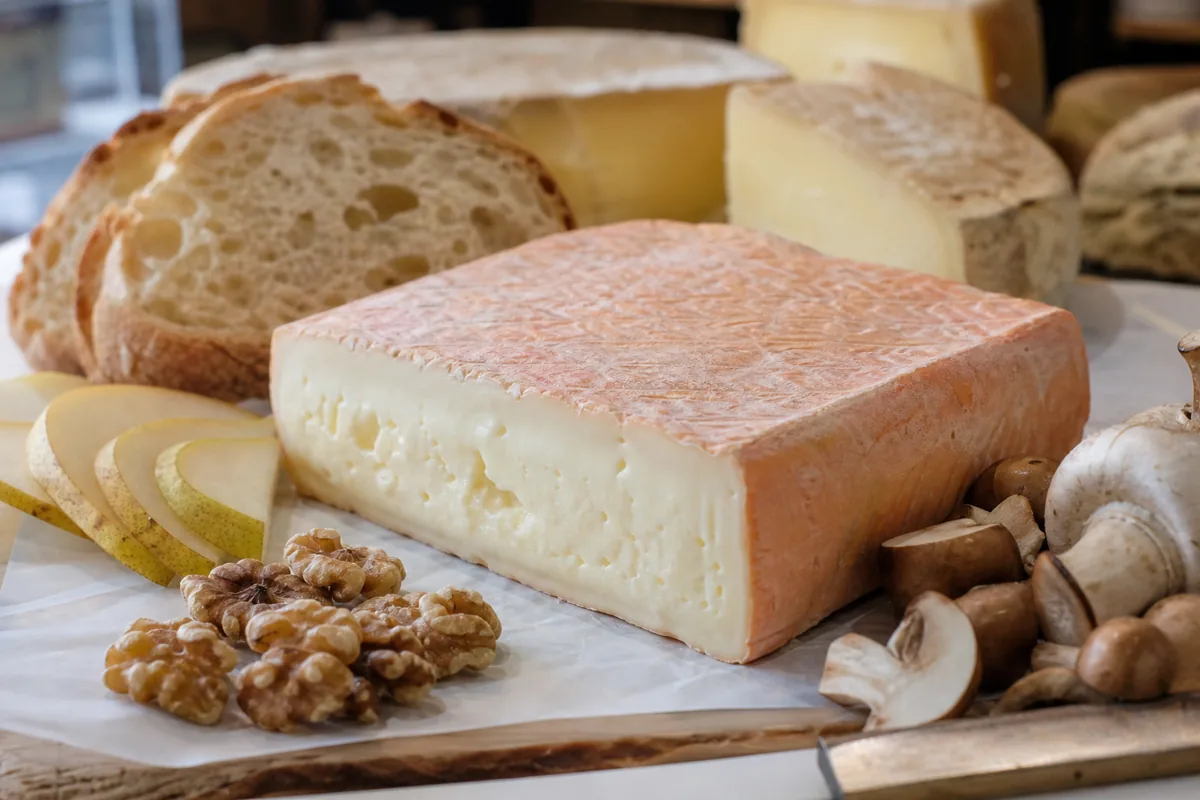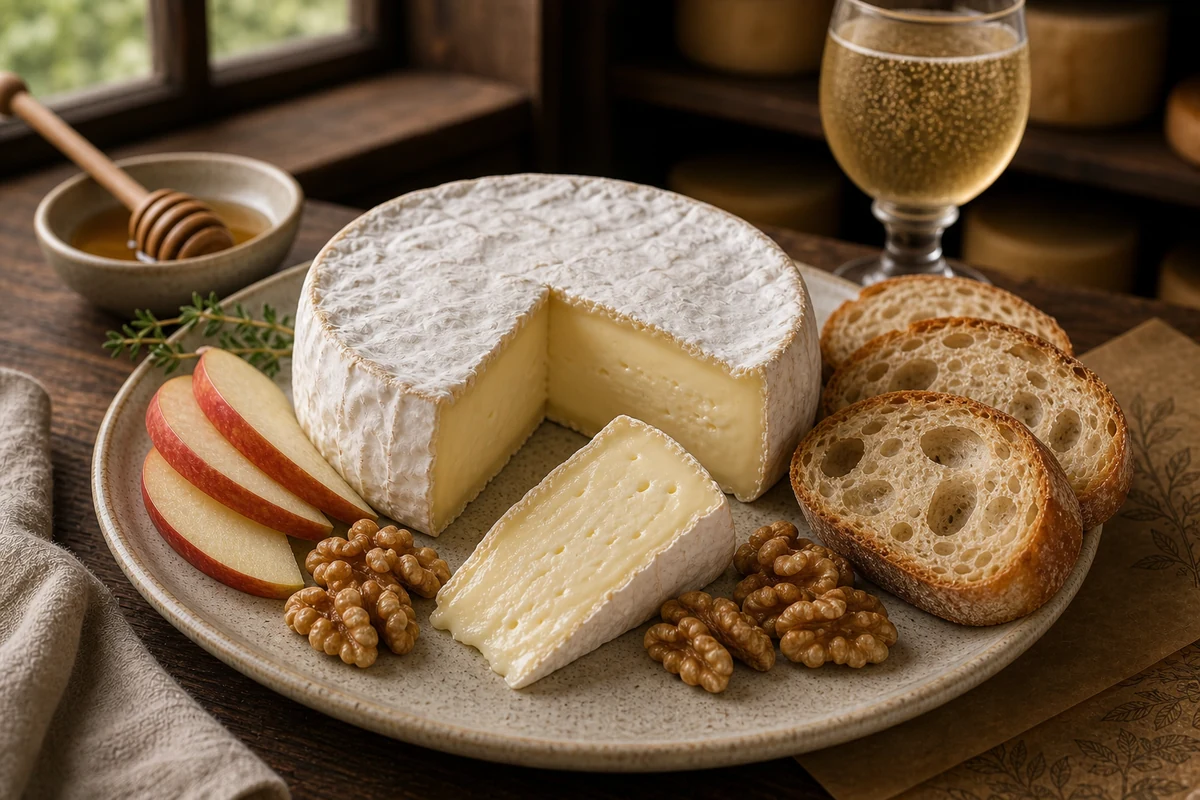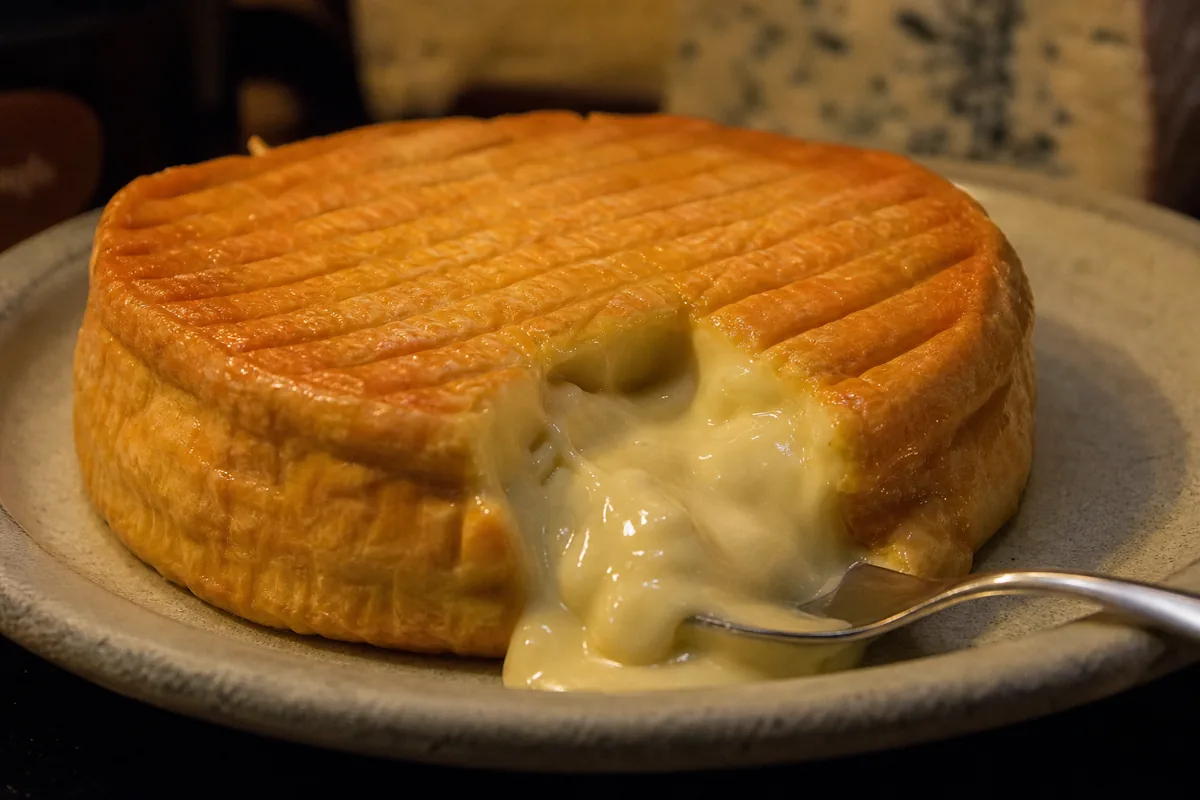
Durrus Classic is a pasteurized cow's milk, semi-soft washed-rind cheese made in Coomkeen, West Cork. The same farmhouse also sells Durrus Og, Durrus Smoked, and Dunmanus, so the name on the label decides the size, age, texture, and best use.
The label decides. The four current cheeses share a maker but are not interchangeable in the kitchen.
In This Article
What Is Durrus Classic?
The producer makes Durrus Classic from locally sourced pasteurized cow's milk and cuts the curds by hand in a copper vat before draining, brining, washing, wiping, and turning each wheel during ripening.
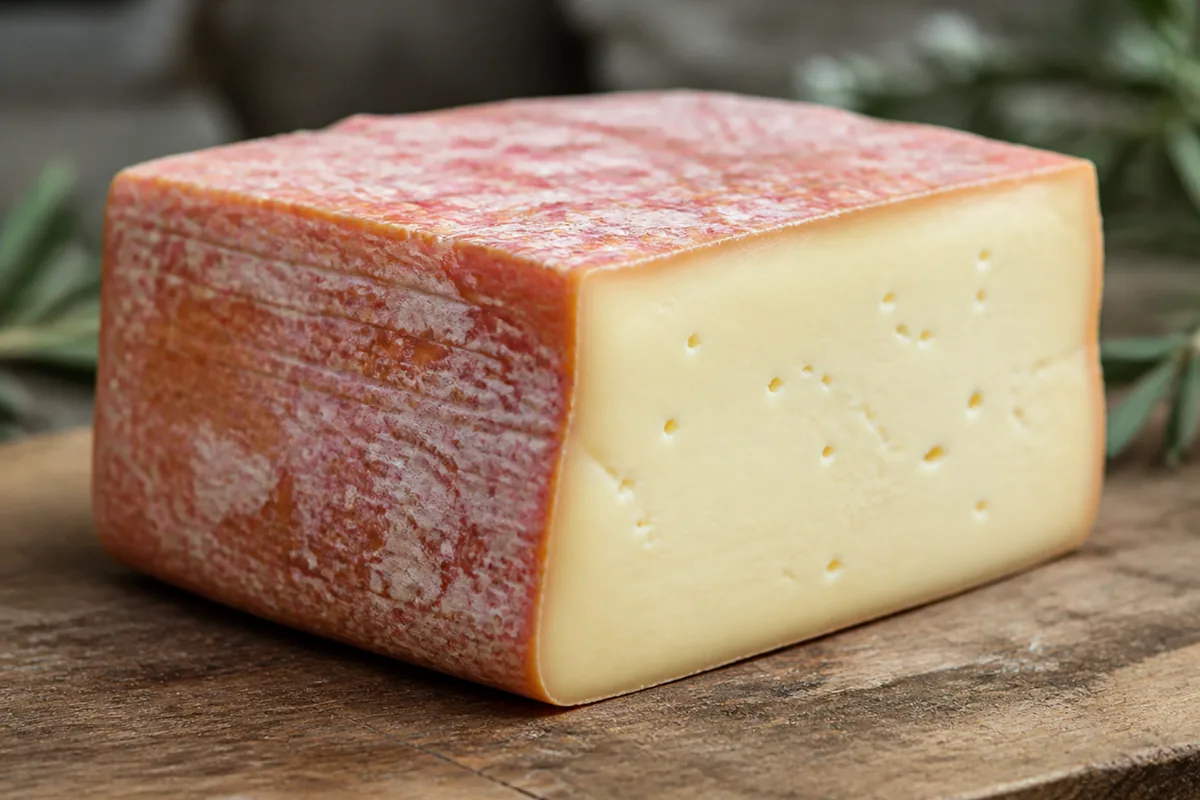
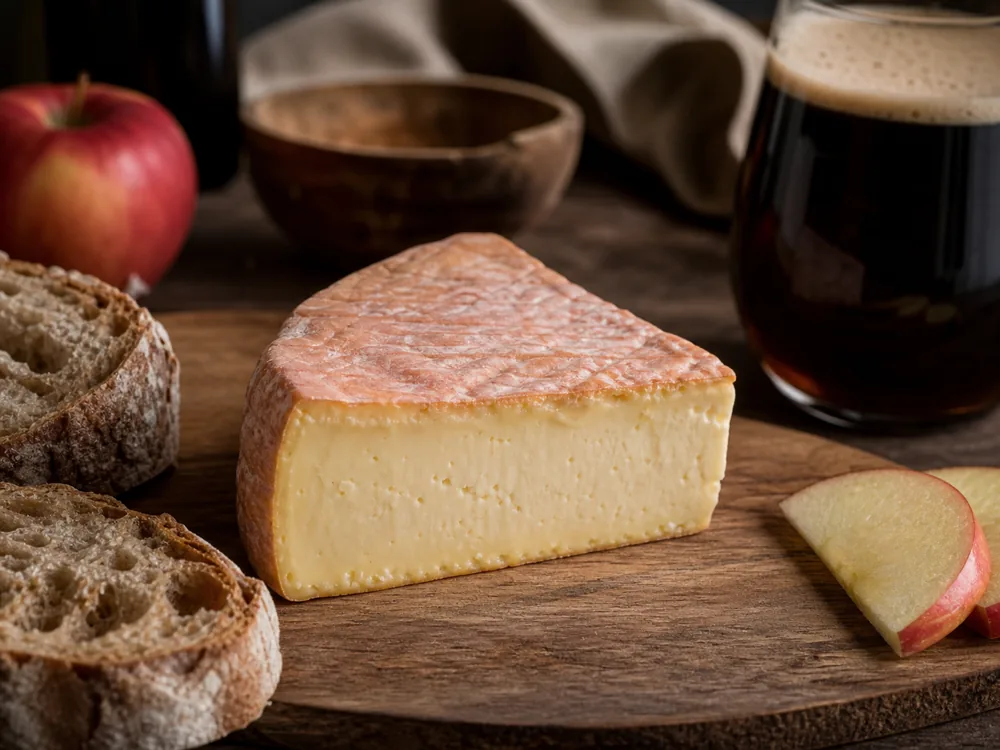
The maker describes a mottled pink-grey rind and a pale interior that can bulge slightly when cut, while Bord Bia identifies the current Classic as a semi-soft washed-rind cheese and records raw milk as No
.
Use the current label. Older profiles that call every Durrus product raw-milk or give one age for the whole range should not override it.
How Do the Four Durrus Cheeses Differ?
| Current cheese | Format and age | What the maker says |
|---|---|---|
| Durrus Classic | 360 g at about 4 weeks, or 1.3 kg at 6 to 10 weeks | Semi-soft rind-ripened wheel that develops from mild and grassy toward richer and earthier |
| Durrus Og | 225 g, ready from about 10 days | Younger Reblochon-inspired cheese made for melting in tartiflette, pasta, or baked tartlets |
| Durrus Smoked | 225 g, ready from about 10 days | The young cheese gently smoked over oak |
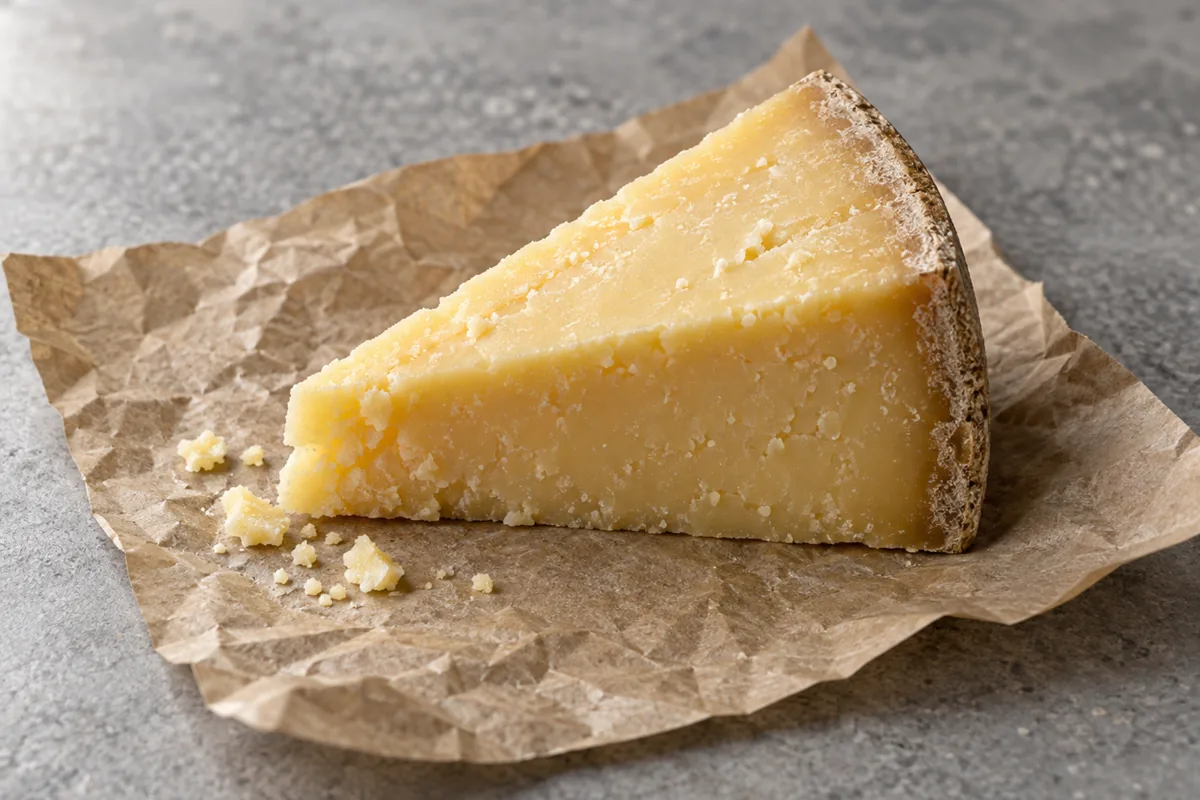
| Dunmanus | 3 kg, matured 6 to 14 months | A firm seasonal cheese made from summer milk, not a large Classic wheel |
The producer owns these formats. A retailer's cut weight can differ because a shop may sell a quarter or half of a larger wheel.
How the Classic Wheel Changes
The small Classic is ready at about four weeks, while the large wheel stays in the ripening room for six to ten weeks. The maker describes the younger cheese as mild, mellow, and grassy, with richer, stronger, earthier character as it matures.
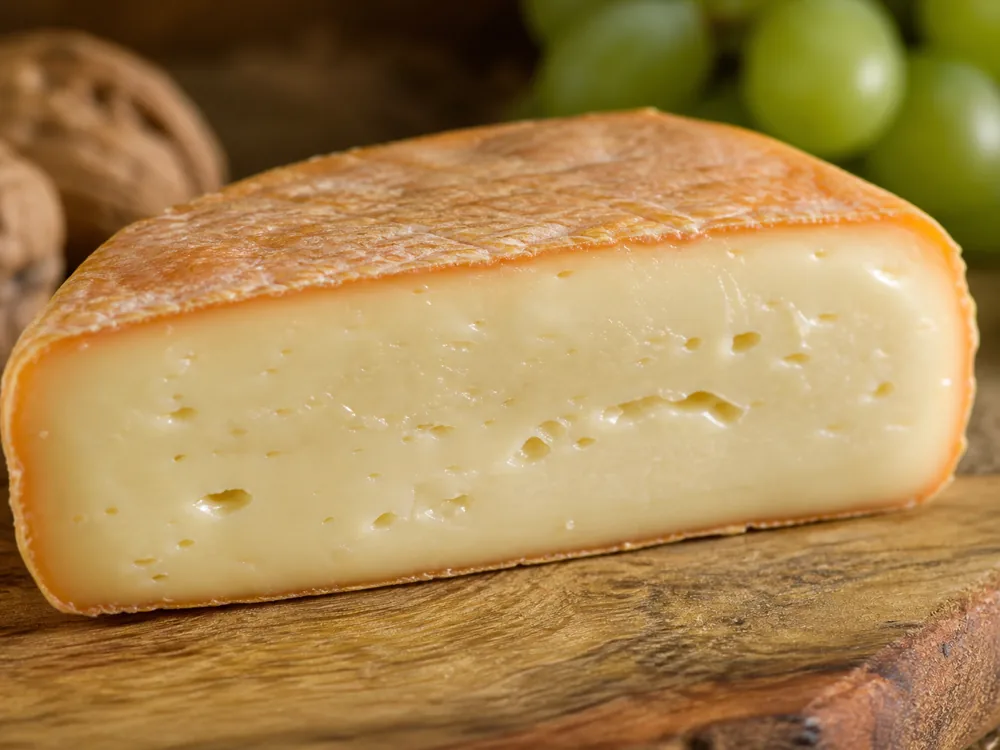
Size changes the schedule. A four-week small wheel and a four-week large wheel are not at the same stage.
At a counter, ask for the product name and cut date, look for a clean pale paste and the expected mottled rind, and reject damaged wrapping, uncontrolled wet breakdown, or a piece whose seller cannot identify the wheel.
How Should You Serve Each Durrus Cheese?
Bord Bia presents Durrus Classic as a table cheese with bread, apples, chutney, beer, cider, and several wines, which supplies serving ideas without claiming that every wheel tastes identical.
For a documented melting use, choose Durrus Og. The farmhouse created it closer to a Reblochon-style cheese and specifically recommends it for tartiflette, pasta, and baked tartlets.
Follow the seller's serving direction and return leftovers to refrigeration promptly.
Who Makes Durrus Cheese?
Jeffa Gill began making Durrus in 1979, and the producer records a gold award at an early Irish farmhouse cheese competition in 1984, exports through Neal's Yard Dairy by 1986, and a move into a dedicated production building in 1991.
The work remains in the family. Jeffa and her daughter Sarah Hennessy lead a small team using milk from nearby West Cork farms, which documents continuity without claiming that one wheel created the whole movement.
How Should You Store Durrus Cheese?
General Food Standards Agency guidance keeps chilled food at 0 to 5 degrees C and tells consumers to follow package storage and use-by directions. Keep the label or seller note with a counter cut because it identifies the product and the relevant date.
Neal's Yard Dairy tells customers receiving its own cut pieces to use waxed cheese paper, place the wrapped cheese in a box, and use it within 14 days of arrival. That is a direction for the seller's shipment and storage method, not a universal Durrus opened-life rule.
Can You Eat Durrus During Pregnancy?
The current producer identifies Durrus as pasteurized, but that fact alone does not settle every pregnancy question. Ireland's HSE advises avoiding unpasteurized dairy, white-mould cheeses such as Brie and white-rind Camembert, blue cheese, and deli-counter food where hygiene may be compromised.
Check the current package and consider the extra handling history of a counter-cut wedge. Ask your maternity team when the label or seller information is incomplete.
In the United States, CDC lists pasteurized soft cheeses heated to an internal temperature of 165 degrees F or until steaming hot, and deli-sliced cheeses heated to 165 degrees F or until steaming hot, among safer choices for pregnant people. This cooked option is clearer for a counter cut than treating pasteurization as universal cold-serving clearance.
The NHS lists pasteurised soft cheeses as safe to eat. Served cold, Durrus Classic is described as a pasteurized semi-soft washed-rind cheese, a type the CDC list does not cover, so ask a midwife or doctor.
Our guide to pregnancy safety for cheese explains the wider categories, but the exact package and the guidance for your market remain the deciding records.
SOURCES & REFERENCES
What Else Do People Ask About Durrus Cheese?
The current producer identifies its cheeses as made with pasteurized cow's milk. Check the exact package because older profiles and retailer pages may describe a different period or product.
Classic comes in 360 g and 1.3 kg wheels with longer ripening. Og is a 225 g younger cheese, ready from about 10 days, that the maker designed closer to Reblochon for melting dishes.
No. Dunmanus is the same farmhouse's firm seasonal cheese, sold as a 3 kg wheel and matured for 6 to 14 months.
The current producer and Bord Bia describe an intentional washed rind. Keep it when you enjoy the flavor, but discard a piece with damaged wrapping or deterioration outside the seller's expected condition.
Follow the exact package or seller direction because a counter cut and a sealed wheel do not share one household storage clock.
Check the current label, the handling history, and guidance for your market. The CDC lists pasteurized soft cheeses heated to an internal temperature of 165 degrees F or until steaming hot, and deli-sliced cheeses heated to 165 degrees F or until steaming hot, as safer.
Served cold, Durrus Classic is described as a pasteurized semi-soft washed-rind cheese, a type the CDC list does not cover, so ask a midwife or doctor.