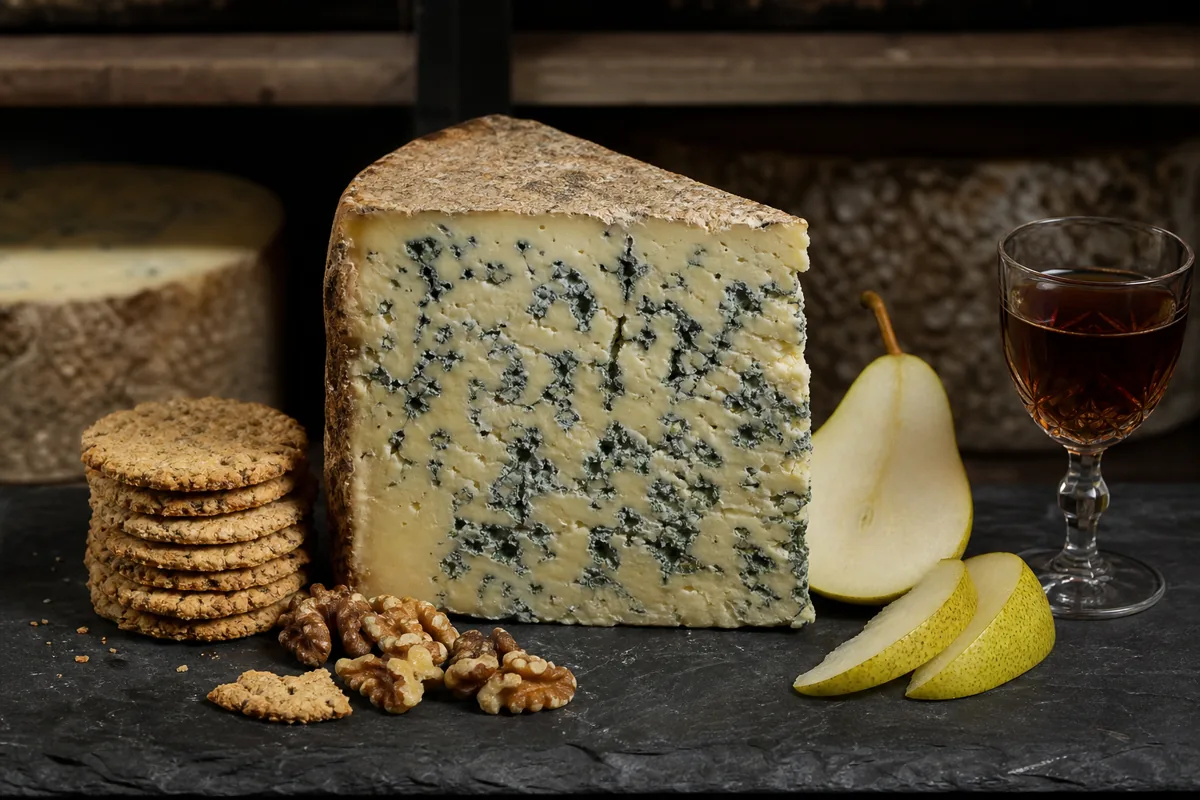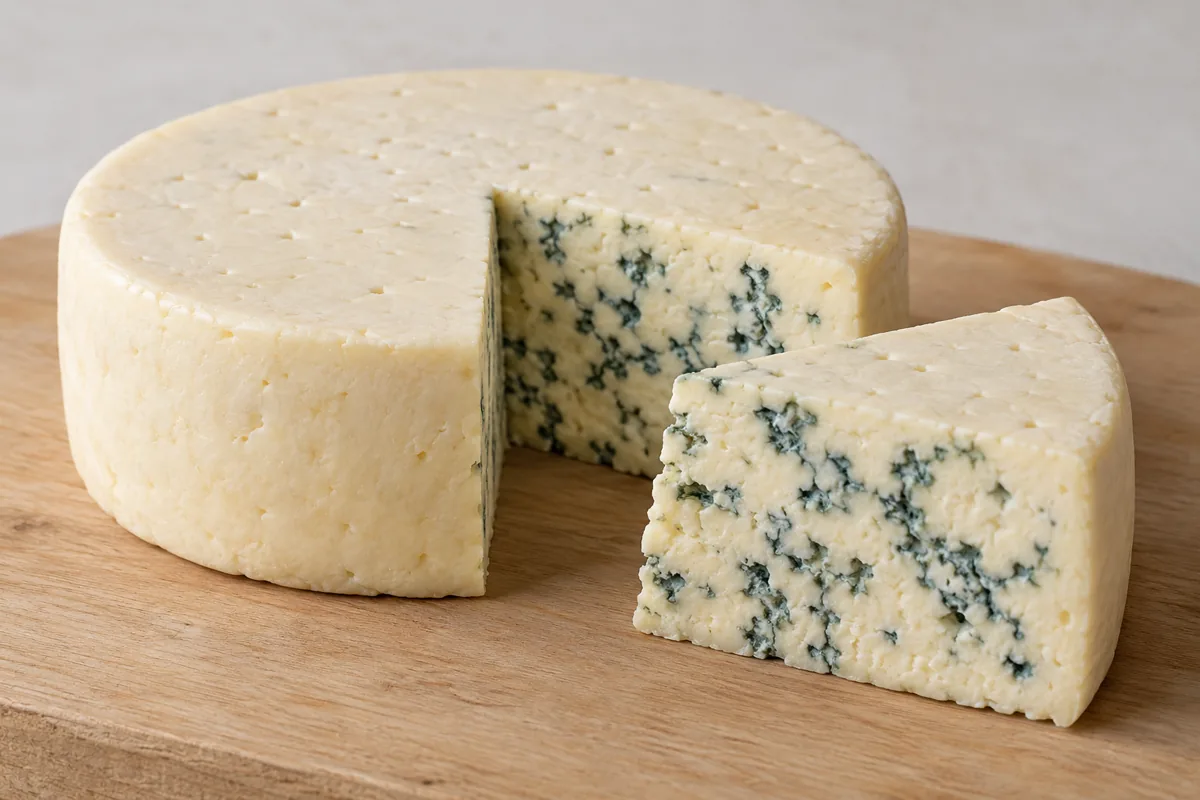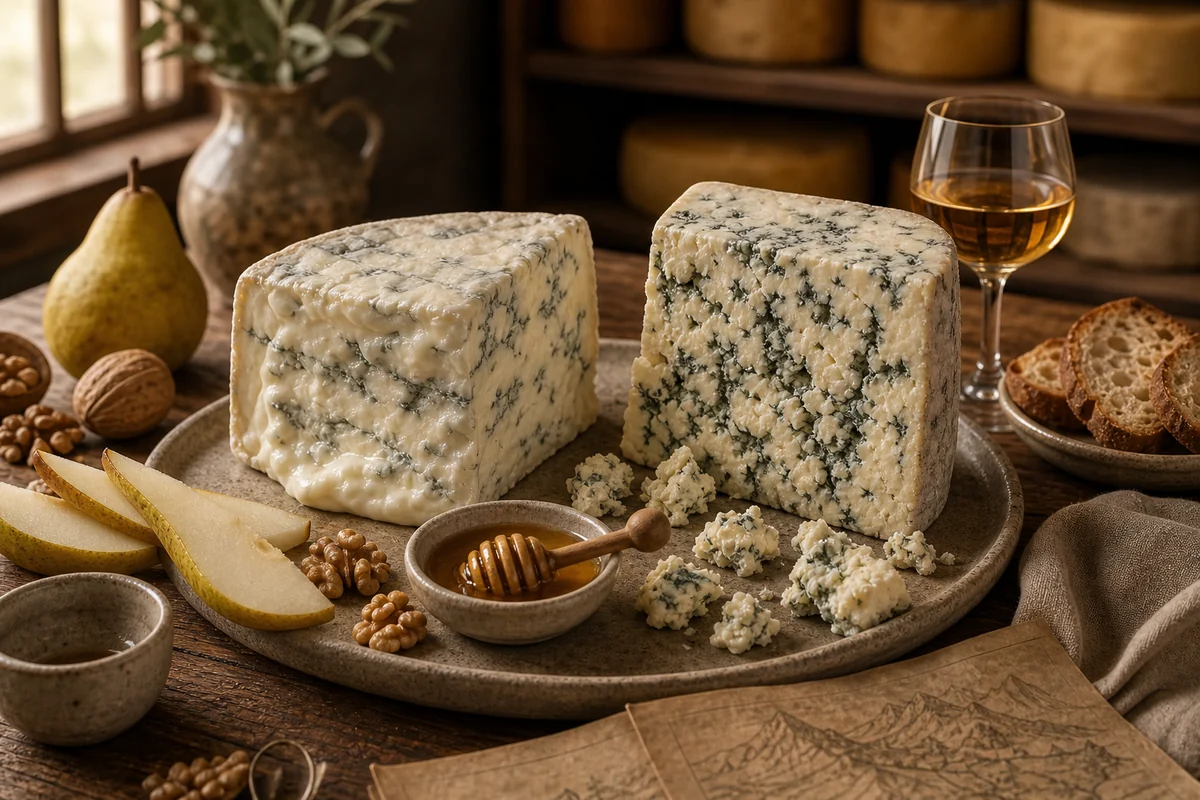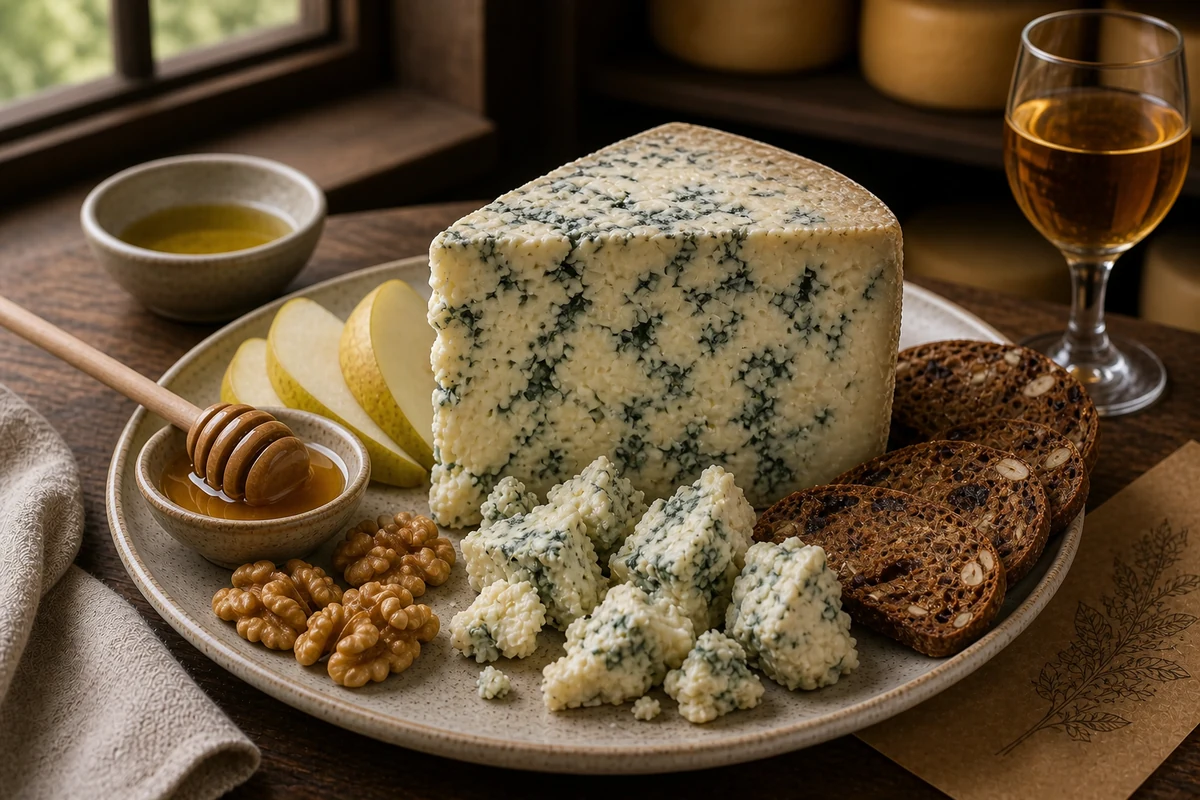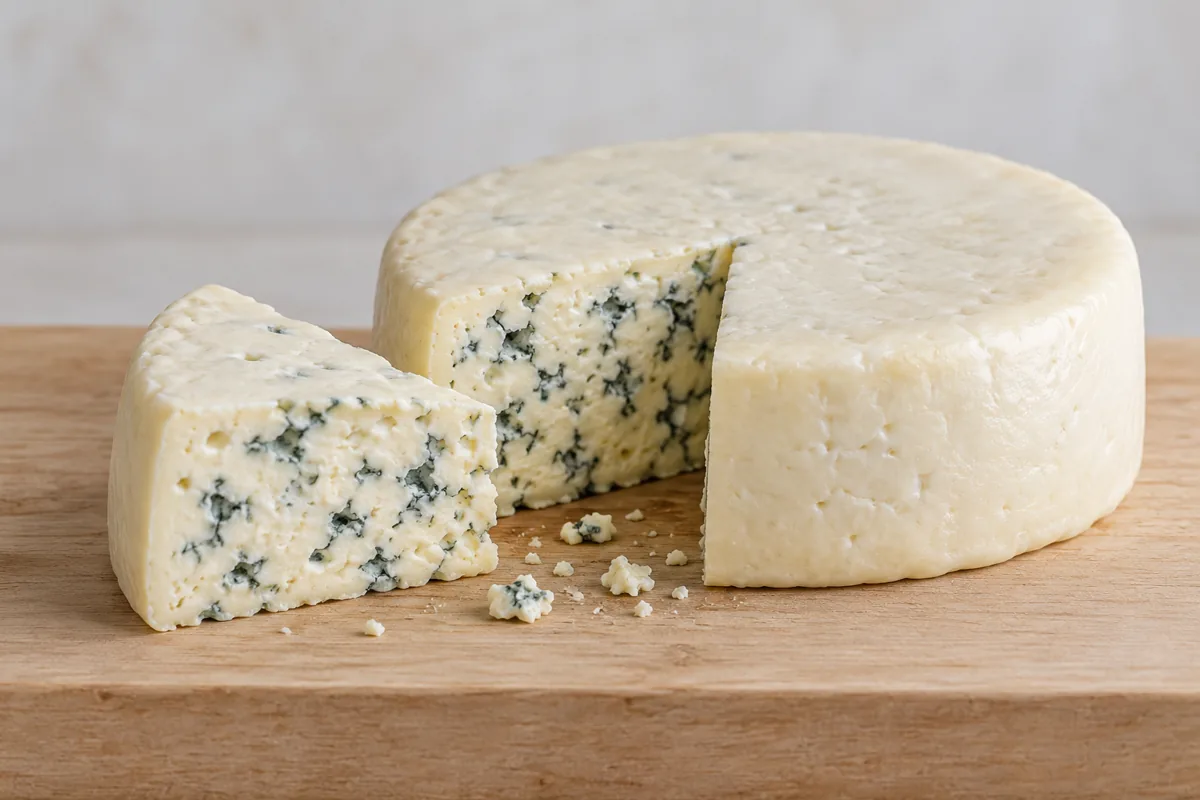
Milawa Aged Blue is a cow's milk blue cheese from Milawa Cheese Company in north-east Victoria, Australia, made from hand-selected batches of the company's younger Milawa Blue that are matured for longer.
The producer says the extra time, up to six months, gives slightly sweeter, stronger flavors and a dark-coloured interior.
In This Article
What Does Milawa Aged Blue Taste Like?
The cheese is savory and sweet, and its strength ranges from the producer's "slightly sweeter" to Cheese.com's "much stronger".
| Source | Flavor | Texture and look |
|---|---|---|
| Milawa Cheese Company | Slightly sweeter, stronger flavors than the younger Milawa Blue | Dark-coloured interior with delicate blue veins |
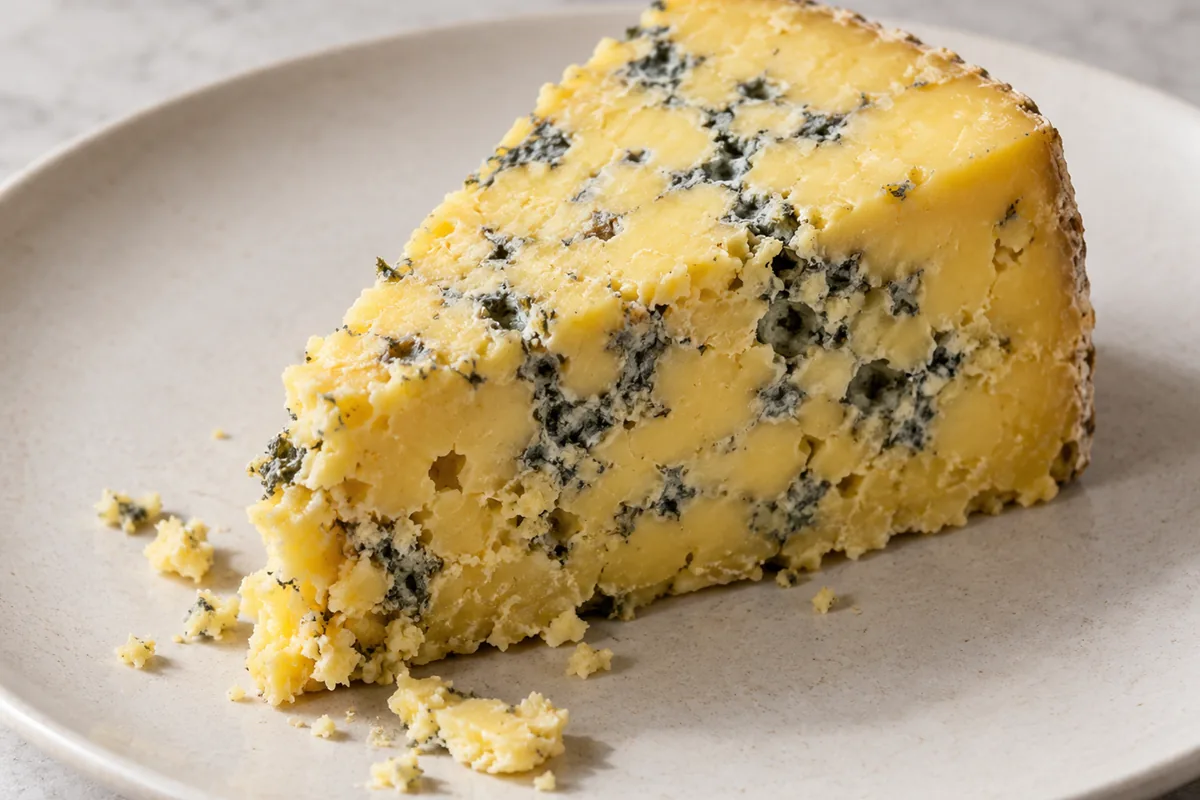
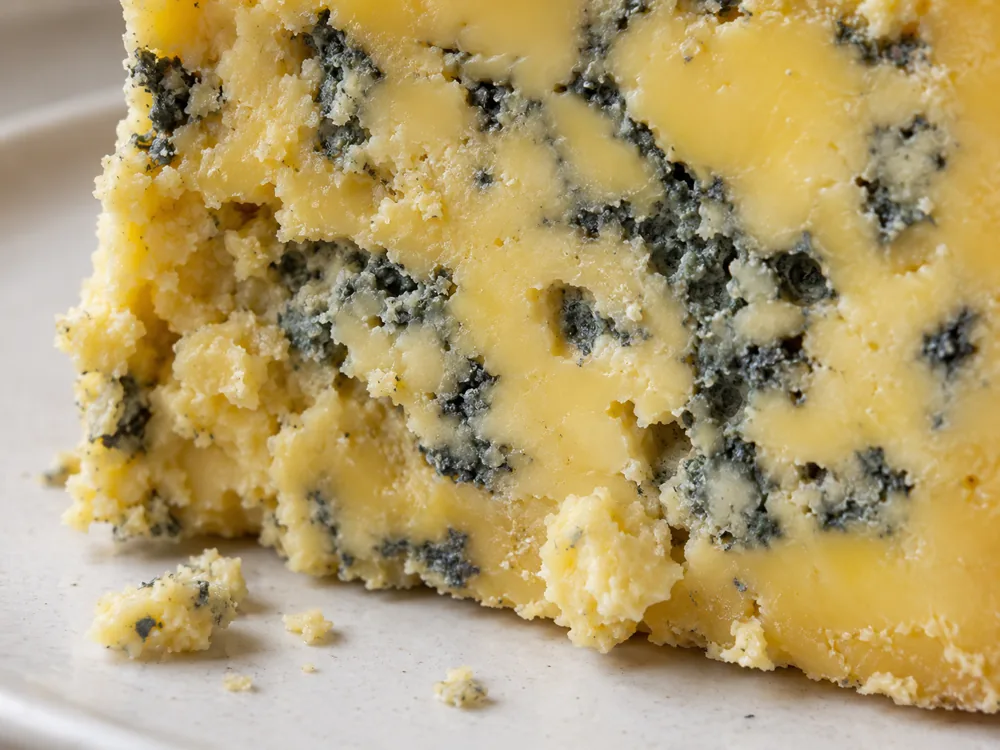
| The Cheese Atlas | Savoury and sweet, with lingering notes of caramel and chocolate; aroma quite earthy | Creamy and crumbly; dark yellow paste with blue-grey pockets and veins |
| Cheese.com | A much stronger blue cheese although well balanced with sweet, buttery notes | Color listed as blue |
The producer's wording is comparative: slightly sweeter and stronger than its own Milawa Blue. Cheese.com says maturing a batch of Milawa Blue for up to six months creates a much stronger blue cheese, a bigger step than the producer's "slightly".
The Cheese Atlas describes a bigger change than the producer's wording suggests, calling the matured blue strikingly different from its younger version in both appearance and flavour.
A buyer comparing a cut piece with the younger cheese has two visible cues to look for: a dark-coloured interior from the producer, and a dark yellow paste with blue-grey pockets and veins from the Atlas. The producer gives the younger Milawa Blue a soft and creamy texture, and crumbliness appears only in the Atlas's description of the aged wheel.
On salt, the producer says the younger cheese has just the right amount, and Britannica says blue cheeses are often quite salty but should not be overly so.
How Is Milawa Aged Blue Made?
Milawa Aged Blue starts as Milawa Blue, the first cheese David and Anne Brown made after buying the old Milawa Butter Factory in 1988.
The Cheese Atlas says the couple set out to make a mild blue, creamy and soft with a restrained blue flavor, and that no cheese like it was being made in Australia at the time. By the producer's account the aged wheel is that same cheese given more time, so its stronger flavor comes from extra maturing of the same cheese.
Calendar Cheese's note on Milawa Blue says the curds are stirred, drained, and scooped by hand into cloth-lined moulds. The cloth holds the curds together as the young wheels are turned and leaves small pockets of air for the blue mold to grow in.
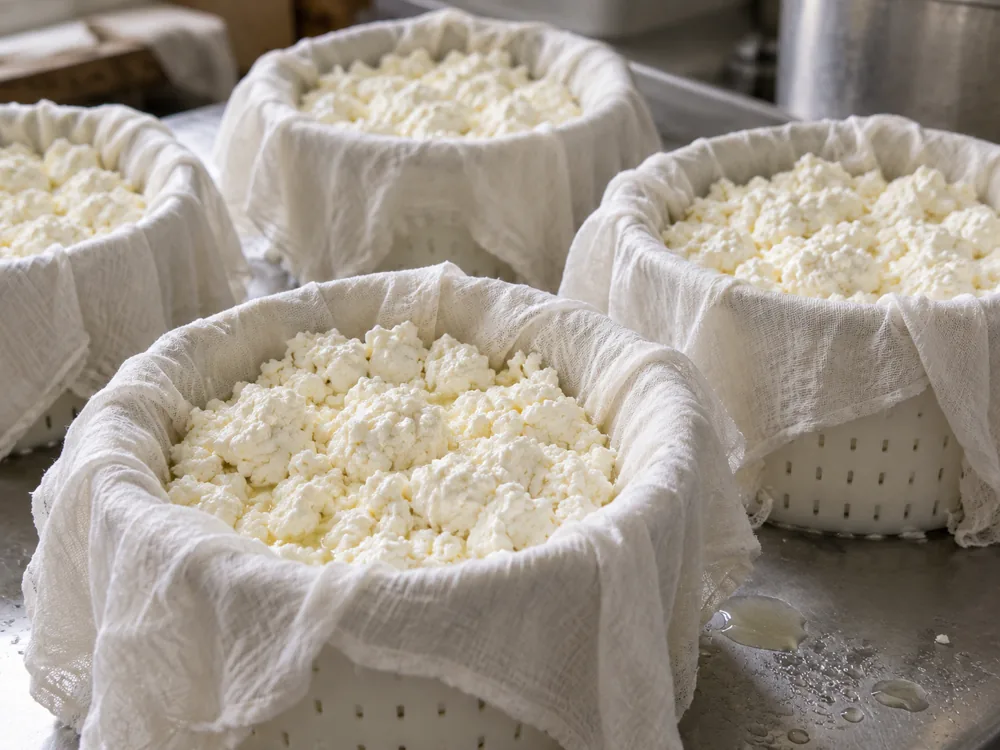
The producer adds that spores of Penicillium roqueforti go in at the milk stage, and that the mold only develops once the wheels are pierced with stainless steel needles to let oxygen in.
Britannica describes the same arrangement for blue cheeses in general: the spores go into the milk or the curd, and the mold grows in the cheese's small natural openings and in machine-made perforations during three to six months of ripening.
Milawa Blue spends three months in the producer's maturing room, where it is turned and brushed by hand. For the aged version, the producer says hand-selected batches are aged for up to six months.
The Cheese Atlas says selected wheels get an additional six months.
Against Britannica's range, the younger cheese sits at the short end and the aged cheese's six months at the long end. If the Atlas's additional six months stacks on top of the first three, the aged wheel would reach about nine months, past that range.
The two accounts also differ on what gets selected: the producer says hand-selected batches of Milawa Blue are aged, while the Atlas says a handful of wheels from each batch are chosen. If the Atlas is right, the aged cheese is a small share of Milawa Blue output.
The producer's ingredient list reads cow's milk, non-animal rennet, cultures, and salt. Calendar Cheese describes the young Milawa Blue as developing a natural, grey, mottled rind, and Cheese.com lists the aged cheese's rind as mold ripened; ask the producer or retailer whether the rind is meant to be eaten.
Britannica adds that most blue cheeses are made from cow's milk, with Roquefort the ewe's milk exception, which puts Milawa Aged Blue with the majority.
Does Milawa Aged Blue Use Animal Rennet?
The producer's ingredient list names non-animal rennet, and that detail matters because the usual rennet is animal-derived: Britannica says rennin, the enzyme that sets the curd, is usually obtained from the stomach of young calves in a brine extract called rennet.
The list rules out calf rennet. If you keep a vegetarian diet, ask the producer what the non-animal rennet and the cultures are made from.
What Goes with Milawa Aged Blue?
Three sources name pairings, and they disagree on red wine: the producer recommends sweet, fruity reds, while Cheese.com recommends a dry red wine.
| Pairing | Why It Works |
|---|---|
| Dessert wine | Milawa Cheese Company. |
| Sweet, fruity red | Milawa Cheese Company. |
| Moscato, stout or Scotch whisky | The Cheese Atlas. |
| Muscatels, fig paste and fruit sourdough | Cheese.com. |
| Dark chocolate | Cheese.com. |
| Dry red wine | Cheese.com, against the producer's sweet reds. |
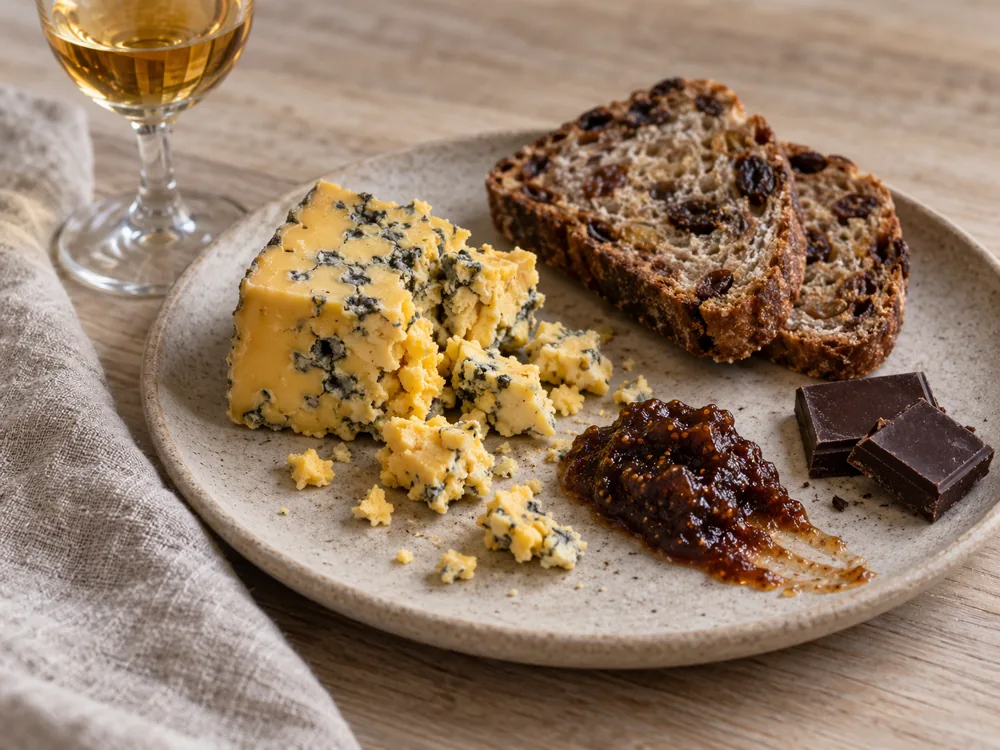
Cheese.com goes furthest on food, naming muscatels, fig paste and fruit sourdough and singling out good-quality dark chocolate as especially good, though it adds that the cheese could also be eaten with bread and crackers.
The producer's own pairing for the younger Milawa Blue is a different list: fresh fruit, light rye bread and fortified reds from its neighbours in Rutherglen, so the aged cheese has its own recommendation of dessert wines and sweet, fruity reds.
Most of these partners are sweet or dark, set against a savory blue.
Is Milawa Aged Blue Safe During Pregnancy?
Whether the milk in Milawa Aged Blue is pasteurized matters less than you might expect, because UK NHS guidance gives the same instruction for pasteurised or unpasteurised soft blue-veined cheeses such as Danish blue, Gorgonzola, and Roquefort: they must be thoroughly cooked.
The NHS page does not name Milawa Aged Blue. The producer calls the younger cheese soft and creamy, Calendar Cheese lists it as semi-soft, and the aged cheese is described as creamy and crumbly, so the soft blue-veined rule is the closest fit; that placement is our reading, not an NHS statement.
If its milk is raw, Milawa Aged Blue matches an example on the CDC's riskier list, soft cheese made from unpasteurized milk such as blue-veined cheese, and the CDC says pregnant women are 10 times more likely to get a Listeria infection.
The CDC's safer choice is a pasteurized soft cheese heated to an internal temperature of 165°F or until steaming hot. With the milk not stated as pasteurized, the NHS thoroughly cooked rule is the guidance that applies.
How Do You Buy and Store Milawa Aged Blue?
Milawa Cheese Company lists Aged Milawa Blue at A$18 for a 150 to 200 g piece, though a banner on the same page says its products are available in-store only or from a local stockist.
The page lists one size only, and because that piece can weigh anywhere from 150 g to 200 g, its price works out at roughly A$9 to A$12 per 100 g. The producer's Milawa Blue page lists the same 150 to 200 g size at A$17, so the longer maturing adds A$1 to the listed price.
Its allergen line says the cheese contains materials derived from cow's milk. For a piece kept at home, the CDC's general rule is to keep the refrigerator at 40°F or below and to refrigerate perishable food, dairy included, within 2 hours, or within 1 hour when the food is exposed to temperatures above 90°F.
CDC adds that bacteria can multiply rapidly at room temperature or in the "Danger Zone" between 40°F and 140°F.
What Is Closest to Milawa Aged Blue?
The nearest relative is the younger Milawa Blue that the aged wheel is made from, and by the producer's account it is the milder of the two. The producer describes Milawa Blue as soft and creamy, with a rich, buttery flavor and a slightly yeasty punch.
The producer pitches the two at different buyers: the younger Milawa Blue is the one for people who think they do not like blue cheese, while the aged cheese is the one given more time to gain more punch.
Competition results sit with the younger cheese: its page lists gold at the 2023 Dairy Industry Association of Australia (Vic) and 2023 Royal Queensland Cheese Dairy Awards and silver at the 2023 Perth Royal Food Awards.
Gorgonzola Dolce is the recipe the producer says inspired Milawa Blue, and Calendar Cheese, an Australian distributor, describes Milawa Blue as based on a recipe for it, with a creamy paste and mild blue flavor.
Choose the younger Milawa Blue for a mild, creamy, buttery blue, or the aged version for slightly sweeter, stronger flavor and a dark-coloured interior. Gorgonzola Dolce is the recipe behind the younger cheese, so it says nothing about the aged flavor.