Abbaye de Tamié is the cheese in the blue-and-white paper with a white cross on it, made by monks at a Trappist abbey in the French Alps.
It is a washed-rind cheese, so the smell arrives before the flavour does. What follows in the mouth is much gentler than the rind leads you to expect.
In This Article
What Abbaye de Tamié Actually Is
The abbey sits at the head of the Val de Tamié in Savoie, in south-eastern France, founded in 1132 by Saint Pierre of Tarentaise with Cistercian monks sent from Bonnevaux in the Dauphiné.
English sources often give 1131 instead, which is the kind of one-year drift you should expect from a twelfth-century foundation date rather than evidence that one of them is wrong.
Cheese has been made there for the community's own table since close to the beginning, which is why the cheese carries the abbey's name rather than a brand.
The dairy is not an industrial operation attached to a monastery. The monks run it themselves.
The milk no longer comes from the abbey's own herd. It is collected daily from six farms in the Tamié valley, from Abondance cows and the other mountain breeds.
It goes into the vat raw and whole, neither pasteurised nor skimmed.
How Many Sizes Does Abbaye de Tamié Come In?
Look the cheese up in two places and you will get two different wheels, which is the first thing that confuses a buyer.
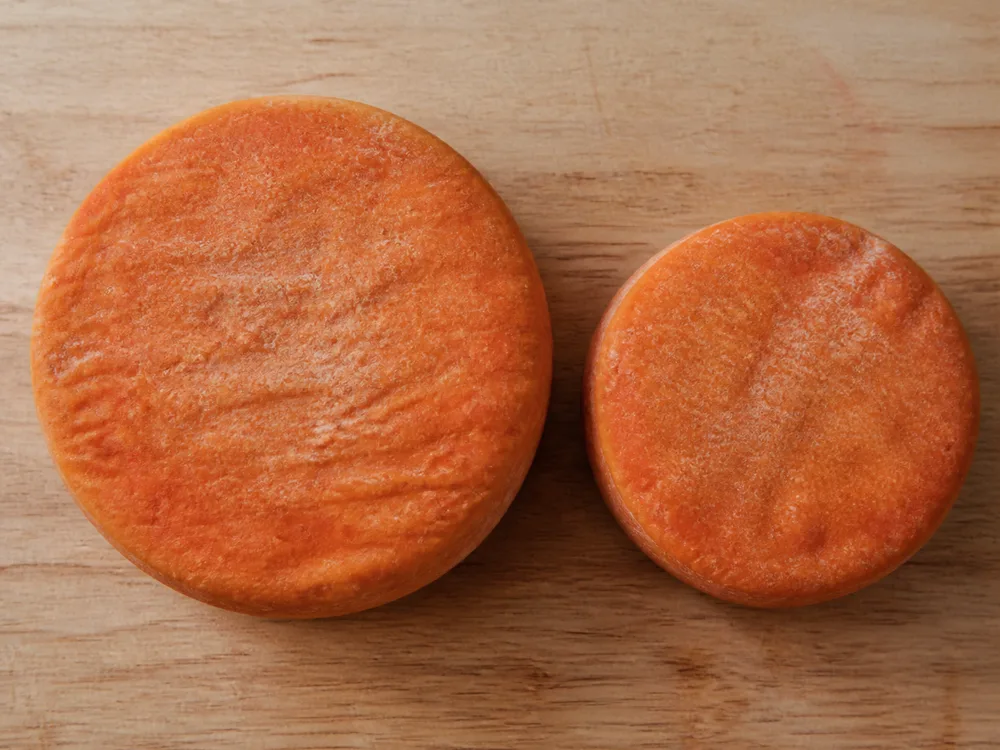
The abbey settles it. It makes two models, and each is sold commercially under a name of its own, which is where the confusion comes from.
| Tamié Grand Modèle | Tamié Petit Modèle | |
|---|---|---|
| Abbey weight | About 1.6 kg | About 600 g |
| Seen in shops as | Roughly 8 in across, sold around 3 lb | Roughly 14 cm across, sold around 500 g |
| Usually sold | Cut to order at the counter | Whole, in its own paper |
| Ripening after packing | Toward the longer end of 21 to 45 days | Toward the shorter end |
| Sold in shops as | Le Véritable, 1.4 to 1.5 kg | Le Petit, 500 to 600 g |
| Best for | A counter that turns cheese over quickly | One household, eaten within days |
Once you know the two trade names, every listing lines up. A shop quoting 1.4 kg and a shop quoting 1.6 kg are describing the same large cheese at different points, because a washed rind keeps losing moisture from the day it is packed.
The small model is the one most people meet, because it is the one a shop can sell whole and a household can finish.
It also has a reason to exist beyond retail. Monks going up to the mountain pastures carried the small model because it travelled better than a full wheel.
If a listing gives you a weight and no picture, trust the weight. Six hundred grams is a cheese for a table.
A kilo and a half is a cheese for a counter.
Why It Gets Mistaken for Reblochon
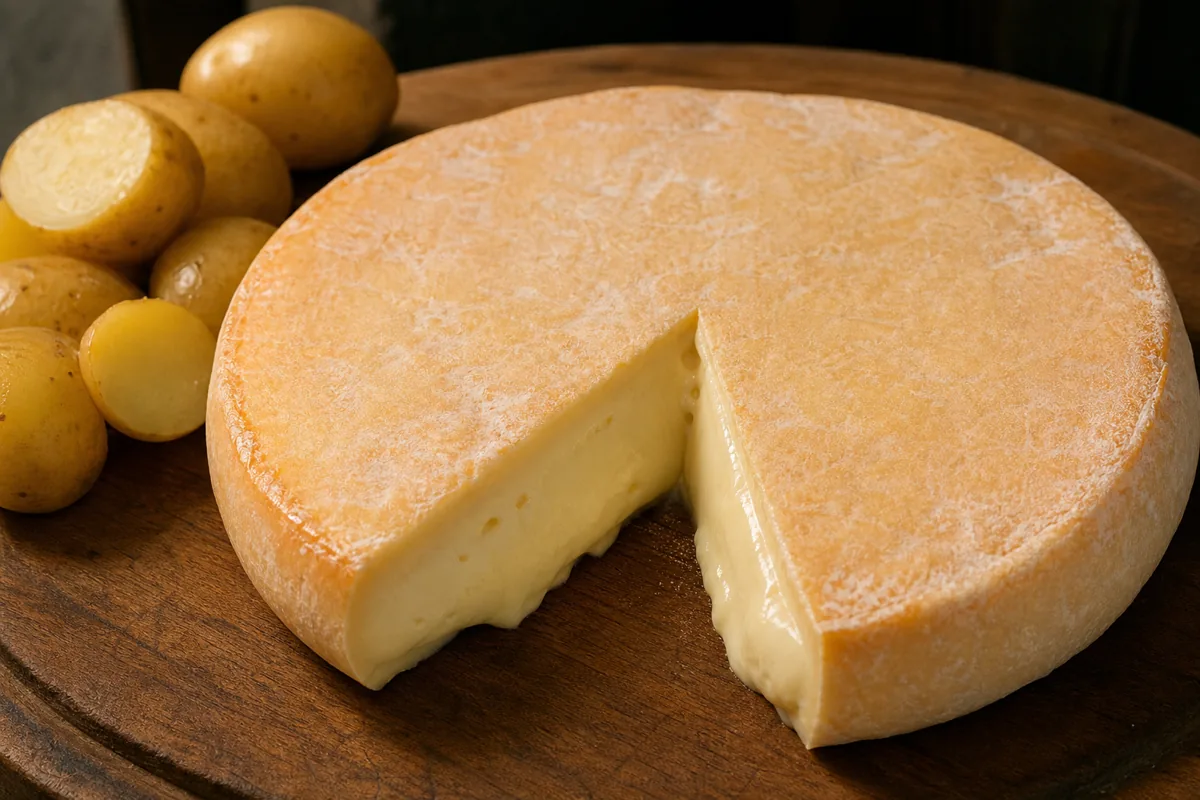
The small format is close to Reblochon in shape and size, and the two come from the same corner of Savoie.
One French affineur describes Tamié as having a similar shape and size to Reblochon but in a more regular format, which is about as fine a distinction as it sounds at the counter.
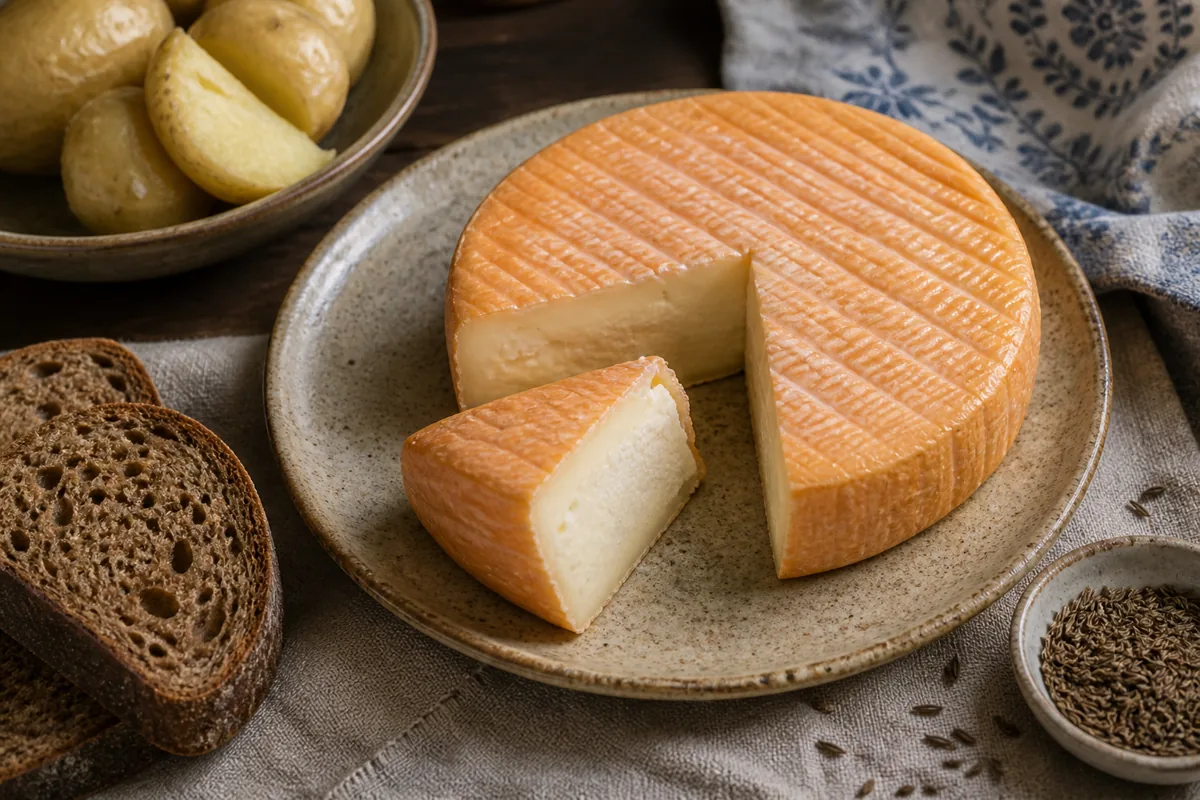
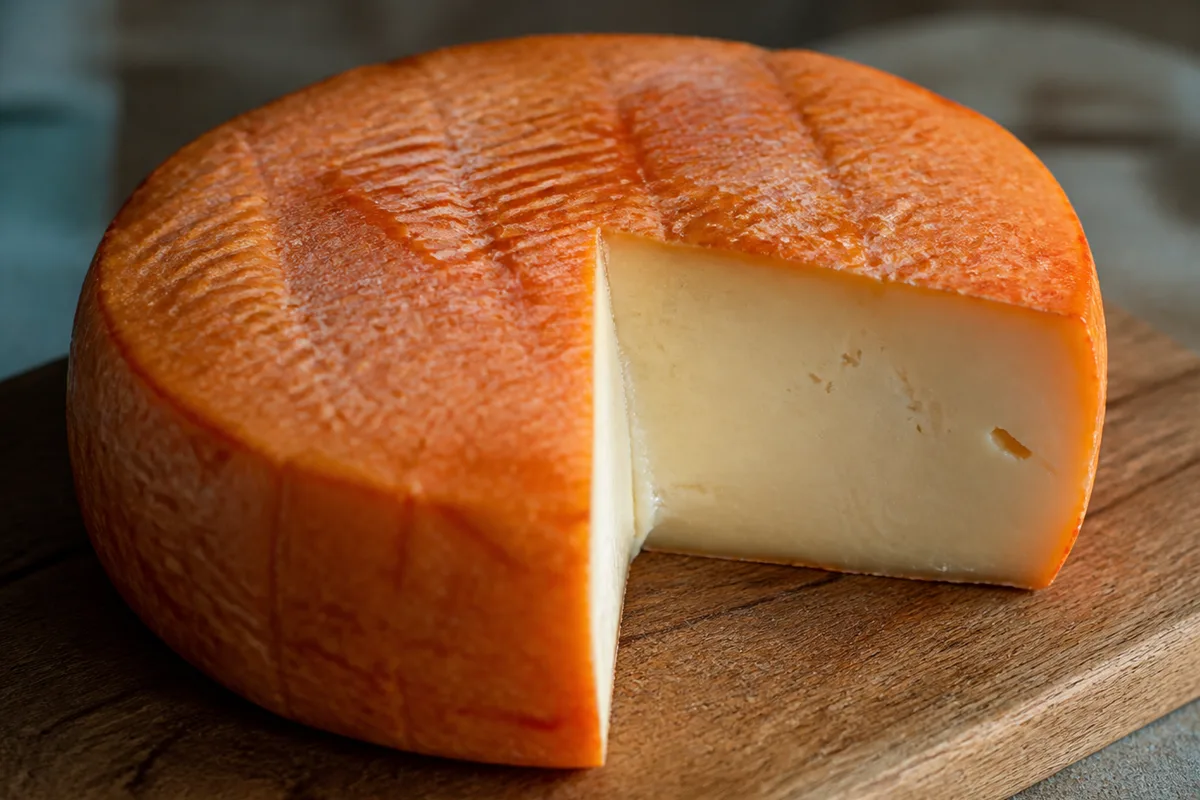
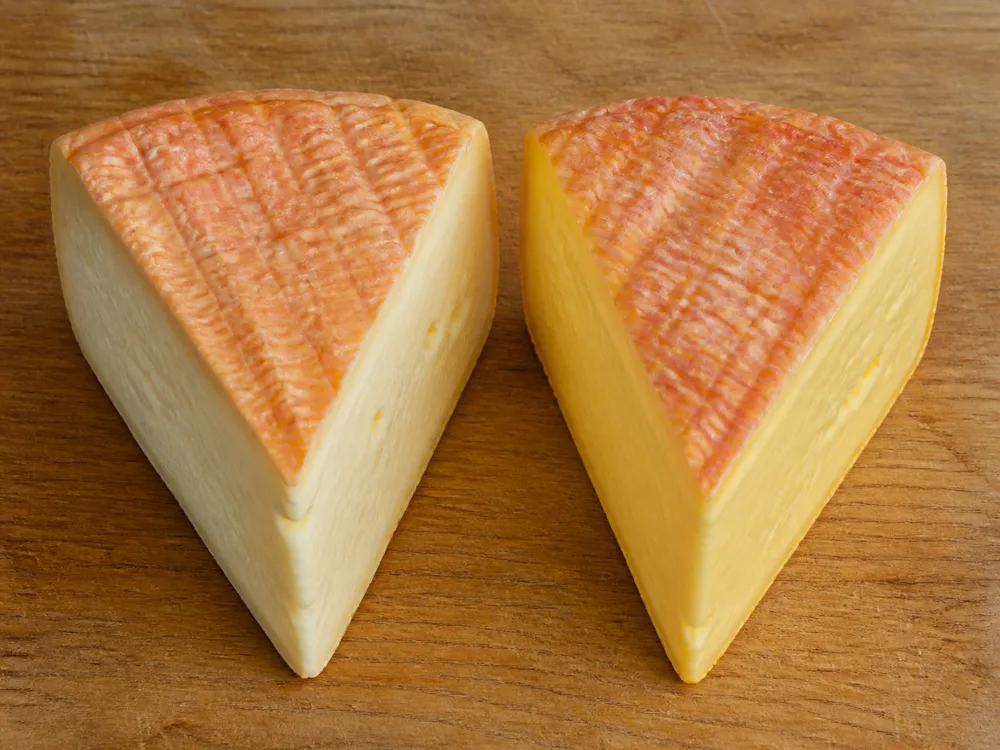
The rinds separate them. Reblochon carries a fine pale bloom, while Tamié is brine-washed and moves from light grey to orange as it matures, a colour that deepens further when the wheel is brushed.
They also behave differently once cut.
Tamié is the softer, more yielding of the two at the same age, which makes it a spreading and eating cheese rather than the melting workhorse a tartiflette wants.
What the Monks Actually Do to the Milk
Every step in the sequence below exists to control either acidity or moisture, and the temperatures are the part a home reader cannot improvise.
- Warm the raw whole milk to 93 F, which is close to the cow's own body temperature and the range the starter bacteria work fastest in
- Add starter cultures made at the abbey and leave the milk to ripen for about ninety minutes, which is where the lactic character comes from
- Cut the set curd to roughly pea size, small enough to release whey freely and keep the finished paste supple rather than wet
- Press gently for about four hours, enough to knit the curd without driving out the moisture that makes this cheese yielding
- Brine the wheels for two to three hours, which salts the cheese from the outside in and starts the rind
- Move them to vaulted cellars at 57 F and high humidity, the conditions Brevibacterium linens needs to colonise the surface
- Turn each wheel by hand every two days, so moisture distributes evenly instead of settling in the bottom half
- Ripen it 21 to 45 days after packing, the shorter end for the small model and the longer end for the large one
The brine wash is the whole point of the exercise. It encourages the orange bacterium that lives in the cellar to take the surface, and that bacterium is what produces the smell.
None of that sequence transfers to a home kitchen, and the cellar is the reason. The orange bacterium that takes the surface lives in that vaulted room, and no recipe can list a room among its ingredients.
Three to six weeks is short for a mountain cheese. That is why Tamié arrives supple and mild rather than concentrated, and why it does not reward keeping.
Why Does Tamié Taste Different in March and September?
This is a mountain cheese made from the milk of one small valley, so what the cows eat in a given month reaches the wheel.
The herds are Tarine and Abondance, the two Savoie breeds, and they are grazed on pasture through the summer and fed hay through the winter.
Silage is excluded altogether, which matters more than it sounds. Fermented forage carries bacteria that survive into raw milk and cause late blowing in the cellar, so a raw-milk cheese that skips silage is protecting its own rind.
Summer pasture changes the butterfat, and that fat is what carries flavour. A wheel made from grazing milk tends to taste fuller and more floral than the same wheel made in February from hay.
None of this is a defect to correct for. It is the reason to buy a small cheese more than once rather than a large one occasionally.
How Does the Dairy Support the Abbey?
This is not a gift-shop sideline, and the scale is what makes the cheese consistent rather than eccentric.
The abbey's current fromagerie page says the dairy produces about 500 kg of Tamié a day. That is substantial enough to support consistent production while remaining tied to milk collected from six farms in one valley.
The same page says more than half the brothers take part in collection, cheesemaking, deliveries, or management. It does not publish a current worker count, so older headcounts should not be read as today's staffing.
The abbey states plainly that the dairy is its principal resource. The cheese pays for the monastery.
Why a Monastery Started Making Cheese at All
That dependence is not a modern branding line. It is the reason the dairy was built.
The abbey was suppressed in 1792, and in April 1793 the buildings were seized as a defensive position in the war between France and Savoy. The monks left in the night.
Monastic life resumed only in 1861, when Cistercian-Trappist monks came from the Abbaye de la Grâce-Dieu to a restored but impoverished house.
The community could not pay for itself, and a cheese dairy was the answer it reached for. Everything you can buy today descends from that decision.
The Trappist part of the name is older, going back to the reform that reached Tamié in 1677 under the influence of Abbé de Rancé.
What the current producer record confirms is more useful than a broad rarity claim: the community operates the dairy, collects the milk, makes the cheese, and matures it in the abbey cellars.
What It Tastes Like, and Why It Smells Louder Than It Eats
The gap between aroma and flavour is the defining thing about this cheese, and it is wider here than in most washed rinds.
The aroma is much more pungent than the flavour. What you actually taste is sweet, with notes of fresh cream, salt, and hay, and a slightly bitter finish at the back.
Underneath that there are lactic notes and a clear smell of fresh mushrooms.
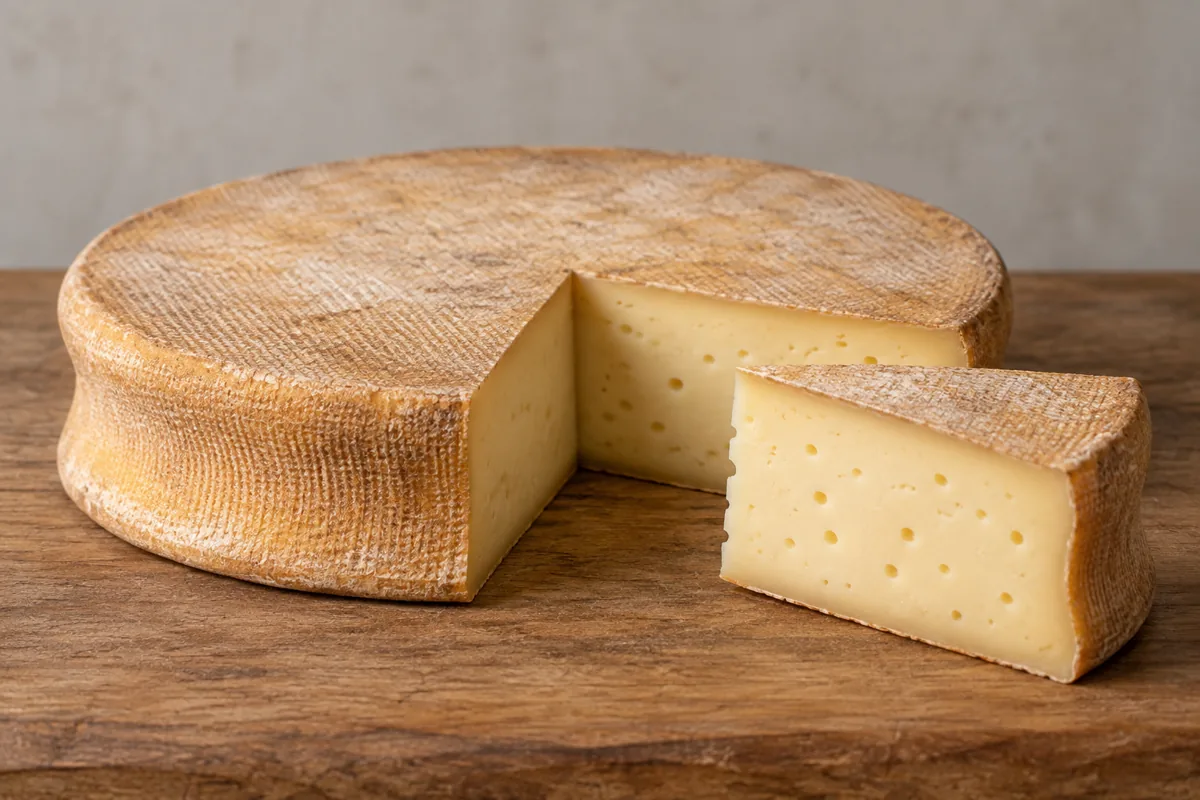
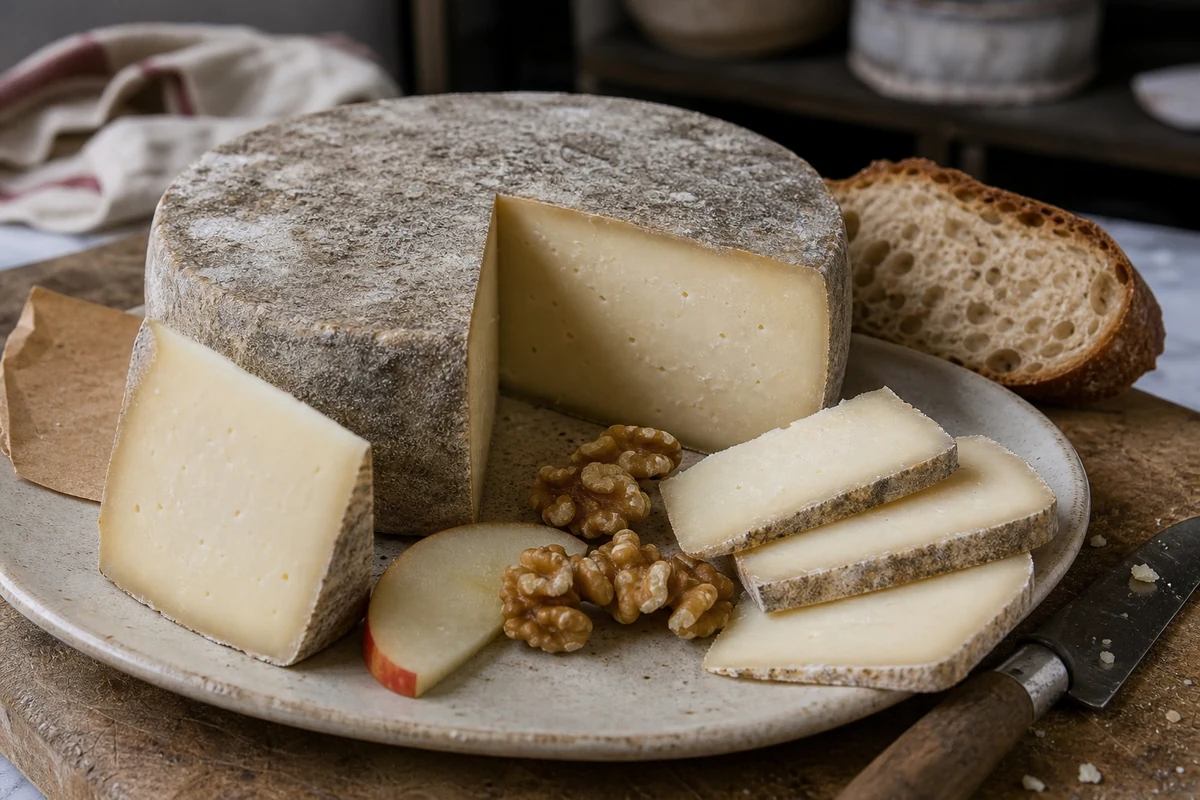
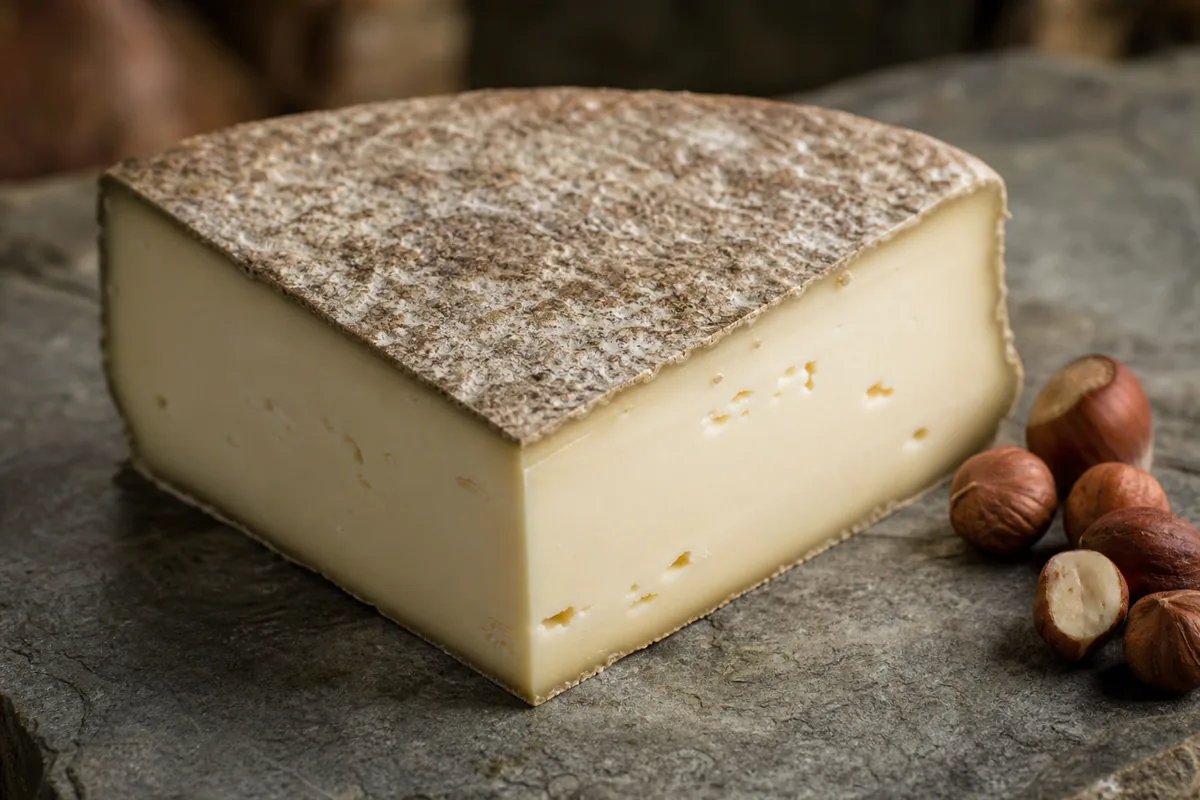
The paste is buttery and pale, with a few discreet openings rather than the dense closed body of a pressed cheese.
Texture is where it wins people over. It is smooth and yielding, and a ripe wedge melts in the mouth rather than needing to be chewed.
One French affineur calls it soft, fine and elegant, and rarely excessive unless it has been kept for a very long time.
Bring out only the portion you plan to serve and let it lose the refrigerator chill. A cold wedge tastes firmer and saltier, while too long at room temperature makes this young cheese soften quickly.
Should You Eat the Tamié Rind?
The rind is edible on a sound wheel, and it carries much of the cheese's character. Taste a narrow rind-and-paste piece first, then keep or trim it according to condition and preference.
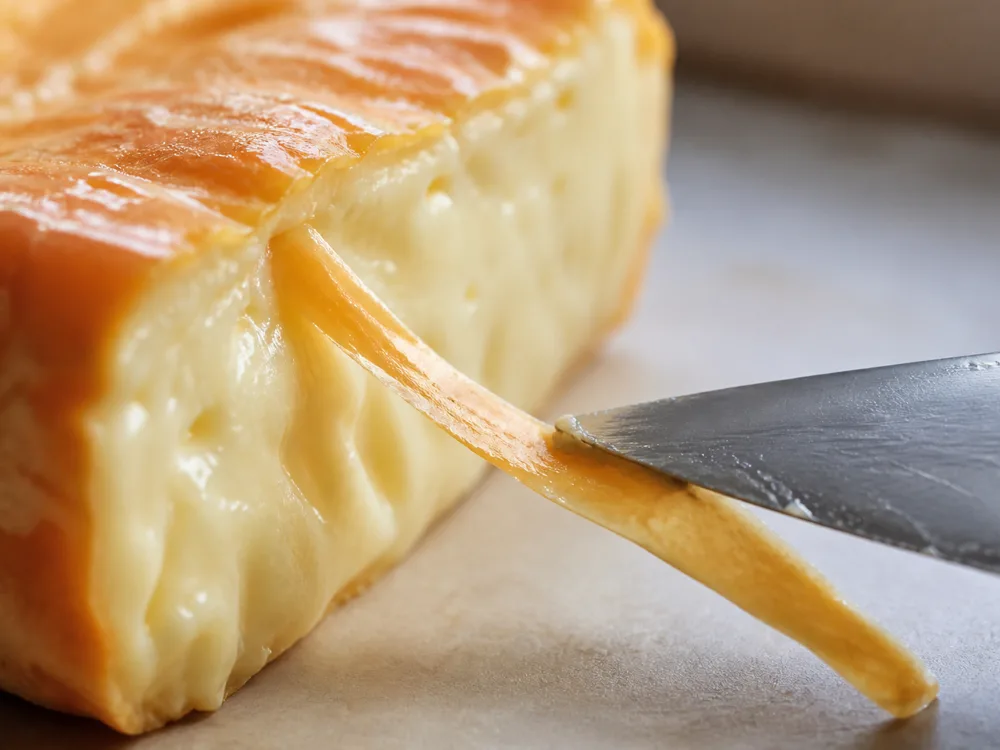
It is orange-red and slightly tacky, the result of repeated brine washing rather than a wax or a coating, and it is meant to be eaten with the paste.
Trim it for preference or when the surface no longer smells clean. If the aroma is more than you want but the wheel is otherwise sound, cut a thin strip from the outer edge and leave the rest.
What you should not do is treat a tacky rind as a fault. Slight stickiness is the washed surface behaving normally, and a rind that has gone dry and papery is the one telling you the cheese sat too long.
The producer describes a light white bloom as part of the finished rind. That does not make every new growth on a cut wedge harmless: if the surface changes after purchase and you cannot distinguish normal rind flora from contamination, ask the seller or discard the piece rather than trying to restore it at home.
How Should You Buy and Store Tamié?
Buy it looking slightly damp and faintly sticky, with an even orange colour and no dry cracked patches at the edge.
A wheel that has dried to a hard pale crust has been sitting too long for a cheese aged four weeks.
The blue-and-white paper it arrives in is packaging, not storage. It will not keep a cut face from drying, and it was never intended to.
After cutting, follow the package or seller date and inspect the wedge each time you open it. The producer's 21-to-45-day best-before range applies after packing and varies by format; it is not an opened-wedge shelf-life promise.
The small model is usually easier for one household to finish without repeatedly exposing a cut face. Compare price by weight only after deciding whether you can use the larger format while it is still in good condition.
What Can You Use Instead of Tamié?
Substitute for the behaviour you need rather than for the country. The useful question is not which cheese is also French, but whether you want something that spreads, something that melts, or something that simply holds a place on the board.
- Closest match, Reblochon: same valley, same format, a shade firmer. Serve it slightly cooler than you would Tamié, and accept a nuttier and less lactic finish
- Milder, Saint-Nectaire: mountain character without the washed-rind aroma. It is drier, so give it longer out of the fridge, and it will not spread the way Tamié does
- Stronger, Munster: the same rind idea taken much further. Use about half as much on a board, and warn anyone who found Tamié already pungent
- For melting instead, raclette: if the dish needs cheese that flows rather than slumps, since a four-week Tamié separates before it stretches
- Wrong direction: a firm Savoie tomme, which shares the region but neither the softness nor the aroma
None of these is a like-for-like swap on a board where Tamié is the point, and you should not pretend otherwise to a guest who knows the cheese.
They are all reasonable where it is one component among several. The melting swap is the only one that does a job Tamié genuinely cannot.
If nothing local fits, buy a smaller piece of the real thing rather than a larger piece of an approximation, because at this size the price gap is smaller than it looks.
How Should You Serve Tamié, and What Should You Drink with It?
Serve it at room temperature, whole in its paper if you have the small model, and let people cut their own wedges from it.
Know what it does under heat before you cook with it, because a four-week washed rind behaves nothing like an aged Alpine cheese.
It softens and slumps rather than stretching, and pushed hard it separates and releases fat instead of pulling into threads. That makes it excellent laid over something already hot and poor as the melting cheese in a long bake.
| Use | How It Works |
|---|---|
| Cheeseboard | Its natural home, where the mild paste sits comfortably beside stronger and harder neighbours. |
| With bread and butter | Plain sourdough and a little salted butter, which is how it is eaten in the valley it comes from. |
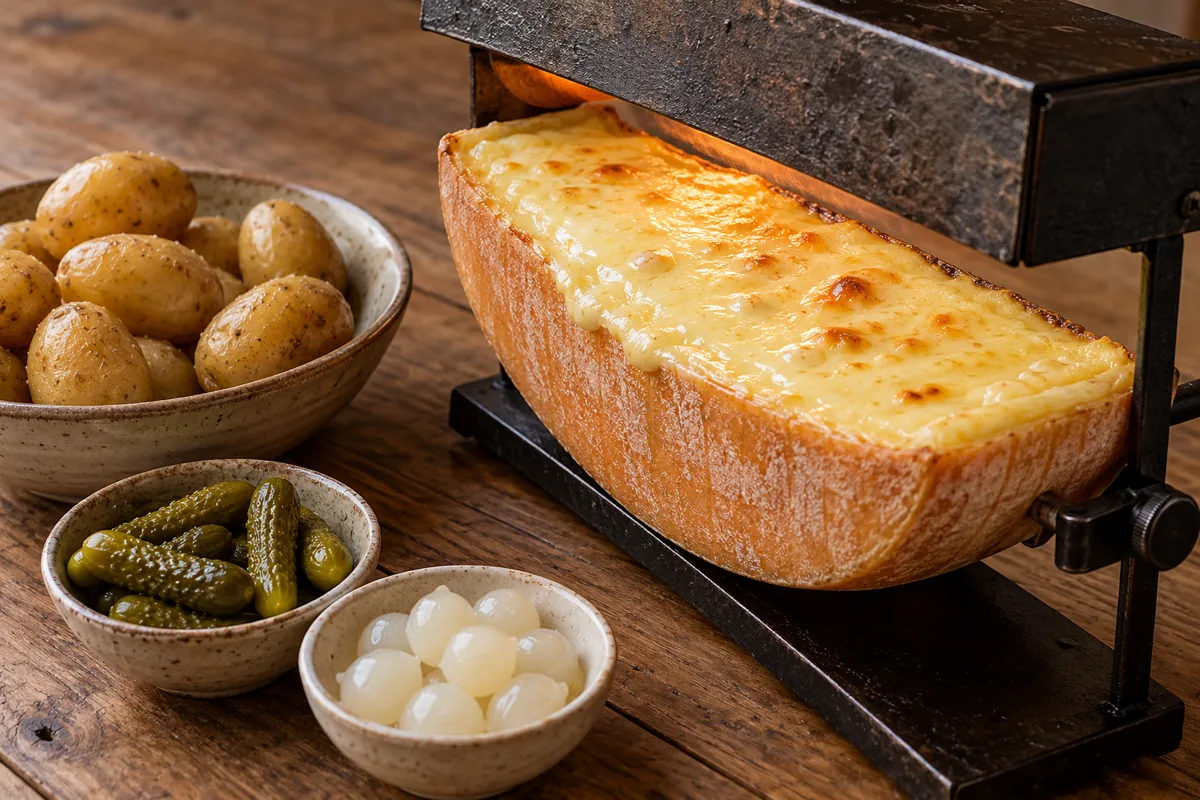
| Melted over potatoes | Softened over hot boiled potatoes rather than baked hard, since it slumps sooner than a raclette cheese. |
| In an omelette | Torn in at the end so it warms through without being cooked into the eggs. |
| Avoid | Long slow bakes, where four-week-old paste separates instead of stretching. |
| Pairing | Why It Works |
|---|---|
| Cru Beaujolais | Light red with enough acidity to cut the cream without covering the hay note. |
| Chardonnay | A rounder white that meets the buttery paste on its own terms. |
| Sangiovese | Savoury and firm-edged, which suits the slightly bitter finish. |
| Merlot | Soft enough in tannin not to fight a young washed rind. |
This is a raw-milk, uncooked pressed cheese. Readers who are pregnant or otherwise at higher risk should check the exact package and follow current guidance for their jurisdiction; our advice on choosing cheese during pregnancy explains where CDC and NHS guidance differs.