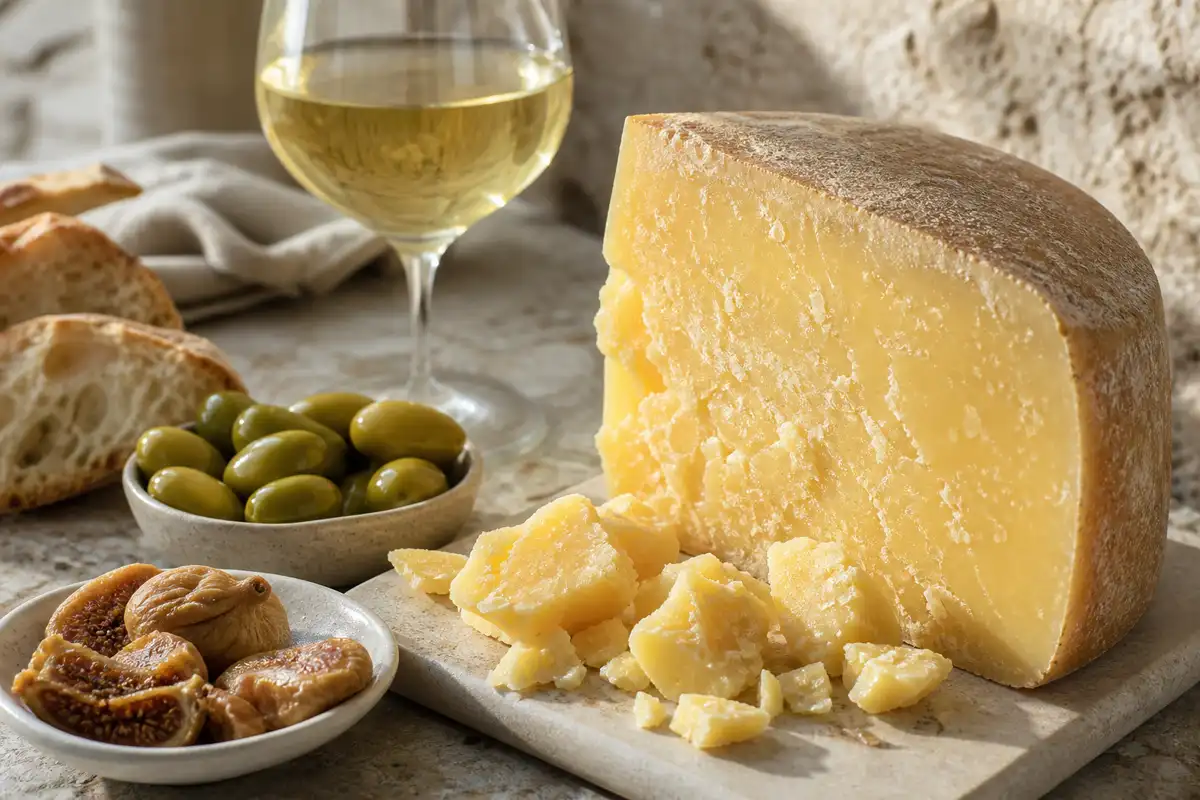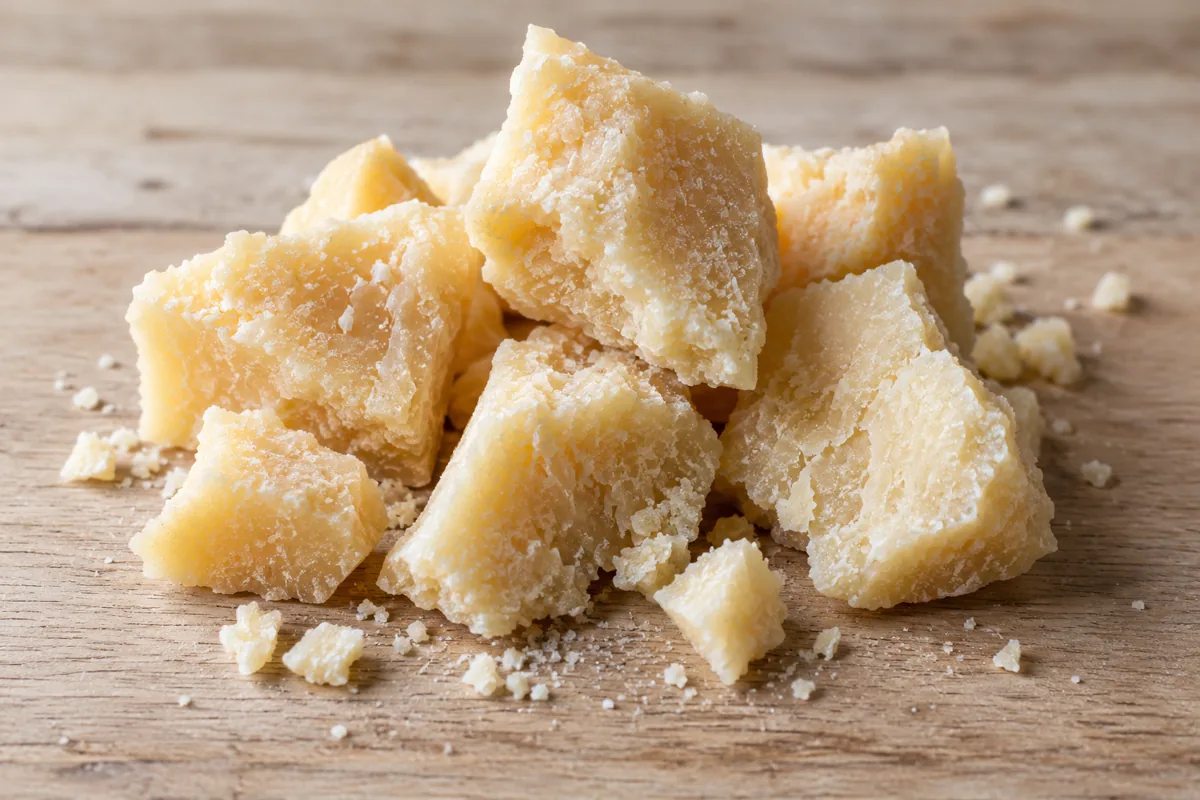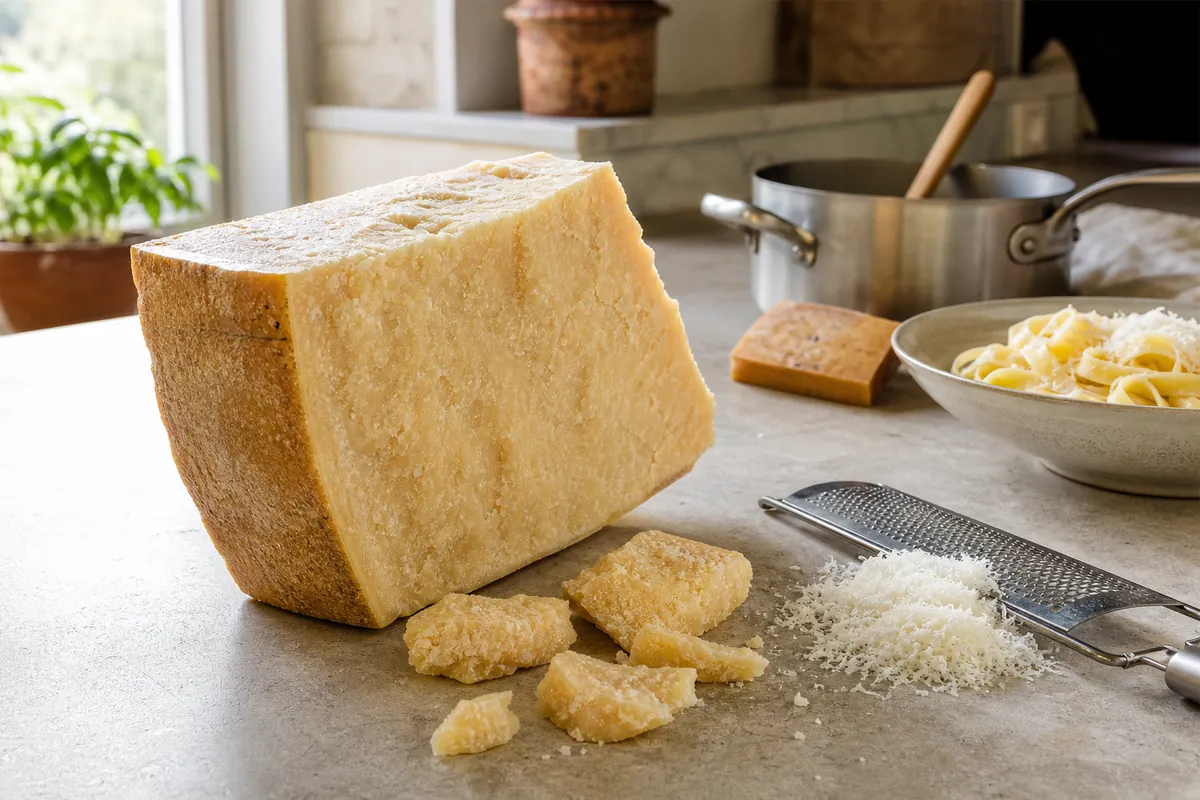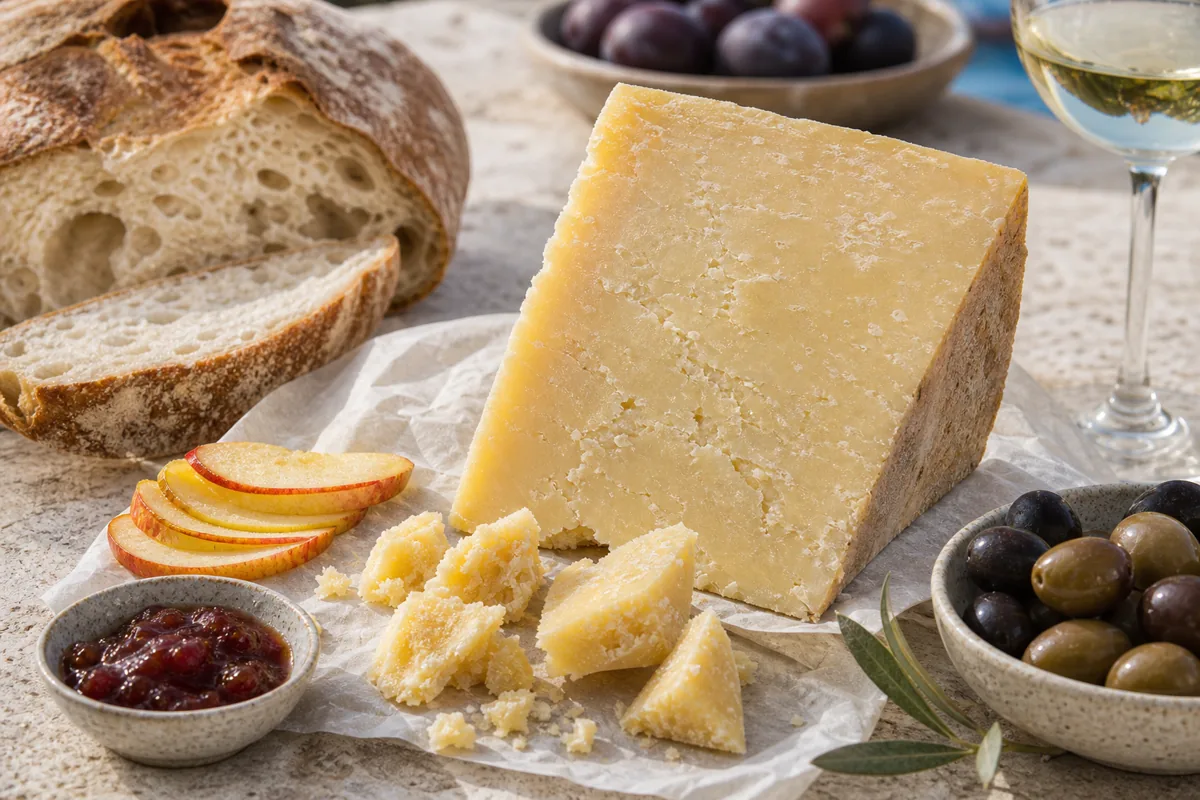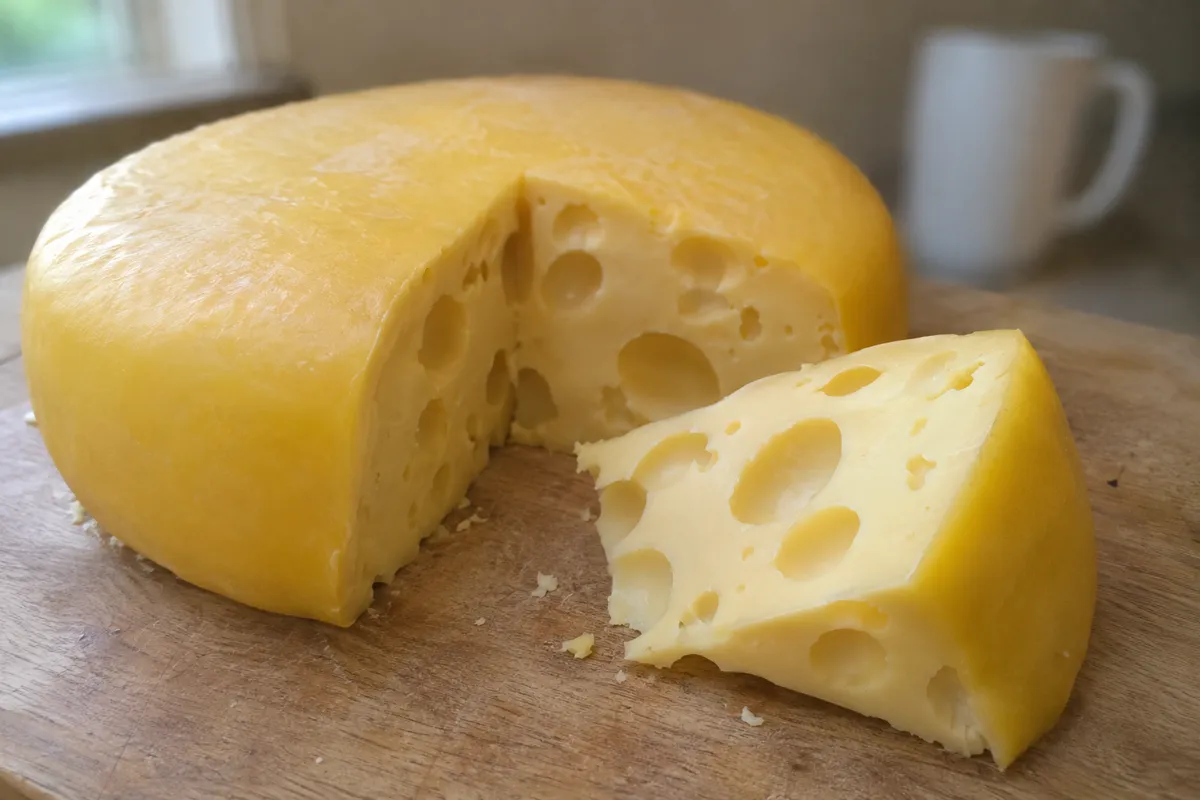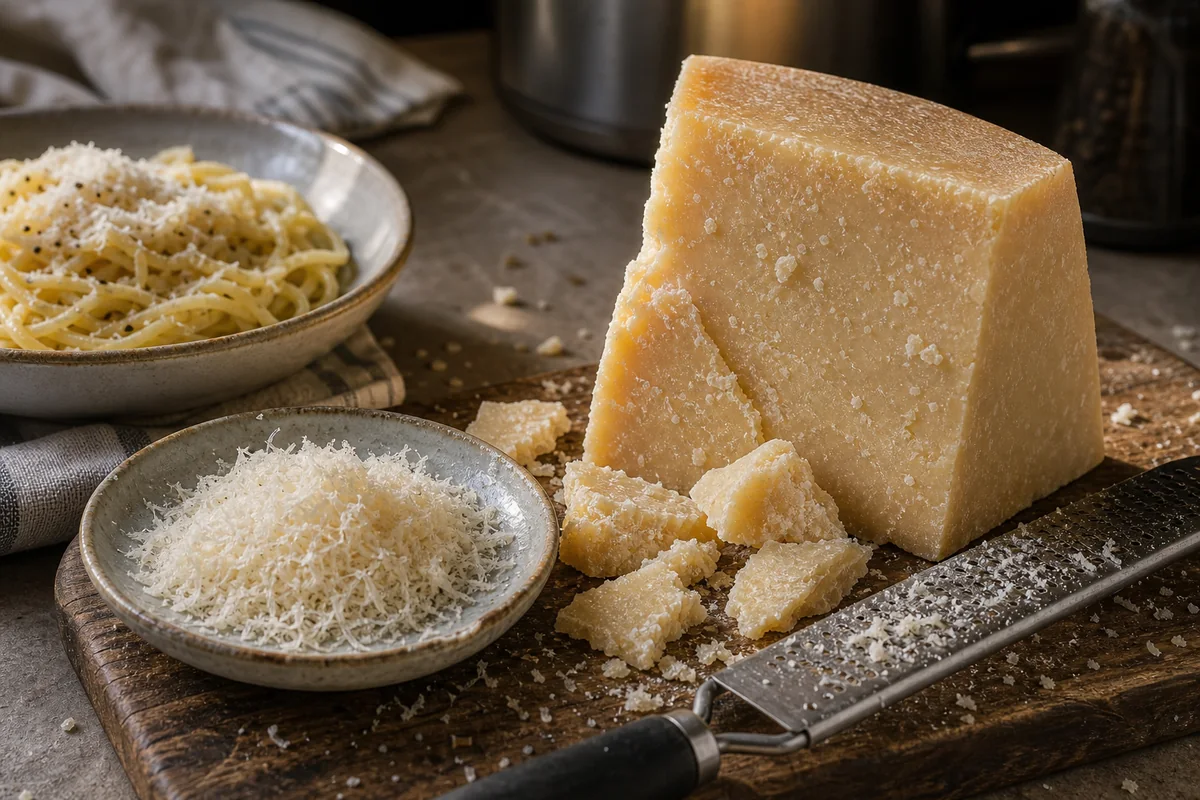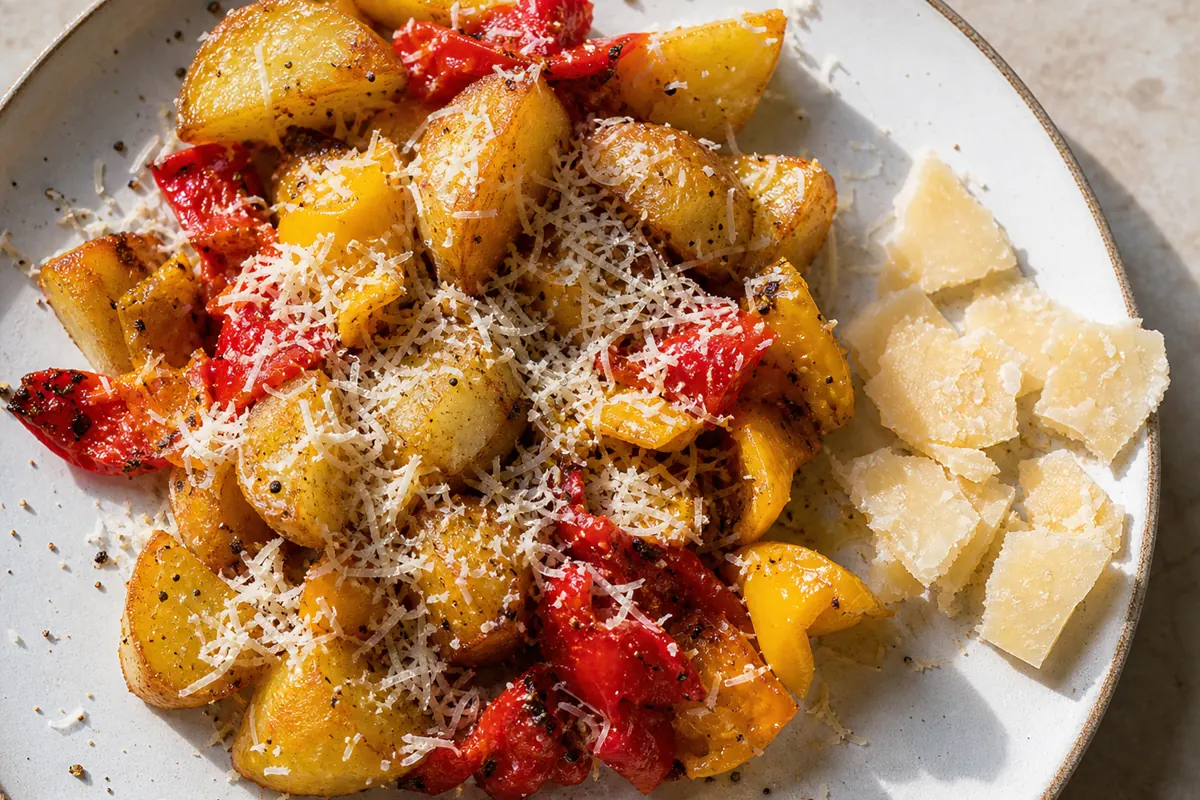
Tezacki Sir Extra Mature (Težački sir) is a hard cow's-milk cheese from the Croatian dairy Sirana Gligora, listed as pasteurised with a minimum age of 6 months, and its brittle texture is described as perfect for grating over hot dishes.
On Gligora's own webshop, both Težački product pages are titled Superior, and the maker gives Težački between 2 and 6 months of ageing, so the age printed on the label tells you which description fits your piece.
In This Article
Who Makes Tezacki Sir, and What Does the Name Mean?
Sirana Gligora makes it, and the dairy's webshop gives its address as Kolan, on the island of Pag. Pag cheese, one of Gligora's three best-known cheeses, is made only from sheep's milk of the island, while Težački uses cow's milk.
The name comes from the Croatian težaci, the hardworking peasants who made this style of cheese at home for generations. Gligora says the cheese grew out of the simplicity of farm life and a wish to keep cheese production natural.
The method builds on Kolan cheese: Težački follows the simple technology Ivan Gligora perfected through Kolan, and Gligora says Šime Gligora wanted to bring the process closer to natural methods. The company calls Težački a newer member of its range that quickly became one of its best-sellers.
The regular Tezacki Sir entry is credited with a bronze medal at the World Cheese Awards in the UK in 2012 and a gold in 2014, while the extra mature entry mentions only the 2012 bronze.
Where Does the Milk for Tezacki Sir Come From?
Gligora says it buys the milk, 100% cow's milk, from partner farms in the Rakovica area, where the cows graze on fields near the Plitvice Lakes, while Cheese.com files the cheese under the Dalmatian hinterland and calls it a Dalmatian cow's-milk cheese.
Gligora's 650 g product page calls the cheese a hard cow's-milk cheese from continental Croatia. Because Gligora buys the milk, its description of where the milk comes from is more specific than a regional label on a reference listing.
Both accounts tie the flavour to grazing: Cheese.com says the slight sweetness comes from cows grazing on higher pastures, and Gligora says the untouched nature around its partner farms directly affects the quality and aroma of the cheese.
How Old Is Extra Mature Tezacki Sir?
Extra mature Tezacki Sir is listed at a minimum of 6 months, the top of the maker's range: Cheese.com's extra mature entry gives that floor and credits the ageing with the cheese's quite brittle texture, while Gligora's own pages say Težački matures for between 2 and 6 months.
The regular Tezacki Sir is listed at a minimum of 4 months, with a firm yellow paste and a few holes, a floor that sits inside that range.
On Gligora's own webshop, the name you will see is Težački Superior: both of its Težački product pages carry that title, and the dairy describes Superior as its most refined expression, with longer ageing, fuller flavour development and deeper character.
A second Težački also has a 6-month floor: Tezacki Iz Maslinove Komine is listed as aged in pressed olive skins that leave it a deep green firm rind and a supple paste. The extra mature entry carries a natural rind and no such colour.
The age printed on the pack is what separates the listings: at least 6 months fits Cheese.com's Extra Mature entry, while Gligora's own range for Težački runs from 2 to 6 months.
What Does Tezacki Sir Extra Mature Taste Like?
Tezacki Sir Extra Mature is described as having a yellow paste with a full, nutty, sweet flavour and a rich, strong aroma.
| Cheese | Paste and texture | Flavour and aroma |
|---|---|---|
| Tezacki Sir Extra Mature (6-month minimum) | Yellow; brittle, flaky and open | Full-flavoured, nutty, sweet; rich, strong aroma |
| Tezacki Sir (4-month minimum) | Yellow; firm and open, with a few holes | Acidic, creamy, pungent; rich, strong aroma |
| Težački Superior 650 g (Gligora's description) | Pale straw-gold; crumbly, lightly crystalline | Dried herbs, butter, ripe stone fruit, a soft savoury character; long savoury finish |
| Tezacki Iz Maslinove Komine (olive skins, 6-month minimum) | Open, soft and supple; deep green firm rind | Full-flavoured, pronounced; aromatic |
By age, the 4-month regular entry is described as acidic, creamy and pungent, and the 6-month extra mature entry as nutty and sweet.
Gligora describes its Superior with dried herbs, butter and ripe stone fruit, and calls it the dairy's most rustic, herbaceous cow cheese.
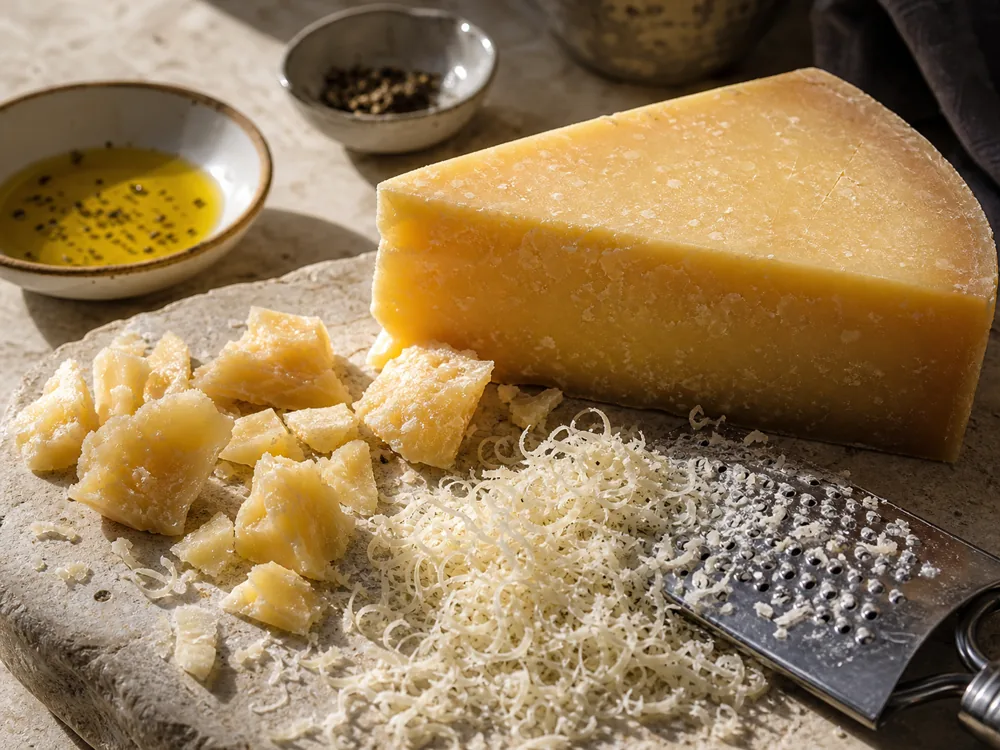
How Do You Use Tezacki Sir Extra Mature, and What Wine Goes with It?
Tezacki Sir Extra Mature's brittle texture is described as perfect for grating over hot dishes. Gligora's Superior page gives a second use, a cheese board with Pošip or Plavac Mali, herb honey drizzled over the cheese, or dried fruits and a glass of Croatian wine.
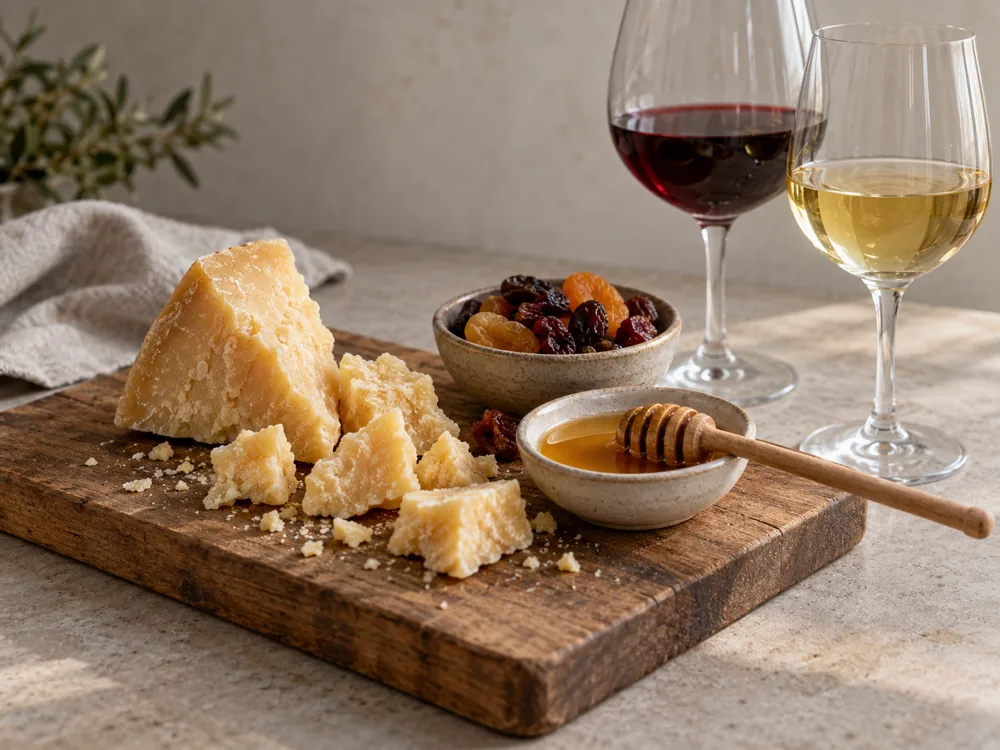
Plavac Mali is the wine both lists name: Cheese.com suggests a Plavac Mali red from Plančić beside a white Malvasia from Škaulj, and Gligora names Plavac Mali beside Pošip.
| Pairing | Type | Why It Works |
|---|---|---|
| Malvasia | Wine | Cheese.com suggests a white Malvasia, naming Škaulj as the maker. |
| Plavac Mali | Wine | Cheese.com suggests a red from Plančić, and Gligora's webshop lists it too. |
| Pošip | Wine | Listed by Gligora's webshop for the Superior tier. |
| Herb honey | Food | Gligora suggests drizzling it over the cheese on a board. |
| Dried fruits | Food | Gligora lists them beside a glass of Croatian wine. |
What Sets Tezacki Sir Apart from Kolan and Pag Cheese?
Tezacki Sir Extra Mature differs from Kolan Extra Mature in its flavour words and in the milk origin Gligora gives for Težački, and from Pag cheese in the milk, which is sheep's milk for Pag cheese.
Kolan is the closest relative. Gligora describes it as a hard cheese from 100% cow's milk, aged at least 4 months and inspired by the Trappists, and says Težački follows the technology perfected through Kolan.
Kolan Extra Mature is listed with the same producer, milk, age floor and rind as Tezacki Sir Extra Mature, so you cannot tell the two cheeses apart by those details.
Kolan Extra Mature is listed with Simmental herds from the Zadar hinterland and a buttery aroma turning nuttier, against Gligora's partner farms near Rakovica for Težački and the nutty, sweet flavour described for Tezacki Sir Extra Mature.
Pag cheese sits at the other end of the dairy's range: Gligora protects it with a PDO and describes the flavour of sea-sprayed, herb-rich pastures.
| Cheese | Milk | Age stated | Texture as described |
|---|---|---|---|
| Tezacki Sir Extra Mature | Cow | 6 months or more | Brittle, flaky, open |
| Kolan Extra Mature | Cow | 6 months or more | Dense, brittle |
| Pag cheese (PDO) | Sheep | 6 to 12 months | Grainy |
Gligora's wine notes also differ by cheese: lighter reds for Kolan and a full-bodied Plavac Mali or Teran for Pag cheese.
Is Tezacki Sir Extra Mature Vegetarian?
Tezacki Sir Extra Mature is listed as vegetarian, made with vegetarian rennet, and as not vegan. If you avoid animal rennet, confirm the rennet on the label or with Gligora before you buy.
Can You Eat Tezacki Sir Extra Mature While Pregnant?
If you are pregnant, you can eat pasteurised Tezacki Sir Extra Mature: Cheese.com lists it as a hard cheese, the NHS lists pasteurised or unpasteurised hard cheeses, such as cheddar, gruyère and parmesan, as safe to eat, and the CDC lists hard cheese, when made with pasteurized milk, such as Asiago, Cheddar, Parmesan, or Swiss/Gruyere/Emmental, as safer.
Cheese.com lists Tezacki Sir Extra Mature as made from pasteurised cow's milk. Gligora's own Težački pages call Težački a hard cow's-milk cheese but do not say whether its milk is pasteurised, so check the label for the milk on a Težački Superior from Gligora's webshop.
Under NHS advice, you can eat Težački Superior whatever its label says about the milk: Cheese.com lists Tezacki Sir as a hard cheese, and the NHS lists pasteurised or unpasteurised hard cheeses as safe to eat.
In the US, you can eat a Težački Superior whose label says pasteurised milk: the CDC lists hard cheese, when made with pasteurized milk, as safer. A Težački Superior without that label is a riskier choice with no heated safer route, even cooked: the CDC lists unpasteurized (raw) milk and dairy products made from raw milk as riskier.
How Do You Buy and Store Tezacki Sir Extra Mature?
Gligora sells Težački Superior as a 2.6 kg full wheel, a 650 g quarter wheel and a 190 g piece, and the 650 g size is exactly a quarter of the full wheel by weight.
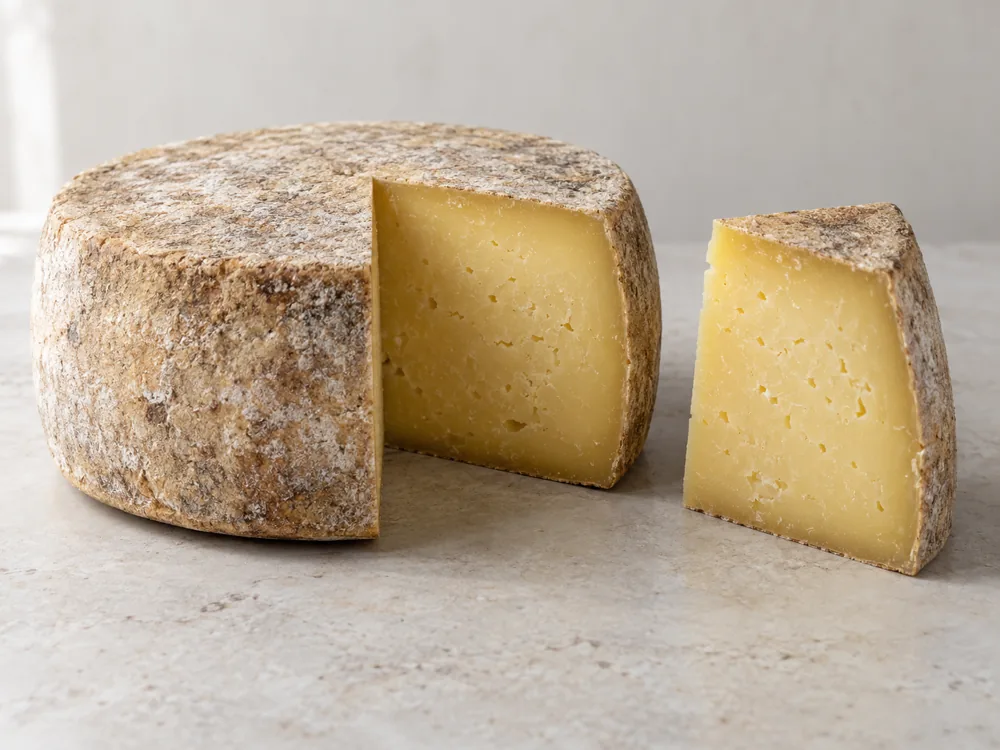
On a shelf, look for the face on the label: the Težački label carries a portrait of Jure Šmit, Šime Gligora's maternal grandfather and the first težak Šime ever met.
The CDC says to keep your refrigerator at 40°F or below and to never leave perishable food, dairy included, out for more than 2 hours (or 1 hour if exposed to temperatures above 90°F). For how long a cut wedge keeps, check the label or ask the seller.