
Pesto Verde is a young Dutch Gouda flavoured with basil and garlic, streaked green through a pale yellow paste. It is a specific branded cheese, not a generic description of any green-flecked Gouda.
Knowing the brand behind it also explains the two label details that confuse most first-time buyers.
In This Article
What Is Pesto Verde Cheese?
Most green-flecked Gouda sold internationally under this name traces back to one specific producer rather than a shared generic recipe. It is sold under the Basiron brand, made by the Dutch company Veldhuyzen Kaas.
The base is a young Gouda-style cheese, not an aged one, which matters for how it behaves both on a cheeseboard and in cooking.
It is marketed as Fat 50+, a richer grade than the 48+ full-fat Gouda most shoppers are already familiar with.
Like most Gouda, it is sold both as whole wax-coated wheels, sometimes as large as 4.5 kilograms for foodservice buyers, and as smaller pre-cut wedges for retail. The wax on a genuine wheel typically carries a green tint, a visual shortcut for the flavour inside before it is even cut.
Being young rather than aged also shapes how it is meant to be eaten. It is not built to be kept and matured further at home the way a wheel of aged Gouda might be; the basil and garlic are at their freshest closer to purchase, not months later.
Who Created Pesto Verde, and When?
Veldhuyzen Kaas itself is not a new company. It was founded in 1884, well over a century before this specific flavoured cheese existed.
Pesto Verde traces to one person's decision, not a long-standing recipe. Dick Veldhuijzen, known within the company for an inventive streak that also produced the goat's-milk cheese Hommage, created Basiron Pesto Verde in 2005 by processing fresh basil directly into the cheese.
The Basiron brand has since grown to more than 20 flavours built on the same idea.
The company itself changed hands after that. MAAZ Cheese B.V. acquired Veldhuyzen Kaas in December 2018, and Veldhuyzen Kaas B.V. now operates as MAAZ's export arm rather than as a fully independent producer.
Dick Veldhuijzen died on 23 July 2023.
What Does "Fat 50+" Mean on the Label?
Not what it looks like at first glance. The number is not the percentage of the whole cheese that is fat.
It measures fat as a share of the cheese's dry matter, calculated after the water content is removed. That is the standard Dutch cheese classification method, used because it stays constant through aging while moisture content does not.
So 50+ sits a notch above standard full-fat Gouda, but it is a labelling convention rather than an unusually high or notable fat claim.
Is Pesto Verde Cheese Vegetarian?
Flavoured Gouda varieties don't always share the same rennet choice as the plain cheese they're built on, so this is worth checking rather than assuming. The ingredient list for Pesto Verde confirms microbial rennet rather than an animal-derived coagulant.
That makes it straightforward to buy without checking further if avoiding animal rennet is a requirement.
Is Pesto Verde Cheese Pasteurised, and Can You Eat It Pregnant?
Yes, it is made from pasteurised cow's milk.
That puts it in the standard safe category for pregnancy that applies to hard and semi-hard cheeses without a soft or bloomy rind, without the extra caution some other cheeses on this site require.
What's In Pesto Verde Cheese?
The full ingredient list is short: pasteurised cow's milk, basil, garlic, salt, starter culture and microbial rennet.
Basil and garlic are added directly, not blended in as a pre-made pesto sauce. Traditional pesto includes pine nuts, olive oil and Parmesan too, none of which appear on this list.
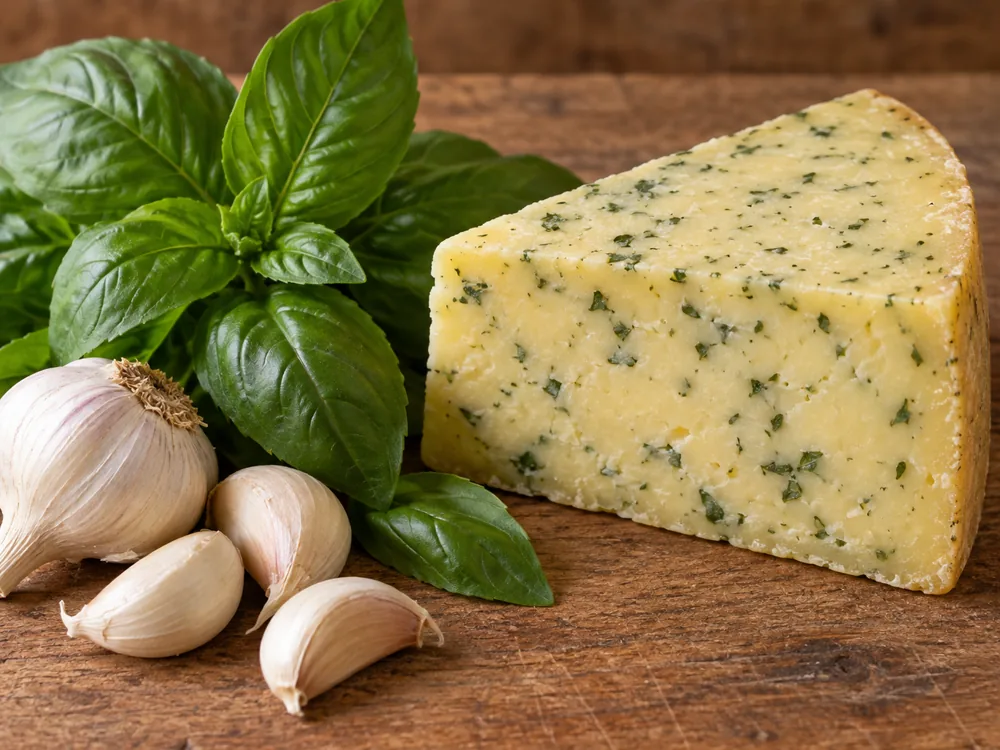
The colour comes from two named colourants rather than the basil alone: E141, copper complexes of chlorophyll, for the green, and E160b(ii), annatto norbixin, for the yellow Gouda base underneath it.
Both are standard, widely used food colourants. Neither is unusual to this cheese specifically, and both appear across a wide range of other coloured dairy products.
What Does Pesto Verde Taste Like?
The base is a young, extremely creamy Gouda, milder than an aged wheel and softer in texture.
Basil and garlic sit on top of that as a genuinely strong, aromatic pesto flavour, not a faint suggestion of herbs. Expect a bold flavoured cheese rather than a subtly seasoned one.
How Do You Use Pesto Verde Cheese?
It melts well, which makes pizza and pasta its two most natural uses.
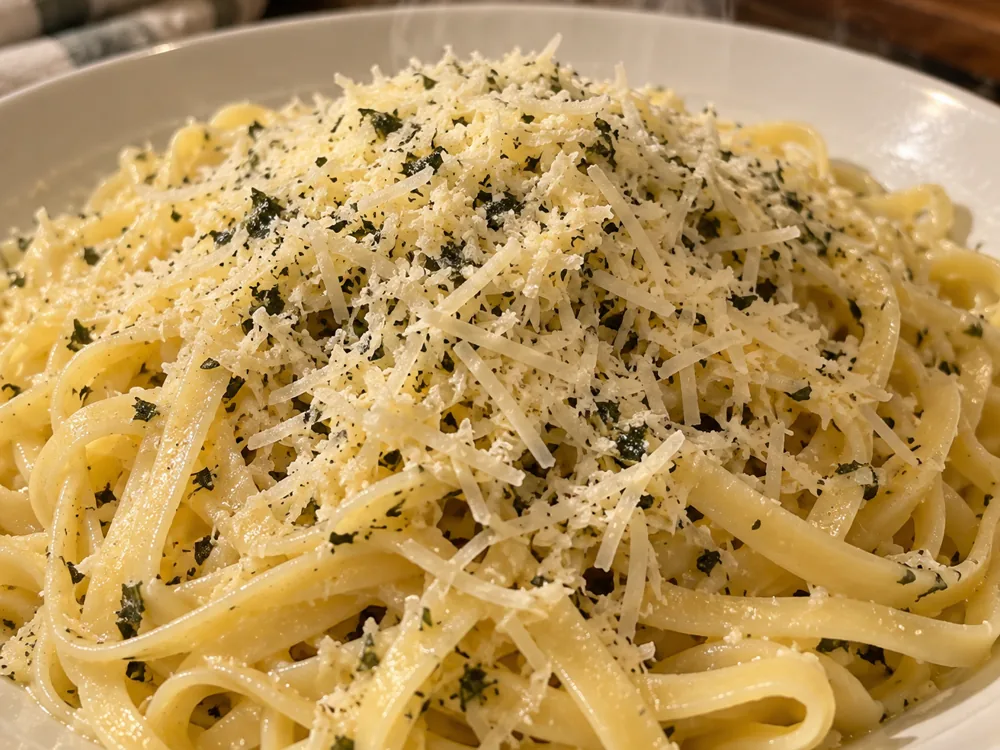
Stirred into cheese sauces and dips, it saves a step over adding pesto and cheese separately. It also suits Mediterranean-style dishes generally, wherever a basil-forward cheese fits the plate.
How Should You Store Pesto Verde?
It doesn't keep as long as an aged wheel. Once cut and vacuum-sealed, a wedge keeps for roughly 7 to 8 weeks refrigerated, shorter than an aged Gouda that can hold for months.
Keep it between about 1.7°C and 7°C, and wrap it so it can still breathe rather than sealing it completely. Wax or parchment paper as the first layer, with a loose outer layer of plastic wrap or a resealable bag, keeps it from drying out without trapping condensation against the rind.
Where Can You Buy Pesto Verde Cheese?
This is not a cheese confined to one country's specialty shops, which is unusual for a flavoured Gouda variant this specific. In the UK, retailers including Dutch Cheeseman UK and the Gouda Cheese Shop carry it.
In the US, it turns up through general online grocery marketplaces rather than typical supermarket chains.
Distribution reaches well beyond Europe and North America, too. Retailers such as Waddi Al Urdun and Gourmet Egypt stock it in the Middle East, which says something about how portable this specific flavour combination has turned out to be.
What to Use Instead of Pesto Verde
A plain young Gouda with fresh pesto stirred in by hand gets close to the same result for anyone who cannot find the branded product.
Other flavoured Gouda varieties, such as cumin or nettle versions, give a similarly styled option if a different flavour direction is acceptable rather than basil and garlic specifically.


