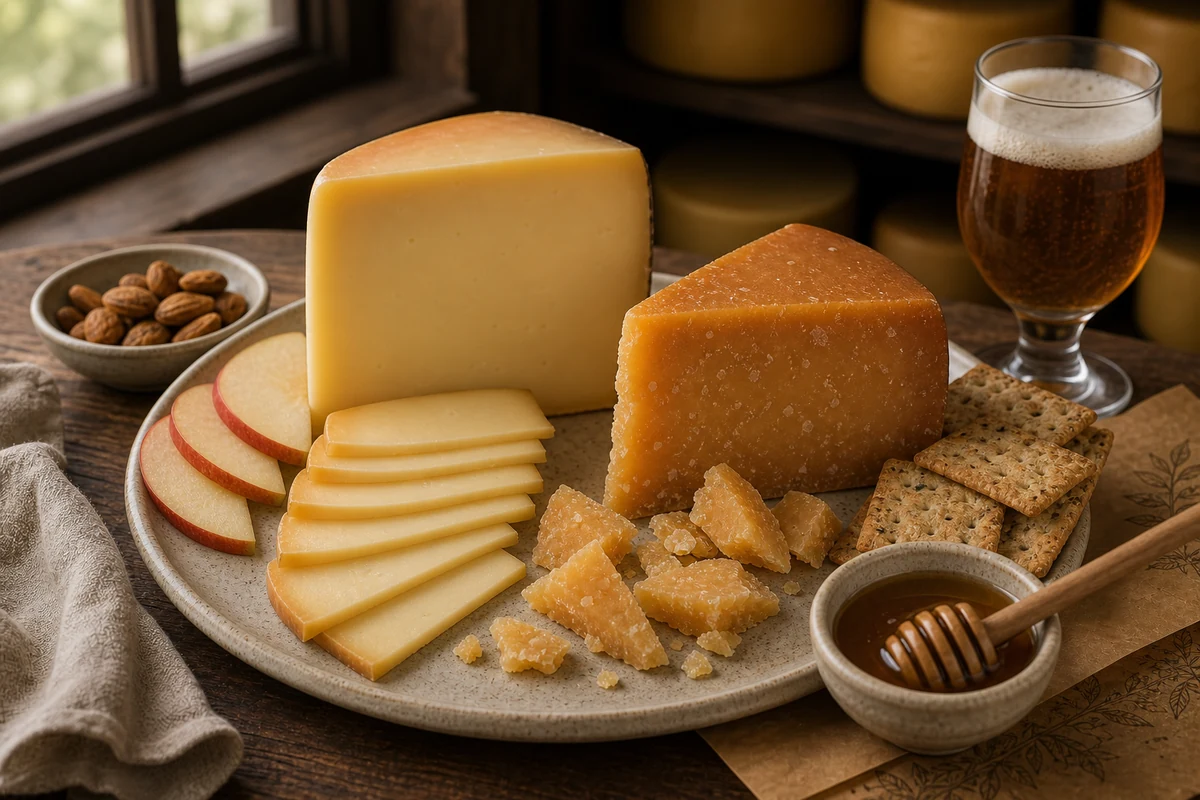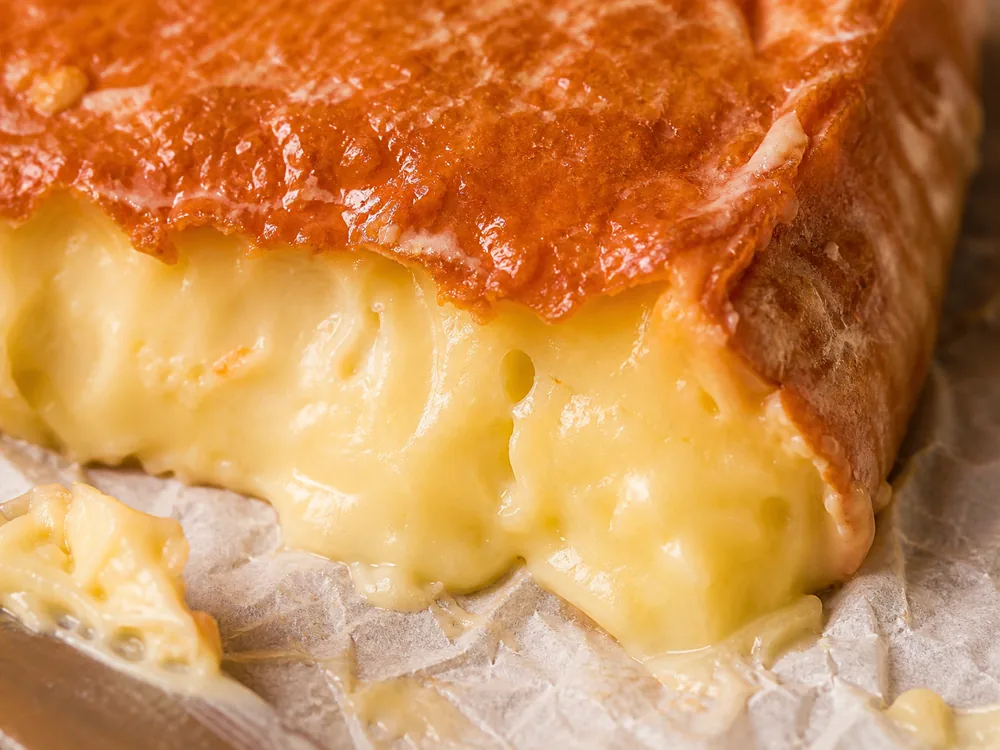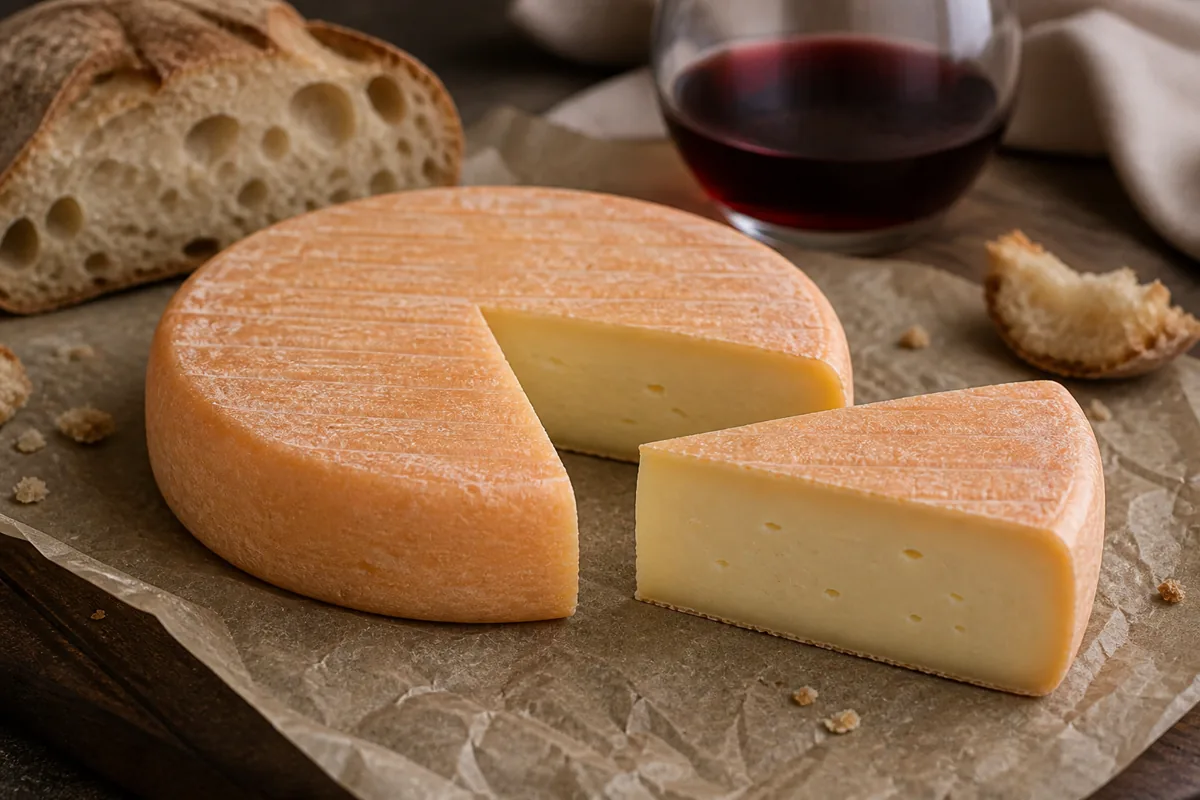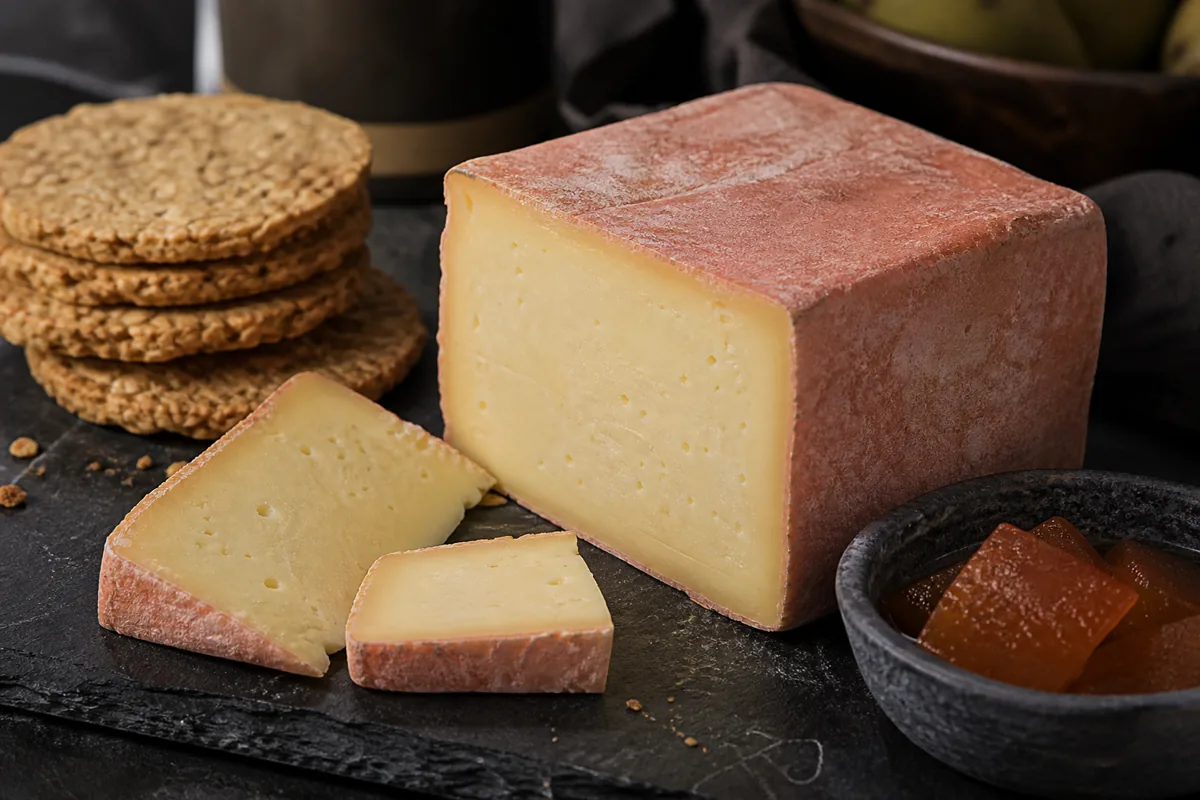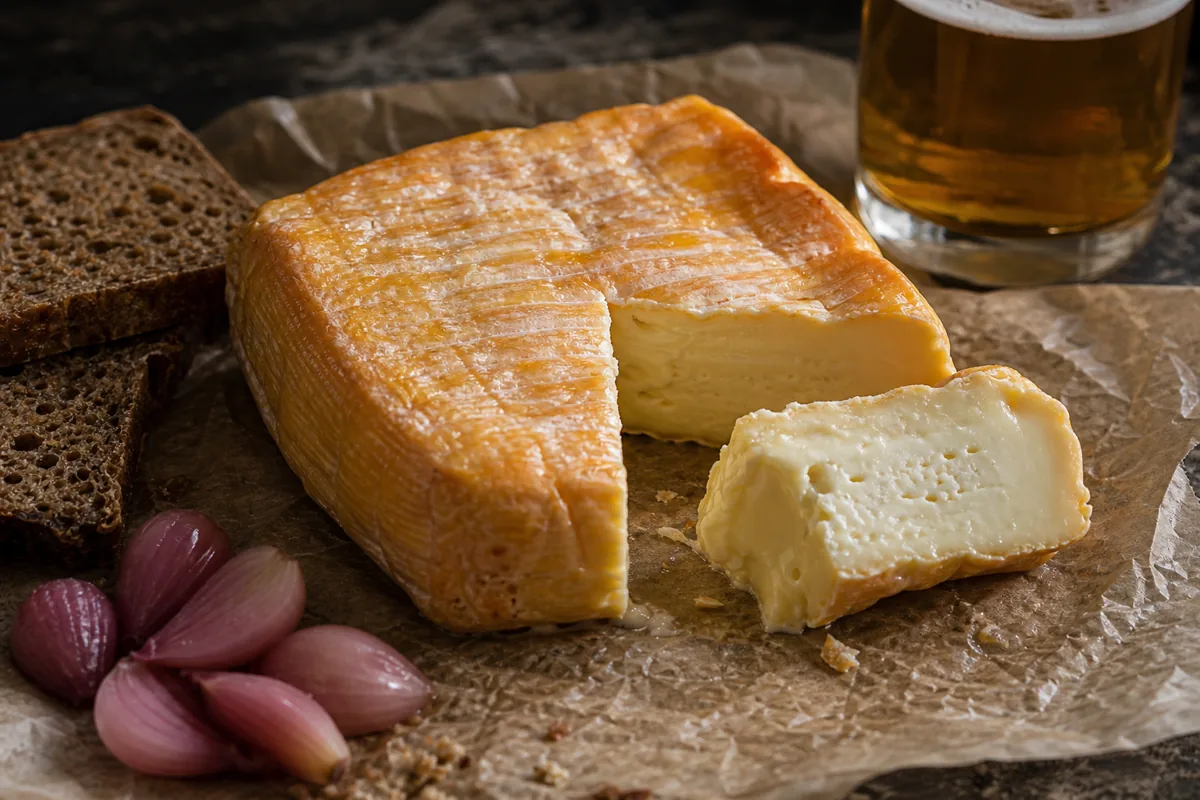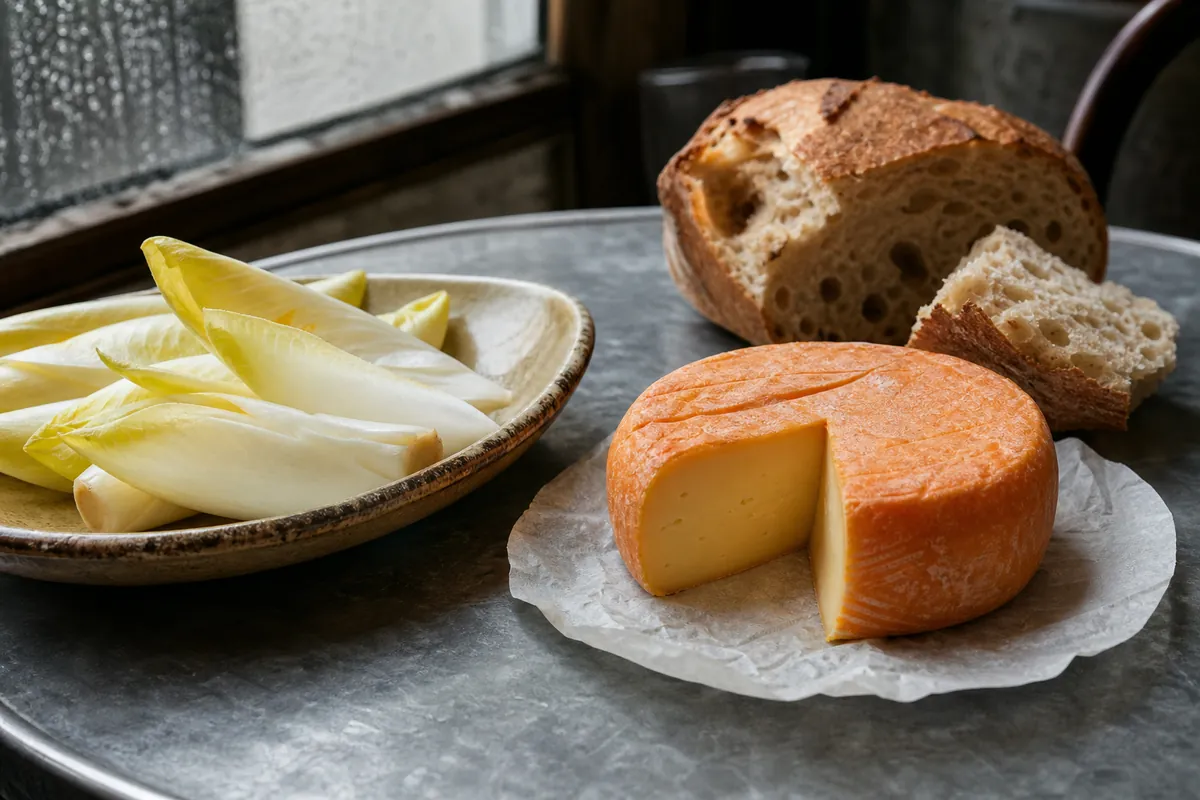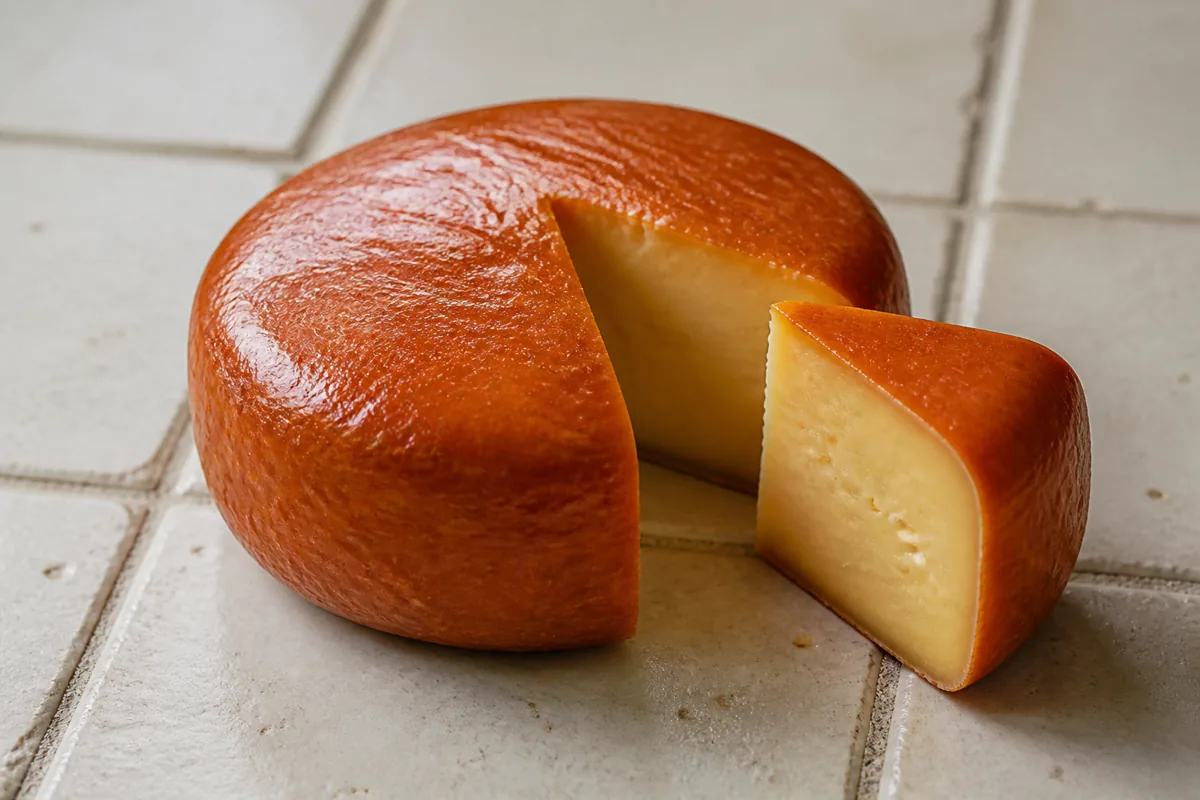
Kernhem is a Dutch washed-rind cow's-milk cheese developed by the Nederlands Instituut voor Zuivelonderzoek, or NIZO, in Ede. If you find it at a Dutch counter, expect a rich, mild-to-piquant paste, a red rind you should trim and a cheese that works in salads, on toast or melted.
The 60+ on the label does not mean 60 grams of fat in every 100 grams of cheese. It measures fat as a share of dry matter, while current wholesale nutrition panels put total fat at about 38 grams per 100 grams of cheese as sold.
In This Article
Where Does Kernhem Come From and Why Is It Called Kernhem?
NIZO developed the cheese in Ede and named it after the Kernhem estate, where the institute was located. A Dutch retail profile preserves that origin and describes the regular washing behind the red rind.
Unlike Gouda or Leiden cheese, Kernhem was not named after a traditional market town or a centuries-old local style. It is a modern developed cheese, and the estate name gave it a more distinctive identity than "Edese kaas", or Ede cheese.
In that respect it is closer to Leerdammer, another modern Dutch cheese, than to a protected regional tradition. Several factories have made Kernhem, and current records name different brands or manufacturers.
Several factories have made Kernhem, so the name does not guarantee one identical ingredient line. You need the pack in your hand to settle the rennet, additives and allergen details.
One secondary account tells a different story about a cheesemaker accidentally ripening roomkaas too warm. The stronger record credits NIZO, so that is the origin you should use unless primary evidence emerges for the accident story.
Category labels vary between Gouda-family, semi-soft and semi-hard, but the red washed rind remains the consistent identity cue. If you are trying to recognise Kernhem at a counter, that visible surface is more useful than a broad family label.
How Can You Recognise Kernhem and Choose a Size?
Look for a cylindrical cheese with a red rind and a light-yellow paste. Whole wheels are large enough that most shoppers will encounter a cut piece, making the rind and ingredient label your best checks.
The Treur Kaas product record and the PS in foodservice specification list a preservative and colourant besides salt, starter culture and rennet. The PS record also names red-bacteria surface flora, which matches the rind treatment more directly than the cheese name alone.
Whole-wheel records range from 2.7 kg to about 3 kg, while retail cuts run from 250 g to 1,000 g. A smaller piece lets you judge the rind aroma and creamy paste before buying a larger amount.
What Does Kernhem Taste Like?
Across the available descriptions, the useful common ground is a creamy cheese with a mild piquant edge. Texture labels vary between semi-soft and semi-hard, so you should judge a cut piece by its age and feel rather than expecting one rigid category.
| Source | Texture | Flavor |
|---|---|---|
| Treur Kaas (wholesaler) | Creamy, semi-sticky | Lightly piquant |
| PS in foodservice (wholesale record) | Semi-hard | Mildly piquant (description); piquant and pronounced (subtitle) |
| CheeseOnline (retailer) | Semi-hard | Creamy and piquant |
| Cheese.com | Semi-soft; "firm, open and smooth" | Mild, nutty, sweet; aromatic |
| Dutch Wikipedia | Somewhat soft inside | Mild |
Nutty and sweet appear in one reference, while the broader agreement stops at mild, creamy and piquant. Treat those extra notes as a possible impression rather than a defining promise.
Even one wholesale record moves between "mildly piquant" and a pronounced piquant taste. That range may reflect marketing language, age or batch variation, but the record does not give you enough information to choose among those explanations.
Most seller descriptions stay at the gentle end, so you should expect a mild cheese with some savoury lift rather than a forceful washed-rind smell. The stronger wording is the outlier.
Semi-soft and semi-hard are both used for Kernhem, with no age or producer attached to either label. You can count on a creamy, cuttable cheese more confidently than on one exact firmness.
The sources agree on a mild, creamy, piquant cheese and split on texture, semi-soft versus semi-hard. PS in foodservice itself gives both a mild and a pronounced strength.
Can You Eat the Kernhem Rind?
The PS wholesale specification explicitly calls Kernhem a Dutch red-rind cheese whose rind is not edible. It also lists surface flora and the colourant E160b, so trimming the outer layer follows the product record rather than a general fear of washed rinds.
Trim the rind before serving, then taste the paste on its own before adding accompaniments.
During ripening, the rind is washed with lukewarm salted water and develops the surface flora associated with red-rind cheese. The treatment helps shape the aroma and piquant edge even though you remove the rind before eating.
This distinction is easy to miss: an inedible rind can still influence the paste during maturation. Trimming it at the table does not erase the flavour development that happened while the wheel was ageing.
What Does 60+ Mean on a Kernhem Label?
"60+" gives fat as a percentage of the cheese's dry matter, which means everything left after water is excluded. A fat-in-dry-matter explainer shows why that number is not the same as total fat in a 100-gram serving.
At 60 percent fat in dry matter, Kernhem sits well above the 40 percent threshold commonly used for a full-fat cheese, and one reference says cream is added to the milk. That helps explain the rich mouthfeel without turning the front-label 60+ into a serving-size number.
The fat in 100 grams of the cheese as sold is lower because the water stays in the weight, as the two wholesale records in the table below show.
Goldsteig's conversion for semi-hard cheese multiplies fat in dry matter by 0.6, which turns 60 into 36 g, close to the total fat in both records.
The PS in foodservice specification explains the small gap: it lists 60.9 percent dry matter and 39.1 percent moisture, and 37.8 g of fat in 60.9 g of dry matter works out at about 62 percent, consistent with a label of 60+.
Water evaporates during maturing and storage, so the 39.1 percent moisture describes the cheese as specified. A drier piece would carry more fat per 100 grams at the same 60+.
| Per 100 g | Treur Kaas | PS in foodservice record |
|---|---|---|
| Energy | 420 kcal (1,736 kJ) | 417 kcal (1,756 kJ) |
| Total fat | 38 g | 37.8 g |
| Saturated fat | 27 g | 24.2 g |
| Monounsaturated fat | 9.8 g | 10.1 g |
| Polyunsaturated fat | 0.9 g | 1 g |
| Protein | 20 g | 18.8 g |
| Carbohydrate | 0 g | 0 g |
| Salt | 1.2 g | 1.2 g |
| Dry matter | Not listed | 60.9 % |
| Moisture | Not listed | 39.1 % |
The two nutrition panels differ by almost 3 grams of saturated fat and 1.2 grams of protein per 100 grams. Use the package you buy for dietary decisions because supplier data are close but not interchangeable.
On the PS panel, a 20-gram portion provides 83 kcal, 7.6 grams of fat and 4.8 grams of saturated fat, or 24 percent of its adult reference intake. Both wholesale records give 1.2 grams of salt per 100 grams, equal to 0.24 grams in that portion.
How Long Is Kernhem Aged?
Published maturation figures range from about one month to 8 to 10 weeks. They may describe different stages or products, so neither number should be treated as a universal age.
If you want a firmer or more assertive piece, ask the shop how long its current wheel has matured. The product age answers that question more directly than the category average.
How Is Kernhem Used on Toast, in Salads, and Melted?
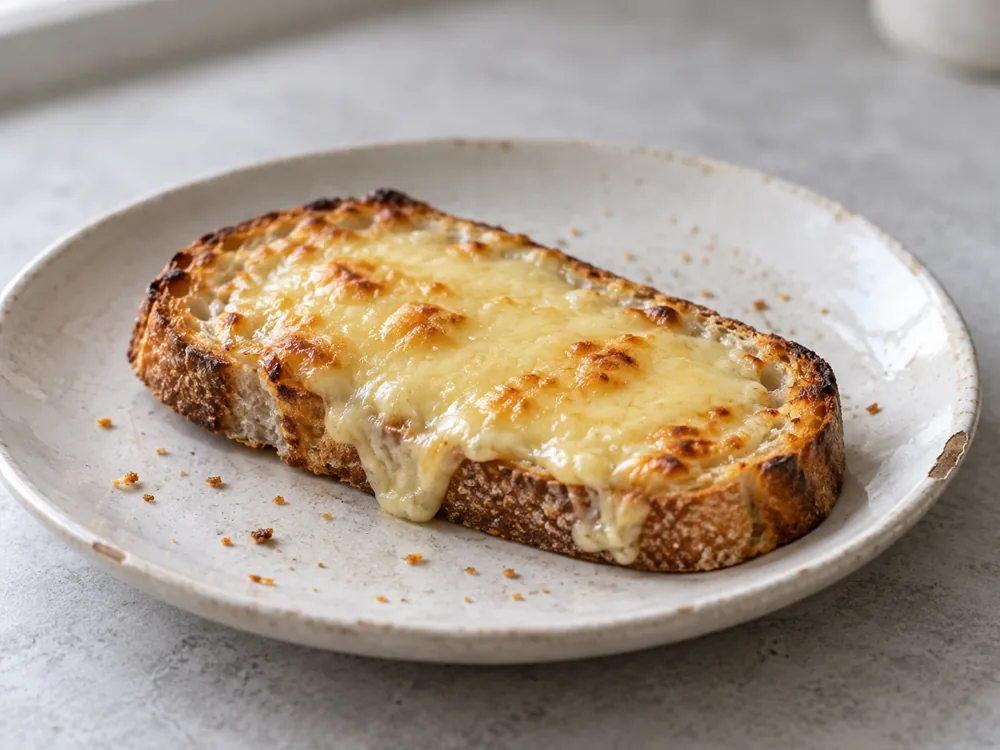
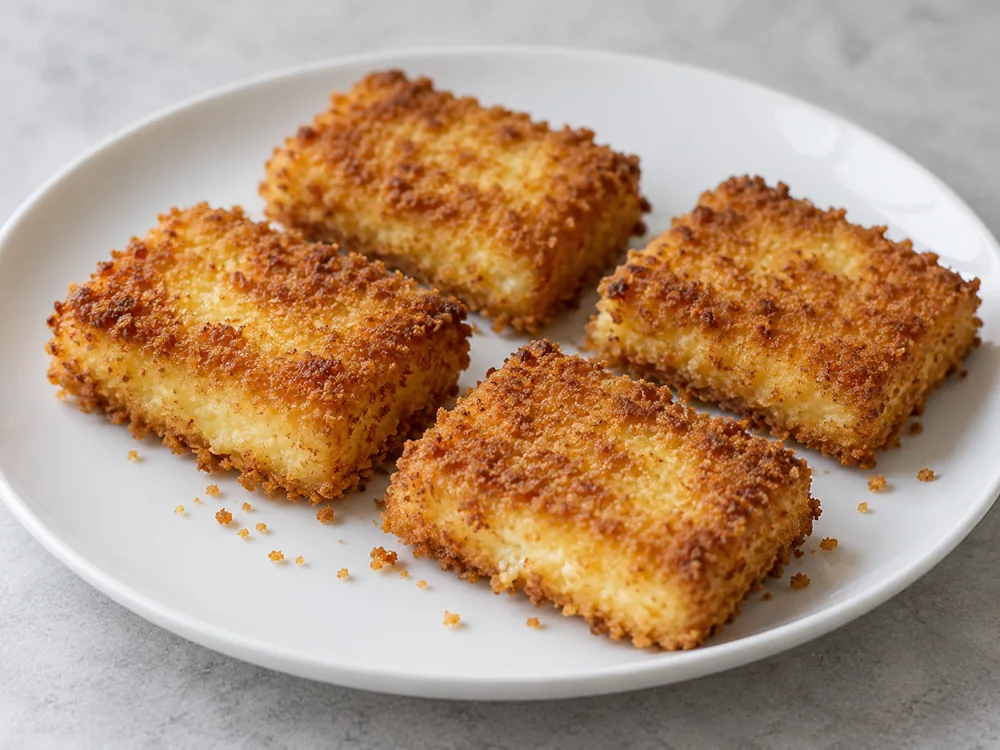
Kernhem can move from cold plates to hot food: cube it into salads, lay it on toast, melt it over a dish or serve it breaded and fried. Its richness also makes a small piece workable at the end of a meal.
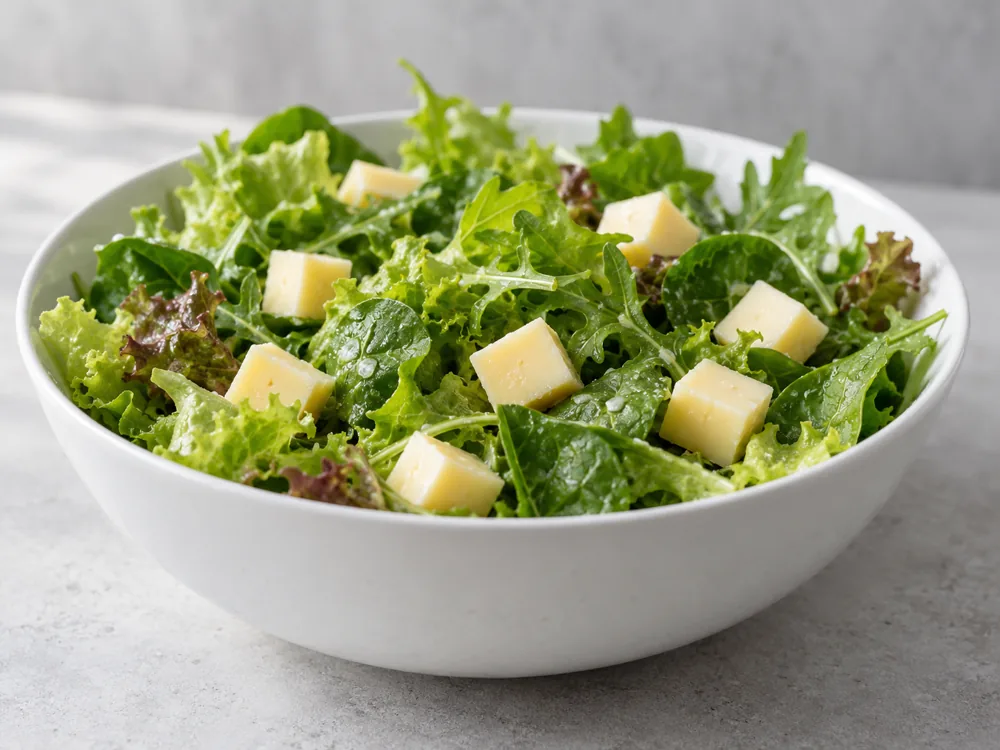
For a simpler serving, add it to lunch or a drinks plate with something crisp or acidic. A light wine is less likely to bury its mild piquancy than a heavy, tannic red.
The PS record introduces breaded frying with "zelfs" (even), so the wholesaler itself presents it as the unusual use.
How Should You Store Kernhem?
The PS in foodservice specification gives chilled storage between 0 and 7°C at the wholesaler and in transport. It also says the cheese has a limited shelf life once opened, but it does not give a number of days.
The CDC home guidance sets the refrigerator at 40°F, about 4°C, or below. That setting fits within the wholesale range, while the date and after-opening instructions on your pack remain the practical limit.
No product-specific record gives an after-opening day count, wrapping method or freezing guidance. Use the pack date first and treat general cheese storage as handling advice rather than a new Kernhem shelf life.
Is Kernhem Vegetarian, and What Else Is on the Label?
The vegetarian answer depends on the supplier. Treur Kaas lists vegetarian rennet, another reference marks Kernhem as not vegetarian and the PS record says only "rennet", so the product name cannot settle the question for you.
Current wholesale ingredient lines include pasteurised cow's milk, salt, culture, rennet, preservative E1105 and colourant E160b. They also list egg beside milk among the allergens and mark E1105 with "EI", the Dutch word for egg.
Egg is easy to miss on a cheese, so someone avoiding it needs the ingredient line of the pack in hand. PS in foodservice also marks the cheese GMO-free and not irradiated.
Is Kernhem Safe to Eat During Pregnancy?
The current seller records consulted here list pasteurised cow's milk, although multiple factories and suppliers mean a pack can differ. The NHS guidance lists pasteurised semi-hard cheeses such as Edam and pasteurised soft cheeses as safe to eat, and says foods made from unpasteurised milk must be thoroughly cooked.
The same NHS page says pasteurised or unpasteurised mould-ripened soft cheeses with a white coating, and soft blue-veined cheeses, must be thoroughly cooked. Kernhem has a washed red rind rather than a white coating, and sellers class it as semi-soft or semi-hard, two classes the NHS lists as safe to eat when pasteurised.
The CDC table lists soft cheese made from unpasteurized (raw) milk as riskier and pasteurized soft cheeses heated to an internal temperature of 165°F or until steaming hot as safer. The NHS also counts any cheese cooked until steaming hot as safe.
In pregnancy, a dish heated until steaming hot meets the NHS cooked-cheese line, and the CDC line for heated soft cheese covers the semi-soft reading. Served cold, Kernhem is described as a pasteurized semi-soft or semi-hard cheese, a type the CDC list does not cover, so ask a midwife or doctor.
What Common Questions Come Up About Kernhem?
It means about 60 percent fat in the cheese's dry matter, not 60 percent of the whole wedge. Current wholesale panels put total fat near 38 grams per 100 grams because water remains part of the cheese.
The PS in foodservice specification says the rind is not edible. Trim it before serving even though it contributes to the cheese's aroma and ripening.
You need to check the supplier's ingredient list. One current record names vegetarian rennet, another source says the cheese is not vegetarian and a third does not identify the rennet type.
You can cube it into salads, melt it on toast or over a hot dish, or bread and fry it. Its mild piquancy gives you more character than a neutral melting cheese without the force of a very pungent washed rind.