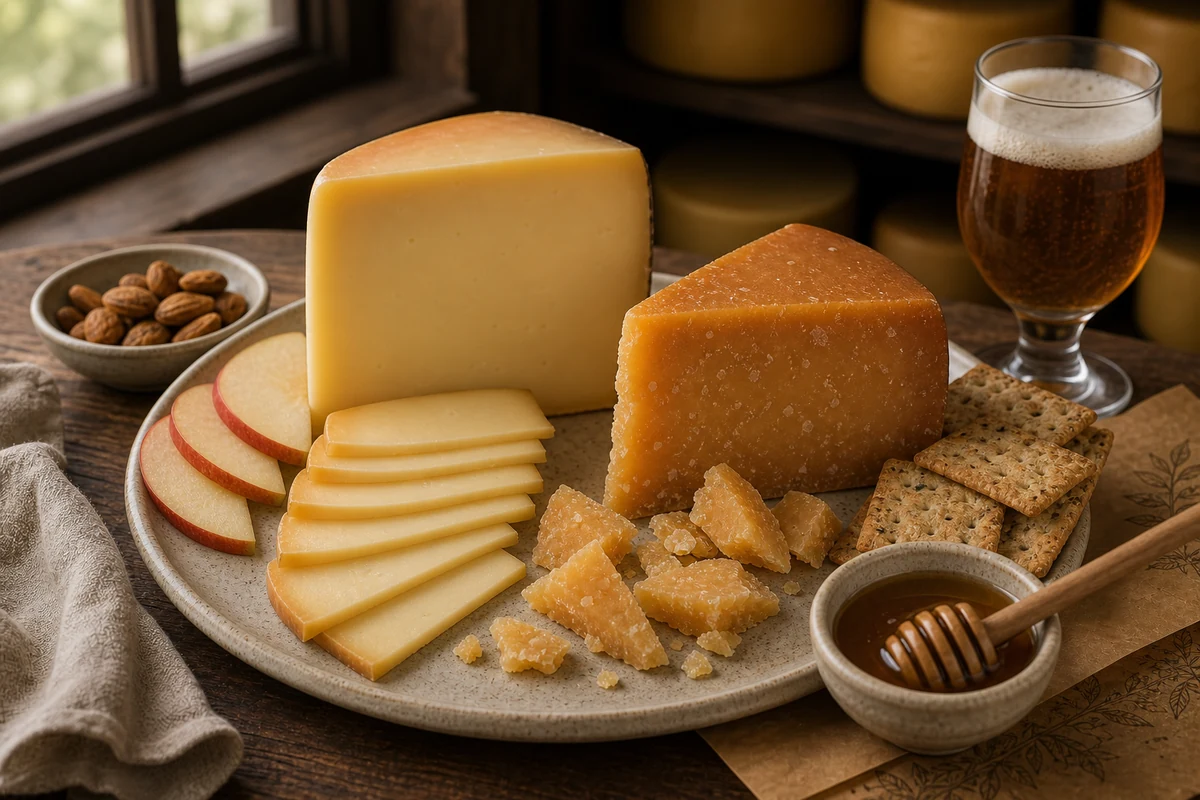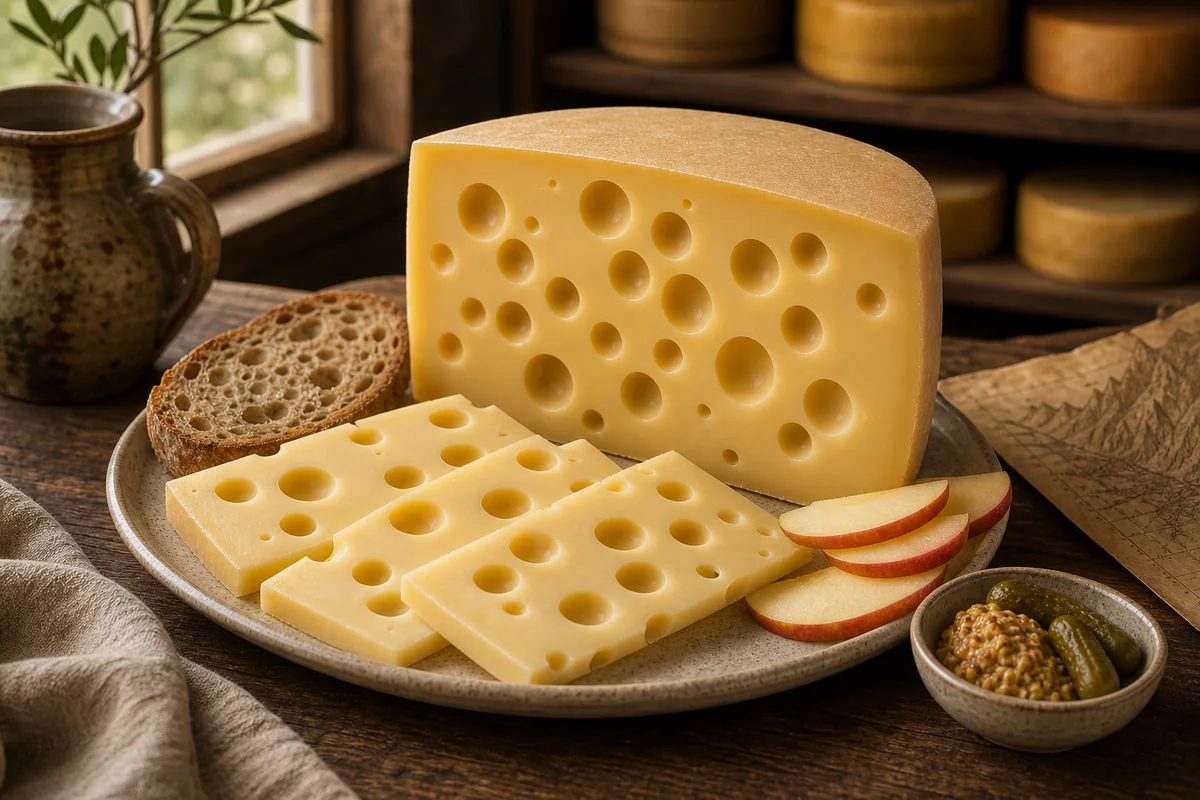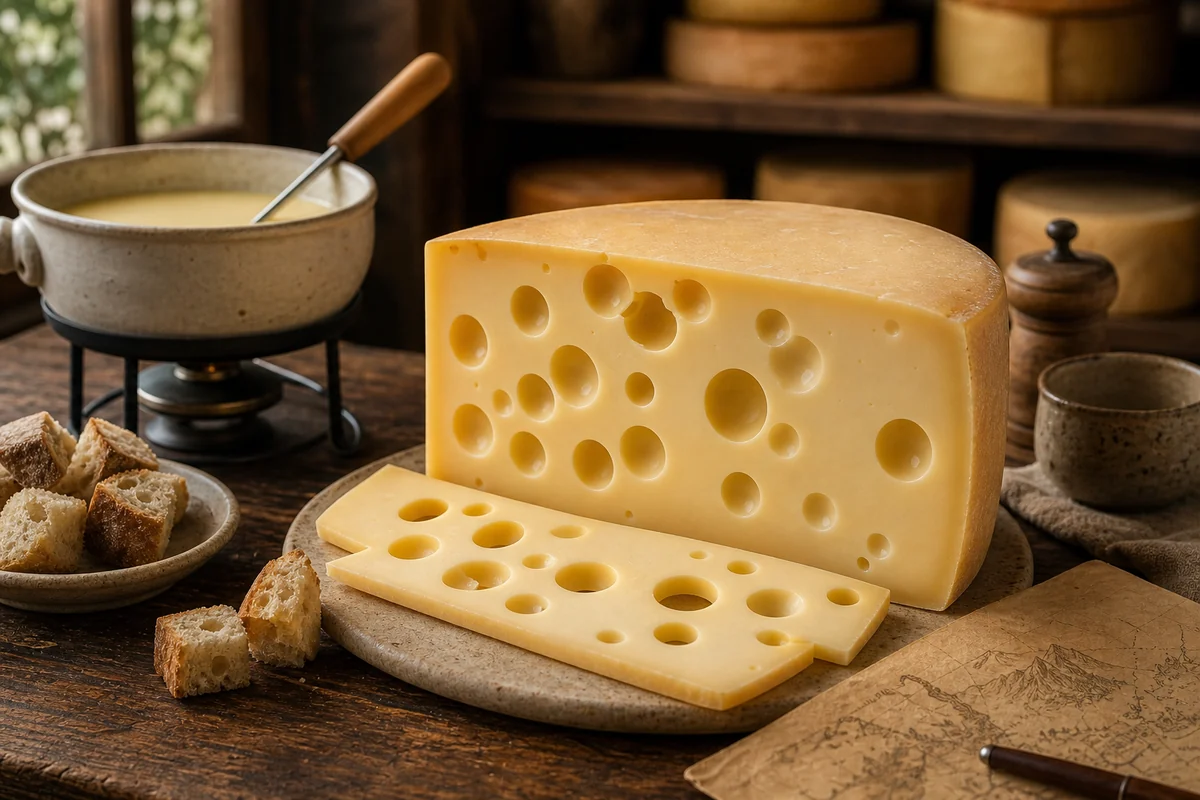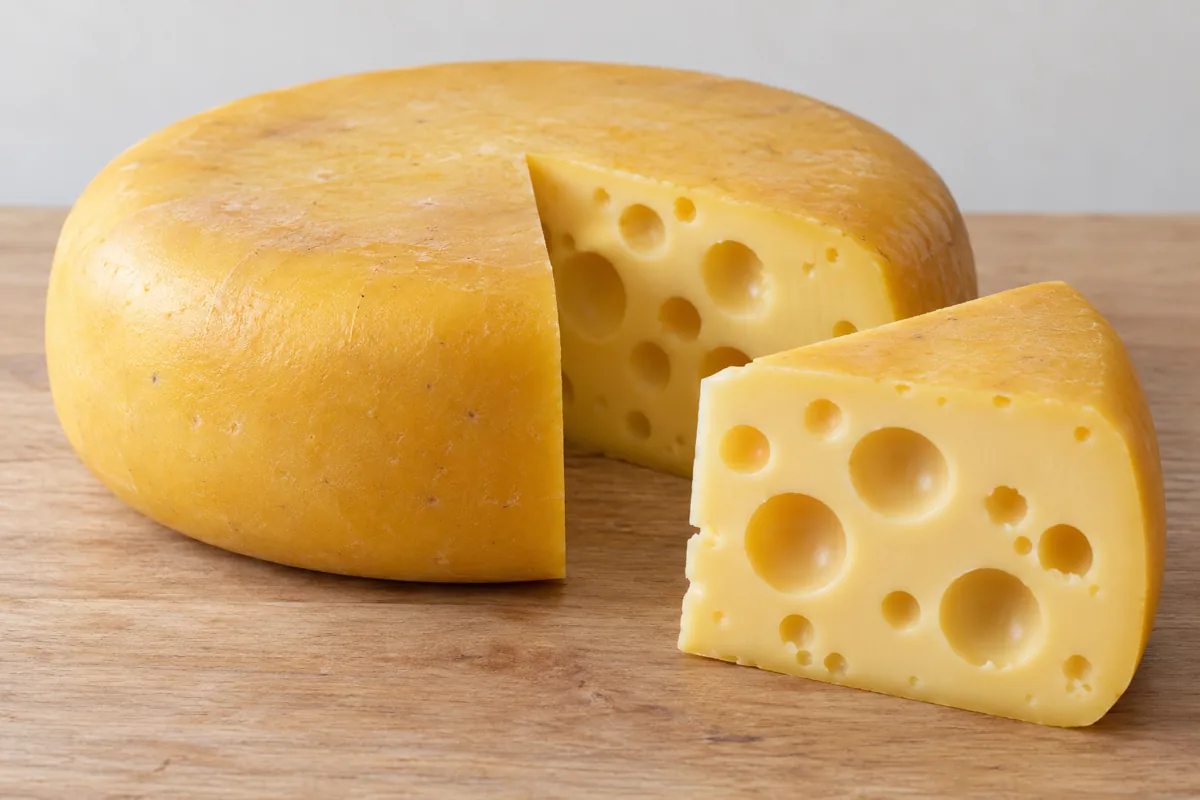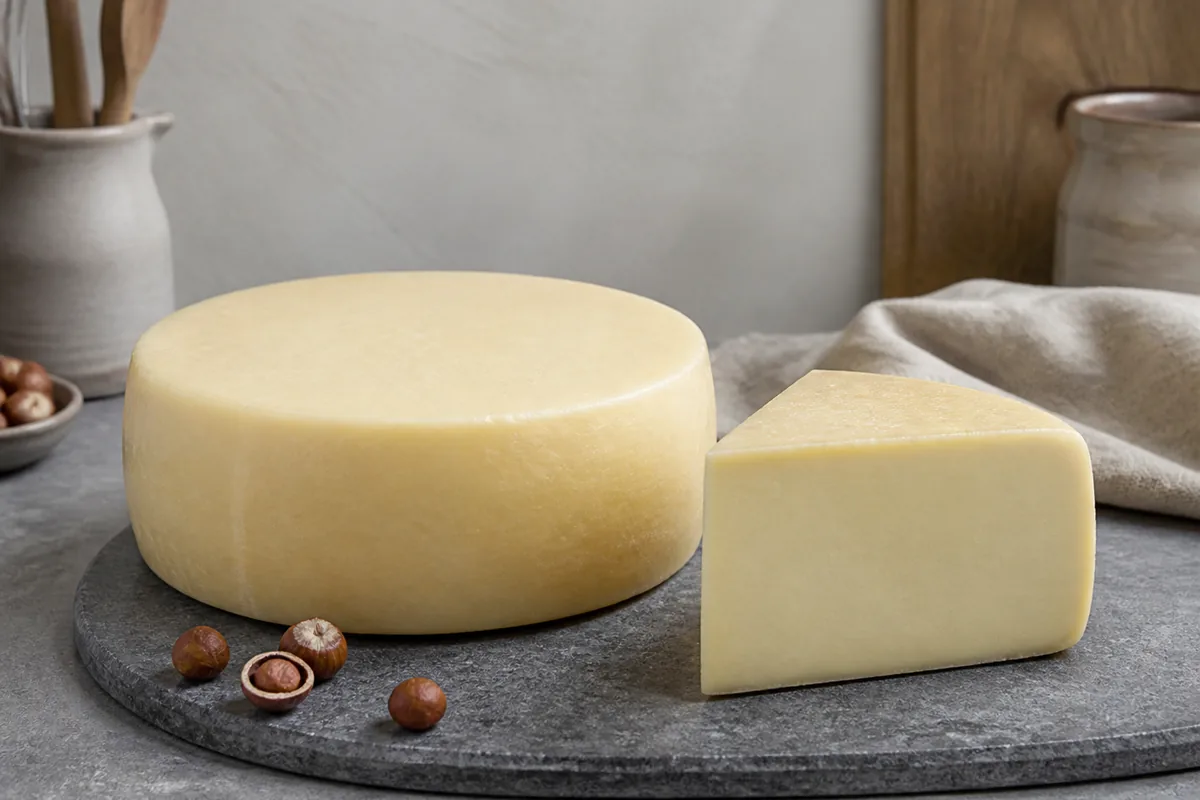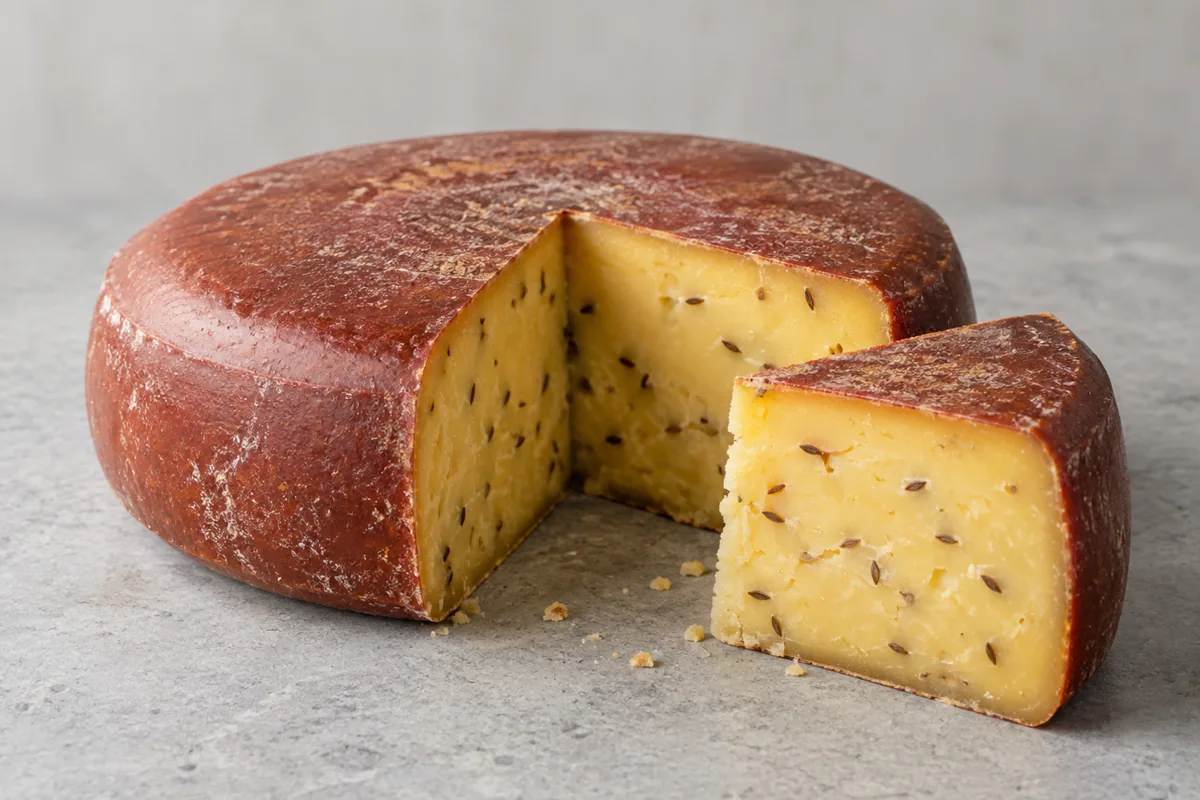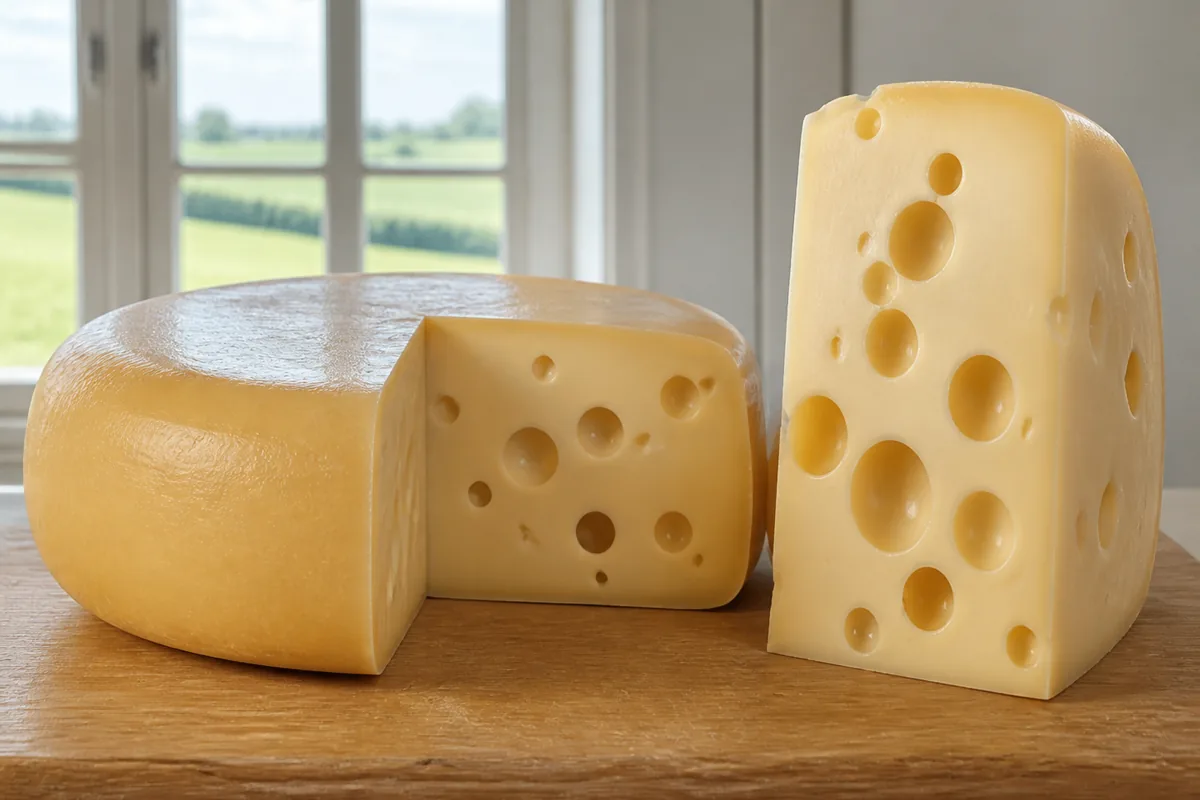
Leerdammer is a trademarked Dutch cheese made from cow's milk, with a supple, semi-hard paste and round holes. Its makers say they set out to combine the mild taste of Gouda with the characteristic holes of Emmental.
In This Article
Where Did Leerdammer Come From, and Who Owns It Now?
Two men created Leerdammer: Cees Boterkooper, who owned a small dairy in the Leerdam area, and Bastiaan Baars, who worked in the cheese trade in a nearby village, in Wikipedia's account.
The UK brand page spells the first surname Boterkopper and describes Baars as a cheesemaking business manager in a nearby town, where Wikipedia says he ran a cheese shop in a nearby village.
The same page says the name comes from the town of Leerdam, where the dairy stood. Wikipedia and Cheese.com place that dairy in Schoonrewoerd, which lies in the municipality of Leerdam, so the two accounts fit together if the name refers to the municipality.
If you look up when Leerdammer began, you will meet five different years, and each source ties its year to a different event.
| Year | Source | What the source ties the year to |
|---|---|---|
| 1914 | Wikipedia and Cheese.com | Wikipedia: Boterkooper had owned his Schoonrewoerd dairy since this year. Cheese.com: first development of the cheese |
| 1970 | Wikipedia | Boterkooper and Baars met |
| 1974 | Leerdammer UK brand page | Creation of Leerdammer |
| 1977 | Wikipedia | Launch of the cheese |
| 1978 | Leerdammer Nederland Original page | The year since which the page says the classic has won people over (“sinds 1978”) |
The oldest year, 1914, belongs to the dairy rather than the cheese in Wikipedia's account, which suggests that Cheese.com's 1914 date measures the dairy's age.
Every other year falls in the 1970s, and the brand's own UK and Dutch pages sit four years apart. If you need a single launch year, Wikipedia gives 1977.
Bel Group handed the Leerdammer brand to Lactalis in 2021, and the cheese is made in Schoonrewoerd, in Dalfsen in the eastern province of Overijssel, and in France.
Wikipedia still calls the cheese Dutch, but with factories in both countries, the label on your pack is what tells you whether it was made in the Netherlands or in France.
How Does Leerdammer Relate to Gouda, Emmental and Maasdam?
Where Leerdammer sits between Gouda and Emmental depends on the description. Wikipedia says it was made to resemble Emmental in appearance and flavour while competing with Gouda and Edam, and Cheese.com lists its family as Gouda and calls it a cross between Emmental and Dutch Gouda.
The name itself is a trademark, which Wikipedia says belongs to Bel Leerdammer B.V., and generic cheese in the same style is sold as Maasdam.
So when you pick up a pack labelled Maasdam, you are buying the generic style rather than the trademarked cheese, and the coagulant, lactose, nutrition and coating details below belong to Leerdammer's own products.
How Is Leerdammer Made?
Before cheesemaking begins, the milk is checked twice, at the farm during collection and again on arrival at the factory, where nine criteria are assessed, including fat content, milk fat acidity and antibiotic residues. Leerdammer's partner farmers are certified under the “Milk Quality Assurance Chain” (KKM).
From there, the milk is curdled with a coagulating enzyme, lactic ferments are added, and the curd is molded and pressed.
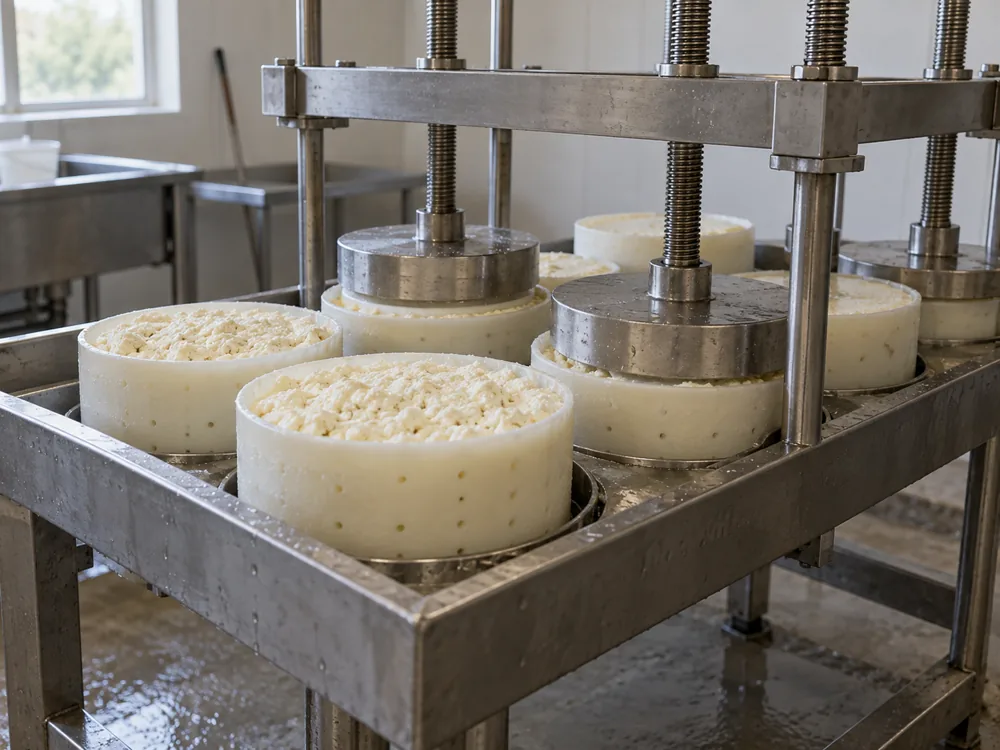
From the press, the cheeses go into a brine bath for more than two days, which the brand says preserves them and enhances their flavour.
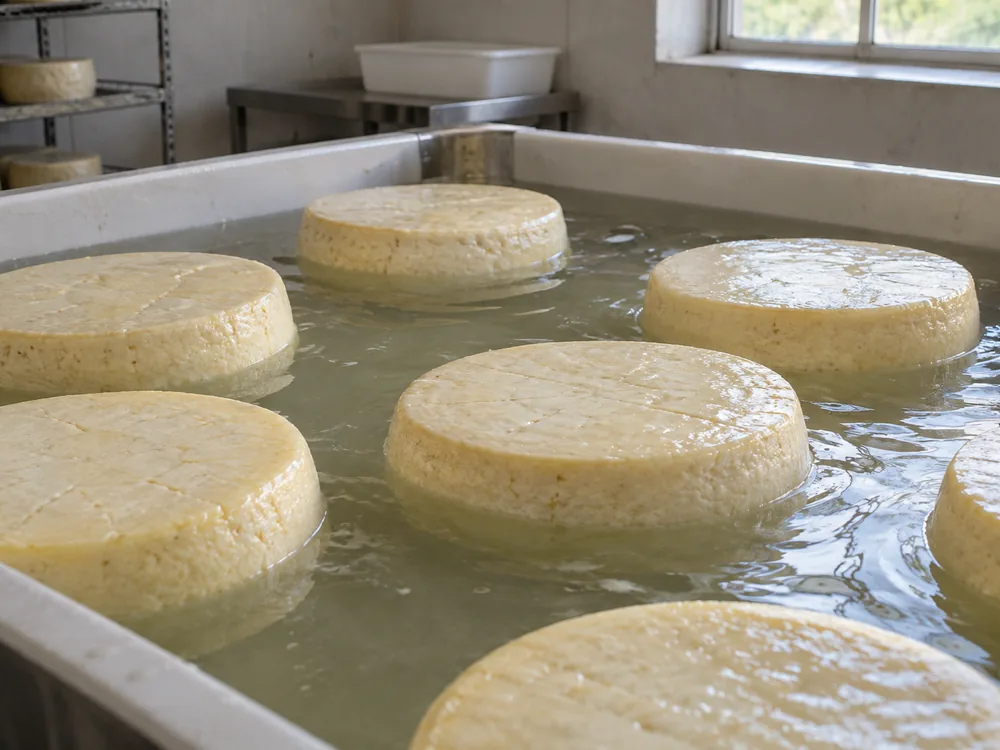
Maturation follows under close monitoring, and the wheels are coated with wax once it ends, which the brand says preserves their supple texture.
Leerdammer ripens for at least six weeks in the Dutch FAQ's figure and for three to twelve months in Wikipedia's.
Why Does Leerdammer Have Holes?
The holes you see in a slice are trapped gas. Two things go into the milk at the start of production: a coagulant, which sets the milk into a solid mass, and special bacteria, which make carbon dioxide that cannot escape from the cheese.
The gas forms as the cheese ripens, and the bubbles left afterwards, often called eyes, mark Leerdammer and similar cheeses such as Emmentaler.
One in-house ferment creates both the holes and what the brand's UK site calls the delicately nutty taste, and it has not changed since the 1970s. A second ferment, the site says, gives a more pronounced taste depending on how long the cheese matures.
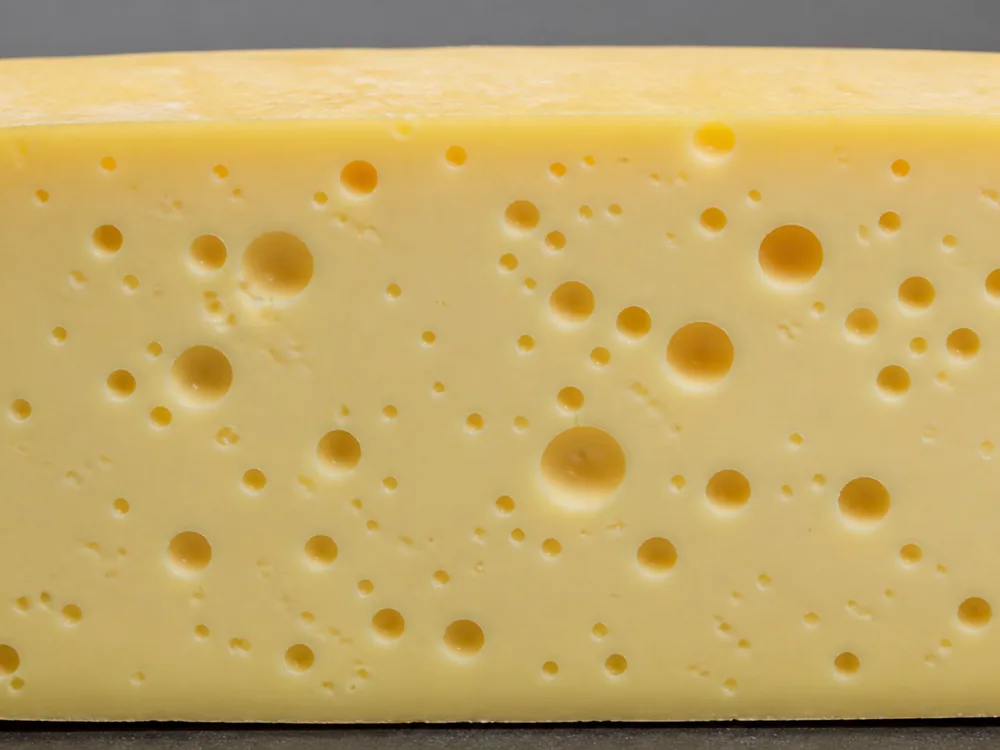
The brand's advertising leans on the result: it has used the Dutch slogan “De lekkerste kaas tussen de gaten”, the tastiest cheese between the holes.
What Does Leerdammer Taste Like?
Leerdammer tastes mild and nutty in both the brand's and Cheese.com's descriptions. The brand adds a “melt-in-your-mouth” texture, and Cheese.com calls the texture creamy, open and smooth and adds sweet to the flavour.
That nutty note becomes more definite with age, according to Cheese.com and Wikipedia, which fits the brand's second ferment that strengthens flavour as maturation continues.
The paste is pale yellow with a creamy texture in Wikipedia's description, while Cheese.com lists the colour as white and the paste as slightly elastic and creamy white, so the colour of your slice is not a dependable test of what is in the pack.
“Nutty” describes the flavour only: the ingredient lines on Leerdammer's UK and Dutch Original pages list no nuts.
Is Leerdammer Lactose-Free, Vegetarian, and Gluten-Free?
The lactose figure you want is on the Dutch page for Leerdammer Original, which lists less than 0.01% lactose. The producer's FAQ gives the reason: lactose turns into lactic acid during ripening, so aged hard and semi-hard Dutch cheeses hold little or none.
The FAQ rests that claim on analyses by an independent accredited institute and words it as most Leerdammer products, so for a variant other than Original, read its own label.
Lactose is the milk sugar, and the sugars line on each label is a cross-check you can read for yourself. The Dutch label lists sugars at less than 0.01 g per 100 g, the same threshold as its lactose claim.
The UK slices label lists sugars and carbohydrate at less than 0.1 g, a reading ten times coarser. It fits the lactose claim without being able to confirm it.
The NHS gives the general picture for lactose intolerance: it lists cheese among foods that contain lactose and says intolerance symptoms can be prevented by eating smaller portions or avoiding the food.
Lactose-free does not mean milk-free. The UK Original Slices page lists milk as an allergen, and the NHS says a food intolerance is different from a food allergy, which can be life threatening.
Milk appears on both ingredient lists more than once. The UK list prints milk in bold twice, as the main ingredient and again inside “Cultures (Milk)”, and the Dutch list likewise notes that the starter culture contains milk (“bevat melk”).
For vegetarians, both Original pages list a vegetarian coagulant, and the FAQ says it is a microbial enzyme rather than calf rennet. Leerdammer suits lacto-vegetarians because it still contains milk, and Cheese.com likewise marks it vegetarian but not vegan.
On gluten, the FAQ says none is added to Leerdammer products, but the company cannot yet give a formal gluten-free guarantee because not all analyses are done. So if you avoid gluten for medical reasons, what you have is a statement about ingredients, not a certification.
What Covers the Outside of a Leerdammer Wheel?
Leerdammer's outside is described in three different ways. Leerdammer Original's Dutch ingredient line ends with “in de korst: conserveermiddel natamycine”, which means the preservative natamycin is used in the rind.
The UK site describes the wheels as coated with wax, and Cheese.com lists the rind as natural. With three accounts of the same surface, check the pack or ask the seller before you eat any coating on a wheel or a cut wedge.
Slices are a different case. The UK Original Slices ingredient list shows no preservative, which fits slices having no rind.
Can You Eat Leerdammer When Pregnant?
The NHS lists pasteurised semi-hard cheeses, such as edam, as safe to eat in pregnancy. Wikipedia and Cheese.com both describe Leerdammer as semi-hard, and the Dutch Original page lists pasteurised milk.
The CDC lists hard cheese made with pasteurized milk, cottage cheese, cream cheese, string cheese, feta and mozzarella made with pasteurized milk, and pasteurized soft cheeses heated to an internal temperature of 165°F or until steaming hot as safer. Served cold, Leerdammer is described as a pasteurized semi-hard cheese, a type the CDC list does not cover, so ask a midwife or doctor.
If you buy Leerdammer sliced at a deli counter, the CDC does have a line for that: it lists unheated cheese sliced at a deli as riskier, and deli-sliced cheese heated to 165°F or until steaming hot as safer.
The NHS adds that most cheese bought in supermarkets is pasteurised and that you can check the packaging to make sure. It also lists any cheese that has been cooked until steaming hot as safe to eat, a separate route from pasteurisation.
What Do the Dutch and UK Leerdammer Nutrition Labels Say?
The figures below come from two labels for Leerdammer Original, the Dutch product page and the UK Original Slices page, so read each one as belonging to one product in one market.
| Per 100 g | Dutch Original page | UK Original Slices page |
|---|---|---|
| Energy | 1477 kJ / 356 kcal | 1460 kJ / 352 kcal |
| Fat | 27.5 g | 27.5 g |
| Saturated fat | 18.5 g | 18.5 g |
| Protein | 27 g | 26 g |
| Salt | 1.5 g | 1.5 g |
| Calcium | 850 mg (106% of reference intake) | Not listed |
The two labels agree on 27.5 g fat, 18.5 g of it saturated, about two thirds, and on 1.5 g salt. They differ by 1 g of protein and 17 kJ of energy.
The Dutch page gives calcium at 106% of the reference intake it uses and calls the cheese rich in calcium (“Rijk aan Calcium”). If you count by the slice, the UK page lists a 20 g slice at 70 kcal, 5.5 g fat and 0.3 g salt.
The label's fat figure differs from fat in dry matter, the fat percentage a cheese would have if all its water were gone. For hard and semi-hard cheese, absolute fat equals fat in dry matter multiplied by 0.6.
Work that backwards from the label's 27.5 g, divided by 0.6, and you get about 46% fat in dry matter.
Where Is Leerdammer Sold, and in Which Packs?
You cannot order Leerdammer from the company directly, but it is available in most supermarkets and retailers. It is sold in supermarkets in Europe, Russia and the US.
The range runs to Original slices, Light reduced-fat slices, an Original block and a traditional giant wheel. In the UK, Original slices come in a 160 g pack, and the Dutch Original is a 250 g product.
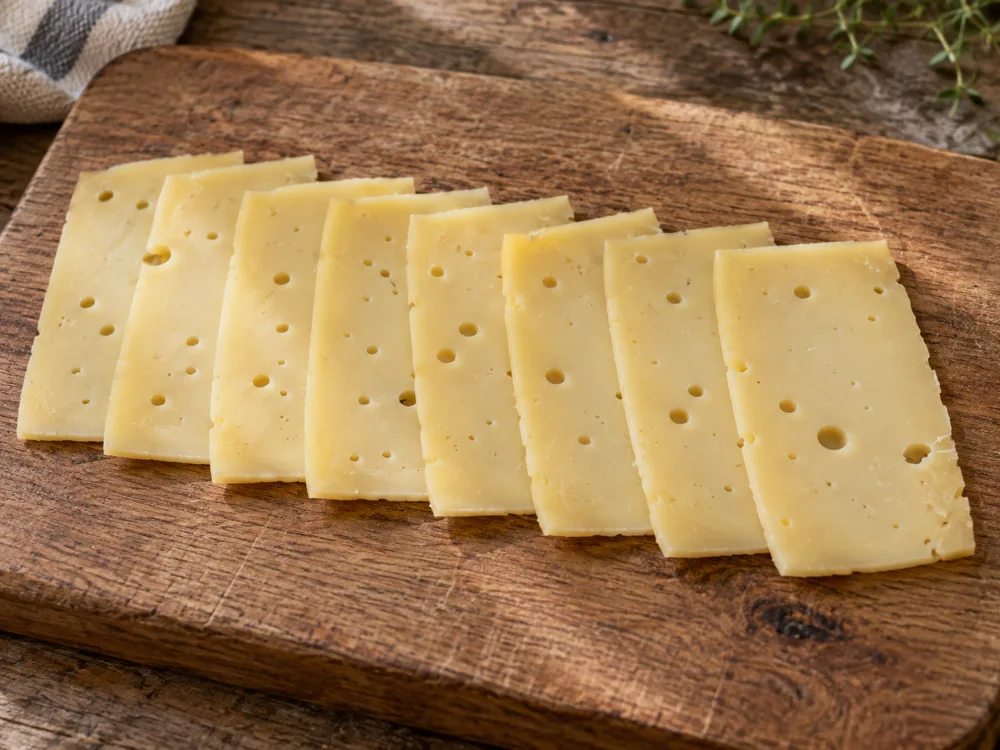
At 20 g a slice, that 160 g pack holds eight slices. For Light slices, take the fat and salt from that pack's own label.
How Should You Store Leerdammer at Home?
Leerdammer's Dutch FAQ says its products must be kept cool, and the CDC says to keep your refrigerator at 40°F or below.
The company takes temperature seriously enough to send no free samples: it cannot know how long or at what temperature a parcel travels, so it cannot guarantee quality.
For shelf life, time after opening and freezing, follow the date and instructions printed on your pack.