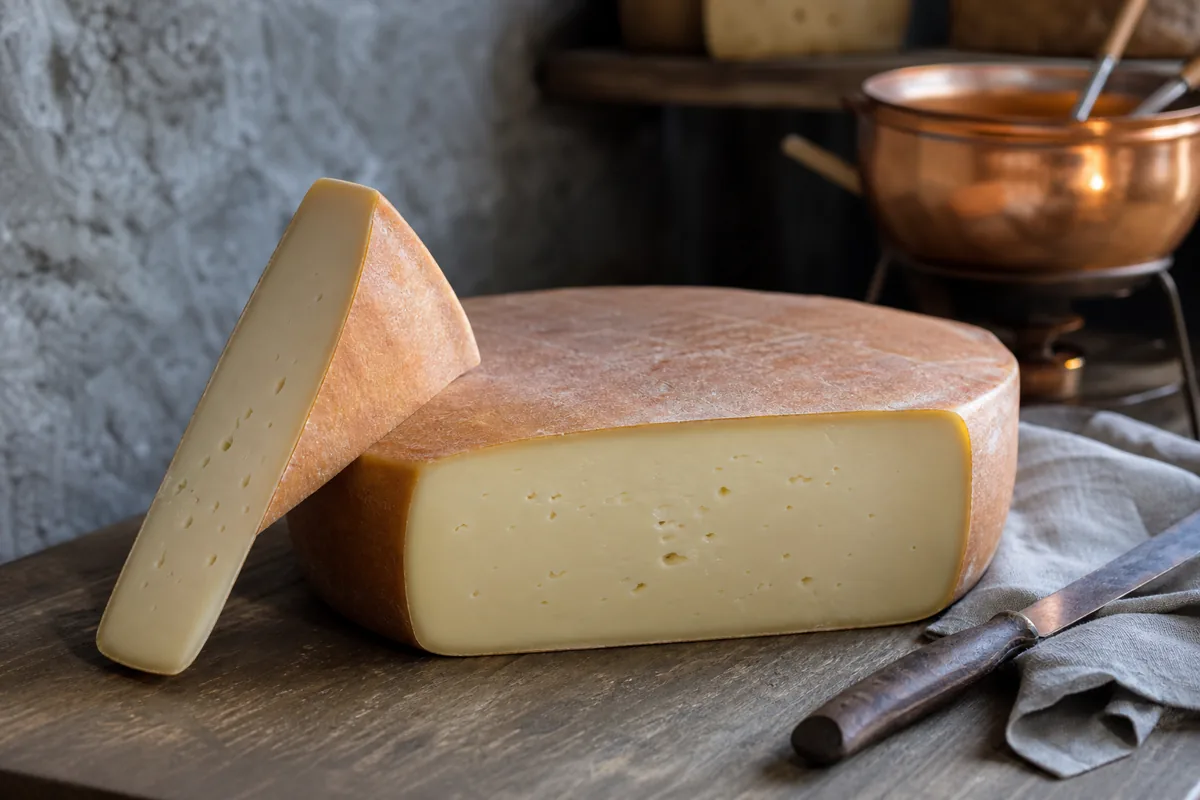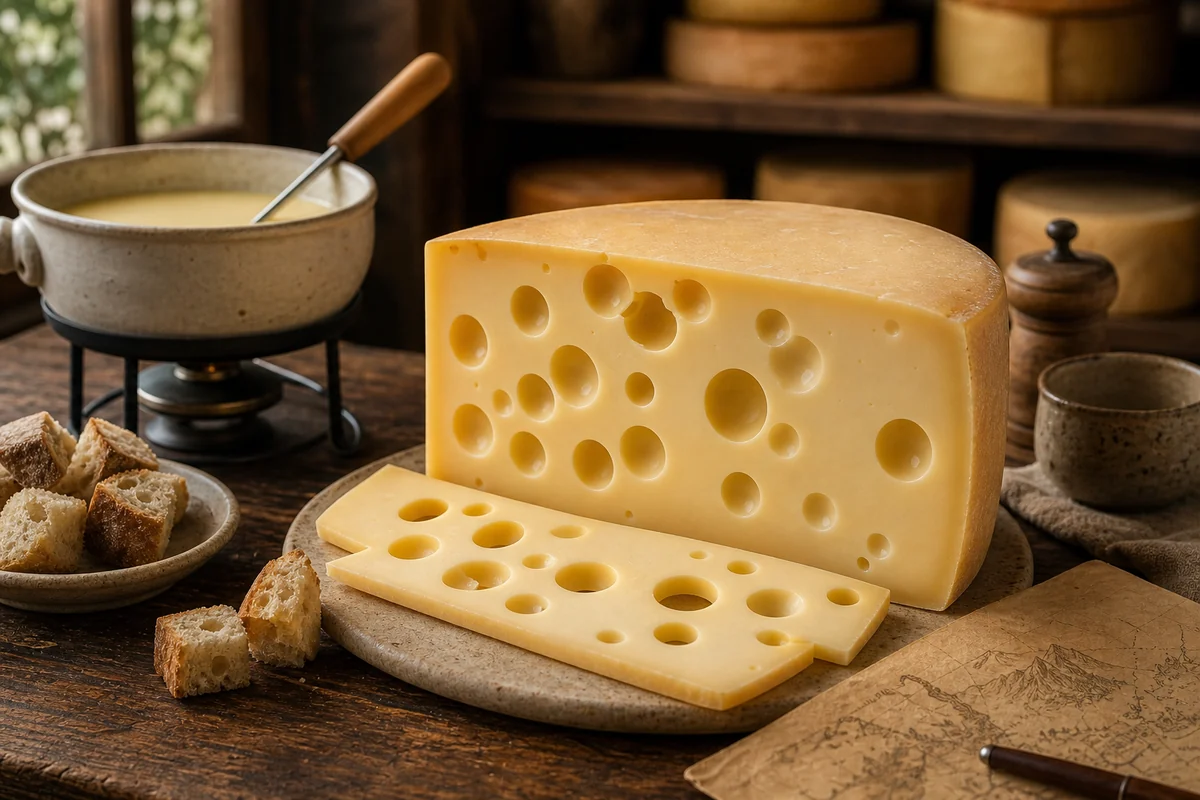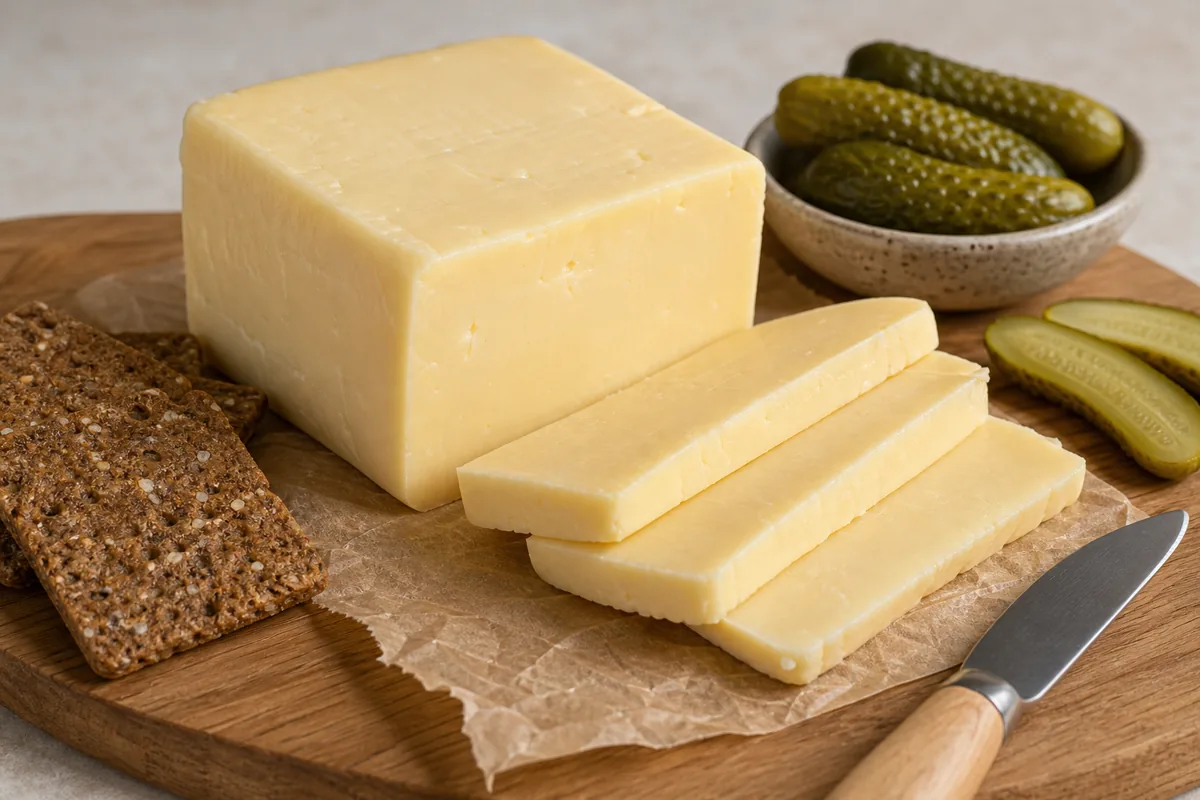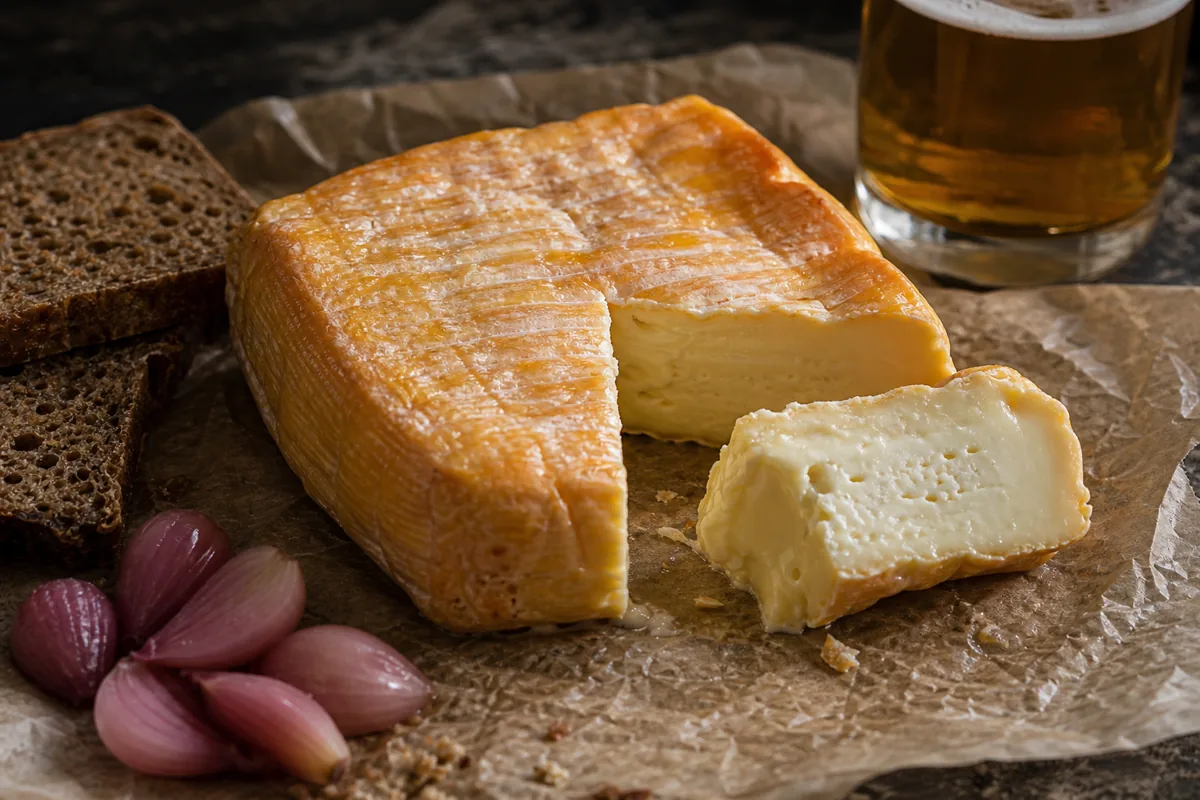
Alpine Gold is a pasteurized cow's-milk cheese from The Farm House Natural Cheeses in Agassiz, British Columbia. The producer currently describes it as semi-firm, creamy, and mildly tangy-sweet, while specialist cheese records classify the same named cheese as semi-soft with a washed golden rind.
Those descriptions point to a supple table cheese rather than a dry Alpine wheel.
The product name identifies one farmstead cheese, so facts from unrelated cheeses called "Alpine" do not establish how this one is made or handled.
In This Article
Who Makes Alpine Gold?
The Farm House lists Alpine Gold among its cow's-milk products.
Its FAQ says every cheese is pasteurized, made on the farm from the farm's own milk, and set with calf rennet.
Culture's exact Alpine Gold profile adds the production details that the short producer listing omits. It identifies a washed-curd, washed-rind cheese aged for at least six weeks, with brine applied during ripening to develop a golden-orange rind.
The 2016 Canadian Cheese Awards placed Alpine Gold in both its semi-soft and washed-rind finalist groups. That record supports the style classification, while the current producer page remains the stronger source for the cheese sold now.
Why Do Alpine Gold Texture Labels Differ?
Semi-soft and semi-firm are overlapping texture labels across retailers, competitions, and countries.
Moisture also changes as a wheel ages, so the word difference does not prove that two separate cheeses exist.
Use the maker name and the original label to identify Alpine Gold. A loose counter sign that says only "Alpine cheese" could refer to a firmer mountain-style cheese with a different texture and use.
| Source | What it says |
|---|---|
| Current producer page | Semi-firm, creamy, mild tangy-sweet flavor |
| Producer FAQ | Pasteurized farm milk and calf rennet |
| Culture cheese profile | Semi-soft, washed-curd, washed-rind, minimum six weeks |
| Canadian Cheese Awards | Semi-soft and washed-rind finalist categories |
The practical result is a cheese that should slice while cold and soften as it warms. Exact firmness can vary by age and cut, so the package and the cut face tell you more than either category word alone.
What Does Alpine Gold Taste Like?
The producer's current description gives the safest baseline: mild, tangy-sweet flavor with a creamy texture. Culture describes a richer, savory paste with floral and grassy notes, so those extra notes should be treated as a specialist tasting description rather than a guaranteed flavor in every piece.
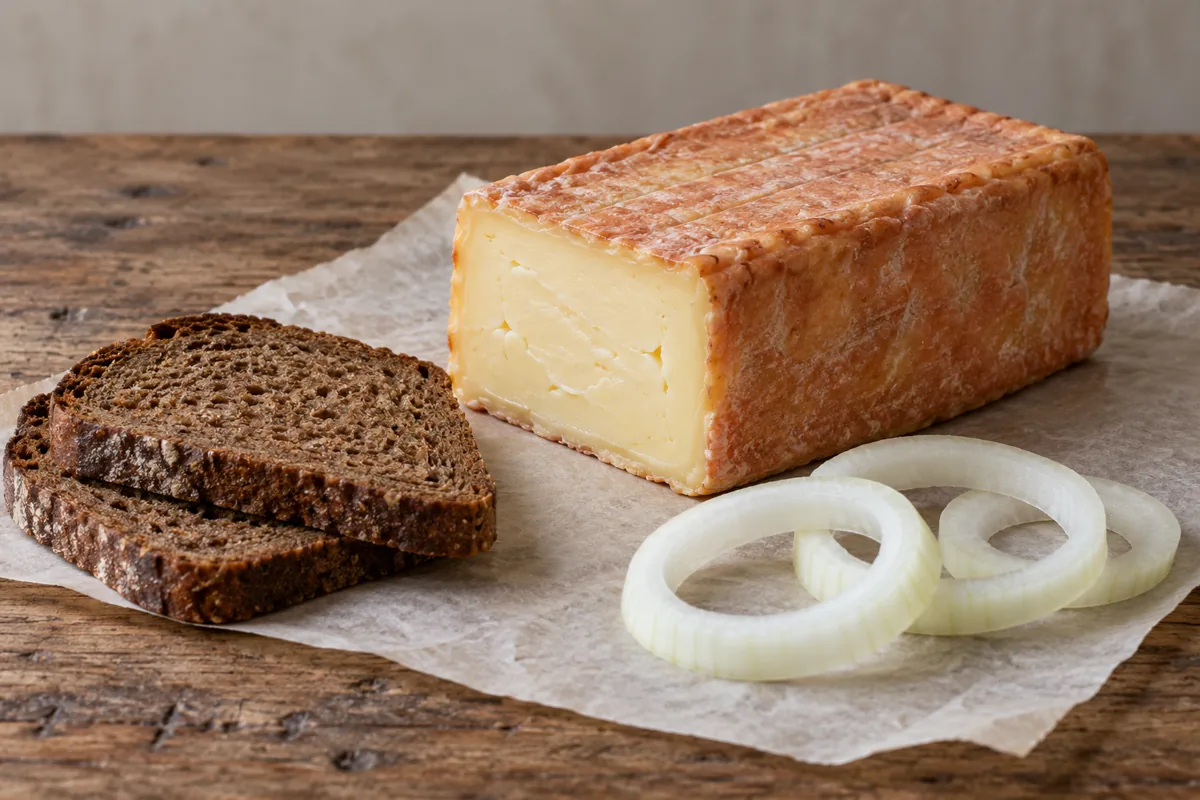
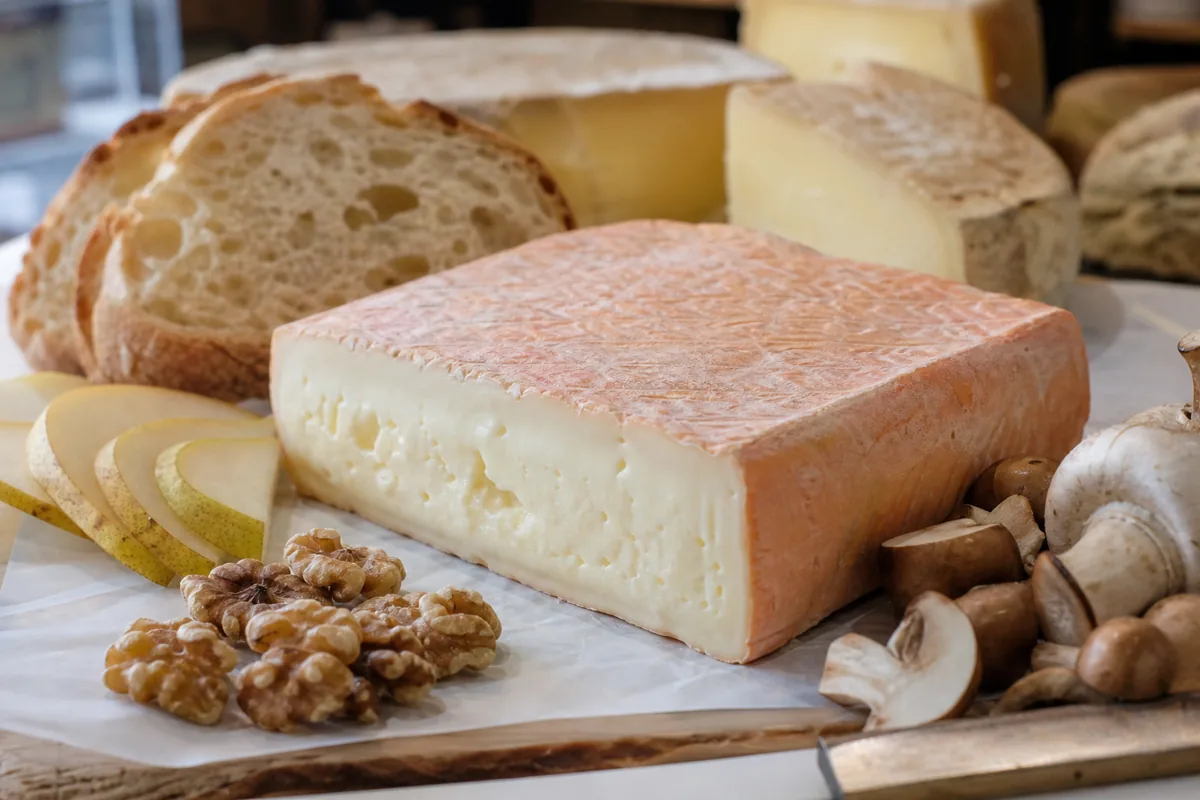
The washed-rind record explains the golden-orange surface shown in specialist references. A retailer should still keep the producer name attached to a cut piece because color alone cannot distinguish Alpine Gold from another washed-rind cheese.
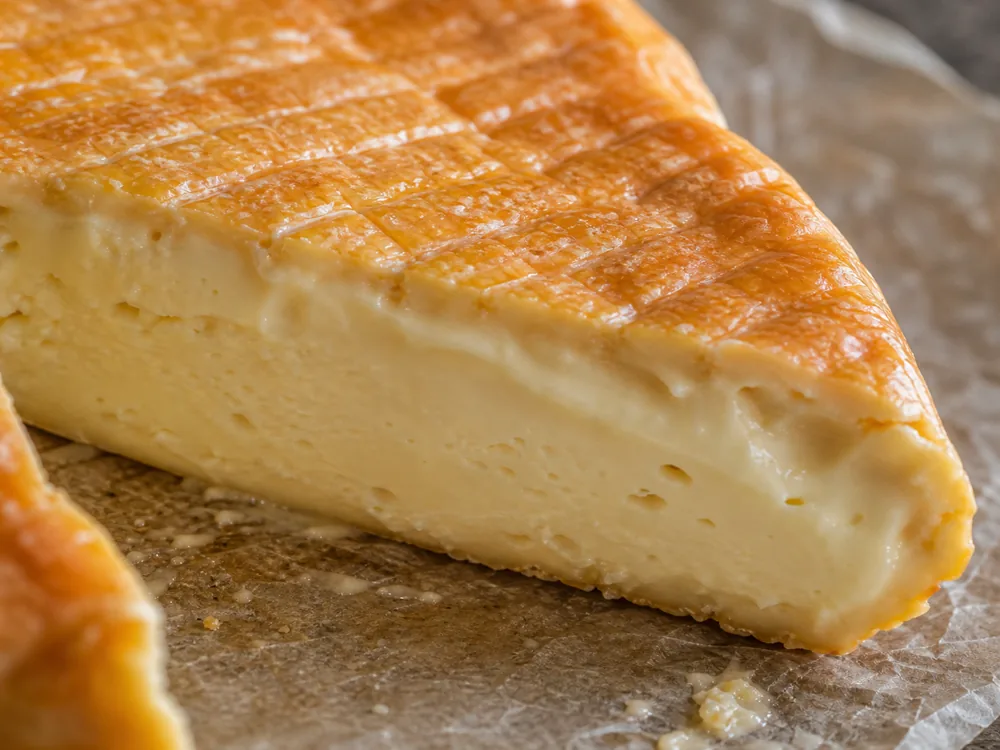
Condition and safety need separate checks. Keep the original label, date, and cold-storage history, since Health Canada warns that food can be unsafe even when it looks and smells normal.
How to Cook with Alpine Gold
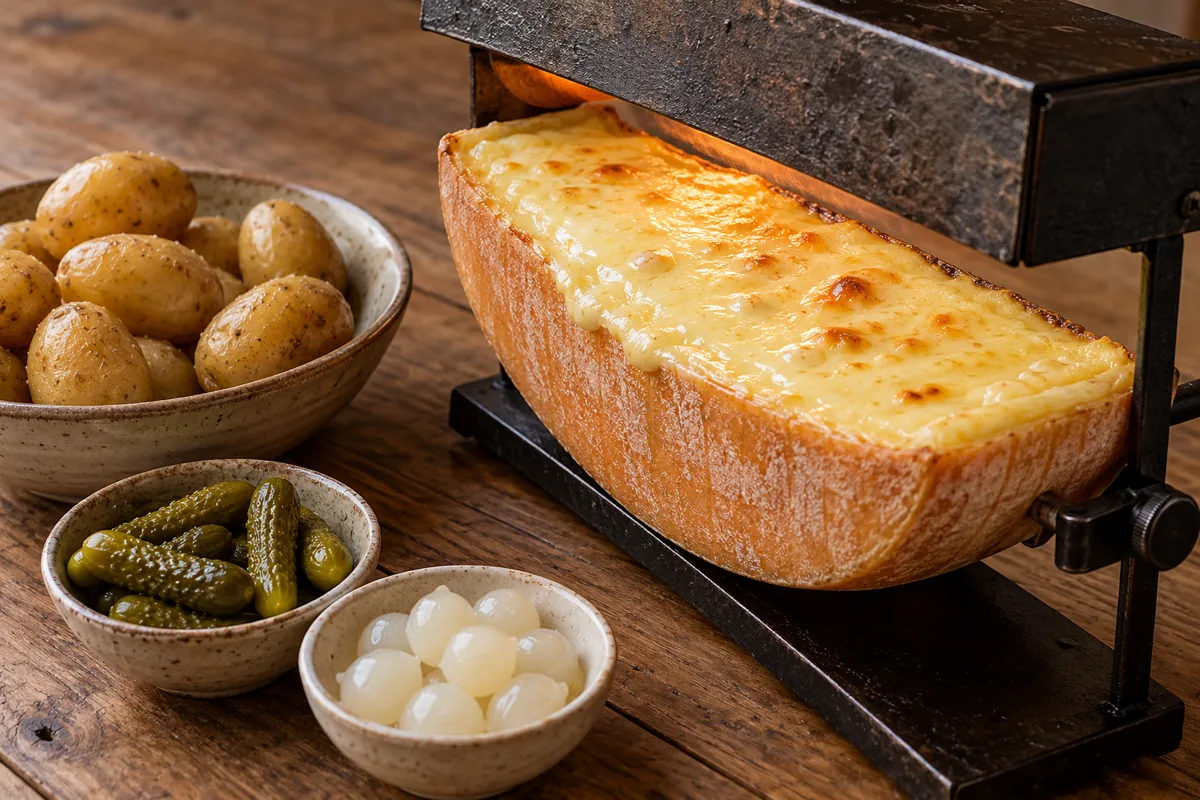
A documented restaurant use gives better guidance than an invented melt score. Vancouver Magazine reported a British Columbia chef using Alpine Gold in stuffed chicken breast, potato gratin, and grilled cheese.
Those dishes put thin or grated cheese inside hot food, where the creamy paste can soften without asking it to stretch like mozzarella. For a first hot use, grilled cheese or gratin gives more control than treating the wheel like classic Raclette.
Use the current piece as the guide. Slice it for a sandwich when cold, or grate it into a gratin if the paste is firm enough. Stop heating when the cheese has softened and the dish is hot throughout.
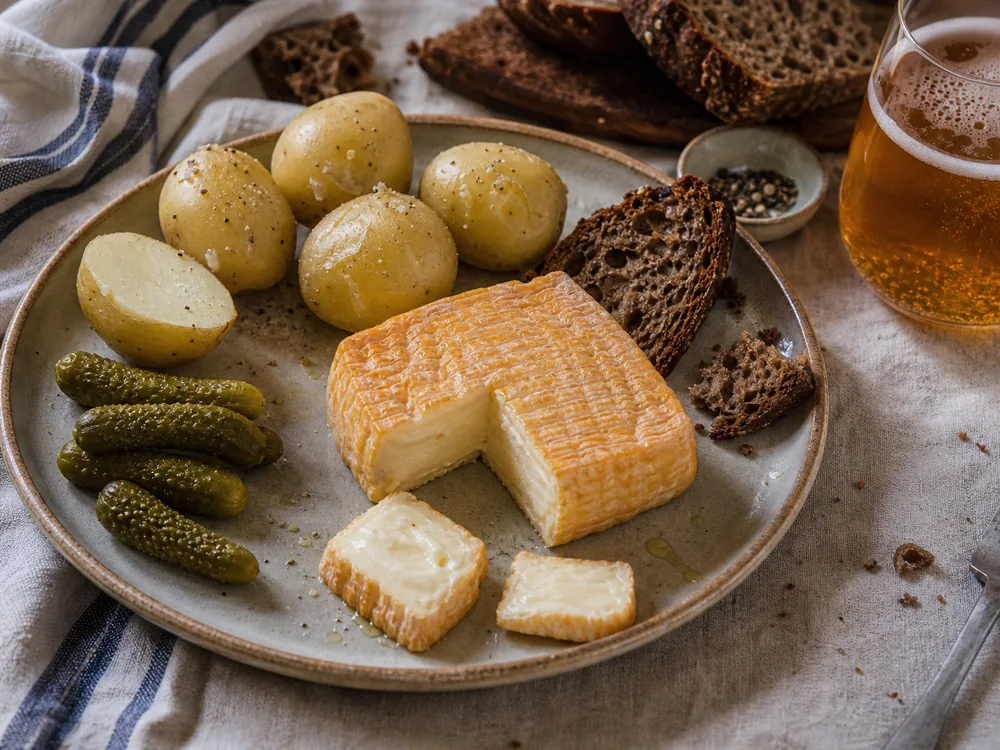
For a cold board, start with bread, apple, and a tart pickle. These accompaniments give the creamy cheese contrast without requiring a specific wine or flavor promise.
How Should You Buy and Store Alpine Gold?
The producer sells from its Agassiz farm shop and maintains a current list of retailers across British Columbia. Availability changes by store, so confirm stock before making a special trip.
At a counter, look for the full Alpine Gold and Farm House names, a readable date, and the milk-treatment statement.
Ask the seller to keep the original label with a cut portion.
Health Canada says a refrigerator should stay at 4°C (40°F) or below and lists cheese storage by the product's best-before date. No current Alpine Gold source publishes one universal number of days after cutting, so keep the date and seller guidance instead of replacing them with a generic window.
Bring out only the amount being served. Health Canada limits perishable food at room temperature to two hours, or one hour during hot summer outdoor activity.
Is Alpine Gold Safe During Pregnancy?
The producer confirms pasteurized milk, but pasteurization alone does not settle the pregnancy decision for a semi-soft or semi-firm surface-ripened cheese.
CDC explains that pasteurization kills Listeria in milk, while soft cheese can still become contaminated during cheese-making. The milk statement and the serving condition therefore answer separate safety questions.
Guidance also differs by jurisdiction and by whether the cheese is eaten cold or cooked.
Health Canada's current pregnancy guide places both pasteurized and unpasteurized soft and semi-soft cheeses in its avoid column. It lists pasteurized dairy cooked in a casserole or au gratin among the safer alternatives.
In the UK, the NHS lists pasteurised or unpasteurised hard cheeses, pasteurised semi-hard cheeses and pasteurised soft cheeses as safe to eat. Culture and the Canadian Cheese Awards call Alpine Gold semi-soft, and the producer calls it semi-firm.
For the United States, CDC lists pasteurized soft cheeses heated to an internal temperature of 165°F (74°C) or until steaming hot among its safer options, and unheated cheese sliced at a deli as riskier. Served cold, Alpine Gold is described as a pasteurized semi-soft or semi-firm washed-rind cheese, a type the CDC list does not cover, so ask a midwife or doctor.
A hot potato gratin can therefore fit the cited safer conditions when the cheese is heated to an internal temperature of 165°F or until steaming hot. A cold sample from a cheese counter does not meet them.
SOURCES & REFERENCES
Alpine Gold is a pasteurized cow's-milk cheese made by The Farm House Natural Cheeses in Agassiz, British Columbia. The producer calls it semi-firm and creamy, while specialist records classify it as a semi-soft washed-rind cheese.
The producer describes a mild tangy-sweet flavor and creamy texture. Culture's exact profile adds rich, savory, floral, and grassy notes, which can vary with the age and condition of the piece.
Published restaurant uses include grilled cheese, potato gratin, and stuffed chicken breast, so it can soften successfully in hot dishes. No current producer source publishes a stretch or melt score.
No current producer source gives one universal opened-life window. Keep it at 4°C (40°F) or below and follow the package date and seller guidance for the exact cut.
Follow current local guidance. Health Canada advises avoiding cold soft and semi-soft cheeses during pregnancy, even when pasteurized, and lists cooked dairy in casseroles or au gratin as a safer alternative.
U.S. CDC lists pasteurized soft cheeses heated to an internal temperature of 165°F (74°C) or until steaming hot among safer options. Served cold, Alpine Gold is described as a pasteurized semi-soft or semi-firm cheese, a type the CDC list does not cover, so ask a midwife or doctor.