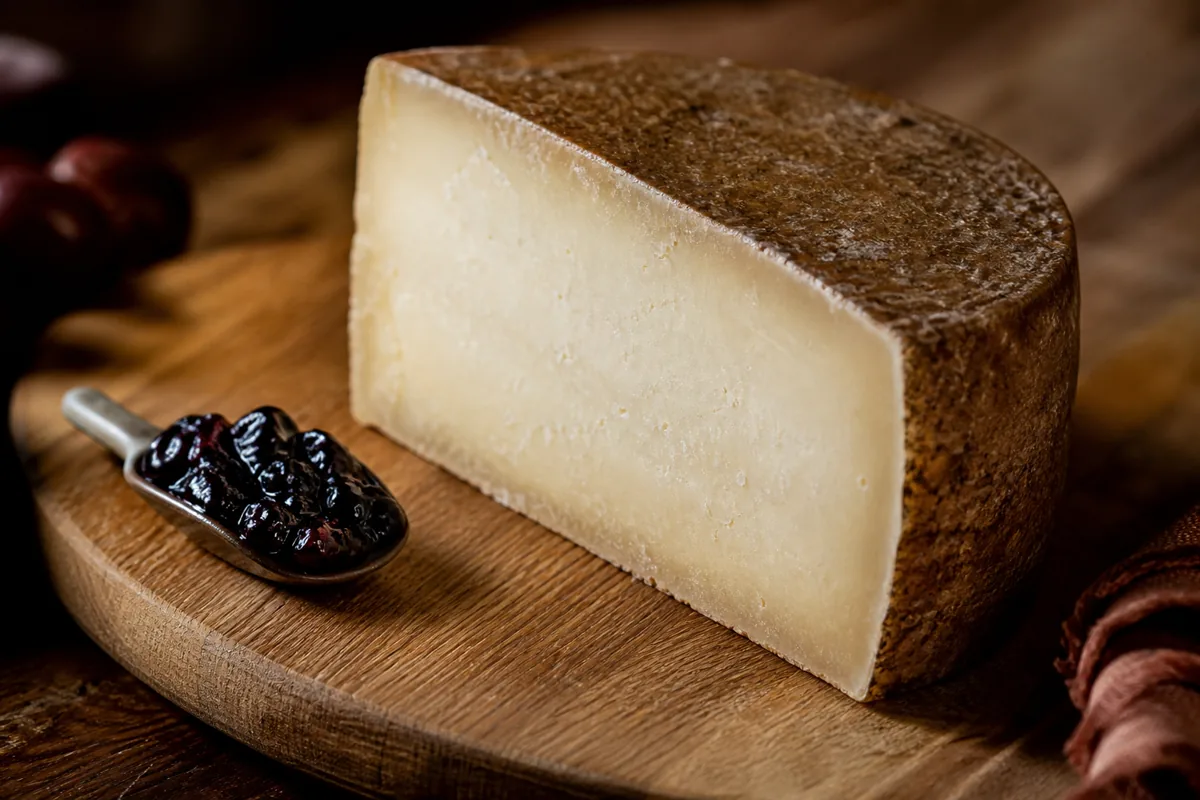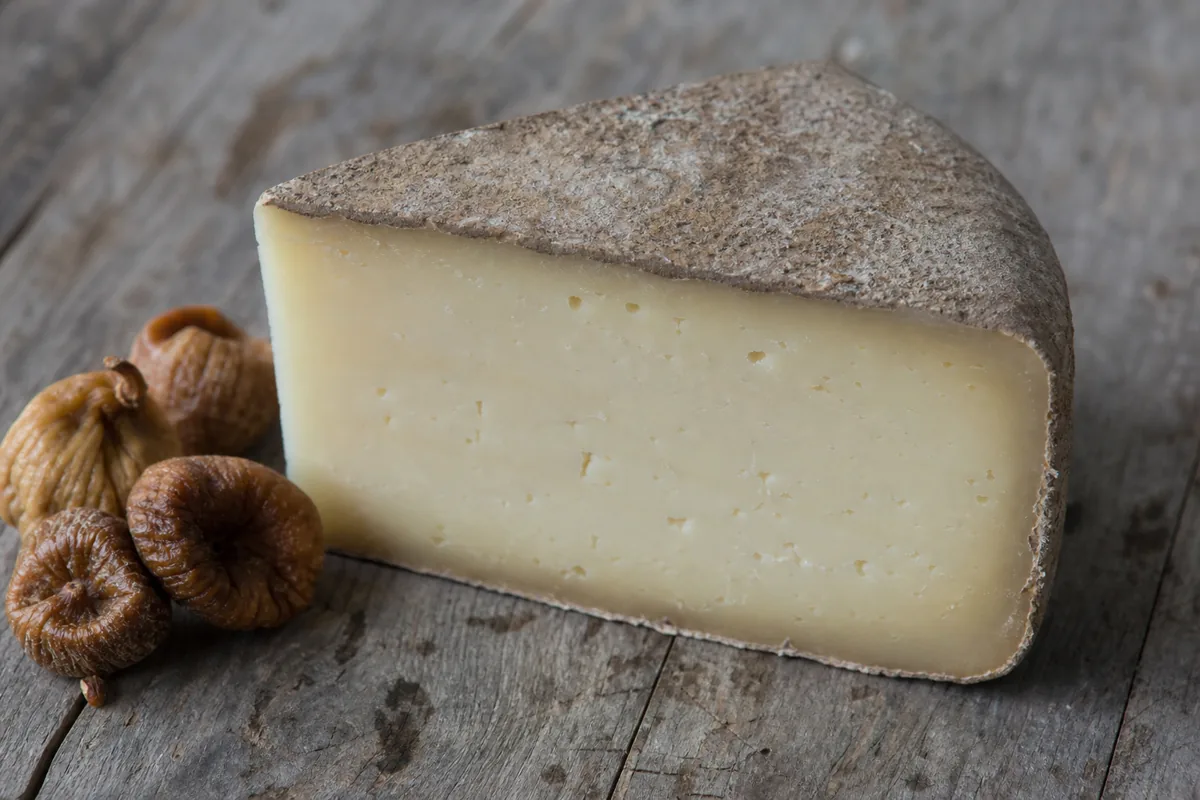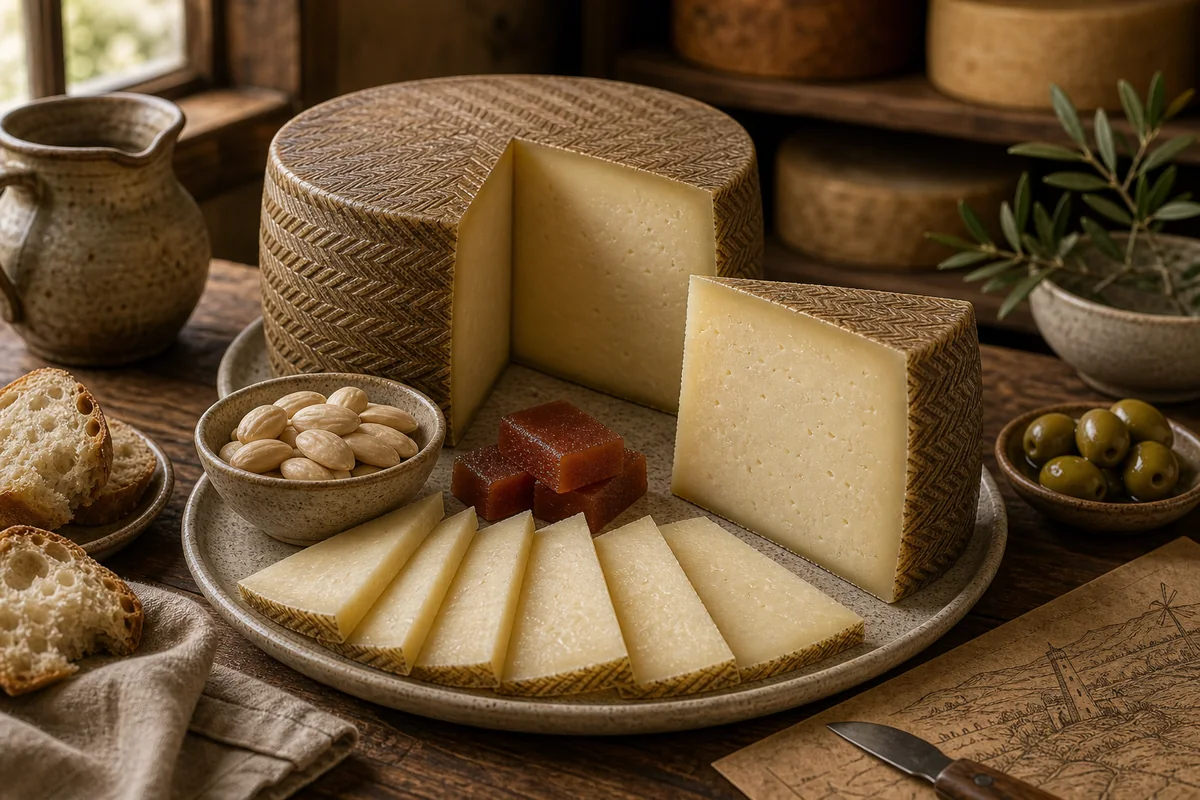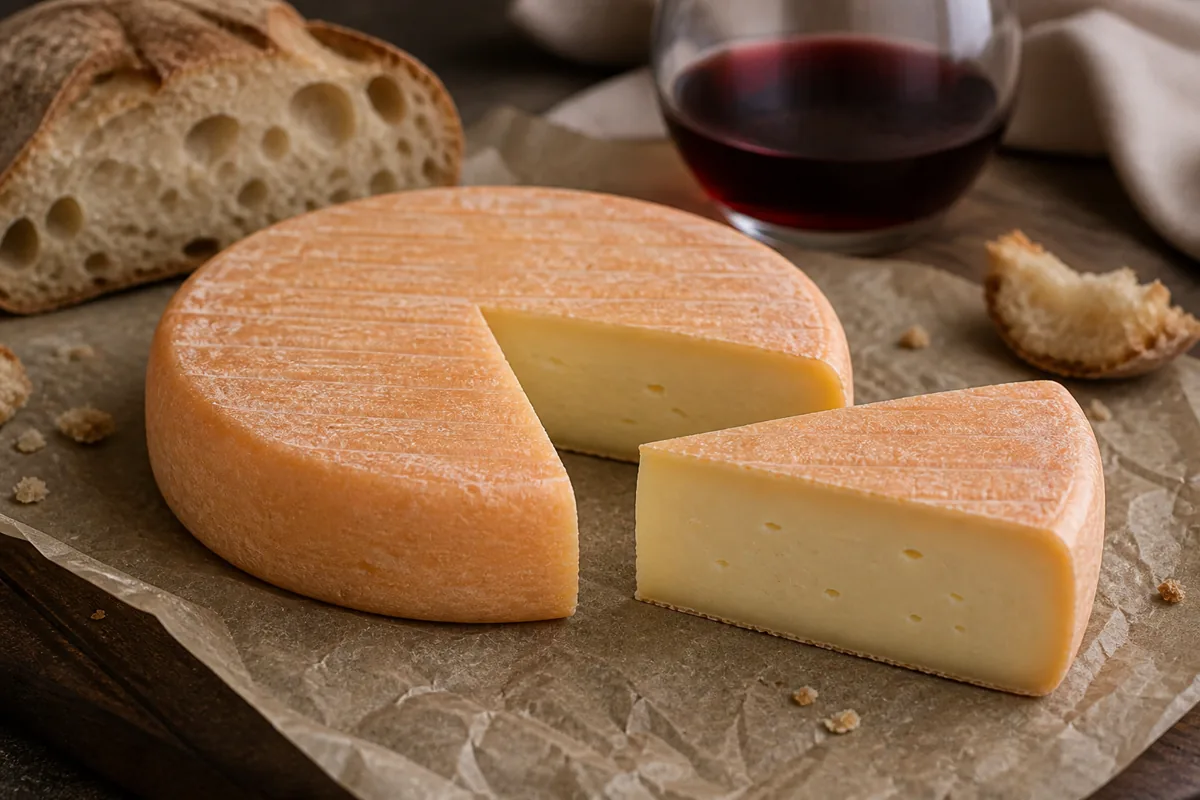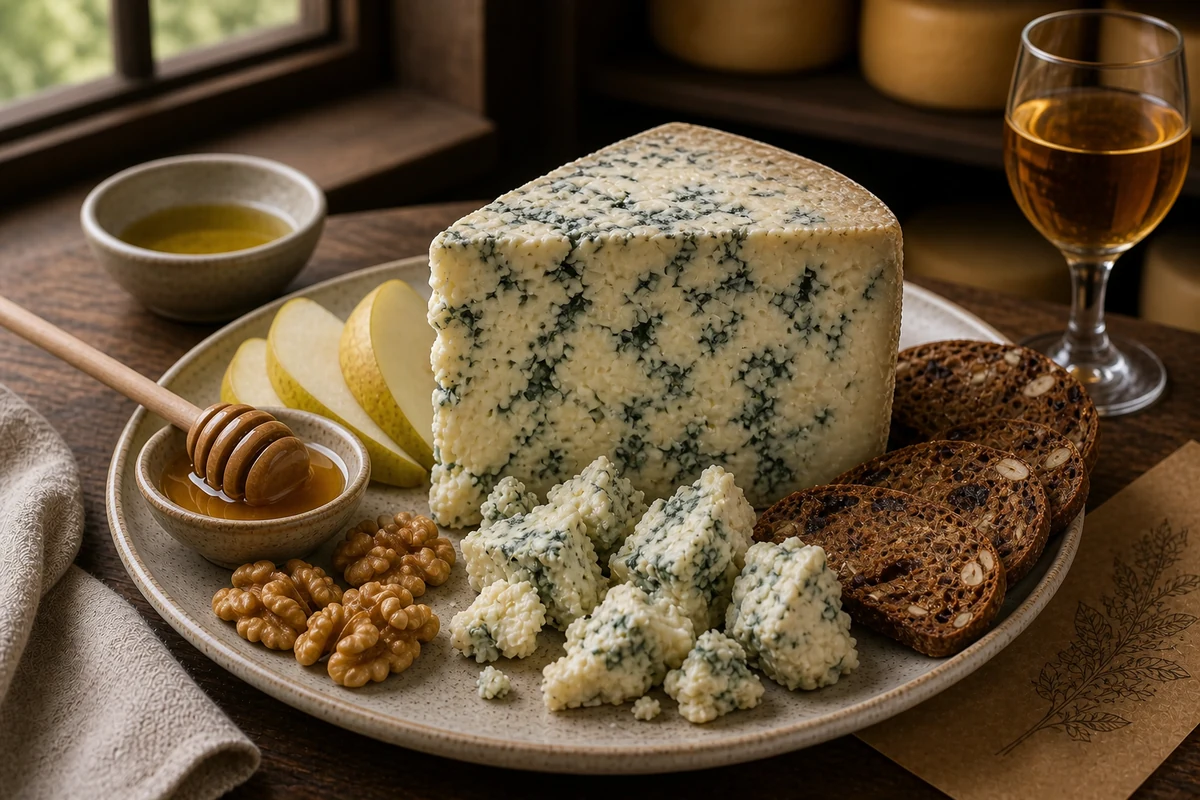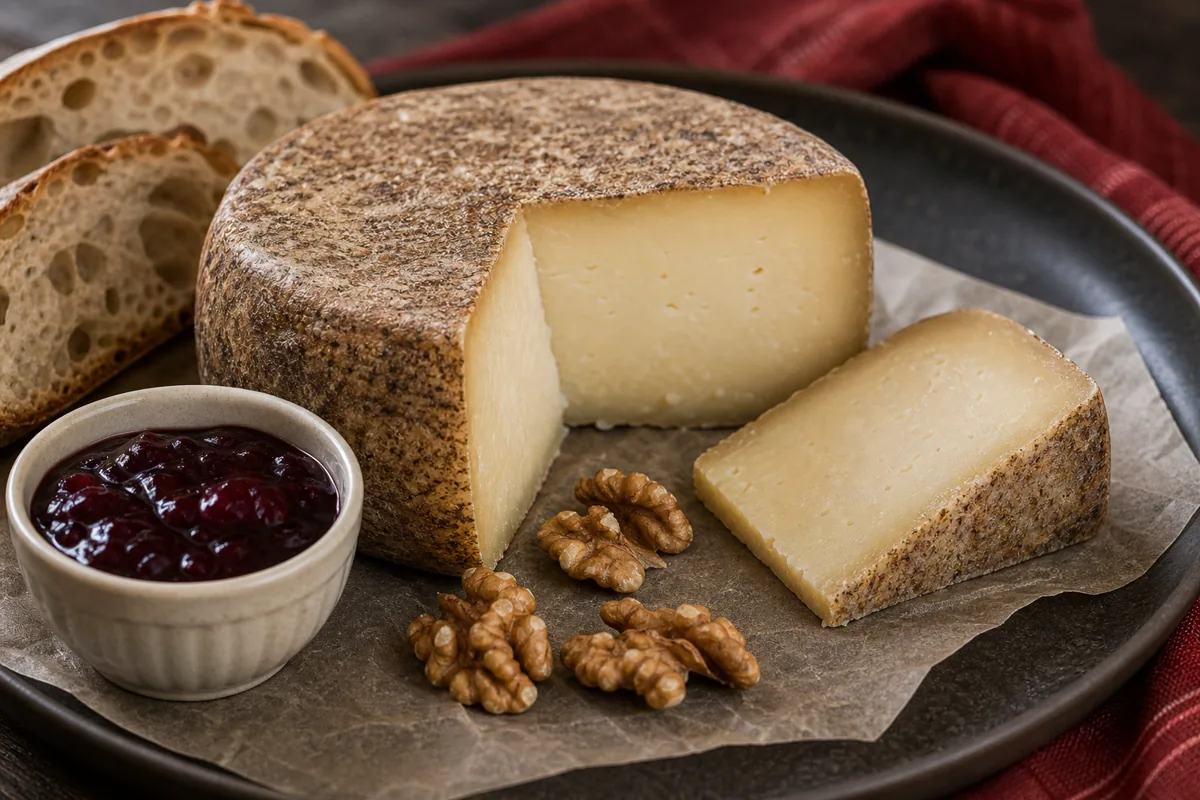
Abbaye de Belloc is a French Basque sheep milk cheese for boards, fruit, and quiet slices rather than heavy melting. Among Basque sheep-milk cheeses, it sits near mountain table wheels with dense paste, natural rind, and mellow nutty depth.
The cheese matters because it is specific without being loud.
Its identity combines a history at Notre Dame de Belloc with a current cheese operation run by the Habitat et Humanisme team, Basque ewe milk, a tomme format, and a natural rind.
Buy it when you want a firm but creamy sheep milk cheese with hazelnut, caramel, and gentle lanolin notes. Skip it when you need a brined salad cheese, a grating block, or a stretchy melt.
In This Article
How Does Belloc Compare With Ossau-Iraty?
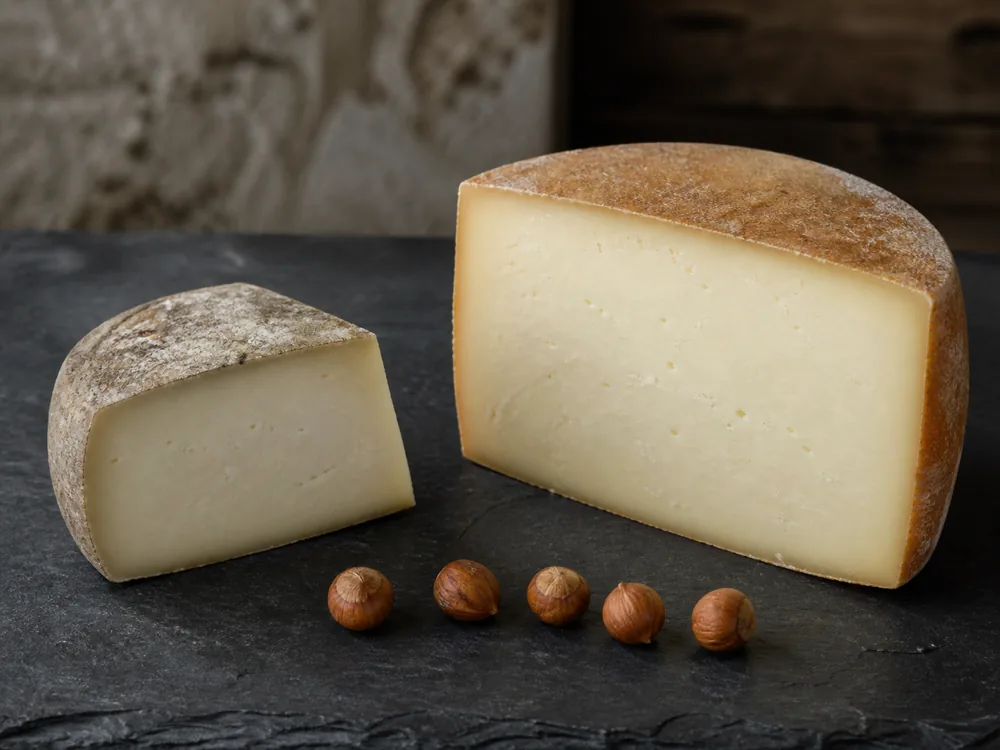
Belloc and Ossau-Iraty share Basque-region sheep milk and a pressed, uncooked paste, but the names do not promise the same wheel. Belloc is sold as a monastery-linked tomme with a convex profile and mottled natural rind, while Ossau-Iraty is a protected designation covering approved production across the French Basque Country and Béarn.
The official Ossau-Iraty specification ties minimum maturation to wheel size. It requires at least two and a half months for 2 to 3 kilogram wheels and four months for 4 to 5 kilogram wheels.
Belloc references commonly place the cheese between four and ten months of age and around 4.5 to 5 kilograms. Its label still has to establish the milk treatment and age of the piece in front of you.
The distinction becomes clearer at the counter. An Ossau-Iraty label identifies an AOP cheese made inside a regulated zone from approved local sheep breeds, while a Belloc label identifies one named cheese with its own monastery history and convex format.
Ossau-Iraty can be farmstead, dairy-made, raw, thermized, or pasteurized within its rules. Its official range includes smaller Basque wheels with sharper edges and larger Bearnese wheels with rounded angles, so a gray rind alone does not turn a wedge into Belloc.
Choose Belloc when you specifically want the named tomme, its mottled rind, and its restrained brown-butter profile. Choose Ossau-Iraty when the protected regional system, producer variation, or a clearly marked farmstead and summer-pasture style is the more important part of the purchase.
| Buying question | Abbaye de Belloc | Ossau-Iraty |
|---|---|---|
| Name means | A specific monastery-linked Basque sheep cheese | A protected regional sheep cheese designation |
| Visual cue | Convex tomme and mottled gray natural rind | Wheel appearance varies within the PDO rules |
| Best reason to choose it | You want Belloc's particular rind, format, and nutty profile | You want regulated French Basque or Béarn origin and wider availability |
What Kind of Cheese Is Abbaye de Belloc?
In cheese terms, this is a French Basque sheep milk tomme with a pressed, uncooked paste. The Ardigasna shop currently lists it as Pur Brebis de l'Abbaye de Bel'loc and describes a firm, elastic paste, a flowery rind, and fruity flavor.
The monastery connection is historical, but the current operation needs a date. Ardigasna says the monks began making cheese in 1959; a Habitat et Humanisme team took over the cheese dairy in June 2021, and the monks relocated in July 2022.
The cheese belongs to the wider French Basque context, where sheep milk cheeses carry strong regional meaning. Its shape and flavor make more sense beside Pyrenees table cheeses than beside soft Normandy wheels.
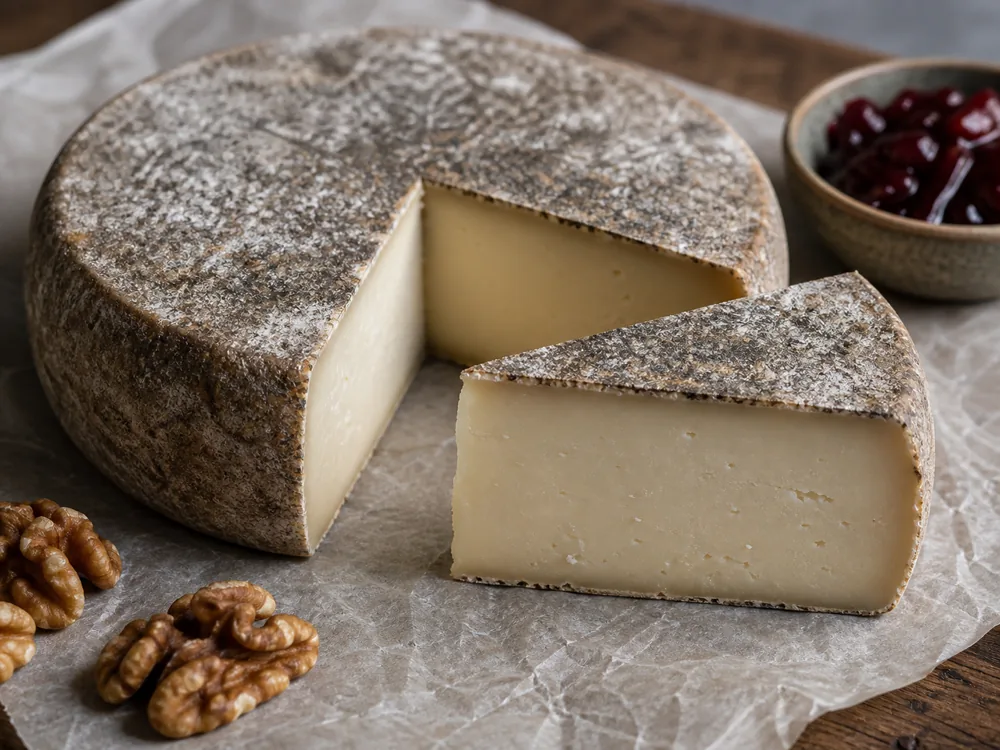
French dairy references describe a flattened wheel with convex sides, about 35 cm across, 8 to 9 cm high, and roughly four and a half to five kg. That format gives buyers a practical clue before the cheese is cut.
- Origin: Pays Basque in France, tied to Notre Dame de Belloc.
- Milk: Sheep milk, with French dairy sources describing raw whole ewe milk.
- Shape: Flattened tomme-style wheel with convex sides.
- Rind: Natural, gray spotted, and sometimes reddish or brown at maturity.
- Flavor: Mild sheep milk, hazelnut, caramel, brown butter, and light lanolin.
- Age: The current shop lists 3 to 4 months for spring cheese and more than 6 months for autumn cheese.
Ossau-Iraty is the closest comparison because both cheeses come from the French Basque sheep-milk tradition. Abbaye de Belloc is often described as based on that local classic, but it is not the same protected-origin cheese.
Why Do the Convex Wheel and Gray Rind Matter for Belloc?
The official history gives the cheese a documented starting point in 1959, not a vague ancient origin. It also makes clear that the present cheese dairy is run by a new team rather than by monks who still live at Belloc.
Current official product language describes a pressed, uncooked sheep cheese with a firm, elastic paste and flowery rind. French dairy references add the convex wheel and gray-spotted surface details that buyers may encounter at a specialist counter.
This aging window keeps Abbaye de Belloc separate from hard Spanish sheep cheese. Manchego can move toward sharper Spanish aging stages, while Abbaye de Belloc stays in a softer Basque table-cheese register.
Sources disagree on milk treatment. French dairy references point to raw or unpasteurized sheep milk, while one Culture line says pasteurized even though its data panel says raw treatment.
The current Ardigasna shop page says sheep milk but does not settle that conflict.
That conflict is not a reason to avoid the cheese. It is a reason to read the label, especially for pregnancy, import, and serving decisions.
For the reader, the safest conclusion is practical: trust the wheel evidence and label before the romance. A slice with clean rind, dense paste, and clear sheep-milk origin tells you more than the monastery name by itself.
How Does Abbaye de Belloc Taste?
Expect sheep-milk depth without harshness. The best descriptions cluster around mild ewe milk, hazelnut, caramel, brown butter, and a lanolin aroma.
The paste is dense and smooth rather than crumbly. French dairy references describe a fine, supple, bright white paste, while the competitor listing calls the texture creamy, dense, and firm.
The texture makes the cheese easier to slice than to grate. If you want a drier sheep milk finish, young Pecorino Toscano gives a firmer Italian contrast.
- Milk note: Gentle ewe milk depth, not sharp brine.
- Sweet note: Caramel and brown butter show more than fruit sweetness.
- Nut note: Hazelnut is the most useful tasting cue.
- Aroma note: Lanolin can read woolly, but it should not smell dirty.
- Texture note: Dense and smooth, with enough creaminess to eat in thin slices.
Let the wedge warm briefly before serving.
Cold sheep milk cheese can taste flat, while a short rest brings out the butter and nut notes.
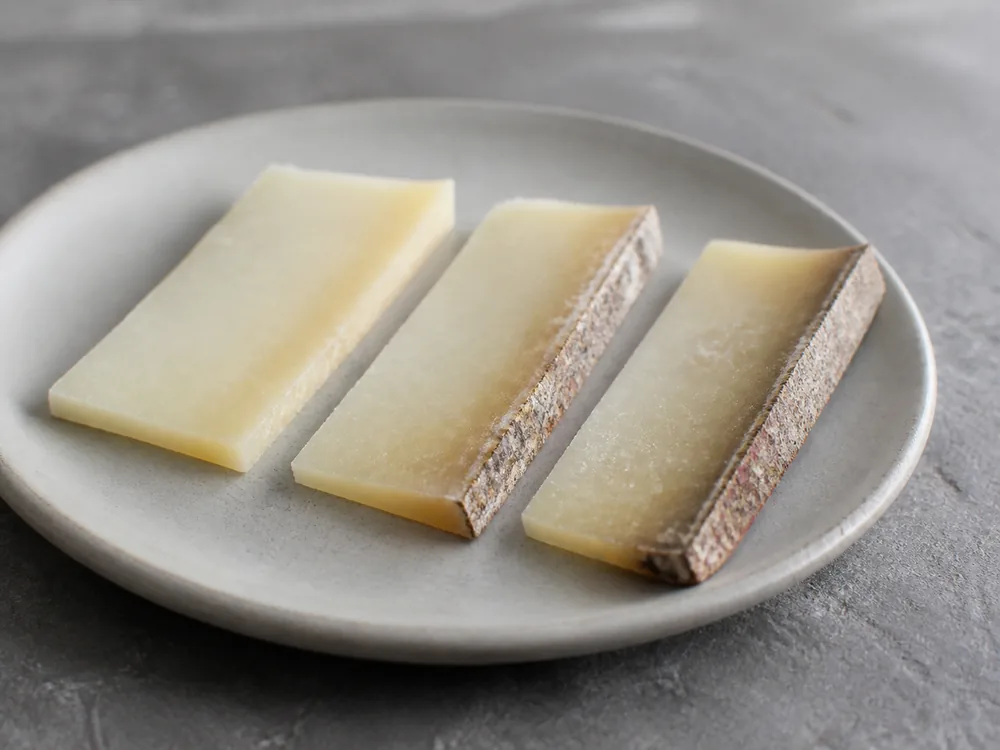
Age changes texture as well as aroma. A younger Belloc should bend slightly and cut with a smooth edge, while a mature piece becomes firmer and leaves a longer roasted-nut finish without turning brittle like a grating cheese.
Taste from the center toward the rind. That sequence separates the clean ewe-milk paste from the cellar notes at the surface and makes it easier to tell deliberate maturation from a tired cut.
Can You Eat the Rind on Abbaye de Belloc?
This natural rind is not a wax coat, but edible does not mean every piece will taste equally good. The gray, brown, and reddish surface can add mushroom, toasted nut, and cellar notes when it is dry, clean, and well kept.
Start with a narrow strip attached to plenty of paste. Keep it when the surface deepens the hazelnut and sheep-milk flavor, or trim it when bitterness, grit, or a strong cellar note overwhelms the center.
The mottling itself is not a spoilage test. Natural rind color varies during affinage, while wet slime, sour seepage, deep contamination in the cut face, or sharp ammonia point to a condition problem.
A cheesemonger can also tell you whether the rind received any treatment that changes the eating advice. That answer belongs to the exact wheel and importer, so it is more reliable than a blanket rule copied from another natural-rind sheep cheese.
How Should You Serve Abbaye de Belloc?
Thin wedges, small batons, and simple table service preserve the cut face and rind better than melting the cheese into a sauce. These formats keep the mild sheep-milk and hazelnut notes readable.
Use it when the plate needs mellow sheep milk depth. It can sit with fruit, nuts, bread, cured meat, and gentle red wine without turning the board aggressive.
| Use | How It Works |
|---|---|
| Cheese boards | Serve thin wedges so the natural rind and dense paste stay visible. |
| Fruit plates | Use apples, pears, preserved cherries, or quince to lift the sheep milk richness. |
| Sandwiches | Slice thinly with ham, pickles, or crusty bread when you want mild Basque depth. |
| Breakfast plates | Pair small pieces with bread, butter, nuts, and fruit preserves. |
For high-heat cooking, high-heat Halloumi is a better tool.
Abbaye de Belloc can soften, but it is not built for frying, grilling, or dramatic melt.
Thin Belloc slices can soften over bread, potatoes, or a savory tart. Moderate heat preserves the sheep-milk sweetness and natural-rind savor that disappear under a hard bake.
Avoid burying it under spicy chutney or strong blue cheese. Those flavors erase the mild sheep milk and hazelnut notes that make the wheel worth buying.
What Pairs With Abbaye de Belloc?
Fresh fruit, walnuts, crusty bread, and moderate red wine sharpen the paste without turning the cheese into dessert. Preserved cherry works when its sweetness stays behind the sheep-milk flavor.
Taste of France points to fresh and preserved fruits, nuts, crusty bread, and Ixtassou cherry jam. Culture suggests Pinot Noir or Shiraz, which fits the cheese's mild caramel and brown butter side.
| Pairing | Type | Why It Works |
|---|---|---|
| Ixtassou cherry jam | Food | A Basque fruit preserve that flatters mild sheep milk richness. |
| Walnuts | Food | Nutty crunch echoes the hazelnut note without adding too much sugar. |
| Crusty bread | Food | A simple base keeps the rind and paste central. |
| Pinot Noir | Wine | Light red fruit works when tannin stays modest. |
| Shiraz | Wine | A fuller red can work if the cheese is mature and the wine is not too oaky. |
Firm sheep milk cheeses usually want freshness, fruit, or restrained structure more than heavy tannin. The same approach used for Manchego wine pairings works here.
On a mixed cheese board, put Belloc between milder cow milk cheeses and sharper aged wedges. Its firm but creamy texture bridges those two styles.
Do not overload the plate with three sheep milk cheeses unless that is the tasting job.
One Basque sheep cheese often gives enough personality for a mixed board.
What Should You Check When Buying Abbaye de Belloc?
Buy from a shop that can explain milk treatment, age, and cut date. The cheese has enough source variation that a clean label matters more than the name alone.
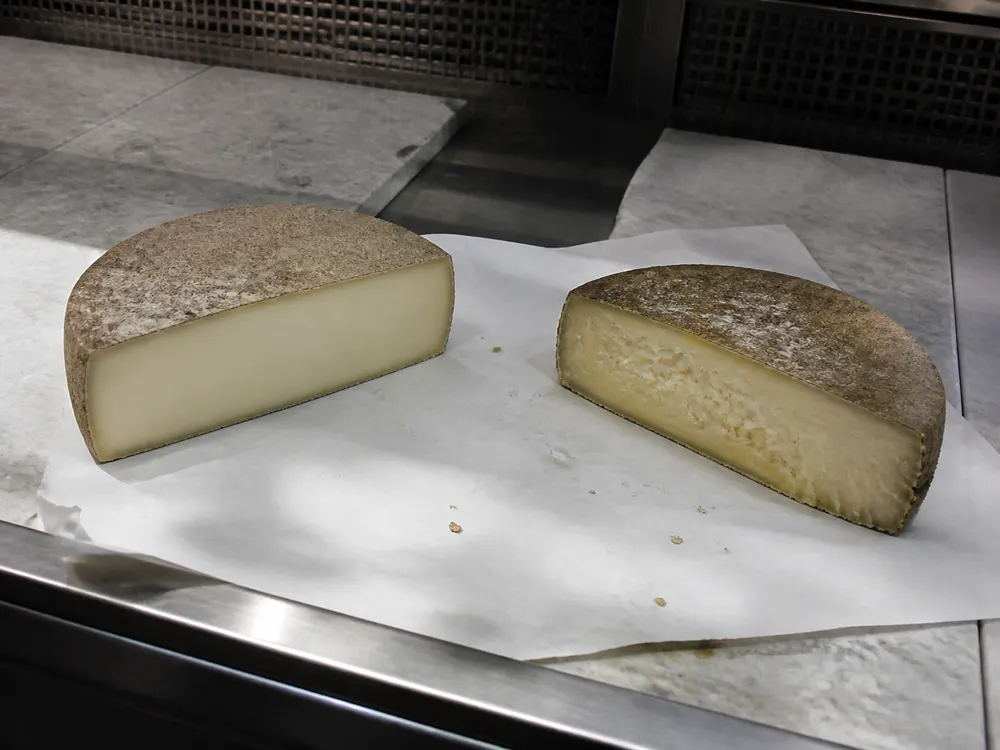
Look for a natural rind that seems healthy, dry enough to protect the paste, and not sour or wet. Gray spotting, brown tones, and reddish patches can be normal, but harsh ammonia or slimy rind is not.
The paste should look dense and smooth.
If the exposed face is cracked, chalky, or oily, the wedge has probably lost the balanced texture that makes the cheese useful.
Use cut-face wrapping after opening. Protect the paste first, then give the rind enough breathing room to avoid trapped moisture.
If rind mold looks like part of the natural rind, ask the cheesemonger before trimming deeply. If mold enters the paste or the cheese smells sour, discard the affected wedge.
Age and cut date answer different questions. The stated months describe affinage before sale, while the cut date tells you how long the exposed paste has been losing moisture in the case.
When two wedges have the same age, choose the one with the smoother cut face and cleaner aroma. A prestigious older wheel cannot recover texture after a poorly wrapped portion has dried and cracked.
What Can You Substitute for Abbaye de Belloc?
For a substitution, decide whether you need origin, texture, or flavor.
Choose Ossau-Iraty for French Basque sheep milk table service, or choose Idiazabal for more smoke and firmness.
Choose Belloc when its particular convex wheel, mottled rind, and monastery-linked identity are the point of the purchase. Choose Ossau-Iraty when protected regional production and easier comparison between makers matter more than one named tomme.
For Spanish familiarity, Manchego can cover some of the sheep milk role. For a firmer Italian sheep milk slice, Pecorino Toscano is usually closer than salty Pecorino Romano.
- Ossau-Iraty: Best for French Basque sheep milk identity.
- Idiazabal: Best when you want more firmness or a smoked option.
- Manchego: Best when you need an easier-to-find sheep milk board cheese.
- Pecorino Toscano: Best when the dish needs a firmer Italian sheep milk wedge.
Do not use brined feta as a direct substitute. The salinity of brined feta changes the dish too much unless you specifically want tang, brine, and crumble.
Is Abbaye de Belloc Safe During Pregnancy?
Pregnancy safety depends on the actual milk treatment and local guidance.
If the label says raw milk, use the same caution you would apply to other raw sheep milk cheeses.
Firm texture and several months of aging reduce moisture, but they do not convert an unclear label into a pasteurized product. The milk statement, storage history, local public-health guidance, and the reader's own medical advice still control the decision.
Follow raw-milk cheese guidance during pregnancy when the label is unclear. A familiar cheese name does not replace the label, storage history, or medical advice.